

Sativa vs Indica: Complete Strain Comparison Guide
Learn sativa vs indica differences in effects, benefits, and uses.
What Is the Difference Between Sativa vs Indica
The conversation around sativa vs indica is one of the oldest and most repeated in cannabis culture, and for good reason: these two categories shape how people choose, grow, and experience the plant. At its simplest, the distinction comes down to botany and effect. Cannabis sativa plants evolved near the equator in regions like Thailand, Colombia, and Mexico, while Cannabis indica originated in the harsher, cooler climates of the Hindu Kush mountain range spanning Afghanistan and Pakistan. Those different homelands shaped everything about how each subspecies looks, grows, and ultimately makes you feel.
Why the labels still matter: Even though modern science has complicated the neat sativa-versus-indica binary, the terms remain a useful shorthand on dispensary shelves. When a budtender hands you something labeled sativa, it sets an expectation of an uplifting, cerebral experience. Indica suggests the opposite — a heavy, sink-into-the-couch calm. These are starting points rather than guarantees, but they help newcomers navigate an otherwise overwhelming menu.
Where the simple story breaks down: Decades of crossbreeding mean that the vast majority of strains sold today are hybrids, not pure landrace genetics. The chemical reality inside any given flower — its cannabinoids and terpenes — drives the experience far more than the sativa or indica label printed on the jar. Understanding both the traditional framework and its limits is the key to making smart choices, whether you enjoy a casual spliff on the weekend or practice wake and bake before a hike.
How Do Sativa vs Indica Effects Work
The effects people attribute to sativa vs indica come from the way cannabinoids interact with your endocannabinoid system. THC acts as an agonist at your CB1 receptors, triggering the psychoactive experience, while the surrounding terpenes and minor cannabinoids modulate the overall character of that high. This combined interplay is often called the entourage effect, and it explains why two flowers with identical THC percentages can feel completely different.
The classic sativa head high: Sativa-leaning strains are typically associated with energizing, creative, and mentally stimulating effects. Many users reach for them during the day to spark focus, conversation, or artistic flow. According to RxList, cannabis affects individuals differently depending on dose, tolerance, and personal physiology, so the same sativa that energizes one person might leave another feeling anxious or wired.
Indica-leaning strains, by contrast, are linked to body-centered relaxation. The stereotypical indica sensation is a warm heaviness in the limbs, a quieting of racing thoughts, and a gentle pull toward sleep. This is where the "in-da-couch" mnemonic comes from. For anyone seeking evening calm, a quality indica-dominant flower can be the difference between tossing all night and drifting off easily. Keep in mind that set, setting, and dosage influence these outcomes as much as genetics do.
Sativa vs Indica Plant Appearance and Structure
Beyond effects, sativa vs indica plants look strikingly different in the garden. These visual cues helped early botanists separate the two subspecies long before anyone could test their chemistry in a lab. If you ever find yourself examining a living plant, the structure tells a story about where its ancestors evolved.
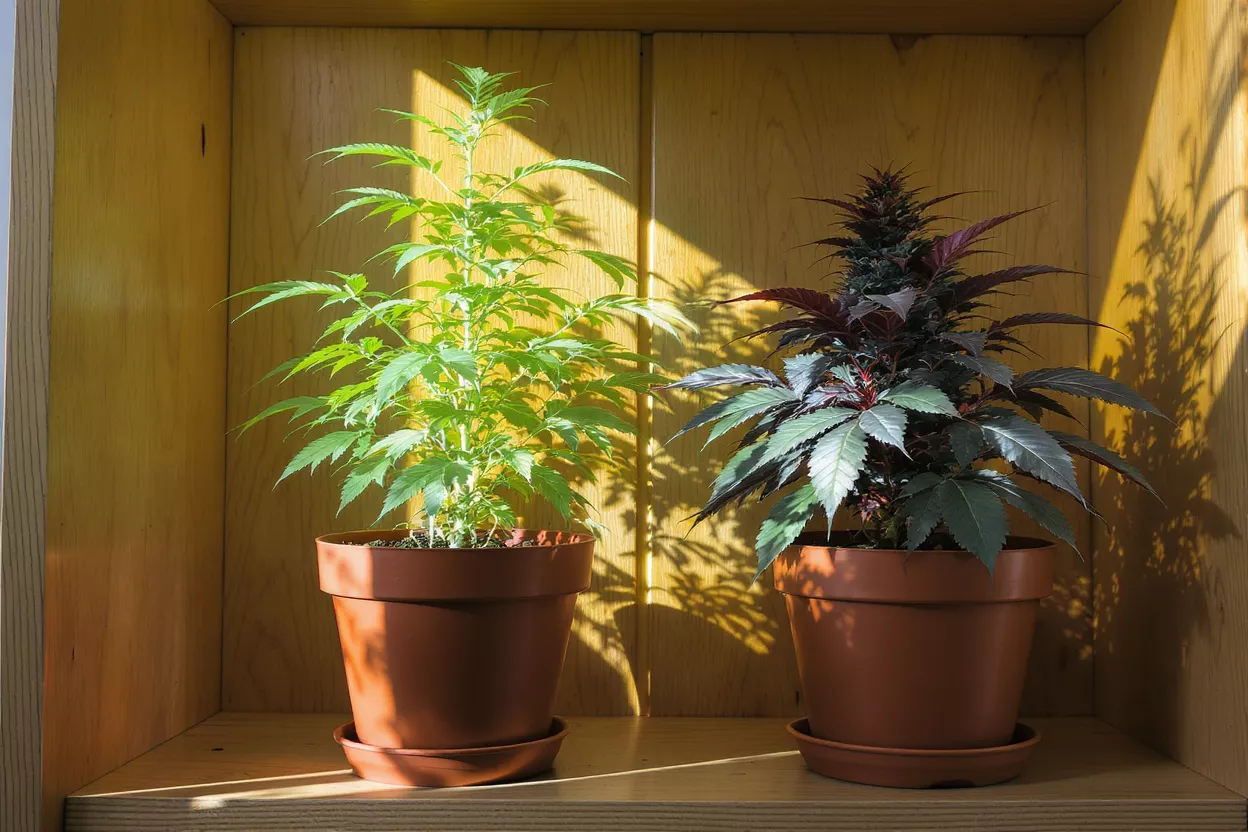
Sativa plants stretch tall and lanky, sometimes reaching well over twelve feet outdoors, with long internodal spacing and slim, finger-like leaves. Their airy buds developed to resist the humidity and mold pressure of tropical climates. Indica plants, meanwhile, grow short and bushy with broad, dark-green leaves and dense, chunky flowers — a compact form suited to the short growing seasons of mountainous regions. Each stamen, leaf node, and bud cluster reflects thousands of years of adaptation.
- 🌱 Sativa height: Tall and stretchy, often 8–12+ feet outdoors with wide internodal gaps.
- 🍃 Sativa leaves: Narrow, light-green blades adapted to intense equatorial sun.
- 🪴 Indica height: Short and bushy, rarely exceeding 6 feet, ideal for indoor grows.
- 🌿 Indica leaves: Broad, deep-green fingers that capture limited mountain sunlight.
- ⏳ Flowering time: Indicas finish in 7–9 weeks; sativas can take 10–14+ weeks.
These structural traits matter enormously to growers. A cultivator with limited vertical space will almost always favor indica or indica-dominant genetics, while someone with a tall greenhouse and a long warm season can let a sativa express its full towering potential. Techniques like topping and low-stress training help tame an unruly sativa, but genetics set the baseline.
What Are the Benefits of Sativa Strains
Sativa strains have built a loyal following among people who want cannabis to fit into an active, productive lifestyle. Rather than winding down, these varieties are prized for lifting you up. The reputation is partly cultural and partly chemical, rooted in the terpene profiles and cannabinoid ratios common to equatorial genetics.
Daytime productivity and focus: Many sativa enthusiasts describe a clear-headed mental energy that pairs well with creative work, exercise, or social settings. A morning wake and bake session with a bright, citrus-forward sativa can feel like a cup of strong coffee with a creative twist. This makes them a popular choice for artists, writers, and anyone who wants to stay engaged rather than sedated.
Mood and creativity: Sativas are frequently associated with euphoria, talkativeness, and a sense of mental expansion. The presence of terpenes like limonene and valencene can contribute an uplifting, citrusy character that reinforces the energetic reputation. For those exploring concentrates, a fast-acting live resin vape cartridge made from sativa genetics delivers that bright effect quickly and conveniently.
- ☀️ Daytime use: Energizing effects suit mornings and afternoons over evenings.
- 🎨 Creative spark: Often reported to enhance focus, ideas, and artistic flow.
- 💬 Social ease: Talkative, sociable effects make gatherings more enjoyable.
- 🏃 Active pairing: Favored before hikes, workouts, or other movement.
What Are the Benefits of Indica Strains
If sativa is the sunrise, indica is the sunset. Indica strains earn their reputation as the go-to choice for unwinding, decompressing, and preparing the body for rest. The heavy, tranquil sensation many users seek at the end of a long day is the hallmark of well-grown indica genetics.
Physical relaxation: The classic indica experience centers on the body. Tension seems to melt, the pace of thought slows, and a comfortable heaviness settles into the limbs. This makes indicas a natural fit for evenings when the only goal is to relax on the couch with a film or a book.
Many people also turn to indica varieties for their calming, soothing qualities after physically demanding days. The relaxing reputation extends beyond flower into edibles and topicals, where the experience becomes longer-lasting and more body-focused. A slow-onset edible enjoyed an hour before bed, or even a topical 2025 formulation rubbed into tired muscles, lets the soothing character of indica genetics shine without any smoking required.

It is worth remembering that the indica label is a guide, not a prescription. Because terpene content varies so widely, two indica strains can deliver noticeably different experiences. Always start low and go slow, especially when trying a new cultivar or a more concentrated product like thc shatter bar or a dab enjoyed on 710.
Sativa vs Indica for Sleep and Relaxation
One of the most common reasons people compare sativa vs indica is to find help with sleep. The conventional wisdom is straightforward: indica for nighttime, sativa for daytime. But the truth, as always, lives in the chemistry rather than the label.
Why indica wins for sleep: The sedating reputation of indica strains is often tied to terpenes like myrcene, which appears in higher concentrations in many indica cultivars and is associated with a relaxing, couch-locking effect. For someone whose mind races at bedtime, the body-heavy quiet of a good indica can ease the transition into sleep more reliably than a stimulating sativa.
That said, some people find that high-THC sativas leave them too alert and even anxious, which is counterproductive at night. If you tend toward overthinking, a heavy daytime sativa right before bed could backfire. For consistent evening relief, a measured slow-release sleep gummy formulated with indica genetics offers a predictable, smoke-free path to rest.
- 🌙 Best for sleep: Indica-dominant strains rich in myrcene and linalool.
- ⚡ Best for energy: Sativa-dominant strains with limonene and pinene.
- 🛌 Bedtime tip: Try edibles 60–90 minutes before lights out.
- 🧘 Wind-down: Pair indica flower with a calm, low-stimulation setting.
The Role of Terpenes in Sativa vs Indica
If there is one concept that modernizes the sativa vs indica conversation, it is terpenes. These aromatic compounds give cannabis its smell and flavor, and growing evidence suggests they shape the effects far more than the broad subspecies label ever could. Two strains both labeled indica might produce different experiences simply because their terpene profiles diverge.
Common terpenes and their character: Myrcene leans earthy and sedating, limonene brings bright citrus energy, pinene smells of fresh forest, and linalool offers floral calm reminiscent of lavender. Valencene contributes a sweet orange note often found in uplifting cultivars, while caryophyllene adds a spicy, peppery edge that uniquely interacts with cannabinoid receptors. Reading a terpene panel tells you far more about how a flower will feel than the word sativa or indica on the label.
This is why savvy consumers increasingly shop by terpene profile rather than category alone. Whether your flower has been through proper winterization for a clean concentrate, or you are sampling xanthophyll-rich trichomes under a loupe, the aromatic fingerprint is your best predictor of effect. Terms like waffle perc, tree perc, and swiss perc describe glass that preserves those delicate aromas through smoother filtration, helping you actually taste the terpenes you paid for.
Are Hybrid Strains Better Than Sativa vs Indica
In a market dominated by crossbred genetics, hybrids deserve their own spotlight in any sativa vs indica discussion. A hybrid is simply a cross between sativa and indica parents, bred to capture desirable traits from both sides. The result can be tuned anywhere along the spectrum, from sativa-dominant daytime cultivars to indica-leaning nighttime ones.
The appeal of balance: Many of today's most popular strains are balanced hybrids that aim to deliver the best of both worlds — a cerebral lift paired with physical ease. This versatility is part of why hybrids dominate dispensary menus. Breeders can dial in flowering time, yield, flavor, and effect by selecting parents carefully across multiple generations.
Hybrids also give growers practical advantages. A breeder might cross a fast-flowering indica with a high-yielding sativa to get a plant that finishes quickly without sacrificing potency. Slang for especially potent modern hybrids — like zaza — reflects how far breeding has come from the original landrace gene pool. The downside is that "hybrid" alone tells you almost nothing about effect, which loops back to the importance of reading cannabinoid and terpene data rather than trusting category labels.
How to Grow Sativa vs Indica at Home
For home cultivators, the sativa vs indica choice carries real consequences for space, time, and effort. Understanding the agronomic differences before you germinate a single seed saves a lot of frustration later. The right pick depends on your environment, patience, and goals.
Space and timing considerations: Indicas are the forgiving choice for indoor and small-space grows. Their short stature and quick 7–9 week flowering window make them manageable under lights. Sativas demand patience and headroom, often stretching dramatically during flower and taking three months or more to ripen. If you have a tall tent or an outdoor plot in a warm climate, the reward can be spectacular.
Growing methods also influence your results regardless of genetics. Soil, hydroponics, and even aeroponics each offer different trade-offs in speed and control, while extraction enthusiasts may later experiment with alcohol extraction to make their own concentrates. Whichever subspecies you choose, dialing in environment matters more than the label.
- 🪴 Best for beginners: Indica or indica-dominant hybrids for fast, compact grows.
- 📏 Space needs: Sativas require tall tents or outdoor room to stretch.
- ⏱️ Patience factor: Sativas can take 10–14 weeks to finish flowering.
- 🌡️ Climate fit: Sativas thrive in long, warm seasons; indicas tolerate cooler.
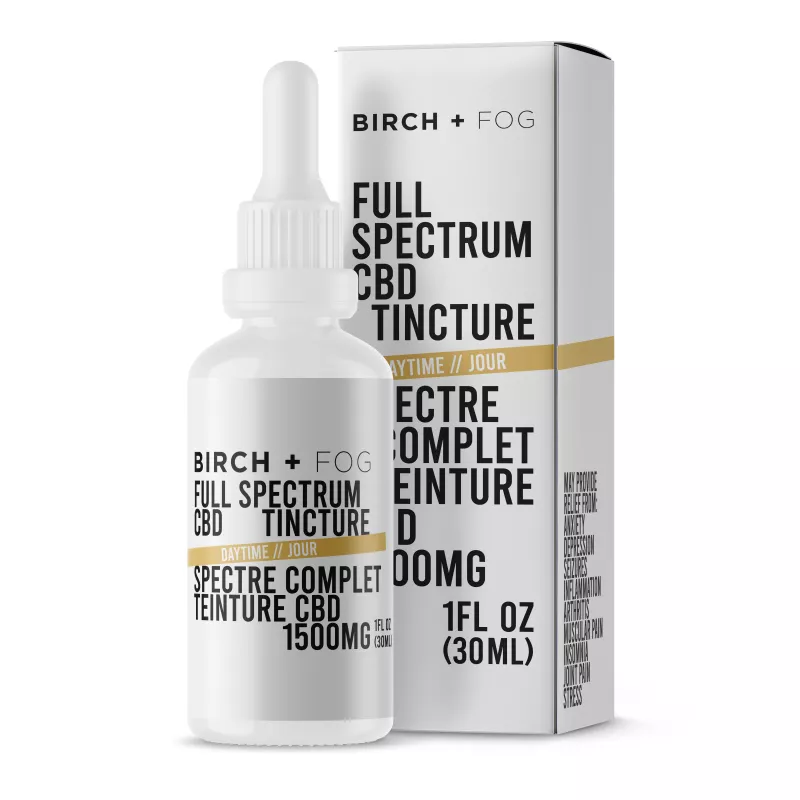

Full Spectrum CBD Tincture Daytime 1500mg – BIRCH+FOG
Daytime relief turned up to professional strength. The 1500mg full-spectrum formula brings the plant's whole entourage to bear on heavy stress, while bright terpenes keep the mind awake rather than sedated. For long, high-pressure days that need more than a starter dose, a single dropper delivers lasting, even-keeled calm from morning through the afternoon.
- Calming Support : High-potency calm for severe stress and racing thoughts
- Cognitive Boost : Specialized terpenes enhance mental clarity instead of causing sedation
- Synergistic Power : Full-spectrum compounds work together for amplified relief
- Long-Lasting Support : High concentration provides extended therapeutic benefits
- High-Strength Formula : Potent support for challenging, stressful periods
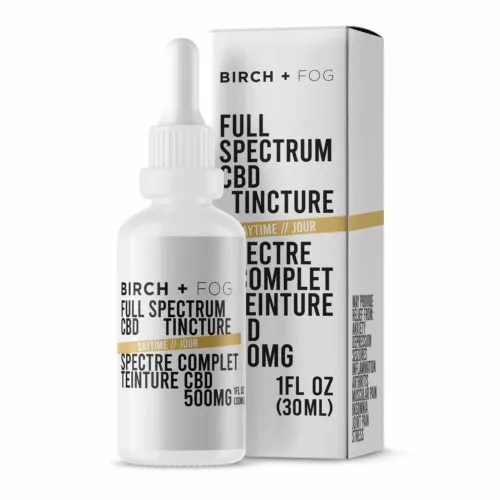
Full Spectrum CBD Tincture Daytime 500mg – BIRCH+FOG
Easygoing daytime calm for newcomers and light days alike. Birch+Fog's 500mg full-spectrum tincture, lifted with energizing sativa terpenes, takes the nervous edge off without the afternoon crash or mental fog. A few drops under the tongue keep you balanced and alert through demanding stretches — a gentle, approachable place to start with full-spectrum CBD.
- Anxiety Targeting : Specifically formulated to address daily stress and nervous tension naturally
- Clear-Headed Relief : Calms anxiety without mental fog or afternoon crashes
- Gentle Effectiveness : Perfect potency for anxiety newcomers seeking real results
- Sustained Balance : Maintains emotional equilibrium throughout demanding days
- Confidence Building : Helps manage social anxiety and performance nervousness
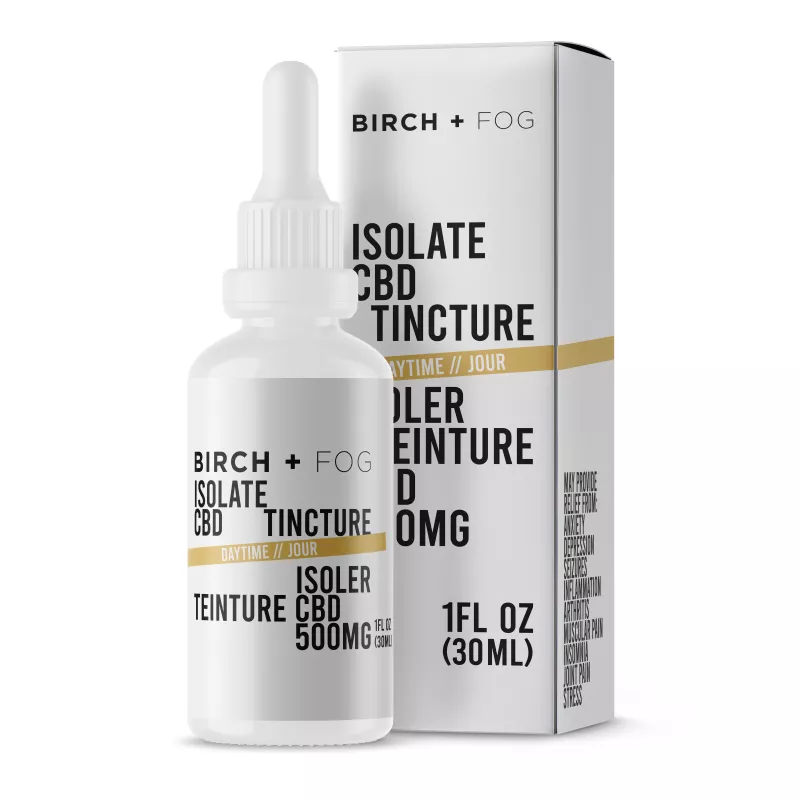
Isolate CBD Tincture Daytime 500mg – BIRCH+FOG
Calm that keeps its eyes open. Birch+Fog's 500mg daytime tincture pairs pure CBD isolate with energizing sativa terpenes for a steadier, clearer kind of ease — no THC, no afternoon fog. A dropper under the tongue takes the edge off a packed morning while you stay sharp for the meeting, the inbox, the school run. An easy, drug-test-friendly first step into daily CBD.
- Stress Response Optimization : Helps regulate cortisol patterns for balanced daily energy
- Cognitive Performance Protection : Maintains mental sharpness during high-pressure situations
- Social Confidence Enhancement : Reduces anticipatory anxiety before meetings or events
- Sleep Quality Preparation : Daytime stress relief supports better evening wind-down
- Emotional Stability Support : Promotes steady mood throughout challenging workdays
How to Choose Between Sativa vs Indica
After all the botany and chemistry, the practical question remains: how do you actually choose between sativa vs indica for your own needs? The answer comes down to your goals, your tolerance, and your willingness to read beyond the label on the jar.
Match the strain to the moment: Start by asking what you want the experience to deliver. Looking for daytime energy, creativity, and sociability? Lean sativa. Want evening calm, physical relaxation, and easier sleep? Lean indica. Need something flexible for all-day use? A balanced hybrid is your friend. Then go one level deeper and check the terpene and cannabinoid profile to confirm the label matches the chemistry.
Practical buying tips: Whether you are shopping flower, vapes, or edibles, accessories and details matter. The right 510 thread battery, quality adapters for your rig, and fresh product all shape the experience. Keep an eyedropper on dose, store flower properly with a humidity pack, and consider additives like xanthan only in infused products where texture matters. Celebrate responsibly when 420 rolls around, but treat every session as a chance to learn what your body actually prefers.
In the end, the sativa vs indica framework is a helpful map rather than the territory itself. It gives newcomers a vocabulary and a starting point, but the real magic lies in the chemistry of each individual plant. Use the labels to narrow your search, then let terpenes, cannabinoids, and your own experience guide the final choice. Approach cannabis with curiosity, start low, go slow, and you will steadily build the knowledge to pick the perfect strain for any moment.




Comments