Autoflower
Discover how autoflower cannabis works, top strains, grow tips & yields.
What Is Autoflower Cannabis
Autoflower cannabis describes plants that transition from vegetative growth into flowering automatically, based on age rather than changes in their light schedule. This trait separates them from traditional cannabis, which depends on shifting daylight hours to trigger bud production. For growers, the appeal is straightforward: plant a seed, and roughly two to three months later you have a harvest, no light manipulation required.
The autoflower trait comes from Cannabis ruderalis, a hardy subspecies that evolved in the short, unpredictable summers of Central Asia and Eastern Europe. Because ruderalis could not rely on stable day-length cues at high latitudes, it adapted to flower on an internal clock instead. Modern breeders crossed this wild genetic line with potent indica and sativa varieties to keep the automatic flowering while restoring the cannabinoid richness ruderalis naturally lacks.
The result is a category of cannabis that has grown enormously popular among home cultivators and commercial operations alike. According to research summarized by Examine, cannabinoid concentration is heavily influenced by genetics and growing conditions, which is exactly why early autoflowers earned a reputation for weaker potency that careful breeding has since corrected.
How Autoflower Genetics Work
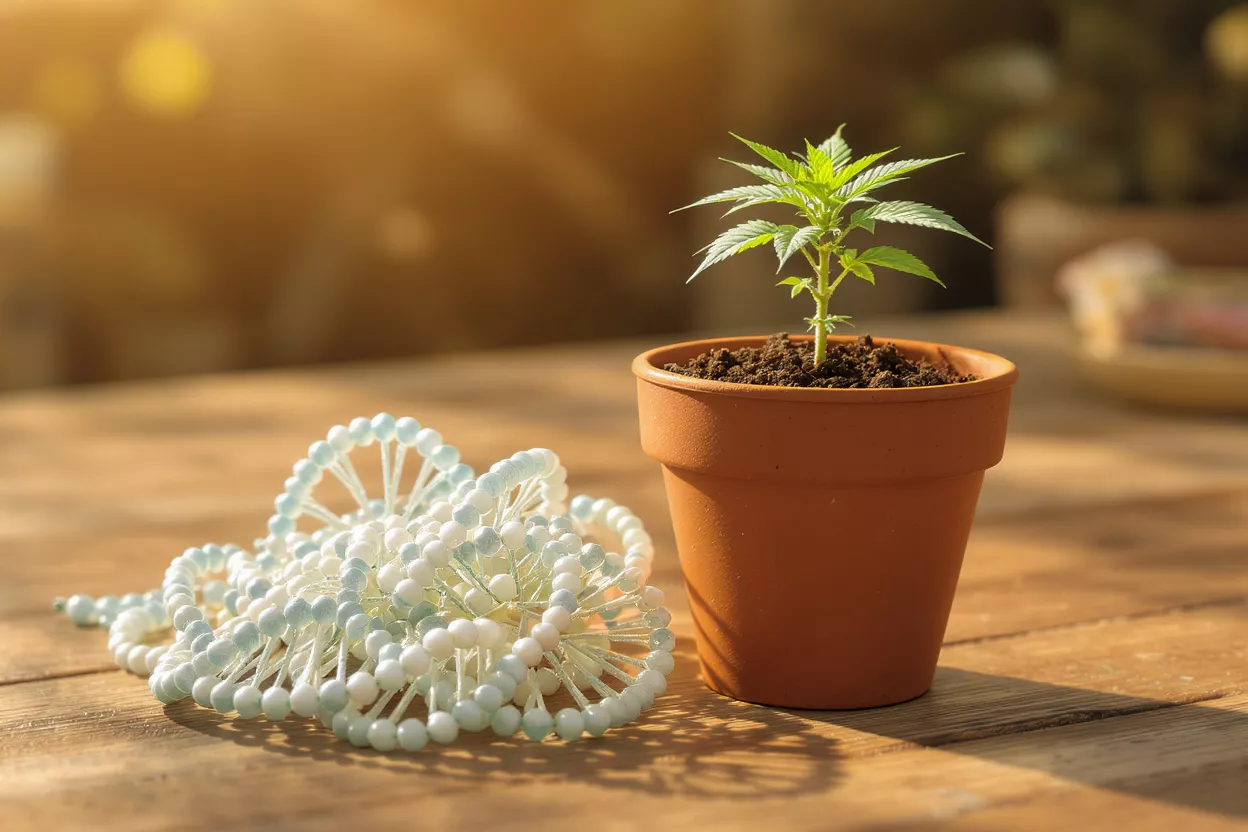
The recessive ruderalis gene: The autoflowering characteristic is governed by a recessive gene inherited from ruderalis ancestry. For a plant to flower automatically, it must carry two copies of this gene. This is why breeders work carefully to stabilize autoflower lines across multiple generations, ensuring that seeds reliably produce auto-flowering offspring rather than reverting to photoperiod behavior.
Why early autoflowers disappointed: The first commercial autoflowers from the 2000s were often low in THC and modest in yield because so much ruderalis genetic material remained in the mix. Ruderalis on its own produces very little CBDA, CBGA, or THC. Through repeated backcrossing with elite photoperiod parents, breeders gradually pushed cannabinoid content upward while preserving the autoflower timing, a process not unlike how brewers refine a yeast strain over many batches.
Cannabinoid biosynthesis in any cannabis plant begins with CBGA, often called the mother cannabinoid, which enzymes then convert into THCA, CBDA, and other acid precursors. The journal-style overviews compiled by Examine note that these enzymatic pathways are consistent across cannabis types, meaning a well-bred autoflower can produce the same compounds as a photoperiod plant when its genetics are sound.
Autoflower vs Photoperiod Plants
The central difference between autoflower and photoperiod cannabis is the flowering trigger. Photoperiod plants require a shift to roughly twelve hours of darkness to begin budding, which gives growers precise control over plant size and timing. Autoflowers ignore the light schedule entirely and bloom on their genetic timetable, trading that control for speed and simplicity.
Each approach suits a different grower. Those running a perpetual harvest or growing in regions with short summers often favor autoflowers, while cultivators chasing maximum yield per plant frequently stick with photoperiods. If you are new and want a forgiving first grow, a quality beginner autoflower seed pack removes much of the guesswork around light timing.
Here is a quick comparison to clarify the trade-offs:
- 🌱 Flowering trigger: Autoflowers bloom by age; photoperiods bloom by light cycle changes.
- ⏱️ Speed: Autoflowers finish in 8–12 weeks from seed; photoperiods often take longer with separate veg and flower stages.
- 📏 Size: Autoflowers stay compact and discreet; photoperiods can grow much larger.
- 🔁 Cloning: Photoperiods clone reliably; autoflowers are best grown fresh from seed each cycle.
How Long Do Autoflower Plants Take to Grow
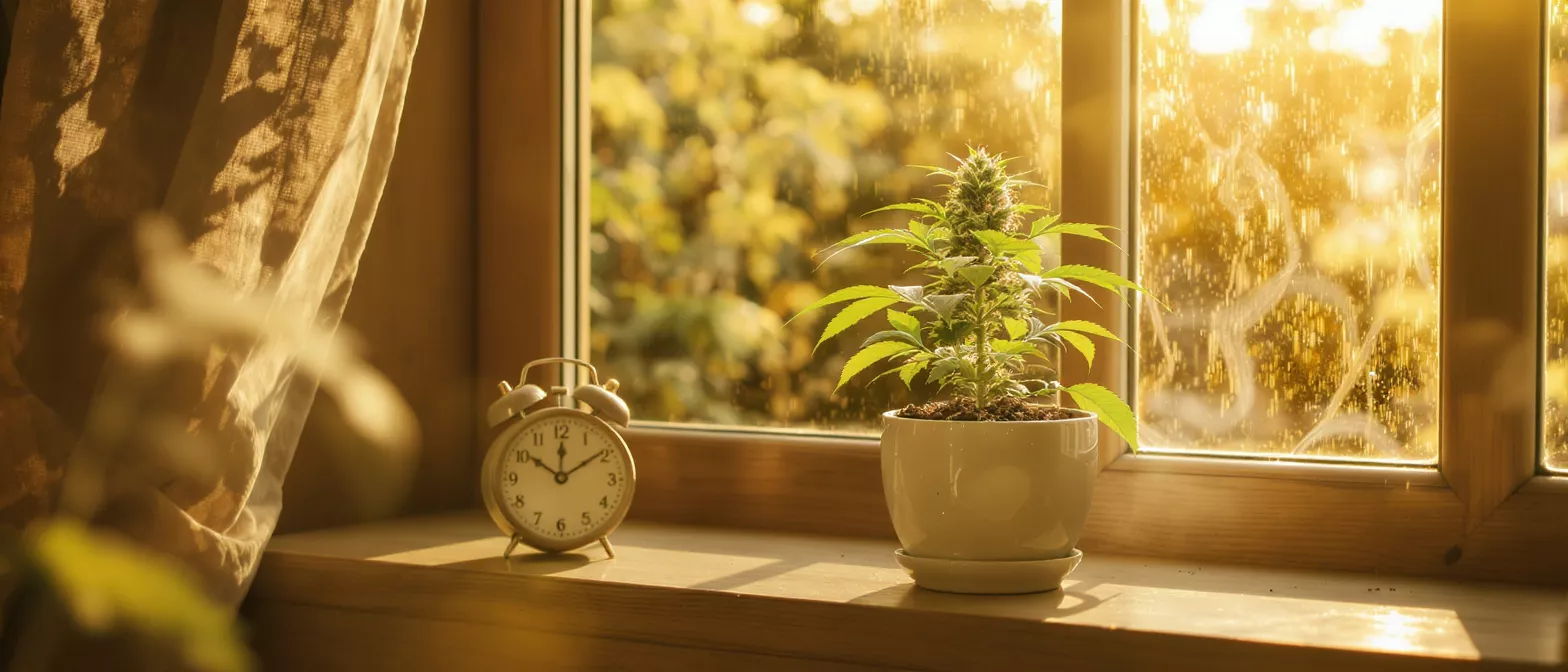
Seed to harvest timeline: Most autoflowers complete their full life cycle in roughly 8 to 12 weeks from germination. The plant spends its first few weeks in a brief vegetative phase, then automatically slips into flowering around week three or four, with the final weeks dedicated to bud development and ripening. This compressed schedule is the headline advantage of the category.
Factors that shift the timeline: Genetics set the baseline, but environment fine-tunes it. Temperature, light intensity, nutrient availability, and pot size all influence whether a plant finishes closer to eight weeks or stretches toward twelve. Cooler nights toward the end can deepen color and slow ripening slightly, while strong, consistent light tends to keep plants on schedule.
Because the window is so short, there is little room to correct major mistakes mid-grow. A stunted seedling rarely has time to recover the way a photoperiod plant might during an extended vegetative stage. This makes a solid start, including healthy soil and a stable environment, more important than with slower-growing varieties.
Best Autoflower Strains for Beginners
For first-time growers, the best autoflower strains combine resilience, forgiving genetics, and predictable timing over raw potency. Strains with strong indica heritage tend to stay compact and bushy, which suits small tents and discreet spaces. Many classic names have been bred into autoflowering versions, giving newcomers access to familiar flavors and effects without the complexity of light scheduling.
When choosing, look for stabilized lines from reputable breeders rather than untested freebies. A reliable compact indica autoflower variety will reward a beginner with even growth and a manageable canopy. Flavor-forward terpene profiles featuring notes from cedrene and other aromatic compounds add appeal beyond the high.
Beginner-friendly autoflower traits to prioritize:
- 🌿 Compact stature: Easier to manage in tents, closets, and balconies.
- 🛡️ Mold and pest resistance: Forgives less-than-perfect humidity control.
- ⚡ Fast finish: Quick turnaround means quicker feedback and learning.
- 🍋 Stable potency: Look for consistent THC and CBN reports from prior growers.
Autoflower Growing Tips and Light Cycles
Light schedules that work: Because autoflowers do not depend on darkness to bloom, many growers run an 18/6 or even 20/4 light cycle throughout the entire grow. More light hours generally mean more energy for growth without risking a return to vegetative mode, since the flowering trigger is genetic rather than light-driven. Some experienced growers stick with 18/6 to save on electricity while still feeding the plant plenty of photons.
Soil, nutrients, and root space: Autoflowers prefer a lighter feeding schedule than hungry photoperiod plants, especially early on. Overfeeding a young auto is one of the fastest ways to stunt it. Many growers plant directly into the final container to avoid transplant shock, since these fast-moving plants resent root disturbance during their short lives.
Low-stress training, where you gently bend and tie branches rather than cutting them, opens up the canopy without the recovery time that heavy pruning demands. As noted in cultivation overviews referenced by Examine, plant stress can influence cannabinoid expression, so a gentle hand pays off in both yield and quality. A carb cap and proper curing later will preserve the aromatic terpenes you worked to develop.
Autoflower Cannabinoid and Terpene Profiles
Modern autoflowers can rival photoperiod plants in cannabinoid output, producing robust levels of THC alongside minor cannabinoids like CBG, CBN, and CBL. The acidic precursors, including CBGA and CBLA (cannabicyclolic acid), form first and convert through heat and aging into their active counterparts. This is why proper drying and curing matter so much to the final experience.
Terpenes shape aroma, flavor, and the nuanced character of each strain. Compounds such as cedrene contribute woody, cedar-like notes, and cedrene terpene effects are often described as grounding and calming. A well-grown autoflower can express a terpene profile every bit as complex as its photoperiod cousins when harvested at peak ripeness.
Cannabinoids and terpenes commonly found in quality autoflowers include:
- 🔬 THC and THCA: The primary psychoactive compound and its raw acidic form.
- 🌙 CBN: A mildly sedating cannabinoid that increases as flower ages.
- 🌳 Cedrene: A terpene lending woody depth and a calming aromatic edge.
- 🧪 CBG and CBGA: The minor cannabinoid and the mother precursor it derives from.
Common Autoflower Growing Mistakes
Overfeeding and overwatering: The single most frequent error new growers make is treating an autoflower like a heavy-feeding photoperiod. These plants are smaller and need proportionally less nutrient and water. Nutrient burn shows up as crispy, yellowing leaf tips and can permanently set back a plant that has no time to recover within its short cycle.
Transplanting at the wrong time: Because autoflowers move quickly and dislike root disruption, transplanting mid-flower can shock them and cost precious days. Most experienced cultivators germinate directly in the final pot. Likewise, aggressive topping or pruning during the brief vegetative window can stall a plant just as it should be building structure.
Light leaks matter less for autoflowers than photoperiods, but environmental stability still counts. Wild temperature swings, inconsistent watering, and poor airflow invite mold and pests. Treating your plants gently and keeping conditions steady will produce far better results than aggressive intervention. A clean grow space supports a clean cure, much like quality control in any craft, from brewing to making a cbd pet balm.
Are Autoflower Yields Worth It
Yield is where autoflowers historically drew criticism, since their compact size naturally limits how much each plant produces compared to a sprawling photoperiod. However, the equation changes when you account for speed. A grower can run multiple autoflower cycles in the time it takes to finish one slow photoperiod harvest, narrowing or even closing the gap over a full year.
For perpetual harvest setups, autoflowers shine. Staggering plantings every few weeks creates a steady stream of harvests rather than one large annual yield. This rhythm suits home growers who prefer a continuous, manageable supply over a single overwhelming trim session. Pairing autoflowers with a quality indoor grow tent kit makes that perpetual cycle far easier to manage.
Per-plant yields have improved dramatically with modern genetics. Where early autoflowers might have yielded an ounce or two, today's stabilized lines can produce considerably more under good conditions, especially with smart training and adequate light. The convenience-to-output ratio has never been more favorable for this category.
The Future of Autoflower Breeding
Autoflower breeding continues to advance at a rapid pace, with new releases routinely matching photoperiod potency and flavor. Breeders are now stabilizing high-CBD, high-CBG, and balanced cannabinoid autoflowers, expanding the category well beyond recreational THC into wellness-oriented profiles. Research summaries from Examine highlight growing interest in minor cannabinoids, which is steering some breeding programs toward CBN-rich and CBG-rich lines.
The push toward faster, more potent, more resilient autoflowers reflects broader trends in cannabis cultivation: efficiency, discretion, and consistency. As indoor growing technology improves and seed banks refine their catalogs, the line between autoflower and photoperiod quality keeps blurring. Terpene preservation through better curing and the rise of niche aromatic profiles, from chaga-like earthiness to citrus brightness, keep enthusiasts engaged.
In short, autoflower cannabis has matured from a beginner's curiosity into a serious, legitimate cultivation choice. Whether you value the rapid harvest, the compact discreet plants, the forgiving learning curve, or the perpetual harvest potential, there is an autoflower strain suited to your goals. With genetics improving every season, this is one corner of cannabis cultivation where the best is genuinely yet to come.