


Heavy metals
Heavy metals like lead and cadmium silently contaminate cannabis.
What Are Heavy Metals in Cannabis
Heavy metals are naturally occurring metallic elements with high atomic weights and densities that become toxic to humans even at low concentrations. In the context of cannabis, the term refers to a small group of contaminants—primarily lead, arsenic, cadmium, and mercury—that can accumulate in plant tissue and end up in flower, concentrates, edibles, and vape products. Unlike pesticides or solvents, these elements cannot be broken down or destroyed; once they enter a plant, they persist.
The reason heavy metals receive so much regulatory attention is that cannabis is consumed in ways that deliver contaminants directly into the body. Smoking and vaporizing send combustion or aerosol products into the lungs, while edibles and tinctures introduce them through the digestive tract. Both routes can bypass some of the body's natural filtering, which makes contamination a genuine safety concern rather than a theoretical one.
For consumers, understanding heavy metals starts with recognizing that a clean-looking bud tells you nothing about its metal content. Contamination is invisible, odorless, and tasteless. The only reliable way to know whether a product is safe is laboratory testing, which is why this category of contaminant sits at the center of modern cannabis quality control and product transparency.
How Heavy Metals Enter Cannabis Plants
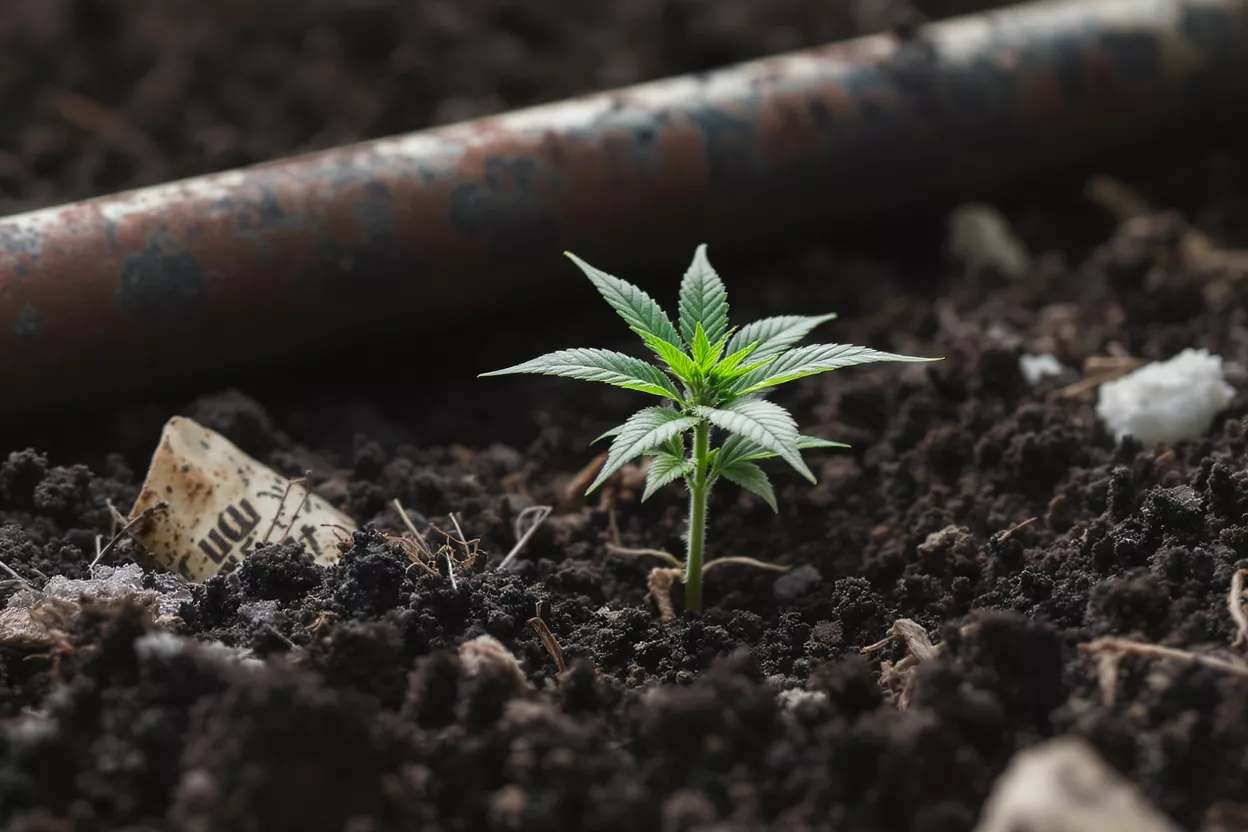
The journey of heavy metals into cannabis almost always begins in the growing environment. Plants draw water and nutrients up through their roots, and if the soil or growing medium contains metals, the roots pull those elements in alongside everything else. This is the single largest source of contamination and the hardest to reverse once it has occurred.
Contaminated soil and water: Agricultural land that previously hosted industrial activity, mining, or heavy pesticide use can carry residual lead, arsenic, and cadmium for decades. Irrigation water drawn from polluted sources adds another pathway, and groundwater near old infrastructure can carry dissolved metals that the plant readily absorbs.
Fertilizers and amendments: Some phosphate fertilizers and low-grade soil amendments contain trace heavy metals as impurities. When growers apply these repeatedly over a season, the metals can build up in the root zone and transfer into plant tissue, particularly cadmium, which moves easily through the food chain.
Beyond cultivation, contamination can also creep in during processing. Grinding equipment, extraction hardware, storage containers, and even some packaging can introduce trace metals if they are made from low-quality materials. This is why a comprehensive view of contamination follows the product from seed all the way to the final sealed package.
Which Heavy Metals Matter Most
While the periodic table contains many metallic elements, cannabis testing focuses on a short list of the most toxic and most likely to appear. These four are often called the "big four" in cannabis and agricultural testing, and nearly every regulatory framework requires screening for them specifically.
- 🜂 Lead: A potent neurotoxin with no safe level of exposure, lead accumulates in bones and soft tissue and is especially harmful to children and developing nervous systems.
- ⚗️ Arsenic: A known carcinogen that occurs naturally in soil and water; chronic exposure is linked to skin, lung, and bladder cancers.
- 🧪 Cadmium: Highly mobile in plants and damaging to the kidneys over time, cadmium is one of the metals cannabis absorbs most efficiently.
- 🌡️ Mercury: A neurotoxin that affects the brain and kidneys, mercury is less common in cannabis but still screened due to its severe toxicity.
Some testing panels extend beyond these four to include chromium, nickel, copper, or antimony, especially for vape products where hardware can be a source. The exact list depends on the jurisdiction and the product type, but the big four remain the universal baseline that every legal market enforces.
It is worth noting that toxicity is dose-dependent and cumulative. A single exposure to a trace amount may cause no measurable harm, but because these metals are not excreted efficiently, repeated exposure through regular consumption is the real danger. This cumulative quality is precisely why regulators set such conservative limits.
Health Risks of Heavy Metals in Cannabis
The health consequences of heavy metal exposure depend on the specific metal, the dose, and the duration of exposure. What unites them is that the damage is often slow, cumulative, and irreversible, building quietly over months or years of repeated low-level intake rather than appearing after a single use.
Neurological effects: Lead and mercury are classic neurotoxins. Long-term exposure can impair memory, concentration, and motor function, and in developing brains it can cause permanent deficits. This is one reason medical patients who consume daily warrant particular protection through rigorous testing.
Organ damage: Cadmium concentrates in the kidneys and can lead to chronic kidney disease, while arsenic affects multiple organ systems and is firmly classified as a human carcinogen. Because cannabis can be used multiple times per day, even small per-dose amounts add up faster than with occasional dietary exposure.
Inhalation deserves special concern. When cannabis is smoked or vaporized, heavy metals can be carried into the deep tissue of the lungs, where they are absorbed efficiently into the bloodstream. This route can be more direct than ingestion, which is why vape products in particular face intense scrutiny over metal content from both plant and hardware sources.

How Heavy Metals Testing Works
Detecting heavy metals at the trace levels regulators care about requires sophisticated laboratory instrumentation. The industry standard is ICP-MS, or inductively coupled plasma mass spectrometry, a technique capable of measuring metals down to parts per billion—concentrations far too small to see, smell, or taste.
Sample preparation: Before analysis, a cannabis sample is typically digested in strong acid and heat, breaking the plant material down into a liquid solution. This releases any bound metals so the instrument can measure the total amount present, not just what sits on the surface.
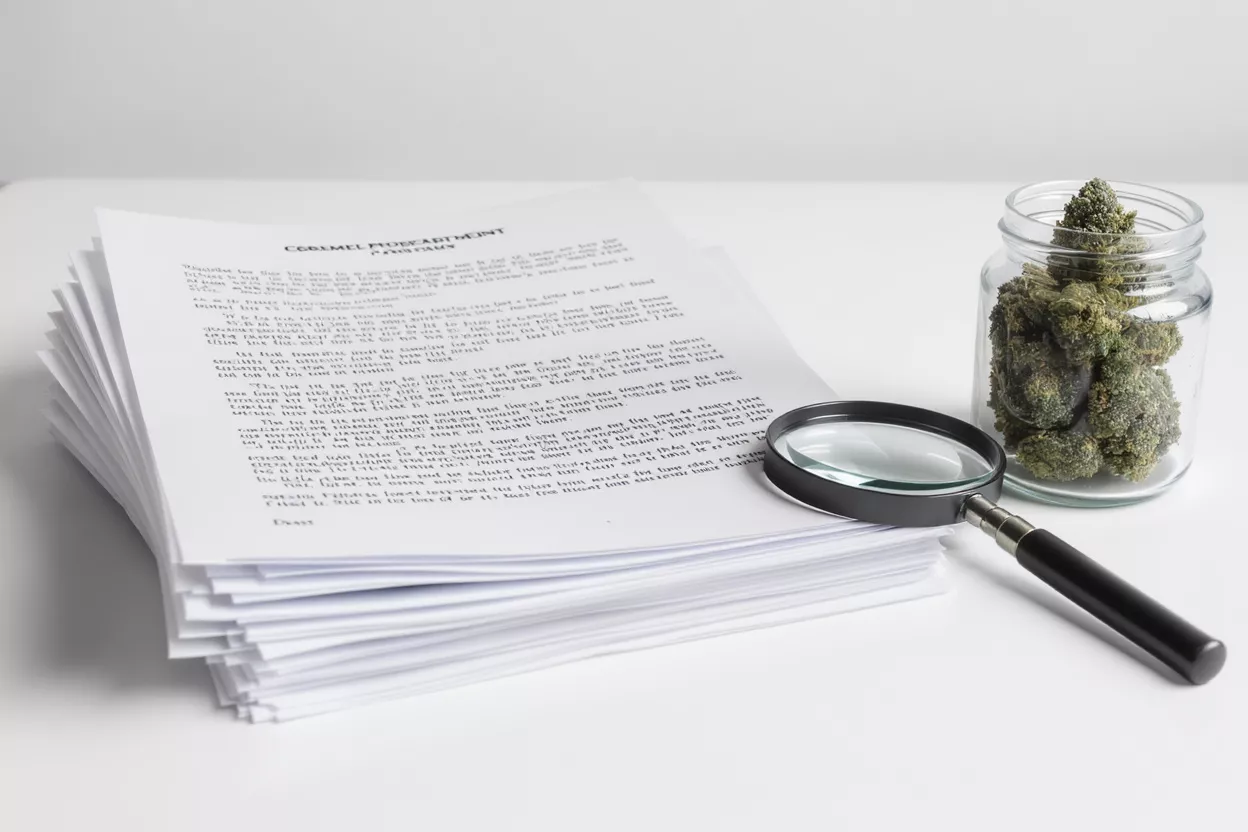
Reading the certificate of analysis: Reputable producers publish a Certificate of Analysis that lists each metal tested, the amount detected, and the regulatory limit. A "pass" means every metal fell below its action limit. Consumers should look for results expressed in clear units and a recent test date tied to the specific batch they are buying.
Testing is performed on a batch basis, meaning each harvest or production lot is sampled and analyzed separately. This matters because contamination is not uniform; one batch may pass cleanly while another from different soil or inputs fails. Batch-level transparency is the backbone of a trustworthy supply chain.
Heavy Metals Regulations and Limits
Legal cannabis markets impose strict maximum limits on heavy metals, and products that exceed them cannot be sold. These limits are usually expressed in micrograms per gram or parts per million, and they are intentionally conservative to protect even the heaviest daily consumers.
In regulated markets such as Canada, mandatory testing for the big four is a condition of licensing, and federal oversight ensures consistency across producers. The limits often differ by consumption route, with inhaled products sometimes held to tighter standards than ingested ones because of the efficiency of lung absorption.
- 📋 Mandatory screening: Lead, arsenic, cadmium, and mercury must be tested in every batch before a product reaches shelves.
- 🔬 Action limits: Each metal has a defined ceiling; exceeding any one of them triggers a failed result and prevents sale.
- 📦 Batch traceability: Every tested lot is tracked so a failing result can be isolated and recalled without affecting clean inventory.
- 🏷️ Consumer access: In transparent markets, the test data is made available so buyers can verify safety independently.
Regulations continue to evolve as analytical methods improve and as more is learned about vape hardware contamination. The general trend is toward tighter limits and broader metal panels, reflecting a precautionary approach that prioritizes consumer safety over producer convenience.
Why Cannabis Is a Hyperaccumulator
One of the most important facts about cannabis safety is that the plant is a natural hyperaccumulator, meaning it absorbs and concentrates substances from its environment far more efficiently than most crops. This trait was actually studied for phytoremediation—using plants to clean polluted soil—because hemp can pull metals out of the ground so effectively.
That same efficiency becomes a liability when the goal is to produce a consumable product. A hemp or cannabis plant grown in marginal or contaminated soil will draw metals up into its leaves, stems, and flowers, concentrating them in the very material that ends up being smoked or extracted. The plant essentially acts as a sponge for whatever is in its root zone.
Implications for concentrates: Because extraction concentrates the desirable compounds from large amounts of plant material, it can also concentrate contaminants. A flower that passes testing might, in theory, produce a concentrate with elevated metal levels if the starting material carried a borderline load. This is why concentrates are tested as finished products, not just as raw flower.
Vape Hardware and Heavy Metals
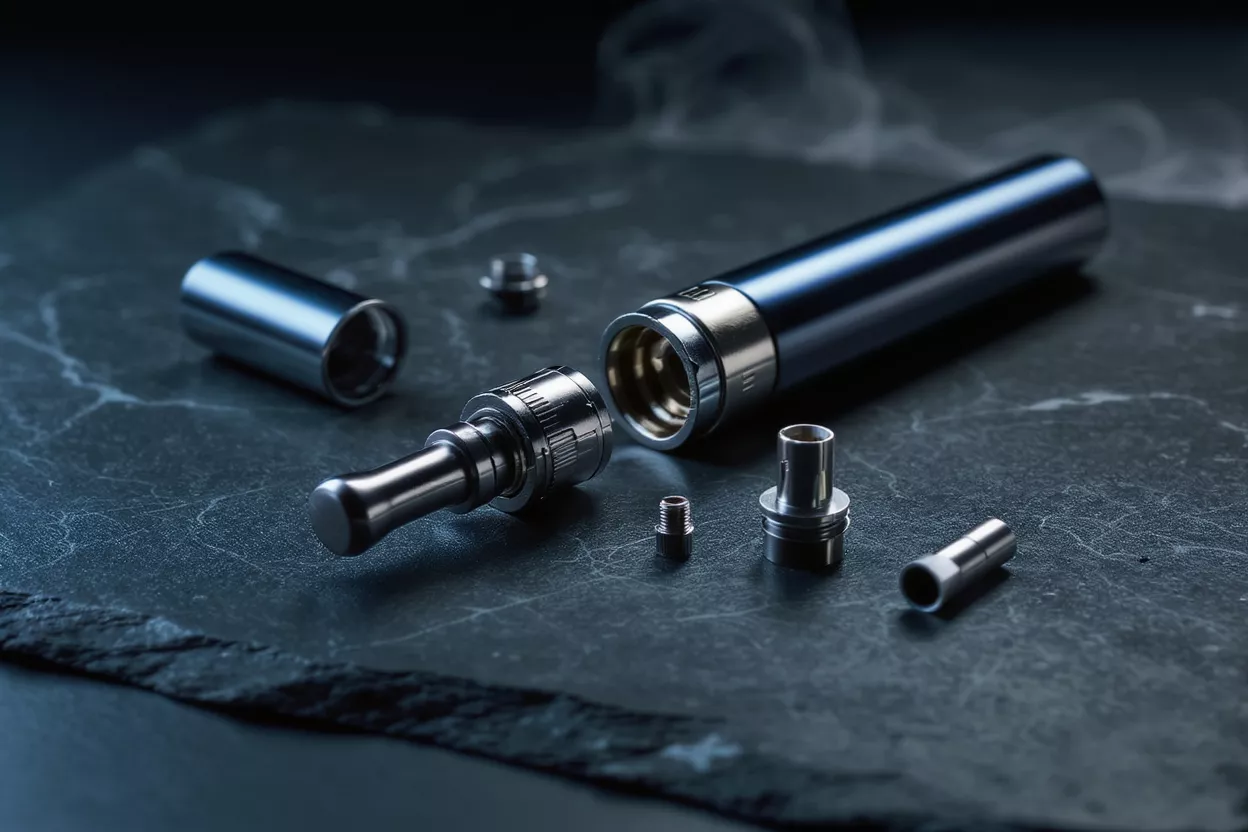
For vaporizer products, heavy metal risk does not stop at the plant. The hardware itself—heating coils, wicks, solder joints, and metal housings—can leach metals into the oil, especially when heated repeatedly over the life of the device. This has made vape cartridges a focal point of contamination research.
Common hardware-derived metals: Lead can migrate from low-quality alloys and solder, while nickel and chromium may come from heating elements. The metal can transfer slowly into the oil during storage and then accelerate when the coil is energized and hot, meaning a freshly filled cartridge and a used one may test differently.
This dynamic is why quality vape manufacturers invest in medical-grade or food-grade components and test the filled, finished cartridge rather than just the oil before filling. A clean distillate placed into a cheap cartridge can still end up delivering metals to the user, so finished-product testing is the only meaningful safeguard.
Consumers can reduce their exposure by choosing products from brands that publish hardware specifications and finished-cartridge test data, and by avoiding unregulated or counterfeit cartridges entirely, since those skip testing altogether and frequently use the cheapest available components.
How to Avoid Heavy Metals in Cannabis
The good news for consumers is that avoiding heavy metals is largely a matter of buying from the regulated market and reading the available documentation. The vast majority of contamination problems occur in unregulated products that never face mandatory testing.
Check the Certificate of Analysis: Before buying, look for batch-specific test results that show heavy metals passing below their limits. A product that cannot produce a recent COA tied to its batch should be treated with caution, regardless of how it looks or how it is marketed.
Buy from licensed, transparent sources: Regulated producers operate under mandatory testing rules, and the best ones go beyond the minimum by sharing full results. Sourcing from a trusted retailer that vets its suppliers dramatically lowers your risk compared to grey-market alternatives.
- ✅ Prefer tested batches: Choose products with a published, recent Certificate of Analysis covering the big four metals.
- 🌱 Favor clean cultivation: Producers who control soil, water, and inputs reduce contamination at the source rather than hoping to catch it later.
- 🔌 Scrutinize vape hardware: For cartridges, look for finished-product testing and reputable, food-grade components.
- 🚫 Skip the unregulated market: Counterfeit and grey-market goods bypass testing entirely and carry the highest contamination risk.
By combining these habits, consumers can enjoy cannabis with confidence. The testing infrastructure exists precisely so that you do not have to gamble on safety—you simply have to choose products that participate in it honestly.
Heavy Metals FAQs for Consumers
A few questions come up repeatedly when consumers first learn that heavy metals can appear in cannabis. Addressing them directly helps separate genuine risk from unnecessary alarm.
Can you taste or smell heavy metals? No. Heavy metal contamination is completely undetectable by the senses. There is no flavor, aroma, or visual cue that signals a problem, which is exactly why laboratory testing is the only reliable method of detection.
Does organic cannabis mean it is metal-free? Not necessarily. Organic certification governs pesticide and fertilizer practices but does not guarantee clean soil. A field can be free of synthetic chemicals yet still carry legacy metals from past industrial use, so testing remains essential even for organically grown product.
Heavy metals represent one of the most important and least visible aspects of cannabis safety. Because the plant absorbs metals so readily, because the contaminants are invisible and cumulative, and because consumption routes deliver them efficiently into the body, this category of testing protects consumers in a way nothing else can. The key takeaway is simple: buy from regulated, transparent sources, read the Certificate of Analysis, and treat any product that cannot prove its safety with healthy skepticism. With those habits in place, the risk becomes manageable and the experience stays clean.



Comments