


Boomers
Discover what boomers are, how psilocybin and cannabis interact, and tips for a safe experience.
What Are Boomers in Cannabis Culture
Boomers is a slang term that refers to the combined use of magic mushrooms and cannabis, a pairing that has become a recognizable practice in psychedelic and cannabis communities alike. The word itself nods to the explosive, expansive nature of the experience — the way visuals "boom" into vivid life when psilocybin and THC meet in the bloodstream. For many enthusiasts, this combination represents a deliberate attempt to deepen and color the mushroom journey rather than simply layering two substances at random.
While cannabis on its own produces a familiar relaxed or euphoric headspace, psilocybin mushrooms operate on an entirely different level, altering perception, mood, and thought patterns through serotonin receptor activity. When people talk about boomers, they are describing the synergy between these two — a practice rooted in curiosity, ritual, and the long human history of combining plant medicines.
Understanding boomers means understanding both halves of the equation. This guide breaks down where the term comes from, how the two substances interact, what the experience actually feels like, and how to approach it thoughtfully if you choose to explore it. The goal here is education and harm reduction, not encouragement to use anything illegally or irresponsibly.
Where the Term Boomers Comes From
The slang lineage of boomers traces back to psychedelic subculture, where "shrooms," "boomers," and "caps" all became affectionate shorthand for psilocybin-containing fungi. Over time, the word drifted to describe not just the mushrooms themselves but the specific act of pairing them with weed. Language in cannabis and psychedelic circles evolves quickly, and boomers stuck because it captured something true about the amplified, blossoming quality of the high.
It is worth noting that "boomers" can mean slightly different things depending on the community. In some regions it simply refers to magic mushrooms, full stop. In others, especially among those who blend substances intentionally, it specifically describes the mushroom-and-cannabis combination. Context matters, and the meaning has always been fluid rather than fixed.
This linguistic flexibility mirrors the broader culture surrounding psilocybin and cannabis — informal, communal, and passed along through word of mouth long before it appeared in any dictionary. Knowing the term's roots helps separate genuine harm-reduction knowledge from the noise of pop-culture mythmaking.

How Boomers and Weed Work Together
Two different neurochemical pathways are at play when boomers and weed combine. Psilocybin converts in the body to psilocin, which binds primarily to serotonin 5-HT2A receptors, producing the characteristic shifts in perception, emotion, and cognition. Cannabis, meanwhile, acts on the endocannabinoid system, with THC binding to CB1 receptors concentrated in the brain. These systems are separate but not isolated, and they influence overlapping circuits governing mood and sensory processing.
Many users report that cannabis intensifies the psilocybin experience, particularly the visual component. A modest amount of weed taken near the peak of a mushroom trip can deepen patterns, saturate colors, and heighten the sense of immersion. This is partly subjective and partly pharmacological — THC may potentiate certain effects while also lowering the threshold for sensory absorption.
Timing plays a major role in how the two interact. Smoking cannabis early in a come-up can ease nausea, a common psilocybin side effect, while using it during the peak tends to amplify intensity. The combination is not strictly additive; it is more like two instruments harmonizing, where the result depends heavily on dose, sequence, and the individual's body chemistry.
Hippie Flipping vs Candyflipping Explained
Hippie flipping is the specific term for combining magic mushrooms with MDMA, and it is frequently confused with boomers. The two are distinct: boomers pairs psilocybin with cannabis, while hippie flipping introduces an entirely different stimulant-empathogen into the mix. The confusion is understandable given how interchangeably these slang terms get tossed around online.
Candyflipping, by contrast, refers to combining LSD with MDMA. None of these involve cannabis as the primary partner, which is what sets boomers apart. Here is a quick reference to keep the terminology straight:
- 🍄 Boomers: magic mushrooms combined with cannabis, prized for enhanced visuals and a mellow body feel.
- 🌈 Hippie flipping: magic mushrooms combined with MDMA, blending psychedelia with empathogenic warmth.
- 🍬 Candyflipping: LSD combined with MDMA, layering long psychedelic visuals over euphoric energy.
- 🌿 Mushroom and weed: the everyday phrasing many people use when they simply mean boomers.
Knowing these distinctions matters for safety as much as vocabulary. Each combination carries a different risk profile, interacts with the body differently, and demands its own preparation. Mislabeling them can lead someone to apply the wrong harm-reduction advice to a very different chemical situation.
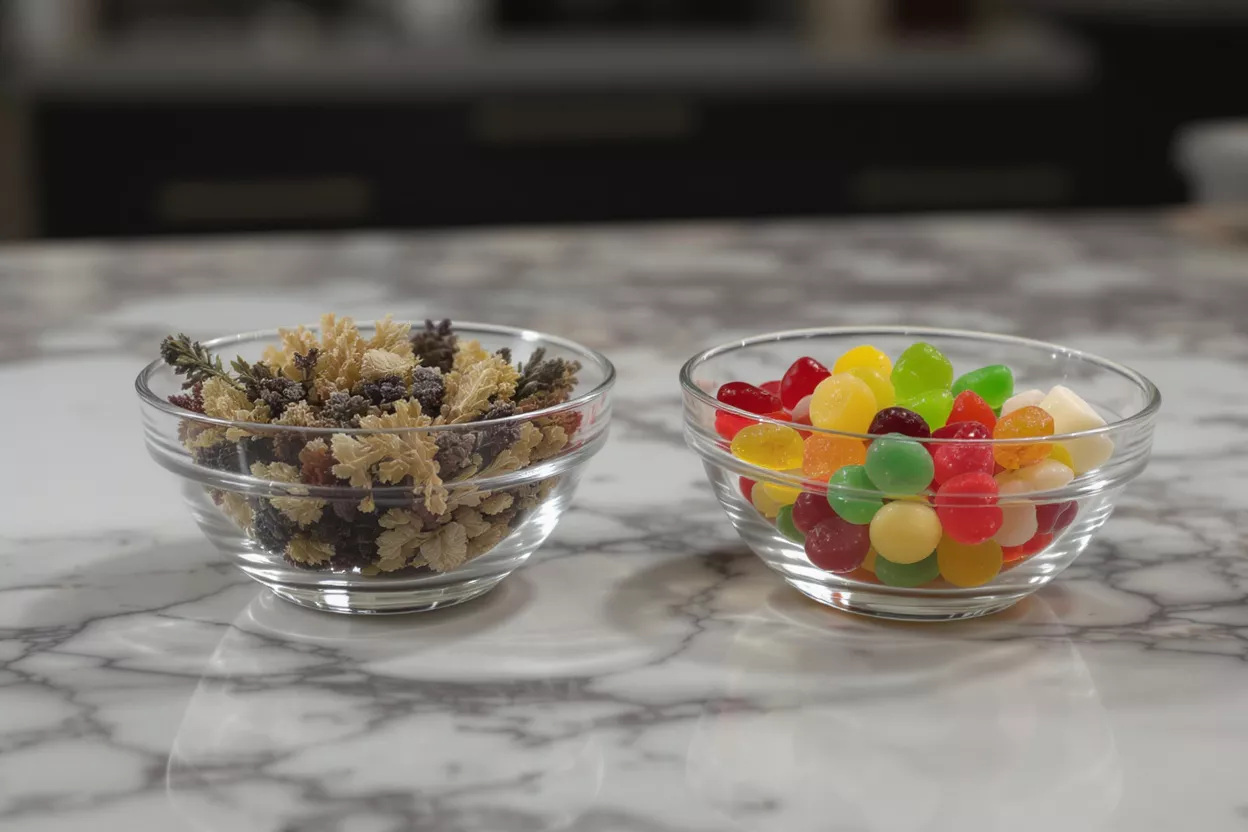
What Do Boomers Feel Like
The sensory amplification is what most people describe first. Colors appear richer, geometric patterns gain depth, and the breathing, flowing quality of a mushroom trip becomes more pronounced when cannabis is layered in. Music often feels three-dimensional, and the boundary between observer and experience can soften in ways that feel profound rather than disorienting.
Beyond the visual layer, boomers tend to bring a contemplative, introspective tone. Psilocybin already encourages reflection and emotional openness, and cannabis can either soothe or sharpen that depending on the strain and dose. Indica-leaning cannabis often adds a grounded, bodily heaviness, while sativa-leaning varieties may push the experience toward racing thoughts — a reason many experienced users favor calming strains for this pairing.
Not every effect is gentle. Because cannabis can amplify anxiety and paranoia in some people, it has the potential to magnify a difficult mushroom experience just as easily as a pleasant one. The same synergy that deepens awe can deepen unease, which is why mindset and dosing carry so much weight with boomers specifically.
Boomers Dosing Guide for Beginners
Start low and go slow is the cardinal rule for boomers, and it applies to both substances independently. A beginner-friendly psilocybin dose generally falls between one and two grams of dried mushrooms, which is enough to feel meaningful effects without overwhelming a first-timer. Layering cannabis on top means the effective intensity climbs, so a smaller mushroom dose is wise when weed is involved.
Cannabis dosing should be conservative and deliberate. A single small inhalation can be enough to shift a mushroom trip noticeably, so there is rarely a reason to consume heavily. Many seasoned users wait until they understand where the mushroom experience is heading before adding any cannabis at all, treating it as a precise tool rather than a constant companion.
Here is a general framework to consider, keeping individual tolerance and body chemistry in mind:
- 🍄 Microdose pairing: 0.1–0.3g psilocybin with a tiny amount of cannabis for a subtle mood lift.
- 🌗 Light experience: 1–1.5g psilocybin, cannabis introduced only after the come-up settles.
- 🌕 Moderate journey: 1.5–2.5g psilocybin, a single small cannabis dose near the peak for enhanced visuals.
- ⚠️ Experienced only: higher doses demand a sitter, planning, and prior solo experience with each substance.

Are Boomers Safe to Combine
Physiological safety for boomers is relatively favorable compared to many drug combinations, because neither psilocybin nor cannabis is associated with the kind of acute organ toxicity seen with harder substances. Psilocybin has a notably high physiological safety margin, and cannabis is not known to be lethal in normal consumption. That said, "physiologically tolerable" is not the same as "risk-free."
The primary risks with boomers are psychological. Cannabis can intensify anxiety, paranoia, and disorientation, and when those feelings are already heightened by psilocybin, the result can be a challenging or frightening episode. People with a personal or family history of psychosis, schizophrenia, or severe anxiety disorders should approach psychedelics with extreme caution or avoid them entirely.
There are also practical considerations worth weighing before combining anything:
- 🧠 Mental health history: certain psychiatric conditions can be aggravated by psychedelics — consult a professional first.
- 💊 Medication interactions: SSRIs and other drugs can blunt or unpredictably alter psilocybin effects.
- 🚗 Impairment: never drive or operate machinery — judgment and coordination are profoundly affected.
- 🤝 Sober support: a trusted, sober sitter dramatically reduces risk for less experienced users.
Setting and Mindset for a Boomers Trip
Set and setting is a foundational concept in psychedelic literature, and it governs the boomers experience more than dose alone. "Set" refers to your mindset — your emotional state, expectations, and intentions going in. "Setting" is the physical and social environment around you. Both shape whether the journey tilts toward insight and wonder or toward anxiety and confusion.
A comfortable, familiar space free of unexpected interruptions is ideal. Soft lighting, curated music, water within reach, and a sense of privacy all help. Because cannabis can heighten suggestibility and sensitivity to surroundings, an unstable or chaotic environment becomes even riskier when boomers are involved than it would be with mushrooms alone.
Intention matters too. Many people approach psilocybin with a question they want to sit with, a feeling they want to process, or simply a desire for openness. Entering the experience while stressed, sleep-deprived, or emotionally raw can amplify difficult material, so most experienced users wait for a genuinely good day before exploring this combination.

Legal Status of Boomers and Psilocybin
Legality varies enormously by jurisdiction, and it is essential to understand the rules where you live. In most of the world, psilocybin mushrooms remain a controlled substance, and possession or sale can carry serious legal consequences regardless of cannabis laws in the same region. The shifting legal status of cannabis has not automatically extended to psychedelics.
That said, the landscape is changing. Several jurisdictions have decriminalized psilocybin or established supervised therapeutic frameworks, reflecting a wave of renewed scientific interest in psychedelic-assisted therapy. Research institutions are actively studying psilocybin for depression, anxiety, and addiction, and these developments are gradually reshaping policy in some areas.
Because cannabis and psilocybin occupy different legal categories almost everywhere, combining them does not simplify anything legally. Anyone considering boomers should research current local law carefully and recognize that this guide is educational — it is not legal advice, and nothing here endorses breaking the laws that apply to you.
Tips for a First-Time Boomers Experience
Experience each substance separately first before ever combining them. Knowing how your body and mind respond to psilocybin on its own, and how cannabis affects you independently, gives you a baseline to work from. Jumping straight into boomers without that foundation makes it far harder to know what is causing what if something feels off.
When you do combine them, let the mushrooms lead. Take your psilocybin dose, wait through the come-up, and only consider adding a small amount of cannabis once you understand the direction the trip is taking. Adding weed too early or too heavily is the most common way a pleasant journey turns uncomfortable, so restraint genuinely pays off here.
Above all, treat the experience with respect and patience. Boomers can offer moments of genuine beauty, introspection, and creative clarity, but they reward preparation and humility far more than bravado. Start small, stay safe, keep a sober friend nearby, and give yourself a full day with nothing else scheduled.
Boomers sit at the intersection of two of humanity's oldest plant allies, and the combination of magic mushrooms and cannabis continues to fascinate curious minds for good reason. Approached carelessly, the pairing can amplify anxiety and disorientation; approached with knowledge, intention, and respect for dosing, it offers a uniquely vivid and reflective experience. Understand the terminology, honor set and setting, know your local laws, and always prioritize harm reduction over intensity. The most rewarding journeys are the ones you prepare for thoughtfully.
Comments