


Cottonmouth
Cottonmouth got you parched?
What Is Cottonmouth from Cannabis?
Cottonmouth is the casual name for the dry, sticky, cotton-like sensation that takes over your mouth after consuming cannabis. Almost anyone who has used THC-rich flower, edibles, or concentrates has felt it — that uncomfortable parched feeling that makes you reach for the nearest glass of water. In clinical terms, this experience is called xerostomia, a reduction in saliva production that leaves the oral tissues feeling dry and tacky.
Despite how common it is, cottonmouth remains one of the most misunderstood side effects of cannabis. Many people assume it is caused by the smoke itself drying out the mouth, but the real mechanism is rooted in how cannabinoids interact with your body at a cellular level. The good news is that cottonmouth is temporary, harmless in most cases, and entirely manageable once you understand what is actually happening.
Understanding cottonmouth matters because it shapes the overall comfort of your cannabis experience. Whether you consume for relaxation, sleep, or symptom relief, knowing why your mouth dries out — and how to prevent it — lets you stay focused on the effects you actually want rather than the nagging discomfort of a desert-dry tongue.
Why Does Cannabis Cause Cottonmouth?
The endocannabinoid system holds the answer. Your salivary glands — particularly the submandibular glands that produce the majority of your saliva — are dotted with cannabinoid receptors known as CB1 and CB2. When THC enters your bloodstream and binds to these receptors, it disrupts the normal signaling that tells your glands to produce saliva. The result is a sudden drop in salivary flow that creates that signature dry, sticky feeling.
It is a nervous system response, not dehydration. Research published in studies on the endocannabinoid system has shown that the submandibular glands rely on signals from the parasympathetic nervous system to keep saliva flowing. THC essentially interrupts these messages by activating the cannabinoid receptors located on the glands themselves. This is why drinking gallons of water beforehand does not fully prevent cottonmouth — the issue is signaling, not fluid levels.
This receptor interaction explains why cottonmouth occurs regardless of whether you smoke, vape, or eat your cannabis. The smoke and heat of combustion can certainly add to the dryness, but they are not the root cause. Even THC-infused edibles, which involve no inhalation at all, can leave you reaching for water.
Common Cottonmouth Symptoms to Recognize
Cottonmouth presents in ways that go beyond simply feeling thirsty. The hallmark symptom is a persistent dryness across the tongue, gums, and inner cheeks, often accompanied by a sticky or tacky texture that makes speaking feel awkward. Some people describe it as having a mouthful of cotton balls — hence the colorful nickname.
Beyond dryness, several related sensations commonly appear together. Recognizing them helps you confirm that cottonmouth, rather than something else, is the culprit.
- 🌵 Sticky tongue and gums: A tacky coating that makes your tongue cling to the roof of your mouth.
- 💬 Difficulty speaking: Words can feel slurred or effortful when saliva is scarce.
- 🥤 Persistent thirst: An urge to drink that does not fully resolve even after sipping water.
- 👅 Altered taste: Foods and flavors may seem muted or slightly off until saliva returns.
- 😮 Mild bad breath: Reduced saliva allows odor-causing bacteria to linger longer.
These symptoms typically fade as the cannabis effects wear off and your salivary glands resume normal function. For most users, the entire episode lasts only as long as the high itself, making it more of a minor inconvenience than a genuine concern.
Does Cottonmouth Depend on Consumption Method?
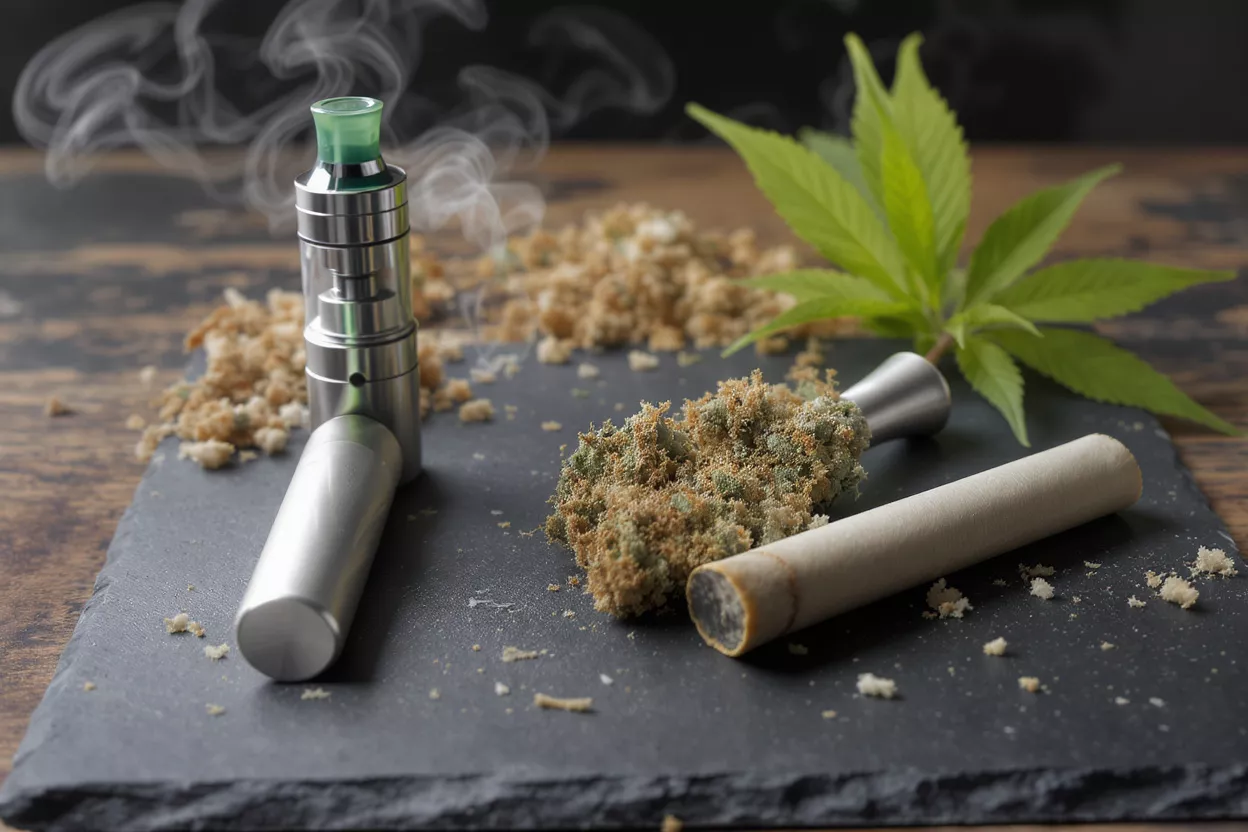
Inhaled cannabis tends to feel the driest. Smoking and vaping deliver THC rapidly while also exposing the mouth to warm, dry air and combustion byproducts. This combination produces an immediate and pronounced cottonmouth that hits within minutes. The heat strips moisture from oral tissues even as the THC reduces saliva production, creating a double effect.
Edibles cause cottonmouth too — just differently. Because edibles bypass the lungs entirely, many newcomers are surprised to feel dry-mouthed after a gummy or infused beverage. The dryness sets in more gradually as the THC is metabolized and distributed through the bloodstream, but the underlying receptor mechanism is identical. The onset is slower and the sensation can last longer because edible effects persist for several hours.
Tinctures, capsules, and concentrates all share the same potential, with intensity scaling roughly with the amount of THC consumed. Higher-potency products produce stronger cottonmouth because more cannabinoids are available to bind to the receptors in your salivary glands. Choosing a balanced product with CBD alongside THC may slightly soften the effect for some users.
How to Prevent Cottonmouth Before It Starts
Prevention is far easier than cure when it comes to cottonmouth. Since the dryness stems from reduced saliva signaling rather than dehydration, the goal is to keep your mouth moist and your salivary glands stimulated throughout your session. A little preparation goes a long way toward a more comfortable experience.
Hydrate strategically, not just heavily. Drinking water before, during, and after consumption keeps your tissues moist even when saliva flow dips. Sipping consistently is more effective than chugging a large amount at once, because steady hydration maintains comfort across the entire duration of the effects.
Stimulating saliva production directly can also blunt the worst of the dryness. Consider these simple preventative habits before you light up or eat that edible:
- 💧 Pre-hydrate: Drink a full glass of water 20–30 minutes before consuming.
- 🍬 Keep sugar-free candy handy: Sucking on a hard candy stimulates the salivary glands.
- 🍋 Try citrus or tart flavors: Sour tastes trigger a natural saliva response.
- 🚭 Limit alcohol and caffeine: Both are diuretics that worsen overall dryness.
- 🌬️ Use a humidifier: Moist air helps if you are consuming indoors in a dry climate.
Best Remedies for Cottonmouth Relief
When cottonmouth has already set in, several proven remedies can restore comfort quickly. The key is stimulating saliva while replenishing moisture, addressing both the symptom and the cause simultaneously. Most relief methods are inexpensive and likely already in your kitchen.
Water is the first line of defense, but not the only one. While plain water rehydrates dry tissues, beverages and foods that prompt your glands to work can be even more effective. Chewing gum, sucking on lozenges, or eating juicy fruits like watermelon and oranges all encourage saliva production while adding hydration at the same time.
Demulcent drinks coat and soothe. Beverages with a slightly thicker texture — such as herbal teas with honey or milk-based drinks — coat the mouth and provide longer-lasting relief than water alone. Many cannabis users also swear by tart juices, which combine hydration with the saliva-triggering effect of sour flavors. Avoid sugary sodas, which can leave the mouth feeling stickier once the fizz fades.

Is Cottonmouth Harmful to Your Health?
For the vast majority of people, cottonmouth is a harmless and temporary inconvenience. Once the cannabis effects subside, your salivary glands resume normal function and any dryness resolves on its own. There is no evidence that occasional cottonmouth causes lasting damage to a healthy mouth.
That said, saliva plays an important protective role in your oral cavity. It neutralizes acids, washes away food particles, and contains antimicrobial compounds that keep bacteria in check. Prolonged or frequently repeated dry mouth — the kind that might occur with very heavy daily use — can theoretically reduce these protective benefits over time if oral hygiene is neglected.
The practical takeaway is that cottonmouth itself is not dangerous, but the conditions it creates warrant basic attention. Staying hydrated and maintaining good dental habits ensures that the temporary dryness never has a chance to contribute to bigger problems down the line.
Cottonmouth and Long-Term Oral Health
Saliva is your mouth's natural defense system. Beyond keeping things moist, saliva buffers acids, remineralizes tooth enamel, and physically rinses away the debris that bacteria feed on. When saliva levels drop repeatedly, the mouth becomes a slightly more hospitable environment for plaque and the bacteria that contribute to cavities and gum irritation.
This does not mean cannabis users are destined for dental trouble. The risk only becomes meaningful for those who experience chronic dry mouth and skip basic care. Frequent consumers can offset any concern with a few mindful habits that keep saliva flowing and protect the enamel.
- 🪥 Brush and floss consistently: Twice-daily brushing removes plaque that thrives in dry conditions.
- 💦 Stay hydrated all day: Ongoing moisture supports natural saliva recovery between sessions.
- 🦷 Use fluoride products: Fluoride toothpaste and rinses strengthen enamel against acid wear.
- 🍬 Chew xylitol gum: It stimulates saliva and actively discourages cavity-causing bacteria.
- 🩺 Keep regular dental visits: Professional cleanings catch any early issues before they grow.
With these straightforward precautions, even daily cannabis users can keep their oral health in excellent shape while enjoying the effects they value. Cottonmouth becomes a minor footnote rather than a genuine risk.
Who Experiences Cottonmouth the Most?
Cottonmouth affects nearly everyone who consumes THC, but its intensity varies widely from person to person. The dose and potency of the product play the largest role — high-THC concentrates and edibles tend to produce stronger, longer-lasting dryness than a small puff of low-potency flower. The more cannabinoids in circulation, the more receptors get activated in your salivary glands.
Individual physiology shapes the experience. Some people naturally produce more saliva than others, and baseline hydration, age, and medications can all influence how dry the mouth gets. Anyone already taking medications that cause dry mouth as a side effect — such as certain antihistamines or antidepressants — may notice cottonmouth more sharply when cannabis is added to the mix.
Frequency of use also matters, though not always in the way people expect. Regular consumers sometimes report milder cottonmouth as their bodies grow accustomed to cannabis, while occasional users may feel it more acutely. Regardless of where you fall on that spectrum, the prevention and relief strategies remain the same and work for nearly everyone.

Cottonmouth Myths and Facts
Plenty of misinformation surrounds cottonmouth, much of it passed along through casual conversation rather than evidence. One of the most persistent myths is that cottonmouth is simply a sign of dehydration that water alone will fix. While water helps, the dryness originates in the salivary glands' response to THC, which is why pre-hydrating does not completely prevent it.
Another myth: only smoking causes cottonmouth. As covered earlier, edibles, tinctures, and capsules all trigger the same dry-mouth response because the cause is cannabinoid receptor activation, not smoke exposure. The smoke can intensify the feeling, but it is never the sole driver. Believing otherwise leads many edible users to be caught off guard.
A final misconception is that cottonmouth indicates something is wrong or that the cannabis is low quality. In reality, dry mouth is a normal pharmacological effect of THC and reflects nothing about the product's purity or grade. Whether you are using premium flower or a carefully dosed gummy, a little dryness is simply part of how your body responds to cannabinoids.
In summary, cottonmouth is a near-universal and entirely manageable side effect of cannabis use, driven by THC's interaction with cannabinoid receptors in your salivary glands rather than by dehydration or smoke. It announces itself through dryness, stickiness, and persistent thirst, but it resolves on its own as the effects fade. By hydrating strategically, stimulating saliva with tart flavors or sugar-free candy, and maintaining solid oral hygiene, you can keep cottonmouth from ever interfering with your experience. Understanding the science behind it transforms a mysterious annoyance into a predictable, easily handled part of enjoying cannabis.




Comments