


Delta-8
Discover what delta-8 THC is, how it works, and what to expect.
What Is Delta-8 THC
Delta-8 has quietly become one of the most talked-about cannabinoids of the past few years, occupying a curious middle ground between full-strength cannabis and the non-intoxicating wellness products built around CBD. For people who want a gentle lift without the racing thoughts that high-potency products sometimes bring, it has become a genuinely appealing option worth understanding.
Chemically speaking, Delta-8 is an isomer of the more familiar delta-9 THC. The two molecules share an almost identical structure, separated only by the position of a single double bond on the carbon chain. That tiny shift — from the eighth carbon to the ninth — is responsible for the meaningful differences in how each compound behaves once it reaches your system.
Where it comes from naturally: Delta-8 occurs in the cannabis plant in only trace amounts, far too small to extract economically. Because of this scarcity, nearly all commercial Delta-8 is produced by converting hemp-derived CBD through a controlled chemical process. This manufacturing reality shapes everything from product quality to legality, and it is the single most important thing a new user should understand before buying.
How Delta-8 Works in the Body
Like other cannabinoids, Delta-8 interacts with the endocannabinoid system, the vast signaling network that helps regulate mood, appetite, sleep, and pain perception. It binds primarily to the CB1 receptors concentrated in the brain and central nervous system, which is why it produces noticeable psychoactive effects rather than the more subtle profile of non-intoxicating cannabinoids.
Why the effects feel milder: Delta-8 appears to bind to CB1 receptors with slightly lower affinity than delta-9. Researchers believe the altered double-bond position changes how snugly the molecule fits into the receptor, dampening the intensity of the signal. The practical result is a high that many describe as clearer-headed and less likely to tip into anxiety or paranoia.
Once ingested or inhaled, Delta-8 is metabolized largely in the liver, where enzymes convert it into related compounds before it is gradually cleared from the body. The route you choose matters a great deal: inhaled Delta-8 reaches the bloodstream within minutes, while edibles pass through digestion first, delaying onset but extending duration considerably.
Delta-8 vs Delta-9: What's the Difference
The most common question newcomers ask is how Delta-8 stacks up against conventional delta-9 THC. While they are close molecular cousins, the experience they deliver and the legal frameworks surrounding them diverge in ways that genuinely matter for the average consumer.
The clearest distinction is potency. Delta-8 is generally regarded as roughly half to two-thirds the strength of an equivalent dose of delta-9. For some users that reduction is a feature rather than a limitation, allowing them to stay functional and relaxed instead of overwhelmed.
- ⚖️ Potency: Delta-9 is markedly stronger per milligram; Delta-8 delivers a softer, more manageable intensity.
- 🧠 Mental tone: Delta-8 is frequently described as calmer and less prone to anxious edges than delta-9.
- 🌿 Source: Most Delta-8 is converted from hemp CBD, while delta-9 is typically extracted from higher-THC cannabis.
- 📜 Legal status: Hemp-derived Delta-8 sits in a different regulatory category than cannabis-derived delta-9 in many regions.
None of this makes one inherently superior. Experienced cannabis users may find Delta-8 too gentle, while those new to THC or sensitive to its stronger effects often appreciate the more forgiving ceiling it offers.
How Delta-8 Is Made From Hemp
Understanding how Delta-8 is manufactured is essential because the process directly determines product safety. Since the plant yields so little naturally, producers start with CBD extracted from legal hemp and convert it through a reaction called isomerization.
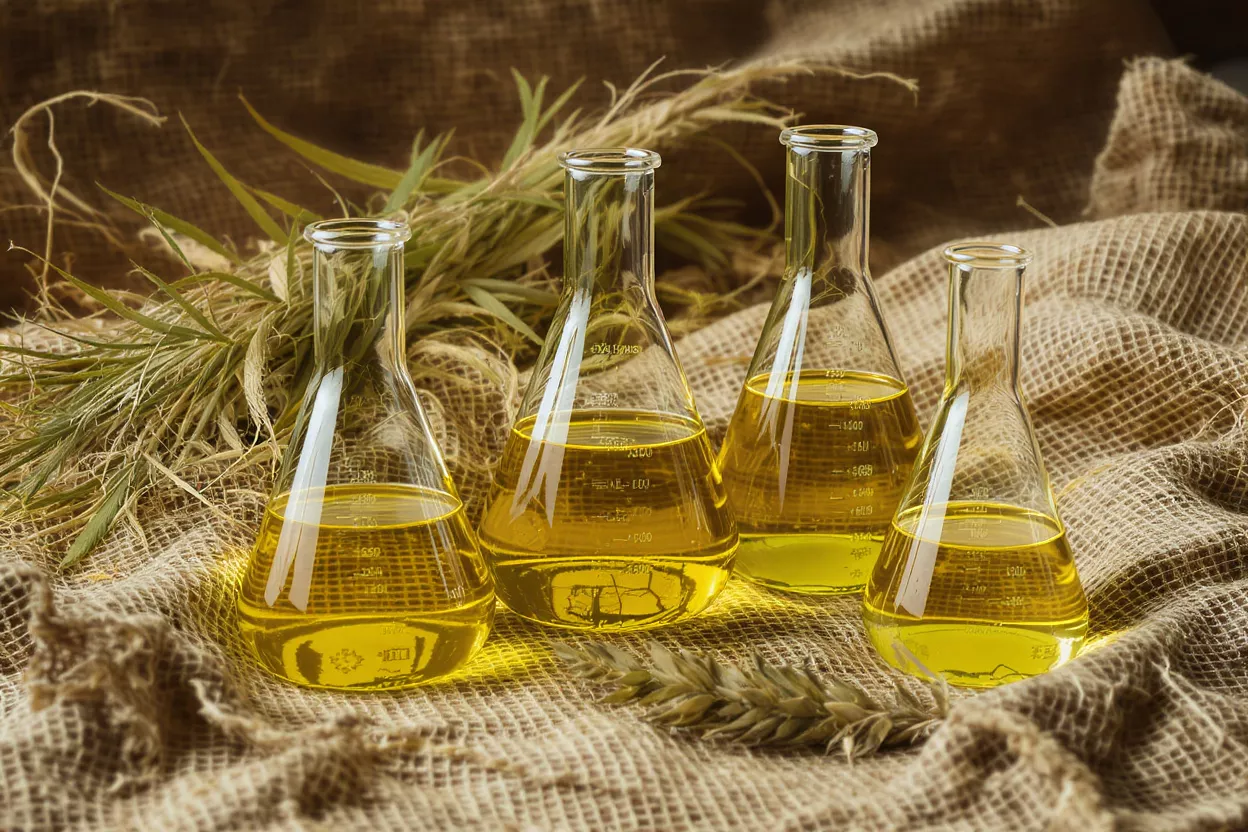
The isomerization process: Manufacturers dissolve CBD in a solvent and introduce an acid catalyst, which rearranges the molecule's structure into Delta-8. When performed by skilled chemists in a proper lab, this yields a clean, usable cannabinoid. The concern arises when the process is rushed or done carelessly, leaving behind residual acids, solvents, or unintended byproducts.
Because this conversion is a chemical synthesis rather than simple extraction, the resulting distillate must be thoroughly purified and tested. Reputable producers send their finished product to independent laboratories that verify both the cannabinoid content and the absence of harmful residues, which is why third-party testing is non-negotiable in this category.
What Delta-8 Effects Feel Like
For anyone considering their first experience, knowing what to expect removes much of the apprehension. Most users describe Delta-8 as producing a relaxed, mildly euphoric state that leans more toward body ease than intense mental stimulation.
The typical experience: Common reported effects include a sense of calm, gentle uplift in mood, mild relaxation through the limbs, and an increased appetite. Many people specifically choose Delta-8 because it tends to deliver these effects without the heavy mental fog or anxious overthinking that stronger products can trigger.
That said, individual responses vary based on body chemistry, tolerance, and dose. Onset timing depends heavily on the delivery method, and patience is the most common piece of advice seasoned users offer to newcomers.
- 😌 Relaxation: A soothing, low-key calm that settles the body without sedating heaviness at moderate doses.
- 🍽️ Appetite: A reliable nudge toward hunger, which some users seek out intentionally.
- 🙂 Mood: A gentle euphoric lift that tends to stay even rather than spiking sharply.
- 😴 Rest: Larger doses, particularly in edible form, often lean toward drowsiness later in the evening.
Types of Delta-8 Products
The market offers Delta-8 in nearly every format that cannabis enthusiasts have come to expect, and each delivery method carries its own rhythm of onset and duration. Choosing the right one depends largely on how quickly you want effects and how long you want them to last.
Inhalable options: Vape cartridges and disposable pens deliver Delta-8 rapidly, with effects arriving within minutes and tapering off over a couple of hours. They offer precise, on-demand control, making them popular among users who want to dial in exactly how much they consume.
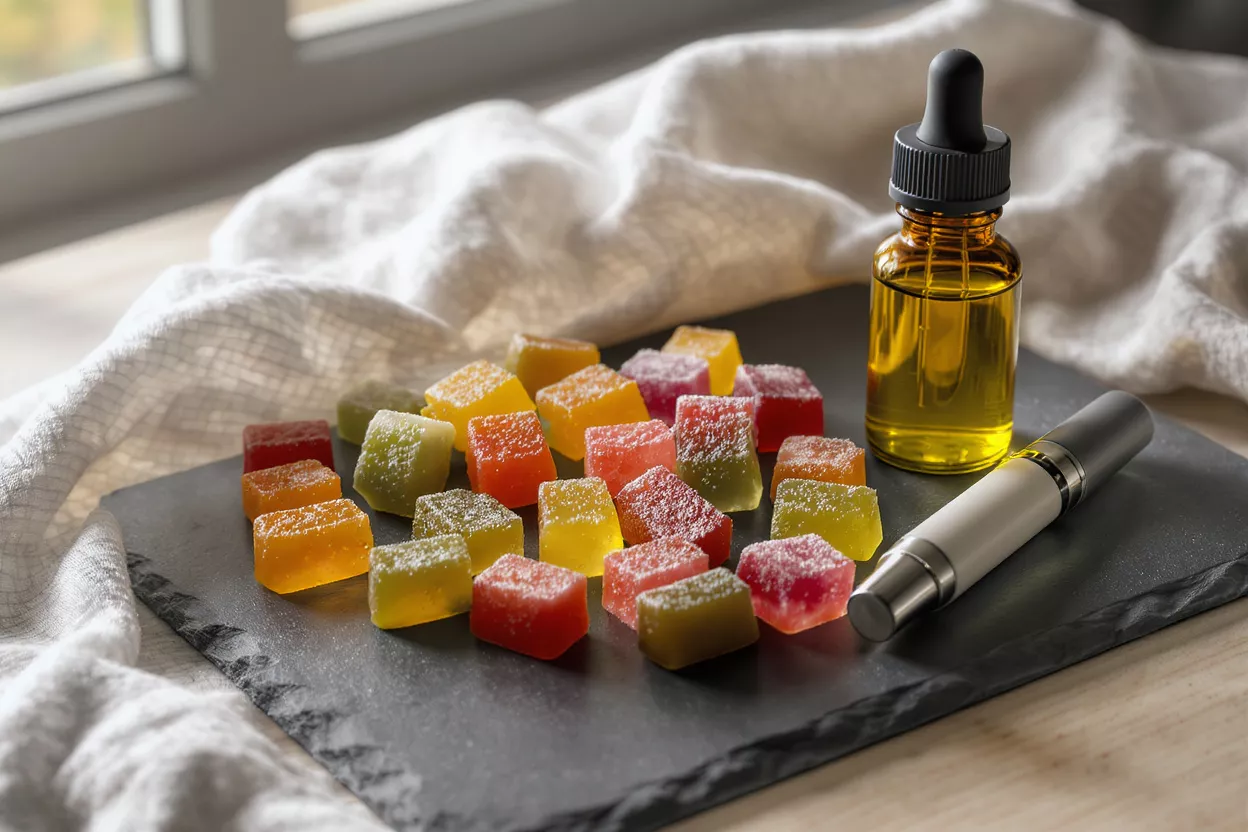
Edibles such as gummies and tinctures take the slower route through digestion, with onset ranging from thirty minutes to two hours but effects that can last well into the evening. Tinctures placed under the tongue occupy a middle ground, absorbing somewhat faster than swallowed edibles while still offering a long, even experience.
Delta-8 Dosing Guide for Beginners
Getting the dose right is the difference between a pleasant introduction and an uncomfortable one. The golden rule echoed across the cannabis community applies perfectly here: start low and go slow, giving each dose time to fully reveal itself before considering more.
Starting points by experience level: A complete beginner might begin with as little as 5 to 10 milligrams of Delta-8, while those with some cannabis tolerance often start in the 10 to 20 milligram range. Because Delta-8 is milder than delta-9, the numbers run somewhat higher than they might for traditional THC, but the same caution still applies.
- 🌱 New users: 5–10 mg is a sensible first dose; wait the full onset window before redosing.
- 🍃 Occasional users: 10–20 mg typically delivers noticeable, comfortable effects.
- 🔥 Experienced users: 25 mg and above for those with established tolerance who know their limits.
- ⏳ Patience with edibles: Always wait at least two hours before taking a second edible dose.
The most common mistake is impatience with edibles — taking a second dose because the first has not yet kicked in, then feeling both at once. Respecting the onset window prevents nearly all unpleasant overshoots.
Is Delta-8 Legal Where You Live
The legality of Delta-8 is genuinely complicated and depends heavily on where you are. Because most commercial Delta-8 is derived from hemp, it occupies a regulatory grey area created by laws that legalized hemp and its derivatives while leaving the question of converted cannabinoids open to interpretation.
Why the rules vary so widely: Some jurisdictions treat hemp-derived Delta-8 as legal under the same framework that permits CBD, while others have specifically restricted or banned it, citing its psychoactive nature. This patchwork means a product sold freely in one place may be prohibited a short drive away.
The regulatory landscape continues to shift, with new rules emerging regularly as lawmakers catch up to the market. Anyone considering Delta-8 should check the current laws in their own region before purchasing, since the situation can change and local rules always take precedence over general assumptions.

Is Delta-8 Safe to Use
Safety with Delta-8 hinges far less on the cannabinoid itself and far more on the quality of the specific product you buy. The compound has a reputation for being gentle and well-tolerated, but the manufacturing concerns discussed earlier mean that not all products on the market are created equal.
The real safety question: The primary risk is not Delta-8 itself but the contaminants that poorly made products may contain — residual solvents, leftover catalysts, or mislabeled cannabinoid content. This is precisely why purchasing only lab-tested products from transparent brands is the most important safety decision you can make.
As with any psychoactive substance, common-sense precautions apply: do not drive or operate machinery after use, keep products securely away from children and pets, and consult a healthcare provider if you are pregnant, nursing, or taking medications. Starting with a low dose also dramatically reduces the chance of an uncomfortable experience.
How to Choose Quality Delta-8
With so many products competing for attention, knowing how to separate trustworthy Delta-8 from questionable offerings is the most valuable skill a consumer can develop. The good news is that reputable brands make their quality easy to verify if you know what to look for.
What to look for before buying: The single most important marker is a current certificate of analysis from an independent laboratory, confirming both potency and purity. Beyond that, transparency about hemp sourcing, clear ingredient labeling, and an established reputation all signal a brand worth trusting with something you intend to put in your body.
Delta-8 has earned its place as a meaningful option for people seeking a softer, more manageable cannabinoid experience. By understanding how it works, respecting sensible dosing, checking your local laws, and insisting on lab-tested products, you can explore everything it offers with genuine confidence. Approached thoughtfully, it is one of the more approachable doorways into the wider world of cannabinoids available today.





Comments