


Directional airflow
Learn how directional airflow carb caps improve dabbing by spinning vapor for fuller hits.
What Is Directional Airflow in Cannabis Gear
Directional airflow describes any system that channels incoming air along a deliberate path rather than letting it enter from a single fixed opening. In the cannabis world, the term most often appears in the context of carb caps used for dabbing concentrate, where the goal is to push heat and vapor across the surface of a heated nail or banger. By steering air precisely, the user controls how the concentrate vaporizes and how that vapor reaches the lungs.
The concept borrows from basic fluid dynamics. Air moves from areas of high pressure to low pressure, and when you restrict and aim that movement through an angled hole or rotating spout, you create a focused current. That current agitates the puddle of concentrate sitting in a hot dish, spreading it thin so more of it touches the heated surface at once.
For anyone who has watched a thick dab pool in the bottom of a quartz banger and slowly chug to life, the appeal is immediate. Directional airflow is the difference between a stubborn, uneven vaporization and a smooth, swirling extraction that empties the dish completely. It is a small piece of hardware with an outsized effect on the overall session.
How Directional Airflow Works in Carb Caps
A directional airflow carb cap functions by combining two jobs into one piece of glass or quartz. First, it restricts the opening of the banger, lowering the internal pressure so concentrate vaporizes at a cooler temperature. Second, it aims the incoming air at an angle, creating a vortex that keeps the oil moving instead of letting it settle.
The vortex effect is the heart of the design. When air enters through an angled or offset hole, it spirals around the inside wall of the banger. This spinning motion drags the dab up the walls and back down, constantly exposing fresh material to the hottest zones of the quartz. The result is faster, more complete vaporization with far less waste left behind.
Pressure and temperature work together here. By capping the banger, you trap heat and reduce the boiling point of the cannabinoids and terpenes. A directional cap lets you ride a lower temperature without sacrificing vapor production, because the swirling air keeps feeding concentrate to the heat rather than relying on the dish alone to do the work.
Directional Airflow vs Static Carb Caps
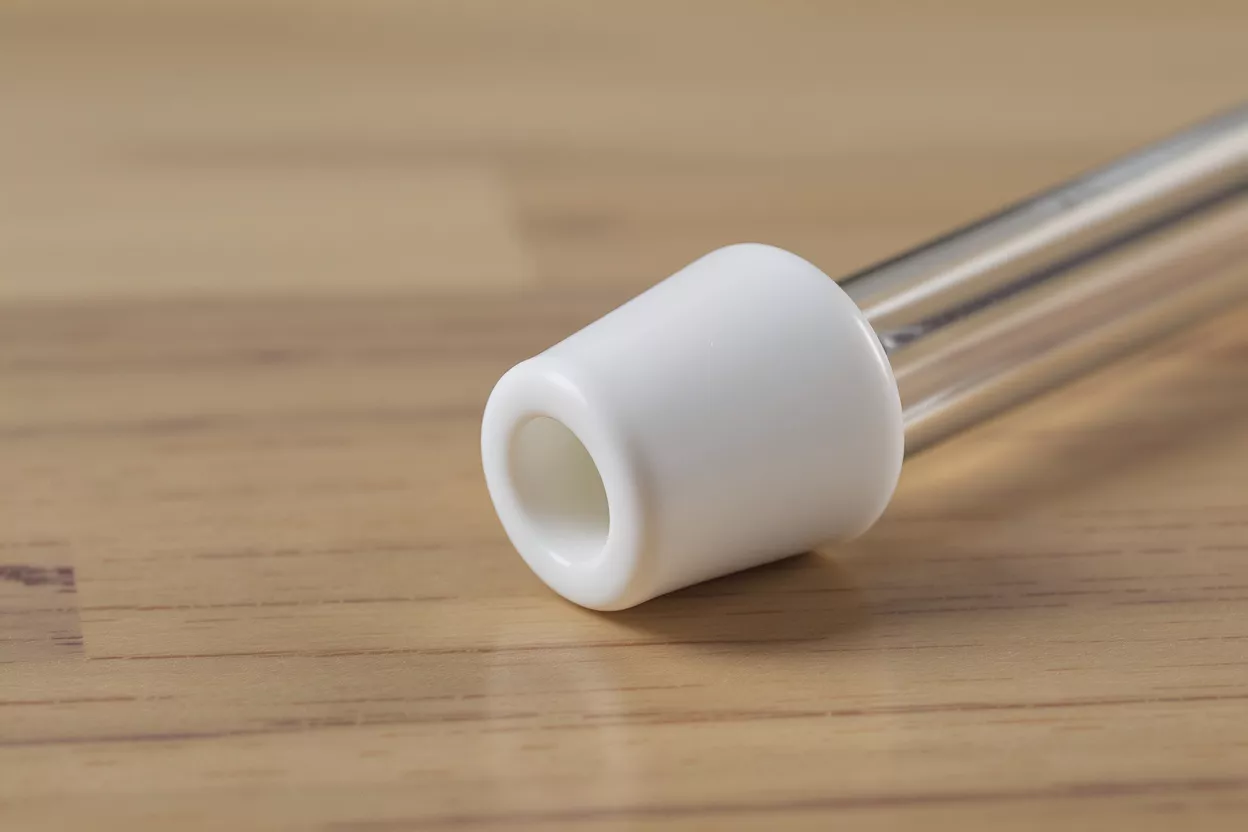
Not every carb cap is built the same. A static or flat carb cap simply covers the banger and may have a single straight hole. It restricts airflow but does nothing to steer it, so the concentrate often vaporizes from the center outward, leaving rings of unburned oil clinging to the edges of the dish.
Directional caps solve this by aiming air toward the walls and corners where heat lingers longest. The practical difference shows up in how clean your banger looks after a dab. With a static cap you frequently need to scrape or torch off residue; with a directional cap the swirling current sweeps the dish nearly empty on its own.
- 🌀 Vortex motion: Directional caps spin the air, dragging concentrate up the walls for even coverage that static caps cannot match.
- 💨 Vapor retention: Aimed airflow keeps vapor in the chamber longer, reducing the cloud you lose to the open air.
- 🧹 Cleaner dishes: Less leftover residue means fewer reheats and longer stretches between deep cleans.
- 🌡️ Lower temps: The restricted, focused opening lets you dab cooler while still pulling full flavor.
Types of Directional Airflow Carb Caps
The market offers several styles of directional airflow cap, each with a slightly different approach to steering the current. Choosing among them depends on the shape of your banger, the consistency of your concentrate, and how much control you want over the spin.
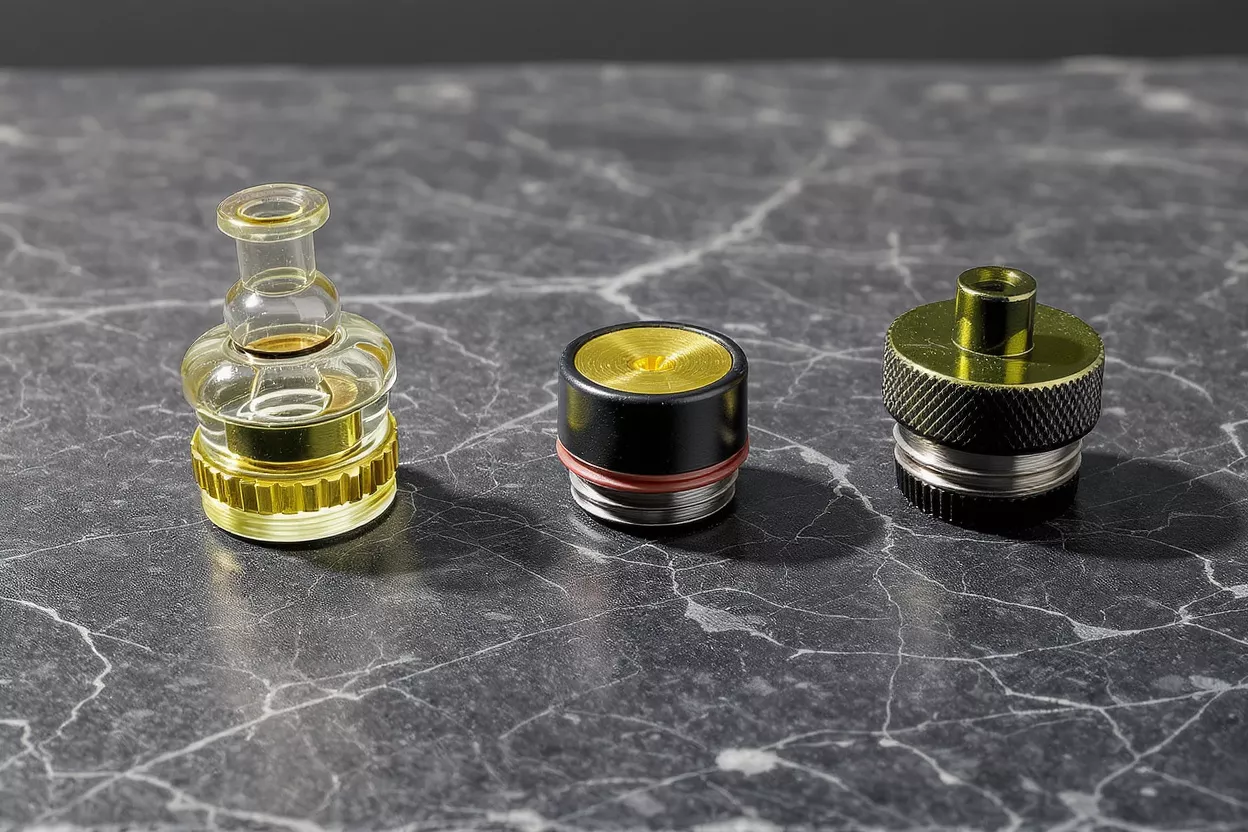
Bubble caps feature a rounded dome with an angled spout that you rotate to point air in any direction. They are the most common and forgiving design, pairing well with flat-top and round-bottom bangers alike. The ball joint lets you fine-tune the airflow mid-dab without lifting the cap.
Directional flat caps sit lower and offer a sleeker profile, with one or two offset holes drilled at an angle. They tend to produce a tighter, faster vortex, which suits experienced users chasing maximum efficiency on low-temp dabs.
- 🫧 Bubble carb cap: Rotating spout, beginner friendly, works on nearly any banger size.
- ⬛ Directional flat cap: Low profile with offset holes, delivers a tight spin for low-temp precision.
- 🔁 Spinner cap combo: Pairs with terp pearls so the airflow physically rotates the pearls and spreads oil.
- 💧 Marble-top cap: Uses an interchangeable marble to seal while an angled channel directs the stream.
Directional Airflow Benefits for Flavor and Efficiency
The most immediate payoff of directional airflow is flavor. When concentrate vaporizes at a lower, more controlled temperature, the delicate terpene compounds survive instead of burning off. Those terpenes carry the aroma and taste that distinguish one strain of rosin from another, so preserving them transforms the experience.
Efficiency is the second major draw. Because the vortex keeps feeding concentrate to the heat, you extract more vapor from the same amount of material. A single dab that might have left a stubborn ring of waste under a static cap instead vaporizes almost completely, stretching your supply further.
There is also a comfort factor. Lower-temperature vapor produced under a directional cap is cooler and smoother on the throat, which makes larger pulls more tolerable. Combined with the fuller flavor, this gentler hit is why many seasoned dabbers refuse to go back to flat caps once they switch.
Using Directional Airflow for Low-Temp Dabs
Low-temp dabbing is where directional airflow truly shines. The technique involves heating the banger, letting it cool to a target window, then applying the concentrate and capping. Getting the timing right matters, and the cap does heavy lifting once the dab is in the dish.
Reading the temperature comes with practice. Most flavor-focused dabs land somewhere in the range where quartz has cooled past glowing but still sizzles a small drop on contact. After dropping the concentrate, you place the directional cap and begin a slow, steady inhale while rotating the spout to chase any oil clinging to the edges.
Patience pays here. A gentle pull lets the vortex do its work, lifting and circulating the puddle rather than yanking raw vapor straight off the surface. If you notice oil pooling on one side, simply rotate the cap so the air points toward it, and the spin will pull it back into the active zone.
- 🔥 Heat the banger: Torch the quartz until it just glows, then remove the flame.
- ⏲️ Cool down: Wait roughly 30 to 60 seconds depending on banger thickness for a flavorful window.
- 💧 Drop the dab: Add a modest amount of concentrate to the warm dish.
- 🌀 Cap and spin: Place the directional cap and rotate the spout while inhaling slowly.
- ♻️ Reclaim and clean: Cap the banger after to trap reclaim and keep the dish tidy.
Directional Airflow in Bongs and Pipes
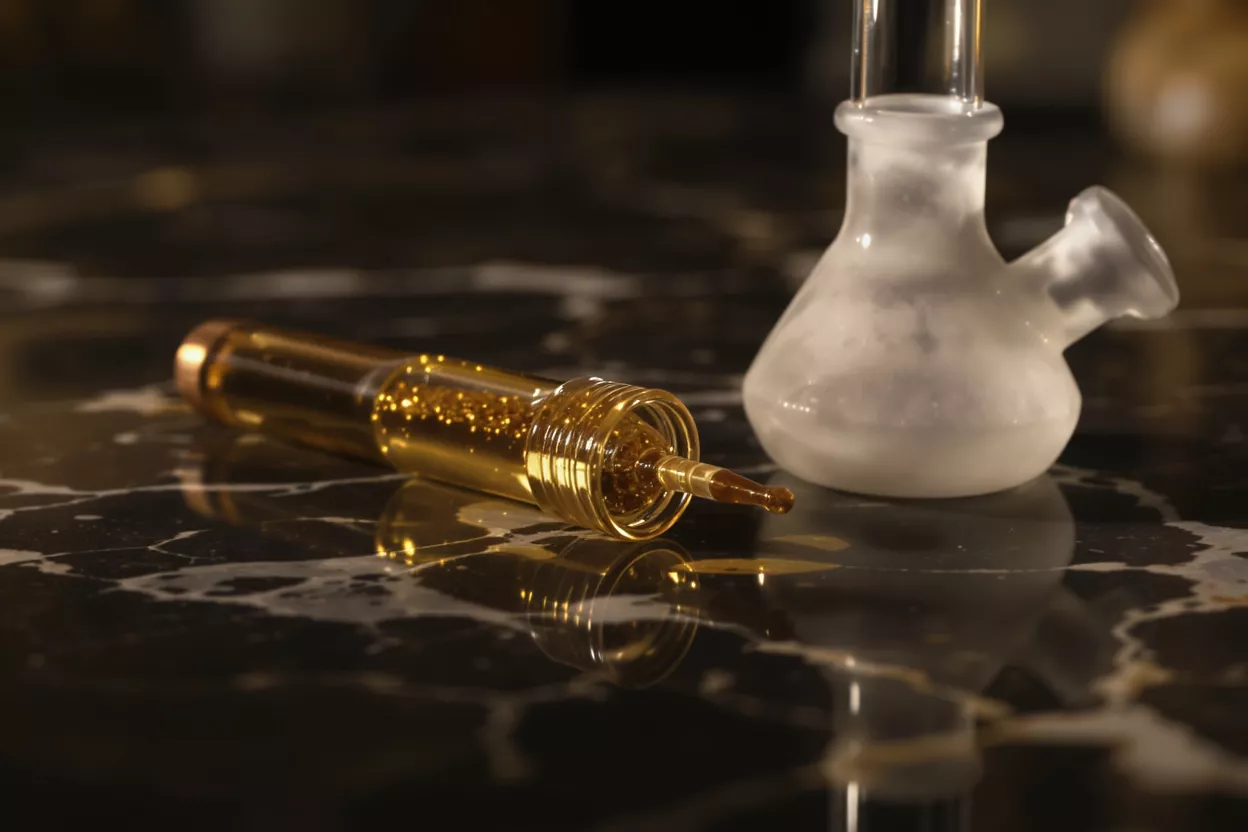
Directional airflow is not limited to dabbing hardware. The same principle appears throughout glass design, from the angle of a downstem to the placement of percolator slits in a bong. Each of these features steers smoke or vapor along a chosen path to cool it, filter it, and smooth the draw.
In water pipes, percolators with directional slits push smoke sideways through the water rather than letting it bubble straight up. This lateral movement breaks the smoke into finer bubbles, increasing contact with the water and stripping out more heat and particulates before the vapor reaches your lungs.
Even hand pipes benefit from intentional airflow. A carb hole placed at an angle, or a chamber shaped to swirl smoke before it exits the mouthpiece, gives a cleaner and more controlled hit. The lesson is universal: when you aim the air, you gain command over temperature, density, and flavor.
Choosing the Best Directional Airflow Cap
Picking the right cap starts with matching it to your banger. Measure the inner and outer diameter of your dish, because a cap that does not seal properly leaks air and ruins the vortex. Most bubble caps fit a wide range, but flat caps demand a closer match to function correctly.
Material matters as much as fit. Quartz and borosilicate glass both handle heat well and impart no taste, while some users prefer the heft of a fully quartz banger setup for thermal stability. Avoid caps with metal contact points that touch the concentrate, since they can scorch terpenes and add an off flavor.
Pairing with terp pearls elevates the whole system. When you drop one or two pearls into the dish, the directional airflow spins them, and they physically smear the concentrate across the hot quartz. This combination delivers the most complete vaporization available short of an electronic setup, and it costs only a few extra dollars.
Cleaning and Maintaining Airflow Caps
A directional cap only works if its airflow channel stays clear. Over time, vaporized oil condenses inside the spout and around the holes, narrowing the passage and weakening the vortex. Regular cleaning keeps the spin strong and the flavor crisp.
The simplest method is a warm soak in isopropyl alcohol followed by a rinse. For stubborn buildup inside narrow channels, a cotton swab or pipe cleaner dipped in alcohol reaches the spots a soak cannot. Always let the cap dry completely before the next session so no residual alcohol vaporizes into your hit.
- 🧴 Alcohol soak: Submerge the cap in isopropyl for several minutes to dissolve oil buildup.
- 🧽 Channel cleaning: Run a swab or pipe cleaner through the spout to clear narrow passages.
- 💦 Final rinse: Flush with warm water and dry fully before dabbing again.
- 🔍 Inspect airflow: Blow through the cap to confirm the channel is open before each session.
Are Directional Airflow Caps Worth It
For anyone who dabs with any regularity, a directional airflow cap is one of the highest-value upgrades available. The cost is modest, the learning curve is gentle, and the improvement in flavor and efficiency is immediate and obvious. It addresses the single most common frustration in dabbing: wasted concentrate clinging to a dish that never fully vaporizes.
Beginners benefit from the forgiveness a directional cap provides, since the vortex compensates for slightly imperfect temperature timing. Experienced users appreciate the precision and the way it unlocks true low-temp dabbing, where terpene preservation reaches its peak. Few accessories serve both ends of the spectrum so well.
In short, directional airflow turns a passive piece of glass into an active tool that shapes every part of the session. Whether you are chasing flavor, conserving material, or simply tired of scrubbing baked-on residue, steering the air gives you control that a static cap never can. It is a small investment that pays back with every dab you take.




Comments