

Dose
Learn how to find your ideal cannabis dose for THC and CBD.
What Is a Cannabis Dose?
A cannabis dose is the measured amount of active compounds — primarily THC and CBD — that you consume in a single session or product serving. Unlike a glass of water or a cup of coffee, where the effect is fairly predictable across people, the right dose of cannabis varies dramatically from one person to the next. What relaxes one individual might overwhelm another, and the same person may respond differently depending on the day, the method, and the product.
Dose is usually expressed in milligrams of cannabinoids. An edible package might list 10 mg of THC per gummy, while a tincture could be measured in milligrams per dropper. Inhaled cannabis is harder to quantify precisely, since absorption depends on how deeply and how long you draw, but the underlying principle is identical: you are managing how much active compound reaches your bloodstream.
Why dose matters more than potency alone: a high-potency product is not inherently stronger in effect if you simply take less of it. Dosing is the lever that lets you tune intensity. Understanding it transforms cannabis from a guessing game into something measurable, repeatable, and far safer. The goal of any thoughtful dosing strategy is to find the smallest amount that delivers the benefit you want, without unwanted side effects.
How a Cannabis Dose Works in the Body
Once consumed, cannabinoids interact with the endocannabinoid system, a network of receptors that helps regulate mood, appetite, pain, and sleep. THC binds directly to CB1 receptors in the brain, producing the psychoactive effects most people associate with cannabis. CBD works more indirectly, modulating the system without producing a high. The dose you take determines how many of these receptors are engaged and how strongly.
The dose-response curve is not linear: with many substances, doubling the dose doubles the effect. Cannabis is more complicated. Low to moderate THC doses can feel uplifting and relaxing, but past a certain threshold, additional THC can flip into anxiety or discomfort. This is sometimes called a biphasic response, where the same compound produces opposite effects at different doses. It is one of the main reasons starting low is universally recommended.
The route of consumption also shapes how the dose unfolds. Inhaled cannabis reaches peak effect within minutes and fades within a couple of hours. Edibles pass through the digestive system and liver, where THC is converted into a more potent metabolite, producing a slower, stronger, and longer experience. The same 10 mg can feel mild when vaped and intense when eaten.
What Affects Your Ideal Dose
No single dose works for everyone, because individual biology plays an enormous role. Two people of identical weight can respond very differently to the same gummy. Several overlapping factors determine where your personal sweet spot lands, and recognizing them helps you predict your own response instead of relying on someone else's experience.
- ⚖️ Tolerance: Regular consumers develop resistance over time, often needing more to feel the same effect than a first-time user.
- 🧬 Body chemistry: Metabolism, enzyme activity, and endocannabinoid baseline vary genetically and influence intensity.
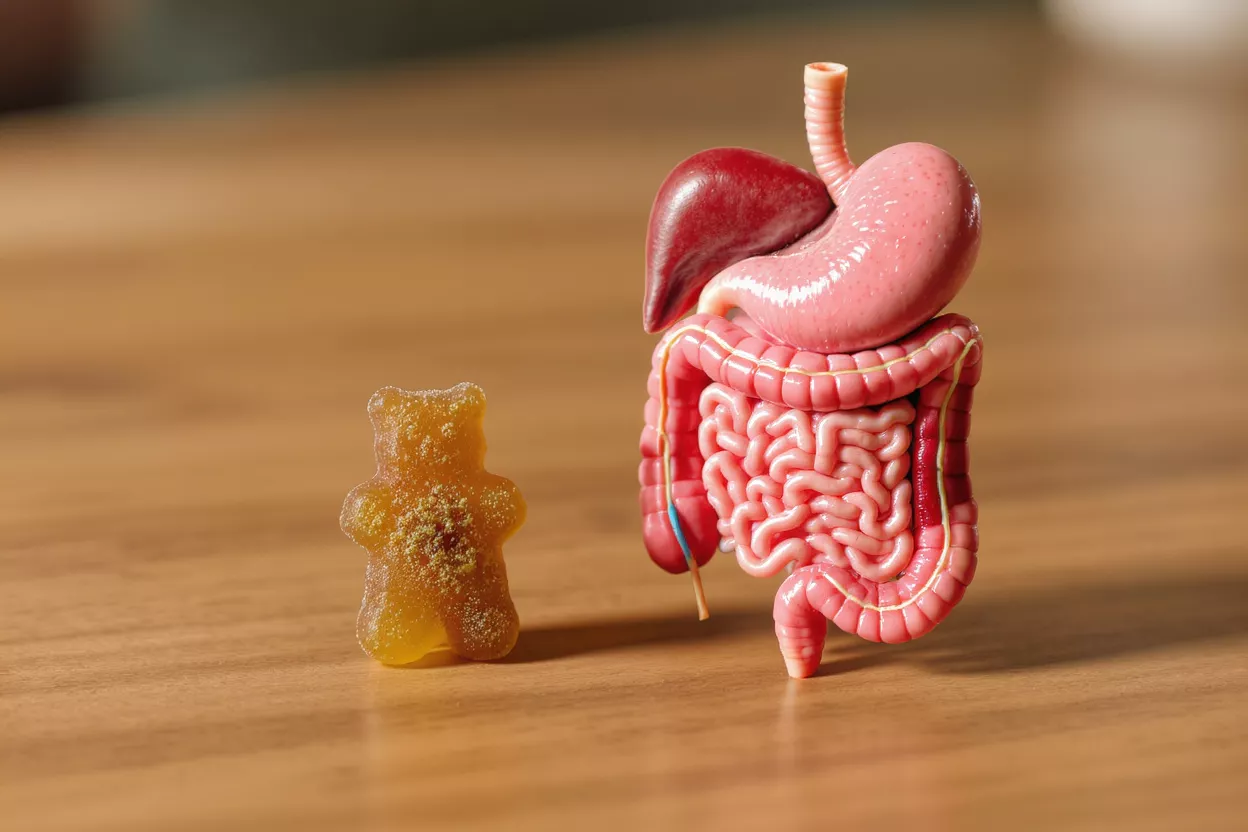
- 🍽️ Stomach contents: Edibles taken on an empty stomach often hit faster and harder than those taken with food.
- 😴 Intended outcome: A dose for daytime focus differs from one meant for deep sleep.
- 🌿 Product type: The ratio of cannabinoids and the presence of terpenes shapes the felt experience.
Why first-timers should ignore experienced users' doses: a friend who casually takes 50 mg has likely built substantial tolerance over months or years. For a newcomer, that same amount could be genuinely unpleasant. Dosing is personal, and the only reliable starting point is your own baseline, not someone else's tolerance ceiling.
Set and setting matter too. The same dose can feel comforting in a calm, familiar environment and overwhelming in a stressful or unfamiliar one. Your mindset going in shapes how you interpret the physical sensations, which is why a relaxed context supports a more predictable experience.
How to Find the Right THC Dose
Finding your THC dose is a process of careful experimentation, not a one-time calculation. The golden rule across the entire cannabis world is "start low and go slow." This means beginning with a small amount, waiting long enough to feel the full effect, and only then deciding whether to take more. Patience here prevents the most common dosing mistake: stacking doses before the first has kicked in.
Standard starting points for THC edibles: for someone with little or no tolerance, the commonly recommended baseline is modest and built around waiting for clarity before adjusting.
- 🌱 1–2.5 mg: Microdose territory — subtle relief with minimal intoxication, ideal for total beginners.
- 🙂 2.5–5 mg: Mild euphoria and relaxation, a common comfortable range for casual users.
- 😌 5–15 mg: Stronger effects, suited to those with established tolerance.
- 🔥 15–30 mg: Significant intoxication, generally for experienced or medical users with specific needs.
With edibles specifically, the cardinal rule is to wait at least two full hours before considering a second dose. Because digestion is slow and variable, the effects can take 30 minutes to two hours to appear and then continue building. Many uncomfortable experiences come not from the initial dose but from impatience — taking more because nothing seemed to be happening yet.
CBD Dose Guidelines for Beginners
CBD dosing follows a gentler logic because it is non-intoxicating and generally well tolerated even at higher amounts. People typically use CBD for relaxation, recovery, and a sense of calm rather than for a high, so the stakes of getting the dose slightly wrong are lower. Still, more is not automatically better, and finding an effective dose involves the same patient, incremental approach.
How to titrate a CBD dose: a common method is to begin with a low daily amount, such as 10 to 20 mg, and maintain it consistently for several days. Because CBD's benefits often build with regular use rather than appearing instantly, consistency over a week or two tells you more than a single dose ever could. If you notice no benefit, you increase gradually until you find a level that works.
The relationship between CBD and THC also affects how a product feels. Many people find that CBD softens some of THC's sharper edges, which is why balanced ratio products are popular among those who want gentle effects. A 1:1 product can feel noticeably more grounded than a THC-dominant one at the same total milligram count, making the ratio just as important as the raw dose.
Dose by Consumption Method
The same milligram figure produces wildly different experiences depending on how you consume it. Understanding these differences is essential, because a dose that works perfectly as a vape may be far too strong as an edible. Each method has its own onset time, duration, and intensity profile.
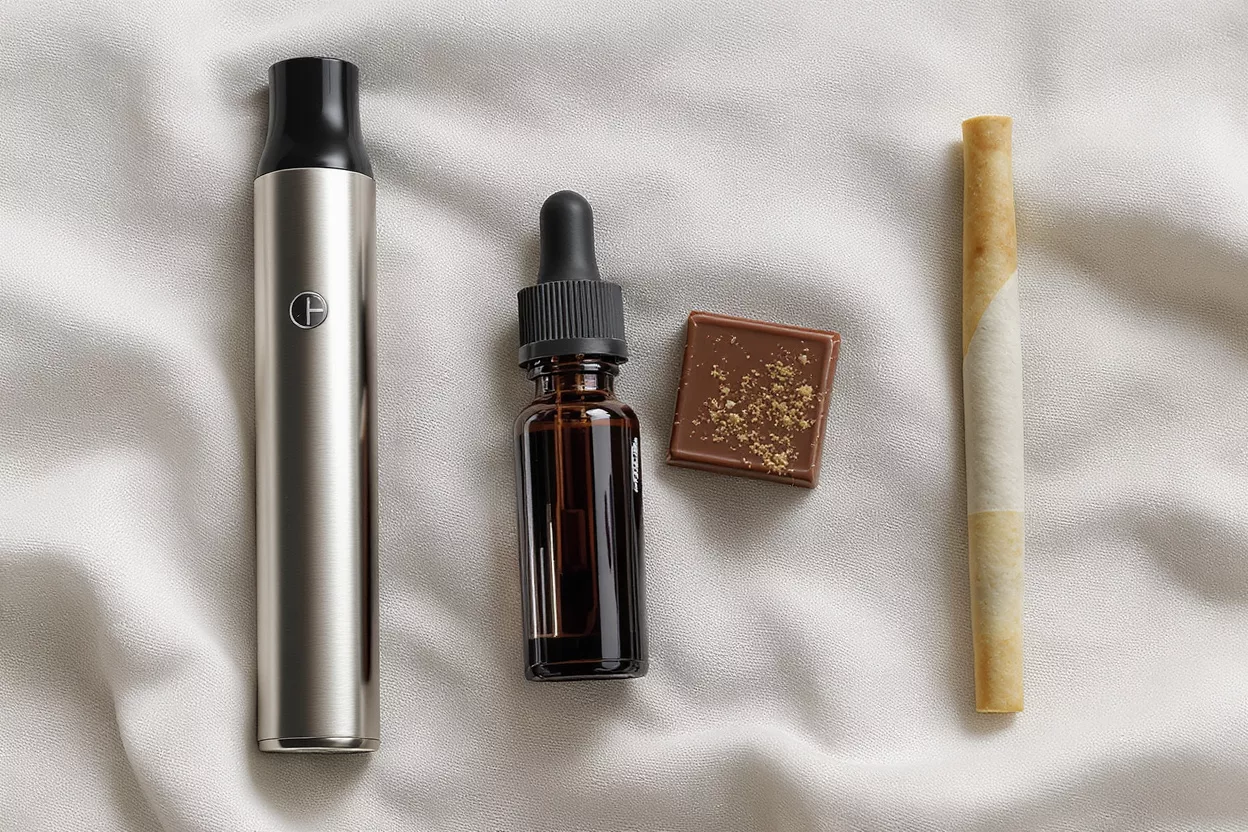
- 💨 Inhalation: Fast onset within minutes, peak control, effects lasting one to three hours — easiest to titrate in real time.
- 🍬 Edibles: Slow onset of 30 minutes to two hours, stronger and longer effects up to six hours or more.
- 💧 Tinctures: Held under the tongue, onset in 15 to 45 minutes, offering a middle ground between inhaling and eating.
- 🧴 Topicals: Applied to skin for localized relief, typically non-intoxicating with no systemic dose.
Why edibles demand extra caution: the liver converts THC into 11-hydroxy-THC, a metabolite that crosses into the brain more readily and produces a more potent, body-heavy effect. This is the chemistry behind the classic warning that edibles can sneak up on you. A measured 5 mg edible is a sensible starting place precisely because that conversion amplifies what the number alone suggests.
Because inhaled cannabis offers near-immediate feedback, it is often the easiest method for learning your own limits. You feel the effect quickly, so you can stop the moment you reach a comfortable level. Edibles remove that feedback loop, which is exactly why patience and conservative starting doses matter so much more with them.
What Is Microdosing Cannabis?
Microdosing means taking a very small dose — typically 1 to 2.5 mg of THC — designed to deliver subtle benefits without noticeable intoxication. The goal is functionality: a gentle lift in mood, mild relief from discomfort, or a touch of creative ease while remaining clear-headed and capable of daily tasks. It has grown in popularity among people who want cannabis to support their day rather than interrupt it.
Who microdosing suits best: it appeals to professionals, creatives, and wellness-focused users who value consistency and control over intensity. Because the dose is so low, the risk of uncomfortable side effects drops sharply, making it an approachable entry point for cautious beginners and a sustainable habit for those managing tolerance.
Microdosing also helps prevent tolerance from climbing too quickly. By using the smallest effective amount, you keep your endocannabinoid system more responsive over time, which means your doses stay efficient. Many regular users periodically reset by lowering their intake, returning to a place where small amounts feel meaningful again.
Signs You Took Too High a Dose
Even careful consumers occasionally take more than intended, and knowing the warning signs helps you respond calmly. An excessive dose of THC is not dangerous in the sense of being life-threatening, but it can be genuinely unpleasant. Recognizing the symptoms lets you reassure yourself that the discomfort is temporary and will pass.
- 😵 Anxiety or paranoia: Racing thoughts and unease are the most common signs of overshooting a comfortable dose.
- 💓 Rapid heartbeat: A faster pulse can feel alarming but is generally short-lived.
- 🌀 Dizziness or nausea: Especially common with high edible doses as effects peak.
- 🛋️ Heavy sedation: Feeling glued to the couch and unable to engage with surroundings.
What to do if you overshoot: the most important step is to stay calm and remember the feeling is temporary. Find a quiet, comfortable space, hydrate with water, and rest. Some people find that a small amount of CBD can help counterbalance THC's intensity. Eating a light snack and waiting it out is almost always enough; the effects always fade as your body metabolizes the cannabinoids.
Prevention beats recovery. The single best safeguard against an unpleasant experience is the discipline to wait before redosing. Most overconsumption happens with edibles, when impatience leads someone to take a second serving before the first has revealed itself. Respecting the onset window eliminates the majority of these situations.

Are Cannabis Doses Safe?
For most healthy adults, cannabis has a wide safety margin, and a thoughtful dosing approach makes uncomfortable experiences rare. There is no known lethal dose of THC in the way there is for many other substances, which is part of why "start low and go slow" is such reassuring advice — the worst outcome of a modest dose is usually temporary discomfort, not harm.
When extra caution is warranted: certain groups should be more conservative. People who are pregnant or nursing, those with cardiovascular conditions, individuals taking medications that interact with cannabinoids, and anyone with a history of certain mental health conditions should consult a healthcare professional before establishing a dose. Responsible dosing always accounts for individual health context.
Quality and labeling matter for safety too. Accurately dosed products from tested sources let you trust the milligram figures on the package, which is the foundation of any dosing strategy. When you know exactly how much THC is in each serving, you can dose with confidence rather than guesswork, and that transparency is one of the strongest arguments for choosing lab-tested products.
Building a Personal Dosing Routine
Once you understand the fundamentals, the next step is turning them into a repeatable routine that fits your life. The best dosing strategy is one you can sustain — consistent, intentional, and tuned to your goals rather than someone else's. Keeping a simple journal of what you took, how much, and how it felt accelerates this learning more than anything else.
Tracking that actually helps: note the product, the milligram dose, the time, what you ate beforehand, and the effects over the following hours. Patterns emerge quickly. Within a few entries you will often see precisely which dose and method deliver your ideal experience, removing the guesswork from future sessions and saving you from repeating uncomfortable surprises.
Your ideal dose is not fixed forever, either. Tolerance shifts, goals change, and new products enter the picture. Periodically revisiting your baseline — sometimes lowering it to reset sensitivity — keeps your routine efficient. Ultimately, mastering your dose is about cultivating a mindful, informed relationship with cannabis, where you remain in control and every session reflects a deliberate choice rather than a guess.

Comments