

Greenhouse
Discover how greenhouse cannabis cultivation balances sunlight and control for premium quality.
What Is Greenhouse Cannabis Cultivation
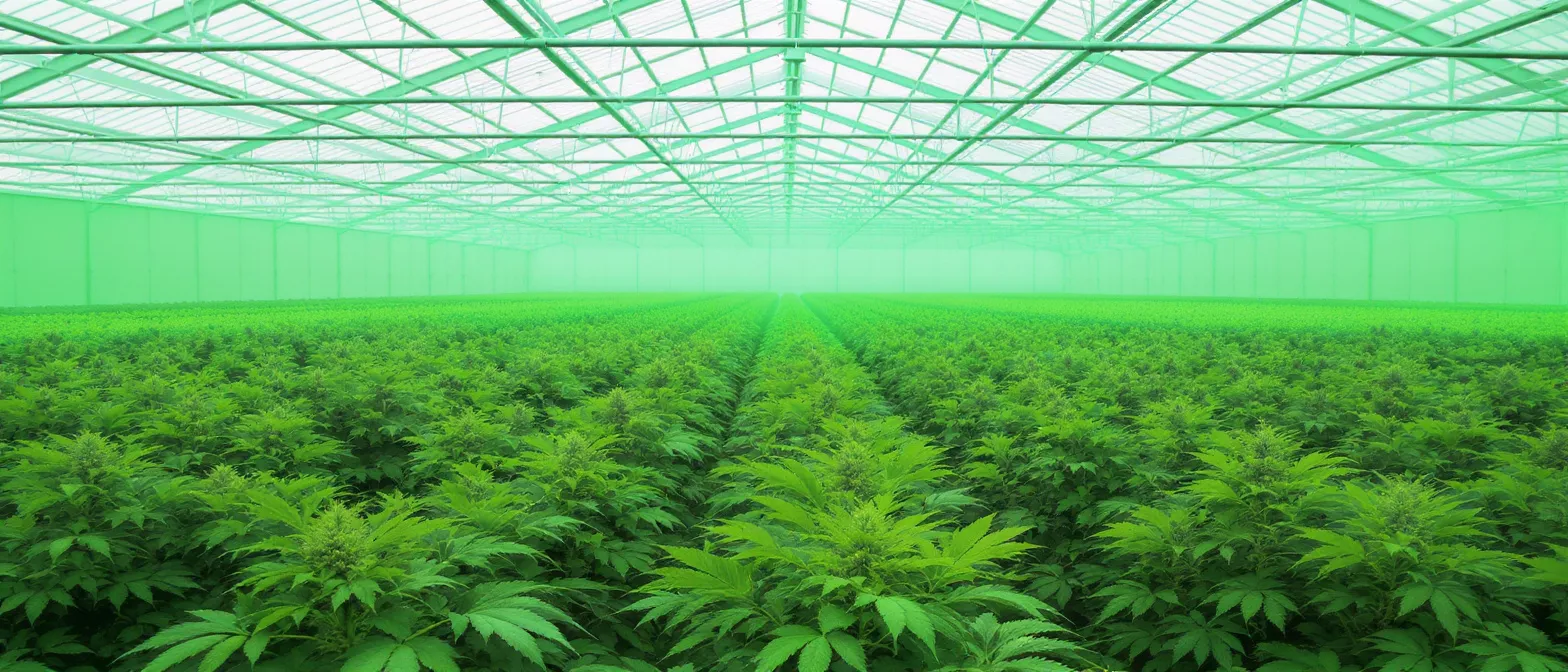
Greenhouse cannabis cultivation occupies the middle ground between the raw exposure of outdoor farming and the engineered precision of indoor grow rooms. A greenhouse is a structure clad in glass or translucent polycarbonate that captures and concentrates natural sunlight while sheltering plants from wind, pests, and unpredictable weather. For cannabis growers, this hybrid approach harnesses the sun's full spectrum at no cost while retaining enough control to protect a valuable crop through its most vulnerable stages.
The term has gained real weight in the legal cannabis market because consumers increasingly recognize it as a marker of value and quality. A greenhouse flower can rival indoor product on appearance and potency while costing less to produce, which is why so many licensed producers have built sprawling glass facilities rather than warehouses packed with artificial lights.
Why the distinction matters to buyers: when you see "greenhouse-grown" on a label, it signals a specific production philosophy. The cultivator chose to lean on sunlight as the primary energy source, supplementing only where nature falls short. This typically yields cleaner cannabinoid expression and a lighter environmental footprint than a fully indoor operation, without sacrificing the protection that open-field plants lack.
How Greenhouse Growing Works
At its core, a cannabis greenhouse works by trapping solar radiation. Sunlight passes through the transparent covering and warms the air, soil, and plants inside; the covering then slows the escape of that heat, creating a stable, warm microclimate even when outdoor temperatures swing. This passive solar effect lets growers extend their season at both ends, starting earlier in spring and finishing later in autumn than an outdoor plot would allow.
Modern facilities layer technology on top of that basic principle. Automated vents, retractable shade cloth, supplemental grow lights, and circulation fans all respond to sensor data, nudging conditions toward the ideal range for whatever growth stage the plants are in. The grower becomes a conductor rather than a brute-force operator, amplifying or dampening natural inputs as needed.
The role of supplemental lighting: in regions with short winter days or persistent cloud cover, the sun alone cannot drive a full flowering cycle. Growers install high-efficiency LED or HPS fixtures to top up the natural photoperiod, ensuring plants receive enough usable light to fatten buds and finish on schedule. Because the sun does most of the heavy lifting, these supplemental systems draw a fraction of the power an indoor grow demands.
Greenhouse vs Indoor vs Outdoor Cannabis
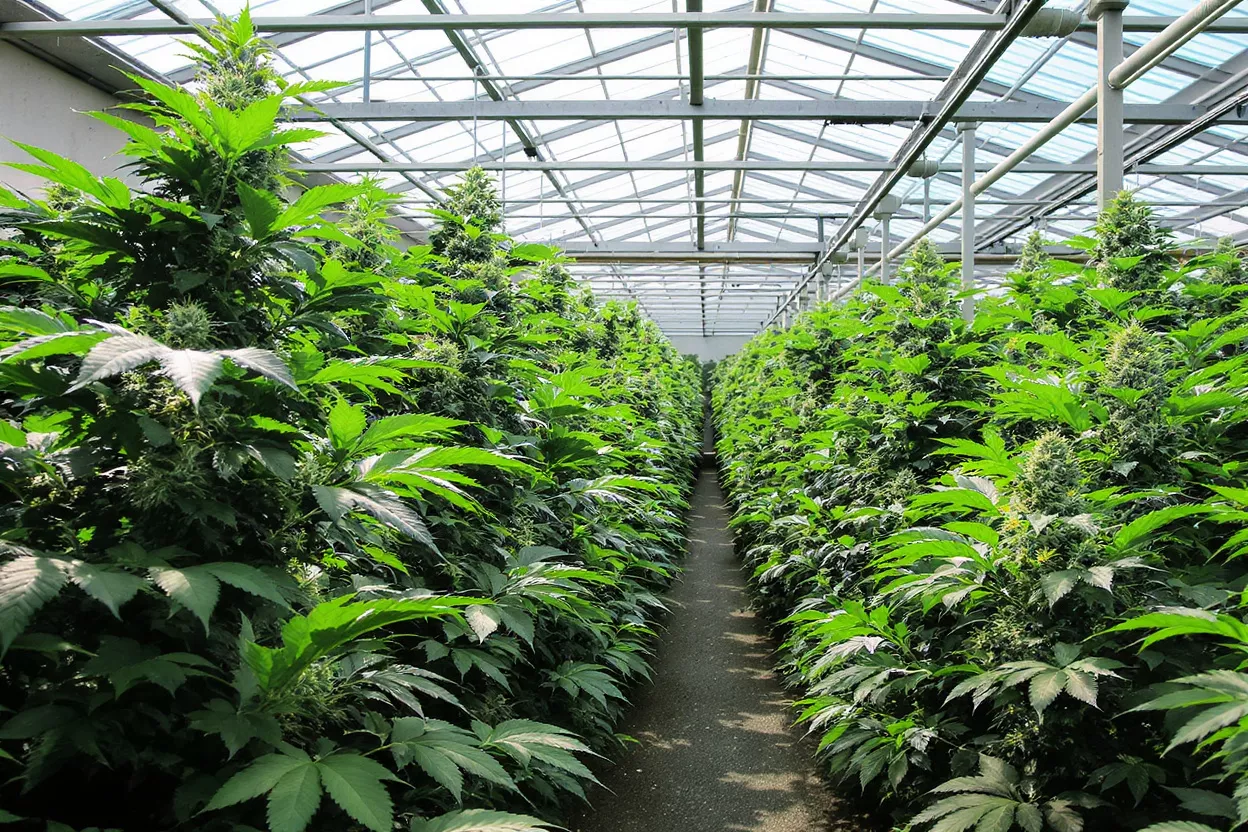
Understanding where greenhouse cannabis sits requires comparing it honestly against the two extremes. Indoor cultivation offers total control over every variable, producing the dense, frost-coated flower that commands premium prices, but it consumes enormous amounts of electricity. Outdoor cultivation costs the least and produces the largest plants, yet it surrenders control to the weather and exposes crops to contamination and pests.
Greenhouse cultivation deliberately splits the difference. It captures most of the cost advantage of outdoor sun while reclaiming much of the quality and consistency that indoor control provides. For many producers, this balance represents the smartest economics in the legal market.
- ☀️ Outdoor: lowest cost and largest yields, but fully exposed to weather, pests, and seasonal limits with one harvest per year.
- 🏠 Indoor: total environmental control and top-shelf appearance, offset by the highest energy bills and carbon footprint in the industry.
- 🌱 Greenhouse: free solar energy plus protective structure and supplemental controls, delivering near-indoor quality at a fraction of the operating cost.
Types of Greenhouse Systems for Cannabis
Not all greenhouses are built alike, and the structure a cultivator chooses shapes both the cost and the quality of the final flower. The simplest are passive hoop houses, little more than arched frames draped in polyethylene film that protect plants while relying entirely on ambient conditions. At the other end sit high-tech glass houses that approach indoor levels of automation while still admitting natural light.
Between those poles lies a spectrum of options suited to different climates and budgets. The right choice depends on local weather, energy prices, and the quality tier a producer is targeting.
- 🌾 Hoop houses: low-cost polyethylene tunnels ideal for season extension in mild climates with minimal automation.
- 🏗️ Gutter-connected ranges: large commercial structures linking multiple bays for scaled production and shared climate systems.
- 🔆 Glass high-tech houses: fully automated facilities with computerized venting, shading, and supplemental light for premium output.
- 🌑 Light-dep greenhouses: fitted with blackout systems to control flowering timing and squeeze multiple harvests from a single season.
Matching structure to climate: a grower in a sun-drenched, temperate valley can thrive with a simple hoop house and almost no supplemental input, while a cultivator in a cloudy northern region needs a sealed glass facility with heating and lighting to compete. The structure is never one-size-fits-all; it is a deliberate response to the environment outside its walls.
Greenhouse Cannabis Benefits
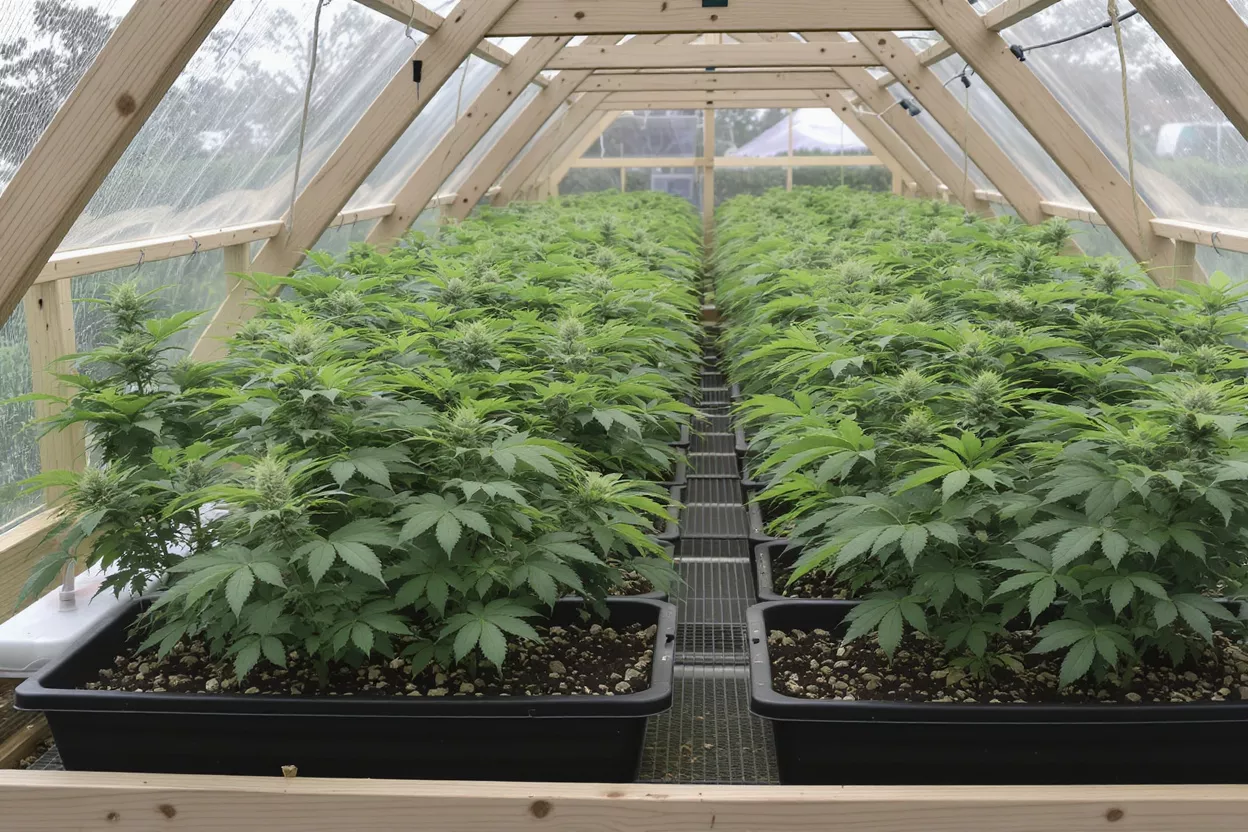
The headline benefit of greenhouse cultivation is the dramatic reduction in energy cost. By drawing on free sunlight for most of the plant's light needs, growers slash the electricity bills that dominate indoor budgets. That saving flows downstream, allowing greenhouse flower to reach shelves at a more accessible price than comparable indoor product.
Quality that competes with indoor: sunlight delivers a complete, balanced spectrum that artificial fixtures only approximate. Many growers and connoisseurs argue this full spectrum encourages richer terpene and cannabinoid development, giving well-grown greenhouse flower aromatic complexity that rivals anything from a sealed room.
Larger yields per plant: the abundant light and generous headroom of a greenhouse let cannabis plants grow taller and bushier than they often can indoors, producing more flower per plant. Combined with the option of multiple harvests through light deprivation, a single greenhouse can out-produce a comparable indoor footprint while spending far less to do it.
Light Deprivation Greenhouse Techniques
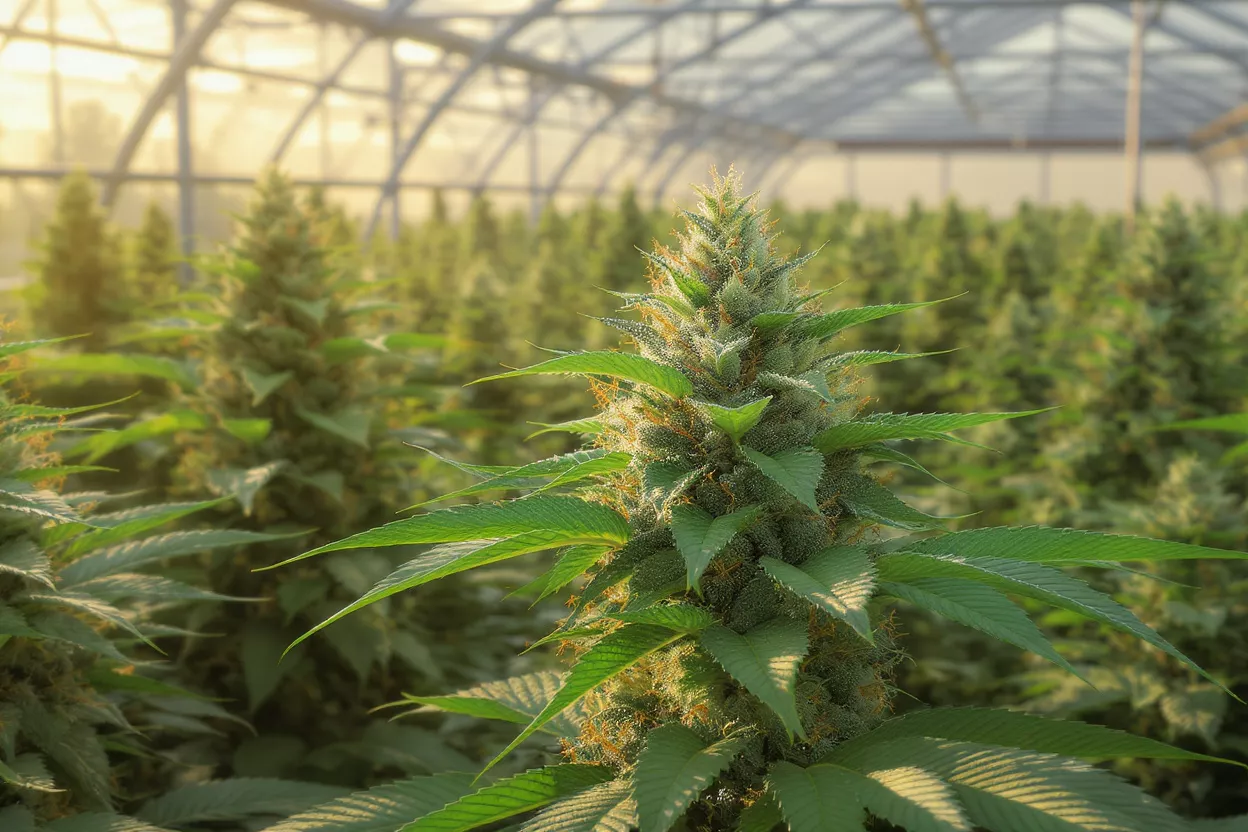
Light deprivation, or "light-dep," is one of the most powerful tools in greenhouse cultivation. Cannabis is a photoperiod plant, meaning it begins to flower when nights grow long enough to signal the approach of autumn. By drawing automated blackout curtains over the greenhouse to artificially shorten the daylight the plants perceive, growers can trigger flowering whenever they choose, regardless of the calendar.
This control unlocks the ability to harvest multiple times in a single season. A grower might force an early summer flowering cycle, harvest, then replant for a natural autumn finish, effectively doubling the output of the same structure. It also lets producers time their harvests to market demand rather than waiting for nature's single annual window.
Quality and timing advantages: beyond raw quantity, light deprivation gives growers precision over when buds mature. They can avoid the late-season cold and humidity that breeds bud rot, harvesting in warm, dry conditions that protect resin and flavor. The result is cleaner, more consistent flower than an uncontrolled outdoor finish typically delivers.
Climate Control in a Cannabis Greenhouse
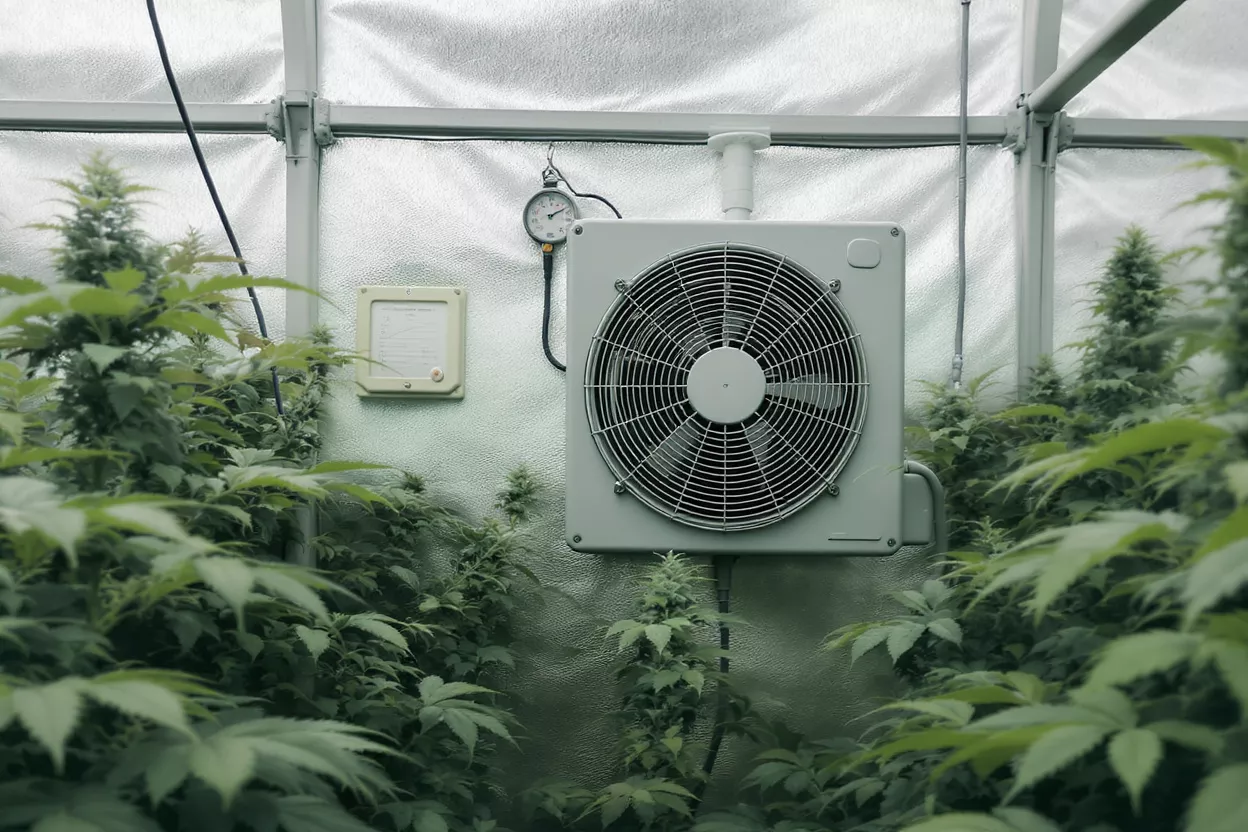
Even with the sun providing light and warmth, a cannabis greenhouse demands careful climate management. Temperature, humidity, and airflow all influence how plants grow and how vulnerable they become to mold and pests. The transparent structure that traps heat so effectively can quickly overheat on a bright day, so ventilation becomes essential to keep conditions in the healthy range.
Humidity is the constant adversary. Cannabis transpires heavily, and a sealed greenhouse can trap that moisture until it condenses on cool surfaces and feeds fungal disease. Growers fight back with exhaust fans, dehumidifiers, and careful plant spacing that keeps air moving through the canopy.
- 🌡️ Temperature: kept roughly between 20–28°C during the day through vents, shade cloth, and heating to avoid heat stress or chill.
- 💧 Humidity: managed below the 50–60% range in flowering to prevent mold while supporting healthy transpiration.
- 🌬️ Airflow: circulation and exhaust fans strengthen stems and disrupt the stagnant pockets where pathogens thrive.
- 🪟 CO₂: supplemented in sealed glass houses to push photosynthesis and accelerate growth during peak light.
Mastering these variables is what separates a mediocre greenhouse crop from an exceptional one. The grower who reads conditions accurately and responds before problems take hold consistently produces cleaner, healthier flower.
Is Greenhouse Cannabis Good Quality
A common misconception holds that greenhouse cannabis is inherently inferior to indoor flower. In reality, quality depends far more on the skill of the grower and the sophistication of the facility than on the broad category itself. A well-run high-tech greenhouse can produce flower that is visually stunning, intensely aromatic, and rich in cannabinoids, often indistinguishable from indoor product in a blind comparison.
What affects greenhouse flower quality: genetics, climate control, harvest timing, and post-harvest curing all matter enormously. A producer who controls humidity, deploys light deprivation to finish in ideal conditions, and cures slowly will deliver excellent flower. A careless operation in a leaky hoop house may not, and the difference shows in the jar.
The most honest framing is that greenhouse cultivation removes the energy penalty of indoor growing without imposing a quality ceiling. The natural sunlight that drives the process is, after all, the light cannabis evolved under, and many cultivators consider it the ideal foundation for a clean, full-spectrum trichome expression.
Sustainability of Greenhouse Growing
Cannabis has earned a reputation as an energy-hungry crop, largely because of the electricity that indoor cultivation pours into artificial lighting and climate control. Greenhouse growing directly addresses that problem by substituting free, renewable sunlight for most of those watts, shrinking the carbon footprint of every gram produced.
The sustainability advantage extends beyond electricity. Many greenhouse operations capture rainwater, recirculate nutrient solutions, and use integrated pest management that leans on beneficial insects rather than heavy chemical sprays. The protected environment makes these greener practices easier to implement than they would be in an open field.
The environmental bottom line: as regulators and consumers grow more conscious of cannabis's ecological cost, greenhouse cultivation stands out as a credible path toward responsible production. It proves that high-quality flower and a lighter environmental footprint are not mutually exclusive goals but complementary ones.
Choosing Greenhouse Cannabis Products
For consumers navigating dispensary shelves, greenhouse-grown flower often represents the sweet spot of value. It typically carries a friendlier price than indoor flower while offering quality that easily clears the bar for an enjoyable, flavorful experience. Reading the label and asking about the cultivation method helps you understand exactly what you are buying.
What to look for in greenhouse flower: trust your senses where you can. Look for healthy color, a dense but not overly compact structure, a visible coating of trichomes, and a strong, pleasant aroma. These signs of careful cultivation matter more than the growing category printed on the package.
Greenhouse cannabis ultimately captures the best of both worlds: the cost efficiency and ecological sense of harnessing the sun, paired with the protection and control that lift quality well above raw outdoor growing. As the industry matures and prioritizes both value and sustainability, greenhouse cultivation is positioned to define the mainstream of premium-yet-accessible flower for years to come. Whether you are a budget-conscious buyer or a connoisseur curious about full-spectrum sun-grown product, a well-made greenhouse flower deserves a place in your rotation.

Comments