

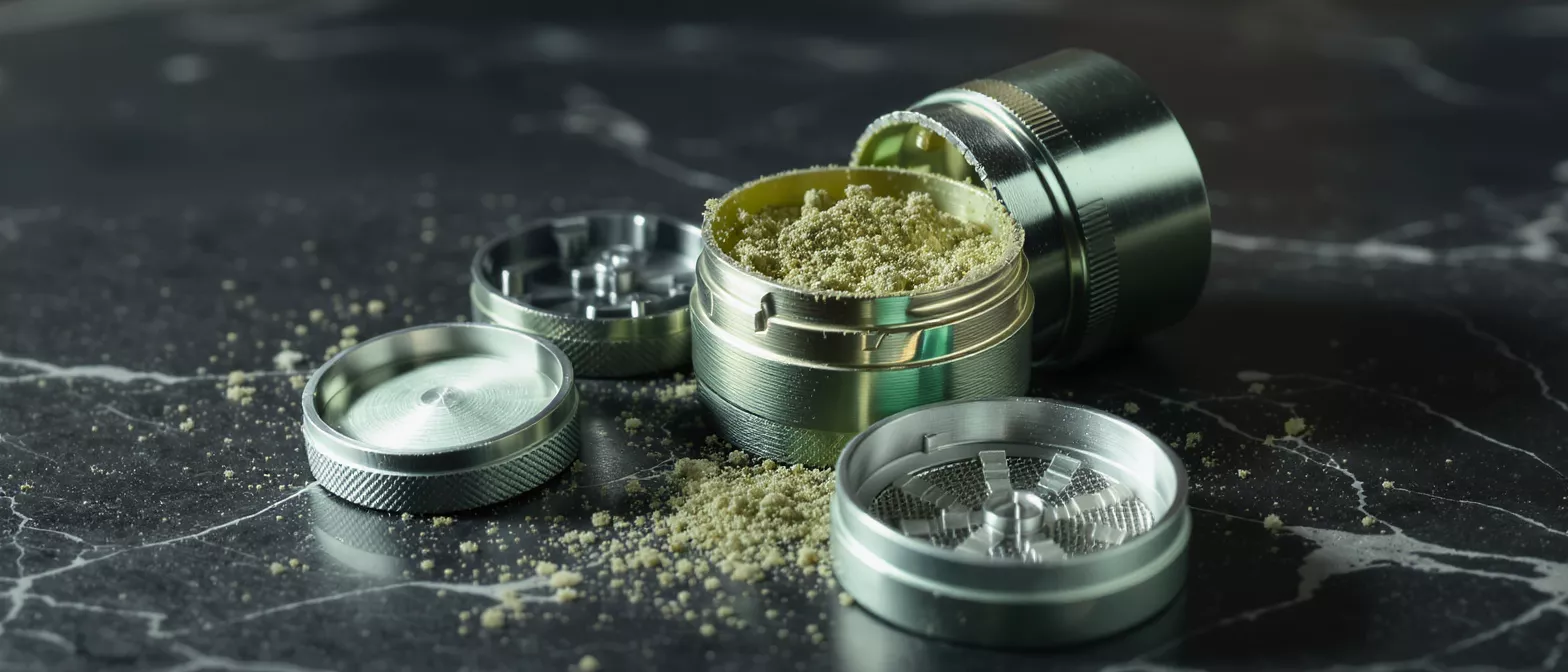
Grinder
Learn how a grinder improves every session with even burns and kief collection.
What Is a Grinder and Why It Matters
A grinder is one of the most quietly essential tools in any cannabis setup, yet it rarely gets the attention it deserves. At its core, a grinder is a device built with interlocking teeth or plates that break apart dry flower into uniform particles. That uniformity is the whole point. When buds are torn by hand, the result is uneven clumps that burn inconsistently and waste material.
The difference a grinder makes becomes obvious the moment you compare a hand-pulled bowl to a machine-milled one. Evenly ground herb exposes more surface area, which means heat penetrates the material more efficiently and combustion stays consistent from the first draw to the last. Whether you are rolling, packing, or feeding a dry-herb vaporizer, the prep work the grinder handles sets the ceiling on everything that follows.
Why hand-breaking falls short: Tearing buds by hand crushes delicate trichomes against your fingertips, where the sticky, resin-rich material clings to skin instead of staying with the flower. A grinder keeps those potent crystals in play, channeling them where they belong rather than leaving them on your hands. That alone justifies the small investment for most people.
How Does a Grinder Work
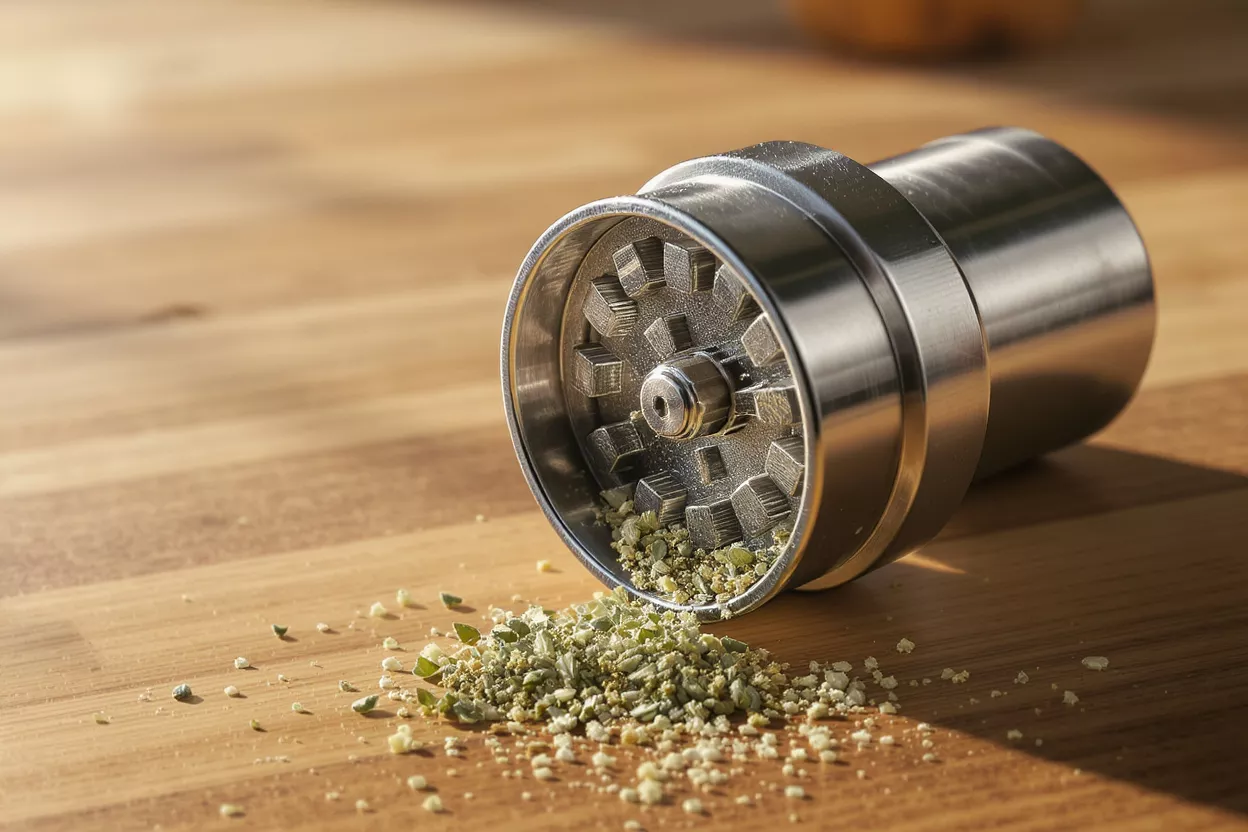
The mechanics of a grinder are deceptively simple. Two plates studded with teeth face each other, and as you twist the halves in opposite directions, the teeth shear the flower into smaller and smaller fragments. Diamond-shaped or pyramid teeth are the most common because they grip and cut rather than merely crush, producing a fluffier, more even grind.
In multi-chamber designs, the ground material does not simply sit between the teeth. Holes in the grinding chamber act as a sieve, allowing particles to fall through only once they reach the right size. This is the clever part of the engineering: the flower keeps tumbling and shearing until it is fine enough to drop into the collection chamber below, ensuring consistency without you having to think about it.
The role of magnets and threading: Quality grinders use a neodymium magnet to hold the lid in place, preventing accidental spills and keeping the contents secure during transport. Smooth, well-machined threading between chambers matters too, because gritty or misaligned threads make twisting a chore and shorten the tool's lifespan. The smoother the action, the better the milling experience.
Types of Grinders Explained
Not all grinders are built the same, and the design you choose shapes how you handle your flower day to day. The market generally breaks down into a handful of distinct styles, each with trade-offs in convenience, price, and the quality of the grind they deliver.
Manual twist grinders dominate the category because they balance affordability with control. But electric grinders, card-style grinders, and grinder-rollers all carve out their own niches for people with specific priorities, whether that is speed, portability, or accessibility for those with limited hand strength.
- 🌀 Two-piece grinders: The simplest design — a top and bottom that grind flower with nowhere for it to fall through. Compact and cheap, but no kief collection.
- ⚙️ Three-piece grinders: Add a collection chamber beneath the teeth so ground material drops away cleanly, keeping the grind from over-processing.
- 💎 Four-piece grinders: Include a mesh screen and a dedicated kief chamber, separating fine pollen-like crystals for later use.
- ⚡ Electric grinders: Battery or plug-powered for one-handed, effortless milling — ideal for those with arthritis or joint pain.
- 💳 Card grinders: Flat, wallet-sized graters for travel, sacrificing grind quality for ultimate portability.
What Is a 4-Piece Grinder
The four-piece grinder is widely considered the gold standard for everyday users, and for good reason. It stacks four separate components: the toothed lid, the grinding chamber with sieve holes, a mesh screen, and a bottom kief catcher. Each layer serves a purpose, and together they turn a simple twist into a multi-stage refining process.
When you grind in a four-piece, the herb falls through the sieve into the storage chamber while the finest particles — the loose kief — sift through the mesh screen and accumulate in the bottom chamber. Over weeks of regular use, that collected kief becomes a potent bonus you can sprinkle on a bowl or press into hash.
Why the extra chambers are worth it: Some people balk at paying more for additional layers, but the kief that collects over time often justifies the upgrade on its own. That concentrated dust is among the most potent material your flower produces, and catching it instead of losing it to the grinding teeth turns a routine tool into a slow-accumulating reward.
Grinder Materials Compared
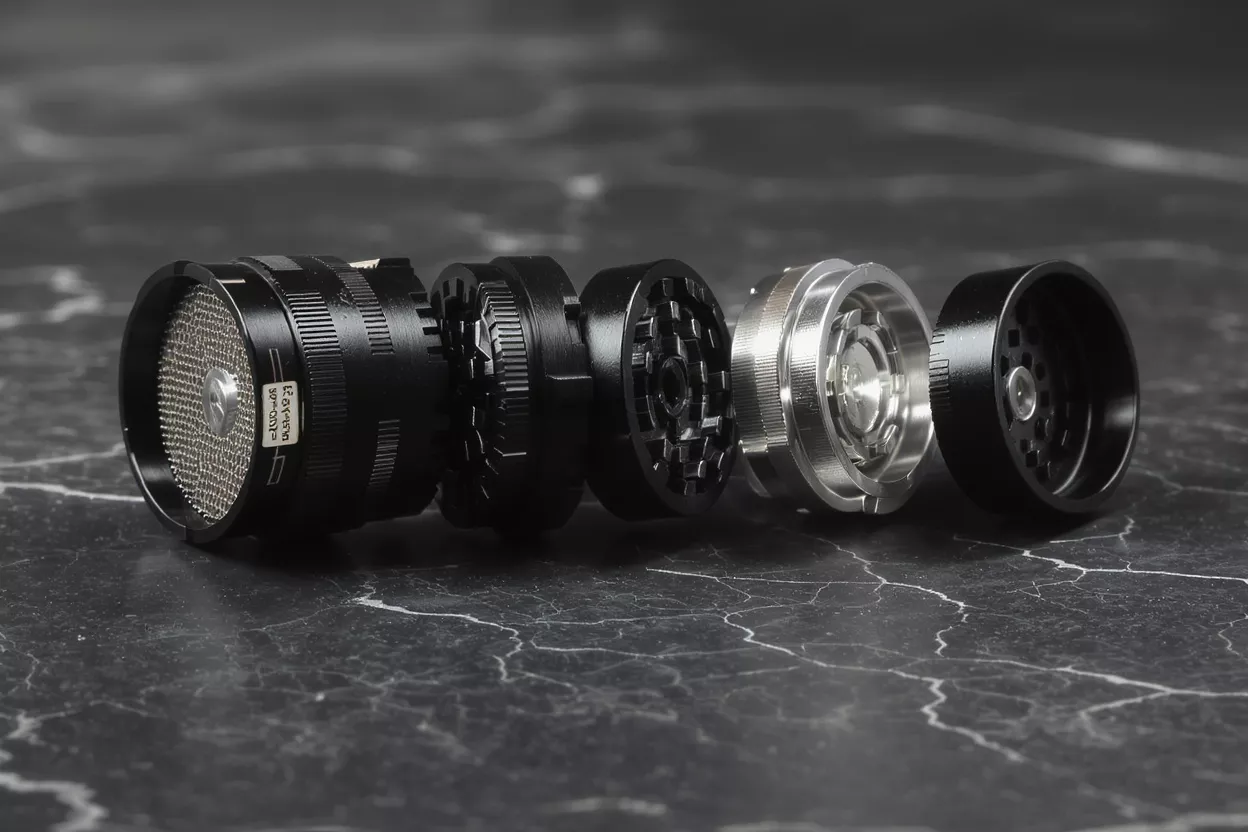
The material a grinder is made from affects its durability, weight, and how it interacts with your flower. The three dominant choices are aluminum, stainless steel, and various forms of acrylic or wood, and each appeals to a different kind of user.
Aircraft-grade aluminum is the most popular choice for a reason: it is lightweight, corrosion-resistant, and machines into sharp, precise teeth. Steel grinders are heavier and nearly indestructible, prized by people who want a tool that will outlast everything else in their kit. Wooden and acrylic grinders lean toward aesthetics or budget, though they generally trade longevity for looks or low cost.
- 🛩️ Aluminum: Lightweight, durable, and resistant to corrosion. The everyday standard with the best balance of price and performance.
- 🔩 Stainless steel: Heavier and tougher than aluminum, with excellent longevity, though it commands a premium price.
- 🌳 Wood: Beautiful and traditional, but the teeth are often metal pins and the wood can absorb moisture over time.
- 🧊 Acrylic: The cheapest option, transparent so you can watch the grind, but the teeth dull quickly and crack under stress.
Benefits of Using a Grinder
The advantages of using a dedicated grinder go well beyond convenience. The most immediate payoff is an even, consistent grind that burns predictably, but the ripple effects touch nearly every part of the experience, from potency preservation to economy of material.
Consistency is the foundation. When every particle is roughly the same size, heat distributes evenly through the material, which means smoother draws and fewer harsh, scorched pockets. A finer, more uniform grind also exposes more surface area, helping you extract more from less flower — a meaningful benefit when you consider the cost of quality buds over time.
Preserving potency and reducing waste: Because a grinder keeps sticky trichomes off your fingers and channels kief into a collection chamber, you lose far less of the potent material that hand-breaking sacrifices. Over months of use, that preservation adds up to noticeably more value from the same amount of flower, making the grinder pay for itself in saved material alone.
What Is a Kief Catcher
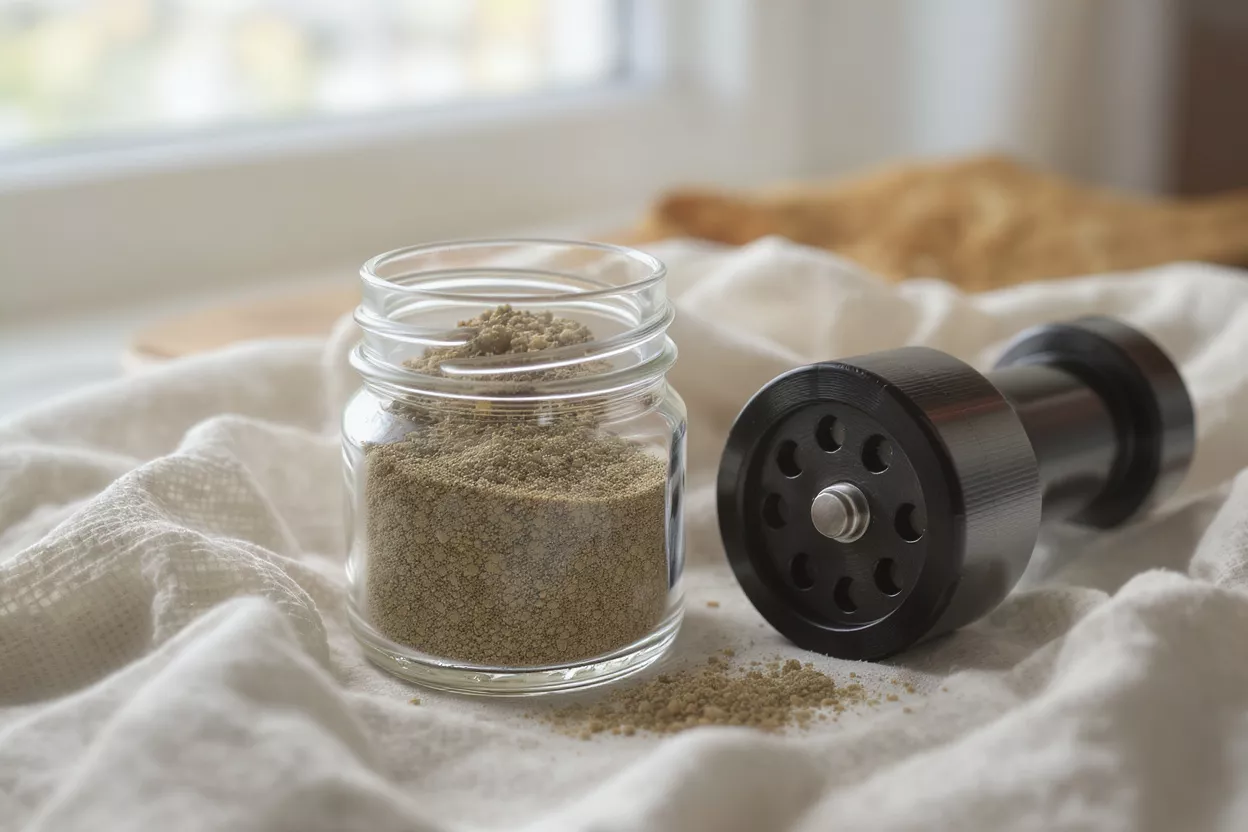
A kief catcher is the bottom chamber of a four-piece grinder, separated from the storage chamber by a fine mesh screen. As you grind and the chambers tumble against each other, microscopic trichome heads break free and sift through the screen, settling into this dedicated reservoir as a pale, powdery collection.
Kief is essentially raw, unpressed cannabis resin — the same material that becomes hash when compressed. Because it is concentrated trichomes, kief carries a much higher potency than the surrounding flower, which is why catching and saving it matters so much. Many grinders include a small scraper tool specifically for sweeping kief off the screen and out of the chamber.
What to do with collected kief: Once you have accumulated a meaningful amount, the options open up. Sprinkle it over a packed bowl for an extra kick, twist it into a joint, press it into a slab of hash, or sift it into homemade edibles. A pollen press takes the process further, compacting loose kief into a solid, storable disc.
How to Clean a Grinder Properly
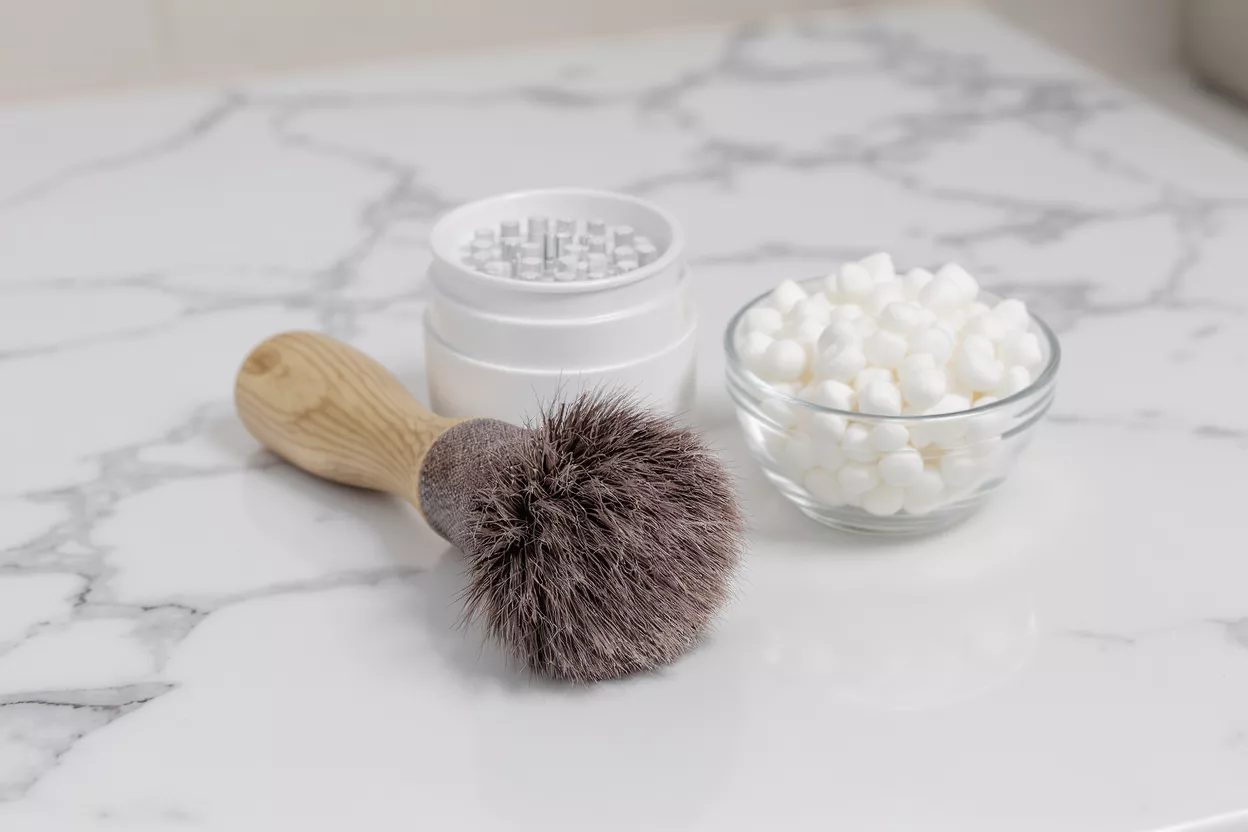
Over time, resin builds up on the teeth and threading, making the grind sluggish and the twisting action gritty. A dirty grinder also harbors a sticky residue that can muddy the flavor of your flower, so periodic cleaning keeps both performance and taste at their best.
The most common method for metal grinders involves isopropyl alcohol. Disassemble all the chambers, submerge the metal parts in high-proof alcohol, and let them soak until the resin loosens. A toothbrush or small brush scrubs the stubborn buildup from the teeth and screen, after which a thorough rinse and complete drying restores the tool to near-new condition.
- 🔧 Disassemble fully: Separate every chamber and tap out loose material before cleaning begins.
- 🧴 Soak in alcohol: Submerge metal parts in isopropyl alcohol for fifteen to thirty minutes to dissolve resin.
- 🪥 Scrub the teeth: Use an old toothbrush to work loose any residue clinging to teeth and threads.
- 💧 Rinse and dry: Rinse with warm water and let parts dry completely before reassembling.
Best Grinder for Your Needs
Choosing the right grinder comes down to honestly assessing how you use cannabis and what you value most. A casual user who rolls occasionally has very different needs from a daily consumer who wants to harvest kief, and there is no single grinder that wins for everyone.
For most people, a four-piece aluminum grinder in the two-and-a-half-inch range hits the sweet spot: large enough to grind a meaningful amount at once, durable enough to last years, and equipped with a kief catcher for long-term rewards. Those with hand mobility issues should look seriously at electric models, while frequent travelers might keep a compact card grinder as a backup.
Matching the grinder to your routine: Think about volume and portability before brand or aesthetics. If you grind large quantities for edibles or share with friends, a wide-diameter grinder saves time. If you prioritize discretion and a slim profile, a smaller two-piece or card design slips into a pocket without a bulge. Let the way you actually consume guide the purchase.
Grinder Care and Longevity Tips
A well-made grinder is a long-term investment, and a little care goes a long way toward keeping it performing like new for years. Beyond periodic deep cleaning, small habits — like avoiding overfilling and not forcing the twist when it sticks — protect the teeth and threading from premature wear.
Store your grinder somewhere dry and avoid leaving it overpacked between sessions, since trapped moisture and old material accelerate resin buildup. If the magnet weakens or the threading wears, those are signs the tool has seen heavy use, but high-quality aluminum and steel grinders routinely outlast far more expensive accessories in a kit.
In the end, a grinder is the small, unglamorous tool that quietly elevates everything else you do with your flower. From the even burn it delivers to the kief it patiently collects, the right grinder rewards the modest investment many times over. Choose one built from durable material, keep it clean, and it will serve you faithfully through countless sessions — a humble device that punches well above its weight in any setup.




Comments