

Moisture content
Learn how moisture content affects cannabis quality, storage, and safety.
What Is Moisture Content in Cannabis
Moisture content refers to the percentage of water present in cannabis flower relative to its total weight. Freshly harvested plants can hold upwards of 75% water, while properly finished flower sits in a much narrower window. This single variable influences nearly every downstream characteristic of the final product, from how the flower burns to how long it remains safe to consume. Understanding moisture content is foundational for anyone serious about preserving the quality of their cannabis.
The water in cannabis exists in two broad forms: free water sitting on and between plant tissues, and bound water held within cellular structures. During drying, free water evaporates first and relatively quickly, while bound water releases slowly over days. This is why a bud can feel dry on the outside yet still hold considerable moisture deep within its core, a distinction that trips up many first-time growers.
Because moisture content is expressed as a ratio, it shifts as water leaves the plant. A flower that loses half its water weight does not simply read "half dry" on a meter; the calculation accounts for the remaining solid plant matter, which is why precision instruments matter when you want a reliable reading rather than a guess based on feel.
Why Moisture Content Matters for Quality
Cannabinoid and terpene preservation: Moisture content has a direct relationship with the volatile compounds that define a strain's character. When flower is dried too aggressively, fragile terpenes evaporate alongside the water, stripping away aroma and flavor. Retaining the correct amount of moisture keeps these compounds locked in the resin glands where they belong.
Smoothness of the smoke: Overly dry flower burns hot and harsh, producing an acrid smoke that scratches the throat. Properly hydrated flower combusts more evenly, delivering a smoother experience and a more complete expression of the strain's flavor profile. The difference between 8% and 15% moisture is immediately noticeable to an experienced consumer.
Beyond sensory qualities, moisture content affects the perceived weight and density of flower. This carries practical and economic weight for both commercial operations and home growers, since water is heavy and a few percentage points of moisture can meaningfully change how a batch weighs out and how it performs over time.
Ideal Moisture Content for Stored Cannabis
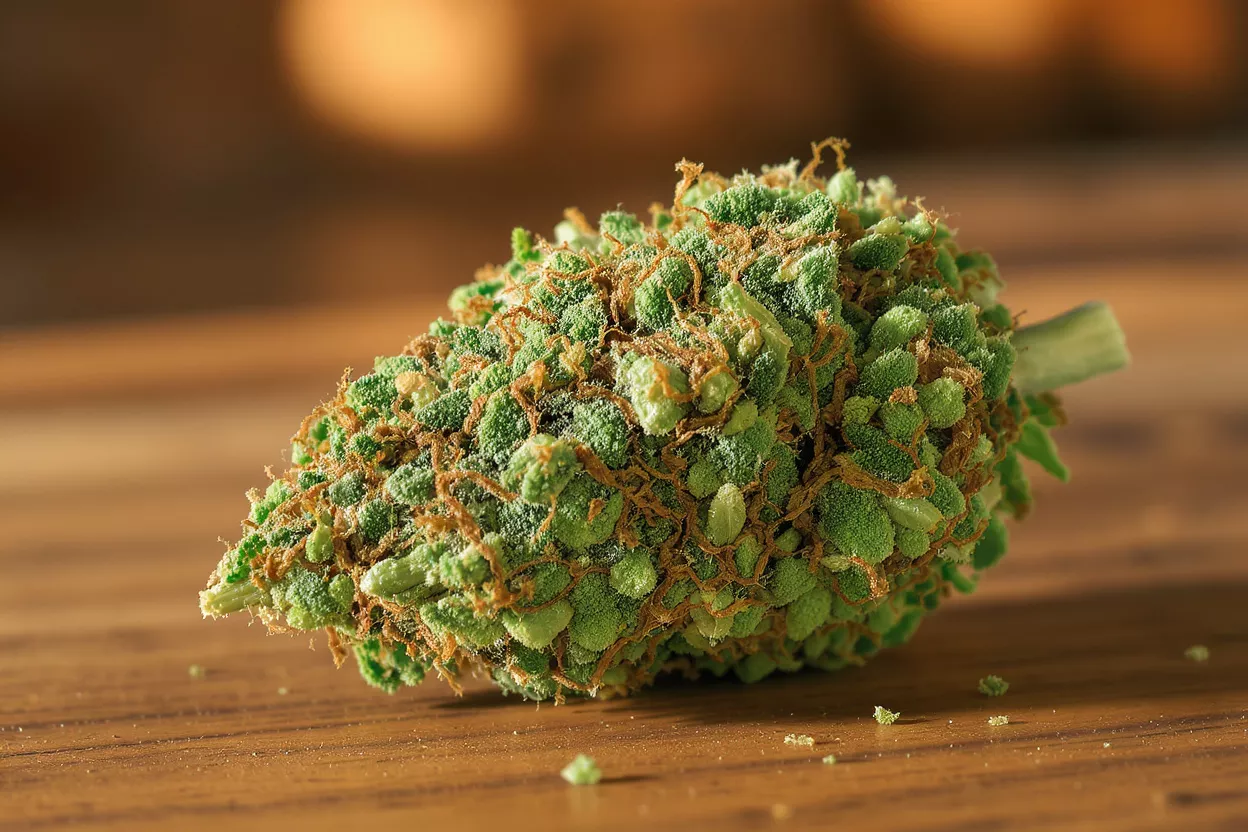
The widely accepted target range for finished, storage-ready cannabis falls between roughly 10% and 12% moisture content. Within this band, the flower is dry enough to resist microbial colonization yet retains enough water to preserve terpenes and provide a pleasant smoke. Drifting too far in either direction introduces problems that are difficult to reverse.
Relative humidity in the storage environment is the practical lever most people use to maintain this balance. Flower equilibrates with the air around it, so controlling the humidity inside a sealed container effectively sets the moisture content of the bud over time.
- 💧 Below 8%: Flower becomes brittle, terpenes degrade, and the smoke turns harsh and hot.
- ✅ 10–12%: The ideal window for preserving aroma, potency, and a smooth burn.
- ⚠️ Above 15%: Risk of mold and bacterial growth climbs sharply, threatening the entire batch.
- 🌡️ 55–62% RH: The relative humidity range that keeps stored flower within the target moisture band.
How Moisture Content Is Measured
Hygrometers and humidity packs: The most accessible method for hobbyists is monitoring relative humidity inside a sealed container with a small digital hygrometer. While this measures the air rather than the flower directly, the two equilibrate, giving a reliable proxy for moisture content once the container has settled for several hours.
Moisture analyzers and loss-on-drying: Commercial labs and serious producers use loss-on-drying instruments that weigh a sample, heat it to drive off all water, then weigh it again. The difference reveals the exact water percentage. This destructive but precise method is the standard against which simpler tools are calibrated.
For most people, a combination of feel, visual inspection, and a hygrometer reading provides enough accuracy. The classic "stem snap" test, where a stem breaks cleanly rather than bending, offers a rough field check, though it lacks the precision needed for fine-tuning a batch destined for long-term storage.
Moisture Content During the Drying Process
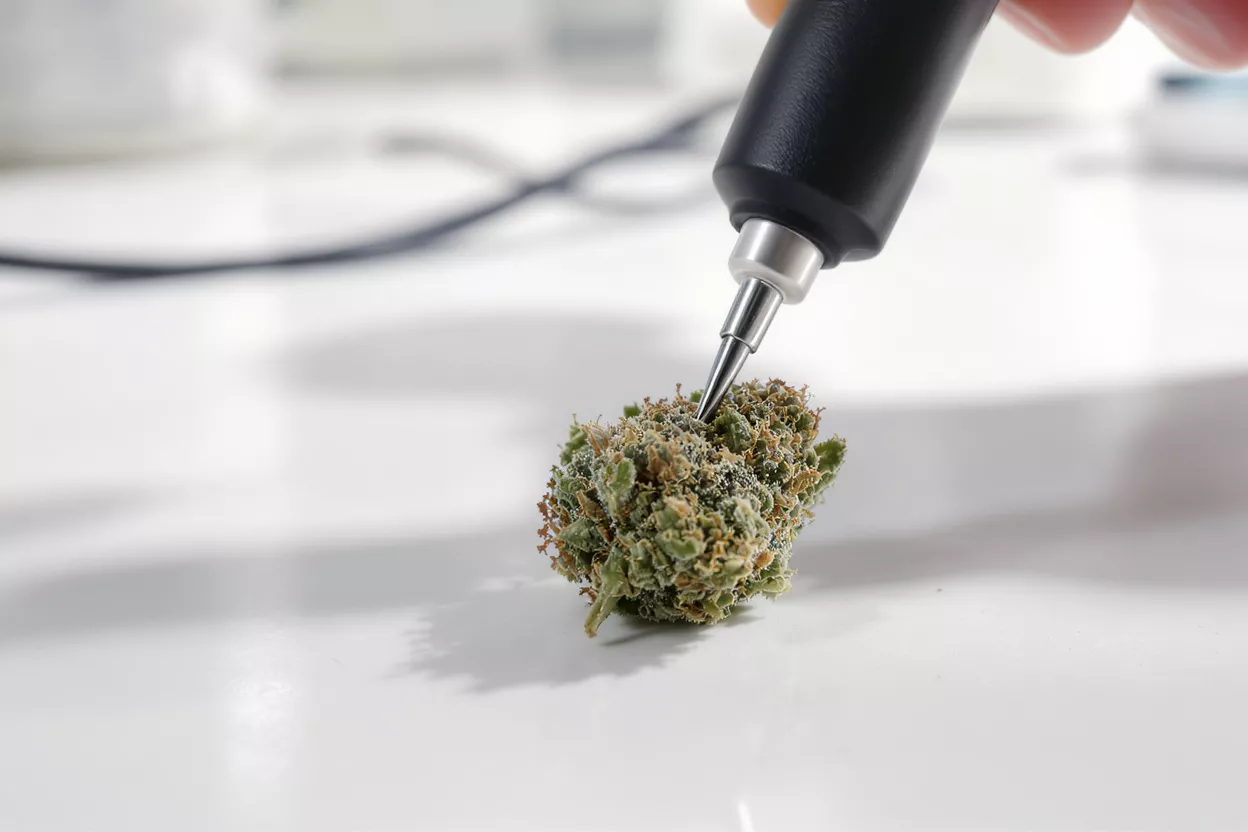
Drying is the first and most aggressive stage of moisture reduction, taking freshly harvested flower from roughly 75% water down to the 10–15% range over the course of seven to fourteen days. The goal is to remove the bulk of the water slowly enough that the outer layers do not seal off and trap moisture inside, which would invite mold during later stages.
Environmental control during drying: A controlled space held around 60°F to 70°F with relative humidity near 50% encourages even, gradual water loss. Rushing this stage with heat or aggressive airflow drives off terpenes and creates the outside-dry, inside-wet problem that ruins otherwise excellent flower.
Air circulation matters as much as temperature. Gentle, indirect airflow prevents stagnant pockets where humidity climbs and microbes take hold, while avoiding the harsh direct wind that desiccates surfaces prematurely. The balance is delicate, and patience during drying pays dividends in the final moisture content.
How Curing Balances Moisture Content
Curing follows drying and is where moisture content is fine-tuned and stabilized. Once flower reaches the rough target range, it goes into sealed containers where the remaining bound water redistributes evenly throughout the bud. This redistribution is the heart of a good cure and cannot be rushed.
The role of burping: During the first weeks of curing, growers open or "burp" their containers daily to release humid air and introduce fresh, drier air. This gradual exchange pulls the moisture content down to its final resting point while preventing the buildup of trapped humidity that breeds anaerobic bacteria.
A proper cure typically runs two to four weeks at minimum, though many connoisseurs extend it for months. Throughout this period the moisture content settles into a stable equilibrium, and the harshness of fresh flower mellows as residual chlorophyll and sugars break down, leaving a smoother, more flavorful product.
Moisture Content and Microbial Risk
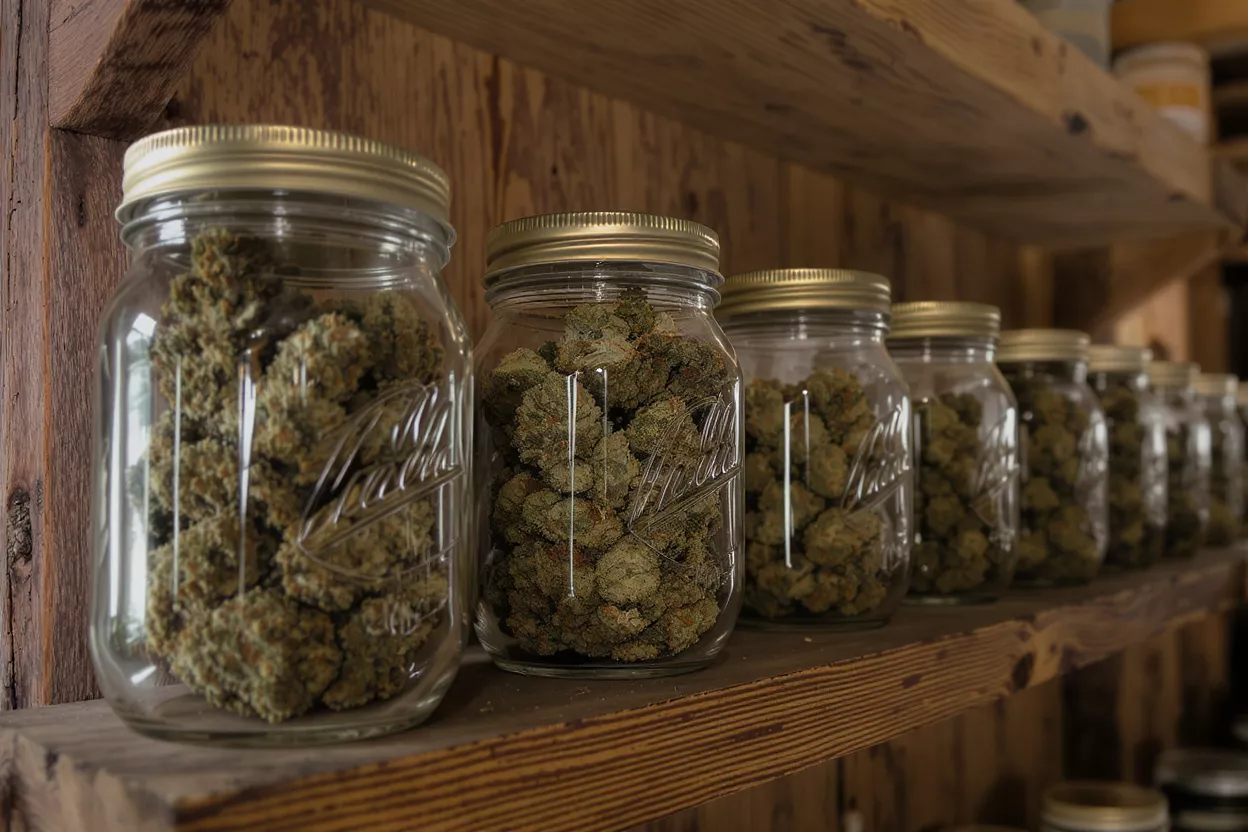
Excess moisture content is the single greatest enabler of microbial contamination in stored cannabis. Mold spores and bacteria are nearly always present on plant material, lying dormant until conditions allow them to flourish. Water is the trigger that wakes them, which is why keeping moisture below the danger threshold is non-negotiable for safety.
Recognizing contamination: Visible signs include white powdery patches, gray fuzz, or a musty, ammonia-like smell that differs sharply from healthy cannabis aroma. Any of these indicators means the flower has held too much moisture for too long and should not be consumed, as inhaling mold poses genuine respiratory risks.
- 🔬 Aspergillus: A common mold genus that thrives in damp flower and can cause serious lung infections in vulnerable people.
- 🦠 Botrytis (bud rot): Gray mold that often begins inside dense buds where moisture lingers undetected.
- 👃 Off odors: Ammonia or mildew smells signal anaerobic bacterial activity from trapped humidity.
- 🌫️ Powdery mildew: A white, dusty coating that spreads across surfaces in high-humidity storage.
How Moisture Content Affects Decarboxylation
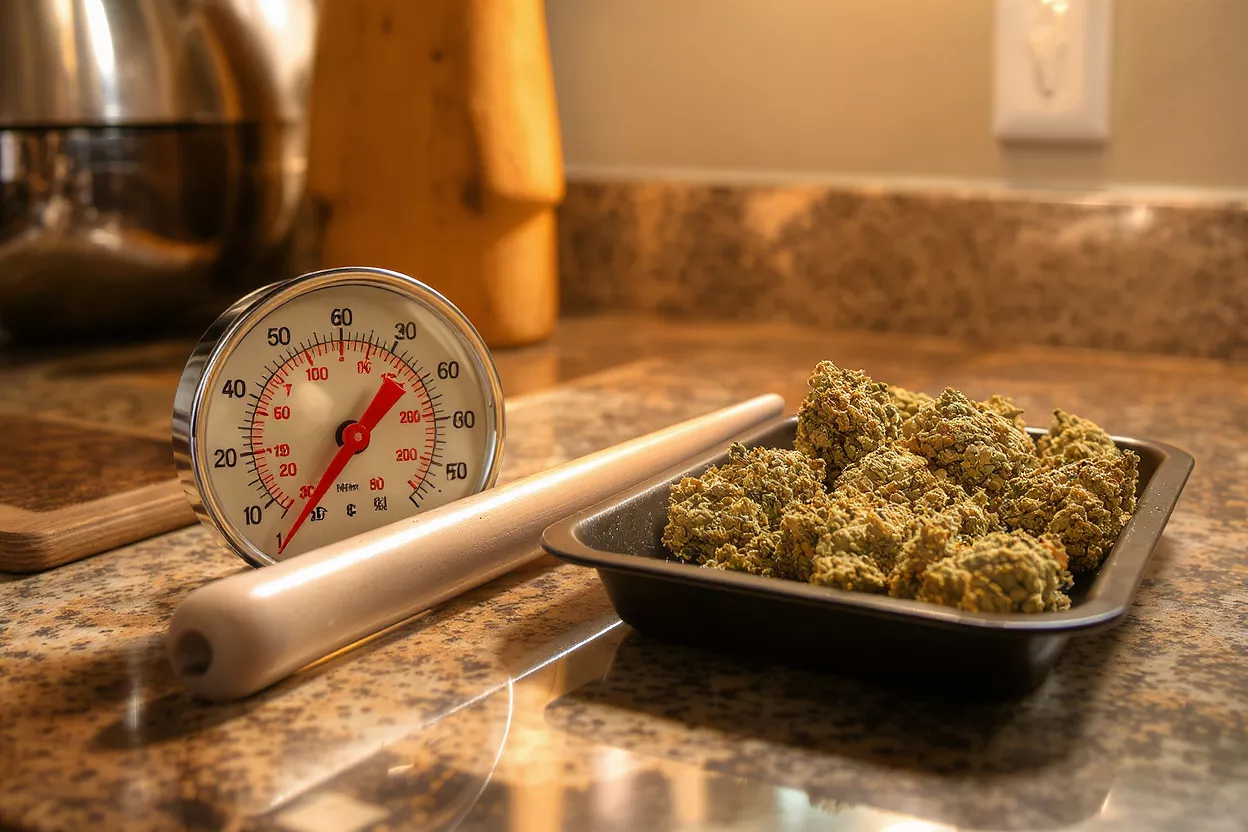
Moisture content plays a quiet but important role in decarboxylation, the heating process that converts acidic cannabinoids like THCA into their active forms. Water in the plant material absorbs heat energy and must evaporate before the flower reaches the temperatures where conversion happens efficiently, so wetter material takes longer to decarboxylate evenly.
Even heating for infusions: When making edibles or infusions, residual moisture creates hot and cold spots that lead to inconsistent activation of cannabinoids. Starting with properly dried flower in the 10–12% range gives predictable, repeatable results that home cooks can rely on for consistent dosing.
That said, bone-dry flower is not the goal here either. Some residual moisture helps distribute heat more gently and protects delicate compounds from scorching. The same balanced moisture content that serves storage and smoking also serves the kitchen, which is convenient for anyone working from a single well-cured jar.
Correcting Moisture Content Problems
Rehydrating overly dry flower: When cannabis has dried past the ideal window and turned brittle, it can often be rescued. Placing a humidity pack or a small piece of food-safe organic material into the sealed container slowly reintroduces moisture over a day or two, restoring suppleness without shocking the flower or inviting mold.
Drying out overly wet flower: Material that reads too high on the hygrometer needs gentle additional drying. Opening the container more frequently, adding a fresh desiccant pack, or briefly spreading the flower in a controlled low-humidity space draws the excess moisture down before microbes can establish themselves.
Speed matters more when correcting wet flower than dry flower, because the microbial clock is already ticking. Catching a high reading early and acting promptly is often the difference between salvaging a batch and losing it. Regular monitoring is the best insurance against either extreme developing unnoticed.
Moisture Content Storage Best Practices
Long-term preservation comes down to controlling the three variables that govern moisture content: humidity, temperature, and light. Airtight glass containers paired with two-way humidity packs hold flower in the ideal range for months, buffering against the swings that ambient conditions would otherwise impose. Glass is preferred over plastic, which can carry static and leach over time.
- 🫙 Glass jars: Airtight, non-reactive containers that lock moisture content in place and shield contents from air exchange.
- 📦 Humidity packs: Two-way regulators that both add and remove moisture to hold a steady 58–62% RH.
- 🌑 Cool, dark storage: Low light and stable temperature slow cannabinoid degradation and prevent condensation.
- 📊 Routine monitoring: A small hygrometer in each jar catches drift before it becomes a problem.
Temperature deserves equal attention because heat accelerates the breakdown of cannabinoids and can drive condensation inside a sealed jar as conditions fluctuate. A cool, stable cupboard away from direct sunlight protects both the chemistry and the moisture balance of stored flower far better than a windowsill or a warm drawer.
Mastering moisture content is the throughline connecting every stage of cannabis handling, from the drying rack to the storage jar to the edibles pot. Hold flower in that 10–12% sweet spot, monitor it with simple tools, and act quickly when readings drift, and you preserve the potency, flavor, and safety that careful cultivation worked so hard to create. It is one of the most rewarding details a cannabis enthusiast can learn to control.

Comments