

Moon rocks
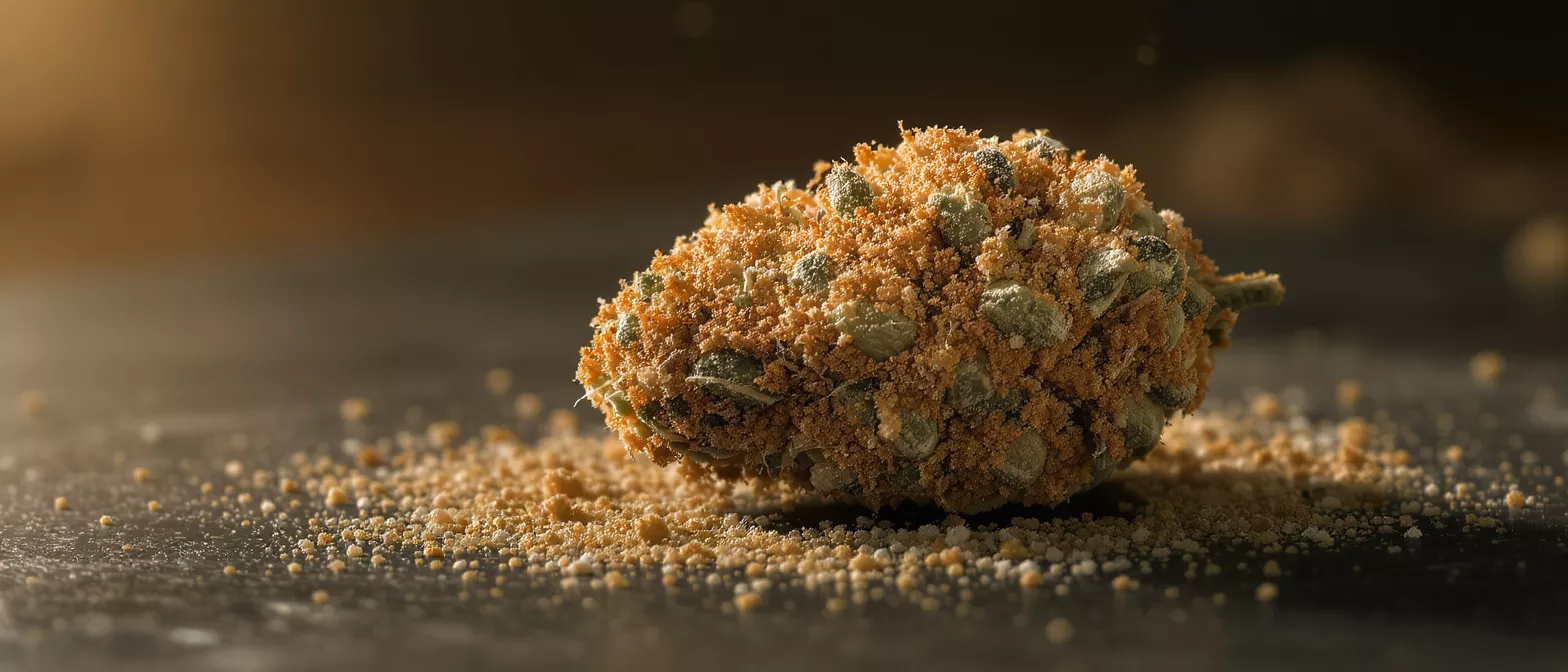
Moon rocks stack flower, hash oil, and kief into one ultra-potent nug.
What Are Moon Rocks in Cannabis?
Moon rocks are one of the most potent forms of cannabis you can find, built by layering three distinct cannabis products into a single, dense nugget. At their core sits a whole bud of premium flower, which is then dipped in or coated with sticky hash oil and finally rolled in a generous dusting of kief. The result is a craggy, frosted sphere that looks more like a moon than a typical green bud, which is where the name comes from.
The appeal of moon rocks lies in stacking concentrates on top of flower. Where a standard bud might test in the range most consumers are accustomed to, these layered creations push potency into territory that demands respect. Each component contributes its own cannabinoids and terpenes, building a product that delivers an experience far more intense than smoking flower alone.
Where moon rocks came from: The concept is widely credited to West Coast rapper Kurupt, who popularized and trademarked a version of the product. Since then, moon rocks have become a staple novelty item in legal markets and a benchmark for anyone curious about how potent cannabis can realistically become before it tips into pure concentrate territory.
How Moon Rocks Are Made Step by Step
Understanding how moon rocks are made helps explain why they hit so hard. The process is deceptively simple but relies on quality at every layer. Producers start with a dense, resinous bud, because a loose or airy nug will not hold up to the weight of the oil and kief it is about to receive.
The three core ingredients: Every authentic moon rock relies on the same trio working together. The bud provides structure and a baseline of cannabinoids, the oil acts as both potency booster and adhesive, and the kief seals everything in a powdery shell of concentrated trichomes.
- 🌙 The bud: A whole, dense flower nugget forms the foundation — usually a high-quality strain chosen for flavor and structure.
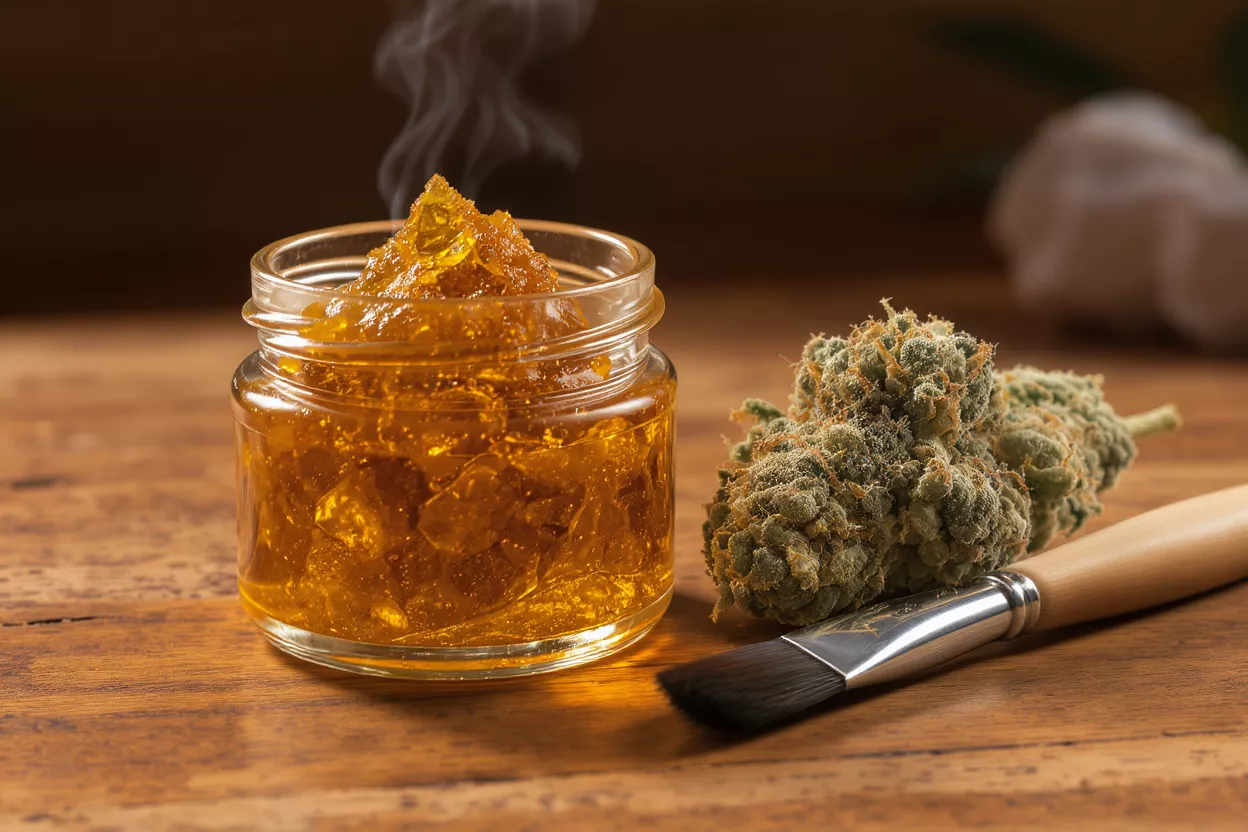
- 💧 The hash oil: Sticky concentrate is brushed, dripped, or sprayed over the bud to coat it and serve as glue.
- ✨ The kief: The oil-covered bud is rolled in collected trichome dust until fully encrusted.
After assembly, the moon rock is typically left to cure and firm up so the oil stabilizes and the kief adheres permanently. Quality producers are careful not to oversaturate the bud, since too much oil leaves a soggy product that burns poorly and never quite dries.
Moon Rocks Potency Explained
Potency is the headline feature of moon rocks, and it is worth breaking down why these nuggets pack such a punch. A typical cannabis flower carries a respectable cannabinoid content on its own, but moon rocks compound that figure by adding two more concentrated layers on top.
Why the numbers climb so high: Hash oil is itself a concentrate, often testing several times stronger than flower. Kief, being pure trichome heads, is similarly loaded with THC and terpenes. Layering these on a potent bud can push a finished moon rock to levels that dramatically outpace the flower it started with.
Because the cannabinoid load is so concentrated, even experienced consumers find that a little goes a long way. The terpene profile also intensifies, since you are combining the aromatic compounds of the original strain with those carried in the oil and kief. This is part of what makes the flavor and aroma of a good moon rock so rich and layered.
What Do Moon Rocks Feel Like to Smoke?
The experience of smoking moon rocks tends to come on strong and last a long while. Because you are consuming flower, oil, and kief simultaneously, the onset can feel heavier than what regular bud produces, and the effects often have a notable body component alongside the cerebral lift.
Many users describe a wave of relaxation that settles into the limbs, paired with an elevated head space that can border on dreamy. The combined entourage effect of stacked cannabinoids and terpenes contributes to a fuller, rounder high than any single component delivers on its own.
Duration and intensity: Expect effects to linger well beyond a typical flower session. The depth of the experience makes moon rocks popular for evening or weekend use rather than a quick daytime puff, since the intensity can be too much to power through a busy schedule.

How to Smoke Moon Rocks the Right Way
Smoking moon rocks takes a little more care than lighting up ordinary flower. Because they are sticky from the oil and dense with kief, they do not crumble neatly into a grinder, and they burn differently than dry bud. Knowing how to handle them keeps the experience smooth.
Why you should not use a grinder: Running a moon rock through a grinder is a quick way to gum up the teeth with oil and lose precious kief to the chamber walls. Instead, break the nugget apart gently with scissors or your fingers into small, manageable pieces.
- 🔥 Glass is your friend: A pipe or bong handles moon rocks better than a paper joint, which can struggle to stay lit.
- ✂️ Cut, do not grind: Use scissors to break off small chunks rather than crushing the whole piece.
- 🌿 Add a flower base: Packing a layer of regular bud beneath the moon rock helps it catch and burn more evenly.
- 🐢 Go low and slow: Apply gentle heat and take your time — these chunks smolder rather than flame quickly.
Patience is the theme throughout. Moon rocks burn slower than flower because of the concentrate content, so do not be surprised if a single small piece keeps a bowl going far longer than you expect.
Moon Rocks vs Regular Flower and Other Concentrates
Placing moon rocks alongside other cannabis options helps clarify where they fit. Compared to regular flower, they are dramatically more potent, slower to burn, and more involved to prepare. Compared to pure concentrates like shatter or wax, they offer a more familiar smoking ritual that still involves combusting plant material.
Where moon rocks sit on the spectrum: Think of them as a bridge between flower and dabbing. You get concentrate-level potency without needing a rig, torch, or nail. That accessibility is a big reason moon rocks appeal to flower smokers who want more intensity but are not ready to invest in dabbing equipment.
The trade-off is consistency. Because moon rocks are handmade and layered, the potency and quality can vary from batch to batch in a way that more standardized concentrates do not. Buying from a reputable source helps ensure the oil and kief used are clean and properly applied.
Types of Moon Rocks You Might Encounter
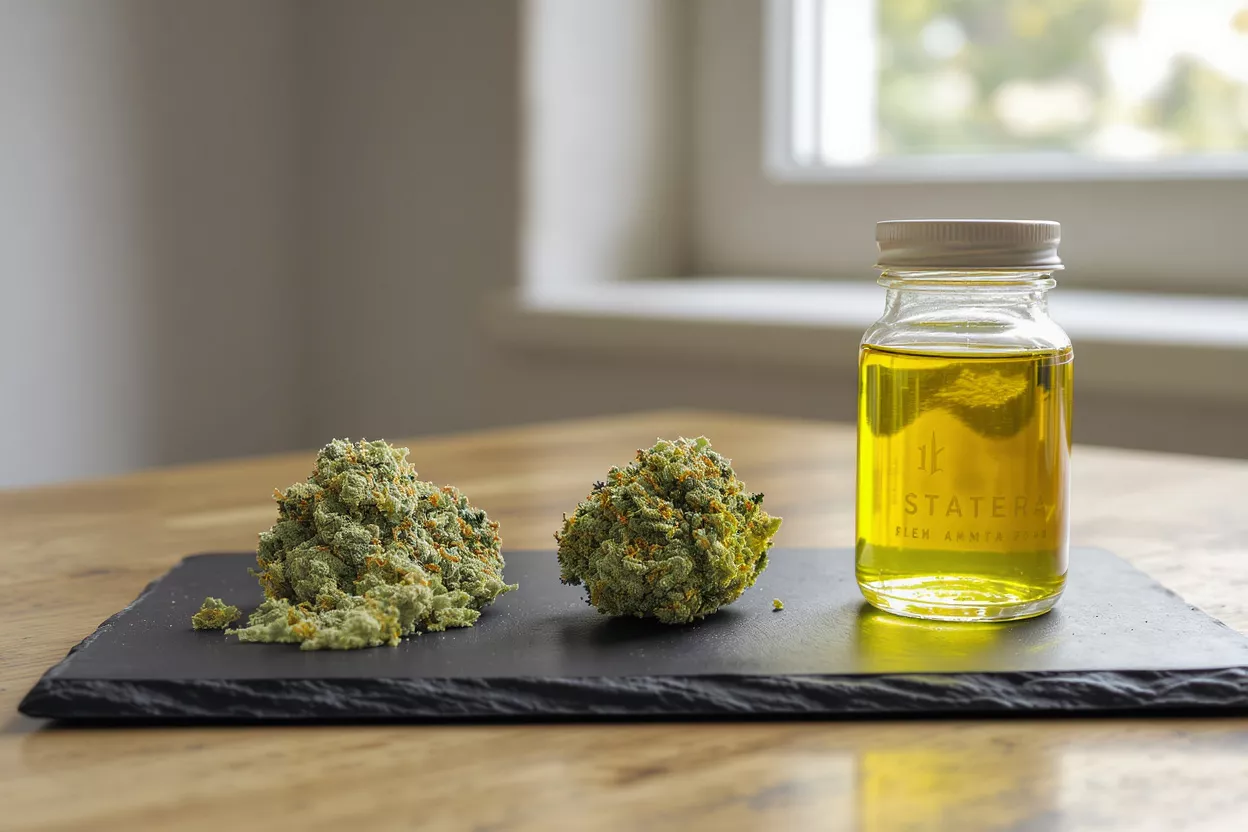
Not all moon rocks are identical, and the category has expanded as producers experiment with different inputs. The strain of the base bud, the type of oil used, and the source of the kief all shape the final character of the product.
Common variations on the classic: Some makers tailor moon rocks around a specific strain to preserve a particular flavor and effect profile, while others lean into novelty with unusual oils or infused twists. The growing market means you can find options suited to different preferences.
- 🌞 Sativa moon rocks: Built on an uplifting base strain for a more energetic, cerebral character.
- 🌚 Indica moon rocks: Centered on a relaxing strain for heavier body effects and evening use.
- 🍋 Strain-specific moon rocks: Crafted with matching oil and kief from the same cultivar for a cohesive flavor.
- 🧊 Sun rocks: A premium cousin using high-grade flower, distillate, and kief from a single strain.
Sun rocks deserve a special mention as the higher-end relative of moon rocks. They typically use top-shelf flower and cleaner concentrates, aiming for an even more refined and potent experience while keeping the same three-layer concept intact.
Moon Rocks Dosing Guide for Beginners
Given how potent moon rocks are, sensible dosing is essential, especially for newcomers. The cardinal rule is to start with far less than you think you need. A small piece of moon rock can deliver effects equivalent to a much larger amount of ordinary flower.
How to approach your first session: Break off a tiny fragment, place it on a base of regular flower, and take a single measured draw before deciding whether to continue. Wait several minutes to gauge how it hits, since the effects can build and may be stronger than they first appear.
Set and setting matter more with a product this strong. Choose a comfortable, familiar environment with no obligations afterward, keep water and a light snack nearby, and avoid mixing with alcohol. Treating moon rocks with the caution you would give any concentrate keeps the experience enjoyable rather than overwhelming.

Are Moon Rocks Safe to Use?
For healthy adults using cannabis responsibly, moon rocks carry the same general safety profile as other cannabis products, with the important caveat that their potency raises the odds of overconsumption. The main risk is not toxicity but the discomfort of getting far higher than intended.
What to watch for: Consuming too much can trigger temporary anxiety, dizziness, a racing heart, or couch-lock that feels unpleasant. These effects fade with time, but they are best avoided by dosing conservatively from the start. Quality of ingredients also matters, since poorly made oil or contaminated kief introduces unnecessary risk.
Sourcing from licensed, tested producers is the single best safeguard. Lab-tested moon rocks confirm what is in the product and screen for residual solvents, pesticides, and contaminants. As with all cannabis, those who are pregnant, nursing, or managing certain health conditions should consult a healthcare professional before use.
How to Store Moon Rocks for Freshness
Proper storage keeps moon rocks performing at their best. Because they are coated in oil and kief, they are more delicate than ordinary buds and can degrade or lose their frosted exterior if handled carelessly. A little attention to storage preserves both potency and flavor.
The basics of keeping them fresh: Store moon rocks in an airtight glass container kept in a cool, dark place away from direct light and heat. Light and warmth break down cannabinoids and terpenes over time, dulling both the strength and the aroma you paid for.
- 🫙 Use airtight glass: A sealed jar protects against air exposure that degrades the concentrate layers.
- ❄️ Keep it cool and dark: A cupboard or drawer away from sunlight and appliances works well.
- 🤏 Handle minimally: Touch them only when ready to use, since heat from your fingers softens the oil and knocks off kief.
Moon rocks are a remarkable showcase of how flower, hash oil, and kief combine into something far greater than the sum of their parts. Whether you are a curious flower smoker looking to level up or a seasoned consumer chasing depth and intensity, understanding how these potent nuggets are built, dosed, and stored lets you enjoy them safely and get the most from every layered, frosty bite.

Comments