


MSO
Discover how an MSO shapes the legal cannabis industry.
What Is an MSO in Cannabis?
An MSO, or multi-state operator, is a cannabis company that holds licenses and runs operations across more than one U.S. state. Because federal prohibition still blocks the interstate transport of cannabis, every state functions as its own closed market with separate licenses, separate facilities, and separate compliance regimes. An MSO is the corporate structure built to operate inside many of those walled gardens at once, replicating cultivation, manufacturing, and retail in each jurisdiction it enters.
The term gained traction as the legal industry matured beyond mom-and-pop dispensaries. Investors and operators needed shorthand for the publicly traded, multi-license enterprises that began consolidating market share around 2017 and 2018. Today the MSO label signals scale, ambition, and a deliberate strategy of geographic diversification rather than a single regional foothold.
Why the "multi-state" part matters so much: In most industries a company simply ships products nationwide from a central plant. Cannabis cannot. A gummy made in an Illinois facility cannot legally cross into Ohio. That single legal constraint forces MSOs to duplicate entire operations in every market, which shapes everything from their cost structure to how they account for a single brand sold under different supply chains in different states.
How Cannabis MSO Business Models Work
Most MSOs pursue what the industry calls vertical integration within each state. That means a single company controls the plant from seed to sale—growing the flower, extracting and formulating it into products, packaging the finished goods, and selling them through company-owned dispensaries. Keeping the chain in-house lets an operator capture margin at every step and maintain consistency across the brands it markets.
Entry strategies vary. Some MSOs build operations from the ground up, applying for licenses and constructing facilities in newly legalized states. Others grow by acquisition, buying established single-state operators to instantly inherit licenses, real estate, and customer relationships. The acquisition route is faster but expensive, and integrating disparate teams and compliance systems is a persistent challenge.
Brand portability is the holy grail: A well-run MSO wants a customer in Massachusetts and a customer in Arizona to recognize the same brand, trust the same potency, and have a similar experience—even though the actual product was grown and made by separate facilities. Achieving that consistency across independent supply chains is one of the hardest operational problems in the sector, and the companies that solve it command real pricing power.
Underpinning all of this is the regulatory layer. Each state dictates how many licenses one company may hold, whether vertical integration is required or forbidden, and how products must be tested and labeled. An MSO's playbook has to bend to fit each rulebook.
Why State-by-State Rules Shape the MSO
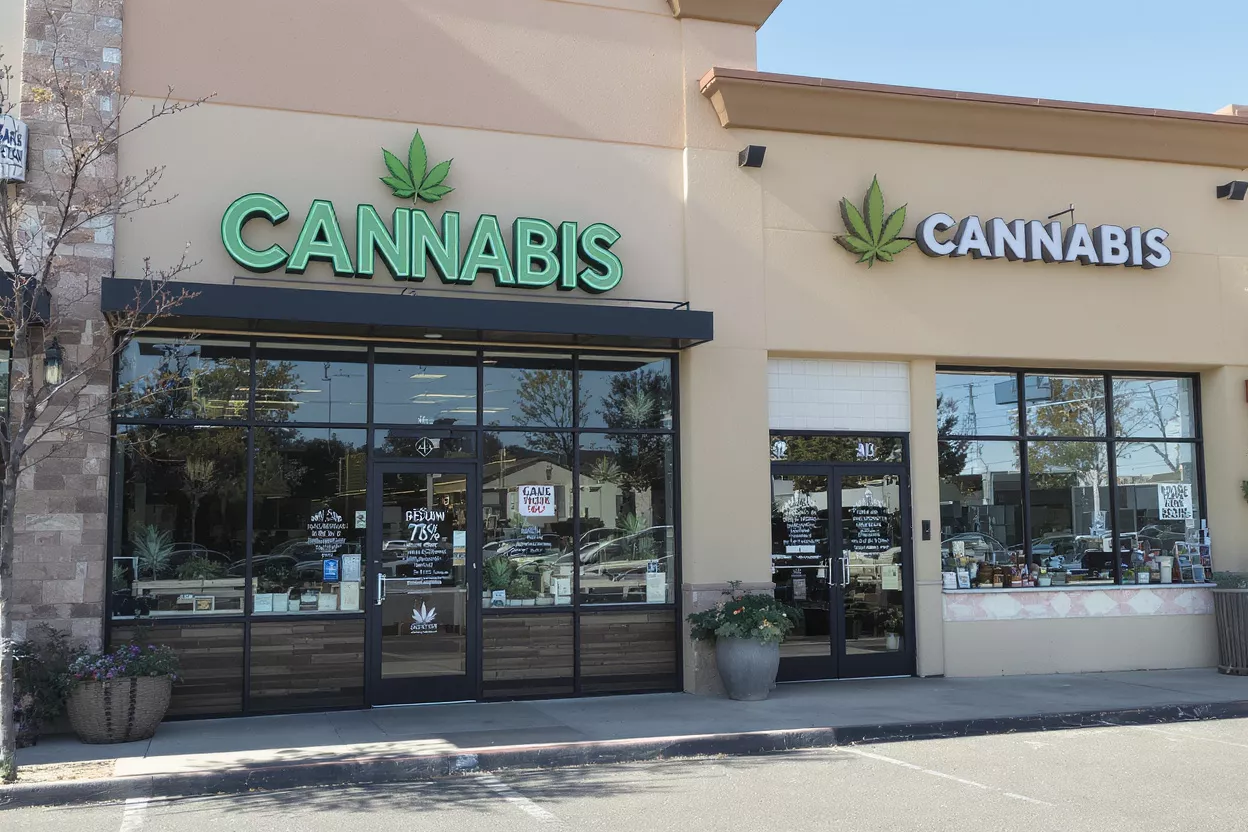
No two cannabis markets in the United States look alike, and that fragmentation is the central fact of MSO life. A state like Florida mandates vertical integration—if you want to sell, you must also grow and process. Other states cap the number of retail licenses any single entity can hold, deliberately preventing the kind of consolidation an MSO craves.
License caps and limited-license states: Some of the most valuable MSO footprints sit in "limited-license" markets, where the state issues only a handful of permits. Scarcity creates a protective moat. An operator that secured one of a dozen licenses in a populous state enjoys limited competition and pricing power that simply doesn't exist in markets like Oklahoma or Colorado, where licenses are abundant and margins are thin.
Tax structures shift across borders too. Excise tax rates, testing requirements, and packaging mandates all change at the state line. An MSO's compliance department is effectively running dozens of separate businesses, each answering to its own regulator, its own seed-to-sale tracking system, and its own renewal calendar.
Vertical Integration and the MSO Supply Chain
Vertical integration is the backbone of the MSO model, but it is not a single uniform strategy—it is a spectrum. On one end sits full integration: the company owns cultivation, extraction, manufacturing, distribution, and retail. On the other end are hybrid models where an operator may grow and process but also sell wholesale to third-party dispensaries, or run dispensaries that stock other brands alongside its own.
The appeal of owning the whole chain is margin and control. When you grow your own biomass, you are not exposed to wholesale price swings, and you can guarantee the inputs for your branded products. You also keep the retail markup that would otherwise go to an independent store.
The risks are just as real. Building cultivation and manufacturing in every state ties up enormous capital in real estate and equipment. If demand in a market softens or wholesale prices collapse, the operator is stuck with fixed costs it cannot easily shed. Here is how the typical MSO supply chain breaks down within a single state:
- 🌱 Cultivation: Indoor, greenhouse, or outdoor grows produce the raw flower and biomass.
- ⚗️ Processing: Extraction and formulation turn flower into concentrates, edibles, and vapes.
- 📦 Packaging: Products are labeled and sealed to meet that state's specific compliance rules.
- 🚚 Distribution: Internal logistics move goods to owned stores or wholesale partners.
- 🛒 Retail: Company-owned dispensaries sell directly to consumers and patients.

MSO vs Single-State Operator: Key Differences
A single-state operator, or SSO, concentrates everything in one market. That focus has real advantages: deep local knowledge, simpler compliance, lower overhead, and the ability to react quickly to a single regulator. Many of the most profitable cannabis businesses in the country are disciplined SSOs that never tried to expand beyond their home turf.
The MSO trades that simplicity for scale and diversification. By spreading across many states, an MSO insulates itself from any single market's misfortune—a price crash in one state can be offset by strength in another. That diversification is also a story investors like, since it resembles the geographic spread of a conventional consumer goods company.
The tradeoffs come down to a few clear distinctions:
- 🗺️ Footprint: MSOs operate in many states; SSOs commit to one.
- ⚙️ Complexity: MSOs juggle multiple regulators and tracking systems; SSOs answer to one.
- 💰 Capital needs: MSOs require far more cash to duplicate operations everywhere.
- 🛡️ Risk profile: MSOs diversify market risk; SSOs concentrate it but stay nimble.
- 🏷️ Branding: MSOs chase multi-state brand recognition; SSOs build local loyalty.
Neither model is inherently superior. The right structure depends on capital access, management depth, and whether leadership believes federal reform will eventually reward national scale.
How MSO Companies Raise and Spend Capital
Because cannabis remains federally illegal, MSOs are largely shut out of traditional U.S. financing. Most major banks won't lend to them, and federally chartered exchanges like the NYSE and Nasdaq generally won't list plant-touching companies. As a result, the largest American MSOs trade on Canadian exchanges and over-the-counter U.S. markets, raising money through channels most industries take for granted.
Where the money comes from: MSOs lean heavily on private placements, sale-leaseback deals on their real estate, and high-interest debt. Specialized cannabis REITs buy an operator's cultivation facilities and lease them back, freeing up cash but adding rent obligations. The cost of capital in cannabis is steep, which is why disciplined balance-sheet management separates the survivors from the casualties.
On the spending side, capital flows toward licenses, facility buildouts, and acquisitions. A new cultivation site can cost tens of millions before it produces a single salable gram, and many MSOs grew aggressively during boom years only to confront a harsh reckoning when valuations fell and credit tightened. The lesson many learned: expansion for its own sake destroys value if the underlying markets aren't profitable.

Are Cannabis MSO Stocks a Good Investment?
Cannabis MSO stocks have a reputation for volatility, and that reputation is earned. Share prices have swung wildly on regulatory rumors, earnings surprises, and shifting expectations about federal reform. For investors, an MSO is less a bet on a single product and more a bet on the trajectory of American cannabis policy and each company's ability to operate profitably under brutal constraints.
What separates a strong MSO from a weak one: Look past the press releases at the fundamentals. Positive operating cash flow, manageable debt, exposure to limited-license states with real pricing power, and a track record of integrating acquisitions are the markers of durability. Revenue growth alone means little if it was bought with debt the company cannot service.
The single biggest swing factor is federal policy. Reforms such as access to normal banking, relief from the punishing tax burden imposed by Section 280E, or eventual rescheduling would dramatically improve MSO economics overnight. That potential upside is exactly why the sector attracts speculative capital despite its history of painful drawdowns. Investors should treat MSO equities as high-risk positions, not steady blue chips.
Largest Cannabis MSO Operators to Know
A handful of names dominate the U.S. multi-state landscape, having assembled footprints across the most lucrative limited-license markets. Companies like Curaleaf, Trulieve, Green Thumb Industries, Verano, and Cresco Labs are frequently cited as the largest operators by revenue and geographic reach, each pursuing a slightly different blend of organic growth and acquisition.
Different paths to the top: Some operators built their strength on a dominant home-state position—Trulieve's commanding share of the Florida market is a textbook example of leveraging a vertically integrated, limited-license stronghold. Others, like Green Thumb Industries, earned attention for reaching consistent profitability earlier than peers, proving the model can generate real cash rather than just revenue.
It's worth remembering that rankings shift as the industry consolidates. Mergers reshuffle the leaderboard, and a company that looks dominant in one cycle can stumble when a key market saturates or a costly acquisition fails to integrate. The takeaway for anyone studying the sector is to evaluate operators on durable fundamentals rather than headline size alone.
MSO Challenges: Banking, Taxes, and Compliance
The defining hardship of MSO life is Section 280E of the federal tax code. Because cannabis is a Schedule I substance, plant-touching businesses cannot deduct ordinary expenses like marketing, rent, or payroll the way other companies do. The result is an effective tax rate that can exceed 70 percent, crushing margins that would be healthy in any other industry.
The banking problem compounds everything: With most banks unwilling to serve cannabis companies, many MSOs operate partly in cash, which raises security costs and complicates everything from payroll to vendor payments. Legislation to normalize cannabis banking has been debated in Congress for years, and its passage would meaningfully lower the friction operators face every day.
Then there is the sheer weight of compliance. Each state runs its own seed-to-sale tracking system, its own testing standards, and its own labeling rules. An MSO must staff and software-equip a compliance function capable of satisfying every regulator simultaneously. A single misstep—a failed lab test, a labeling error, a missed renewal—can jeopardize a license worth tens of millions of dollars.
The Future of the Cannabis MSO
The long-term thesis behind the MSO model rests on a single assumption: that federal policy will eventually ease, allowing the patchwork of state markets to knit into something closer to a national industry. If interstate commerce ever becomes legal, the operators with the broadest footprints and strongest brands would be positioned to consolidate quickly and finally realize the efficiencies that prohibition currently forbids.
Rescheduling and its ripple effects: A move of cannabis from Schedule I to Schedule III would not legalize it federally, but it would lift the 280E tax burden, instantly improving profitability across the sector. That kind of reform would reward disciplined operators and could trigger a fresh wave of consolidation as healthier balance sheets enable new acquisitions.
For now, the smart MSOs are focused on what they can control: tightening operations, paying down debt, deepening their positions in profitable limited-license states, and building brands that travel. The companies that survive the current shakeout by mastering fundamentals—rather than chasing growth for its own sake—are the ones most likely to thrive if and when the regulatory landscape finally shifts. The multi-state operator remains one of the most ambitious and closely watched structures in the entire cannabis economy, a bet on both operational excellence and the slow arc of policy reform.





Comments