


Mycotoxin
Learn what a mycotoxin is, how it forms on cannabis, and why it's dangerous.
What Is a Mycotoxin in Cannabis?
A mycotoxin is a toxic chemical compound produced as a secondary metabolite by certain species of mold and fungi. When these microorganisms colonize organic material—including cannabis flower—they can release these byproducts as part of their natural defense and growth processes. Unlike the visible mold itself, a mycotoxin is invisible, odorless, and chemically stable, which means it can persist long after the fungus that created it has been removed or destroyed.
The word combines the Greek "mykes" (fungus) and "toxikon" (poison), and that etymology captures the problem neatly: these are poisons made by fungi. In the context of cannabis, mycotoxins matter because consumers often inhale, vaporize, or ingest the plant material directly. That route of exposure bypasses many of the protective barriers the body uses when processing food, making contamination a genuine safety concern rather than a theoretical one.
Why mycotoxins differ from mold: It is a common misconception that removing visible mold makes a product safe. The fungal organism and the toxin it secretes are two separate things. Heat from combustion or vaporization will not reliably neutralize a mycotoxin, and trimming away a moldy patch does not guarantee the surrounding tissue is free of toxin. This is precisely why laboratory screening exists rather than relying on the naked eye.
How Mycotoxins Form on Cannabis
Mycotoxin formation is a story about moisture, temperature, and time. Fungal spores are ubiquitous in the environment—they drift through the air and settle on virtually every surface. They remain dormant and harmless until they encounter conditions favourable for growth: typically elevated humidity, warm temperatures, and a nutrient source like the sugars and plant matter in cannabis flower. Once active, the colony grows, and under stress or competition it begins producing toxic metabolites.
The cultivation and post-harvest phases each present distinct windows of vulnerability. A dense flower with poor airflow during the late flowering stage can trap moisture deep inside the bud, creating an anaerobic pocket where mold thrives undetected. The drying and curing stages are equally critical—rushing or mishandling them leaves residual moisture that fuels fungal activity.
The conditions that trigger toxin production: Not all mold automatically produces a mycotoxin. Many fungi only switch on toxin synthesis when they experience environmental stress, nutrient competition, or fluctuating conditions. This is part of why inconsistent storage—repeated cycles of warming and cooling, or humidity swings—can be more dangerous than stable but slightly imperfect conditions. The fungus interprets instability as a threat and responds chemically.
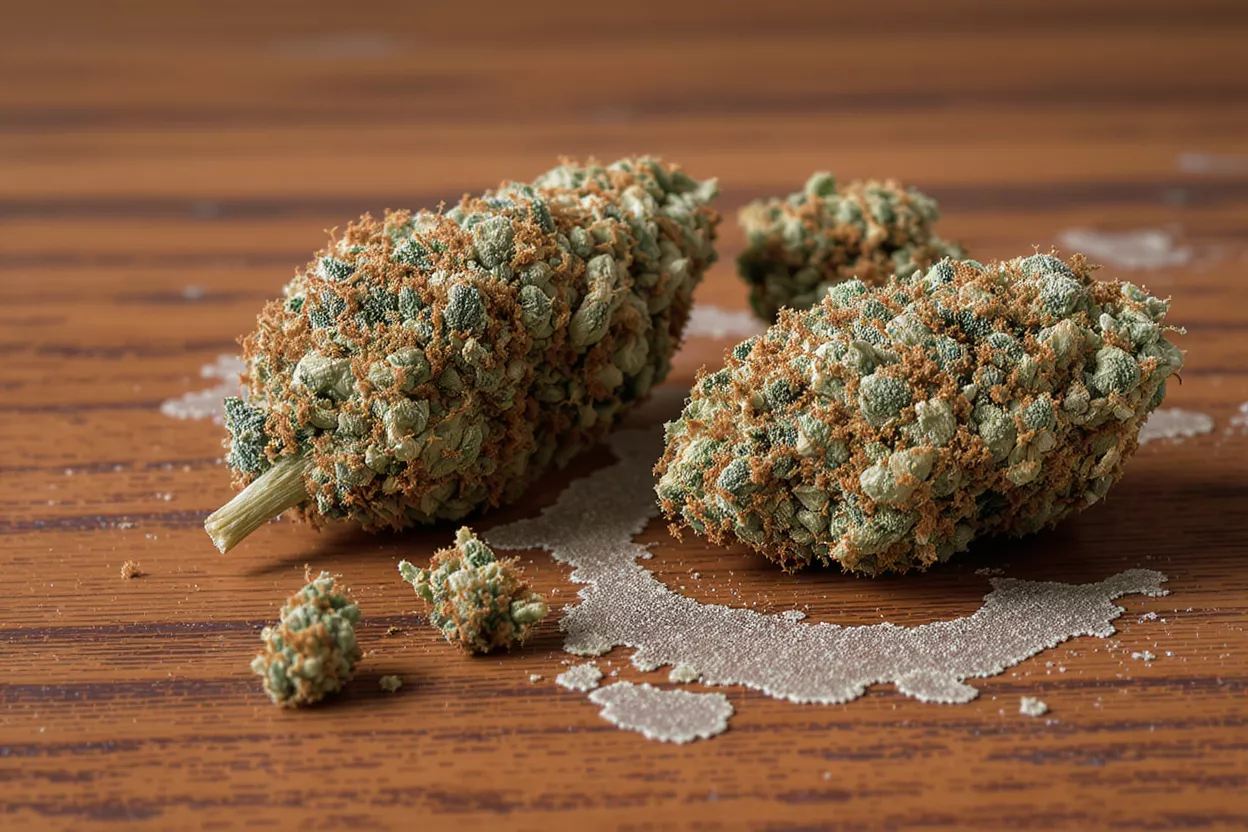
Types of Mycotoxin Found in Cannabis
Several distinct families of mycotoxin are relevant to cannabis safety testing, each produced by different fungal genera and each carrying its own toxicological profile. Regulatory frameworks typically focus on a short list of the most dangerous and well-studied compounds, since screening for every possible metabolite would be impractical.
The compounds most commonly screened in cannabis testing programs include the following:
- ⚠️ Aflatoxins (B1, B2, G1, G2): Produced primarily by Aspergillus flavus and Aspergillus parasiticus, these are among the most potent naturally occurring carcinogens known, with aflatoxin B1 being the most concerning.
- 🍞 Ochratoxin A: Generated by Aspergillus and Penicillium species, this nephrotoxic compound is associated with kidney damage and is also found in improperly stored grains and coffee.
- 🌾 Fumonisins: Produced by Fusarium species, more commonly associated with grain crops but occasionally relevant to plant material.
- 🧪 Trichothecenes: A broad group of toxins from Fusarium and related fungi, known for potent effects on cells.
In cannabis specifically, aflatoxins and ochratoxin A receive the most regulatory attention. They are the compounds most likely to appear on a certificate of analysis as pass/fail thresholds, and they represent the clearest documented risks to consumer health based on decades of toxicological research in food science.
Are Mycotoxins Dangerous to Consume?
Yes—mycotoxins are genuinely dangerous, and their danger is well established across food safety literature spanning decades. The degree of harm depends on the specific toxin, the dose, the duration of exposure, and the consumer's own health status. Acute high-dose exposure is rare in cannabis but chronic low-level exposure through regular consumption of contaminated product is a more realistic concern.
For immunocompromised individuals, the stakes rise considerably. Medical cannabis patients undergoing chemotherapy, living with HIV, or managing autoimmune conditions are precisely the population most likely to use cannabis therapeutically and least able to tolerate fungal contamination. Documented cases of invasive fungal infection in immunocompromised cannabis users have prompted much of the regulatory caution around contamination testing.
Inhalation versus ingestion: The route of exposure changes the risk calculus. Inhaling combusted or vaporized material delivers compounds directly to lung tissue and into the bloodstream, bypassing the liver's first-pass metabolism that helps detoxify ingested substances. For this reason, a level of contamination that might be tolerable in food can pose a heightened concern when smoked or vaped.
Mycotoxin Health Risks Explained
The health consequences of mycotoxin exposure range from acute irritation to serious long-term disease, and they vary by compound. Understanding these risks clarifies why regulators treat contamination so seriously rather than as a cosmetic flaw.
The principal documented health effects associated with mycotoxin exposure include:
- 🫁 Respiratory complications: Inhaling fungal material and toxins can trigger irritation, allergic responses, and in vulnerable individuals, serious pulmonary infection.
- 🧬 Carcinogenicity: Aflatoxin B1 is classified as a Group 1 human carcinogen by the International Agency for Research on Cancer, with strong links to liver cancer.
- 🔴 Organ toxicity: Ochratoxin A targets the kidneys, while several mycotoxins place a burden on the liver during processing.
- 🛡️ Immune suppression: Certain mycotoxins can weaken immune function, compounding risk for already vulnerable patients.
It is worth keeping perspective: the goal of testing and good practice is to ensure exposure stays below any level of concern. A properly cultivated, dried, tested, and stored product should present negligible risk. The danger arises specifically when contamination goes undetected, which is why the systems described in the following sections exist.
How Mycotoxin Testing Works in Labs
Laboratory analysis is the only reliable way to confirm whether a cannabis product contains a mycotoxin, because the compounds are invisible to the senses. Accredited testing facilities use sophisticated analytical chemistry to detect and quantify these toxins at extremely low concentrations—often measured in parts per billion.
The analytical methods involved: The gold standard for mycotoxin detection is liquid chromatography coupled with tandem mass spectrometry, frequently abbreviated as LC-MS/MS. This technique separates the compounds in a sample and then identifies them by their precise molecular mass, allowing labs to distinguish a specific aflatoxin from chemically similar substances and to measure it with high accuracy. Enzyme-linked immunosorbent assays offer faster, lower-cost screening but are generally used for preliminary checks rather than final certification.
A sample fails when measured toxin concentrations exceed the action limits set by the governing jurisdiction. Results appear on a certificate of analysis, the document consumers can request to verify that a batch passed contamination screening. Reading this document is one of the most practical habits a cautious consumer can develop.
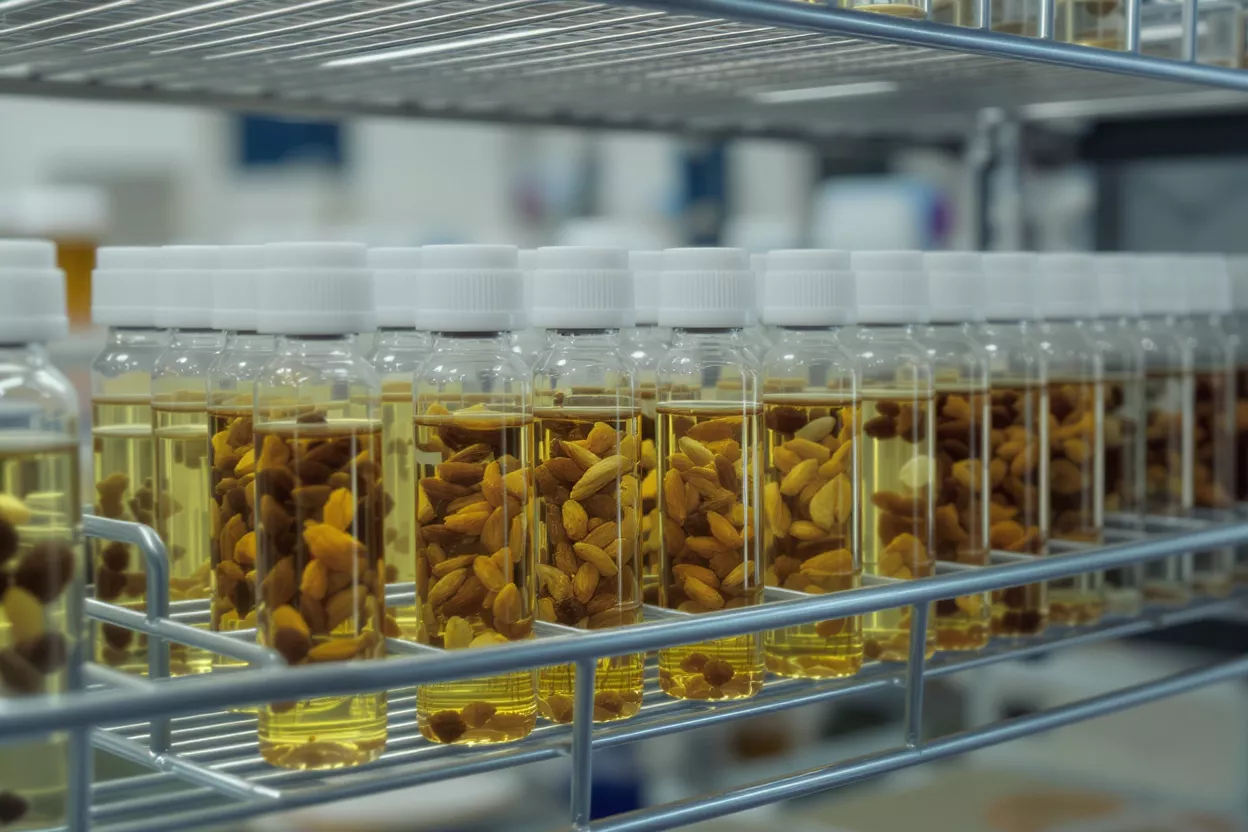
Preventing Mycotoxin Contamination at the Source
The most effective defence against a mycotoxin is preventing the mold that produces it from ever gaining a foothold. This responsibility falls primarily on cultivators and processors, who control the environmental variables during the plant's most vulnerable stages. Prevention is vastly more reliable than remediation, since once a toxin has formed, it cannot simply be washed or heated away.
Environmental control during cultivation centres on managing humidity and airflow. Maintaining relative humidity within an appropriate range, ensuring vigorous air circulation through the canopy, and avoiding the overcrowding that traps moisture all reduce the conditions fungi need. Sanitation of equipment and grow spaces removes the spore reservoirs that would otherwise seed a colony.
The role of proper drying and curing: After harvest, controlled drying brings moisture content down to a stable level slowly enough to preserve quality but thoroughly enough to deny mold a foothold. Curing in a monitored environment, with periodic checks for the telltale signs of fungal activity, closes the window during which contamination most commonly takes hold. Cultivators who rush this phase to get product to market faster invite exactly the problem testing is designed to catch.
Mycotoxin Prevention Through Proper Storage
Contamination risk does not end when a tested product leaves the facility—storage conditions in transit, on retail shelves, and in the consumer's home all influence whether dormant spores reactivate. Even a product that passed laboratory screening can develop mold, and subsequently a mycotoxin, if it is stored carelessly in a humid or fluctuating environment.
The fundamentals of safe storage are straightforward and worth following consistently. The key practices include:
- 🌡️ Stable temperature: Keep cannabis in a cool, consistent environment and avoid the heat cycling that stresses any latent fungal spores into activity.
- 💧 Humidity control: Use airtight containers with humidity-regulating packs to hold relative humidity in a safe range, typically around 55–62%.
- ☀️ Darkness: Store away from direct light, which degrades cannabinoids and can create temperature swings inside a container.
- 🔒 Airtight sealing: Limit oxygen exposure and prevent ambient humidity from creeping in by keeping containers properly sealed.
Glass jars with good seals outperform plastic bags for long-term storage, and dedicated humidity packs take much of the guesswork out of the equation. For consumers who buy in larger quantities, dividing flower into smaller sealed portions reduces the repeated air exposure that accelerates degradation and contamination risk.
Spotting Mold Before It Becomes a Mycotoxin
While only a lab can confirm the presence of a mycotoxin, consumers can learn to recognise the visual and sensory warning signs of the mold that precedes it. Catching contamination early protects you from the more serious problem of toxin accumulation, even if the absence of visible mold never fully guarantees safety.
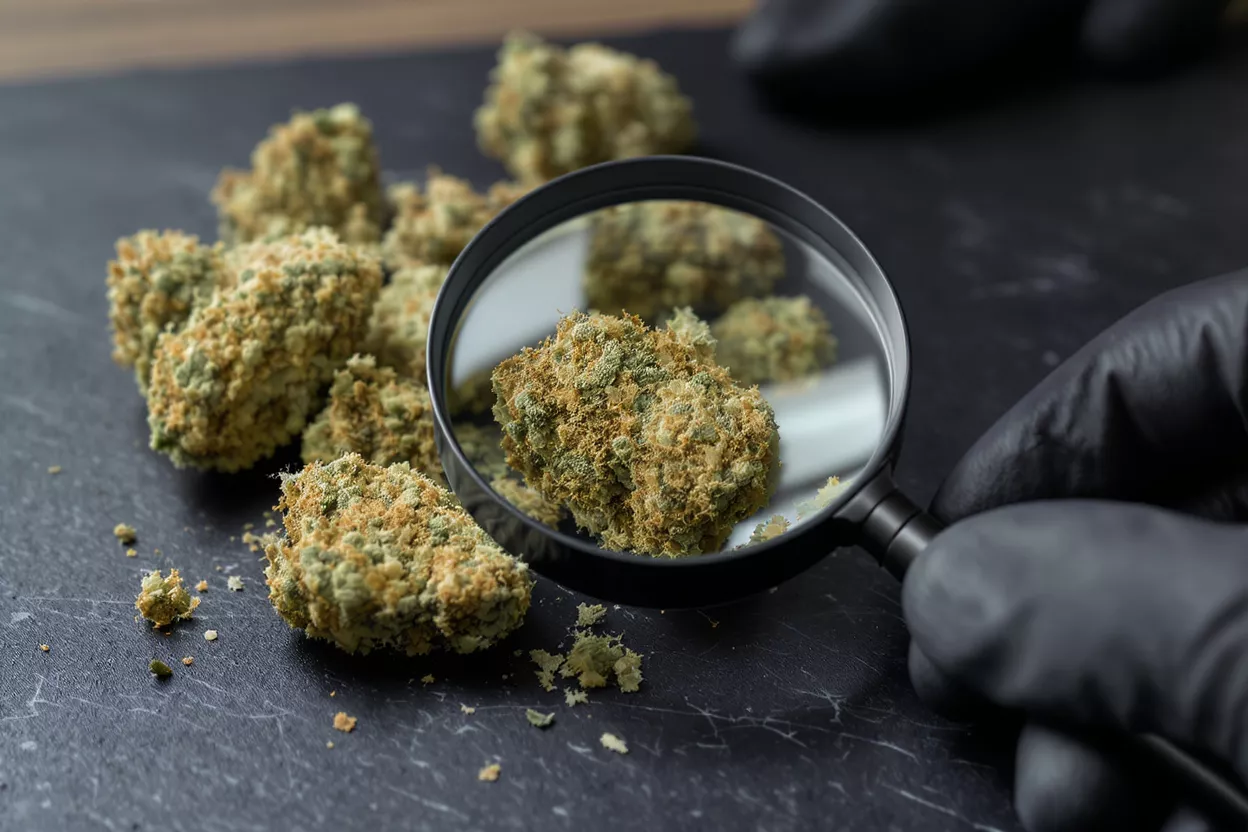
Visual and aroma cues to watch for: Healthy cured flower carries a pungent, earthy, or pleasantly herbal aroma. A musty, stale, or hay-like smell is a red flag that fungal activity may be underway. Visually, mold often appears as a fuzzy white, grey, or greenish coating that can be mistaken for trichomes. The difference is texture: trichomes resemble crystalline frost, while mold looks like cottony webbing or powder.
When in doubt, do not consume. The cost of discarding a questionable batch is trivial compared with the potential health consequences of inhaling fungal toxins. A magnifying loupe or jeweller's scope helps distinguish a healthy trichome from a fungal filament, and developing the habit of inspecting flower before use builds a useful layer of personal quality control.
Mycotoxin Regulations and Safety Standards
In regulated cannabis markets, mycotoxin screening is a mandatory part of the safety testing every batch must pass before sale. Jurisdictions establish specific action limits—maximum permissible concentrations—for the toxins of greatest concern, most commonly total aflatoxins and ochratoxin A. Products exceeding these thresholds cannot legally reach consumers.
These standards draw heavily on decades of food safety science, adapting limits established for crops like grains, nuts, and coffee to the unique exposure routes of cannabis. Because inhalation introduces particular concerns, some regulators apply conservative thresholds. The result is a system designed to catch contamination before it reaches the person who will ultimately consume the product, which is the entire point of mandatory testing.
For consumers, the practical takeaway is to favour products from licensed, transparent sources that publish their testing results. A regulated product accompanied by a recent certificate of analysis offers a documented assurance that the batch was screened for a mycotoxin and passed. That paper trail, combined with sensible home storage and a willingness to inspect flower before use, forms a realistic and effective personal safety strategy.
Mycotoxins represent one of the more serious but entirely manageable safety considerations in cannabis. They are toxic byproducts of mold that can form during cultivation, drying, or storage, persisting invisibly even after the fungus itself is gone. The defence is layered: rigorous environmental control by cultivators, mandatory laboratory testing against established limits, and conscientious storage and inspection by consumers. Understanding what a mycotoxin is, how it forms, and how the safety system works empowers you to make informed choices and enjoy cannabis with confidence rather than worry.

Comments