

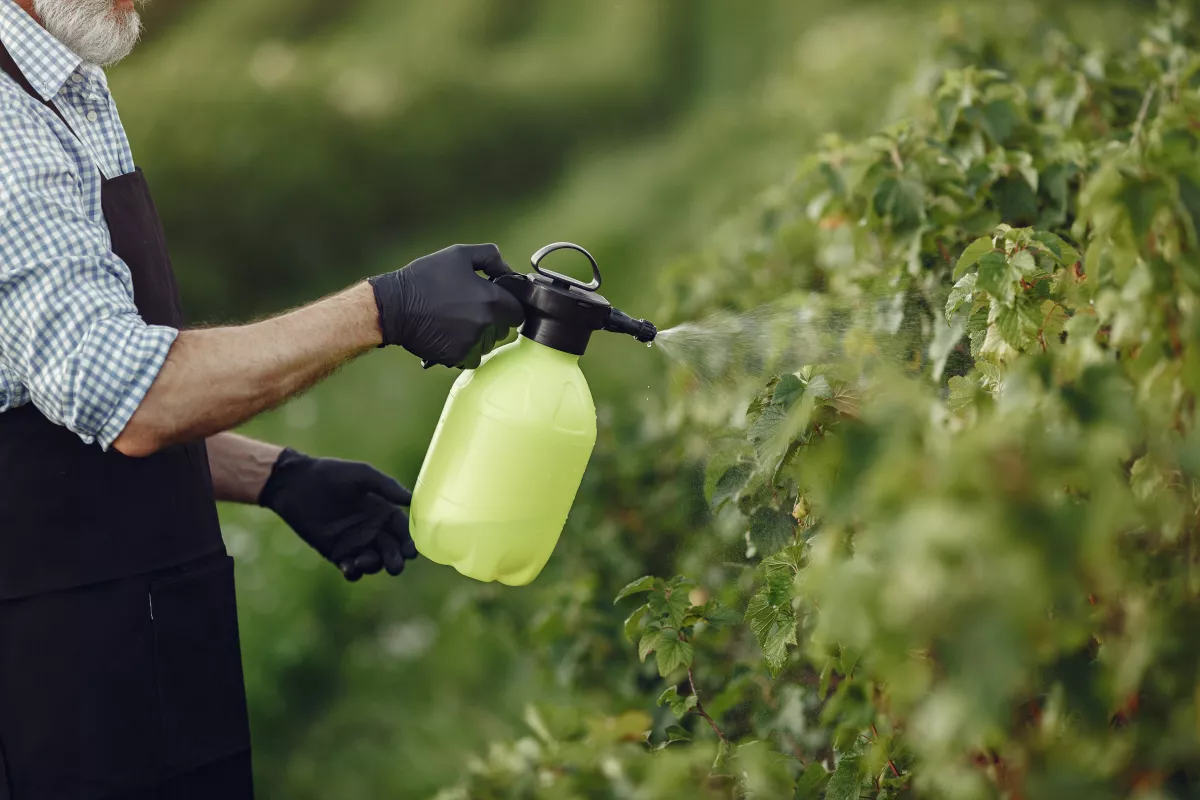
Pesticide
Learn how pesticide use affects cannabis safety.
What Is a Pesticide in Cannabis Cultivation?
A pesticide is any substance designed to prevent, destroy, or control organisms that damage crops, and in cannabis cultivation it occupies a uniquely sensitive position. Because cannabis is consumed by inhalation, ingestion, and topical application — often by people managing serious health conditions — the margin for contamination is far narrower than with most agricultural commodities. Understanding what a pesticide actually does, and why its use on cannabis demands extra scrutiny, is the foundation for evaluating the safety of any product you buy.
The word covers a broad family of chemical and biological agents. Insecticides target mites, aphids, and fungus gnats. Fungicides combat powdery mildew and bud rot. Miticides address spider mites, one of the most persistent threats in indoor grows. Herbicides suppress competing weeds, though these are rare in controlled cannabis environments. Each category carries its own residue profile and its own regulatory treatment.
Why cannabis is a special case: unlike a tomato that can be rinsed before eating, cannabis flower is dried and then heated and inhaled. Combustion can transform certain residual compounds into more harmful byproducts, and the lungs absorb substances far more efficiently than the digestive tract. This is why a chemical considered acceptable on food crops may be prohibited entirely on cannabis intended for smoking.
How Pesticides Work on Cannabis Plants
Different pesticides interrupt pest biology in different ways, and knowing the mechanism helps explain why some leave persistent residues while others break down quickly. Contact pesticides kill on touch, coating the plant surface and the pest alike. Systemic pesticides are absorbed into the plant's vascular tissue, circulating through stems, leaves, and ultimately the flower — which is precisely why systemic products are the most concerning for the end consumer.
Systemic absorption and why it lingers: when a plant draws a systemic compound into its tissue, no amount of surface washing will remove it. The chemical becomes part of the flower itself. Many of the most notorious cannabis recalls have involved systemic fungicides like myclobutanil, which is relatively benign on grapes but releases hydrogen cyanide when heated. The mechanism that makes a pesticide effective is often the same mechanism that makes it dangerous downstream.
Timing also shapes residue levels. A pesticide applied early in the vegetative stage has weeks to degrade before harvest, while one sprayed during flowering can persist directly onto the buds you eventually consume. Responsible cultivators observe pre-harvest intervals, the mandated waiting period between final application and harvest, to allow chemical breakdown.
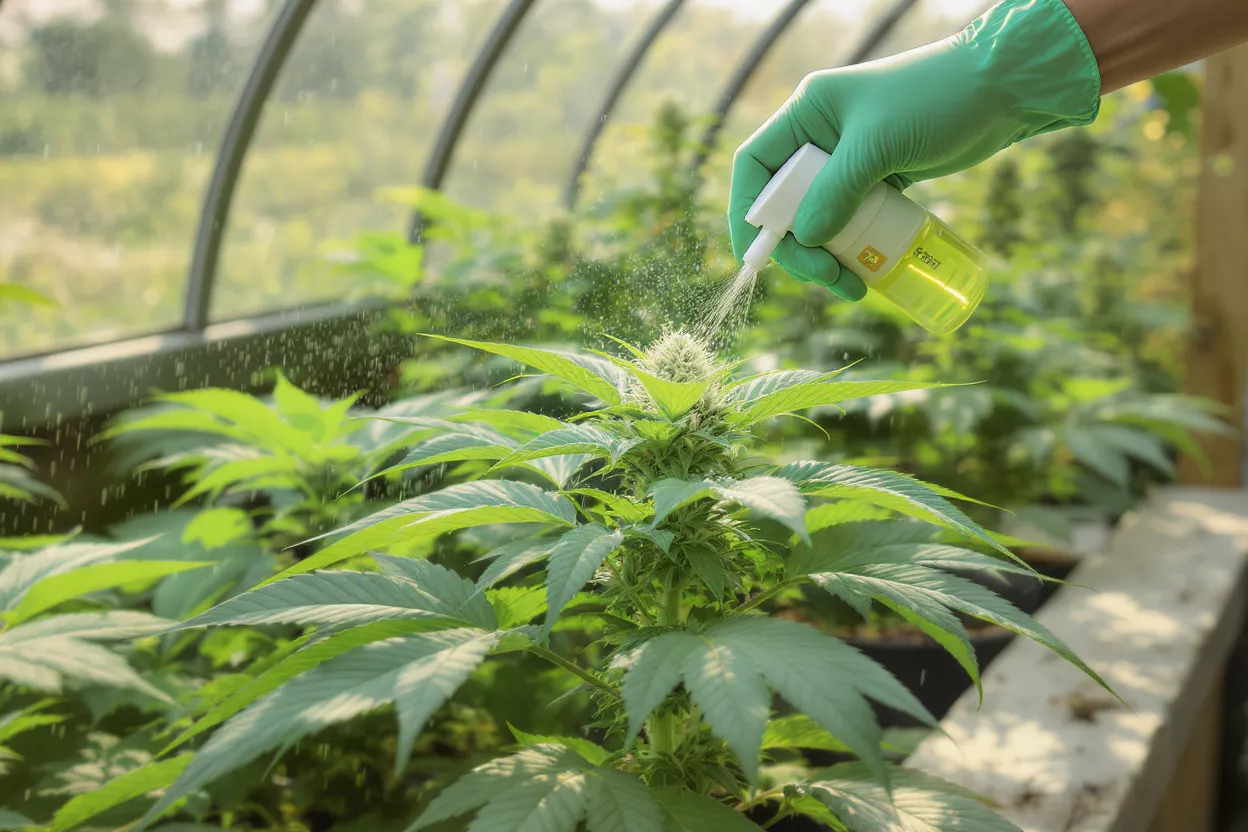
Types of Pesticide Used in Cannabis Growing
The pesticides a grower might reach for fall into several practical categories, each with distinct safety implications. Some are approved for cannabis in regulated markets; others are explicitly banned yet still surface in illicit-market testing. Distinguishing between them is essential for both cultivators and informed buyers.
- 🌿 Biological controls: living organisms such as predatory mites and beneficial nematodes that hunt pests without leaving chemical residue.
- 🧴 Botanical pesticides: plant-derived agents like neem oil and pyrethrins, generally lower-risk but still requiring careful pre-harvest timing.
- ⚗️ Synthetic contact pesticides: manufactured compounds that remain on the surface and degrade at variable rates.
- 🚫 Banned systemic chemicals: compounds like myclobutanil and imidacloprid that absorb into tissue and are prohibited on cannabis in most legal markets.
Minimum-risk and exempt products: many regulators permit a defined list of low-toxicity substances — often based on essential oils, soaps, or microbial agents — that pose minimal threat to human health. These form the backbone of compliant pest management programs and rarely trigger residue failures when used as directed.
The illicit market tells a different story. Without testing requirements or oversight, unregulated growers may use whatever is cheapest and most effective, including agricultural chemicals never evaluated for inhalation. This is one of the clearest practical reasons to source cannabis from licensed, tested supply chains.
Why Pesticide Residue Matters for Consumers
Pesticide residue is the trace amount of a chemical that remains on or within the plant at the point of consumption. For most consumers this is invisible — you cannot see, smell, or taste contamination at the levels that matter. That invisibility is exactly why mandatory laboratory testing exists, and why trusting a product's appearance alone is unwise.
The route of exposure dramatically changes the risk. When cannabis is smoked, pyrolysis can convert residues into novel combustion products, some of which are more toxic than the parent compound. Studies analyzing contaminated flower have found that a substantial fraction of certain pesticides transfers directly into mainstream smoke, meaning the user inhales them with little filtration.
Concentrates amplify the problem: when flower is processed into concentrate, any residual pesticide is concentrated alongside the cannabinoids. A residue level that passes in flower can become dangerously elevated in an extract, which is why many jurisdictions test concentrates against stricter thresholds. Anyone consuming vapes or dabs has a heightened stake in clean source material.
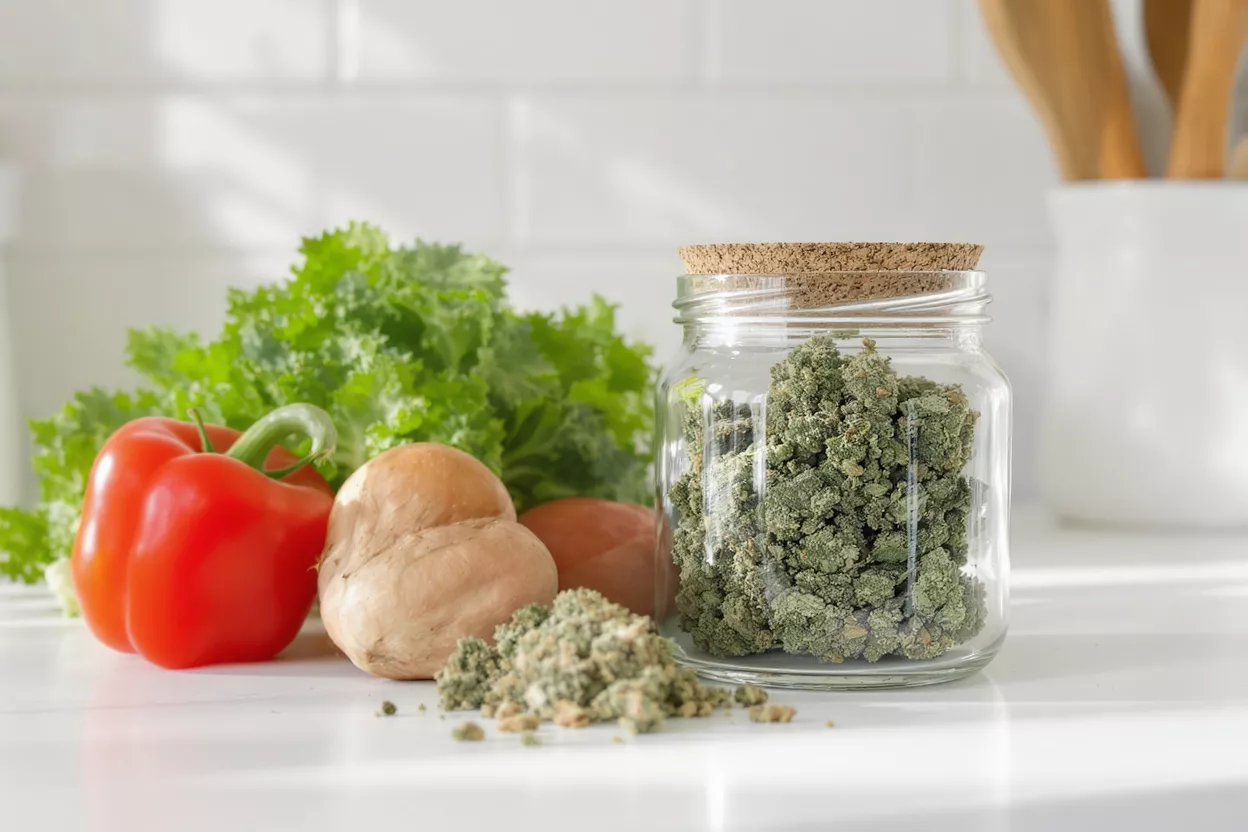
How Pesticide Testing Works in Legal Cannabis
In regulated markets, every batch of cannabis must pass laboratory screening before it can be sold. Accredited labs use highly sensitive instruments — primarily liquid and gas chromatography paired with mass spectrometry (LC-MS/MS and GC-MS/MS) — that can detect residues at parts-per-billion concentrations. These methods identify and quantify dozens of individual compounds against legally defined action limits.
What a Certificate of Analysis tells you: a Certificate of Analysis documents the lab results for a specific batch, including the pesticides screened for and whether each fell below its threshold. A clean pesticide panel showing "pass" or "not detected" across the regulated list is one of the strongest signals of product safety you can find. Reputable retailers make these documents available to customers.
Testing is not infallible. Sampling methodology, lab variability, and the specific list of analytes a jurisdiction mandates all influence results, and lists differ widely between regions. Still, mandatory third-party testing remains the single most effective safeguard against contaminated cannabis reaching consumers, and it is a feature entirely absent from the illicit market.
Are Pesticides Safe on Cannabis Flower?
The honest answer is that safety depends entirely on which pesticide, how much, how it was applied, and how the product is consumed. A minimum-risk botanical applied weeks before harvest and properly degraded poses negligible danger. A banned systemic fungicide sprayed during flowering and then inhaled is a genuine hazard. Blanket statements in either direction misrepresent the science.
Regulatory action limits are designed to keep exposure well below thresholds associated with harm, building in safety margins. When a product passes a compliant testing panel, the residual pesticide present — if any — is generally at levels considered acceptable for human exposure by the standards of that market.
The real danger sits outside the regulated system. Illicit-market flower has repeatedly tested positive for banned chemicals at alarming concentrations, sometimes many times over legal limits. The question "are pesticides safe on cannabis" ultimately becomes a question about sourcing: a tested, compliant product is in a fundamentally different risk category than an untested one.
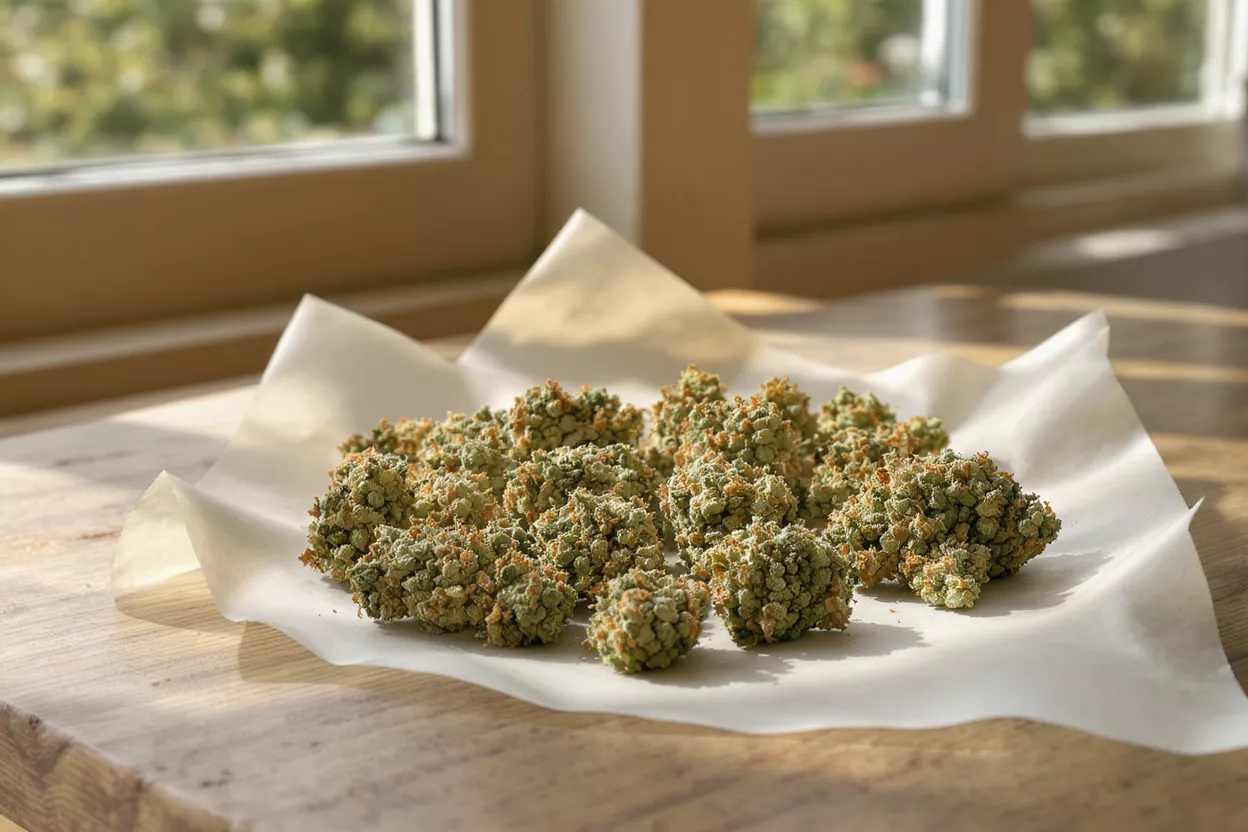
Health Risks of Pesticide Exposure From Cannabis
The health consequences of pesticide exposure range from mild to serious and depend heavily on the specific compound and dose. Acute, high-level exposure can cause symptoms like headache, nausea, dizziness, and respiratory irritation. Chronic low-level exposure raises concerns about cumulative effects, particularly for daily consumers and medical patients using cannabis over long periods.
Vulnerable populations face elevated risk: medical patients are often the heaviest and most frequent consumers, and many already manage compromised immune systems or other conditions that make them more susceptible to toxic exposure. For these users, the stakes of contaminated product are considerably higher than for an occasional recreational consumer, which is part of the ethical argument behind strict testing regimes.
Certain pesticides carry specific, well-documented dangers. Myclobutanil's conversion to hydrogen cyanide under heat is the most cited example, but organophosphates and other neurotoxic classes raise their own concerns. The combination of an unknown chemical and a high-efficiency delivery route — the human lung — is what transforms an abstract agricultural residue into a personal health question.
Organic Pest Control Alternatives to Pesticide
Many cultivators manage pests successfully with little or no synthetic chemical input, relying instead on integrated pest management (IPM) — a layered strategy that prioritizes prevention and biological control over reactive spraying. IPM treats chemical pesticides as a last resort rather than a first response, which dramatically reduces residue risk in the finished flower.
- 🐞 Beneficial insects: ladybugs, predatory mites, and parasitic wasps that consume pest populations naturally.
- 🌱 Companion planting: aromatic plants that repel insects or lure them away from the cannabis crop.
- 💨 Environmental control: managing humidity, airflow, and temperature to make conditions inhospitable to mites and mildew.
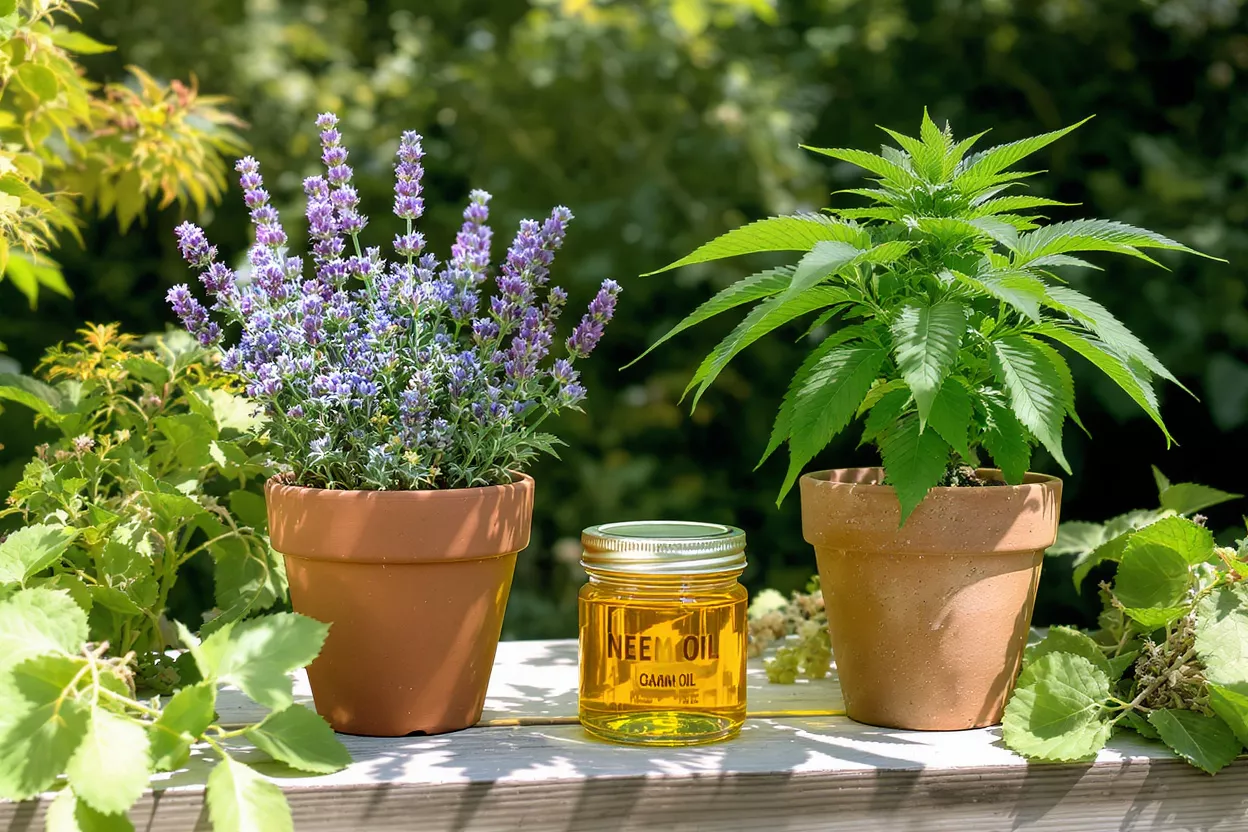
- 🧼 Soft botanical sprays: neem oil, insecticidal soaps, and essential-oil blends used early and sparingly.
Why prevention beats treatment: a healthy, vigorous plant grown in clean conditions with strong airflow resists pests far better than a stressed one. Sanitation, quarantine of new clones, and careful environmental monitoring eliminate most infestations before they begin, sparing the grower from ever needing a heavy chemical intervention. The cleanest flower is usually grown by the most disciplined cultivator, not the one with the strongest spray.
Organic certification, where it exists for cannabis, signals adherence to these lower-input practices. While cannabis cannot carry federal organic labels in some jurisdictions, third-party organic-equivalent programs have emerged to recognize growers who avoid synthetic inputs.
How to Identify Clean, Pesticide-Free Cannabis
You cannot identify pesticide contamination by sight, smell, or taste, so the most reliable approach is documentary rather than sensory. The single best habit a consumer can build is asking for and reading the lab results before purchasing. A product backed by a transparent, recent Certificate of Analysis from an accredited lab is in a different trust category than one sold without paperwork.
Questions worth asking a retailer: whether the product was tested for the full regulated pesticide panel, whether the Certificate of Analysis is available, and which lab performed the analysis. A reputable seller answers these readily. Evasiveness or an inability to produce documentation is a meaningful warning sign about the supply chain behind the product.
Beyond paperwork, sourcing from licensed, regulated channels does most of the work. The legal supply chain exists precisely to enforce the testing and traceability that protect consumers. Choosing tested products over unregulated alternatives is the most effective single decision you can make to avoid pesticide exposure — far more reliable than any visual inspection.
Pesticide Regulations Across Legal Markets
There is no single global standard for cannabis pesticides, and the patchwork of rules reflects cannabis's unusual legal status. Because it remains federally restricted in some countries, national pesticide tolerances for food crops often do not legally extend to cannabis, leaving individual states, provinces, and agencies to write their own lists of approved substances and action limits.
Why the lists differ so much: one jurisdiction may screen for dozens of compounds while a neighbor tests for fewer, and the same chemical can carry different thresholds depending on the regulator's risk assessment. This variability means a product compliant in one market might fail in another, and it underscores why consumers benefit from understanding their own region's standards.
The trajectory across legal markets has generally moved toward stricter, more comprehensive testing as science and infrastructure mature. Regulators increasingly distinguish between flower meant for smoking and products meant for ingestion, and they continue refining lists as new data emerges about how specific residues behave under heat and extraction.
Pesticides are an unavoidable part of agriculture, but their role in cannabis demands far more caution than in ordinary crops because of how the plant is consumed. The key takeaways are straightforward: systemic chemicals pose the greatest danger, combustion and concentration can amplify residue risk, and the illicit market offers no protection whatsoever. Mandatory laboratory testing, transparent Certificates of Analysis, and disciplined organic-leaning cultivation together form the safety net that keeps contaminated product away from consumers. Armed with the habit of reading lab results and sourcing from regulated channels, you can confidently choose clean cannabis and leave pesticide worries behind.




Comments