


Phytol
Discover phytol, the cannabis diterpene behind subtle floral scents and potential wellness benefits.
What Is Phytol in Cannabis?
Phytol is a diterpene alcohol that quietly does some of the most important work in the cannabis plant, even though it rarely gets the spotlight that flashier compounds like THC or popular terpenes such as myrcene enjoy. While most conversations about aroma molecules focus on the volatile compounds that hit your nose the moment you open a jar, Phytol operates a little differently. It is woven into the chemistry of photosynthesis itself, and only later becomes available as the fragrant, oily molecule that researchers study for its potential wellness applications.
Chemically, Phytol is classified as an acyclic diterpene alcohol, which simply means it is a long-chain molecule built from isoprene units without a closed ring structure. This gives it a heavier, oilier character than the light, fast-evaporating monoterpenes that dominate fresh cannabis aroma. Because of that weight, Phytol tends to linger, contributing subtle floral and balsamic notes rather than the sharp citrus or pine you notice immediately.
Why it matters in the modern cannabis conversation: As consumers move beyond THC percentages and start exploring the full chemical fingerprint of a cultivar, lesser-known compounds like Phytol are finally getting attention. Understanding it helps explain why two strains with identical cannabinoid profiles can feel and smell completely different.
How Phytol Forms in the Plant
The story of Phytol begins with chlorophyll, the green pigment responsible for capturing sunlight. Phytol exists as a structural side chain attached to the chlorophyll molecule, anchoring it within the plant's light-harvesting machinery. In this bound form, it is not a free aroma compound at all but an essential part of how the plant converts light into energy through photosynthesis.
How it becomes a free terpene: When chlorophyll breaks down, whether through the natural senescence of leaves, the drying and curing of harvested flower, or enzymatic activity, Phytol is released. This is why curing matters so much for the final chemical character of cannabis. The slow, controlled degradation of plant pigments during a proper cure liberates compounds that were previously locked away, shaping the eventual aroma and effect profile.
This origin story sets Phytol apart from terpenes synthesized directly in the trichomes, the resinous glands that produce most cannabis aroma compounds. Because Phytol comes from chlorophyll metabolism rather than dedicated terpene synthase pathways, its concentration is influenced by growing conditions, light exposure, and how the plant is processed after harvest.
Interestingly, Phytol is also a precursor in the biosynthesis of vitamins E and K1 in plants, underscoring just how central this molecule is to fundamental plant biology rather than being a mere fragrant afterthought.
What Does Phytol Smell and Taste Like?
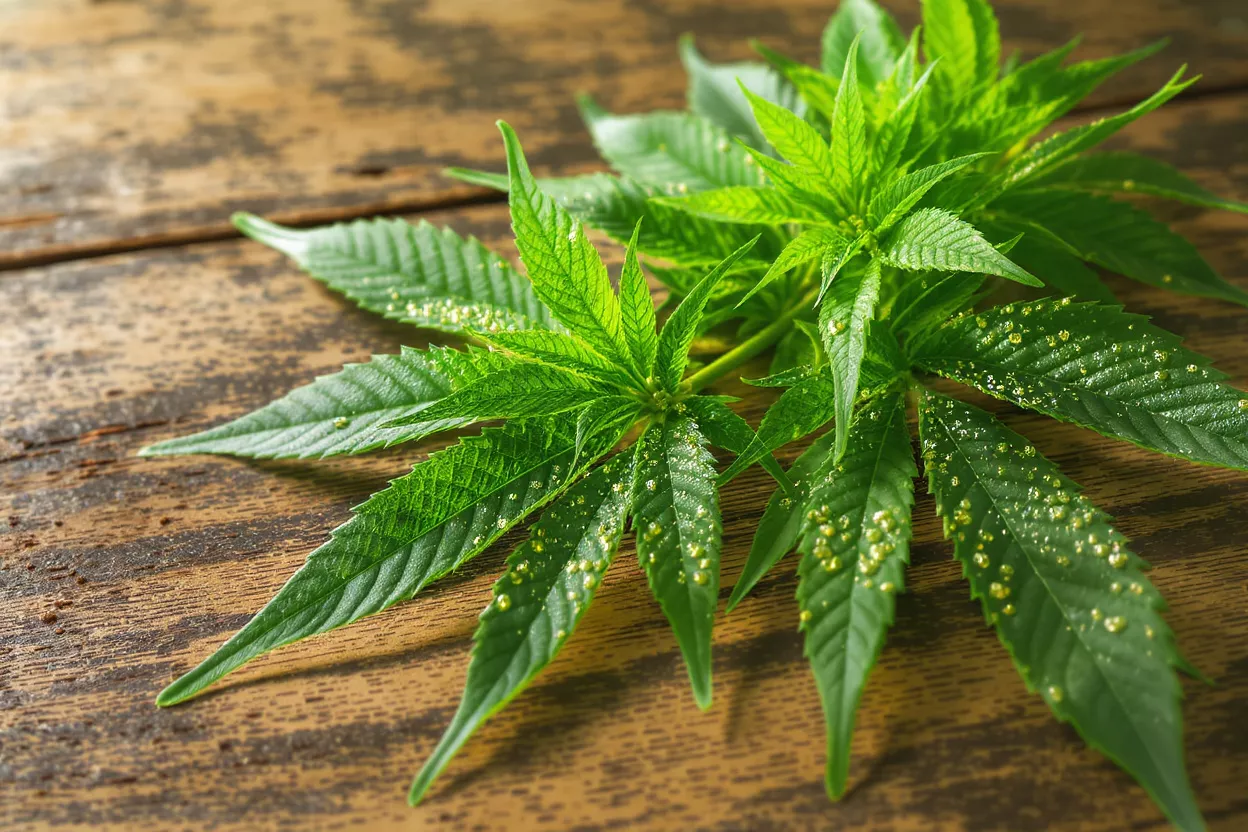
Phytol contributes a soft, green, and mildly floral aroma that many describe as balsamic or grassy. Unlike the bright, immediate punch of limonene or the unmistakable peppery bite of caryophyllene, Phytol works in the background. It rounds out a strain's bouquet, adding depth and a faintly herbal smoothness rather than a dominant headline note.
Because it is a heavier molecule, Phytol does not evaporate quickly, which means it tends to show up in the lingering finish rather than the first sniff. Think of how a perfume has top notes that fade fast and base notes that persist for hours. Phytol behaves like a base note, anchoring the overall aroma and giving certain cultivars a mellow, slightly tea-like or hay-like quality on the back end.
The flavors most associated with Phytol-rich cannabis include the following characteristics:
- 🌿 Green and herbaceous: A fresh-cut grass or leafy quality that feels clean rather than sweet.
- 🌸 Soft floral: Gentle floral undertones reminiscent of mild jasmine or chamomile.
- 🍵 Tea-like smoothness: A balsamic, slightly earthy finish that recalls steeped green tea.
- 🌾 Hay and balsam: A dry, sweet-grassy warmth that lingers after exhale.
Phytol Effects and Potential Benefits
Phytol has attracted genuine scientific curiosity, with early research exploring several potential effects. The most frequently cited area of interest involves relaxation and sleep support. Some studies suggest Phytol may interact with the GABA system, the same neurotransmitter pathway targeted by many calming compounds, which could partly explain why strains containing it are sometimes described as soothing or sedating.
Antioxidant and anti-inflammatory potential: Laboratory research has examined Phytol's ability to neutralize free radicals and modulate inflammatory responses. As an antioxidant, it may help protect cells from oxidative stress, and several animal studies have noted reductions in inflammatory markers. These findings are preliminary and have not been confirmed in large human trials, but they align with the broader interest in plant-derived antioxidants.
Possible antimicrobial activity: Researchers have also documented antimicrobial and antifungal effects in laboratory settings, suggesting Phytol may play a defensive role for the plant and could hold value for future therapeutic exploration.
It is worth emphasizing that most of this research has been conducted in cell cultures or animal models rather than controlled human studies. Phytol is promising as a subject of inquiry, but anyone seeking specific health outcomes should consult a healthcare professional rather than relying on terpene content alone.
Is Phytol Safe to Consume?
Phytol is widely regarded as safe at the trace levels found in cannabis and food. It appears naturally in green vegetables, teas, and many edible plants, and it is used in the fragrance and cosmetics industries as well. The amounts present in a flower or extract are extremely small, typically a tiny fraction of the overall terpene content, which keeps everyday exposure well within commonly accepted ranges.
That said, context matters when discussing safety. Some research has raised questions about Phytol when isolated and consumed in very high, concentrated doses, particularly in inhalation studies unrelated to typical cannabis use. These concerns involve quantities far beyond what anyone would encounter from enjoying flower or a normal extract, so they should not alarm the average consumer.
A few practical points help put safety into perspective:
- ✅ Trace amounts are normal: The Phytol in cannabis exists at minute concentrations comparable to what you ingest eating leafy greens.
- 🧪 Isolated extracts differ: Concentrated, isolated Phytol is a different scenario than the small amounts naturally present in whole-plant products.
- 👩⚕️ Consult a professional: Anyone with specific health conditions or concerns should speak with a knowledgeable healthcare provider.
Phytol vs Other Cannabis Terpenes
To appreciate where Phytol fits, it helps to compare it with the more familiar terpenes that dominate cannabis chemistry. Most aroma compounds in cannabis are monoterpenes or sesquiterpenes produced in the trichomes, whereas Phytol is a diterpene that arrives via chlorophyll breakdown. This fundamental difference in origin shapes everything from its concentration to its behavior.
Compared with myrcene, the most abundant terpene in many strains, Phytol is far less volatile and far less concentrated. Where myrcene delivers an upfront earthy, musky aroma, Phytol whispers in the background. Both, however, are sometimes associated with relaxing, sedative-leaning experiences, which makes them interesting companions in calming cultivars.
How Phytol stacks up against the headliners: Unlike pinene, which evaporates quickly and offers sharp coniferous brightness, or linalool, famous for its lavender floral signature, Phytol is heavier, slower, and subtler. It rarely defines a strain on its own but instead modifies and deepens the overall sensory experience, much like a base note in fine perfumery anchors the brighter top notes above it.
Where Else Phytol Is Found in Nature
Phytol is not unique to cannabis. In fact, it is one of the most abundant diterpenes in the plant kingdom because it exists in the chlorophyll of virtually every green plant. This means you encounter it constantly, often without realizing it, through a wide variety of foods and botanical products.
Green tea is one of the richest dietary sources, which partly explains why some Phytol-forward cannabis cultivars carry that smooth, tea-like quality. The molecule also appears in leafy green vegetables, certain medicinal herbs, and the essential oils of numerous plants used in aromatherapy and traditional medicine.
Common natural sources of Phytol include the following:
- 🍵 Green and black tea: Among the most concentrated everyday dietary sources.
- 🥬 Leafy greens: Spinach, kale, and similar vegetables contain Phytol bound within their chlorophyll.
- 🌿 Medicinal herbs: Many traditional botanicals used in herbal medicine carry measurable amounts.
- 🌼 Essential oils: Several aromatherapy oils include Phytol as a supporting aromatic component.
This widespread presence reinforces just how ordinary and well-tolerated the molecule is in the human diet, while also hinting at why it contributes such a natural, green character to the cannabis cultivars that express it.
Phytol and the Entourage Effect
One of the most compelling reasons to care about Phytol is its potential role in the entourage effect, the theory that cannabis compounds work better together than in isolation. Rather than acting as standalone ingredients, cannabinoids and terpenes are thought to influence one another, shaping the overall character of a given experience.
Synergy with cannabinoids: If Phytol does indeed interact with the GABA system as some research suggests, it could complement the calming effects of certain cannabinoids and other sedative-leaning terpenes. In a cultivar rich in CBD or myrcene, even small amounts of Phytol might contribute to a more rounded, relaxing profile.
The entourage effect remains an evolving area of study, and the precise contribution of any single minor terpene is difficult to isolate. Still, the growing recognition that the whole chemical orchestra matters, not just the loudest instruments, is precisely why compounds like Phytol deserve attention. They may be quiet players, but the music sounds different without them.
How to Find Phytol-Rich Cannabis
Finding cannabis with notable Phytol content can be challenging because it does not always appear on standard terpene panels, and when it does, it usually sits near the bottom of the list. Many basic lab certificates focus on the dominant monoterpenes and sesquiterpenes, so Phytol may be grouped under "other" or omitted entirely unless the testing facility specifically measures diterpenes.
Reading a certificate of analysis: When shopping, ask for a detailed certificate of analysis, often abbreviated as a COA. The most thorough labs will list a fuller terpene panel, and a Phytol entry, even a small one, confirms its presence. Pairing this data with your own sensory impressions, especially that smooth, green, tea-like finish, gives you the best chance of identifying cultivars where it plays a meaningful role.
A few practical strategies can guide your search:
- 📋 Request a full COA: Look for labs that test diterpenes, not just the common monoterpenes.
- 👃 Trust your nose: Seek out cultivars with a mellow, grassy, tea-like aroma on the finish.
- 🌱 Consider the cure: Properly cured flower tends to express more free Phytol than rushed, poorly dried product.
- 💬 Ask knowledgeable staff: Budtenders familiar with full terpene profiles can point you toward deeper, more complex cultivars.
The Future of Phytol Research
As interest in the full spectrum of cannabis chemistry continues to grow, Phytol stands to benefit from expanded scientific attention. For years, research focused almost exclusively on THC and CBD, but the field is steadily broadening to include minor cannabinoids and, increasingly, the supporting cast of terpenes and diterpenes that shape each cultivar's identity.
What researchers want to learn next: Future studies will likely aim to clarify Phytol's interactions with the human body, confirm or refine the early findings on relaxation, antioxidant activity, and antimicrobial properties, and establish clearer dose-response relationships. Well-designed human trials, rather than cell cultures and animal models, are the missing piece that could transform promising preliminary data into actionable knowledge.
For now, Phytol remains a fascinating example of how much chemistry hides within a single plant. It reminds us that the cannabis experience is the product of dozens of interacting compounds, many of which we are only beginning to understand. As cultivation, testing, and research mature together, this humble chlorophyll-derived molecule may well earn a more prominent place in the conversation.
In summary, Phytol is a diterpene alcohol born from chlorophyll that contributes subtle floral, green, and tea-like notes to certain cannabis cultivars. It carries intriguing potential around relaxation, antioxidant protection, and antimicrobial activity, plays a likely supporting role in the entourage effect, and appears safely throughout our everyday diet in foods like green tea and leafy vegetables. While much research remains to be done, understanding Phytol enriches the way we appreciate the complexity of the cannabis plant and the many quiet molecules working behind its more famous compounds.



Comments