Schwag
Learn what schwag is, how to spot it, and why it matters.
What Is Schwag Cannabis?
Schwag is the slang term for low-grade, poorly grown, or improperly cured cannabis that sits at the bottom of the quality ladder. If you have ever opened a bag and found brown, brittle flower that smells more like hay than anything resembling fresh herb, you were almost certainly looking at schwag. The word carries an unmistakable connotation in cannabis culture: this is the stuff seasoned consumers actively avoid, the opposite of the dank, frosty buds you see celebrated on dispensary shelves.
Where the term comes from: Schwag (sometimes spelled "shwag" or "swag") entered cannabis vernacular decades ago, largely describing mass-produced, brick-pressed imports that flooded illicit markets before legalization. These bulk shipments prioritized volume over care, and the resulting product was harsh, seedy, and weak. The name stuck as a catch-all for any flower that fails to meet a reasonable quality bar.
Understanding schwag matters because it sharpens your eye as a consumer. Once you know what defines truly poor cannabis, you can better appreciate well-grown flower and spot when you are being shortchanged. Cannabis quality exists on a spectrum, and schwag marks the floor of that range. Knowing the floor helps you recognize the ceiling.
How to Identify Schwag Weed
Spotting schwag is mostly a matter of using your senses. Quality cannabis announces itself through color, aroma, texture, and structure, while schwag fails on most or all of these fronts. A trained eye can size up a sample in seconds, but even newcomers can learn the telltale signs quickly.
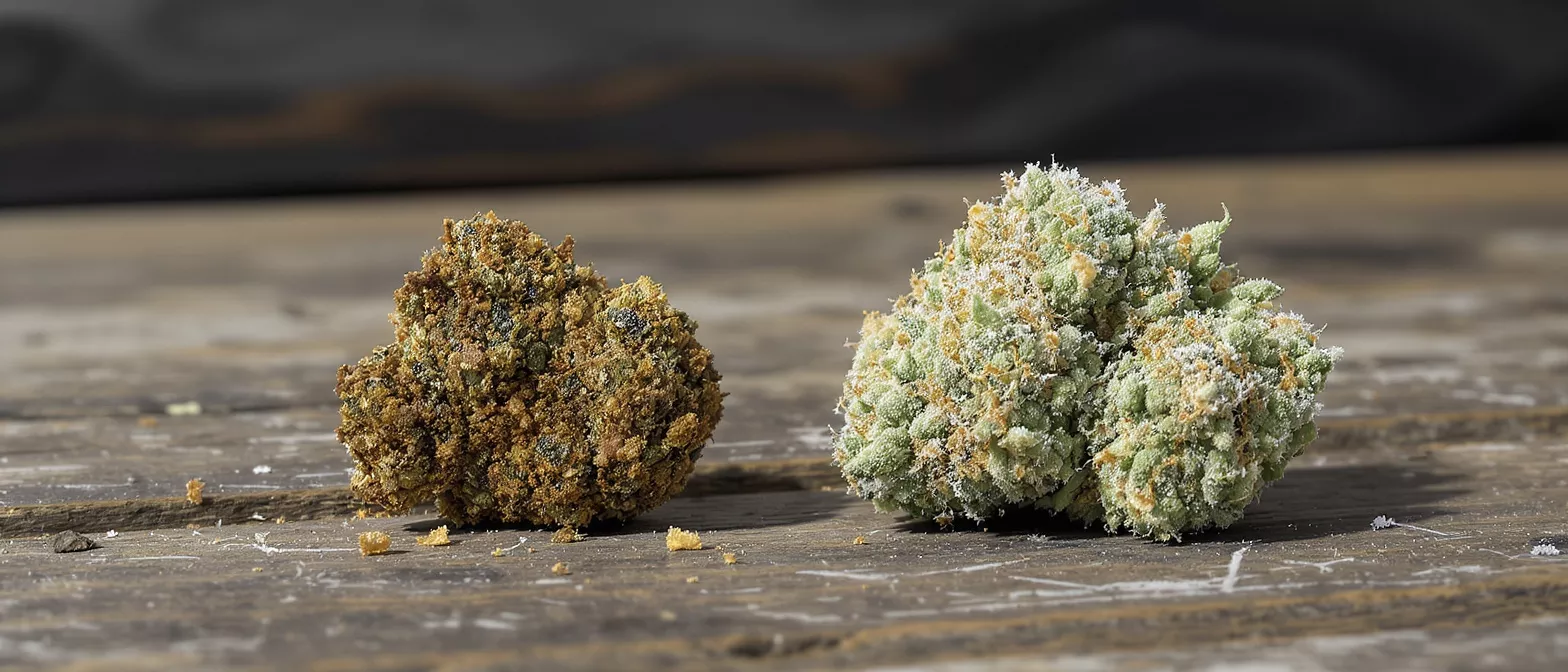
Visual red flags: Healthy flower tends toward vibrant greens, sometimes accented with purple or orange pistils and a frosty coating of trichomes. Schwag, by contrast, often appears brown, tan, or washed out. You may notice seeds, stems, and an abundance of leaf material rather than dense, manicured buds. A dusty or compressed texture is another giveaway, particularly in brick weed that has been pressed for transport.
The smell test is equally revealing. Premium cannabis carries a pungent, complex bouquet driven by terpenes that hint at diesel, citrus, pine, or earth. Schwag frequently smells flat, grassy, or like dried hay, a sign that terpenes have degraded or were never well developed. According to Healthline, terpenes contribute meaningfully to both aroma and the overall experience, so their absence is a serious quality concern.
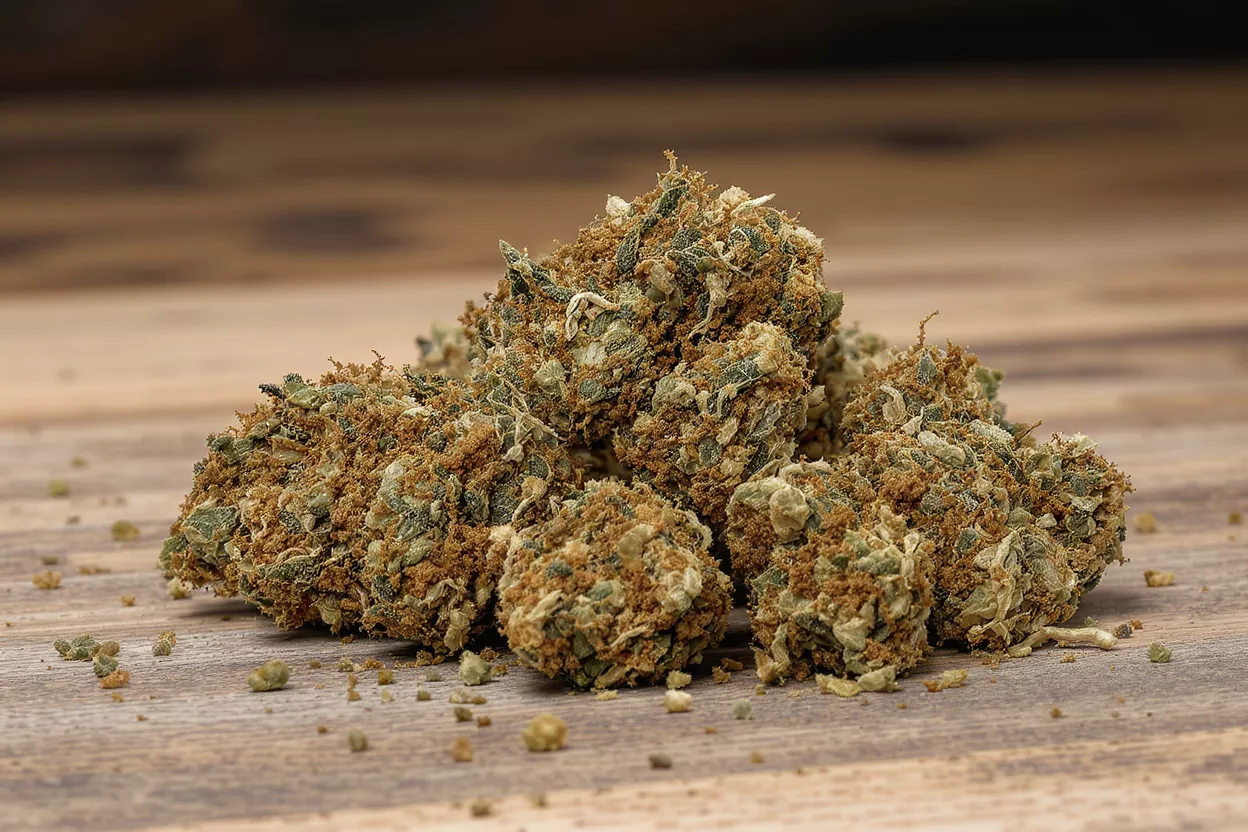
Texture seals the diagnosis. Good flower feels slightly sticky and springs back when gently squeezed, thanks to a proper cure that retains some moisture. Schwag tends to be overly dry, crumbling into dust or shake at the lightest touch. If your buds disintegrate the moment you handle them, you are dealing with low-grade material that was rushed, mishandled, or stored badly.
Why Schwag Exists: Common Causes
Schwag does not happen by accident in most cases; it results from specific failures along the cultivation and handling chain. Understanding these causes demystifies why some cannabis ends up so disappointing while other batches shine.
Poor growing practices: Cannabis is a demanding plant. Inadequate light, nutrient imbalances, pest infestations, and rushed harvests all sabotage quality. Growers who skip proper defoliation, ignore directional airflow in their canopy, or harvest before trichomes mature will produce weak, underwhelming flower. Outdoor crops grown without care, exposed to mold and contaminants, frequently slide into schwag territory.
Bad curing and storage: Even well-grown cannabis can degrade into schwag through neglect after harvest. Curing is a slow, controlled process that develops flavor and smoothness, and skipping it leaves harsh, chlorophyll-heavy buds. Improper storage compounds the problem: excess heat, light, and oxygen break down cannabinoids and terpenes over time. A jar of premium flower left open on a sunny windowsill can slide toward schwag within weeks.
The legacy of brick weed also explains a lot. For decades, cannabis smuggled across borders was compressed into dense bricks to maximize transport efficiency. This pressing crushed trichomes, trapped moisture unevenly, and introduced mold risk. The result was the archetypal schwag: brown, seedy, and flavorless. Modern regulated markets have largely moved past this, but the cultural memory of brick weed shaped the term we still use.
Schwag vs Dank: A Quality Comparison
The clearest way to understand schwag is to contrast it with its opposite. In cannabis slang, "dank" describes top-shelf flower bursting with aroma, potency, and visual appeal. Schwag and dank sit at opposite ends of every quality metric that matters.
Here is a side-by-side breakdown of how the two compare across the factors consumers care about most:
- 🌿 Appearance: Dank shows vibrant green, frosty trichomes, and dense buds; schwag looks brown, dry, and full of stems and seeds.
- 👃 Aroma: Dank delivers pungent, complex terpenes; schwag smells like hay or nothing at all.
- 💪 Potency: Dank can test well above 20% THC; schwag often languishes in the single digits.
- 🔥 Smoothness: Dank burns clean and even; schwag is harsh and scratchy on the throat.
- 💵 Value: Dank costs more per gram but delivers far more per puff; schwag is cheap for a reason.
For consumers who have only encountered low-grade product, stepping up to quality flower is a revelation. If you have been disappointed by harsh, weak weed, exploring premium indoor-grown flower shows just how dramatic the difference can be. The gap is not subtle; it changes the entire experience from start to finish.
Types of Low-Grade Cannabis
Not all subpar cannabis is identical. Schwag is an umbrella term, but within it exist several recognizable categories, each with its own causes and characteristics. Knowing them helps you pinpoint exactly what went wrong with a given batch.
Brick weed: The classic schwag, compressed into dense blocks for smuggling. The pressing damages trichomes and traps moisture, leading to mold risk and a flat, stale profile. Brick weed is dense, brown, and almost always seedy.
Beyond brick weed, several other forms of low-grade cannabis circulate. Here are the most common types you might encounter:
- 🧱 Brick weed: Compressed, brown, seedy bulk flower with crushed trichomes and a stale character.
- 🍂 Ditch weed: Feral hemp-like cannabis with negligible THC, often growing wild from old industrial crops.
- 🌾 Larf: Underdeveloped popcorn buds from the lower canopy that never received enough light to mature.
- 💨 Old shake: Degraded leftover fragments and dust at the bottom of the bag, low in potency from age.
- 🚫 Moldy flower: Cannabis contaminated during a bad cure or humid storage, which should never be consumed.
Each of these represents a different failure point, but they share the same outcome: a weak, harsh, low-value smoke. Recognizing the specific type tells you whether the problem was growing, harvesting, storage, or simple age.
Is Schwag Safe to Use?
Beyond the disappointing experience, schwag raises legitimate safety questions. Because it often comes from unregulated sources with minimal quality control, the risks extend past mere harshness into genuine health territory.
Mold and contaminants: The biggest concern with schwag is contamination. Poorly cured or improperly stored cannabis can harbor mold, mildew, and bacteria, which are especially dangerous to inhale. Outdoor crops grown without oversight may carry pesticide residues or heavy metals from contaminated soil. Healthline notes that inhaling mold spores poses real respiratory risks, particularly for people with compromised immune systems.
The absence of lab testing is what makes illicit-market schwag genuinely risky. Regulated dispensary products undergo screening for pesticides, microbials, and residual solvents, but unregulated schwag offers no such assurance. You simply cannot know what you are inhaling. This is one of the strongest arguments for buying from a licensed dispensary rather than a questionable street source.
If you ever encounter cannabis with visible mold, a musty basement smell, or a powdery white coating that is clearly not trichomes, discard it. No price is worth the respiratory consequences. When in doubt, throw it out, and lean on tested products instead.
Schwag Effects and Potency
The effects of schwag are predictably underwhelming. With low cannabinoid content and degraded terpenes, the experience falls flat compared to quality flower, and many users report it simply does not deliver much of anything.
Low THC, weak effects: Where premium flower might test above 20% THC, schwag frequently sits in the low single digits. The result is a faint, short-lived effect that requires smoking far more material to feel anything. Ironically, this can make schwag more expensive in practice, since you burn through quantity chasing a result that quality flower delivers in a single bowl.
Terpene degradation also flattens the experience. Terpenes shape not just aroma but the character of the high through what researchers call the entourage effect. When they have broken down, as they have in most schwag, the nuanced, layered experience of good cannabis disappears, leaving a thin, one-dimensional buzz at best. Those seeking consistent, predictable effects are better served by lab-tested THC gummies where potency is clearly labeled.
Harshness rounds out the disappointment. Excess chlorophyll from a skipped cure makes schwag scratchy and unpleasant to inhale, often triggering coughing fits that have nothing to do with potency. The combination of weak effects and harsh smoke is precisely why experienced consumers steer clear.
How to Avoid Buying Schwag
The good news is that avoiding schwag is entirely within your control. With a few habits and a basic understanding of quality markers, you can sidestep low-grade flower almost every time.
Buy from licensed sources: The single most effective strategy is purchasing from a regulated dispensary rather than an unverified seller. Licensed retailers source from cultivators who follow quality standards, and their products carry lab results detailing cannabinoid content and contaminant screening. A distributor operating within the legal supply chain has every incentive to deliver consistent quality, unlike an anonymous street source.
Learn to read the signs before you buy. Whenever possible, inspect flower for vibrant color, frosty trichomes, and a pungent aroma. Ask to see test results, which reputable shops provide without hesitation. If a deal seems too cheap to be true, it usually is; rock-bottom prices often signal schwag-tier product.
Trust your senses and your instincts. If flower smells like hay, crumbles to dust, or is packed with seeds and stems, walk away. Building relationships with knowledgeable budtenders at a trusted dispensary pays dividends, since they can steer you toward quality and away from disappointment. Many shoppers also keep a stash of airtight glass storage jars on hand to preserve quality flower once they find it.
What to Do With Schwag Weed
If you find yourself stuck with low-grade flower that is not contaminated, all is not necessarily lost. While schwag is rarely enjoyable to smoke, there are practical ways to extract some value from it, provided it is mold-free and safe.
Make edibles or extracts: One common approach is repurposing schwag into edibles. Decarboxylating and infusing it into butter or oil can capture whatever cannabinoids remain, masking the harsh flavor in a brownie or elixir. Be aware, though, that low-potency input yields low-potency output, so manage your expectations and dose conservatively to avoid an edible hangover. The math is simple: weak flower makes weak edibles.
Some experienced users also explore basic extraction to concentrate what little potency exists, though the yield from genuine schwag is usually too poor to justify the effort. The reality is that you cannot create quality that was never there; processing can only redistribute existing cannabinoids, not manufacture new ones.
Honestly, the most practical takeaway is to treat schwag as a lesson rather than a resource. The time and effort spent salvaging poor flower is often better invested in sourcing quality product in the first place. Once you experience the difference, the appeal of bargain-bin schwag fades fast.
Schwag in the Modern Cannabis Market
The role of schwag has shifted dramatically as legalization has spread. In the prohibition era, schwag dominated because smuggling logistics favored volume and durability over quality. Today's regulated landscape tells a very different story, and the prevalence of schwag has declined sharply where legal markets thrive.
Legalization raised the floor: Regulated cultivation, lab testing, and consumer choice have collectively pushed quality upward across the board. When shoppers can compare tested products side by side, growers must compete on quality rather than simply moving bulk. This competitive pressure has made the old brick-weed-style schwag increasingly rare in legal dispensaries, where even budget options must clear basic safety and potency standards.
That said, schwag has not vanished entirely. It persists in unregulated markets and among careless growers who cut corners. Healthline emphasizes that knowing your source remains essential for both quality and safety, since the gap between tested and untested cannabis is wider than ever. The term also lives on as a useful benchmark, reminding consumers of how far cannabis quality has come.
In the end, schwag is best understood as the baseline against which all good cannabis is measured. Learning to recognize it sharpens your appreciation for quality flower, protects you from contamination risks, and saves you money in the long run. As legal markets continue to mature, well-grown, lab-tested cannabis is more accessible than ever, making low-grade schwag an experience you can confidently leave behind. Know the signs, trust reputable sources, and you will rarely be disappointed again.