


Splash guard
Splash guards protect water pipe mouthpieces from internal moisture.
What Is a Splash Guard
A splash guard is a simple but underrated piece of glassware engineering designed to keep water where it belongs — in the chamber, not in your mouth. Anyone who has taken a hard pull from a bong only to catch a mouthful of dirty water knows exactly why this accessory exists. The splash guard sits between the water reservoir and the mouthpiece, acting as a barrier that breaks up turbulence before it can travel up the neck.
The concept borrows directly from laboratory glassware, where splash guards (also called splash heads or splash adapters) have long protected distillation products from contamination by bumping liquids. In the cannabis world, the same principle applies to a recreational context: you want clean, cool vapor reaching your lips without the unpleasant surprise of water or debris hitching a ride.
Where the splash guard sits in the airflow path matters more than its size. Positioned above the waterline and below the mouthpiece, it intercepts droplets thrown upward by aggressive inhalation. Most are integrated into the neck of a water pipe, though aftermarket versions screw or slot into existing pieces, giving smokers a low-cost upgrade without replacing an entire rig.
How Splash Guards Work in Water Pipes
The physics behind a splash guard are refreshingly straightforward. When you inhale, air rushes through the water and creates bubbles that agitate the surface. That agitation flings water droplets upward, and at high draw speeds those droplets carry enough momentum to reach the mouthpiece. A splash guard introduces a physical obstacle — usually a perforated dome, a slotted disc, or a series of pinched glass ridges — that droplets strike and fall back down from.
Because the guard is perforated or slotted, air and vapor pass through with minimal resistance while heavier water droplets cannot. The result is filtration by inertia: light particles continue upward, heavy ones drop out. This is the same separation principle used in industrial mist eliminators and demisters.
Why draw speed determines splash comes down to energy. A slow, controlled pull rarely needs a guard at all, but a fast, forceful rip generates violent bubbling that overwhelms a bare neck. The faster you inhale, the more the splash guard earns its keep, which is why heavy hitters and dab enthusiasts appreciate them most.
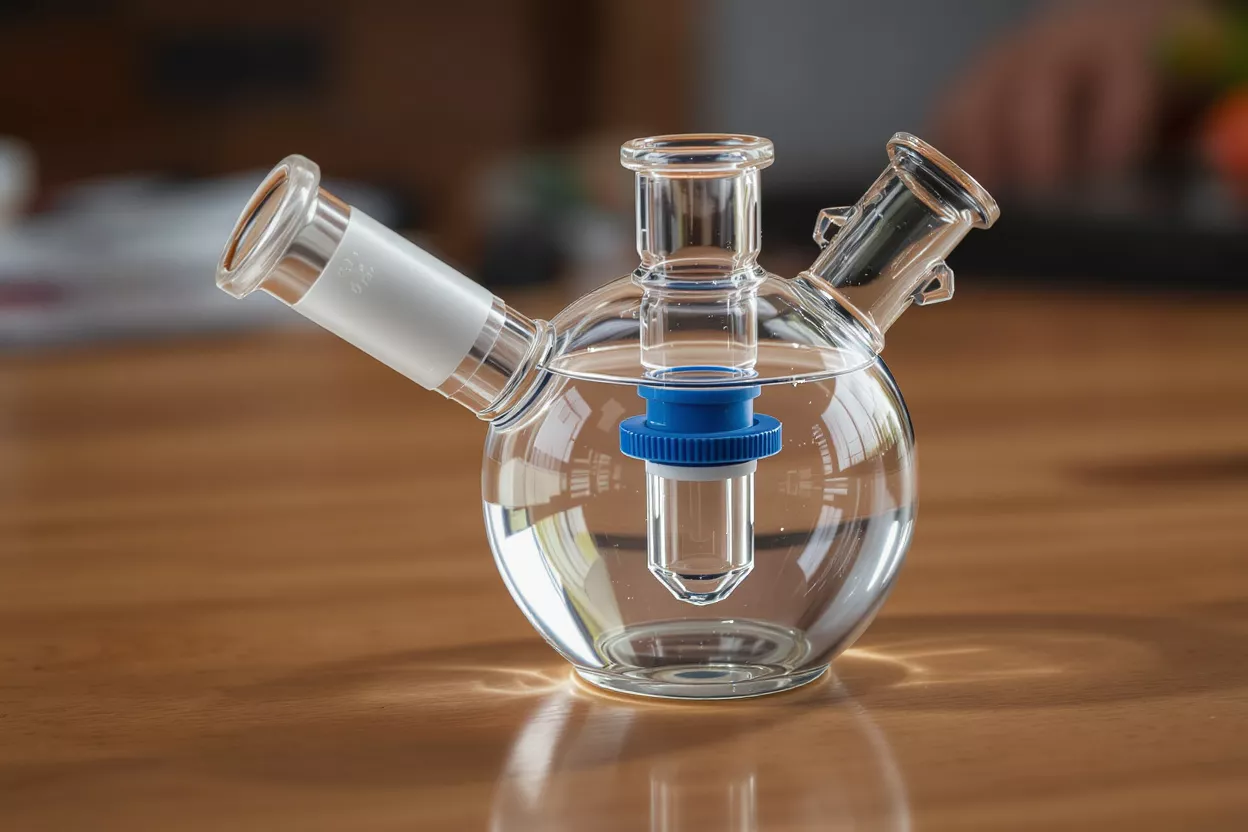
It is worth noting that a splash guard does not filter smoke chemically or cool vapor the way a percolator does. Its single job is moisture management, and it does that one job exceptionally well without adding meaningful drag to your draw.
Types of Splash Guard Designs
Splash guards come in several forms, and the design you choose shapes both function and airflow. Some are built into the glass itself, while others are removable accessories. Understanding the common styles helps you match a guard to your smoking habits and the geometry of your existing piece.
Glassblowers have experimented with everything from simple pinched constrictions to elaborate cage structures. The trade-off is always the same — more obstruction means better splash protection but slightly more airflow resistance. The best designs find a sweet spot that stops water without choking the draw.
- 🛡️ Dome guards: A perforated glass dome arches over the chamber opening, deflecting droplets while letting vapor stream through the holes.
- 🔘 Bead and mesh styles: Loose glass beads or a fine stainless mesh sit in the neck, breaking surface tension and catching spray.
- 🌀 Pinched-ridge necks: Glass is pinched inward to create a maze-like path that droplets cannot navigate but air can.
- 🔧 Removable adapters: Screw-in or friction-fit inserts that retrofit a guard into a pipe that never had one.
Integrated versus aftermarket guards each have a place. Built-in designs offer seamless airflow tuned by the glassblower, while removable adapters let you experiment cheaply. For a first upgrade, a removable guard is the lowest-risk way to test whether the feature improves your sessions.
Splash Guard Benefits for Smoother Sessions
The headline benefit of a splash guard is obvious: no more mouthfuls of bong water. But the advantages run deeper than avoiding a bad taste. Clean draws mean you actually enjoy the flavor of your flower or concentrate instead of masking it with the funk of stale water.
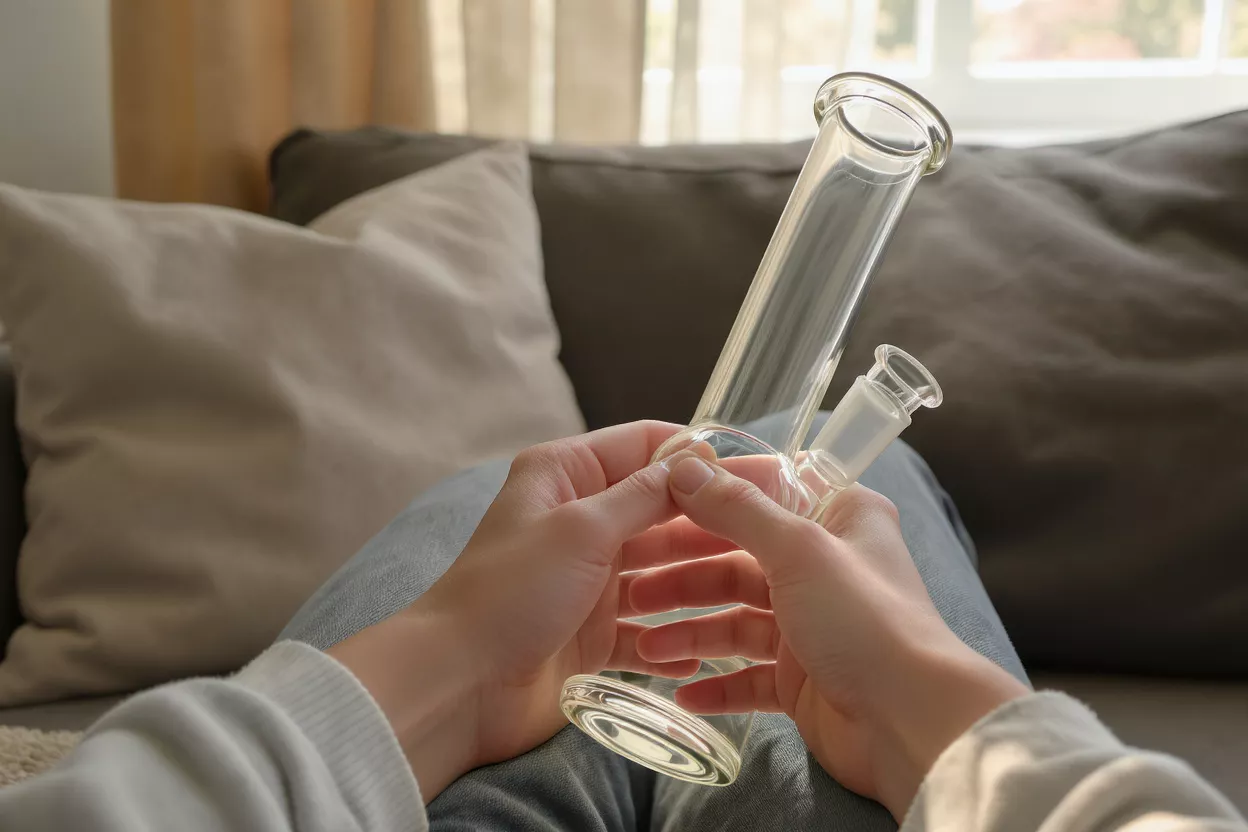
Protecting the mouthpiece from residue keeps your hygiene in check. Water that reaches the mouthpiece leaves mineral spots and bacterial film over time. A guard that holds that moisture down means less frequent deep cleaning and a more sanitary contact point for your lips.
- 💧 No water in the mouth: The primary reason most people install one — clean pulls every time.
- 🔥 Ember and ash blocking: Many guards also catch stray ash or sparks pulled up during a hot bowl.
- 👃 Better flavor clarity: Without water spray diluting each hit, terpene character comes through cleaner.
- 🧼 Easier maintenance: Less residue migration upward means a cleaner mouthpiece for longer.
For people who take big, fast hits, these benefits compound. The faster and harder you pull, the more a splash guard transforms a session from a gamble into a reliably smooth experience.
Do You Need a Splash Guard
Not every smoker needs a splash guard, and being honest about that saves you money. If you use a tall water pipe with plenty of neck space and you take measured pulls, water rarely climbs high enough to reach you. The guard becomes a solution to a problem you do not have.
On the other hand, certain setups practically demand one. Short, squat pieces with little distance between the waterline and the mouthpiece are prone to splash-back. Beaker bases that hold large water volumes can churn violently under a strong draw, and dab rigs designed for compact size leave little buffer room.
Signs your rig would benefit are easy to spot. If you regularly overfill, if you take fast rips, or if you have already tasted bong water more than once, a guard is a cheap fix. Conversely, if you have never had an issue in years of use, you can skip it without missing anything.
Splash Guard vs Percolator: What's the Difference
People often confuse splash guards with percolators because both live inside the body of a water pipe and both interact with airflow. Their purposes, however, are entirely different. A percolator exists to diffuse smoke into the water for cooling and filtration, creating those satisfying clouds of tiny bubbles. A splash guard exists only to stop water from reaching your mouth.
In fact, percolators can sometimes increase the need for a guard. Multi-chamber pieces with aggressive percs produce more turbulence and more surface agitation, which means more potential for splash. Pairing a powerful perc with a splash guard gives you the best of both worlds: heavy diffusion below and clean draws above.
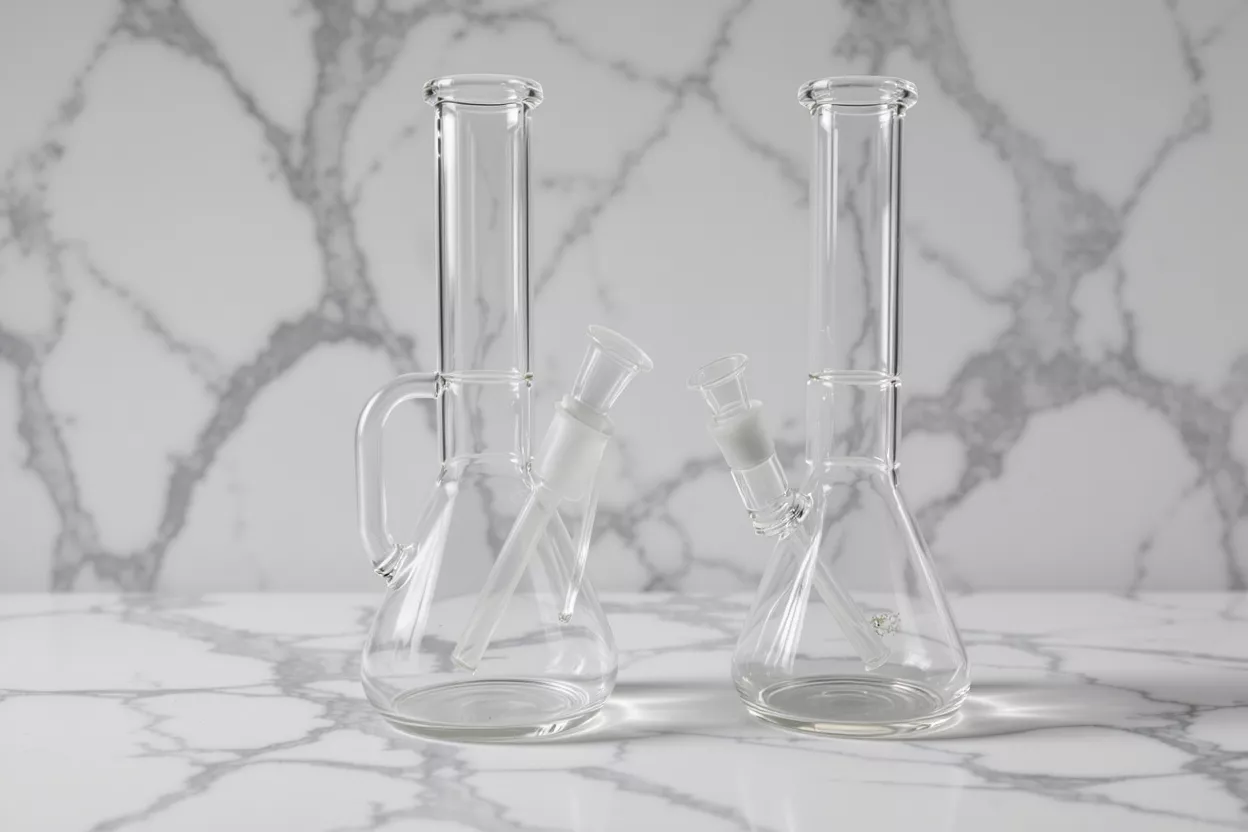
Can one replace the other? No. They are complementary, not interchangeable. A percolator will not reliably keep water out of your mouth, and a splash guard does nothing to cool or filter your smoke. Smokers who want a premium experience often have both features in a single piece, each handling its dedicated job.
Best Splash Guard for Your Setup
Choosing the best splash guard starts with measuring your pipe's joint and neck diameter. A guard that does not fit your geometry either falls out or restricts airflow uncomfortably. Aftermarket guards typically list compatible joint sizes — 14mm and 18mm are the most common in cannabis glassware.
Material matters too. Borosilicate glass guards match the durability and heat tolerance of quality pipes, while stainless steel mesh inserts offer affordability and resilience. Silicone options exist for travel and unbreakable setups, though they can hold odors more readily than glass.
- 📏 For beaker bongs: A dome-style glass guard handles the high water churn these bases generate.
- 💨 For dab rigs: A compact bead or mesh insert protects without adding bulk to a small chamber.
- 🧳 For travel pieces: Silicone or steel guards survive drops and pack down easily.
- 🌬️ For straight tubes: A pinched-ridge or slotted disc preserves the open airflow these pipes are loved for.
Matching guard to draw style is the final consideration. Fast, forceful smokers should lean toward denser mesh or multi-layer domes, while light pullers can use minimal guards that prioritize airflow over maximum protection.
How to Clean a Splash Guard
A splash guard catches exactly the residue it is designed to stop, which means it gets dirty faster than the surrounding glass. Regular cleaning keeps airflow open and prevents the buildup that can sour your hits over time. The good news is that the cleaning routine mirrors how you already maintain your pipe.
For glass guards, the classic isopropyl alcohol and coarse salt solution works beautifully. Soak the guard, agitate with the salt acting as a scrubbing abrasive, and rinse thoroughly. The perforations and slots are where grime hides, so a pipe cleaner or cotton swab helps reach tight geometry.
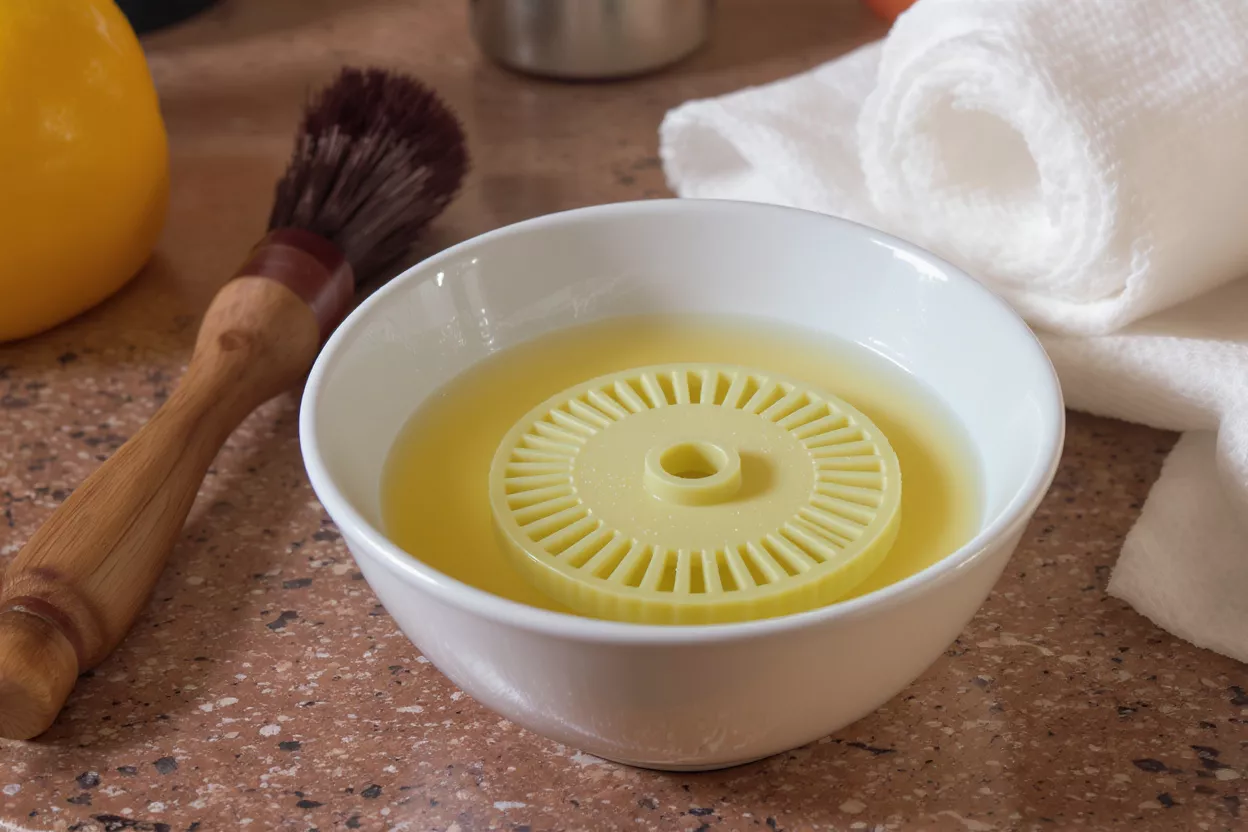
Mesh and bead guards need extra attention because their large surface area traps more resin. Stainless mesh can usually be boiled or soaked, while loose beads should be removed and shaken in a bag of alcohol and salt. Always rinse with clean water until no alcohol smell remains before your next session.
Splash Guards in Glass Distillation
The splash guard's roots run deeper than the smoke shop. In laboratory glassware and cannabis extraction, splash guards — often called splash heads or splash adapters — protect distilled products from contamination during processing. When making cannabis distillate, bumping liquids can throw impurities into the collection flask, ruining purity.
During short-path distillation, a splash guard sits between the boiling flask and the condenser, catching any liquid that surges upward without being properly vaporized. This ensures that only true vapor reaches the cold finger and condenses into clean product, a critical detail when producing high-purity distillate.
From lab bench to smoke shop, the engineering principle is identical. Whether protecting a multi-thousand-dollar batch of extract or simply keeping bong water off your tongue, the splash guard does one thing: it lets vapor through and holds liquid back. That shared physics is why the name crossed over from scientific glassware into everyday cannabis vocabulary.
Are Splash Guards Worth It
For the price, a splash guard is one of the most cost-effective upgrades a water pipe owner can make. A removable insert costs a few dollars, installs in seconds, and solves a problem that genuinely ruins sessions. If you have ever winced at a mouthful of water, the value proposition answers itself.
That said, the honest answer depends on your habits. Slow, careful smokers with tall pieces may never notice a difference, and there is no shame in skipping an accessory you do not need. The guard shines brightest for fast hitters, owners of compact rigs, and anyone who values consistently clean, flavorful draws.
Ultimately, a splash guard is a small refinement that punches above its weight. It will not cool your smoke or boost potency, but it removes one of the most common annoyances in water pipe smoking. For most people who take real pulls from real rigs, that quiet reliability makes the splash guard well worth the modest investment.


Comments