

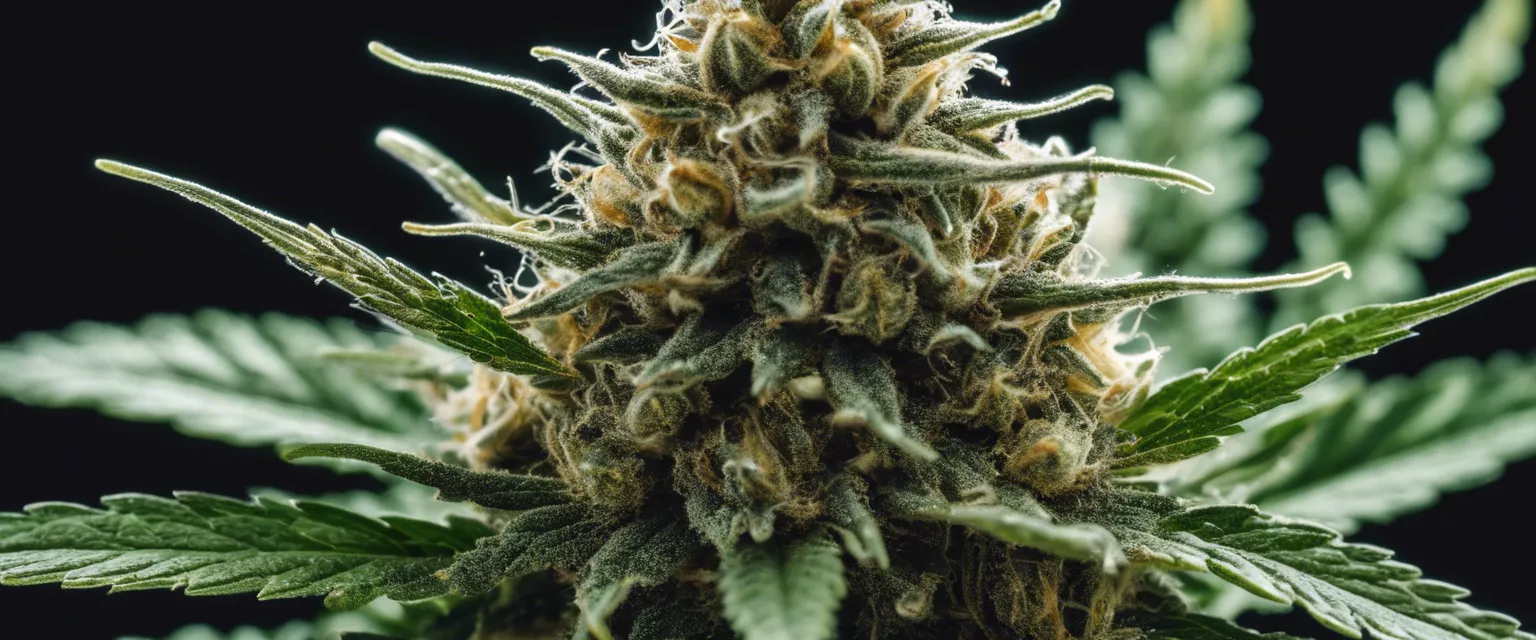
Sugar leaf
Learn what a sugar leaf is, why it's coated in trichomes, and how to use sugar leaf trim for edibles, hash, and kief.
What Is a Sugar Leaf in Cannabis
The sugar leaf is one of the most overlooked yet valuable parts of the cannabis plant. These are the small, often single-fingered leaves that grow directly out of and around the flowering buds. Their name comes from their appearance: as the plant matures, they become dusted with a frosty layer of trichomes that look remarkably like a coating of granulated sugar or crystallized frost.
Unlike the large fan leaves that fuel photosynthesis lower on the plant, sugar leaves nestle tightly within the bud structure. Because they emerge from the same nodes as the flowers, they share the dense glandular development of nearby calyxes, making them far more resinous than any other foliage. A close inspection of a healthy, well-grown cola reveals dozens of these tiny leaves poking out from between the swollen flower clusters.
Where the sugar leaf sits in the plant hierarchy matters for growers and consumers alike. From bottom to top, the plant produces fan leaves, then increasingly small sugar leaves as you approach the bud, and finally the calyxes and pistils that make up the flower itself. Understanding this gradient helps explain why sugar leaves occupy a middle tier in terms of potency and value, and why they deserve more attention than most casual users give them.
Sugar Leaf vs Fan Leaf: What Is the Difference
The clearest way to understand a sugar leaf is to contrast it directly with a fan leaf. Fan leaves are the large, iconic, multi-fingered cannabis leaves that most people picture when they imagine the plant. They are the workhorses of photosynthesis, capturing light and converting it into energy, but they carry almost no trichome coverage and very little cannabinoid content. Growers typically discard them or compost them.
Sugar leaves are smaller, often with fewer fingers, and they hide within the canopy of the bud rather than fanning outward to catch sunlight. Their proximity to the resin-producing flower means they accumulate a meaningful frost of trichomes, which is precisely why they are saved during processing rather than thrown away.
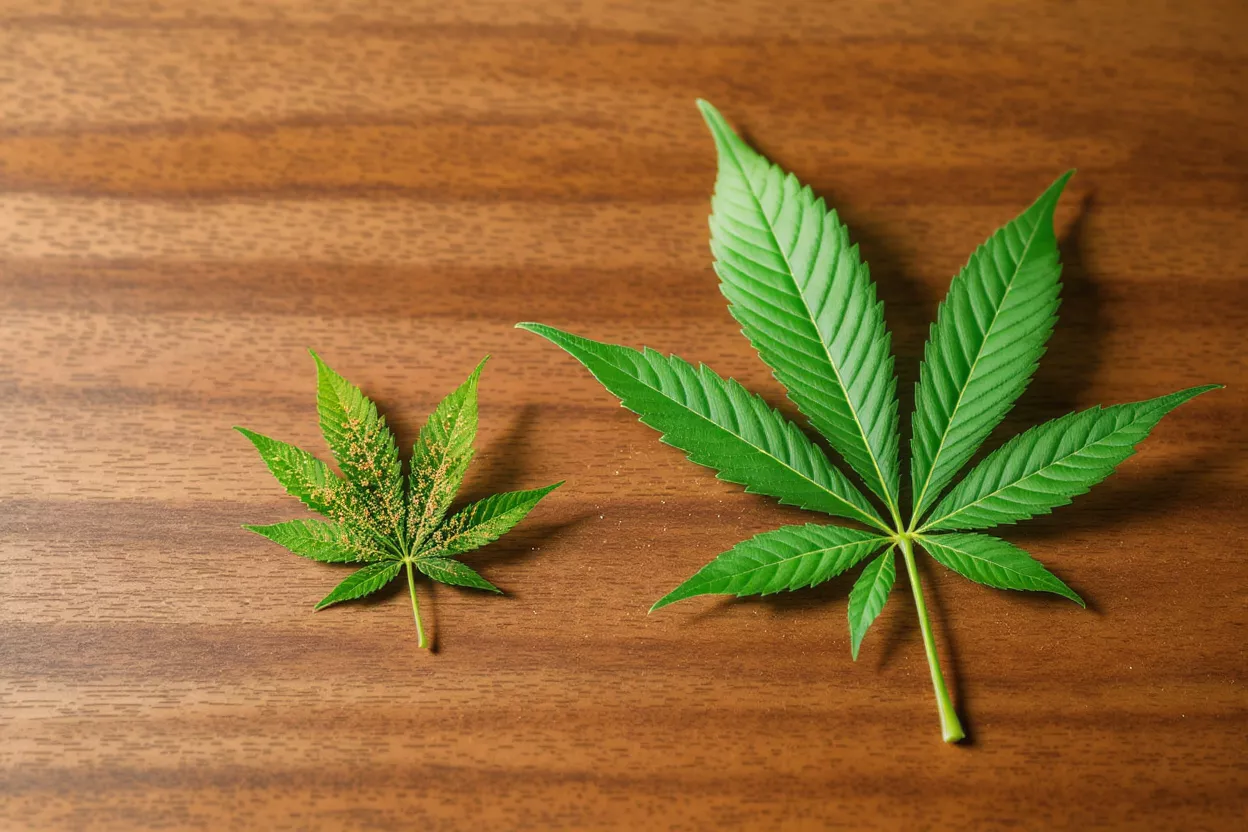
Here is a quick side-by-side comparison to make the distinction stick:
- 🍃 Fan leaves: Large, broad, multi-fingered, low resin, primarily for photosynthesis — usually removed and discarded.
- ❄️ Sugar leaves: Small, frosty, trichome-coated, tucked into buds — saved as trim for extracts and edibles.
- 🌸 Calyxes: The actual flower components with the densest trichome coverage and highest potency of all.
Why Are Sugar Leaves Covered in Trichomes
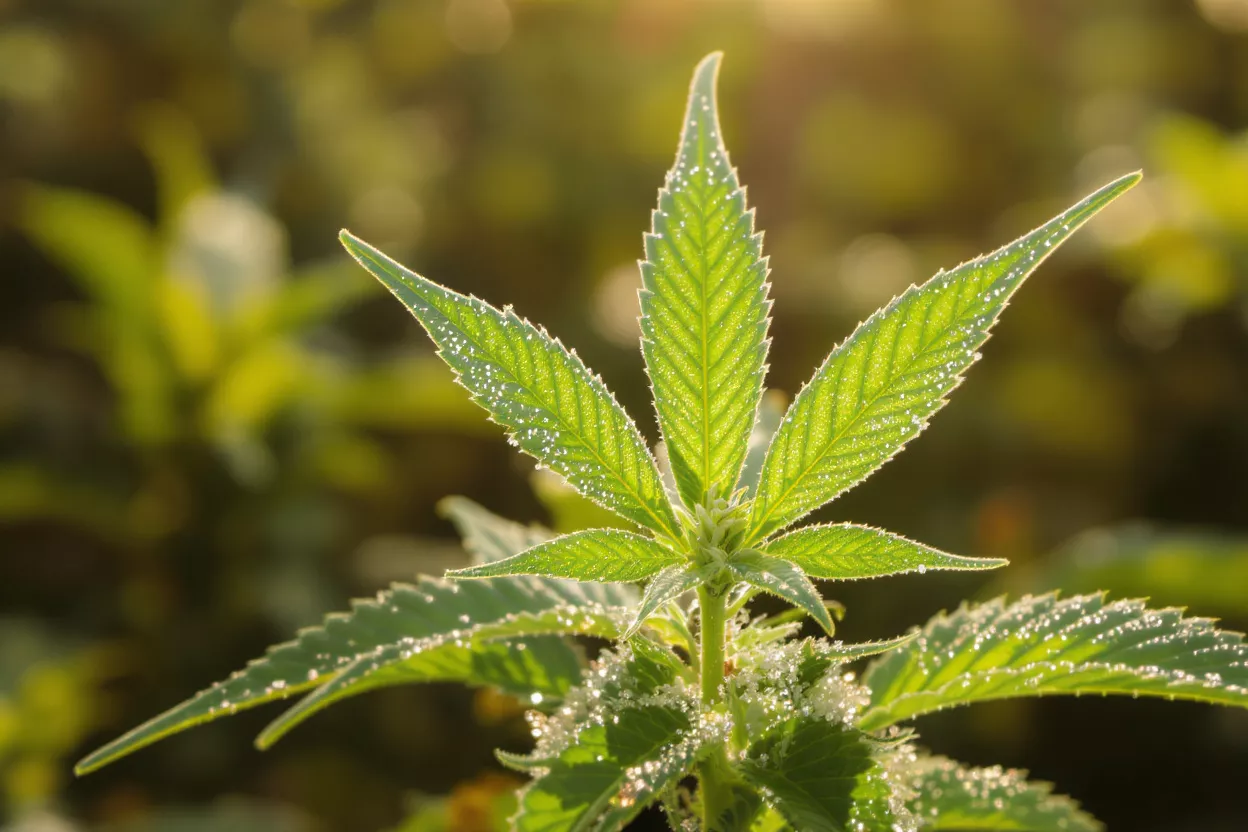
The frosty coating on a sugar leaf comes from trichomes, the microscopic mushroom-shaped glands that produce and store the plant's cannabinoids and terpenes. These glands are most concentrated on and around the flowers because their original biological purpose is to protect the plant's reproductive structures from pests, UV radiation, and herbivores.
Because sugar leaves grow in such close contact with the buds, they catch a generous spray of these resin glands as the plant matures during flowering. The closer a leaf sits to the flower, the heavier its trichome load tends to be, which is why the tiniest sugar leaves often look almost as frosted as the calyxes they hug.
Trichome maturity is also visible on sugar leaves, which makes them a handy reference point during harvest. Growers often examine the glands on sugar leaves with a loupe or microscope, watching them shift from clear to cloudy to amber. While the flower trichomes are the true benchmark, sugar leaf trichomes provide an accessible, easy-to-reach surface for checking ripeness without disturbing the bud itself.
How Much THC Do Sugar Leaves Contain
Sugar leaves contain real cannabinoid content, but consistently less than the flower itself. Where premium buds might test in the high teens to upper twenties for THC percentage, sugar leaf trim typically lands somewhere in the low single digits to low double digits depending on the strain and how heavily the leaves were frosted. This places them firmly in the middle of the potency spectrum.
That intermediate potency is exactly what makes sugar leaves worth saving. They are too valuable to compost like fan leaves, but not potent enough to smoke as you would prime flower. Instead, their cannabinoid content shines when concentrated through extraction or infusion, where the combined resin from a large volume of trim produces a respectable yield.
Strain genetics heavily influence sugar leaf potency. Some cultivars produce remarkably resinous sugar leaves that rival lower-grade flower, while others yield sparse, lightly frosted trim. Indoor plants grown under controlled, intense lighting tend to develop denser trichome coverage on their sugar leaves than outdoor plants exposed to variable conditions, so growing environment plays a meaningful role in the value of the trim you collect.
Sugar Leaf Trimming: Wet vs Dry Methods
Removing sugar leaves from the buds is one of the final steps of harvest, a process simply called trimming. The goal is to tidy the flower so it burns smoothly and looks clean, since the small leaves can add a harsher smoke and a less polished appearance. Trimmers approach this task with one of two timing strategies, each with trade-offs.
Wet trimming happens immediately after harvest while the plant is still fresh and the leaves stand out from the bud, making them easy to snip. The leaves are turgid and splayed, which speeds the work and reduces the chance of accidentally knocking trichomes off the flower. Wet-trimmed buds also dry faster because more plant material has been removed.
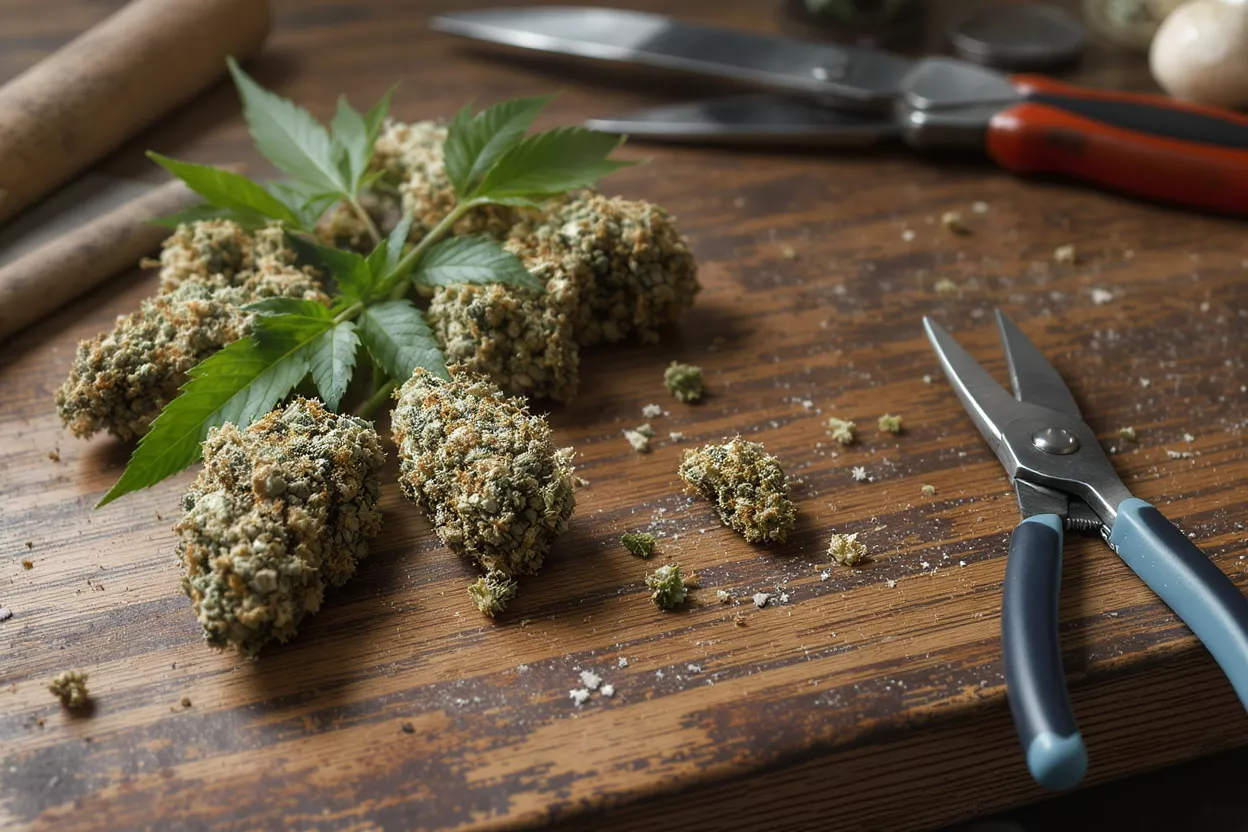
Dry trimming waits until after the buds have dried, at which point the sugar leaves curl inward and tighten against the flower. This method is slower and fiddlier, but many growers swear it produces a slower, gentler dry that better preserves terpenes and aroma. Consider the contrast below when deciding which approach fits your harvest:
- ⏱️ Speed: Wet trimming is faster and easier; dry trimming is slower and more tedious as leaves curl tight.
- 🌿 Terpene preservation: Dry trimming offers a gentler, slower cure that many feel protects aroma and flavor.
- 💎 Trim quality: Both methods yield usable sugar leaf trim, though wet trim is bulkier and dry trim is more brittle.
What to Do With Sugar Leaf Trim
Once you have a pile of trimmed sugar leaves, the worst thing you can do is throw them away. Because they carry genuine trichome coverage, sugar leaves are a free resource that can be transformed into a surprising range of products. Many home growers find that their trim becomes one of the most rewarding parts of the harvest, stretching the value of a single plant well beyond the flower jar.
The key principle is concentration. A handful of sugar leaves smoked on their own would be weak and harsh, but the same handful processed into butter, oil, or hash pools its scattered cannabinoids into something genuinely effective. This is why trim has a long history of being repurposed rather than discarded by experienced cultivators.
Proper storage protects sugar leaf trim until you are ready to use it. Keep it dry, cool, and out of direct light in an airtight container, just as you would with flower. Trim that has been stored carelessly can develop mold or lose potency as trichomes degrade, so treat your trim with the same respect you give your best buds and it will reward you when processing day arrives.
Making Edibles and Concentrates From Sugar Leaves
The most accessible way to use sugar leaf trim is infusion. By gently heating decarboxylated trim in butter or a neutral cooking oil, the cannabinoids dissolve into the fat and become ready for any recipe. This cannabutter or canna-oil then forms the base for everything from brownies to sauces, letting you portion edibles to your own tolerance.
Sugar leaves also lend themselves to alcohol-based tinctures, where high-proof spirits strip the cannabinoids from the plant material to create a fast-acting liquid you can dose by the dropper. Tinctures keep for a long time and offer a discreet, smoke-free option that many medical users prefer.
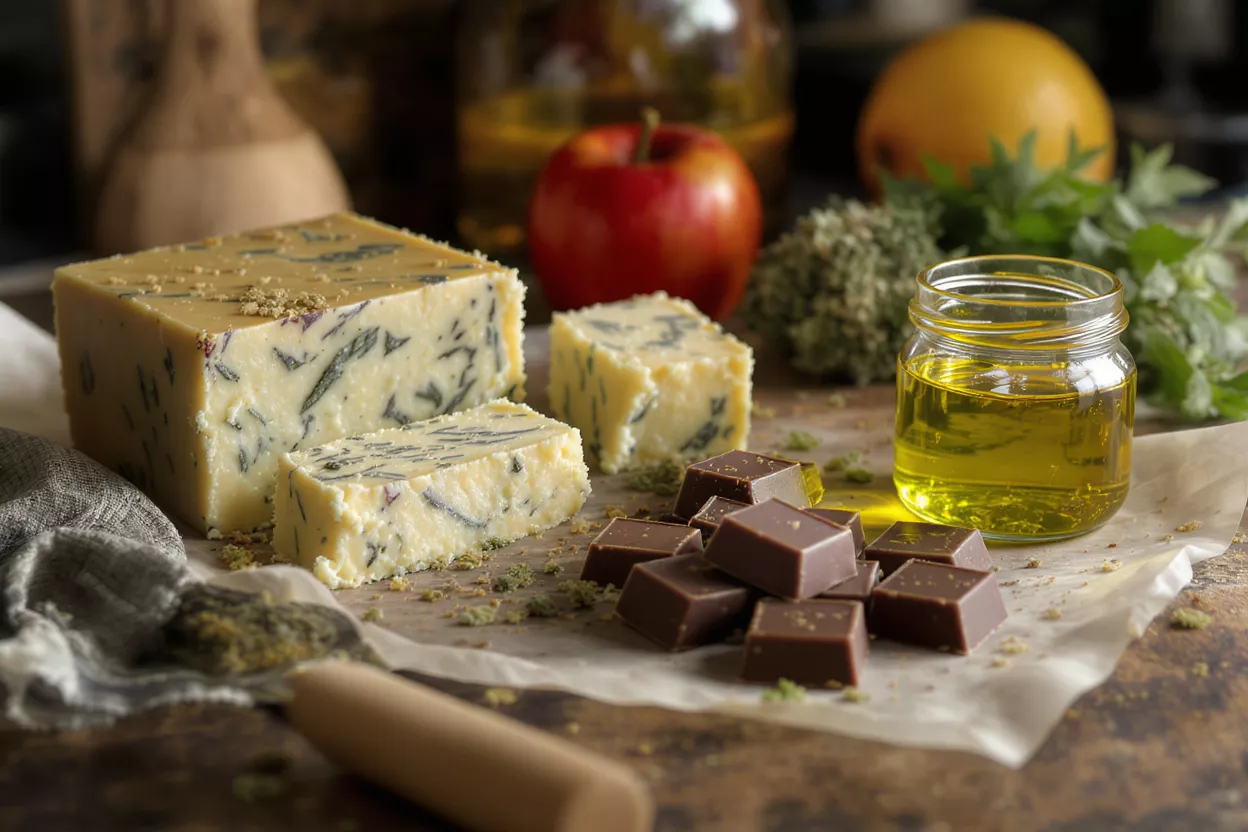
For those willing to go further, sugar leaf trim can feed solvent-based or solventless concentrate production. While flower yields the cleanest, most potent extracts, trim produces respectable returns that make it economical to process in larger batches. The relatively modest cannabinoid content of any single leaf becomes significant when you are extracting from an entire harvest's worth of trim at once.
Sugar Leaves in Hash and Kief Production
Some of the oldest cannabis traditions revolve around collecting loose trichomes, and sugar leaves are ideal material for this. Kief is simply the powder of trichome heads that have been knocked free from plant material, and the frosty surface of sugar leaves gives up a generous amount when sifted through fine mesh screens.
Dry sifting is the simplest method: chill the trim, then gently agitate it over a series of screens that separate the brittle trichome heads from the leaf matter. The resulting kief can be sprinkled onto flower, pressed into hash, or vaporized on its own for a stronger experience than the raw trim ever could provide.
Ice water extraction takes the concept further by using cold water and agitation to freeze and shatter the trichomes off the leaves, then filtering them through a graded set of bubble bags. The result is bubble hash, a solventless concentrate prized for its purity and flavor. Sugar leaf trim is a classic starting material here because its trichome density justifies the effort without requiring you to sacrifice smokable flower.
How Sugar Leaves Reveal Flower Quality
Beyond their practical uses, sugar leaves serve as a useful diagnostic window into the quality and care behind a batch of cannabis. When you examine a bud, the condition of its sugar leaves tells a story about how the plant was grown, harvested, and trimmed before it reached you.
Heavily frosted sugar leaves generally signal a resinous, well-finished plant, while sparse, pale leaves can indicate a strain with low trichome output or a harvest taken before the plant reached its peak. The color and condition of the trim also reveal handling: crisp, vibrant green suggests a careful cure, whereas brown, brittle, or overly dry leaves may point to harsh drying conditions.
Trim quality reflects grower craftsmanship. A meticulously trimmed bud with just a hint of clean sugar leaf shows attention to detail, while a bud buried in untrimmed leaf suggests rushed processing. Consumers who learn to read these signals can judge quality at a glance, and growers who understand them can present their harvest in its best possible light.
Sugar Leaf Questions Growers Ask Most
Newcomers to cultivation and processing tend to circle back to the same handful of practical questions about sugar leaves. Addressing them directly clears up the most common points of confusion and helps you make the most of every harvest.
Can you smoke sugar leaves directly? Technically yes, but it is rarely recommended. Their lower cannabinoid content and higher chlorophyll levels produce a harsh, throat-scratching smoke with modest effects. Processing them into edibles, tinctures, or hash almost always delivers a better experience for the same material.
A few quick answers to round out the essentials:
- ♻️ Should I save my trim? Yes — sugar leaves carry real trichomes and are worth keeping for extraction or infusion.
- 🧊 Best way to store trim? Keep it dry, cool, dark, and airtight, exactly as you would store finished flower.
- 🔬 Do sugar leaves help judge harvest timing? Yes — their accessible trichomes are easy to inspect for ripeness alongside the flower.
Sugar leaves prove that there is no truly wasted material on a well-grown cannabis plant. Once dismissed as a byproduct, this frosty, trichome-coated trim turns out to be a versatile resource for edibles, tinctures, kief, and hash, while also offering a quick read on the quality and care behind any harvest. Understanding the humble sugar leaf rewards both the grower seeking to maximize yield and the consumer learning to recognize a job well done.

Comments