


Swiss perc
Discover how a swiss perc filters smoke through cheese-hole glass channels for smoother hits.
What Is a Swiss Perc?
The Swiss perc is one of the more visually striking percolators in the world of glass water pipes, and it owes its name to a feature you can spot from across the room: a series of holes cut clean through the body of the glass, leaving open gaps that resemble the holes in a wheel of Swiss cheese. These openings are not simply decorative. Each one wraps around a vertical channel that the smoke must travel through, and that channel is what does the real work of cooling and filtering every draw you take.
Unlike a traditional percolator that lives submerged inside the water chamber, the Swiss perc integrates its diffusion structure directly into the main column of the piece. The result is a sleek, almost architectural look that has made it a favorite among collectors who appreciate function and form in equal measure. When you fill the chamber and pull, the airflow is forced into a narrow curved passage studded with tiny diffusion holes.
For anyone new to the language of glass, a percolator (or "perc") is any internal component designed to break smoke into smaller bubbles and pass it through water for filtration. The Swiss perc is a distinctive interpretation of that idea, one that trades the typical submerged tree or disc for a vertical pillar pierced with holes.
How Does a Swiss Perc Work?
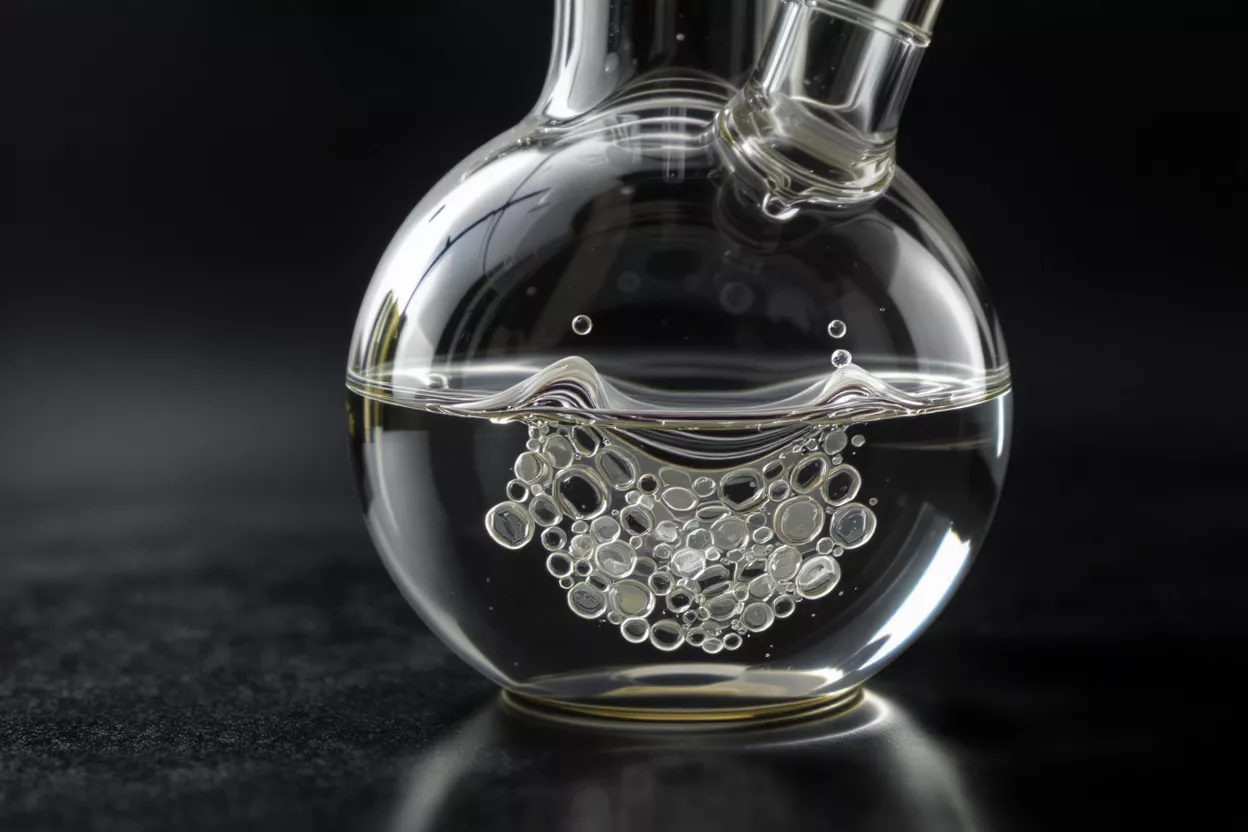
The mechanics of a Swiss perc are deceptively simple. As smoke is drawn up from the bowl, it enters a curved internal channel that snakes around the open holes carved through the glass. Along the walls of this channel sit numerous small diffusion slits or perforations that fracture the smoke stream into a cloud of fine bubbles before it passes through the water below.
The curved-channel geometry matters more than most people realize. By bending the smoke path rather than letting it shoot straight up, the Swiss perc increases the contact time between the smoke and the surrounding water and glass. More contact time means more heat is shed and more particulates are caught, which translates into a draw that feels noticeably smoother on the throat and lungs.
The open holes themselves serve a structural and aesthetic purpose rather than letting air escape. Because the diffusion channel is sealed against them, the smoke never leaks out through the gaps. Instead, the holes lighten the visual weight of the glass and showcase the bubbling action happening inside, turning a functional component into a centerpiece you actually want to watch work.
Why Is It Called a Swiss Perc?
The name is a direct nod to appearance. When glassblowers first began drilling multiple round openings through the body of a percolator column, the finished product looked unmistakably like a slice of Emmental or Swiss cheese, complete with its signature holes. The name stuck because it is descriptive, memorable, and immediately tells you what to look for.
There is a small irony worth noting: the holes that give the Swiss perc its name are not where filtration happens. The actual diffusion occurs along the hidden curved channel that weaves between those openings. So while the holes are the marketing hook and the visual identity, the engineering that delivers a cool, smooth hit is tucked just out of sight.
This combination of eye-catching design and discreet performance is exactly why the Swiss perc has carved out a lasting niche. It belongs to a broader family of artisan percolator styles where the goal is to make the act of smoking feel like an experience rather than a transaction.
Swiss Perc vs Other Percolators
Every percolator design balances diffusion, drag, and durability differently, and the Swiss perc occupies its own corner of that spectrum. Compared to a tree perc with its many fragile arms, the Swiss perc is structurally robust thanks to its solid single-column build. Compared to a showerhead or disc perc, it tends to offer slightly less aggressive bubbling but a far more dramatic visual.
Here is how the Swiss perc stacks up against several common alternatives:
- 🧀 Swiss perc: Curved channel with open holes through the glass — strong on style, moderate diffusion, very durable.
- 🌳 Tree perc: Multiple vertical arms with slits — excellent diffusion but delicate and harder to clean.
- 🚿 Showerhead perc: A flared tube with slits at the base — reliable, smooth, and a common all-rounder.
- 💿 Disc (honeycomb) perc: A flat plate riddled with holes — minimal drag and tons of tiny bubbles.
- 🌀 Inline perc: A horizontal slitted tube — compact, low-profile, and easy to stack with others.
Many high-end pieces combine a Swiss perc with a second percolator stacked above or below it, pairing the dramatic looks of the Swiss design with the heavy filtration of a honeycomb or showerhead. This stacking approach lets you enjoy the best of both worlds in a single rig.

Benefits of a Swiss Perc Water Pipe
The appeal of a Swiss perc water pipe goes beyond aesthetics, though the looks are undeniably a major selling point. The practical advantages center on smoother hits, a sturdier build than many delicate alternatives, and a distinctive presence that makes the piece a conversation starter.
Cooler, smoother draws are the headline benefit. The curved diffusion channel pulls heat out of the smoke before it reaches you, reducing the harsh edge that makes some hits cough-inducing. For people sensitive to throat irritation, this gentler delivery can make a meaningful difference in comfort.
Durability is a quiet strength of the Swiss design. Because the diffusion structure is built into a thick, solid column rather than relying on thin protruding arms, there is far less to snap when you are cleaning or transporting the piece. That ruggedness gives a Swiss perc a longer practical lifespan than many ornate percolators that look beautiful but live in constant peril.
- ❄️ Smoother temperature: The bent channel sheds heat, softening each pull.
- 💪 Solid construction: No fragile arms means fewer accidental breaks.
- 👁️ Visual centerpiece: The signature holes make it a piece worth displaying.
- 🔧 Pairs well: Stacks neatly with other percs for layered filtration.
Swiss Perc and Smoke Diffusion Explained
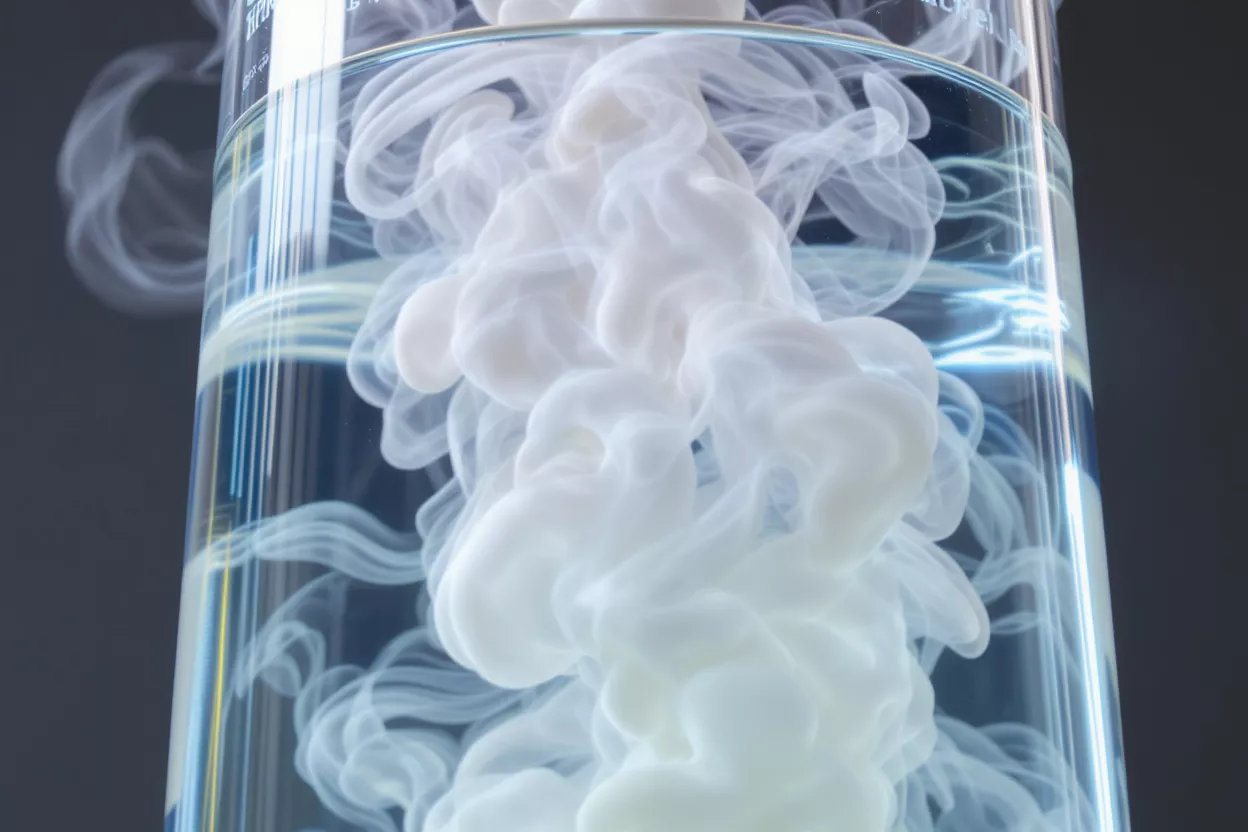
Diffusion is the heart of what any percolator does, and understanding it helps explain why the Swiss perc feels the way it does. When smoke is broken into many small bubbles rather than passing through as a single large pocket, the total surface area in contact with water skyrockets. More surface area means more filtration of tar and water-soluble compounds, plus more rapid cooling.
The Swiss perc achieves diffusion through the perforations lining its hidden channel. Each slit splits the incoming smoke into a finer stream, and as those streams bubble up through the water they release heat and shed particulates. This is the same principle behind filtration in any quality water pipe, simply executed with a distinctive geometry.
It is worth setting expectations honestly: the Swiss perc is not the single most aggressive diffuser on the market. A dense honeycomb disc will produce more tiny bubbles per pull. What the Swiss perc offers instead is a balanced, smooth experience with a moderate draw resistance and a presentation that no flat disc can match.
Are Swiss Perc Bongs Easy to Clean?
Cleaning is where the Swiss perc earns genuine goodwill. Because the diffusion holes are relatively large and the channel is a single curved passage rather than a maze of narrow arms, residue has fewer hidden pockets to accumulate in. A standard soak in isopropyl alcohol and coarse salt, followed by a gentle agitation, dislodges most buildup without much fuss.
Routine maintenance keeps performance high. Resin and tar gradually narrow any diffusion opening, which increases drag and dulls the smoothness you bought the piece for. Rinsing after heavy sessions and doing a full deep clean every week or two will keep the airflow crisp and the glass looking presentable behind those signature holes.
The open-hole construction also makes it easy to visually inspect the interior. You can see exactly where grime is collecting, which takes the guesswork out of knowing when a deep clean is overdue. Few percolator styles make their own cleanliness so transparent.
Types of Swiss Perc Designs
Although the core concept stays consistent, glassblowers have explored plenty of variation within the Swiss perc family. Some keep a single column with a handful of large holes, while others pack in dozens of smaller openings or twist the channel into more elaborate shapes for added contact time.
Common variations you will encounter include the following:
- 🧀 Classic single-hole Swiss: One large opening with a curved channel — clean, minimal, and easy to clean.
- 🔘 Multi-hole Swiss: Several openings across the column for a busier look and more diffusion points.
- 🌈 Swiss-honeycomb hybrid: A Swiss column stacked above a honeycomb disc for layered filtration.
- 🎨 Color-accented Swiss: Worked glass and color around the holes that emphasizes the design as art.
The variation you choose comes down to how much you value pure diffusion versus visual drama. A multi-hole or hybrid design leans toward performance, while a clean single-hole piece leans toward minimalist elegance. Neither is objectively better; they simply serve different priorities.

How to Choose a Swiss Perc Piece
Picking the right Swiss perc means weighing a few practical factors against your personal preferences. Glass thickness, joint size, overall height, and whether the perc is paired with a second diffuser all shape how the piece will feel in daily use. A heavier, thicker-walled rig will survive more handling, while a taller column gives smoke extra travel distance to cool.
Consider how you actually smoke before falling for looks alone. If you take big, fast pulls, a Swiss perc paired with a honeycomb will reward you with a smoother result. If you prefer slow, deliberate draws and value the visual show, a clean single-hole Swiss perc may be all you need.
Pay attention to the quality of the glasswork itself. Well-finished joints, even glass distribution, and smooth-edged holes indicate a piece made by a skilled hand. Rough seams or uneven walls are warning signs that the piece may not hold up or draw evenly over time.
- 📏 Glass thickness: Thicker walls (5mm+) resist cracks and thermal stress.
- 🔗 Joint size: Match it to your existing bowls and accessories.
- 📐 Height: Taller pieces cool more but are less portable.
- 🧩 Stacked percs: Decide whether you want extra filtration layers.
Is a Swiss Perc Right for You?
A Swiss perc rewards the smoker who values the experience and presentation of their glass as much as the function. If you enjoy watching the bubbling action, appreciate a piece that doubles as decor, and want a percolator that resists breakage better than fragile tree designs, the Swiss perc is an excellent match. Its smooth, moderate draw suits both newcomers and seasoned users.
On the other hand, if your single priority is the absolute maximum filtration with no regard for looks, a dense honeycomb or multi-arm setup might edge it out on raw bubble count. The honest takeaway is that the Swiss perc is a balanced choice rather than an extreme one, blending strong cooling with standout aesthetics and easy upkeep.
Whether you are building your first quality water pipe or adding a showpiece to a growing collection, the Swiss perc delivers a combination of durability, smoothness, and visual character that few other percolators can claim. Take care of it with regular cleaning, match the design to the way you smoke, and it will serve as both a reliable daily driver and a genuine conversation piece for years to come.



Comments