


Thai stick
Discover the Thai stick — history, how it's made, potency & a modern revival guide.
What Is a Thai Stick in Cannabis Culture?
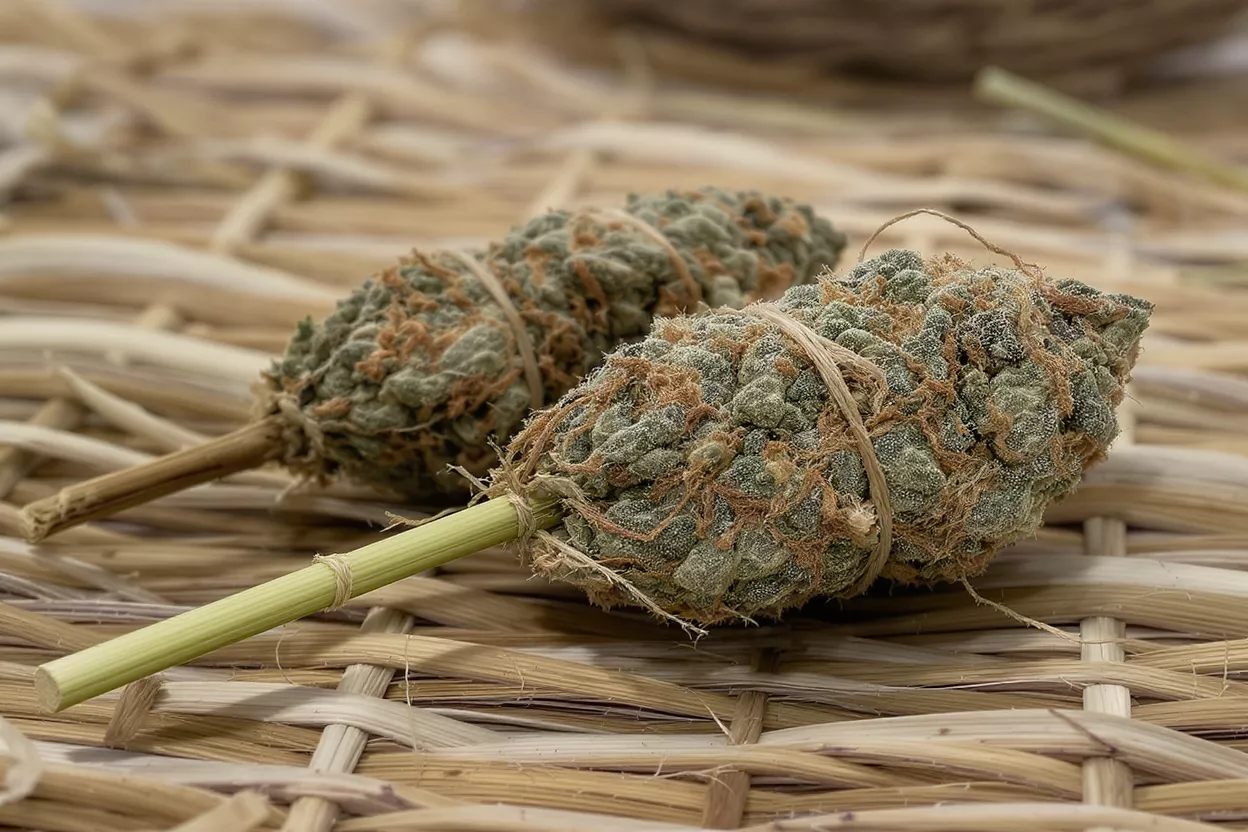
The Thai stick is one of the most storied artifacts in cannabis history, a hand-crafted bundle of premium cannabis flower skewered onto a thin stick and bound tightly with hemp thread or plant fiber. Originating in Southeast Asia, it represented an early form of artisanal cannabis preparation long before pre-rolls and infused products lined dispensary shelves. To understand the Thai stick is to understand a piece of cannabis culture that bridged farmers in rural Thailand with a generation of travelers and soldiers who carried the legend back home.
At its simplest, a Thai stick is whole cannabis buds arranged around a central skewer, wrapped to compress the flower into a dense, cigar-like form. The result burns slowly, concentrates flavor, and—in its traditional form—often underwent a curing process that intensified its potency. It is part product, part craft, and part ritual.
Why the name endures: The "Thai" in Thai stick points directly to its geographic roots, while "stick" describes both the bamboo or cane skewer at its core and the sticky, resinous nature of the finished bundle. Few cannabis terms carry as much romance and mystique, and the name has become shorthand for old-school quality and hand-made care.
The History of the Thai Stick
The Thai stick rose to prominence during the late 1960s and 1970s, when it became one of the most sought-after cannabis imports in North America. Soldiers returning from Southeast Asia and adventurous travelers along the so-called "hippie trail" encountered these tightly wrapped bundles in Thailand and brought stories—and product—back with them. For many Western consumers, the Thai stick was their first taste of truly top-shelf, landrace cannabis.
Thailand's tropical climate and generations of cultivation knowledge produced sativa landrace strains that were aromatic, energetic, and distinctly different from anything grown domestically at the time. The Thai stick packaged these prized flowers in a portable, durable form that traveled well across oceans, making it a natural fit for the international cannabis trade of the era.
The smuggling era: Much of the Thai stick's mythology comes from its role in 1970s smuggling routes. Bound tightly and sometimes dipped in additional resin, sticks were compact and concealable, which made them ideal contraband. As enforcement tightened through the 1980s, authentic imported Thai sticks grew scarce, and the product faded into legend—remembered fondly by those who experienced it firsthand and idealized by everyone who only heard the stories.

How Thai Sticks Are Made Traditionally
The traditional Thai stick is a study in patience and craftsmanship. Cultivators selected fresh, resin-heavy cannabis buds and arranged them around a thin skewer of bamboo or cane. The flowers were then wrapped and bound with hemp string or strips of fibrous plant material, compressing everything into a tight cylinder roughly the size of a cigar.
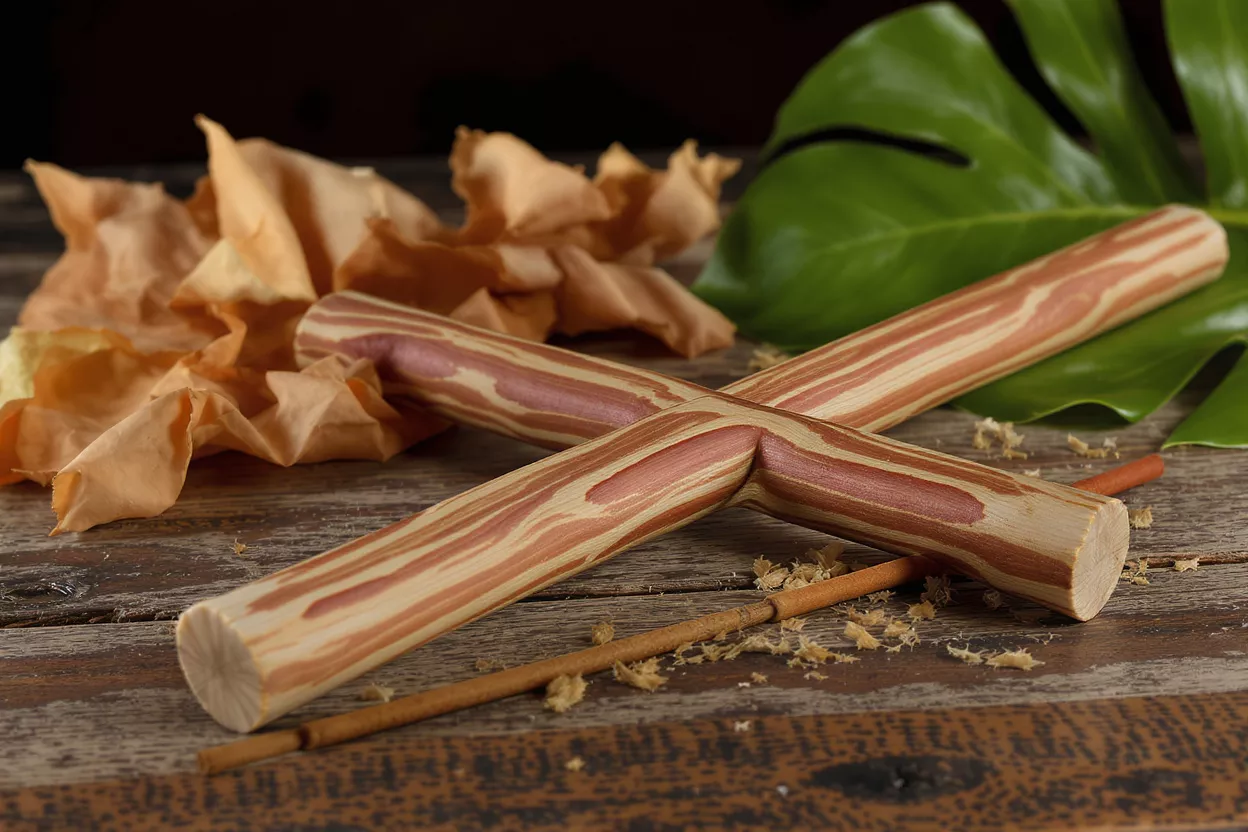
What separated authentic Thai sticks from a simple bundle of buds was the curing. Traditional methods reportedly involved coating the wrapped stick in a liquid—often a hash oil or a resin extracted from the plant—then allowing it to cure over time. Some accounts describe wrapping the sticks in large fan leaves and burying or storing them to sweat and ferment, a process that deepened flavor and boosted potency.
The role of fan leaves and curing: A signature step in many traditional recipes was the use of large cannabis leaf wraps around the bound flower. As the stick cured, the leaves helped lock in moisture and aroma while the resin coating bonded everything together. The finished product was firm, sticky, and slow-burning—qualities that made it both pleasant to smoke and easy to transport.
What Goes Inside a Thai Stick
The quality of any Thai stick begins with the flower at its core. Traditional versions relied on Thai landrace sativas prized for their soaring, cerebral effects and sweet, citrusy aromas. The buds needed to be sticky with trichomes, since the resin played a structural role in holding the bundle together as well as delivering potency.
Beyond the flower, three core components define the construction of a Thai stick. Each contributes to the final character of the product, and the quality of each ingredient determines whether the finished stick is a genuine artisanal treat or a clumsy imitation.
- 🌿 Premium flower: Resin-rich, fully cured buds form the body of the stick and supply both flavor and potency.
- 🪵 The skewer: A thin length of bamboo or cane runs through the center, giving the stick its structure and making it easy to handle while it cures.
- 🧵 The binding: Hemp thread or fibrous plant material wraps the flower tightly, compressing it and holding the form during curing and storage.
The resin coating: Many traditional recipes finished the stick with a layer of hash oil or concentrated resin. This coating served two purposes: it glued the bundle together and dramatically increased the overall cannabinoid load, turning an already strong product into something legendary for its strength.
Thai Stick Potency and Effects
Thai sticks earned their reputation partly through potency. The combination of high-quality landrace flower and a resin or hash oil coating meant that a single stick could deliver effects far stronger than ordinary loose buds of the era. For consumers used to lower-grade imported cannabis, the difference was dramatic and memorable.
The effect profile of a classic Thai stick leaned heavily on its sativa heritage. Users described an energetic, heady, and creative high—uplifting rather than sedating, with a clear-minded buzz that could turn intense given the added resin. Because of the concentrated nature of the product, even experienced consumers approached a Thai stick with respect.
What modern users can expect: Today's hand-made Thai sticks vary widely depending on the strain and whether a concentrate coating is used. A stick built from a potent modern hybrid and finished with kief or hash oil can rival or exceed the strength of its historical ancestors, while a simpler flower-only version offers a smoother, more manageable experience.
Why Thai Sticks Became Legendary
The Thai stick became legendary for reasons that go beyond raw potency. It arrived at a cultural moment when cannabis was woven into the music, travel, and counterculture of the 1960s and 1970s. For a generation discovering cannabis, the Thai stick represented the pinnacle of quality and an exotic connection to a faraway place.
Scarcity amplified the mystique. As imports dried up and authentic sticks grew rare, the product transformed from a tangible item into a symbol. Stories grew with each retelling, and the Thai stick took on an almost mythical status among older consumers who remembered it and younger ones who only heard the tales.
- ✨ Exotic origin: Sourced from Thai landrace genetics that were genuinely different from domestic cannabis of the time.
- 🔥 Exceptional strength: The resin coating made it one of the most potent cannabis products widely available in its era.
- 🎸 Cultural timing: It became intertwined with the music and counterculture movements that defined a generation.
- 🕰️ Scarcity and mystique: Once imports faded, rarity turned the Thai stick into a collector's legend.
That blend of substance and story is exactly why the term still resonates. A Thai stick was never just cannabis—it was an experience packaged in a form that felt special, deliberate, and rare.
The Modern Thai Stick Revival
As legal cannabis markets mature, the Thai stick has enjoyed a quiet revival among craft producers and home enthusiasts. With access to high-quality flower and concentrates, today's makers can recreate—and in some ways improve upon—the traditional product, applying modern curing knowledge and clean concentrate coatings to build sticks that honor the original while meeting contemporary standards.
The revival fits neatly within the broader artisanal cannabis movement. Just as consumers seek out craft hash and solventless concentrates, the Thai stick appeals to those who value hand-made products with history behind them. It offers a slow burn, a ritual of preparation, and a tangible link to cannabis heritage.
Craft cannabis and collectibility: Some legal producers now offer Thai-stick-style products as premium novelty items, often coated in rosin and rolled in kief. These elevated versions command premium prices and appeal to connoisseurs looking for something beyond the standard pre-roll—proof that a fifty-year-old tradition still has plenty of life in it.
How to Make a Thai Stick at Home
Building a Thai stick at home is a rewarding project for patient cannabis enthusiasts, though it requires time and a willingness to experiment. The core process mirrors the traditional method: select quality flower, skewer it, bind it tightly, and allow it to cure. Where modern makers diverge is in their use of clean concentrates and controlled curing environments.
The general approach starts with fresh, slightly sticky buds arranged around a thin bamboo skewer. Hemp thread wraps the flower tightly from end to end, compressing it into a firm cylinder. Many makers then brush the bound stick with hash oil or rosin and roll it in kief before wrapping it in fan leaves and letting it cure for days or weeks.
- 🌿 Skewer slightly fresh, resin-rich buds onto a thin bamboo or cane stick.
- 🧵 Wrap tightly with hemp thread from top to bottom, compressing the flower firmly.
- 💧 Brush with hash oil or rosin to bind the bundle and boost potency.
- ❄️ Roll the sticky exterior in kief for an extra concentrated coating.
- 🍃 Wrap in large fan leaves and cure in a cool, controlled space for one to several weeks.
Patience pays off: The curing stage is what transforms a bundle of buds into a true Thai stick. Allowing the wrapped stick to cure slowly lets moisture redistribute, flavors mellow, and the concentrate coating set firmly. Rushing this step produces a stick that burns unevenly and lacks the smooth character of a properly aged piece.
How to Smoke a Thai Stick
Smoking a Thai stick is a slower, more deliberate affair than lighting an ordinary joint. Because the flower is densely packed and often coated in concentrate, the stick burns slowly and can require relighting—part of the ritual that makes the experience distinctive. Many people remove the central skewer before smoking, leaving a self-supporting cylinder of flower.
Once the skewer is out, the Thai stick can be smoked much like a cigar—lit at one end and drawn slowly. The dense pack and resin coating produce thick, flavorful smoke, and because of the elevated potency, modest sessions go a long way. Sharing a single stick among a group is both practical and true to its communal roots.
Dosing with respect: Given the concentrate-boosted strength of many Thai sticks, moderation matters. Start with a few small draws and wait to gauge the effects before continuing, especially with a stick finished in hash oil or rosin. The combination of potent flower and concentrate can be deceptively strong, so pacing yourself keeps the experience enjoyable.
Are Thai Sticks Worth It Today?
For the right consumer, a Thai stick is absolutely worth seeking out or making. It offers a unique combination of history, craftsmanship, and potency that few other cannabis products can match. The slow burn, rich flavor, and ritual of preparation make it more of an experience than a quick consumption method, and that experiential quality is precisely the appeal.
Practically speaking, Thai sticks command premium prices and demand patience, so they suit enthusiasts and connoisseurs more than casual users. If you value the story behind your cannabis and enjoy hand-crafted products that reward a little extra effort, the Thai stick delivers something genuinely special. For those who simply want convenience, a standard pre-roll may make more sense.
Ultimately, the Thai stick endures because it represents the artisanal heart of cannabis culture—a product shaped by hand, refined by patience, and steeped in decades of history. Whether you encounter one from a craft producer or build your own from quality flower and concentrate, the Thai stick remains a meaningful link to where modern cannabis came from, and a satisfying experience in its own right.
Comments