

Tree perc
Discover how a tree perc filters smoke through branched arms for cooler, cleaner hits.
What Is a Tree Perc and How Does It Work
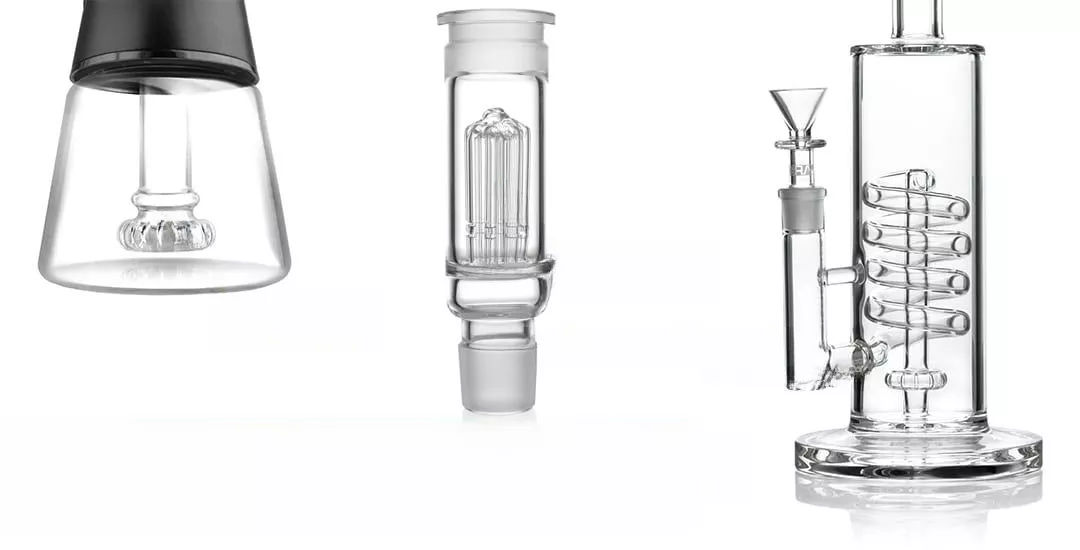
A tree perc is a type of percolator built into glass water pipes that splits incoming smoke across multiple vertical arms branching off a central tube. Picture the silhouette of a bare tree turned upside down: a single trunk feeds several limbs, and each limb carries small slits or holes near its base. As smoke travels down and gets pushed through those openings into the water, it fractures into countless tiny bubbles. That bubble formation is the whole point — more surface contact between smoke and water means cooler, cleaner, smoother draws.
The concept sits inside the broader world of percolators, a category of filtration chambers that all share one goal: maximize how much smoke interacts with water before it reaches your lungs. The tree perc earns its name purely from its branched shape, which lets a single chamber host many diffusion points at once instead of one.
If you have ever taken a harsh, scratchy hit from a dry pipe and compared it to a draw through a quality water pipe, you already understand the difference filtration makes. A tree perc simply pushes that filtration further by multiplying the contact points where smoke meets water, turning one stream into dozens of fine bubbles in a single pass.
Tree Perc Design and Anatomy Explained
The central spine is the backbone of every tree perc. Smoke enters from the downstem, rises or descends through this core column, then gets distributed outward to the surrounding arms. Without the spine, the arms would have no shared feed, so this piece quietly does the heavy lifting of routing airflow evenly.
The arms or rods are what most people notice first. Each one is a hollow glass tube sealed at the bottom and slotted with thin cuts or drilled with tiny holes. A tree perc might carry as few as four arms or as many as a dozen, and the count directly shapes how aggressively the smoke gets diffused. More arms generally translate to finer bubbles and a softer hit, though they also raise the difficulty of manufacturing and cleaning.
The slit geometry is the detail that separates a great tree perc from a mediocre one. Skinny, numerous slits produce a fizzy cascade of micro-bubbles, while wider cuts move more air with less drag but coarser filtration. Glassblowers balance these factors against the airflow resistance, sometimes called the drag, that a smoker feels on every pull.

How Tree Perc Diffusion Smooths Each Hit
Diffusion is the science behind why a tree perc feels so much gentler than a basic pipe. When smoke is forced through narrow slits underwater, the single column breaks into a swarm of small bubbles. Smaller bubbles carry a larger combined surface area, and that surface area is where heat exchange and particulate trapping happen. The result is smoke that arrives cooler and stripped of more tar and ash than an unfiltered draw would deliver.
Temperature plays a major role in perceived smoothness. Hot smoke irritates the throat and triggers coughing, while cooled smoke glides in with far less harshness. As bubbles rise through the water column in a tree perc, they shed heat into the surrounding liquid, so by the time vapor reaches the mouthpiece it has dropped several degrees. Many smokers add ice or use a pipe with a ice catcher to push that cooling even further.
Filtration also captures water-soluble compounds and fine particulate that would otherwise reach the lungs. No water pipe eliminates every irritant, and research on smoke filtration is mixed about how much actually gets removed, but the subjective smoothness is real and consistent. That gentle quality is exactly why tree percs developed such a loyal following among people who prize a soft draw.
Tree Perc vs Other Percolator Types
The percolator landscape is crowded, and each style trades smoothness against drag, durability, and ease of cleaning. Understanding where a tree perc fits helps you decide whether its branched approach matches how you actually smoke.
- 🌳 Tree perc: Excellent diffusion through many arms, classic look, but the thin rods are fragile and the inner chambers trap residue.
- 💧 Showerhead perc: A single vertical tube with slits around the bottom rim — durable, easy to clean, and a favorite on modern pipes.
- 🍯 Honeycomb perc: A flat disc drilled with dozens of holes that delivers heavy bubble action with low drag in a compact footprint.
- 🌀 Turbine perc: Angled slots that spin the water into a vortex, prized for visual flair as much as filtration.
- 🔘 Inline perc: A horizontal slotted tube, simple and sturdy, often stacked with other percs for layered filtration.
Tree percs shine on the filtration front because they spread diffusion across separate arms instead of concentrating it in one spot. The tradeoff is structural: those slender rods are the most breakage-prone feature on any water pipe, and a single cracked arm can compromise the whole chamber. Newer designs like the showerhead and honeycomb emerged partly to deliver comparable smoothness with far more durability.
None of this makes the tree perc obsolete — it remains a centerpiece on high-end bongs precisely because the branched chamber looks stunning in action and diffuses beautifully. It comes down to whether you prioritize that performance and aesthetic over the convenience of sturdier alternatives.

Benefits of Tree Perc Water Pipes
Smoother, cooler hits are the headline benefit and the reason most people seek out a tree perc in the first place. The multi-arm diffusion cools smoke more thoroughly than a single-point percolator, which makes large draws far more comfortable to inhale and hold. For anyone with a sensitive throat, that difference can be the line between an enjoyable session and a coughing fit.
Better flavor preservation follows from the cooler temperature. Harsh, scorching smoke can mute the subtle terpene notes in your flower, while a cooled and filtered draw lets more of the original aroma come through. The water also catches some of the ashy harshness that masks flavor, so each pull tastes cleaner.
Beyond the functional gains, there is genuine visual appeal. Watching multiple arms erupt into bubbles simultaneously is part of the ritual for many smokers, and a well-made tree perc turns an ordinary water pipe into a centerpiece worth showing off.
- ❄️ Cooler smoke: Multiple arms shed heat into the water faster than a single diffuser.
- 👅 Cleaner flavor: Lower temperatures protect delicate terpenes and reduce ashy bite.
- 🫧 Heavy diffusion: Dozens of bubbles per pull mean more filtration in a single pass.
- ✨ Visual centerpiece: The branching bubble show is part of the appeal.
How Many Arms Does a Tree Perc Need
Arm count is the spec most shoppers fixate on, and for good reason — it directly shapes both diffusion and drag. A tree perc with four to six arms offers solid filtration with manageable airflow resistance, making it a sensible middle ground for everyday use. These configurations bubble well without forcing you to pull hard for a satisfying draw.
High-arm tree percs, sporting eight, ten, or even twelve rods, push diffusion to its limit. Each additional arm multiplies the bubble count and softens the hit further, which thrill-seeking smoothness chasers adore. The catch is that more arms mean more drag, more fragile glass, and a much harder cleaning job, so the gains come with real practical costs.
There is a point of diminishing returns. Beyond roughly eight arms, the added smoothness becomes subtle while the downsides scale up sharply. For most people the sweet spot lands in the middle, where filtration is excellent and the pipe stays practical to use and maintain over the long haul.

Cleaning a Tree Perc Bong the Right Way
Cleaning is the tree perc's biggest practical weakness, and ignoring it ruins both performance and flavor fast. Resin builds up inside every arm and across all those tiny slits, and because the chambers are enclosed, you cannot reach them with a brush the way you would scrub a wide tube. Neglect leads to clogged slits, weaker diffusion, and a stale taste that no amount of fresh flower can mask.
Isopropyl alcohol and salt remain the gold-standard cleaning method. Fill the pipe with high-percentage isopropyl, add coarse salt as an abrasive, cap the openings, and shake so the solution scours every arm from the inside. The salt scrubs where brushes cannot reach, and repeated shaking dislodges resin from the slit geometry that hides most of the buildup.
Frequency matters more with tree percs than with simpler pipes. Rinse the chamber with clean water after heavy sessions and run a full alcohol cleaning regularly before residue hardens into stubborn deposits. A pipe maintained on a schedule stays easy to clean, while one left to crust over can become nearly impossible to fully restore.
- 🧂 Salt and isopropyl: The abrasive shake method reaches enclosed arms a brush never could.
- 💦 Rinse often: A quick water flush after sessions stops resin from setting hard.
- ⏰ Clean on schedule: Regular maintenance beats heroic deep-cleaning of crusted glass.
Tree Perc Drawbacks Worth Knowing
Fragility tops the list of tree perc downsides. Those thin glass arms are the most delicate feature on any water pipe, and a hard knock, a careless bump, or even thermal stress from sudden temperature changes can snap one. A broken arm often means the chamber no longer functions correctly, and repair is rarely practical, so handling care is non-negotiable.
Cleaning difficulty, covered above, is the second major drawback and the one owners feel most often. The enclosed arms that make diffusion so good are exactly what make maintenance such a chore. Anyone unwilling to commit to regular alcohol cleanings will likely find a tree perc frustrating within a few weeks of heavy use.
Finally, there is drag. High-arm tree percs can demand a noticeably harder pull than a low-resistance honeycomb or showerhead, since smoke must squeeze through many narrow slits at once. Some smokers love that resistance for the heavy diffusion it signals, while others find it tiring over a long session — it comes down to personal preference.
Choosing a Tree Perc Water Pipe
Glass quality should be your first filter when shopping. Thick, well-annealed borosilicate glass resists thermal shock and survives the inevitable bumps far better than thin, cheap glass. Because the arms are already the fragile point, paying for quality construction here is money well spent rather than a luxury upgrade.
Match the arm count to your style. If you chase the smoothest possible hit and do not mind extra cleaning, a high-arm tree perc rewards you. If you want strong filtration with easier upkeep, stick to a four-to-six-arm design or consider pairing a modest tree perc with a sturdier second percolator for layered filtration without doubling the fragility.
Consider the whole pipe, not just the perc. Joint size, the presence of an ice catcher, overall height, and how the tree perc integrates with the rest of the chamber all affect daily enjoyment. A thoughtfully designed water pipe balances the tree perc's strengths against its quirks rather than chasing arm count as a bragging-rights number.

Are Tree Percs Worth It for Daily Use
For the right smoker, a tree perc is absolutely worth it. If you value silky-smooth, cooled hits and you appreciate the mesmerizing bubble show, the branched chamber delivers an experience few other percolators match. The diffusion quality and the visual ritual together justify the premium for enthusiasts who treat their pipe as a centerpiece.
That said, daily-use practicality cuts the other way for some. If you smoke heavily, dislike cleaning, or tend to be hard on your glassware, the fragility and maintenance demands may outweigh the smoothness gains. In that case a showerhead or honeycomb perc gives you most of the comfort with far fewer headaches, which is precisely why those designs have grown so popular.
Ultimately the tree perc remains a beloved classic for a reason — it pioneered multi-point diffusion and still performs beautifully when treated with care. Weigh the smooth, cool draws and striking aesthetics against the fragility and cleaning commitment, and you will know quickly whether this branched percolator belongs in your collection or whether a sturdier alternative suits your routine better.





Comments