

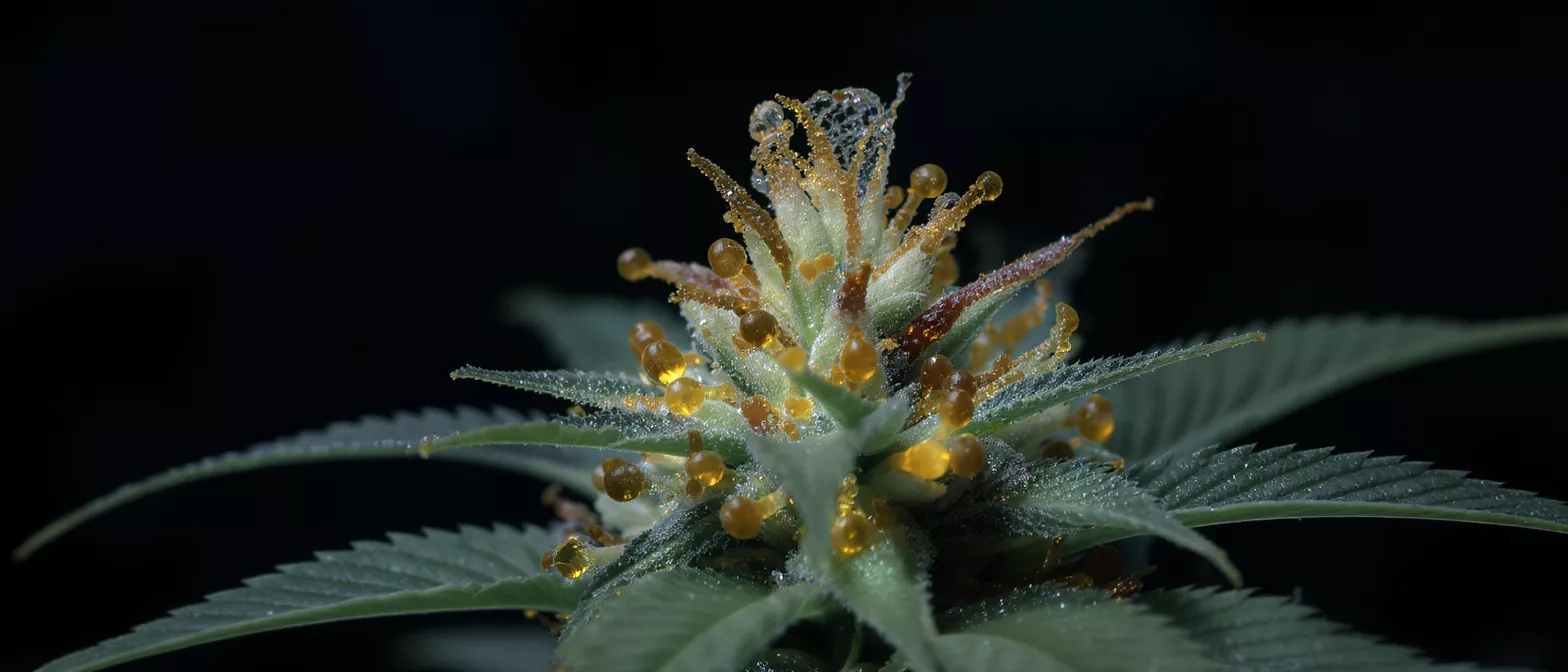
Trichomes
Trichomes hold every cannabinoid and terpene in cannabis.
What Are Trichomes on Cannabis
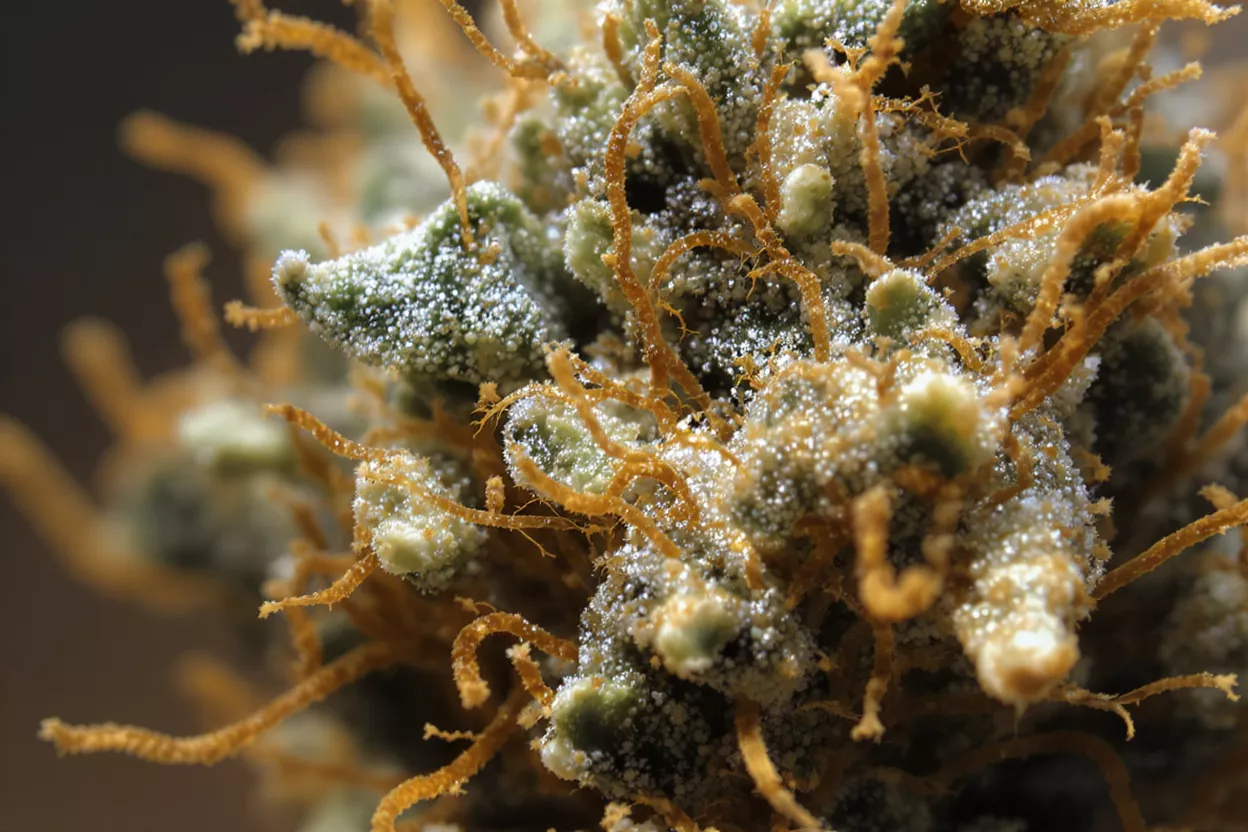
Trichomes are the tiny, crystalline outgrowths that coat the surface of mature cannabis flowers, giving them their frosty, sugar-dusted appearance. The word comes from the Greek tríchōma, meaning "growth of hair," and that is exactly what these structures resemble under magnification: a forest of microscopic stalks topped with glistening resin heads. Though they look like a decorative frost, they are the most chemically important part of the plant.
Where trichomes concentrate: The densest coverage appears on the calyxes that make up the flower, with lighter coverage spreading onto the surrounding sugar leaves and bracts. Stems and fan leaves carry far fewer. This distribution is no accident — the plant invests its resin where it most needs to protect developing seeds.
A defense mechanism first: Before humans ever cultivated cannabis for its effects, trichomes evolved as a survival tool. They deter grazing animals with bitter, sticky resin, trap insects, shield the plant from harmful UV radiation, and help regulate moisture loss. The compounds we prize for their psychoactive and therapeutic value are, from the plant's perspective, simply chemical armour.
Types of Trichomes and How They Differ
Not all trichomes are created equal. Botanists divide them into several categories based on shape and size, and only some are responsible for the bulk of cannabinoid and terpene production. Understanding the differences helps explain why a flower can look frosty yet still vary widely in potency.
The three glandular types that matter most for resin production are distinguished primarily by the size of their stalks and heads. There are also non-glandular trichomes that contribute texture but little chemistry.
- 🔬 Bulbous trichomes: The smallest type, barely 10–15 microns, appearing as little more than a single secretory cell with a tiny head. They dot the entire surface of the plant but contribute modestly to overall resin volume.
- 🌱 Capitate-sessile trichomes: Larger, with a defined head sitting flush or on a very short stalk. These are more numerous and produce a meaningful share of cannabinoids.
- 💎 Capitate-stalked trichomes: The largest and most productive, featuring a tall stalk topped by a bulbous gland head. These are the structures growers watch when judging ripeness and the primary source of cannabinoids and terpenes.
When people talk about "the trichomes" in casual conversation, they almost always mean the capitate-stalked variety, since those are visible to the naked eye and dominate the visual frost and chemical output of premium flower.
How Trichomes Produce Cannabinoids and Terpenes
The resin gland at the head of each capitate-stalked trichome is a miniature chemical factory. Cells at the base of the gland synthesize precursor compounds and secrete them into a cavity beneath a waxy cuticle, where they accumulate as the sticky resin we recognize. This is where the plant builds the molecules that define its aroma, flavour, and effect.
From precursor to potency: Cannabinoids begin life as acidic forms — THCA and CBDA rather than THC and CBD. These convert to their active forms through decarboxylation, a heat-driven reaction that occurs when flower is smoked, vaporized, or baked. Until that point, the resin is loaded with potential rather than active potency.
Terpenes ride alongside: The same glands also produce the volatile aromatic terpenes responsible for the smell of pine, citrus, fuel, or berry. Because terpenes are volatile, they evaporate easily with heat and rough handling, which is one reason careful storage matters so much. The interplay between cannabinoids and terpenes is often described as the entourage effect, a theory that the compounds work together to shape the overall experience.
Why Trichomes Matter for Potency and Effect
If you want to understand why one batch of flower feels markedly different from another, the answer almost always traces back to its trichomes. The density, maturity, and integrity of these glands determine how much cannabinoid and terpene content survives from plant to product.
A heavy frost of intact, mature trichomes signals a flower that was harvested at peak chemical expression and handled gently afterward. Conversely, flower that looks dull or feels smooth has often lost much of its resin to time, heat, or careless processing.
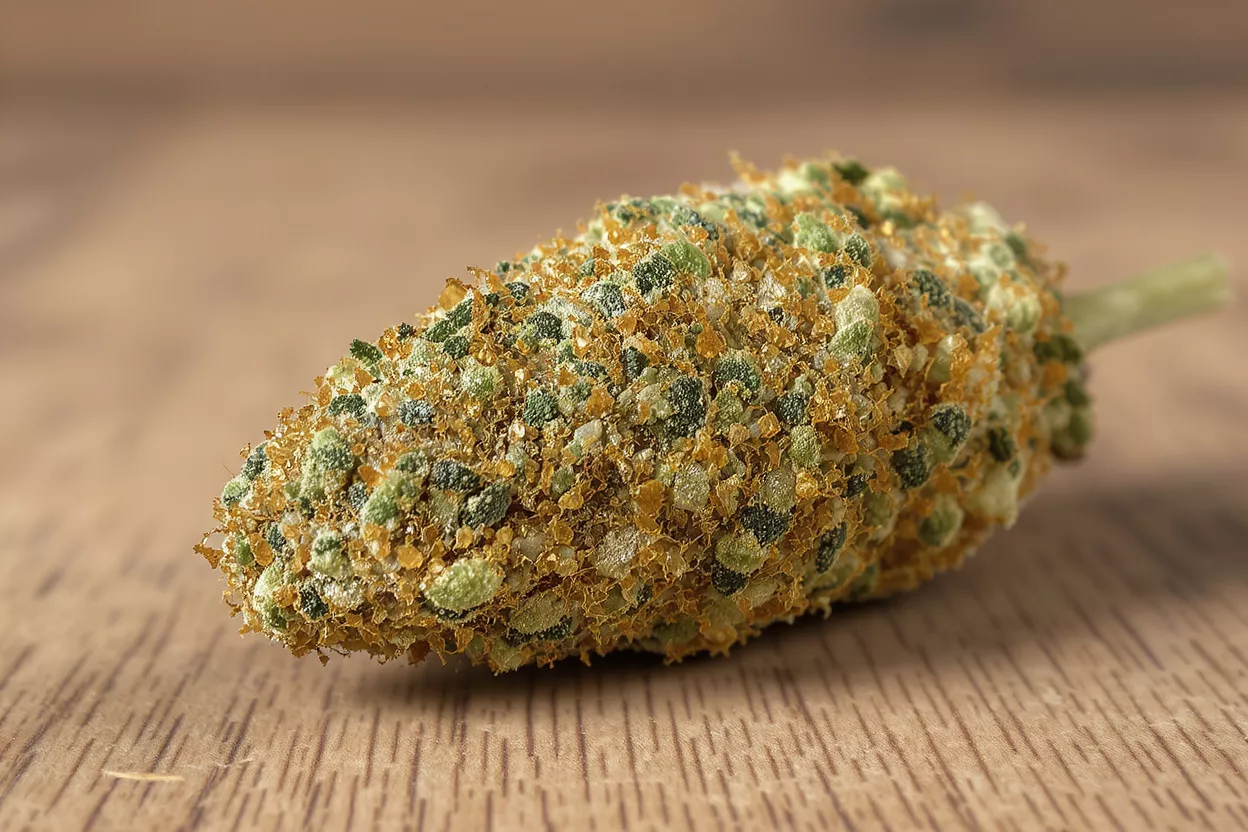
Potency is not just numbers: Lab percentages tell part of the story, but two flowers with identical THC figures can deliver very different experiences depending on their terpene profiles. The trichomes hold both, which is why visual and aromatic assessment still matters even in an age of detailed certificates of analysis.
Reading Trichome Color to Judge Ripeness
One of the most practical skills in cannabis cultivation is reading trichome colour to estimate ripeness. As the gland heads mature, they shift through a predictable colour sequence that growers use to time the harvest with precision.
The colour of the resin head reflects the chemical state inside it. Clear heads are still developing, milky or cloudy heads are at peak cannabinoid content, and amber heads indicate that some THC has begun degrading into the more sedating CBN.
- 🤍 Clear trichomes: The gland heads are transparent and glassy, signalling immaturity. Harvesting now yields lower potency and a thin, sometimes harsh experience.
- ☁️ Milky trichomes: The heads turn cloudy white, marking peak cannabinoid concentration. Most growers aiming for an energetic, cerebral effect target this stage.
- 🟠 Amber trichomes: The heads take on a honey or brown tint as THC degrades toward CBN, producing a heavier, more relaxing body effect.
How to Check Trichomes at Home
You do not need a laboratory to inspect trichomes — a little magnification and good light go a long way. Checking them yourself is the single best way to understand the quality of flower you are growing or buying.
Tools that make it easy: A jeweller's loupe at 30x to 60x magnification is the classic choice and costs very little. Handheld digital microscopes and clip-on phone macro lenses also work well and let you capture images for comparison over time. Whatever tool you use, examine the flower in bright, neutral light against a dark background so the resin heads stand out.
Focus your inspection on the calyxes rather than the sugar leaves, since calyx trichomes mature slightly later and give a more accurate reading of overall ripeness. Look at several spots on the bud rather than judging from a single cluster, because maturity is rarely perfectly uniform across a flower.
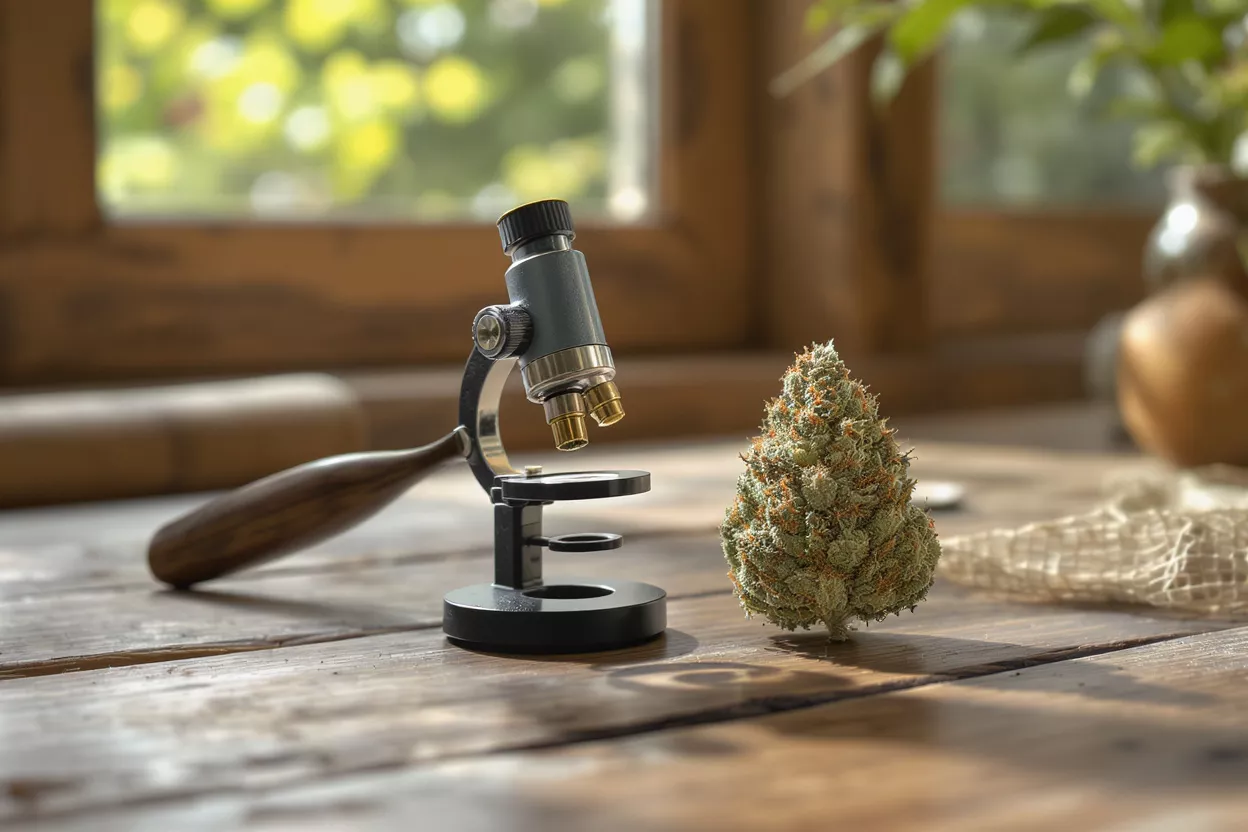
Take your time and be patient. Trichome heads are small, and learning to distinguish clear from milky from amber takes a few sessions before your eye calibrates. Once it does, you will read a bud's ripeness in seconds.
Trichomes and the Perfect Harvest Window
Harvest timing is where trichome knowledge becomes genuinely valuable. The window between immature and over-ripe is narrow, and the resin heads are the most reliable indicator of when to cut. Pistil colour and calendar estimates help, but trichomes give the clearest read on chemical maturity.
Tailoring the harvest to the effect you want: Growers chasing a clear, uplifting sativa-style high tend to harvest when most heads are milky with only a few amber. Those seeking a deeply relaxing indica-style effect wait until a larger share has turned amber. A common target balances roughly 70 percent milky to 30 percent amber.
Waiting too long has a cost. Once trichomes pass peak ripeness, cannabinoids continue degrading and terpenes evaporate, so an over-mature flower loses both potency and aromatic complexity. The art lies in catching the gland heads at the exact stage that matches your goals.
Protecting Trichomes During Trimming and Curing
Harvesting at the right moment means little if the trichomes are damaged afterward. These delicate glands break off easily, and every bump, scrape, or temperature swing strips away resin that can never be recovered. Careful post-harvest handling preserves the work the plant put into building its trichomes.
- ❄️ Keep it cool: Heat melts and degrades resin. Trim and store in cool conditions, and handle cold or room-temperature flower rather than warm.
- 🤲 Handle by the stem: Touching buds directly crushes trichome heads and transfers them to your fingers. Hold flower by the stem whenever possible.
- 🫙 Cure in glass: A slow cure in sealed glass jars, burped daily at first, preserves terpenes and protects resin far better than plastic bags.
Dry trimming versus wet trimming: Many connoisseurs prefer dry trimming — letting buds dry on the branch before manicuring — because brittle, fully dried trichomes are less likely to smear and stick to tools. Wet trimming is faster and reduces mould risk in humid climates, but demands a gentler touch to keep resin intact.
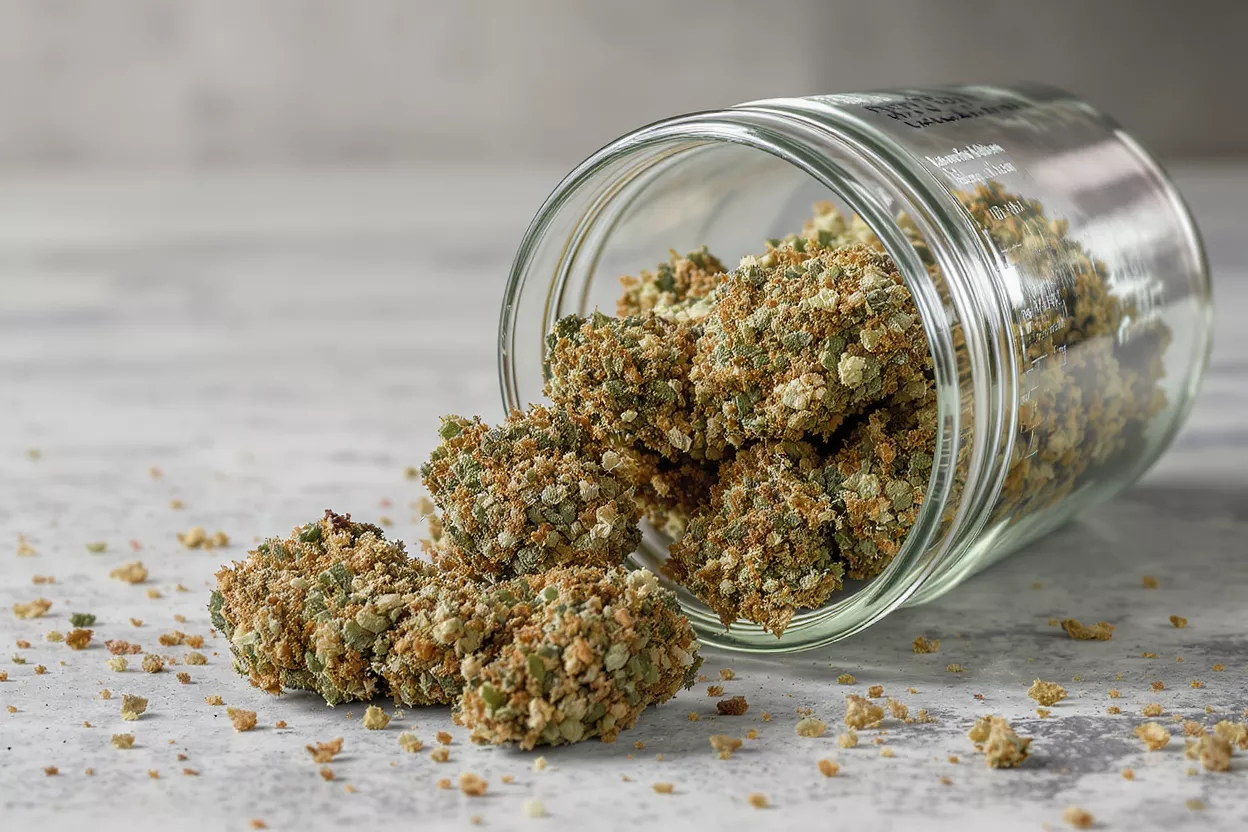
Stored properly in a cool, dark, airtight environment, well-cured flower retains its frosty coat and full aromatic profile for many months, rewarding the care taken at every earlier stage.
Trichomes and Cannabis Concentrates
If trichomes hold nearly all of a plant's cannabinoids and terpenes, it follows that separating them from the rest of the plant material produces something far more potent. This is the entire premise behind cannabis concentrates, which are essentially collections of trichome resin with the plant matter removed.
Solventless extraction: Methods like dry sifting and ice-water hash rely on physical agitation to knock the resin heads free, which are then collected and pressed. Rosin takes this further, using gentle heat and pressure to squeeze the oils out of the gathered heads without any chemicals.
Solvent-based products such as shatter, wax, and live resin use substances like butane or CO2 to dissolve the resin away from the plant before purging the solvent. Whatever the method, the goal is the same: isolate the trichome glands, because that is where the chemistry lives. The quality of any concentrate is ultimately capped by the quality and freshness of the trichomes it started from.
Are Trichomes the Best Indicator of Quality
It is tempting to treat a heavy trichome coat as the definitive sign of top-shelf flower, and frost is indeed a strong signal. A dense, intact layer of mature resin glands reflects healthy genetics, careful cultivation, and gentle handling. But trichomes are one indicator among several, not the whole picture.
Aroma, bud structure, proper curing, and a complete terpene profile all contribute to a satisfying experience. A flower can be visually frosty yet poorly cured, or modest in coverage yet exceptionally aromatic and well-balanced. The smartest approach combines a trichome inspection with your nose, your eyes, and where available a certificate of analysis.
Ultimately, trichomes are the heart of what makes cannabis valuable — the source of nearly every compound that gives the plant its effects, aroma, and character. Learning to read them, protect them, and appreciate them turns a casual glance at a bud into genuine insight. Whether you grow your own, shop carefully, or simply want to understand what you are consuming, an eye for trichomes is one of the most rewarding skills in the cannabis world.

Comments