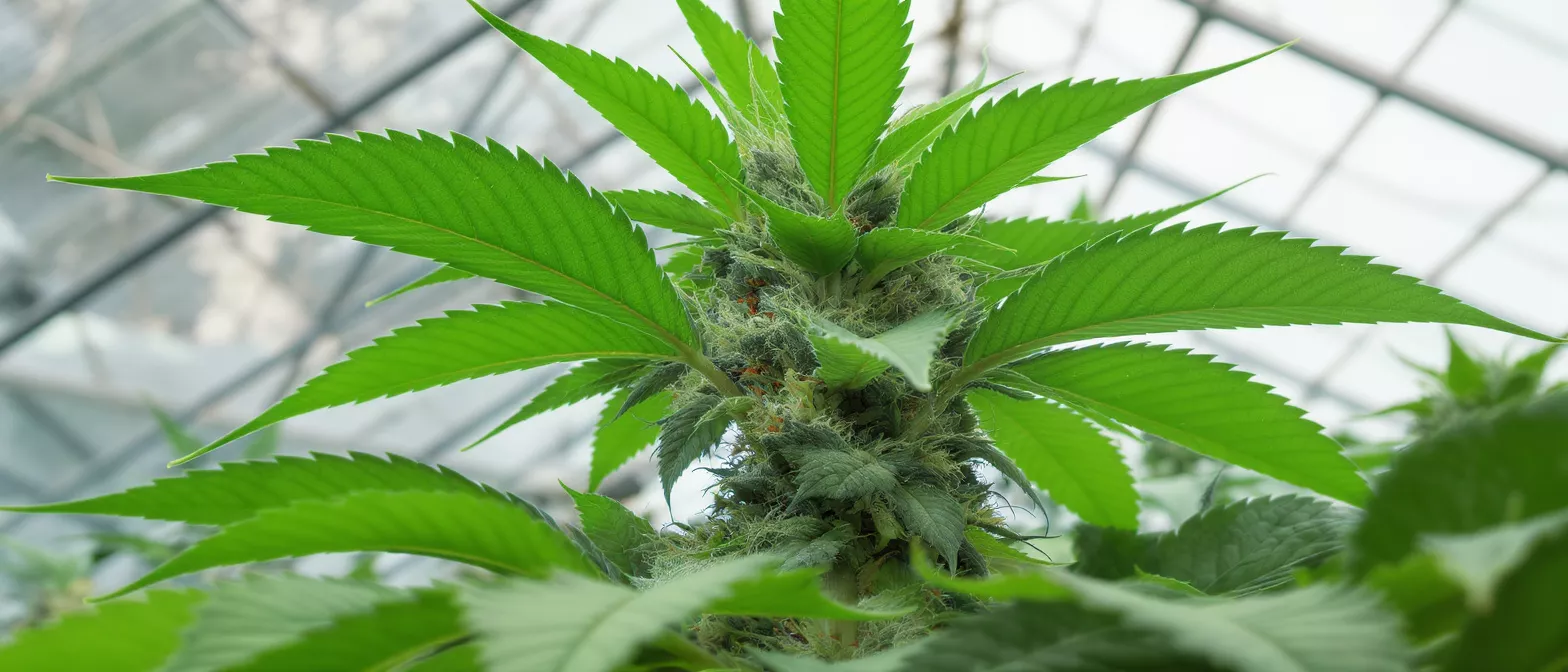
Vegetative stage
Learn everything about the vegetative stage: light cycles, nutrients, training & timing.
What Is the Vegetative Stage in Cannabis Growth
The vegetative stage is the growth phase where a cannabis plant pours all of its energy into building leaves, stems, and roots rather than producing buds. It begins once seedlings have established their first true serrated leaves and continues until the grower or the season triggers flowering. During this window the plant focuses on getting bigger and stronger, laying down the structural foundation that will eventually support heavy colas. Everything you do here — light, feeding, training — directly shapes the size and yield of the final harvest.
Think of the vegetative stage as the framing phase of building a house. A plant that vegetates well develops a robust network of roots and a sturdy canopy capable of carrying dense flowers without snapping. Conversely, a stressed or undernourished plant during veg rarely recovers enough to deliver a strong yield, no matter how perfect the bloom phase is. Understanding cannabis physiology during this period is one of the most valuable skills a grower can develop, and reputable health and botany resources like Verywell Health emphasize how plant growth cycles influence cannabinoid development later on.
Why the vegetative stage matters so much: the size of your plant at the end of veg largely determines your ceiling for yield. Cannabis only grows taller and wider during veg and the early stretch of flowering, so a plant kept too small here will produce modest results even under ideal conditions. This is why experienced growers treat the vegetative stage as the make-or-break window rather than an afterthought before the "real" growing begins.
How the Vegetative Stage Works Day by Day
Once a seedling transitions into vegetative growth, it shifts into a rapid-expansion mode. Internodes — the spaces between sets of leaves — lengthen, side branches emerge, and the root mass multiplies to keep pace with the canopy above. Photosynthesis runs at full throttle during this stage, converting light, carbon dioxide, and water into the sugars that fuel new tissue. A healthy plant can put on noticeable height every single day under strong light.
Root development drives everything: the explosive growth you see above the soil is mirrored below it. A plant building a dense, white root system can absorb more water and nutrients, which in turn supports faster top growth. This is why transplanting into progressively larger containers during veg matters — root-bound plants stall. Healthy roots also buffer the plant against stress, letting it bounce back faster from minor mistakes in watering or feeding.
Vigor in the vegetative stage is partly genetic and partly environmental. Sativa-leaning genetics and certain hybrids stretch tall with airy spacing, while indica-dominant plants tend to stay compact and bushy. Knowing your strain's tendencies helps you plan container size, training, and the timing of your flip to flower. A grower chasing a stout, manageable canopy might reach for an indica-dominant seed pack to keep height in check naturally.
Vegetative Stage Light Cycle and Schedule
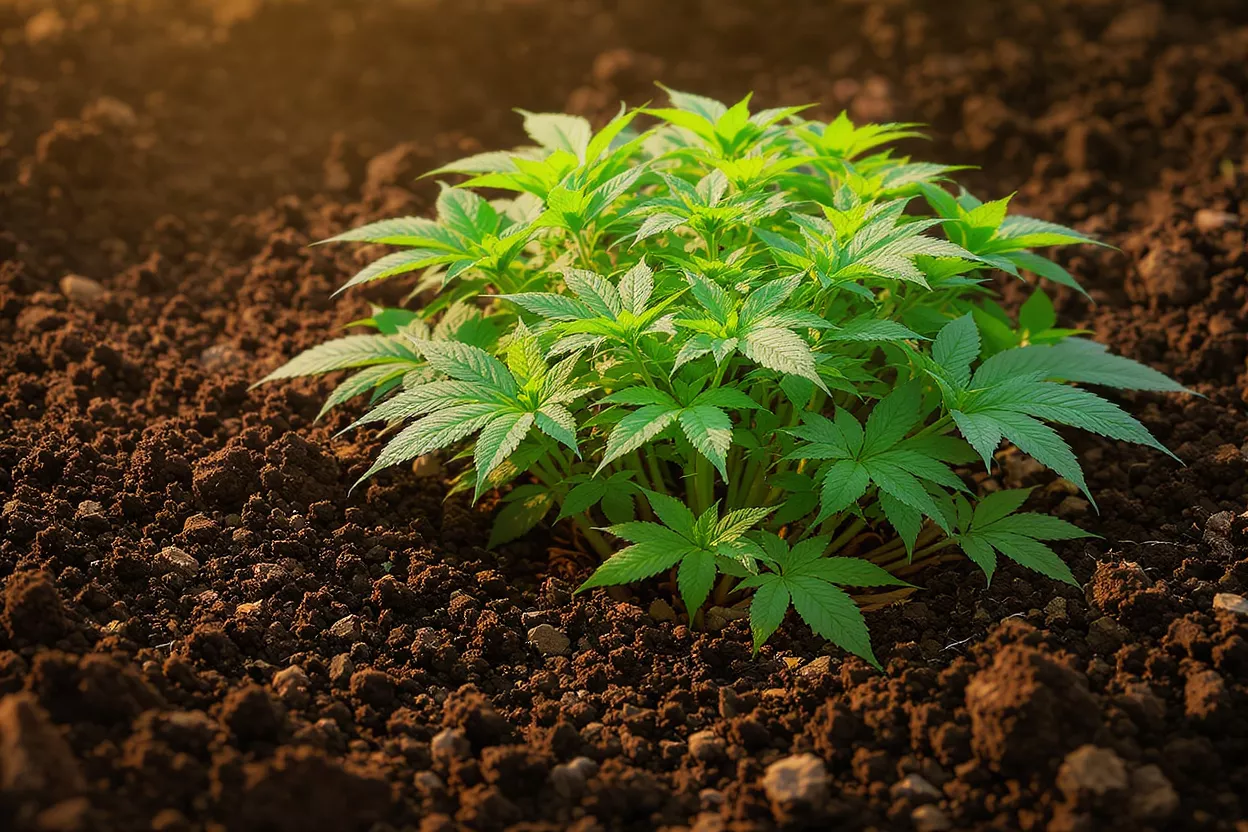
Light is the single most important input during veg. Cannabis is a photoperiod plant, meaning the length of uninterrupted darkness it receives signals whether to keep growing leaves or to begin flowering. To keep a plant in the vegetative stage, growers provide long days — typically 18 hours of light and 6 hours of darkness — though some run 20/4 or even 24/0 to push faster growth.
The classic 18/6 schedule is the most popular for good reason. It delivers enough light to drive vigorous growth while giving the plant a genuine dark period for respiration and recovery. Many growers find 18/6 produces healthier plants than running lights around the clock, and it saves on electricity. Continuous light can accelerate growth slightly, but it offers diminishing returns and stresses some genetics.
Light quality matters as much as duration. During veg, plants thrive under cooler, blue-spectrum light that encourages tight, bushy growth rather than leggy stretching. Modern full-spectrum LED fixtures cover this beautifully, and many growers upgrade to a full-spectrum LED grow light to dial in the blue-heavy output that vegetative plants crave. Outdoor growers rely on the long days of late spring and summer to keep plants in veg naturally until the shortening days of late summer trigger the flip.
Vegetative Stage Nutrients and Feeding
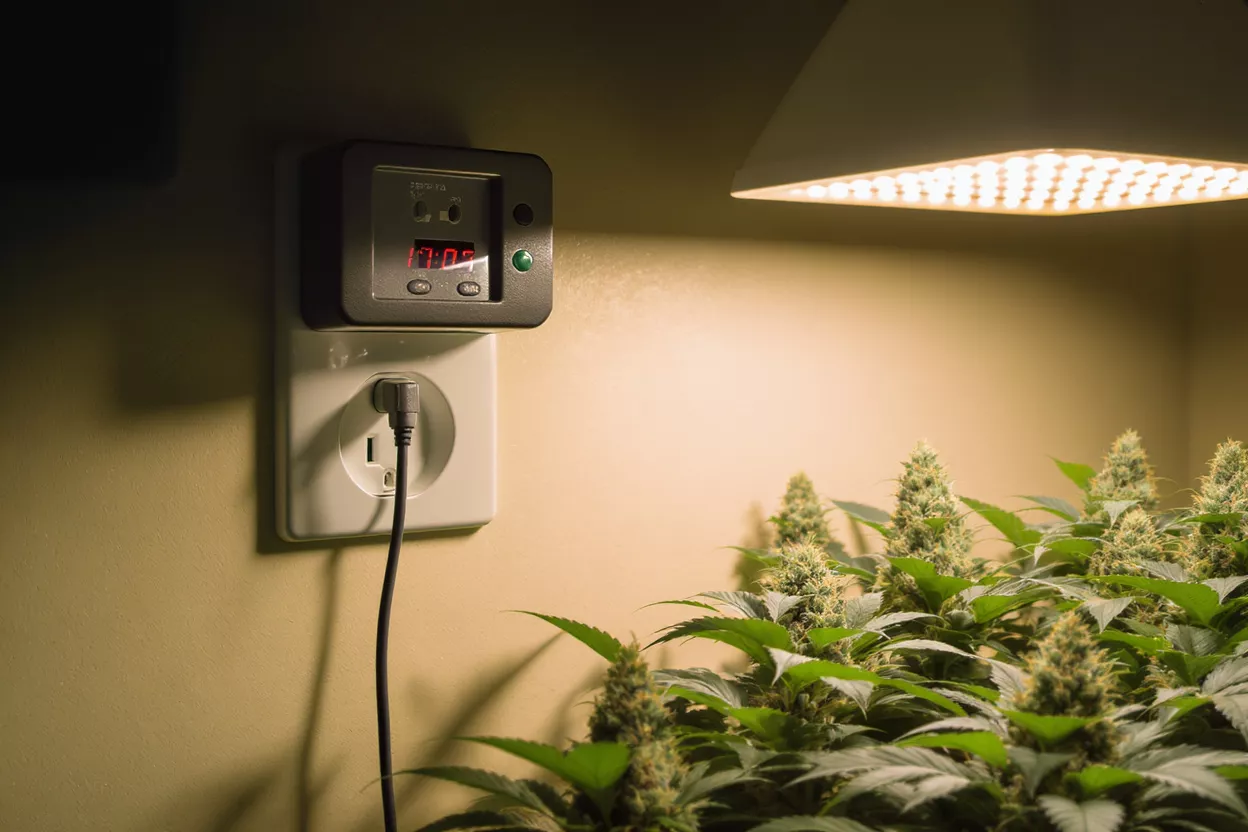
Nitrogen is the star nutrient of the vegetative stage. Plants building masses of new leaves and stems consume nitrogen voraciously, which is why veg-specific nutrient blends run high in N relative to phosphorus and potassium. Alongside nitrogen, plants need a steady supply of secondary nutrients like calcium and magnesium, plus a range of micronutrients, to avoid deficiencies that show up as discolored or distorted leaves.
Feeding schedules and strength: young vegetative plants should be fed at lower concentrations and ramped up gradually as they grow. Overfeeding is one of the most common rookie mistakes, producing nutrient burn that scorches leaf tips. A good rule is to start at roughly a quarter to half the manufacturer's recommended dose and watch how the plant responds before increasing. Research summarized by Verywell Health on plant nutrition reinforces that balanced feeding beats aggressive dosing.
pH management quietly determines whether all that feeding actually works. In soil, cannabis absorbs nutrients best in a pH range of about 6.0 to 7.0, while hydroponic and coco setups prefer 5.5 to 6.5. Drift outside these windows and nutrients become locked out even when they're present in abundance — a frustrating problem that mimics deficiencies. Checking runoff pH regularly keeps feeding on track.
- 🌱 Nitrogen (N): the primary driver of leaf and stem growth — keep it high through veg.
- 💧 Calcium & Magnesium: prevents leaf spotting and supports cell structure during rapid growth.
- ⚖️ pH balance: 6.0–7.0 in soil, 5.5–6.5 in hydro — the gatekeeper for all nutrient uptake.
- 🧪 Start low: begin at quarter strength and increase gradually to avoid nutrient burn.
How Long Does the Vegetative Stage Last
There's no single correct length for the vegetative stage — it depends entirely on your goals, space, and genetics. Indoor growers typically veg for anywhere from three to eight weeks, with four to six weeks being a comfortable sweet spot for most setups. The longer you veg, the bigger your plant becomes, so growers with limited vertical space flip earlier while those chasing large yields extend it.
Autoflowering genetics are the exception to all of this. Unlike photoperiod plants, autoflowers begin flowering automatically after a set number of weeks regardless of the light schedule, so their vegetative window is fixed and short — usually three to four weeks. This makes them fast but also means you can't extend veg to bulk them up, so getting the early growth right is critical.
Reading the plant instead of the calendar: a more reliable approach than counting days is watching the plant itself. Many growers flip to flower once the plant has filled roughly half to two-thirds of its final intended height, since cannabis typically doubles or even triples in size during the flowering stretch. A plant with healthy spacing between nodes, a full canopy, and visible pre-flowers at the nodes is signaling its readiness.
Best Vegetative Stage Training Techniques
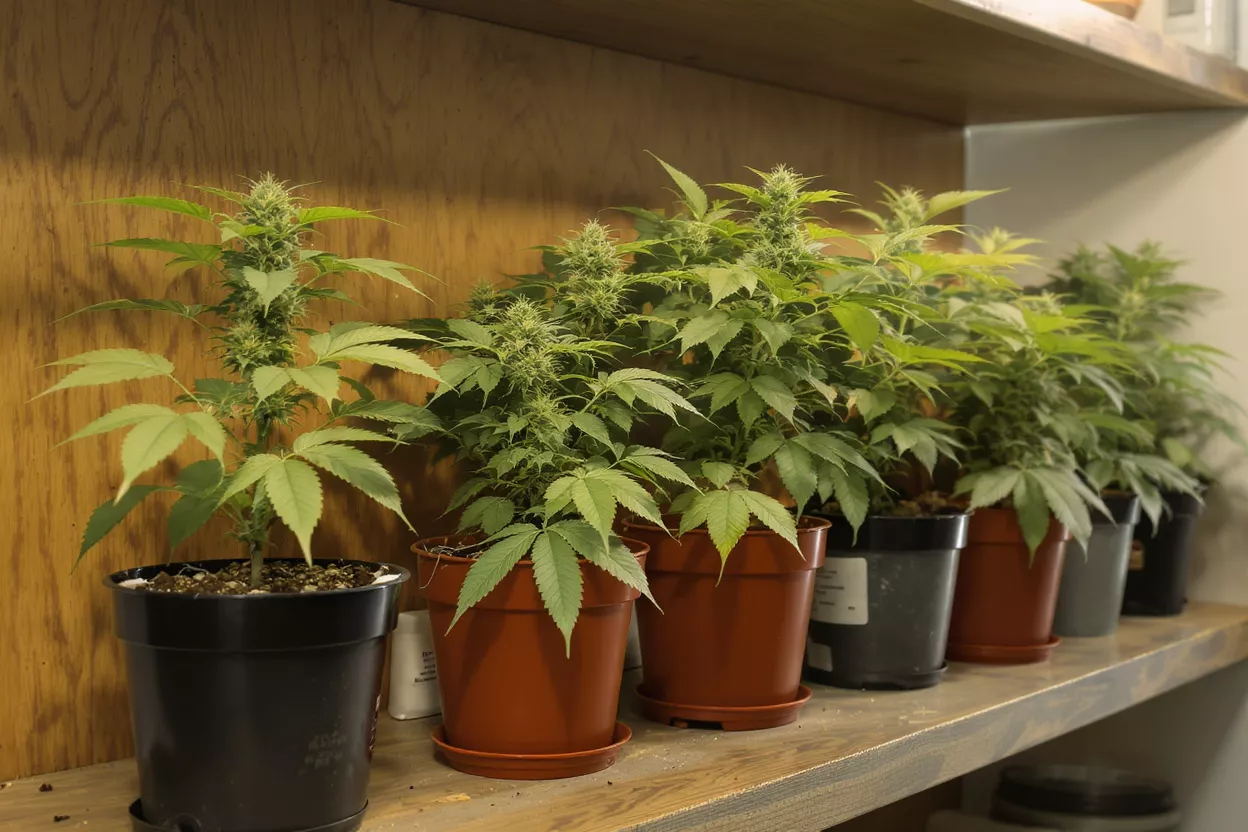
The vegetative stage is the only window where training pays off, because the plant is flexible, fast-growing, and quick to recover. Training reshapes the canopy to spread light evenly across more bud sites, dramatically improving yield compared to letting a plant grow into a single dominant cola. The two broad categories are low-stress training, which bends and ties branches without cutting, and high-stress training, which involves deliberate damage like topping.
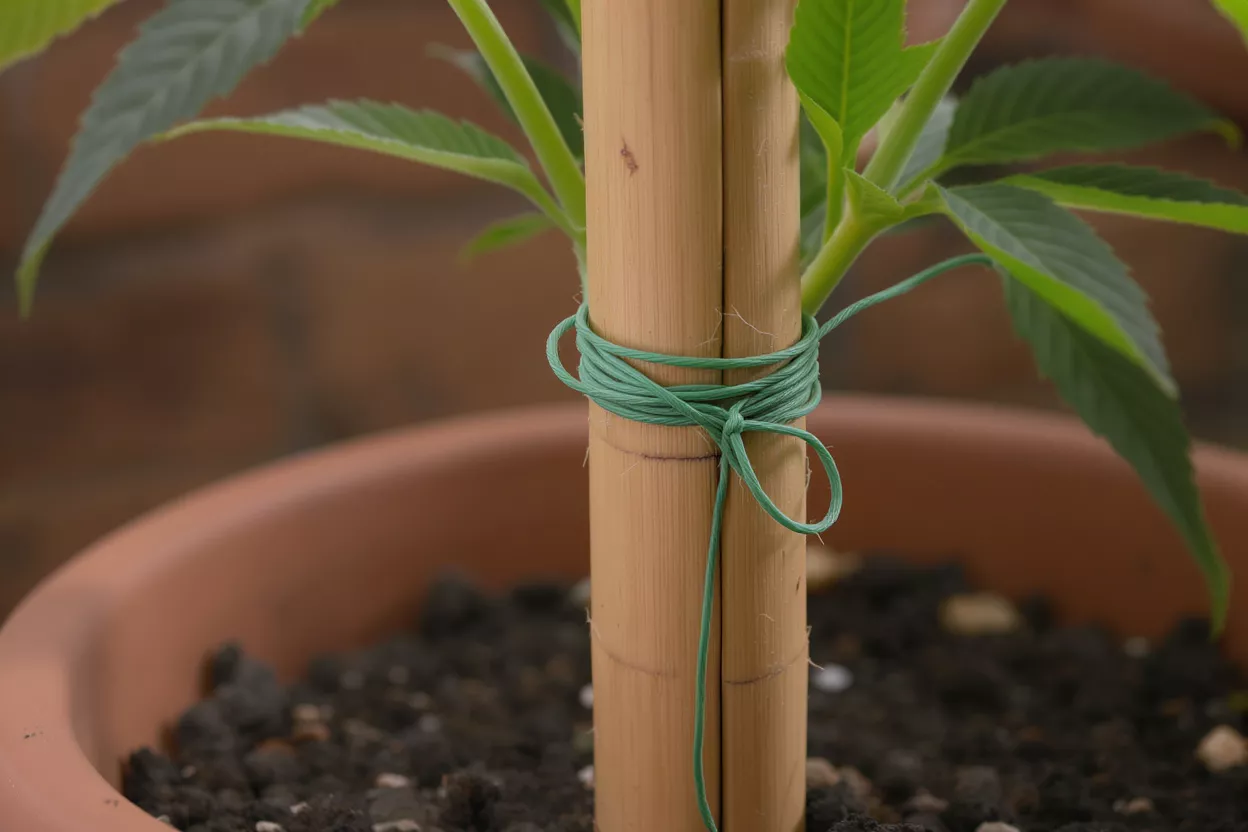
Low-stress training (LST) is the gentlest and most forgiving method. By tying down the main stem and branches horizontally, you encourage lower side shoots to grow upward and compete with the top, creating a flat, even canopy. It causes virtually no setback and works for nearly every grower, including beginners. A simple plant training kit with soft ties makes the process clean and repeatable.
High-stress techniques like topping and fimming remove or damage the growing tip to force the plant to develop multiple main colas instead of one. These methods produce bushier plants and bigger yields but require recovery time, so they're best done early in veg when the plant has weeks to bounce back. Other popular approaches include the following:
- ✂️ Topping: cut the main stem above a node to create two new main colas.
- 🤏 Fimming: a partial pinch of new growth that can yield four or more tops.
- 🪢 LST: bend and tie branches to open the canopy with zero plant damage.
- 🕸️ ScrOG: weave branches through a screen for a perfectly flat, light-efficient canopy.
Vegetative Stage Temperature and Humidity
Climate control during veg is less forgiving than many growers assume. Vegetative cannabis prefers daytime temperatures between roughly 70 and 85°F, with a modest drop at night. Within this range plants transpire and photosynthesize efficiently, and growth races ahead. Too cold and metabolism slows; too hot and plants wilt, stretch, and become vulnerable to pests and pathogens.
Humidity targets shift as the plant grows: young seedlings and clones love high humidity around 65 to 70 percent because their root systems are too small to draw much water from the soil. As plants mature through veg, gradually lower the humidity toward 40 to 60 percent. This trains the plant to rely on its roots and reduces the risk of mold taking hold in the dense canopy you're building.
Airflow ties the whole environment together. Gentle, directional airflow across the canopy strengthens stems, deters fungus gnats and mold, and keeps fresh carbon dioxide flowing to hungry leaves. A stem that sways in a light breeze grows thicker and sturdier than one in still air — a free way to prepare your plant for the weight of flowers ahead.
Common Vegetative Stage Problems and Fixes
Most vegetative-stage troubles announce themselves through the leaves, which act as the plant's dashboard. Yellowing lower leaves often signal a nitrogen deficiency, since the plant cannibalizes old growth to feed new shoots. Burnt, crispy leaf tips usually mean the opposite — too much fertilizer. Learning to read these signals early prevents small issues from snowballing into stunted growth.
Overwatering masquerades as many problems: drooping, puffy leaves and slow growth frequently trace back to soil that never dries out, suffocating the roots. Cannabis roots need oxygen, and a constantly soggy medium invites root rot. The fix is counterintuitive — water less often, letting the top inch or two of medium dry between waterings, which actually encourages roots to reach and the plant to drink more eagerly. Guidance from Verywell Health on plant care underscores how root oxygenation affects overall vigor.
Pests and light stress round out the usual suspects. Spider mites, fungus gnats, and aphids all find vegetative plants attractive, so regular inspection of leaf undersides pays dividends. Meanwhile, lights placed too close cause bleaching and curling, while lights too far away produce leggy, stretched plants reaching desperately for brightness. Adjusting hanging height and maintaining clean, pest-free conditions resolves the majority of veg headaches before they cost you yield.
Vegetative Stage Indoor vs Outdoor Growing
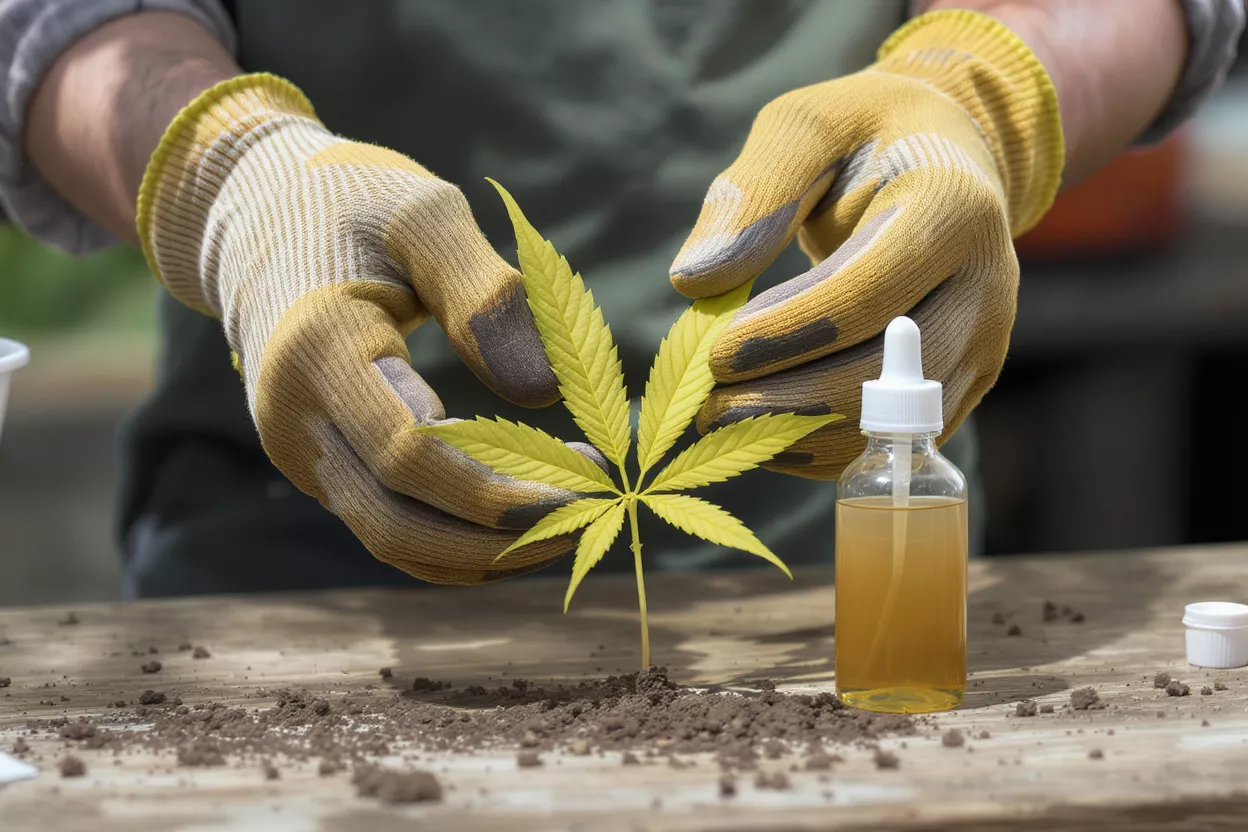
Indoor and outdoor growers experience the vegetative stage very differently. Indoors, you control everything — light schedule, spectrum, temperature, humidity, and the precise moment you flip to flower. This control lets indoor growers veg for as long as they like, sculpting plant size to fit their tent and stacking multiple harvests per year. The trade-off is the cost of equipment and electricity to recreate the sun.
Outdoors, the sun and seasons run the show. Plants started in spring vegetate through the long days of early summer and naturally transition to flower as daylight shortens toward fall. Outdoor plants can grow enormous because they aren't constrained by ceiling height or wattage, often producing towering specimens with massive root runs. The catch is that you're at the mercy of weather, pests, and a fixed seasonal calendar.
Greenhouse growing splits the difference: a greenhouse harnesses free sunlight while offering protection from wind, heavy rain, and temperature swings. Growers can even use blackout tarps or supplemental lighting to manipulate the light cycle, gaining some of the timing control of indoor growing. For many, this hybrid approach captures the best of both worlds — natural light economy with a meaningful degree of environmental management.
Transition From Vegetative to Flowering
Flipping from veg to flower is one of the most satisfying milestones in the grow. For photoperiod plants, the trigger is changing the light cycle to 12 hours of light and 12 hours of uninterrupted darkness. That extended night period signals to the plant that the season is shifting and it's time to reproduce — which, for cannabis, means producing the flowers we're after. Within a couple of weeks you'll see the plant stretch dramatically and begin forming pistils.
Timing the flip for your space: because plants commonly double or triple in height during the flowering stretch, the timing of your transition is essentially a height calculation. Flip when your plant reaches roughly a third to a half of your available vertical space. Get this right and your canopy fills the tent perfectly; flip too late and plants crowd your lights, inviting heat stress and bleaching.
The vegetative stage rewards patience and attention more than any single product or trick. A grower who nails light, feeding, climate, and training during veg sets up a flowering phase that practically runs itself, finishing in dense, resinous buds. Treat this foundational stage as the investment it is — strong roots, a healthy canopy, and well-trained branches are the quiet groundwork behind every impressive harvest. Master the vegetative stage, and the rest of the grow follows with far less drama.