


Yield
Learn how cannabis yield is measured and what affects it.
What Is Cannabis Yield
In cannabis cultivation, yield refers to the total weight of usable, dried, and cured flower harvested from a plant or growing operation. It is the number every grower watches most closely, because it translates directly into how much finished product a garden produces. While potency, terpene profile, and bag appeal all matter, yield is the metric that determines whether a grow cycle was worth the weeks of light, water, and attention invested in it.
The concept sounds simple — more flower equals a better harvest — but yield is the downstream result of dozens of upstream decisions. Genetics, environment, training, feeding, and timing all converge at harvest to produce a final number measured in grams or ounces. Understanding what drives that number is the difference between a mediocre return and a garden that consistently overperforms.
It is important to separate wet yield from dry yield. Freshly cut plants are heavy with moisture, and that weight can be misleading. After proper drying and curing, cannabis loses roughly 70–80% of its wet weight. Serious growers only ever quote dry yield, because that is the amount of product that can actually be stored, used, or sold.
How Cannabis Yield Is Measured
Grams per plant is the most intuitive way to express yield and the figure most home growers reach for first. A healthy indoor plant might deliver anywhere from 30 grams to several hundred grams depending on size and method, while a large outdoor plant in full sun can produce a pound or more. The trouble with per-plant figures is that they ignore the space and energy used to get there, which makes them a poor tool for comparing different setups.
Grams per watt is the efficiency metric favored by indoor cultivators. It divides total dry harvest by the wattage of the grow lights, rewarding growers who extract the most flower from the least electricity. A grower pulling 1.0 gram per watt is doing well; experienced cultivators with tuned environments and quality LED grow lights can push past 1.5 grams per watt.
Grams per square meter measures how productively a footprint of canopy space is used, which matters enormously when floor space is the limiting factor rather than electricity. The three metrics answer different questions, and choosing the right one depends on whether your bottleneck is plant count, power, or physical room.
- 🌿 Grams per plant: best for outdoor growers and those limited by legal plant counts.
- ⚡ Grams per watt: the gold standard for indoor efficiency and energy cost analysis.
- 📐 Grams per square meter: ideal when canopy space, not power, is the constraint.
Factors That Affect Yield
Yield is never the product of a single variable. It emerges from the interaction of genetics, light, environment, nutrition, and grower skill. A flawless growing environment cannot rescue weak genetics, and elite genetics will underperform in a poorly managed room. The most productive gardens are the ones where every input is dialed in simultaneously rather than optimized in isolation.
Light is the single most influential environmental factor, because photosynthesis is the engine that builds plant mass. Within healthy limits, more usable light means more flower. But light only pays off when temperature, humidity, and carbon dioxide are balanced to let the plant actually use that energy.
Time is an underrated factor. A plant harvested too early surrenders weight and potency that it would have gained in its final fattening weeks, while one left too long can degrade. Patience during the late flowering stretch often adds more to final yield than any expensive piece of equipment.
Indoor vs Outdoor Yield
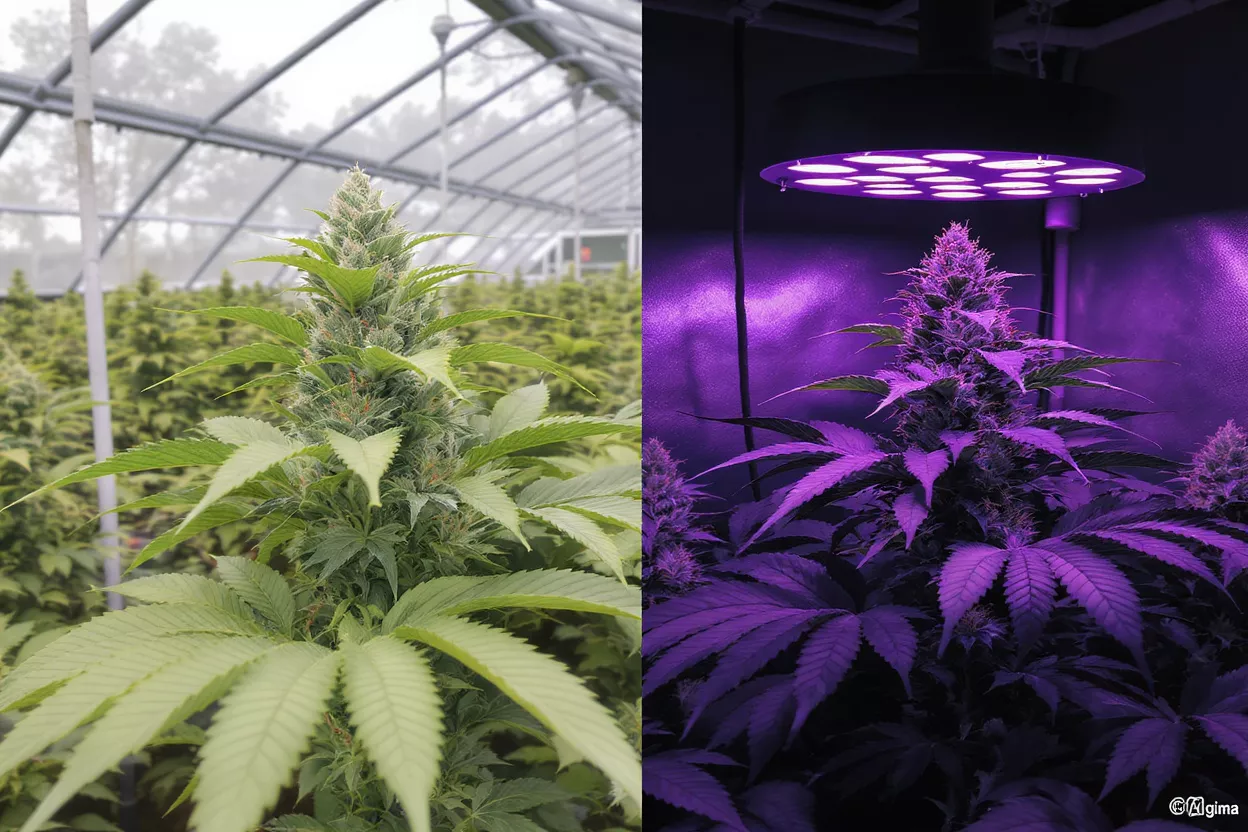
Outdoor growing harnesses the full spectrum and unmatched intensity of the sun, which is why a single mature outdoor plant can dwarf its indoor counterpart in raw weight. Plants grown in the ground with unrestricted root runs and natural sunlight regularly reach several feet tall and produce harvests measured in pounds rather than ounces. The trade-off is a single annual harvest dictated by the seasons and total exposure to weather, pests, and mold.
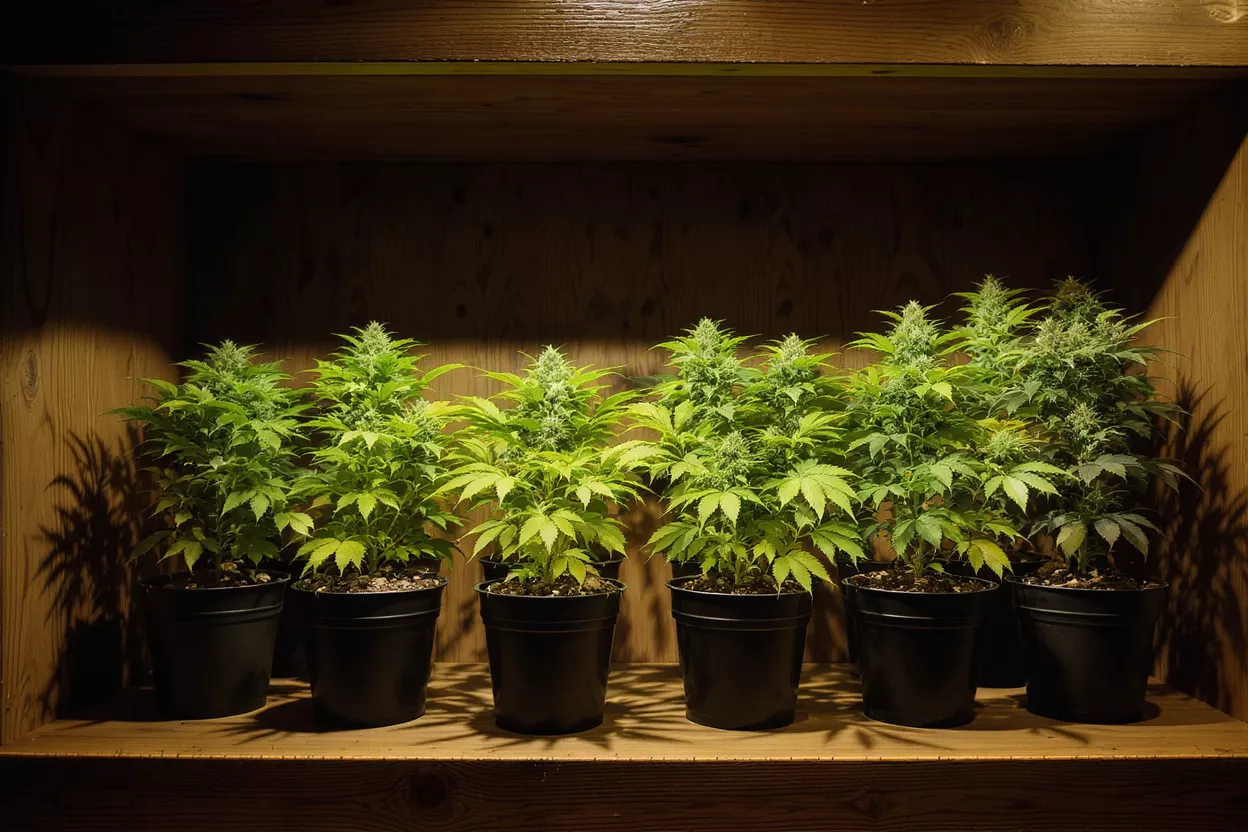
Indoor growing sacrifices the brute force of the sun in exchange for complete control. Cultivators dictate the light schedule, temperature, humidity, and feeding, allowing multiple harvests per year and consistent quality regardless of climate. Per-plant yields are usually smaller, but the ability to run several cycles annually and fine-tune every variable often makes indoor gardens more productive over a full year.
Greenhouse and light-deprivation setups attempt to blend both worlds, capturing free sunlight while adding environmental control and the ability to manipulate flowering cycles. For many commercial operations this hybrid approach delivers the best balance of yield, cost, and consistency.
How to Increase Cannabis Yield
Increasing yield is rarely about one dramatic change and almost always about removing limiting factors one at a time. The principle of limiting factors states that a plant's output is capped by whatever resource is in shortest supply. You can flood a garden with perfect light, but if humidity is wrong or roots are starved, that light goes to waste. Diagnosing and fixing the weakest link is where real gains live.
Canopy management is one of the highest-impact strategies available. An even, level canopy ensures that every bud site receives strong, direct light rather than wasting energy on shaded lower growth that never fattens. Techniques that spread the plant horizontally turn what would have been a single dominant cola into a dozen or more productive flowering sites.
Environmental tuning is the quiet multiplier. Dialing in vapor pressure deficit, supplementing carbon dioxide, and maintaining stable temperatures lets a plant photosynthesize at its genetic ceiling. None of these are flashy, but together they routinely add 20–40% to a final harvest without changing the genetics or the lights.
- 🔆 Maximize usable light: position lamps correctly and keep the canopy within the optimal intensity range.
- ✂️ Train the canopy: spread growth evenly so light reaches every bud site.
- 🌡️ Stabilize the environment: control temperature, humidity, and CO₂ to unlock photosynthetic potential.
- 🧪 Feed precisely: match nutrients to each growth stage and avoid over- or under-feeding.
- ⏳ Harvest at peak: wait for trichome maturity to capture the final weeks of weight gain.
Training Techniques for Higher Yield
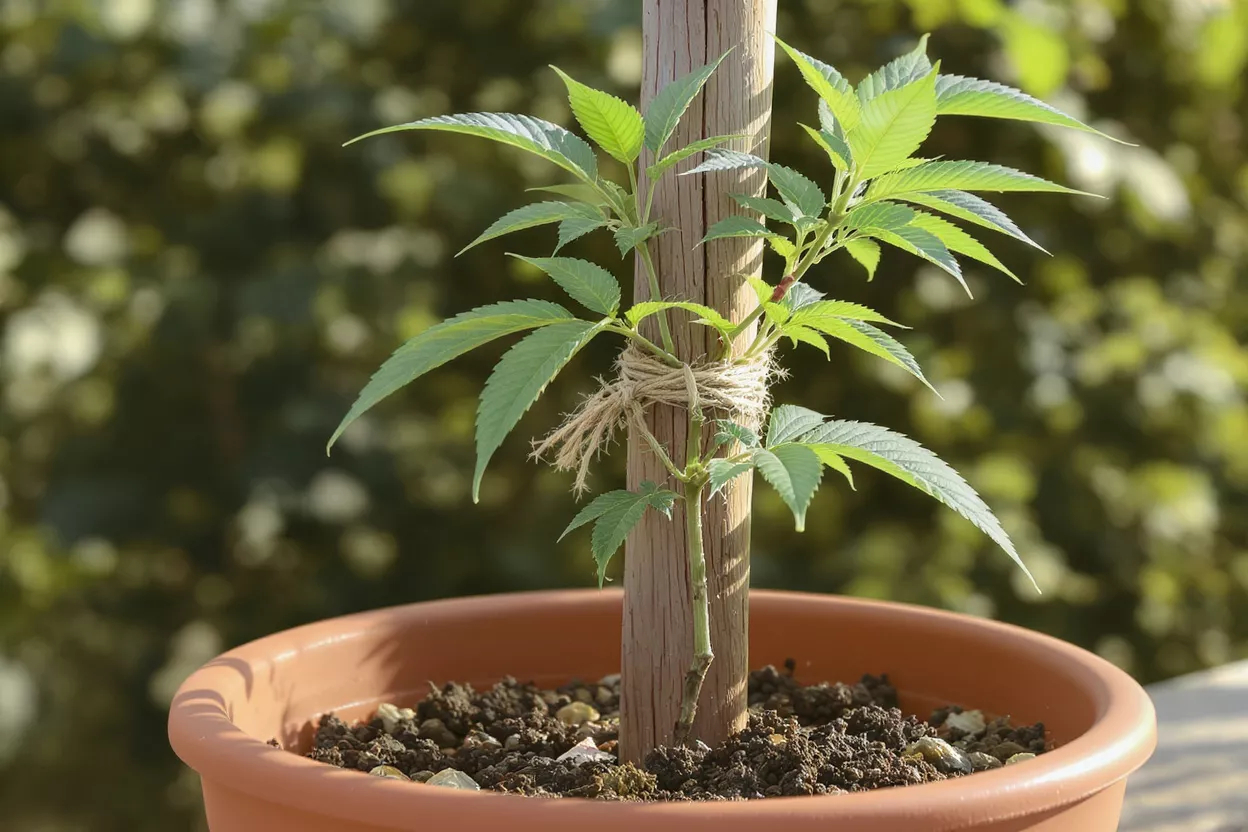
Low-stress training (LST) involves gently bending and tying down branches to open up the plant and expose lower bud sites to light. Because it never wounds the plant, LST carries no recovery time and works in any grow style. Over a cycle, the flat, wide canopy it creates can dramatically increase the number of fattening colas compared to an untrained plant left to grow as a single spire.
Topping and fimming remove or pinch the main growth tip, prompting the plant to redirect energy into multiple new shoots. The result is a bushier plant with several main colas instead of one. These high-stress methods require a healthy plant and a short recovery period, but they reshape the plant's structure in ways that pay dividends at harvest.
Screen of green (ScrOG) uses a horizontal net to weave branches into an even canopy, maximizing light penetration across the entire footprint. It is one of the most efficient ways to push grams per square meter, and pairs naturally with sea of green philosophies for filling space quickly.
Lighting and Yield Per Watt
Light is the raw material from which flower is built, so the quality, intensity, and spectrum of your lighting directly cap your potential yield. Modern LED grow lights have transformed indoor cultivation by delivering high photon output with far less heat and lower electricity costs than the high-pressure sodium fixtures that once dominated the industry.
The relevant measurement is not wattage but photosynthetic photon flux density, or PPFD — the amount of usable light actually reaching the canopy. During flowering, cannabis thrives in the range of roughly 600–900 µmol/m²/s, and pushing toward the upper end pays off only when carbon dioxide is supplemented to match. Beyond a point, more light without more CO₂ simply bleaches and stresses the plant.
Spectrum matters too. A fuller spectrum that includes deep red and a touch of far-red can encourage denser, heavier flowers, while blue-heavy light keeps vegetative growth compact. Tuning spectrum to growth stage is a subtle lever that experienced growers use to coax out extra weight without adding a single watt.
- 💡 PPFD over wattage: measure the light hitting the canopy, not the number on the box.
- 🌡️ Manage heat: efficient LEDs free up headroom for higher intensity without cooking the room.
- 🔴 Tune the spectrum: red-rich light in flower encourages denser, heavier buds.
Nutrients and Soil for Better Yield
A plant can only build as much flower as its nutrition allows. The three macronutrients — nitrogen, phosphorus, and potassium — drive different phases of growth, and matching them to the plant's stage is fundamental. Nitrogen fuels the leafy vegetative push, while phosphorus and potassium take over during flowering to support dense, resinous bud development.
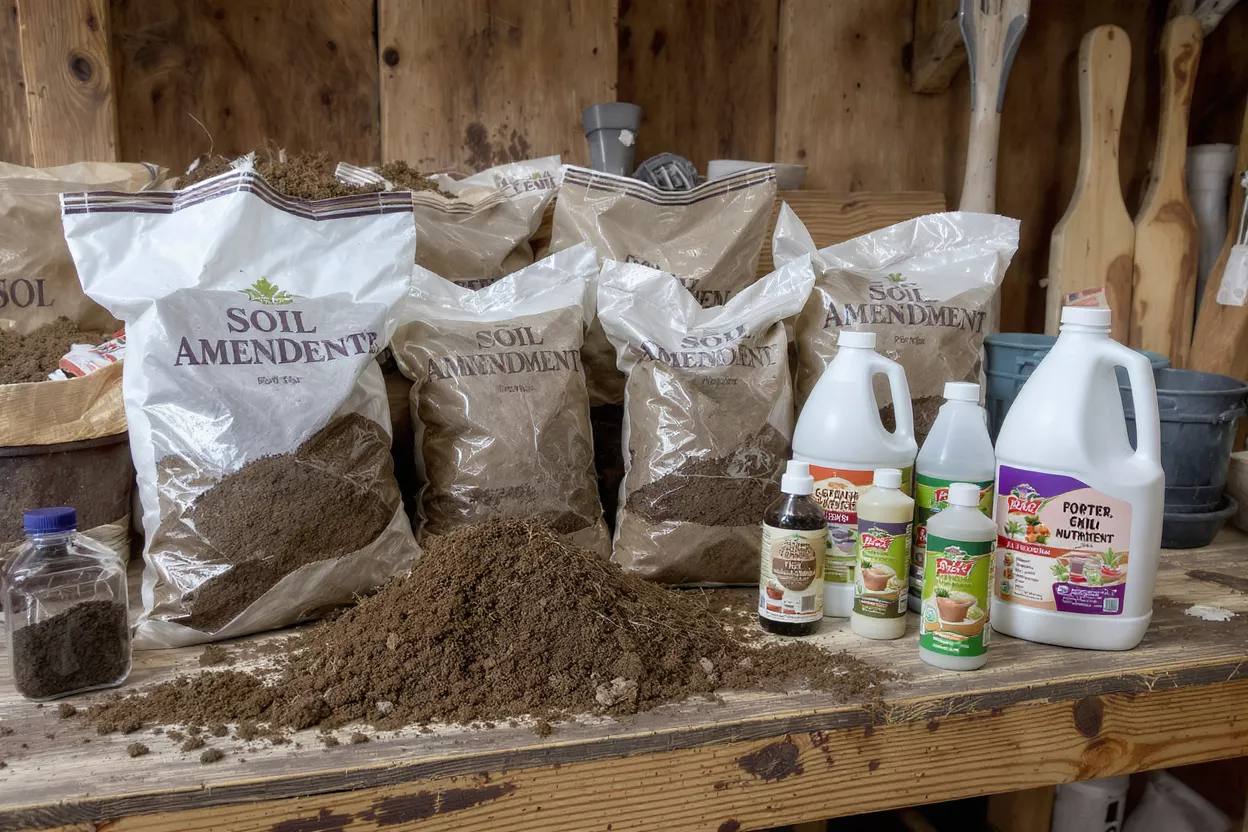
The root zone is where nutrition becomes yield. Healthy roots in a living, well-aerated medium absorb nutrients efficiently, while compacted or overwatered soil suffocates them and stalls growth. Many growers chasing bigger harvests overlook the medium entirely, when improving soil structure and microbial life is often the cheapest meaningful upgrade available.
Overfeeding is one of the most common yield killers. More nutrients do not mean more flower; past the plant's uptake capacity, excess salts build up, lock out other elements, and burn the plant. Reading the leaves, watching runoff, and feeding to the plant's actual appetite consistently outperforms aggressive feeding schedules.
Strain Genetics and Yield Potential
No amount of skill can push a plant past the ceiling written into its DNA. Genetics set the upper limit on how much a given plant can produce, and choosing a high-yielding cultivar is the single most decisive choice a grower makes before a seed ever sprouts. Some strains are simply bred to stack heavy, dense flowers, while boutique varieties may trade weight for flavor or rare cannabinoid content.
Indica-dominant and many modern hybrid strains tend to grow short, bushy, and productive, making them favorites for indoor gardens where height is limited. Sativa-leaning genetics often stretch tall and yield generously outdoors but demand more space and a longer flowering window. Knowing a strain's growth pattern lets you match it to your space rather than fighting its nature.
Autoflowering varieties have closed much of the historical yield gap with photoperiod plants. While a single autoflower still tends to produce less than a well-trained photoperiod plant, their speed allows more harvests per year, and modern breeding has made high-yielding autoflowers a genuinely competitive choice for many growers.
Common Yield Mistakes to Avoid
Harvesting too early is the most expensive mistake of all. The final two weeks of flowering are when buds swell and pack on their last meaningful weight. Impatient growers who chop based on a calendar rather than trichome maturity routinely leave a fifth of their potential harvest on the table. A simple jeweler's loupe to read trichome color pays for itself many times over.
Overcrowding tempts growers chasing higher plant counts, but cramming too many plants into a space backfires. Crowded canopies shade one another, restrict airflow, and invite mold and pests, so a smaller number of well-spaced, properly trained plants often out-yields a jungle. Quality of light reaching each bud beats sheer plant quantity.
Neglecting the cure is the final pitfall. A harvest dried too fast or stored carelessly loses weight, aroma, and value even after a flawless grow. Patience through a slow dry and a proper cure protects every gram you worked to produce. Treat the finish line with the same care as the race itself, and your true yield — usable, high-quality flower — will reflect the effort.
Ultimately, yield is the cumulative reward for hundreds of small decisions made across a single grow cycle. From selecting the right genetics and dialing in light to training the canopy, feeding with restraint, and curing with patience, every choice compounds toward that final dried weight. Growers who treat yield as a system rather than a single trick are the ones who consistently fill their jars — and understanding each link in that chain is the surest path to a heavier, higher-quality harvest.

Comments