


Should I Use Melatonin or CBD for Better Quality Sleep?
Melatonin or CBD for sleep — which is right for you?
If you have ever lain awake at 2 a.m. scrolling through supplement reviews, you have probably run into the same debate again and again: melatonin or CBD for sleep? Both have surged in popularity as gentler alternatives to prescription sedatives, and both promise the same elusive prize — a full, restorative night of rest. But they work in completely different ways, suit different kinds of sleeplessness, and carry their own quirks. This guide breaks down how each one functions, what the research actually says, and how to decide which deserves a spot on your nightstand.
The short version is that there is no single winner. Melatonin is a hormone your body already makes to signal that night has fallen, while CBD is a plant compound that works on a broader system tied to stress, mood, and physical tension. Knowing which problem you are actually trying to solve — falling asleep versus staying asleep, racing thoughts versus a scrambled body clock — is the key to choosing well.
Below we walk through the mechanics of both, compare them head to head, and offer practical guidance on dosing, safety, and even combining the two. Whether you are new to supplements or refining a routine you already trust, you will leave with a clear sense of what fits your sleep.
What Is CBD for Sleep and How Does It Work?
CBD, short for cannabidiol, is a non-intoxicating compound extracted from the cannabis plant. Unlike THC, it will not get you high, which is a large part of why CBD for sleep has become so widely adopted among people who want calm without impairment. Instead of acting like a sedative that knocks you out, CBD interacts with the body's endocannabinoid system — a network of receptors that helps regulate stress responses, mood, pain perception, and the daily rhythms that govern when you feel alert or drowsy.
Why CBD helps with sleep indirectly: Most people who struggle to fall asleep are not simply tired-and-can't-drift-off; they are wired. Anxious thoughts, residual stress from the day, and low-grade physical tension keep the nervous system in a state of mild alert. CBD appears to soften that arousal, making it easier for sleep to arrive naturally rather than forcing it chemically. Research from institutions like Johns Hopkins Medicine has noted that cannabinoids may influence both anxiety and sleep architecture, though the science is still maturing.
This is an important distinction. Because CBD addresses the causes of wakefulness rather than overriding your biology, it tends to produce a more natural-feeling drowsiness. Many users describe it as the mental noise simply turning down. For those whose sleeplessness is rooted in stress, a quality full-spectrum CBD oil can be a gentler starting point than a hormone supplement.
How Melatonin Works for Sleep
Melatonin is a hormone produced by the pineal gland deep in your brain. As daylight fades, melatonin levels naturally rise, telling your body that it is time to wind down. This is why it is often called the "sleep hormone" — it does not sedate you so much as it signals the arrival of night and nudges your internal clock toward rest.
Why melatonin works best for timing problems: Because melatonin governs the circadian rhythm rather than sedation, it shines in situations where your body clock is out of sync. Jet lag, shift work, and the gradual drift of staying up too late all confuse the natural signal. A supplemental dose taken at the right time can reset that signal, helping you feel sleepy when you actually want to.
Where melatonin is less useful is for the kind of insomnia driven by anxiety or a busy mind. If your body clock is fine but your thoughts will not settle, more melatonin will not necessarily help — you may already have plenty. This is the crux of the melatonin-versus-CBD question: melatonin fixes when you feel sleepy, while CBD addresses why you cannot relax. Amino acids like Theanine, often paired with these supplements, work on a similar calming angle.

CBD vs Melatonin: The Key Differences
Understanding the contrast between these two supplements makes the choice far easier. They are not interchangeable, and treating them as such is why some people feel let down when one does not work as expected. The core difference is mechanism: one is a hormone that adjusts timing, the other is a plant compound that eases the conditions keeping you awake.
Here is a clear breakdown of how they compare on the factors that matter most when you are choosing what to take tonight:
- 🌙 Mechanism: Melatonin signals your body clock; CBD calms the nervous system and stress response.
- ⏰ Best for: Melatonin suits jet lag and shifted schedules; CBD suits stress, anxiety, and physical tension.
- ⚡ Onset: Melatonin acts within 30–60 minutes; CBD can take 45 minutes to two hours depending on format.
- 🌅 Morning feel: Melatonin can leave some users groggy; CBD rarely causes a hangover effect at sensible doses.
- 🔁 Tolerance: Melatonin may lose impact with nightly use; CBD tends to remain consistent over time.
If you remember one thing, let it be this: match the supplement to the problem. A scrambled schedule calls for melatonin, while a racing mind responds better to CBD. Many people eventually find that the most reliable answer involves both, which we will cover shortly.
CBD Oil for Sleep Benefits
CBD oil for sleep has earned its reputation largely because of how versatile and forgiving it is. Taken as a tincture under the tongue, it absorbs relatively quickly and lets you fine-tune your dose drop by drop. This control is one of the main reasons sleep-focused users gravitate toward oils over other formats.
Stress reduction as the foundation: The most consistent benefit reported by CBD users is a sense of decompression before bed. By dialing down the body's stress signaling, CBD makes the transition into sleep feel less like a struggle and more like a natural slide. According to Johns Hopkins Medicine, managing nighttime anxiety is one of the most effective levers for improving overall sleep quality, which is precisely the lever CBD pulls.
Physical comfort and recovery: Pain and inflammation are silent sleep saboteurs. People with sore joints, post-workout muscle fatigue, or chronic discomfort often wake repeatedly through the night. CBD's interaction with pain-perception pathways can ease that physical static, allowing for deeper, less interrupted rest. Some prefer a soothing CBD topical balm for localized aches, applied alongside an oral dose for whole-body calm. Full-spectrum formulas may also include trace terpenes like Valencene and a touch of Terpinolene, whose terpinolene effects lean toward relaxation.
Melatonin Benefits and Where It Falls Short
Melatonin's biggest advantage is precision. When your problem is timing — you want to fall asleep at 10 p.m. but your body insists it is midnight — melatonin is hard to beat. It is also inexpensive, widely available, and backed by decades of research on circadian regulation, which gives it a strong evidence base for specific use cases.
Where melatonin genuinely excels: Travelers crossing time zones get the clearest benefit. A well-timed dose can shave days off the misery of jet lag by nudging the body clock forward or back. Shift workers and night owls trying to advance their bedtime see similar gains. In these scenarios, melatonin is doing exactly what it evolved to do, only on your schedule.
The limitations show up when melatonin is treated as a general sleep aid. Taking it every night for ordinary insomnia can blunt its effectiveness and, in some people, disrupt the body's own production. Higher doses are not better either — research consistently shows that small amounts, around 0.5 to 1 milligram, often outperform the large 5 or 10 milligram tablets sold on shelves. It also does nothing for a mind churning with worry, which is where many people's sleep problems actually originate.
Best CBD Sleep Pills in Canada
For Canadians who prefer a measured, no-fuss option, CBD sleep pills offer a convenient alternative to oils. Each capsule delivers a precise, pre-measured dose, removing the guesswork of counting drops. This consistency makes them popular with people who travel, who dislike the earthy taste of tinctures, or who simply want a routine they can follow without thinking.
When evaluating CBD sleep products in Canada, a few factors separate the dependable from the disappointing. Quality, transparency, and formulation all matter more than marketing claims. Here is what to look for:
- 🧪 Third-party testing: Reputable brands publish lab results confirming cannabinoid content and screening for contaminants.
- 🌿 Full-spectrum vs isolate: Full-spectrum capsules include supporting cannabinoids and terpenes for a more rounded effect.
- 💊 Clear dosing: Look for products that state milligrams of CBD per capsule plainly on the label.
- 🛌 Sleep-targeted blends: Some formulas pair CBD with calming additions like Theanine or a low dose of melatonin.
- 🍁 Domestic sourcing: Canadian-grown, sun-grown hemp processed under regulated standards offers peace of mind.
A well-formulated CBD softgel for sleep can be the simplest entry point for newcomers, especially those who want the calm of CBD without committing to a tincture routine. Look for clean ingredient lists; some premium 2025 formulas even include vitamin E as Tocopherol to preserve freshness.
Can You Combine CBD and Melatonin?
One of the most common questions about these two supplements is whether they can be taken together — and the answer, for most people, is yes. Because they work through entirely separate pathways, combining them can address both halves of the sleep equation at once: melatonin handles timing while CBD handles the mental and physical unrest.
Why the combination often outperforms either alone: Imagine you are both jet-lagged and stressed about an early meeting. Melatonin alone might cue your body clock but leave your anxious thoughts intact, while CBD alone might calm your mind but not correct the timing. Together, they cover each other's blind spots. Many sleep-formulated products are built precisely around this synergy, pairing a low melatonin dose with a calming amount of CBD.
That said, start conservatively. Combine a small melatonin dose with a moderate amount of CBD and see how your body responds before adjusting. Some people find that the CBD does enough on its own that they can lower or skip the melatonin entirely. As always, those taking medication should consult a healthcare provider, since both supplements can interact with certain prescriptions. Calming herbal allies like Lion's Mane are sometimes added to daytime routines to round out overall wellness.
CBD for Sleep Dosing Guide
Dosing CBD for sleep is less of an exact science than melatonin and more of a personal calibration. Body weight, metabolism, the severity of your sleeplessness, and the product's potency all influence how much you need. The guiding principle is simple: start low and increase gradually until you find the amount that relaxes you without leaving you foggy.
A practical starting framework: Most beginners do well starting around 15 to 25 milligrams taken roughly an hour before bed. If that does not produce noticeable calm after several nights, step up by 5 to 10 milligrams at a time. Many people land somewhere between 25 and 50 milligrams for sleep, though some need more and others surprisingly less. The format matters too — an oil absorbs faster than a capsule, so timing should shift accordingly.
Consistency is more important than chasing a perfect number. CBD tends to build a steadier baseline of calm when taken nightly for a couple of weeks, so resist the urge to abandon it after one underwhelming night. Keep a simple log of dose, timing, and how you slept; patterns emerge quickly and make fine-tuning straightforward. Avoid combining it with heavy meals if you want faster onset, as fat can slow absorption from a capsule.
Are CBD and Melatonin Safe to Take?
Both supplements have strong safety profiles, which is a large part of their appeal compared to prescription sleep medications. Neither carries the dependency risk associated with sedative-hypnotics, and serious adverse effects are rare at normal doses. That said, safe does not mean consequence-free, and a few considerations are worth keeping in mind.
CBD side effects to know: The most commonly reported effects are mild — dry mouth, slight drowsiness the next morning if the dose is high, and occasionally a change in appetite. More importantly, CBD can interact with how the liver metabolizes certain medications, including blood thinners. If you take prescription drugs, a quick conversation with your pharmacist or doctor is the responsible move before starting.
Melatonin considerations: Melatonin's main pitfalls are grogginess from excessive doses and vivid dreams, which some find unpleasant. Because it is a hormone, there are open questions about long-term nightly use, particularly in younger people. Using the smallest effective dose and reserving it for genuine timing problems sidesteps most concerns. For either supplement, quality sourcing matters; cheap products can contain inaccurate dosing or contaminants, so buy from brands that test transparently.
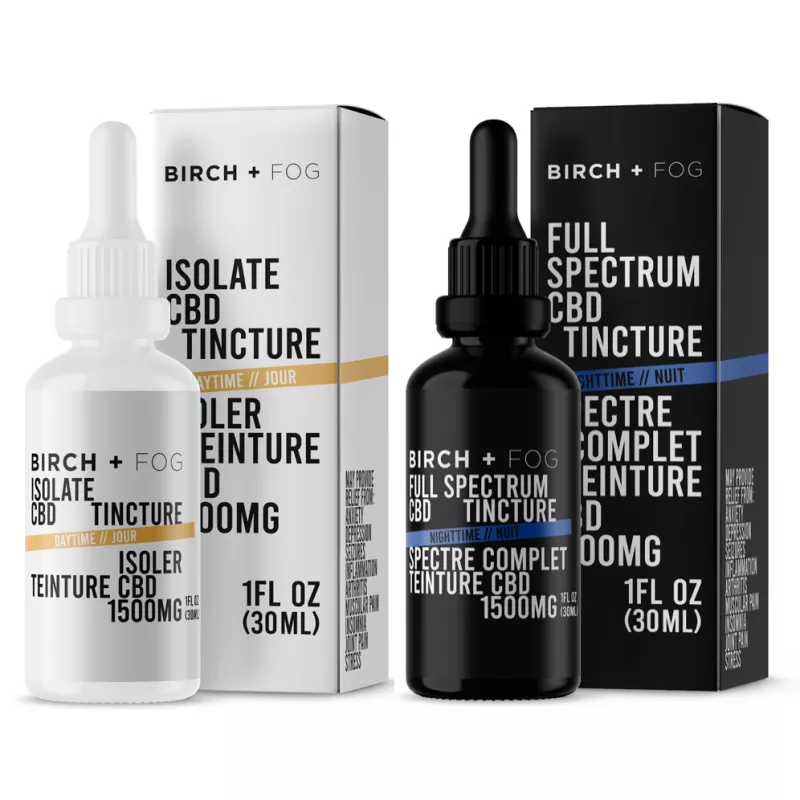

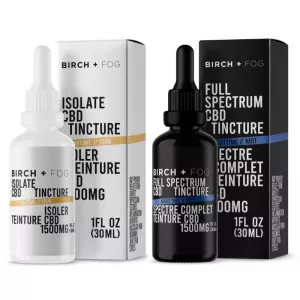
Day + Night CBD Tincture Duo 1500mg – BIRCH+FOG
Maximum-strength, 24-hour support in a specialized pair. This 1500mg Day + Night duo brings clinical-grade potency to both ends of the day — a daytime bottle that calms without fog and an evening formula whose higher concentration eases you into deeper rest. Time-specific terpenes do the steering, so serious relief never costs you your focus or your sleep.
- High Potency : A robust 1500mg concentration for serious needs
- Cognitive Function Preserved : Maximum strength without mental fog or daily impairment
- Chronic Pain Management : Sufficient potency for persistent, severe discomfort
- Severe Anxiety Support : Manages intense anxiety symptoms across full day cycles
- Enhanced Sleep Architecture : Higher evening concentration promotes deeper sleep phases

CBD CBN Sleep Vegan Dark Chocolate Bar 1000mg / 24pcs – NOW+THEN
A bedtime square worth looking forward to. NOW+THEN's CBD+CBN sleep bar pairs 27mg of CBD with 15mg of CBN in each of 24 sugar-free dark squares — calming cannabinoids in a cozy, plant-based treat. No high, no sugar, just a gentle nudge toward rest. The wind-down ritual that tastes like dessert.
- Sleep Induction : CBN promotes natural drowsiness
- Anxiety Reduction : CBD calms racing thoughts
- Sleep Quality : Improves deep sleep cycles
- No Morning Grogginess : Natural sleep, natural wake
- Sugar-Free Rest : No glucose spikes disrupting sleep

Full Spectrum CBD Tincture Nighttime 500mg – BIRCH+FOG
A gentle on-ramp to better evenings. This 500mg full-spectrum tincture leans on the plant's natural entourage to quiet a busy mind and ease you toward sleep — without the heavy, over-sedated morning after. Low and forgiving, it's the ideal first nighttime CBD: a few drops after dinner to soften the day's edges and settle into a calmer wind-down.
- Gentle Sedation : Promotes sleep without heavy drowsiness
- Stress Relief : Calms end-of-day anxiety naturally
- Easy Introduction : Perfect first CBD sleep product
- Flexible Use : Works for sleep or daytime calm
- Natural Rhythm : Supports healthy sleep patterns
Which Is Better for Your Sleep?
After weighing the mechanics, benefits, and limits of both, the honest conclusion is that "better" depends entirely on you. There is no universal champion — only the supplement that matches your particular flavor of sleeplessness. The most useful thing you can do is diagnose your own pattern before reaching for a bottle.
How to choose based on your situation: If your trouble is timing — you travel often, work odd hours, or simply cannot fall asleep until far too late — melatonin is the logical first try, used sparingly and at a low dose. If your trouble is a restless mind, lingering stress, or physical discomfort that keeps pulling you out of sleep, CBD addresses the root more directly and is gentler for nightly use. And if you face both, a thoughtful combination frequently delivers the best of each.
Whichever path you choose, give it a fair trial, keep your expectations grounded, and remember that supplements work best alongside good sleep habits — a consistent schedule, a dark cool room, and less screen time before bed. Treat melatonin and CBD as tools rather than miracles, and you will be far more likely to find the restful nights you are after. The right choice is the one that solves the problem you actually have, so listen to your body and adjust as you learn what works.










Comments