
Melatonin
Discover how melatonin cannabis products combine sleep-timing hormones with cannabinoids for deeper rest.
What Is Melatonin Cannabis?
The pairing of melatonin and cannabis has quietly become one of the most popular formulations in the sleep aid market, and for good reason. Melatonin is a hormone your body produces naturally to regulate the timing of sleep, while cannabis contributes compounds that can ease the mind and body into rest. When combined into a single product, these two ingredients target different layers of the sleep process, offering a more complete approach than either delivers alone.
At its core, melatonin is a signaling molecule rather than a sedative. It does not knock you out the way a sleeping pill might. Instead, it tells your brain that nightfall has arrived and that it is time to wind down. Cannabis products designed for sleep often pair melatonin with cannabinoids like CBN or modest amounts of THC to address the physical restlessness that keeps many people awake.
Why combine them at all? The logic is that melatonin handles the circadian timing while cannabis quiets the racing thoughts and muscle tension that often sabotage a good night. This division of labor is what makes melatonin cannabis products appealing to people who have tried single-ingredient remedies without success. Rather than relying on one mechanism, you engage several pathways that govern how quickly you fall asleep and how deeply you stay there.
How Melatonin Cannabis Works for Sleep
Understanding how melatonin cannabis works requires looking at two separate biological systems that happen to overlap at bedtime. Melatonin acts on receptors in the suprachiasmatic nucleus, the brain region that functions as your master clock. As natural light fades, your pineal gland releases melatonin, and supplementing it reinforces that signal, especially useful when screens, travel, or shift work have thrown your rhythm off.
Cannabis works through an entirely different route: the endocannabinoid system. This network of receptors influences mood, pain perception, and arousal. Cannabinoids interacting with these receptors can lower the physiological tension that prevents sleep onset, which is why so many people reach for cannabis when stress keeps them staring at the ceiling.
The combined timeline matters. Melatonin typically begins influencing the brain within thirty to sixty minutes, which is why most formulations recommend taking them well before you intend to sleep. Cannabinoids absorbed through edibles follow a similar curve, meaning the two ingredients tend to peak together. This overlap is intentional, creating a window where your circadian signal and your relaxation response work in concert rather than at cross purposes.
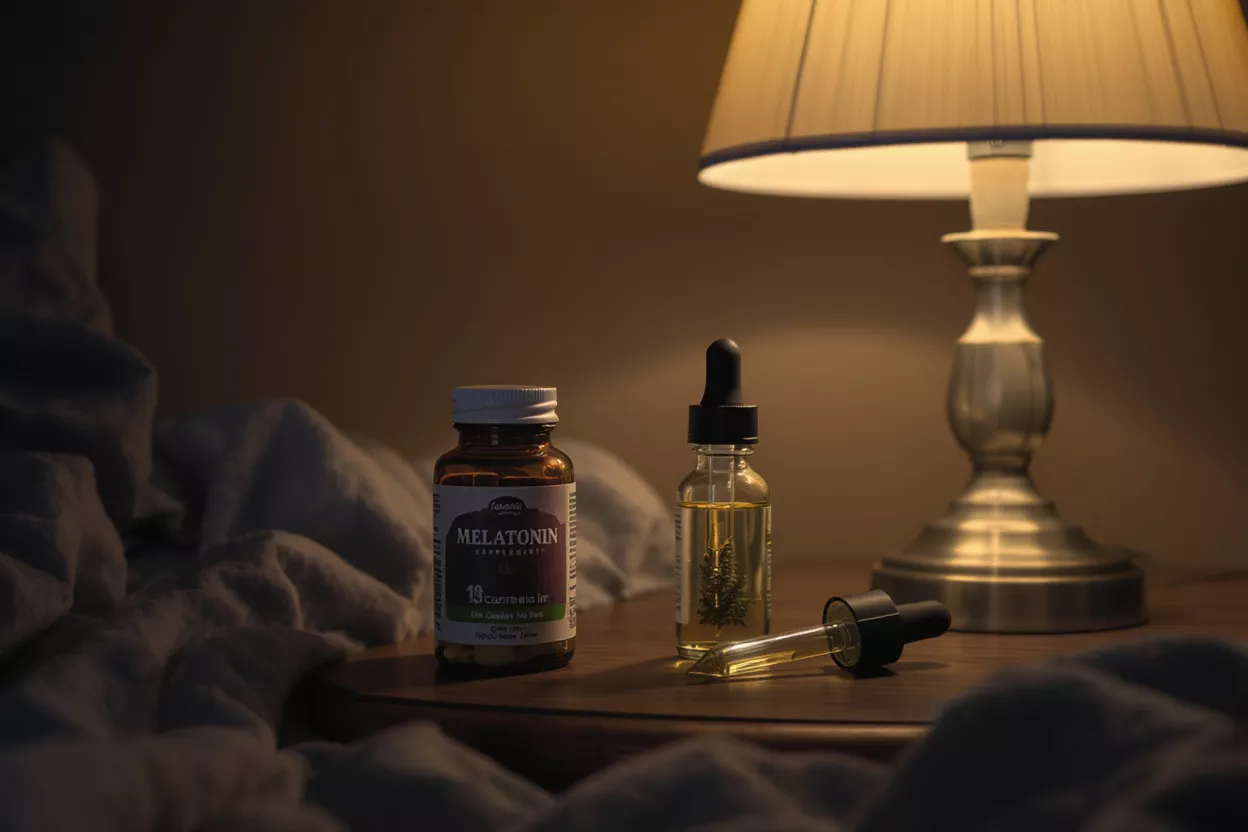
The Sleep Science Behind Melatonin Cannabis
Sleep is not a single state but a cycle of stages, each serving a distinct restorative function. The science behind melatonin cannabis is most interesting when you consider how these ingredients influence different parts of that cycle. Melatonin primarily affects sleep latency, the time it takes to drift off, by aligning your internal clock with the actual hour.
Cannabinoids, particularly CBN and THC, appear to influence sleep architecture in other ways. Research suggests THC may reduce the time spent in REM sleep while increasing deep, slow-wave sleep in the early part of the night. For people who wake frequently or sleep lightly, this shift toward deeper stages can feel like a meaningful improvement in rest quality, though the long-term effects of REM suppression remain an active area of study.
It helps to picture the two ingredients addressing separate sleep complaints:
- 🌙 Trouble falling asleep: Melatonin shortens sleep latency by signaling that it is time for rest.
- 😴 Trouble staying asleep: Cannabinoids can deepen sleep and reduce nighttime awakenings.
- 🔄 Disrupted rhythm: Melatonin helps reset clocks thrown off by jet lag or shift work.
- 🧠 Racing thoughts: The calming effect of cannabis quiets mental chatter at bedtime.
Melatonin Cannabis Synergy and the Entourage Effect
The concept of synergy is central to why these formulations work better than the sum of their parts. In cannabis science, the entourage effect describes how compounds amplify and modulate one another. When melatonin enters this picture, it adds a hormonal layer to the botanical chemistry already at play.
Terpenes contribute more than aroma. Many sleep formulations include myrcene and linalool, terpenes associated with sedation and relaxation. Linalool, the same compound that gives lavender its calming reputation, may enhance the drowsy effect, while myrcene is often credited with the heavy, couch-locked sensation of certain indica varieties.
The practical takeaway is that a well-designed melatonin cannabis product is more than a melatonin tablet with cannabis added. The formulators are choosing cannabinoid ratios and terpene profiles that complement the hormone, building a layered effect where each ingredient covers a weakness in the others. This is why two products with identical melatonin doses can produce noticeably different experiences depending on what surrounds the hormone.
Types of Melatonin Cannabis Products
The market offers melatonin cannabis in several formats, each with distinct onset times and dosing precision. The format you choose has a real impact on how the product fits into your nighttime routine, so it pays to understand the differences before settling on one.
Edibles dominate the category because they allow precise, pre-measured doses and a long duration that carries you through the night. Gummies and capsules are the most common, blending melatonin with cannabinoids in fixed ratios. Tinctures offer faster onset and more flexible dosing, since you can adjust drops to suit your tolerance, while the sublingual route bypasses some of the digestive delay.
Here is how the common formats compare:
- 🍬 Gummies: Pre-dosed and convenient, with onset around 45 to 90 minutes and effects lasting six or more hours.
- 💊 Capsules: Flavorless and precise, ideal for those who dislike sweet edibles.
- 💧 Tinctures: Faster acting when held under the tongue, with easy dose adjustment drop by drop.
- 🫖 Beverages: Sippable formats that combine hydration with a measured cannabinoid and melatonin dose.
For most people new to these products, a low-dose gummy or capsule offers the easiest entry point because the dose is fixed and the effect is predictable. Tinctures suit those who want to fine-tune the experience over time.
Melatonin Cannabis Dosing Guide
Start low and go slow remains the golden rule. A common misconception is that more melatonin produces deeper sleep, but research suggests the opposite can be true. Doses as small as 0.5 to 1 milligram are often as effective as larger ones, and excessive melatonin may leave you groggy the next morning. Most sleep-focused products land between 1 and 5 milligrams for this reason.
On the cannabis side, the dose depends heavily on your experience and which cannabinoids are involved. A product leaning on CBN may contain little to no psychoactive THC, while one built around THC for sleep typically keeps the dose modest, often between 2 and 5 milligrams, to avoid the stimulation that higher amounts can paradoxically cause in some people.
Timing is as important as quantity. Take your melatonin cannabis product roughly thirty to sixty minutes before bed to align the onset with the moment you actually want to sleep. Taking it too late means the effects peak after you have already been lying awake, while taking it too early can leave you drowsy before you are ready to settle in for the night.
Are Melatonin Cannabis Products Safe?
For most healthy adults, both melatonin and cannabis carry well-established safety profiles when used responsibly. Melatonin is not habit-forming in the way prescription sleep medications can be, and the body does not build a dependence on it that requires escalating doses. That said, it is a hormone, and consistent high doses warrant caution and ideally a conversation with a healthcare provider.
Side effects tend to be mild and dose-related. The most common complaints are morning grogginess, vivid dreams, and occasional headaches, most of which resolve by lowering the dose. Cannabis can add dry mouth, mild dizziness, or a lingering heaviness if the cannabinoid content is too high for your tolerance. These effects are uncomfortable rather than dangerous for healthy individuals.
Certain groups should approach these products with extra care. People who are pregnant or breastfeeding, those taking blood thinners or immunosuppressants, and anyone managing a chronic medical condition should consult a professional before use. Because melatonin influences hormonal pathways, it is not recommended for casual nightly use in children without medical guidance.
Melatonin Cannabis Benefits for Better Rest
The appeal of melatonin cannabis comes down to addressing sleep from multiple angles at once. Where a single ingredient might fall short, the combination offers a more rounded solution that accounts for both the timing and the quality of your rest.
The benefits extend beyond simply falling asleep faster. Many users report waking less frequently through the night and feeling more genuinely rested in the morning, which speaks to improvements in sleep depth rather than just duration. For people whose sleep problems stem from anxiety or physical discomfort, the cannabinoid component addresses root causes that melatonin alone would leave untouched.
There is also a practical convenience worth noting. Instead of stacking a melatonin supplement, a relaxation aid, and perhaps a calming tea, a single well-formulated product consolidates the routine. This simplicity makes consistency easier, and consistency is one of the most underrated factors in genuinely fixing a troubled sleep schedule over the long term.
Choosing the Best Melatonin Cannabis for Sleep
Selecting the right product starts with honesty about what is actually disrupting your sleep. If you struggle mainly with falling asleep at a reasonable hour, a melatonin-forward formulation makes sense. If you fall asleep fine but wake repeatedly, a product weighted toward CBN or a small THC dose may serve you better.
Lab testing separates quality products from the rest. Reputable melatonin cannabis products come with a certificate of analysis confirming the cannabinoid content and screening for contaminants like pesticides and heavy metals. Without this documentation, you have no real assurance that the milligram counts on the label reflect what is actually inside.
Consider these factors when comparing options:
- 🔬 Third-party testing: Always verify a current certificate of analysis is available.
- ⚖️ Cannabinoid ratio: Match the THC, CBN, and CBD balance to your specific sleep complaint.
- 🌿 Terpene profile: Look for sedating terpenes like myrcene and linalool in the formulation.
- 📋 Melatonin dose: Favor lower doses around 1 to 3 milligrams for a clean morning.
Reading reviews from people with similar sleep struggles can help, but treat your own first few nights as the real test, starting with the lowest dose and adjusting gradually.
Melatonin Cannabis Interactions and Considerations
Like any sleep aid, melatonin cannabis products interact with other substances and lifestyle factors in ways worth understanding. Alcohol is the most common pitfall, as it may seem to aid sleep initially but fragments rest later in the night and can amplify the sedating effects of both melatonin and cannabis in unpredictable ways.
Certain medications deserve attention. Melatonin can interact with blood pressure drugs, anticoagulants, diabetes medications, and other sedatives, sometimes intensifying their effects. Cannabis is metabolized by the same liver enzymes that process many prescriptions, which means it can subtly alter how those drugs behave in your system. When in doubt, a pharmacist can flag specific concerns.
Melatonin cannabis is a genuinely useful tool for better sleep when approached thoughtfully, combining the circadian precision of a natural hormone with the relaxing properties of cannabis to address rest from several directions at once. The key is starting with low doses, choosing lab-tested products, and paying attention to how your own body responds. Used consistently and respectfully, these formulations can help transform restless nights into reliable, restorative sleep, but they work best as part of a broader commitment to good sleep habits rather than a standalone fix.