Vegan Chocolate: Dairy-Free Cannabis Chocolate
Discover vegan chocolate cannabis edibles: dairy-free, precisely dosed, and delicious.
What Is Vegan Chocolate in Cannabis Edibles
Vegan chocolate has moved from a niche specialty into one of the most requested formats in the cannabis edibles market, and for good reason. At its core, vegan chocolate is chocolate made entirely without animal-derived ingredients—no milk solids, no butterfat, no casein, and no whey. When you pair that dairy-free foundation with a precisely measured cannabinoid infusion, you get a confection that satisfies both plant-based eaters and consumers who simply want a cleaner ingredient list. The appeal is broad: lactose-intolerant adults, environmentally minded shoppers, and anyone chasing the deep, complex flavor that high-cacao chocolate naturally delivers.
The cannabis angle is what elevates vegan chocolate from a grocery-aisle treat into a deliberate wellness product. Cannabinoids are fat-soluble, which means they bind beautifully to the cocoa butter that gives chocolate its silky melt. A well-made bar carries THC, CBD, or a balanced blend distributed evenly throughout, so every square delivers a consistent dose. This even distribution is what separates artisan-grade infusion from amateur kitchen experiments where the active compound clumps or settles.
Why plant-based chocolate suits cannabis infusion: Dairy fats and cannabinoid oils can compete in an emulsion, sometimes producing a grainy texture or uneven potency. Removing the milk simplifies the chemistry. Cocoa butter alone is an exceptional carrier, and many chocolatiers find that vegan formulas actually deliver smoother, more reliable infusions. The result is a product that tastes intentional rather than improvised.
How Vegan Chocolate Is Made Without Dairy
Understanding how vegan chocolate is built helps you appreciate why it behaves so well as a cannabis carrier. Traditional milk chocolate relies on milk powder to soften the bitterness of cacao and add creaminess. Vegan recipes replace that dairy with plant-based alternatives—oat milk powder, rice milk solids, coconut milk powder, or almond derivatives—each lending its own subtle character to the finished bar.
The manufacturing process still follows the classic chocolate-making arc: roasting, grinding, conching, and tempering. Conching is the prolonged mixing stage that develops flavor and texture, and it matters enormously for mouthfeel. According to research compiled by Frontiers, the lipid composition of a confection significantly influences how cannabinoids are absorbed once consumed, which is one reason careful fat selection in vegan recipes is so important.
Plant-based milk swaps and their flavor impact: Coconut milk powder brings a rich, almost tropical roundness and high fat content that mimics dairy creaminess closely. Oat milk powder offers a neutral, gentle sweetness that lets the cacao shine. Rice milk solids are the lightest, producing a cleaner but less creamy bar. Choosing among them is part flavor preference, part texture engineering. For consumers who want the richest plant-based experience, coconut-based chocolate bars tend to deliver the most satisfying melt.
- 🥥 Coconut milk powder: Highest fat content, creamiest melt, faint tropical note.
- 🌾 Oat milk powder: Neutral sweetness, smooth body, lets cacao flavor lead.
- 🍚 Rice milk solids: Lightest texture, clean finish, lower fat.
- 🌰 Almond derivatives: Nutty depth, moderate creaminess, popular in premium bars.
Vegan Chocolate vs Traditional Milk Chocolate
The most common question newcomers ask is whether vegan chocolate tastes like a compromise. It does not—at least not when it is made well. The difference is more accurately described as a different flavor profile rather than a lesser one. Vegan dark chocolate, in particular, often tastes more intense and cacao-forward because there is no milk to mute the natural bitterness and fruity notes of the bean.
From an infusion standpoint, vegan chocolate frequently outperforms its dairy counterpart. Milk proteins can interfere with how cannabis-infused oil disperses, occasionally creating texture issues. A pure cocoa butter matrix accepts cannabinoid extracts more uniformly, which translates into more predictable dosing—a meaningful advantage when consistency is the whole point of a measured edible.
Texture and shelf stability differences: Dairy chocolate can develop fat bloom—that whitish film—when temperature fluctuates, and the milk solids shorten shelf life slightly. Vegan bars built on cocoa butter and stable plant fats tend to resist bloom well when tempered correctly and can hold flavor longer. The trade-off is that some plant fats melt at slightly different temperatures, so chocolatiers tune their recipes carefully to achieve that satisfying snap.
- 🍫 Flavor: Vegan leans more intense and cacao-forward; dairy is milder and sweeter.
- ⚖️ Infusion consistency: Vegan offers more uniform cannabinoid distribution.
- 🌍 Sustainability: Plant-based formulas carry a smaller environmental footprint.
- 🕒 Shelf life: Vegan bars often resist fat bloom better when properly tempered.
Types of Vegan Chocolate for Edibles
Not all vegan chocolate is created equal, and the type you choose shapes both flavor and how the cannabis reads on the palate. Dark chocolate is the most natural fit—its high cacao content and minimal added ingredients make it inherently closer to vegan, and its boldness masks any subtle plant or cannabinoid notes. Many premium cannabis bars start with a 70% or higher dark base for exactly this reason.
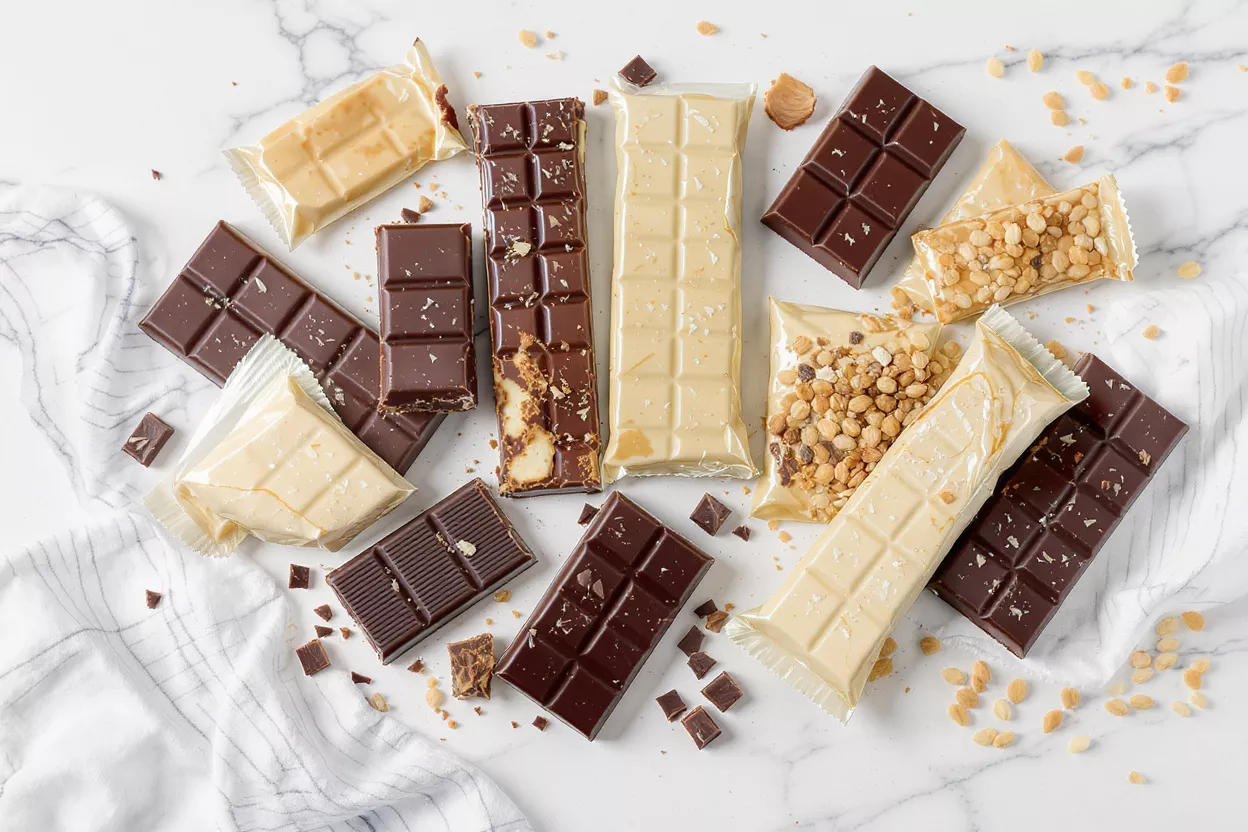
Vegan milk chocolate is the trickier category to perfect, since recreating creaminess without dairy demands skilled formulation. The best versions use coconut or oat milk solids to build body, producing a bar that genuinely satisfies milk-chocolate cravings. White chocolate goes even further from tradition, relying entirely on cocoa butter, sweetener, and plant milk to achieve its pale, mellow profile.
Specialty and flavored vegan chocolate options: Beyond the three classics, chocolatiers fold in inclusions—sea salt, chili, freeze-dried fruit, espresso, or crunchy cacao nibs—to create signature bars. These additions do more than dress up the product; assertive flavors like chili or coffee help camouflage any vegetal undertone from the infusion, making the overall experience cleaner. For adventurous palates, dark chocolate sea salt squares balance bitterness, brightness, and a savory edge beautifully.
Vegan Chocolate Benefits for Health-Conscious Consumers
Choosing vegan chocolate is rarely about flavor alone. For many consumers, the decision is rooted in health, ethics, and dietary need, and cannabis-infused versions inherit all of those advantages. The most immediate benefit is digestibility: lactose intolerance affects a large share of adults worldwide, and a dairy-free bar sidesteps the bloating and discomfort that conventional chocolate can trigger.
Dark vegan chocolate in particular carries a respectable nutritional resume. Cacao is rich in flavonoid antioxidants, magnesium, and iron, and the plant-based milk swaps generally add less saturated animal fat. None of this turns chocolate into a health food, but it does mean a thoughtfully made bar offers more than empty calories—a welcome quality in a wellness-oriented edible.
Ethical and environmental motivations: Dairy production carries a substantial water and land footprint, so plant-based chocolate appeals to consumers minimizing their environmental impact. Combined with responsibly sourced cacao, a vegan bar can represent a genuinely more sustainable indulgence. When you want a guilt-light treat, low-sugar vegan chocolate options pair these ethics with a lighter sweetener load.
- 💪 Digestive comfort: No lactose means no dairy-related bloating or cramping.
- 🌱 Antioxidant content: High-cacao bars deliver flavonoids, magnesium, and iron.
- 🌎 Lower footprint: Plant-based recipes reduce water and land use.
- ❤️ Allergen-friendly: Suits dairy allergies and many sensitive diets.
Dosing Vegan Chocolate Cannabis Edibles
Dosing is where edibles demand the most respect, and vegan chocolate is no exception. The cardinal rule—start low and go slow—exists because oral cannabis is metabolized by the liver into a more potent compound, and the effects take far longer to arrive than inhaled cannabis. A typical starting dose for newcomers is 2.5 to 5 milligrams of THC, often a single square or two of a scored bar.
Patience is the hardest part. Edible effects can take anywhere from 45 minutes to two hours to fully set in, and the temptation to eat more before that window closes is the single most common mistake. Research summarized by health and pharmacology reviewers consistently notes that the delayed onset of oral cannabis leads to accidental overconsumption when users redose too soon. The fat in vegan chocolate can slightly accelerate absorption compared to a fat-free gummy, which is one more reason to wait the full window.
Reading a vegan chocolate label correctly: A reputable bar lists total cannabinoid content and the per-square dose. Divide the total milligrams by the number of squares to confirm. Lab-tested products from licensed makers give you that certainty; unlabeled homemade bars do not, which is why measured commercial chocolate is the safer route for predictable results.
- 🟢 Beginner: 2.5–5 mg THC, then wait two full hours.
- 🟡 Moderate: 5–15 mg for regular consumers with established tolerance.
- 🔴 Experienced: 15 mg and up, only with well-known tolerance.
How Cannabis Infuses Into Vegan Chocolate
The science of infusion is genuinely elegant. Cannabinoids like THC and CBD are lipophilic—they dissolve in fat rather than water—and cocoa butter is roughly 100% fat. That makes chocolate one of the most efficient edible carriers available. Manufacturers typically blend a cannabis-infused oil or a decarboxylated distillate into the melted chocolate during a controlled tempering stage, ensuring even dispersion before the bar sets.
Decarboxylation is the unsung step that makes any of this work. Raw cannabis contains acidic cannabinoid precursors that must be gently heated to convert into the active forms your body responds to. Skipping or rushing this step produces a weak, unpredictable edible. Professional makers decarb their extract precisely before it ever meets the chocolate, which is part of why commercial bars dose so reliably.
Distillate vs full-spectrum infusions: Distillate is highly purified, nearly flavorless, and lets the chocolate taste pure—ideal for clean, predictable bars. Full-spectrum extracts retain terpenes and minor cannabinoids like CBN, contributing subtle aroma and what enthusiasts call the entourage effect. Some terpenes, such as borneol and carene, carry their own herbal and piney notes that a skilled chocolatier can either highlight or balance against the cacao.

Is Vegan Chocolate Safe and What to Watch For
Vegan chocolate edibles are safe for most adults when used responsibly, but a few considerations deserve attention. The chocolate itself is simply food; the cannabis is the component requiring care. Overconsumption is the main risk, and while a too-large dose is deeply uncomfortable—anxiety, racing heart, nausea—it is not lethal. Knowing that can help an anxious first-timer ride out an unexpectedly strong experience.
One lesser-known concern for heavy, long-term cannabis users is Cannabinoid Hyperemesis Syndrome, a condition marked by cyclic vomiting that resolves with cessation. It is uncommon and tied to chronic heavy use rather than occasional edibles, but it is worth knowing about. Far more routine is the need to keep these products away from children and pets, since a chocolate bar is irresistibly tempting and pets in particular cannot tolerate either chocolate or THC.
Allergens and ingredient transparency: Vegan does not automatically mean allergen-free. Many bars contain tree nuts, soy lecithin, or are produced in facilities handling those allergens. Coconut—technically a fruit but a common allergen flag—appears in many creamy vegan formulas. Always read the full panel, and buy from makers who publish lab results and complete ingredient disclosures so there are no surprises.
Best Vegan Chocolate for Cannabis Recipes
If you are making vegan chocolate edibles at home, your choice of base chocolate determines most of your success. Look for couverture-grade chocolate with a high cocoa butter content, because that extra fat both tempers beautifully and carries cannabinoids efficiently. Bars labeled simply as cacao, cocoa butter, sugar, and a plant emulsifier give you a clean canvas without competing flavors.
Dark chocolate at 60 to 75% cacao hits the sweet spot for most home infusions. It is forgiving to temper, its bold flavor masks any infusion notes, and it pairs with nearly any terpene profile. If you prefer something sweeter, a quality vegan milk chocolate built on coconut or oat solids works, though its lower cocoa-butter ratio can make even dispersion slightly trickier. White chocolate is the most delicate to infuse evenly and best left to confident hands.
Pairing flavors with your infusion: Think about how cannabis terpenes interact with chocolate. Piney, herbal terpenes complement dark chocolate and mint, while fruity, citrusy profiles brighten under a touch of orange zest or freeze-dried raspberry. A pinch of sea salt sharpens everything and tames bitterness. These small choices turn a functional edible into something genuinely crave-worthy, whether you are making a simple bar, a cannabis baked good, or a batch of homemade cannabis cough drops alongside it.


CBD Vegan Dark Chocolate Bar 500mg / 24pcs – Chocolit
Rich, dark, and quietly calming. Chocolit's vegan dark CBD bar folds 500mg of CBD into 70% cacao sweetened with monk fruit — completely sugar-free and plant-based. Deep and slightly bitter in the best way, with antioxidant-rich cacao doing double duty, it's the wholesome wind-down square for stress that doesn't need a high. Indulgence you can feel good about.
- Anxiety Relief : 500mg CBD provides powerful calming effects
- Blood Sugar Friendly : Zero glycemic impact from monk fruit
- Anti-Inflammatory : CBD plus dark chocolate compounds
- Vegan Wellness : Plant-based relief aligns with ethics
- Antioxidant Boost : High cacao content fights free radicals

CBD CBN Sleep Vegan Dark Chocolate Bar 1000mg / 24pcs – NOW+THEN
A bedtime square worth looking forward to. NOW+THEN's CBD+CBN sleep bar pairs 27mg of CBD with 15mg of CBN in each of 24 sugar-free dark squares — calming cannabinoids in a cozy, plant-based treat. No high, no sugar, just a gentle nudge toward rest. The wind-down ritual that tastes like dessert.
- Sleep Induction : CBN promotes natural drowsiness
- Anxiety Reduction : CBD calms racing thoughts
- Sleep Quality : Improves deep sleep cycles
- No Morning Grogginess : Natural sleep, natural wake
- Sugar-Free Rest : No glucose spikes disrupting sleep

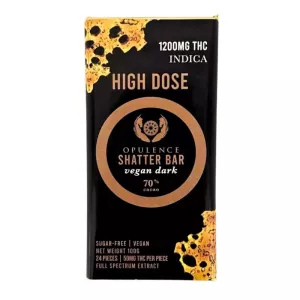
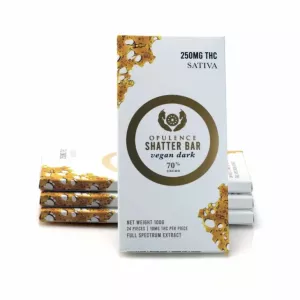
Vegan Dark Chocolate Sativa Shatter Bar 500mg / 24pcs – Opulence
Concentrated energy, ethically made. Opulence's 500mg Vegan Dark Sativa Shatter bar packs about 21mg of pure sativa per square across 24 sugar-free pieces — sharp focus, creative drive, and sustained energy with zero glycemic impact. Plant-based doesn't mean gentle here. The high-potency daytime bar for experienced, conscious users.
- Potent Stimulation : 21mg sativa per piece
- Sustained Energy : No sugar crash
- Enhanced Focus : Shatter preserves clarity
- Creative Power : Higher dose inspiration
- Vegan Strength : Plant-based doesn't mean weak
Storing Vegan Chocolate Edibles Properly
Proper storage protects both flavor and potency, and chocolate is fussier than it looks. The enemies are heat, light, humidity, and strong odors. Chocolate readily absorbs surrounding smells, and cannabinoids degrade with prolonged light and heat exposure. A cool, dark, dry place—ideally a sealed container in a pantry around 60 to 68°F—keeps a bar at its best for months.
Refrigeration is a common instinct but a flawed one. Cold storage invites condensation and can cause sugar bloom, that grainy white surface, while also dulling flavor and risking odor absorption from other foods. If your climate is genuinely hot, an airtight container in the fridge is a reasonable compromise—just let the bar return to room temperature before unwrapping to avoid moisture forming on the surface.
Maximizing potency over time: Cannabinoids are reasonably stable but not immortal. THC slowly converts to CBN with age and exposure, gradually shifting effects toward the sedative end. To preserve a bar's intended profile, keep it sealed, shaded, and cool, and consume within the maker's recommended window. Treated well, a quality vegan chocolate edible holds its character far longer than most people expect.
Vegan chocolate has earned its place at the center of the modern cannabis edibles conversation, and it is easy to see why. It marries an ethical, allergen-friendly, antioxidant-rich confection with one of the most efficient cannabinoid carriers nature offers. From understanding the dairy-free formulation and the science of fat-soluble infusion to dosing responsibly and storing your bars correctly, a little knowledge transforms a simple treat into a reliable, enjoyable experience. Whether you buy lab-tested bars or craft your own, vegan chocolate proves that going dairy-free is not a sacrifice—it is often an upgrade in flavor, consistency, and conscience.