What are the best THC edibles for anxiety?
Discover the best THC edibles for anxiety relief.
If you have ever wondered what the best THC edibles for anxiety actually are, you are not alone. As cannabis becomes a mainstream wellness tool, more people are reaching for gummies, chocolates, and other infused treats hoping to take the edge off a stressful day. The truth is more nuanced than a simple product recommendation, because the relationship between THC and anxiety is dose-dependent, individual, and shaped by the other compounds in the formula. This guide unpacks the science, the formats, and the practical strategies that separate a calming experience from an uncomfortable one.
Cannabis is not a one-size-fits-all remedy, and anxiety is one of the conditions where that lesson hits hardest. The same molecule that soothes one person at a small dose can trigger racing thoughts in another at a larger one. Understanding why that happens is the first step toward choosing an edible that genuinely helps rather than hurts. Let us walk through everything you need to know to make an informed, confident decision.
How THC Edibles Affect Anxiety
The biphasic effect explained: THC has what researchers call a biphasic relationship with anxiety, meaning the direction of its effect flips depending on dose. At low concentrations, THC tends to reduce anxiety and promote a sense of ease. At higher concentrations, that same compound can amplify worry, paranoia, and a racing heart. This single fact is the most important thing to understand before you eat your first edible, because it explains why two people can have opposite reactions to the same gummy.
When you eat a THC edible, the compound travels through your digestive system and liver, where it converts into 11-hydroxy-THC, a metabolite that is more potent and longer-lasting than inhaled THC. This is why edibles feel stronger and last longer than smoking or vaping. The effect builds slowly over thirty to ninety minutes, which is both a benefit and a risk. The slow onset gives you a gentle, gradual experience, but it also tempts impatient users to take a second dose before the first has peaked.
The endocannabinoid system sits at the center of this story. This network of receptors helps regulate mood, stress response, sleep, and appetite. THC binds to CB1 receptors concentrated in the brain regions that govern fear and emotional processing, which is precisely why dose and personal chemistry matter so much for anxiety outcomes.
Best THC Edibles for Anxiety Relief
What makes an edible anxiety-friendly: The best THC edibles for anxiety share a few common traits. They tend to be low in THC per serving, balanced with calming cannabinoids like CBD, and easy to dose precisely. A gummy you can cut in half, a chocolate square scored into small pieces, or a microdose mint all give you the control that an unmarked brownie never will. Precision is the foundation of a calm experience.
Look for products that publish lab-tested cannabinoid content and clearly state milligrams per piece. Reputable edibles built for relaxation often combine THC with CBD and sometimes minor cannabinoids or terpenes chosen for their soothing reputation. Here are the qualities worth prioritizing when you shop:
- 🌿 Balanced ratios: Products blending CBD with THC tend to soften the psychoactive intensity that triggers anxiety.
- 🍬 Low milligram servings: Edibles offering 2.5mg or 5mg per piece let you start gently and build up.
- 🧪 Third-party lab results: Verified potency means no surprises from an unexpectedly strong dose.
- 🌙 Calming terpene profiles: Formulas featuring myrcene or linalool may complement the relaxing effect.
No single brand is universally best, because anxiety responds to the formula and the dose far more than to the marketing on the package. The smartest approach is to evaluate the cannabinoid profile rather than the flavor or the brand story.
Why Low-Dose THC Edibles Work Best for Calm
Microdosing for mood: Low-dose or microdose edibles have become the go-to choice for anxiety because they sit squarely in the calming side of THC's biphasic curve. A microdose typically falls between 1mg and 5mg of THC, an amount large enough to ease tension but small enough to avoid the overwhelming intensity that fuels paranoia. Many people find this gentle threshold delivers relaxation without intoxication.
The appeal of staying low is functional calm. Instead of feeling heavily stoned, microdosers report a subtle softening of stress that lets them stay present, productive, and comfortable. This makes low-dose edibles particularly attractive for daytime use or for newcomers who are nervous about losing control. The goal is to feel like yourself, only calmer.
Starting low also protects against the most common edible mistake: overconsumption. Because edibles take so long to kick in, beginning with a small dose and waiting patiently is the single most reliable way to avoid an anxious experience. You can always take more, but you cannot take less once it is in your system.
Best CBD-to-THC Ratios for Anxiety
How CBD tempers THC: CBD is the unsung hero of anxiety-friendly edibles. This non-intoxicating cannabinoid appears to buffer some of THC's anxiety-provoking effects, smoothing the experience and reducing the likelihood of paranoia. When CBD and THC work together, many users describe a more grounded, manageable calm than THC alone provides. This synergy is a practical reason to seek out balanced products.
Ratios are usually expressed as CBD to THC. A 1:1 ratio offers noticeable relaxation with mild psychoactivity, while higher CBD ratios lean even gentler. Here is a quick reference for matching ratios to goals:
- ⚖️ 1:1 CBD:THC: Balanced relaxation with mild, manageable euphoria, a popular starting point for anxiety.
- 🛡️ 2:1 or 4:1 CBD:THC: Calming and clear-headed, with minimal intoxication for sensitive users.
- 🌼 20:1 CBD:THC: Predominantly CBD with a whisper of THC, ideal for those very sensitive to psychoactivity.
- 🔥 High THC, low CBD: Generally the riskiest choice for anxiety-prone individuals.
The entourage effect, where cannabinoids and terpenes influence one another, helps explain why balanced edibles often outperform pure THC products for stress relief. Combining compounds tends to produce a fuller, more forgiving experience.
Types of THC Edibles for Stress and Worry
Choosing a format that fits your routine: THC edibles come in many forms, and the format you choose affects both dosing precision and how the product fits into your day. Gummies dominate the market because they are easy to portion, consistent in potency, and discreet. Chocolates and baked goods offer indulgence but can be harder to dose accurately when a single piece contains multiple servings.
Beyond the familiar gummy, the edible category has expanded dramatically. Fast-acting nano-emulsified beverages and tinctures blur the line between edible and sublingual, delivering effects in as little as fifteen minutes. For anxiety, faster onset can be a genuine advantage because it reduces the temptation to redose too early.
Consider how each format suits your lifestyle and your dosing comfort:
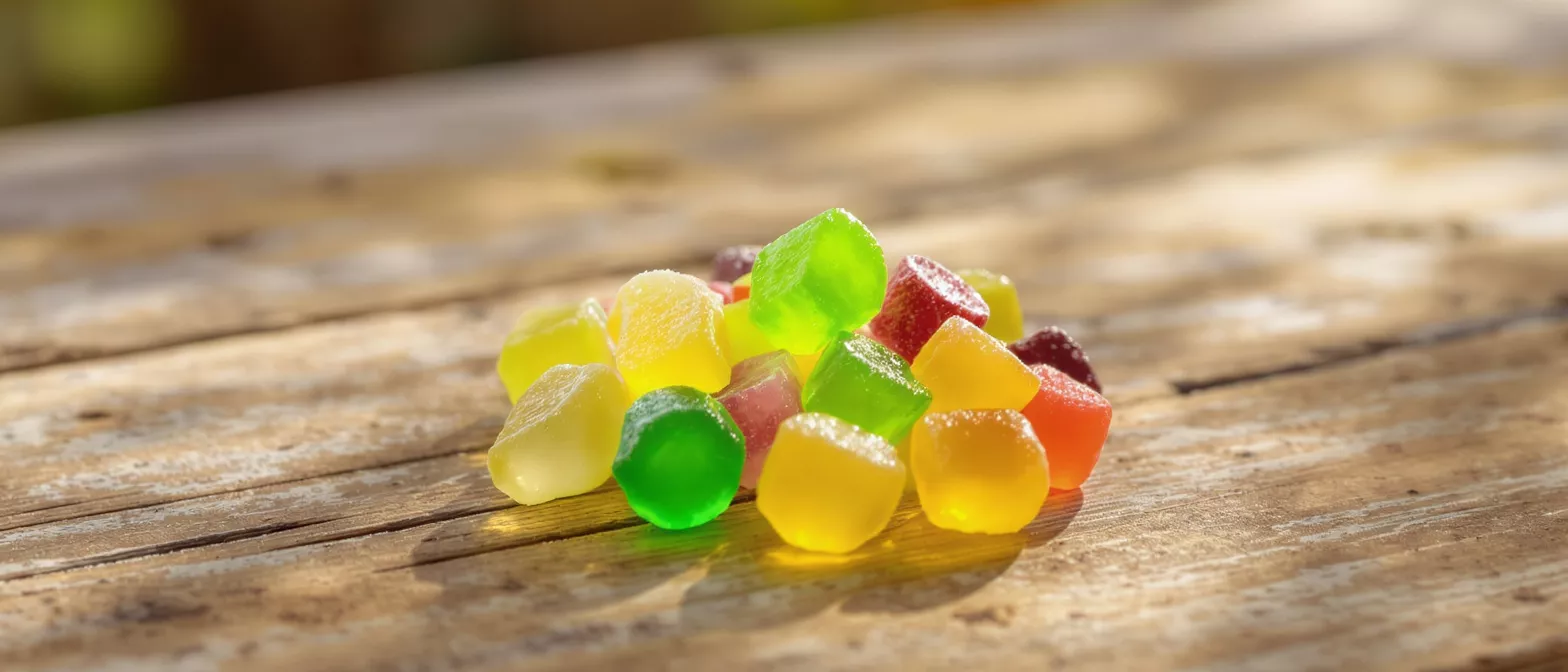
- 🍬 Gummies: Precise, portable, and consistent, the easiest format for controlled low doses.
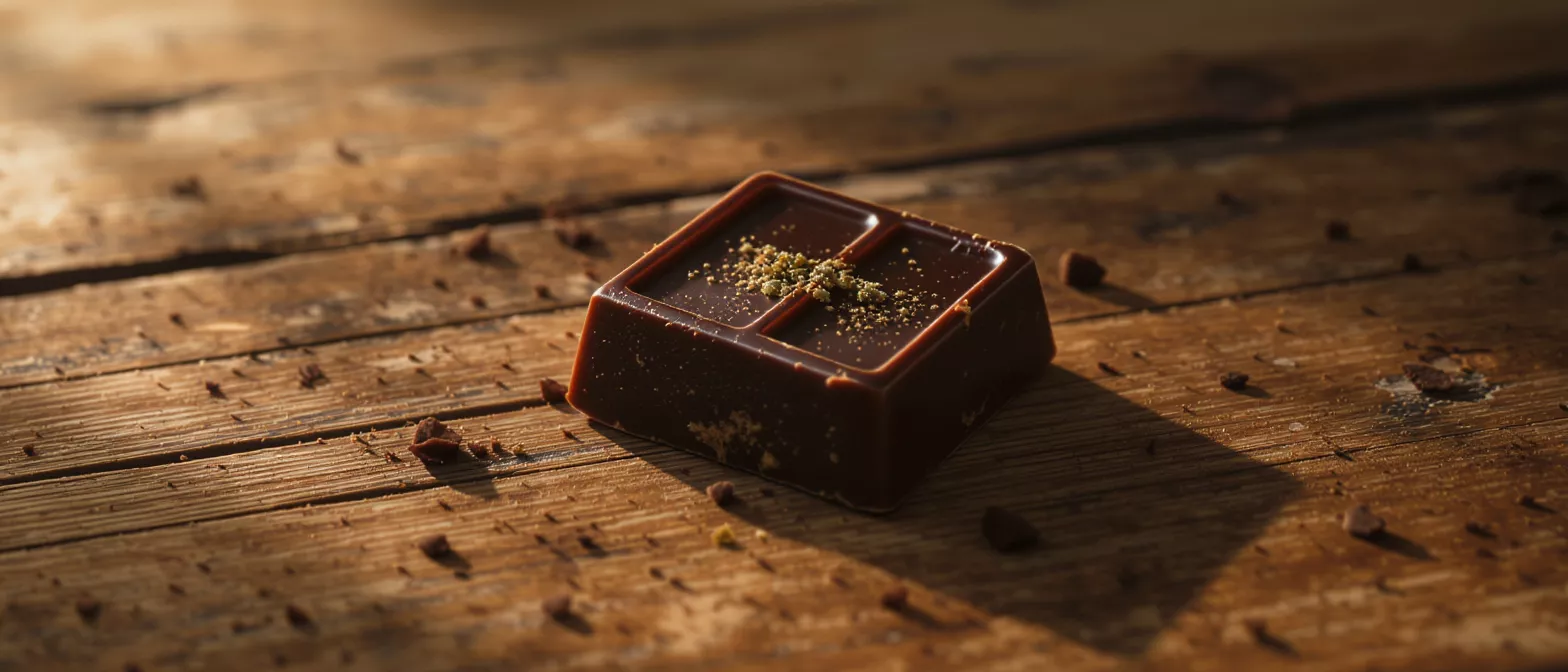
- 🍫 Chocolates: Pleasant and relaxing, but check how many milligrams sit in each scored square.
- 🥤 Infused beverages: Faster onset thanks to nano-emulsion, helpful for impatient dosers.
- 💧 Tinctures: Technically sublingual but flexible, allowing drop-by-drop precision for microdosing.
- 🍯 Mints and lozenges: Discreet and low-dose, well suited to functional daytime calm.
THC Edibles Dosing Guide for Anxiety
Start low and go slow: The golden rule of edibles is even more important when anxiety is in play. For most people new to THC edibles, a starting dose of 2.5mg is sensible, with 5mg being a moderate dose and anything above 10mg considered strong. Anxiety-prone users should anchor themselves firmly at the low end and resist the urge to climb quickly.
Timing matters as much as quantity. After taking your edible, wait a full two hours before considering more. The slow digestive onset means the peak can arrive long after you assume nothing is happening. Eating with a little fat can aid absorption, but it may also slightly delay onset, so plan your timing with patience built in.
Use this general framework as a starting point, adjusting for your own tolerance and body chemistry:
- 🌱 1mg to 2.5mg: Microdose territory, subtle calm with minimal intoxication.
- 🍃 2.5mg to 5mg: Mild relaxation, a comfortable range for many anxiety users.
- 🌿 5mg to 10mg: Moderate effects, better suited to those with established tolerance.
- ⚠️ 10mg and above: Strong, with rising risk of anxiety for sensitive individuals.
Are THC Edibles Safe for Anxiety?
Understanding the risks: For most healthy adults, THC edibles used responsibly carry a low risk of serious harm, but they are not without downsides for anxiety specifically. Taking too much can produce intense, uncomfortable anxiety, racing thoughts, and a pounding heart. These effects, while frightening in the moment, are temporary and not physically dangerous, but they can be deeply unpleasant and may reinforce the very anxiety you were trying to soothe.
Certain people should be especially cautious. Those with a personal or family history of psychosis, individuals on interacting medications, and anyone who is pregnant or breastfeeding should avoid THC edibles or consult a healthcare provider first. If you have an anxiety disorder, it is wise to discuss cannabis use with a professional who knows your full medical picture.
If an edible does push you into an anxious place, remember that the feeling will pass. Find a quiet, comfortable space, hydrate, breathe slowly, and remind yourself that the discomfort is temporary. Some people find that a small amount of CBD helps counter an overwhelming THC experience.
THC Edibles vs Other Cannabis Formats for Anxiety
Edibles versus inhalation: Edibles and inhaled cannabis offer very different experiences, and the right choice depends on what you need. Smoking or vaping delivers near-instant effects that fade within a couple of hours, giving you tight control over timing and dose. Edibles, by contrast, take longer to start and last much longer, which can mean sustained relief but also a harder experience to dial back if you overshoot.
For anxiety, the long duration of edibles is a double-edged sword. A single well-dosed gummy can keep you calm through an entire evening without redosing, which many people prefer. However, the delayed onset demands patience and discipline that inhalation does not, because you cannot feel your way to the right amount in real time.
Sublingual products like tinctures and dissolvable strips occupy a useful middle ground. They begin working faster than traditional edibles while still offering the discreet, smoke-free convenience that makes edibles appealing. For anxiety-focused users seeking precision and a gentle onset, this category is worth exploring alongside conventional gummies.
How to Choose THC Edibles for Anxiety
Reading the label like an expert: Choosing the right THC edibles for anxiety comes down to scrutinizing the label and matching the product to your goals. Always confirm the milligrams per piece, the total milligrams per package, and the CBD-to-THC ratio. A product that buries this information or sells unmarked servings is not built for the careful dosing anxiety demands.
Beyond the cannabinoid numbers, consider the terpene profile if it is listed. Certain terpenes are associated with relaxation, and their presence can shape the overall feel of an edible. Pair this knowledge with your own intentions, whether you want daytime functional calm or deep evening rest, and let those goals guide your selection.
Keep these decision factors front of mind when comparing products:
- 📋 Lab transparency: Verified third-party testing is non-negotiable for predictable dosing.
- ⚖️ CBD presence: A meaningful CBD ratio tends to make edibles more anxiety-friendly.
- 🔢 Low per-piece potency: Smaller servings give you finer control over your experience.
- 🕐 Onset speed: Nano-emulsified or sublingual options reduce the redosing temptation.
Mistakes to Avoid With THC Edibles for Anxiety
The redosing trap: The most common and most consequential mistake is taking a second dose too soon. Because edibles take up to two hours to reach full effect, impatient users often assume the first dose failed and eat more, only to be hit by the combined strength of both servings at once. This single error is responsible for the majority of anxious edible experiences, and it is entirely avoidable with patience.
Other pitfalls include consuming on an empty stomach without knowing how it affects you, mixing edibles with alcohol, and choosing a high-THC product when your goal is calm. Each of these increases the odds of an uncomfortable experience. Setting and mindset also matter, since a stressful environment can amplify anxiety regardless of dose.
Avoid these frequent errors to keep your experience smooth and calming:
- ⏳ Redosing too early: Always wait at least two hours before considering more.
- 🍷 Mixing with alcohol: Combining the two intensifies effects unpredictably.
- 📈 Starting too high: Skip the strong doses until you understand your tolerance.
- 🌪️ Ignoring your environment: A calm, comfortable setting supports a calm experience.
Finding the best THC edibles for anxiety is less about chasing a famous brand and more about understanding the principles that govern a calming experience. Low doses, balanced CBD-to-THC ratios, precise and lab-verified products, and the patience to let an edible work are the pillars of relief. THC's biphasic nature means the right amount soothes while too much aggravates, so respecting that threshold is everything. Approach edibles thoughtfully, start small, choose balanced formulas, and pay attention to how your own body responds, and you will be well equipped to use these products as a genuine tool for calm rather than a source of stress.