Emulsion
Discover how emulsion cannabis transforms oil-water mixing for faster, consistent dosing.
What Is Emulsion Cannabis and Why It Matters
An emulsion cannabis formulation solves one of the oldest problems in the industry: cannabinoids hate water. Compounds like THC and CBD are lipophilic, meaning they dissolve in oil but separate from water like vinegar in a salad dressing. An emulsion is the bridge that forces these two incompatible phases to coexist as a stable, uniform mixture.
At its simplest, an emulsion is a blend of two liquids that normally do not mix — typically oil and water — held together by an emulsifier. In the cannabis world, this technique transforms thick, sticky cannabis oil into a fine dispersion of microscopic droplets suspended evenly throughout a water-based medium. That transformation is what makes infused seltzers, dissolvable powders, and fast-acting tinctures possible.
Why this matters for everyday products: without emulsification, a cannabis beverage would have oil floating on top and a potent slug of cannabinoids in the last sip. Emulsions guarantee that every milliliter delivers a consistent dose, and they dramatically influence how quickly and how completely your body absorbs the active compounds. Understanding emulsions is the key to understanding why modern edibles work so differently from the brownies of decades past.
How Cannabis Emulsions Work in the Body
The magic of an emulsion is mostly about droplet size. When cannabis oil is broken into smaller and smaller droplets, the total surface area exposed to your digestive enzymes increases enormously. More surface area means faster breakdown, faster absorption, and a larger fraction of the dose actually reaching your bloodstream — a property scientists call bioavailability.
The bioavailability problem with raw cannabis oil: swallow a standard oil-based edible and much of the cannabinoid content never makes it past first-pass liver metabolism. Estimates for oral THC bioavailability often land in the single digits to low double digits. By contrast, a well-engineered emulsion can meaningfully improve that figure because the tiny, water-dispersible droplets are absorbed more efficiently through the gut lining.
Onset time and the seltzer effect: emulsions are the reason a cannabis drink can feel like it kicks in within 15 to 30 minutes rather than 90. Smaller droplets begin absorbing in the mouth and stomach lining well before the liver gets involved. This faster, more predictable onset is a major reason emulsion-based edibles have become so popular among consumers who want control over their experience.
Types of Cannabis Emulsions Explained
Not all emulsions are created equal, and the category covers a surprisingly wide spectrum of technologies. The differences come down to droplet size, the emulsifiers used, and how the mixture is processed. These distinctions determine appearance, stability, mouthfeel, and ultimately how fast the product works.
Cannabis emulsions are commonly grouped into a few practical categories that product developers reach for depending on their goals:
- 🌊 Macroemulsions: larger droplets, often cloudy or milky in appearance, simpler to make but more prone to separating over time.
- 💧 Microemulsions: smaller, thermodynamically stable droplets that form more readily and resist separation without intense processing.
- 🔬 Nanoemulsions: the smallest droplets of all, often clear or slightly hazy, engineered for maximum absorption and fast onset.
Choosing the right type for the product: a creamy cannabis coffee creamer might happily use a macroemulsion, while a crystal-clear sparkling water demands a nanoemulsion to stay transparent and shelf-stable. The application drives the engineering, and a skilled formulator matches the emulsion type to both the sensory experience and the desired onset profile.
Nanoemulsion Technology in Cannabis Products
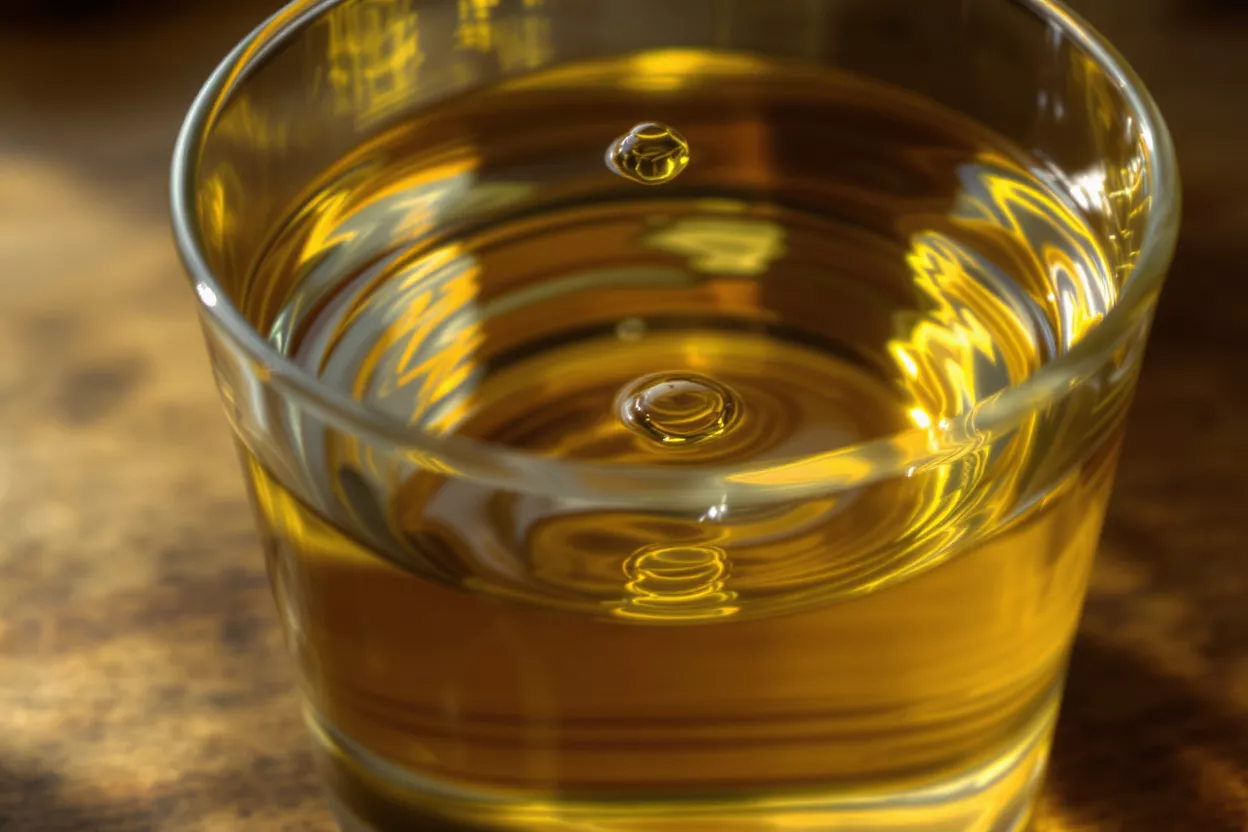
Nanoemulsions represent the cutting edge of cannabis formulation. By reducing oil droplets to the nanometer scale — typically under 100 nanometers — manufacturers create dispersions that behave almost like a true solution. These droplets are so small that light passes through them, which is why many premium cannabis beverages look perfectly clear despite containing oil-soluble cannabinoids.
How nanoemulsions are produced: creating particles this small requires energy. High-pressure homogenization and ultrasonic processing are the workhorses, forcing the oil-water mixture through extreme shear forces that shatter droplets into nanoscale fragments. Some processes use low-energy methods that rely on carefully balanced surfactant chemistry instead, building the structure spontaneously.
The payoff is significant. Nanoemulsified products tend to offer the fastest onset, the most consistent dosing, and the highest effective bioavailability of any oral format. This combination explains why so much research and development money has flowed toward nanoemulsion systems over the past decade.
Microemulsion vs Macroemulsion Systems
The choice between a microemulsion and a macroemulsion shapes nearly everything about the final product. While the names sound like simple size descriptors, the two systems differ fundamentally in how they form and how stable they remain over the life of the product.
Macroemulsions and their trade-offs: these are the easiest emulsions to picture — think milk or vinaigrette. They are thermodynamically unstable, meaning they will eventually separate unless stabilizers hold them in place. They are inexpensive to produce and work beautifully for opaque, creamy products where a cloudy appearance is expected and welcome.
Microemulsions and spontaneous stability: microemulsions occupy a unique scientific niche because they form spontaneously and stay stable indefinitely when the formulation is balanced correctly. They require higher concentrations of surfactants, which can affect taste, but they reward the formulator with remarkable shelf life and clarity. The table below summarizes the practical differences.
- ⚖️ Droplet size: macroemulsions run large and visible to scattered light; microemulsions stay tiny and often translucent.
- 🕒 Stability: macroemulsions separate over time; microemulsions remain stable when correctly balanced.
- 🍶 Best use: macroemulsions suit creamy textures; microemulsions suit clear, long-shelf-life products.
Emulsion Formulation Science and Ingredients
Behind every stable cannabis emulsion is careful ingredient chemistry. The hero of the system is the emulsifier — a molecule with one end that loves oil and one end that loves water. Lecithin, derived from sunflower or soy, is among the most common food-grade choices, alongside engineered surfactants like polysorbates and quillaja saponin.
The role of carrier oils and cannabinoid load: the cannabinoid-rich oil itself must be accounted for in the formula. Formulators balance the ratio of cannabinoids to carrier oil to emulsifier, since too much active material can overwhelm the system and trigger separation. Medium-chain triglyceride oil is a favorite carrier because it disperses readily and carries cannabinoids efficiently.
Beyond the core trio of oil, water, and emulsifier, real-world formulations include co-surfactants, pH buffers, preservatives, and flavor maskers. Cannabis oil carries a naturally bitter, grassy note, so flavor science becomes part of the emulsion challenge. Getting all of these variables to cooperate is what separates a pleasant product from a chalky, separating mess.
Emulsion Stability and Shelf Life
An emulsion is only as good as its stability. A product that looks flawless on bottling day but separates after two weeks on a shelf is a failure, so stability testing is central to cannabis product development. Several distinct failure modes threaten an emulsion over time.
Common ways emulsions break down: creaming occurs when droplets drift upward and concentrate at the top, while sedimentation is the reverse. Coalescence happens when small droplets merge into bigger ones, and Ostwald ripening describes larger droplets growing at the expense of smaller ones. Each of these processes ends in visible separation and uneven dosing.
Formulators fight these tendencies with thickeners that slow droplet movement, optimized surfactant levels that strengthen the droplet interface, and tight control of temperature and pH. Accelerated aging tests — storing samples at elevated temperatures — let developers predict months of shelf life in a matter of weeks, ensuring the product reaching consumers performs as designed.
Benefits of Cannabis Emulsions for Consumers
For the person actually consuming the product, the technical wizardry of emulsions translates into real, tangible advantages. The benefits go well beyond marketing claims and address genuine pain points that have frustrated edible users for years.
Here is what emulsification actually delivers at the consumer level:
- ⚡ Faster onset: nanoemulsified drinks and tinctures can take effect in a fraction of the time of traditional oil-based edibles.
- 🎯 Consistent dosing: uniform droplet distribution means every sip or serving delivers the same amount of cannabinoids.
- 📈 Better absorption: increased bioavailability means more of what you consume reaches your bloodstream rather than being wasted.
- 💦 Water compatibility: emulsions make truly water-soluble formats like seltzers, dissolvable powders, and clear beverages possible.
Predictability as the underrated benefit: perhaps the most valuable advantage is consistency of experience. Faster, more reliable onset lets users titrate their dose with confidence, reducing the classic mistake of taking a second edible before the first has kicked in. That predictability makes emulsion-based products especially welcoming for newcomers and wellness-focused consumers.
Emulsions in Edibles and Beverages
The cannabis beverage boom would not exist without emulsion technology. Infusing a cannabinoid into sparkling water that stays clear, tastes clean, and doses evenly is a pure emulsion challenge, and solving it opened an entirely new product category that competes directly with alcohol.
Beyond drinks — emulsions across the edibles aisle: the same science powers fast-acting gummies, dissolvable powders you stir into any beverage, and even some tincture formats designed to absorb under the tongue. Each format leans on emulsification to deliver a quicker, more uniform effect than older fat-based recipes ever could.
For producers, emulsions also unlock manufacturing flexibility. A single concentrated emulsion can be metered into many different finished products, simplifying inventory and ensuring dose accuracy across an entire product line. This scalability is part of why emulsion-based formats now dominate the fastest-growing corners of the market.
Are Cannabis Emulsions Safe to Consume
Safety is a fair question whenever new processing technology enters the food supply, and cannabis emulsions are generally built from well-understood, food-grade ingredients. Emulsifiers like lecithin and polysorbate have decades of use across the broader food and beverage industry, from ice cream to salad dressing.
What responsible manufacturing looks like: reputable producers test for residual solvents, heavy metals, and microbial contamination, and they verify cannabinoid potency through third-party labs. Because emulsions absorb faster, dose accuracy matters more than ever — a well-made product clearly labels its serving size and total cannabinoid content so consumers can dose responsibly.
Sensible consumption with fast-acting formats: the same rapid onset that makes emulsions appealing also calls for respect. Start low, wait to feel the full effect, and remember that faster does not mean stronger in total — it simply means the timeline is compressed. Used thoughtfully, emulsion-based products are among the most predictable and controllable ways to enjoy cannabinoids.
Cannabis emulsions sit at the intersection of food science and modern cannabis innovation, quietly powering nearly every fast-acting beverage, dissolvable, and next-generation edible on the market. By solving the fundamental incompatibility between cannabinoids and water, emulsification delivers faster onset, more consistent dosing, and meaningfully better absorption. Whether you reach for a sparkling infused water or a quick-acting tincture, understanding the emulsion behind it helps you choose products that match exactly the experience you are looking for.