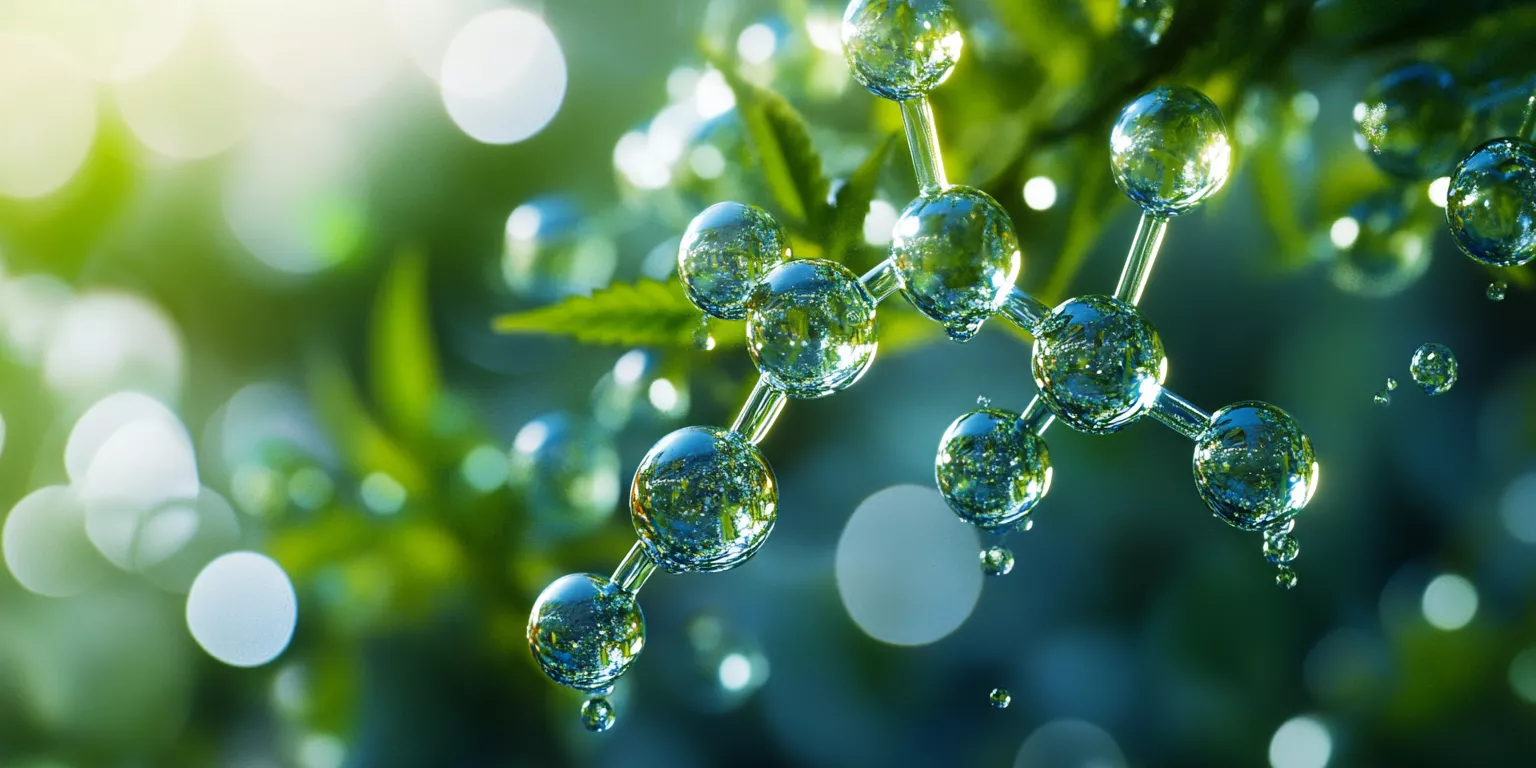
Water-soluble
Discover how water-soluble cannabis boosts bioavailability and speeds onset.
What Is Water-Soluble Cannabis?
Water-soluble cannabis describes cannabinoid formulations engineered to disperse evenly throughout water rather than separating, clumping, or floating to the surface the way raw cannabis oil naturally does. It is one of the most significant formulation advances in modern infused products, and it sits behind nearly every fast-acting beverage, dissolvable powder, and rapid-onset tincture that has reached the market in recent years.
The term can be slightly misleading. Cannabinoids like THC and CBD are not truly dissolving into water at the molecular level the way sugar or salt does. Instead, formulators use clever encapsulation and emulsion chemistry to wrap these oily molecules in carrier structures that water happily accepts. The end result behaves like a water-soluble compound even if the underlying science is more nuanced.
Understanding this technology matters because it directly shapes how quickly you feel effects, how predictable a dose will be, and how a product tastes. For anyone navigating beverages, mixes, and next-generation edibles, water-soluble cannabis is the quiet engineering that makes those formats possible.
How Water-Soluble Cannabis Works
At the heart of water-soluble cannabis is emulsification, the process of breaking cannabis oil into extraordinarily small droplets and coating each one with a surfactant or carrier that is friendly to water. Once these droplets shrink to the nanometer scale, they stay suspended indefinitely, producing a clear or milky liquid that mixes seamlessly into any water-based product.
The role of particle size: The smaller the droplet, the more stable the mixture and the easier it is for your body to absorb. Conventional cannabis oil droplets can be thousands of nanometers wide, while a well-made nanoemulsion drives particles down to roughly 20 to 200 nanometers. At that scale, light passes through the liquid more easily and the droplets resist clumping back together.
The role of emulsifiers: Surfactants such as lecithin, certain plant-derived saponins, or food-grade polysorbates act as molecular mediators. One end of these molecules clings to oil, the other to water, allowing the two to coexist. The choice of emulsifier influences flavor, stability, and how cleanly the product performs in a finished beverage.
Why Cannabinoids Resist Water in the First Place
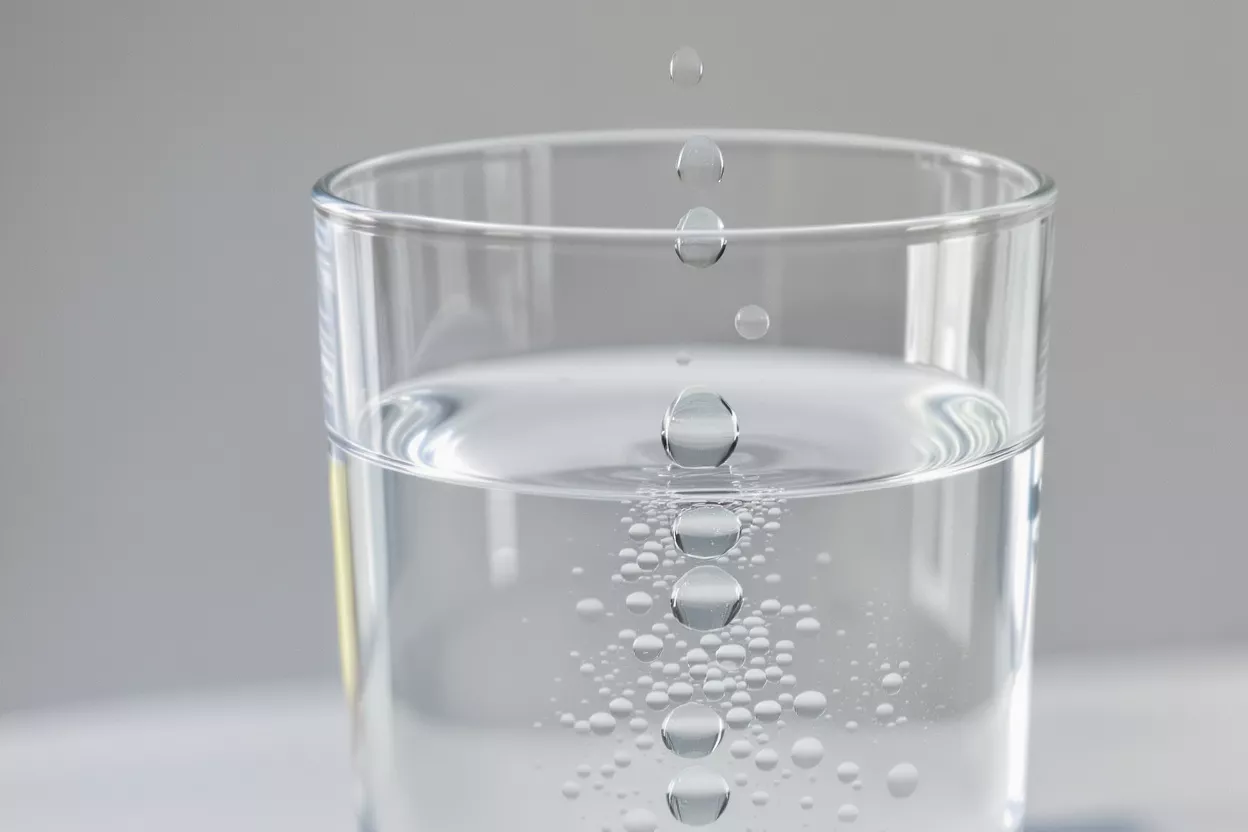
Cannabinoids are lipophilic, meaning they bond readily with fats and oils but reject water almost entirely. This is the same reason a splash of cannabis tincture beads up on top of a glass of juice instead of blending in. The molecules simply have no chemical incentive to mingle with water, so they cluster together to minimize contact.
This natural water-hating behavior creates two practical problems for ordinary cannabis products. First, dosing becomes uneven, because the active compounds drift toward the top or stick to container walls. Second, the human digestive tract, which is largely water-based, struggles to absorb large oil droplets efficiently, so a meaningful portion of an ordinary edible's potency is lost before it ever reaches the bloodstream.
Water-soluble technology is essentially a workaround for chemistry that was never designed for convenience. By disguising oily cannabinoids inside water-friendly shells, formulators sidestep both the dosing inconsistency and much of the absorption loss that plague traditional oil-based formats.
Types of Water-Soluble Cannabis Technology
Not all water-soluble cannabis is made the same way, and the method used has a real impact on stability, taste, and onset. Manufacturers generally choose among a handful of established approaches depending on the final product format and shelf-life requirements.
- 💧 Nanoemulsions: Ultra-fine oil droplets suspended in water using high-energy mixing. The gold standard for beverages and fast-acting tinctures.
- 🧪 Microemulsions: Thermodynamically stable blends that form more spontaneously but often require higher surfactant loads.
- 🌀 Liposomal encapsulation: Cannabinoids wrapped in phospholipid spheres that mimic the body's own cell membranes for smooth absorption.
- ❄️ Spray-dried powders: Liquid emulsions converted into dissolvable powders for dose-on-demand mixes and capsules.
- 🍬 Self-emulsifying systems: Concentrates that automatically form an emulsion the instant they contact water in the stomach.
Each approach trades off cost, complexity, and sensory quality. Nanoemulsions dominate the beverage space because they remain clear and stable, while spray-dried powders shine wherever portability and a long shelf life matter more than instant clarity.
The technology a brand selects is rarely advertised on the label, but it quietly determines whether a drink stays evenly mixed from the first sip to the last and whether the onset feels reliably quick.
Nanoemulsion vs Microemulsion Explained
Nanoemulsions are the workhorses of the water-soluble cannabis world. They require significant mechanical energy to produce, typically through high-pressure homogenizers or ultrasonic equipment that violently shears the oil into tiny droplets. The payoff is a kinetically stable product with excellent clarity and rapid absorption, ideal for canned drinks and clear tinctures.
Microemulsions differ in a subtle but important way. They form almost spontaneously when the right ratio of oil, water, and surfactant comes together, and they are thermodynamically stable, meaning they will not separate over time under normal conditions. The catch is that achieving this stability usually demands a higher concentration of emulsifiers, which can affect taste and mouthfeel.
For the everyday consumer, the practical distinction comes down to experience. Nanoemulsions tend to deliver the cleanest flavor and the quickest onset, while microemulsions offer rock-solid shelf stability. Neither is universally superior; the best choice depends on whether a brand is prioritizing taste, longevity, or manufacturing simplicity.
Water-Soluble Cannabis and Bioavailability
Bioavailability refers to the fraction of an ingested cannabinoid that actually reaches your bloodstream in an active form. With traditional oil-based edibles, this number is notoriously low, often estimated in the single digits to low teens as a percentage, because so much is lost to poor absorption and first-pass metabolism in the liver.
Water-soluble formulations dramatically improve this figure. By shrinking droplet size and presenting cannabinoids in a water-friendly form, more of the active compound is absorbed across the intestinal lining and through the mucous membranes of the mouth. Studies on nanoemulsified cannabinoids have reported absorption gains of several fold compared with unmodified oil.
The practical consequences are meaningful. Higher bioavailability means a smaller milligram dose can produce the same effect, which lowers product cost per experience and reduces the unpredictability that frustrates so many edible users. It also tightens the relationship between the number on the label and what you actually feel.
Best Uses for Water-Soluble Cannabis Products
Water-soluble cannabis truly shines in formats where oil simply will not cooperate. Anything water-based, from sparkling beverages to dissolvable drink mixes, depends on this technology to deliver a consistent, palatable, and fast-acting experience.
- 🥤 Cannabis beverages: Sodas, seltzers, teas, and coffees that need cannabinoids to stay evenly dispersed and clear.
- 💊 Dissolvable powders: Single-serve sachets you stir into water for precise, on-the-go dosing.
- 👅 Fast-acting tinctures: Sublingual drops engineered for quicker onset than traditional oil tinctures.
- 🍯 Functional wellness shots: Concentrated liquids blending cannabinoids with vitamins or adaptogens.
- 🧁 Next-generation edibles: Gummies and chews reformulated for faster, more predictable effects.
The common thread across these products is a desire for control. People reach for water-soluble formats when they want effects to arrive promptly and predictably, rather than waiting an uncertain hour or more for an old-fashioned edible to take hold.
Because these products integrate so cleanly into liquids, they also open the door to social and culinary experiences that were awkward with oily tinctures, from infused mocktails to carefully measured wellness routines.
How Fast Does Water-Soluble Cannabis Work?
One of the most celebrated advantages of water-soluble cannabis is speed of onset. Where a conventional edible might take 60 to 90 minutes to register, well-formulated water-soluble products often begin to take effect within 15 to 30 minutes, and sometimes faster when absorbed partly through the mouth.
Why onset is faster: The tiny droplet size and water-friendly coating allow cannabinoids to be absorbed more readily and to bypass some of the slow processing that bogs down oily edibles. With sublingual products especially, a portion enters the bloodstream directly through the tissues under the tongue, skipping the digestive tract entirely.
This faster, more predictable timeline makes responsible dosing far easier. Because effects arrive sooner, users are less likely to mistakenly take a second dose before the first has kicked in, a common pitfall with slow traditional edibles that frequently leads to uncomfortable over-consumption.
Water-Soluble Cannabis Quality Control
Behind every reliable water-soluble product sits rigorous quality control, because the technology is only as good as its consistency. Manufacturers monitor droplet size distribution, emulsion stability over time, and cannabinoid potency to ensure each batch performs as intended.
Stability testing: Reputable producers store samples under varied temperatures and timeframes to confirm the emulsion will not separate, cloud, or lose potency before its expiration date. An unstable emulsion can drift, leaving uneven doses in a multi-serving container.
Third-party lab analysis: Independent testing verifies cannabinoid content, screens for residual solvents and contaminants, and confirms that the labeled milligrams match reality. For water-soluble products, this also includes checking that the emulsion has not degraded. Always look for a current certificate of analysis before buying.
Quality control is where the gap between a premium water-soluble product and a poorly made one becomes obvious. A well-engineered emulsion stays homogenous and potent; a careless one separates, leaving the first and last servings wildly different in strength.
Are Water-Soluble Cannabis Products Safe?
For most adults, water-soluble cannabis products are considered safe when made by reputable manufacturers using food-grade ingredients and well-established emulsifiers. The surfactants and carriers involved, such as lecithin and food-approved polysorbates, are widely used throughout the broader food and beverage industry.
That said, a few sensible considerations apply. The faster onset that makes these products appealing also means effects can sneak up more quickly, so starting low and going slow remains the wisest approach, particularly for newcomers. Mixing potent water-soluble products into beverages also makes it easy to lose track of total dose, so measuring carefully matters.
As with any cannabis product, the safest path is to buy from licensed, transparent sources that publish lab results, store products as directed, and keep them away from children and pets. When sourced responsibly and used mindfully, water-soluble cannabis offers one of the most precise and predictable experiences available in the modern market. It represents a genuine leap forward, turning the unpredictable nature of traditional edibles into something far more controllable and consumer-friendly.