

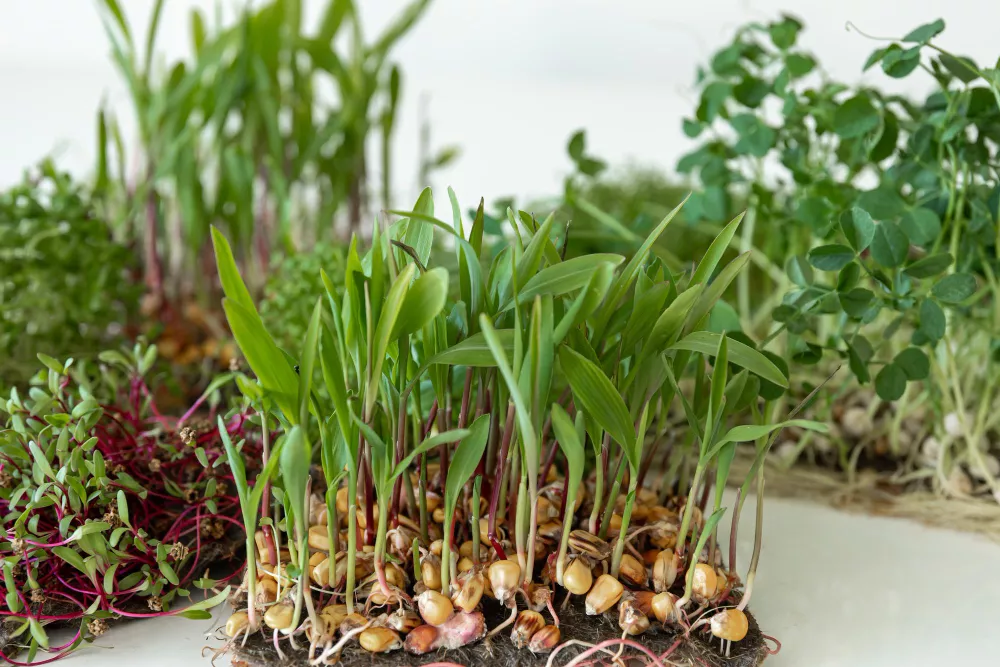
Germination
Learn how germination works for cannabis seeds.
What Is Germination in Cannabis?
Germination is the moment a dormant cannabis seed wakes up and begins its life as a plant. After absorbing water and sensing the right combination of warmth and moisture, the hard outer shell cracks open and a pale embryonic root, called the radicle, pushes outward. This single event marks the official start of the entire growth cycle, and everything that follows depends on getting it right.
The biology behind the sprout is surprisingly elegant. Inside every viable seed sits a tiny, fully formed embryo surrounded by stored energy reserves. Water rehydrates the dormant tissue, enzymes activate, and the embryo begins converting those reserves into the raw material for its first root and leaves. The seed does not need light or nutrients at this stage because everything it requires is already packed inside its shell.
Understanding germination matters because it is the foundation of plant health. A seed that sprouts vigorously tends to produce a robust seedling, while a slow or stressed start can shadow a plant for weeks. Growers who treat germination as a deliberate, controlled step rather than an afterthought consistently see stronger, more uniform crops.
How Cannabis Seed Germination Works
At its core, germination is a chemical wake-up call triggered by water. When a viable seed sits in a moist environment, it imbibes water through tiny pores in its shell. This rehydration swells the internal tissues and switches on dormant enzymes that begin breaking down stored starches and fats into usable sugars and energy.
The role of water, oxygen, and warmth cannot be overstated. Water starts the process, but the embryo also needs oxygen to respire and convert its energy reserves, and it needs warmth to keep enzyme activity moving at a healthy pace. Strip away any one of these three inputs and germination stalls. This is why a seed left in soggy, airless soil often rots rather than sprouts.
Once the radicle emerges, the seedling shifts gears. The root anchors downward seeking moisture and stability while the shoot, called the hypocotyl, pushes upward carrying the seed leaves toward the surface. As soon as those first leaves break into the light, the plant begins photosynthesis and the dependence on stored seed energy fades.
Best Germination Methods for Cannabis Seeds
There is no single correct way to germinate cannabis seeds, and experienced growers tend to favor methods that match their setup and comfort level. Each technique aims to deliver the same trio of moisture, warmth, and oxygen, just through different mechanics.
The paper towel method remains the most popular because it lets you watch progress directly. You place seeds between damp paper towels, keep them in a warm dark space, and check daily until the taproot appears. It offers excellent visibility but demands a gentle hand when transplanting the fragile sprout.
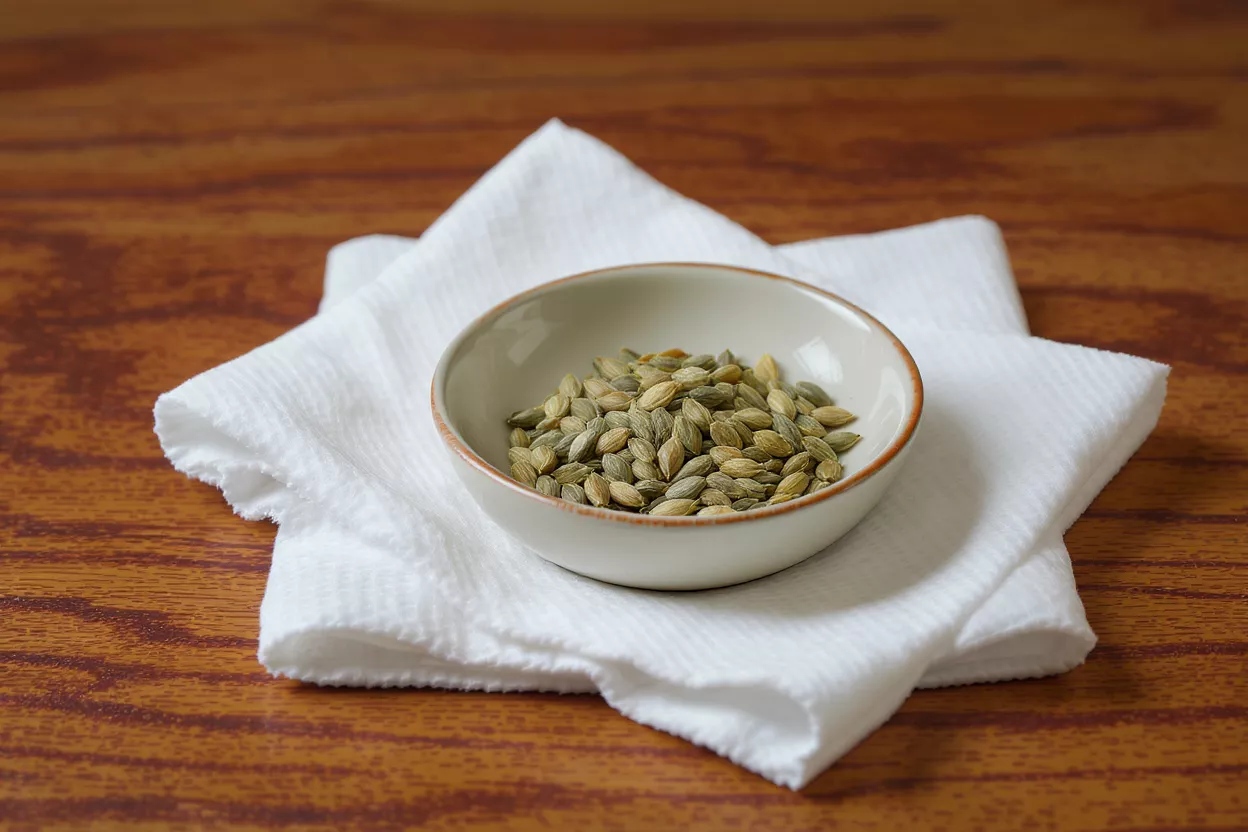
Other approaches trade visibility for simplicity. Planting directly into the growing medium avoids transplant shock entirely, while soaking and starter plugs offer a middle ground. Here is how the common methods compare:
- 💧 Paper towel: High visibility and reliable, but requires careful transplanting of the delicate taproot.
- 🌱 Direct sow: Plant straight into soil or coco; zero transplant shock, but you cannot see what is happening.
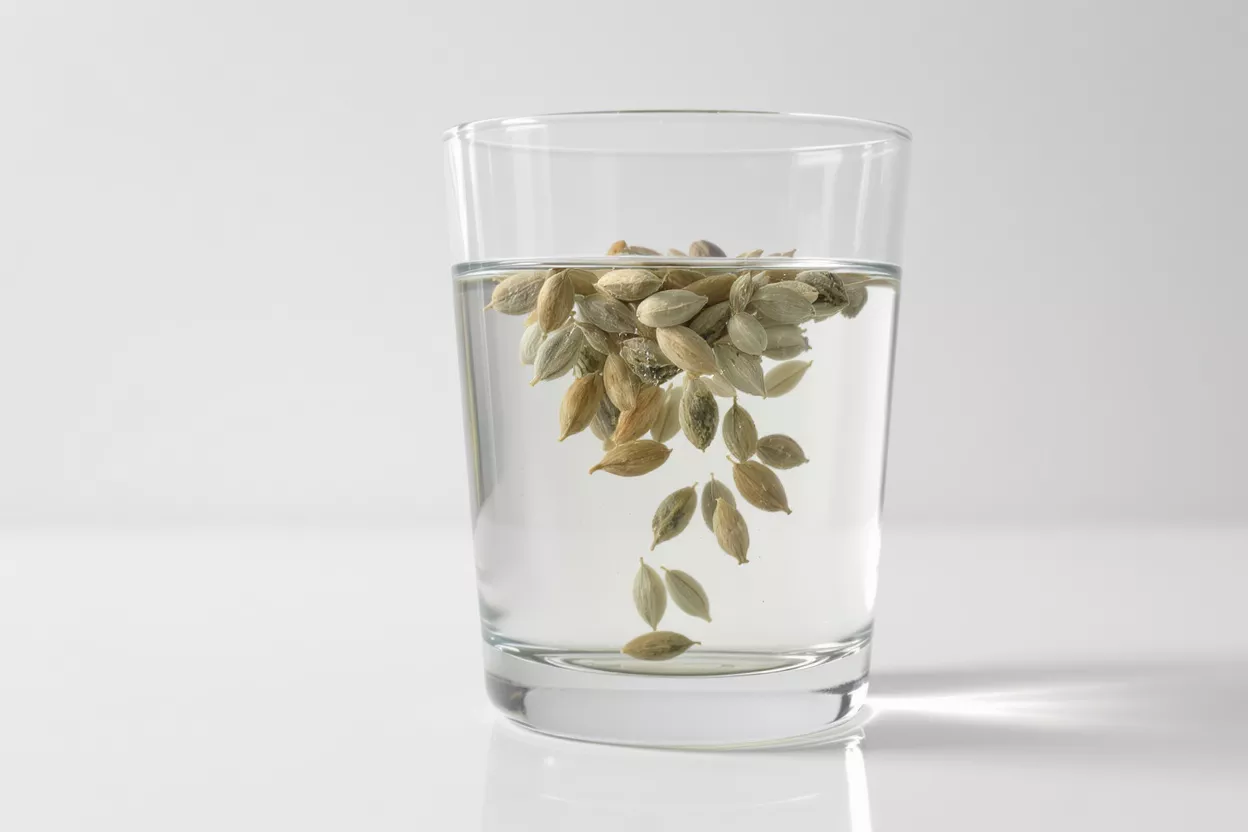
- 🥤 Water soak: Submerge seeds 12 to 24 hours to soften the shell, ideal for older or tougher seeds.
- 🧊 Starter plugs: Rockwool or peat plugs hold moisture evenly and transplant cleanly into any medium.
Ideal Germination Conditions and Environment
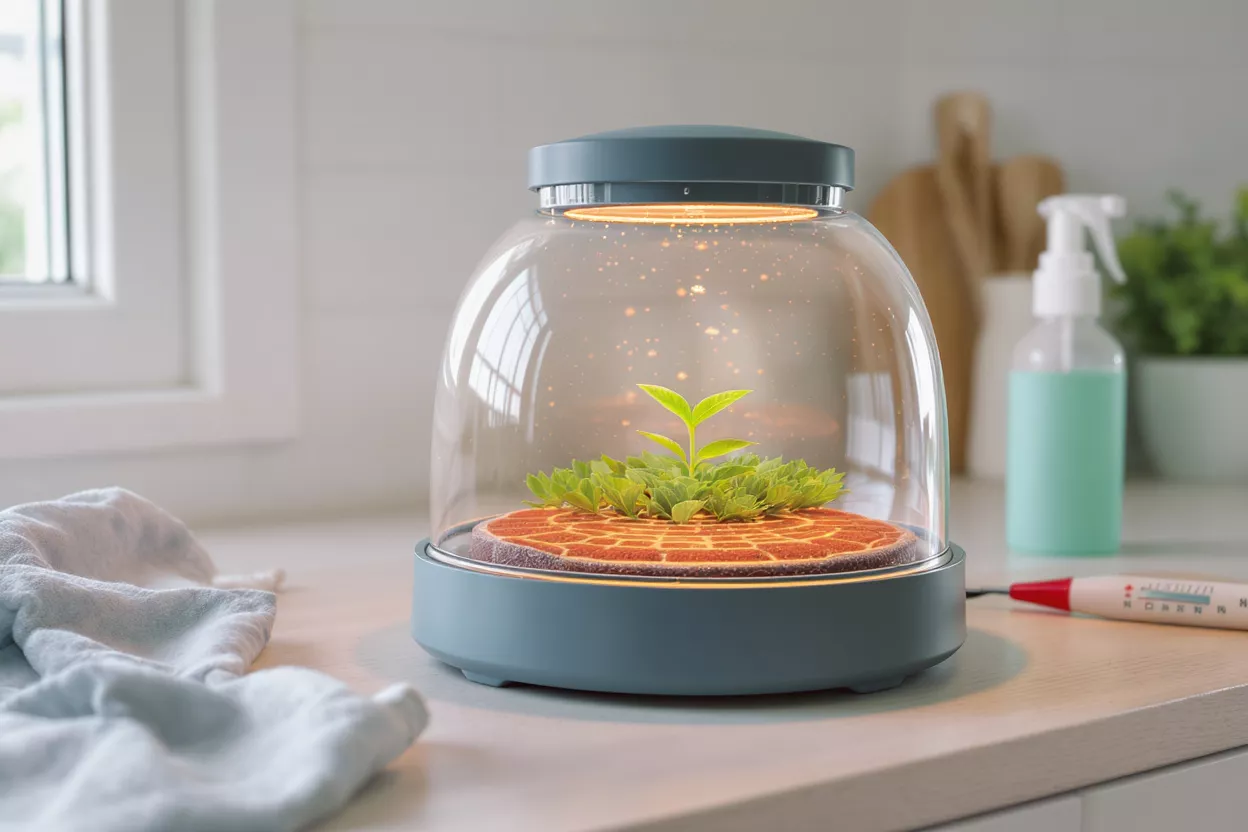
Cannabis seeds germinate best within a fairly narrow window of conditions, and dialing in that environment dramatically improves your success rate. Temperature is the single most influential factor, with most seeds preferring a steady range of 70 to 80°F. Cooler temperatures slow the process to a crawl, while excessive heat can damage the embryo before it ever sprouts.
Humidity and moisture balance form the second pillar. The medium should stay consistently damp but never waterlogged, since standing water displaces the oxygen the seed needs to respire. A useful rule is to keep the surface as wet as a wrung-out sponge, moist to the touch but not dripping.
Darkness rounds out the ideal setup. Cannabis seeds do not require light to germinate and actually prefer dark, undisturbed conditions until the shoot breaks the surface. A warm cupboard, a closed propagator, or a covered tray all work well to maintain stable warmth and humidity while shielding the seed from drying air currents.
How Long Does Cannabis Germination Take?
Most healthy cannabis seeds germinate within 24 to 120 hours, though the full range depends heavily on seed age, genetics, and environment. Fresh, well-stored seeds kept in ideal conditions often crack open in just one to three days, while older or weathered seeds may need a full week or longer to show signs of life.
Why some seeds take longer usually comes down to shell hardness and internal vigor. As seeds age, their shells thicken and their stored energy slowly degrades, which means water penetrates more slowly and the embryo activates with less urgency. A gentle pre-soak or a light scuffing of the shell, known as scarification, can help stubborn seeds along.
Patience is genuinely a virtue here. It is tempting to dig up a seed that has not sprouted after three days, but disturbing it often does more harm than good. Give viable seeds at least seven to ten days under proper conditions before concluding they will not sprout.
Cannabis Germination Step by Step
A repeatable, methodical process takes much of the guesswork out of germination. The following sequence works reliably with the paper towel method and translates easily to other approaches with minor adjustments.
Following a proven sequence keeps you from skipping the small details that make a difference. Work clean, handle seeds gently, and resist the urge to rush. Here is a dependable order of operations:
- 🌡️ Prep the space: Set up a warm, dark spot holding a steady 70 to 80°F.
- 💦 Moisten the towels: Dampen two paper towels until wrung-out-sponge wet, never dripping.
- 🌰 Place the seeds: Space seeds apart, fold the towel over, and slide it into a covered container.
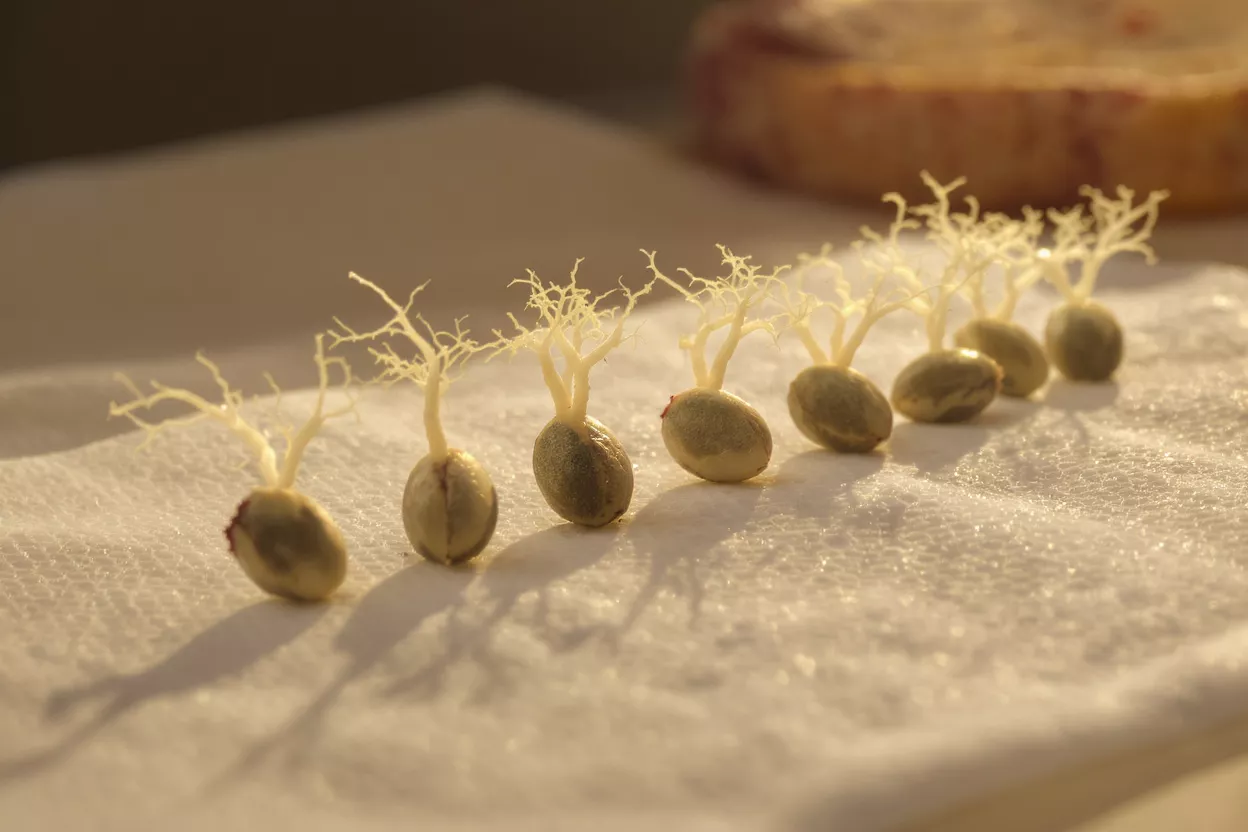
- 🕐 Check daily: Inspect once a day for moisture and the emerging white taproot.
- 🪴 Transplant carefully: Once the taproot reaches a quarter inch, plant it root-down in your medium.
After transplanting, keep the medium warm and lightly moist while the shoot makes its way to the surface. The first set of rounded seed leaves, called cotyledons, will appear before the true serrated cannabis leaves emerge a few days later.
Common Germination Mistakes to Avoid
Most germination failures trace back to a handful of avoidable errors, and recognizing them in advance saves both seeds and frustration. Overwatering tops the list. A drowning seed cannot breathe, and the resulting low-oxygen environment invites rot and damping-off fungus instead of healthy sprouting.
Handling the taproot too roughly is another frequent setback. The emerging radicle is extraordinarily fragile, and touching it directly or crushing it during transplant can kill a seedling outright. Always handle germinating seeds by the shell, and move sprouted seeds with tweezers or by lifting the surrounding paper towel.
Temperature swings and impatience round out the usual suspects. Seeds exposed to cold nights or fluctuating heat germinate unevenly, and growers who dig up slow seeds to check on them often damage the delicate process. Set up stable conditions, then leave the seeds undisturbed.
- 🚱 Overwatering: Soggy mediums suffocate seeds and breed rot; aim for damp, not wet.
- ❄️ Cold temperatures: Anything below 65°F slows or stalls germination dramatically.
- 👆 Touching the taproot: Handle by the shell only; the root tip bruises easily.
- ⏰ Premature digging: Disturbing unsprouted seeds disrupts the process and lowers success.
Testing Seed Viability Before Germination
Not every seed in a batch will sprout, and a quick viability assessment helps you set realistic expectations before committing time and space. A simple visual inspection reveals a great deal. Mature, healthy seeds tend to be dark brown or gray with a hard, slightly mottled shell, while pale green, white, or cracked seeds are often immature and far less likely to germinate.
The float test offers a popular quick check, though it is not infallible. Drop seeds into a glass of water and wait a few hours. Viable seeds with dense internal tissue usually sink, while empty or degraded seeds tend to float. Treat it as a rough guide rather than gospel, since some good seeds float and some duds sink.
Proper storage protects viability long before any test. Seeds kept cool, dark, and dry in an airtight container hold their germination potential for years, while those left in warm, humid, or fluctuating conditions degrade quickly. If you are working from a stored stash, fresh storage habits matter more than any last-minute test.
Seedling Care After Germination
Germination is only the opening act, and the days immediately after a seed sprouts are arguably the most delicate of a plant's entire life. The freshly transplanted seedling needs gentle light, stable warmth, and just enough moisture to keep its root system exploring without drowning the tender tissue.
Lighting the new seedling requires restraint. Young seedlings burn easily under intense light, so a gentle source positioned at a comfortable distance is far better than blasting them with full-power output. As the seedling develops its first true leaves, it begins drawing energy from light rather than the spent seed, and you can gradually increase intensity.
Watering deserves the same light touch. The shallow young root system cannot handle a saturated medium, so water sparingly around the base rather than soaking the whole container. Within a week or two the seedling transitions into the vegetative stage, building the leaves and stems that will eventually support flowering.
Cannabis Germination Questions Answered
A few questions come up again and again, and clear answers help new growers move forward with confidence. One of the most common asks whether seeds need light to germinate. They do not. Seeds prefer darkness until the shoot breaks the surface, at which point light becomes essential for the new seedling.
Whether you can germinate old seeds is another frequent concern. Older seeds can absolutely still sprout, though success rates decline with age. A pre-soak, light scarification, and extra patience all improve the odds of coaxing life from a seed that has been stored for several years.
To pull the essentials together: germination is the water-triggered awakening of a dormant seed, it thrives on a balance of moisture, warmth, and oxygen, and it rewards a steady hand far more than constant fussing. Master this single foundational step, give your seeds a stable dark environment in the 70 to 80°F range, and you set every plant up for a vigorous, healthy life. Treat germination with the care it deserves and the rest of the grow becomes that much easier.
Comments