First-pass Metabolism
Learn how first-pass metabolism transforms THC in edibles.
What Is First-Pass Metabolism in Cannabis?
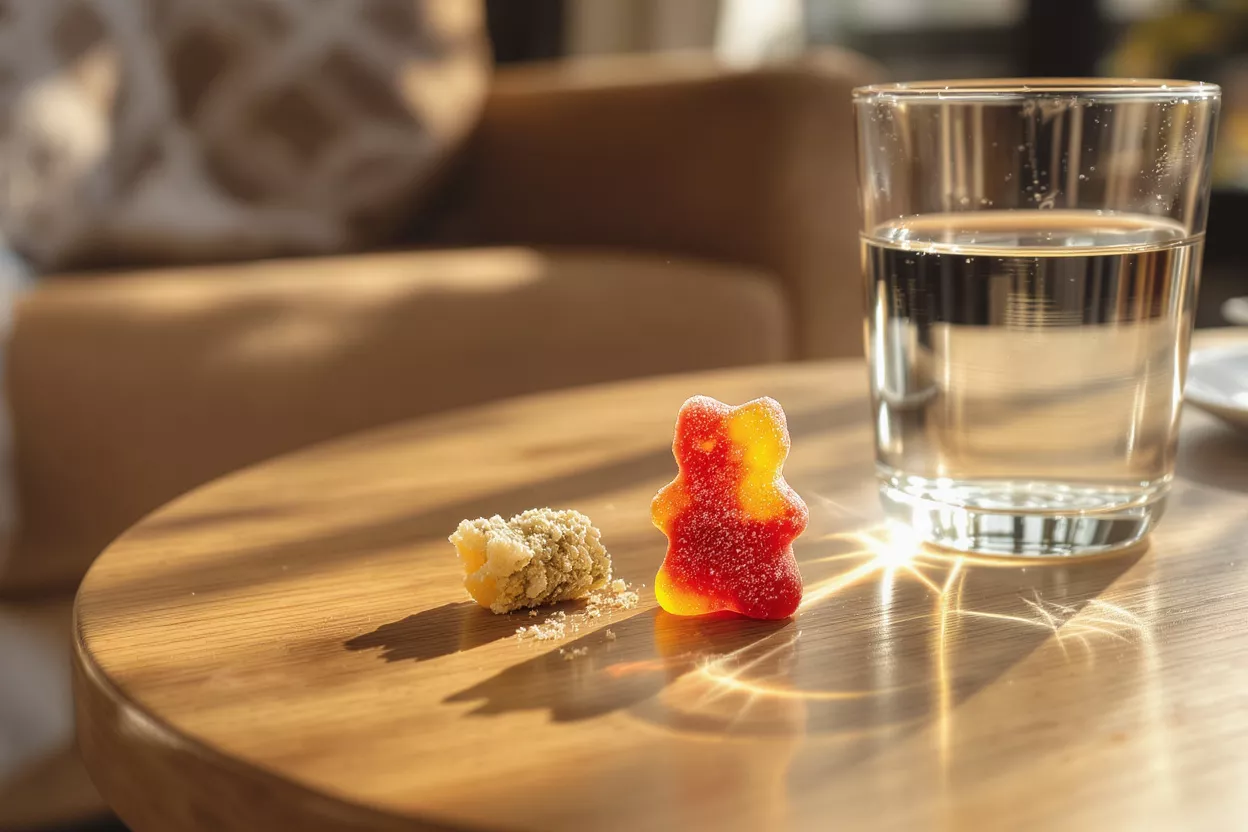
First-pass metabolism is the reason a cannabis edible behaves so differently from a puff off a vaporizer, and understanding it changes how you approach dosing entirely. When you swallow a gummy or a capsule, the cannabinoids inside do not travel straight to your bloodstream and brain. Instead they take a detour through your digestive tract and liver, where a significant portion is chemically transformed before it ever reaches systemic circulation. This processing step is what pharmacologists call the first-pass effect, and for cannabis it produces one of the most fascinating quirks in all of plant medicine.
The concept is not unique to cannabis. Many oral drugs, from blood pressure medications to pain relievers, lose a chunk of their active dose to first-pass metabolism. What makes cannabis special is that the liver does not simply destroy the active compound. It converts THC into a new molecule that is arguably more potent, which is why oral cannabis carries a reputation for delivering a deeper, longer, and occasionally overwhelming experience.
For anyone trying to dose consistently, first-pass metabolism cannabis effects are the missing piece of the puzzle. Once you grasp what is happening inside your liver, the unpredictable nature of edibles starts to make perfect sense, and you gain the knowledge to use them deliberately rather than by accident.
How First-Pass Metabolism Works in the Body
The journey begins the moment a cannabinoid enters your stomach and moves into the small intestine, where it is absorbed into the hepatic portal vein. This vein does not connect directly to the rest of your circulatory system. It routes everything absorbed from the gut straight to the liver first, giving the organ a chance to inspect and modify incoming compounds before they spread throughout the body.
The role of liver enzymes: Inside the liver, a family of enzymes known as cytochrome P450 does the heavy lifting. These enzymes are responsible for breaking down a huge percentage of the substances we ingest, and they treat THC as a prime target. They cleave and rearrange the molecule, kicking off a metabolic cascade that ultimately reshapes the compound into something the body handles differently.
Why so much active compound is lost: Because the entire oral dose must survive this gauntlet, only a fraction of the original cannabinoids make it to the bloodstream intact. This is why swallowing 10 milligrams of THC does not produce the same blood concentration as inhaling 10 milligrams. The liver claims its share first, and the remainder is what your endocannabinoid system actually receives.
THC to 11-Hydroxy-THC: The Conversion Explained
The single most important outcome of first-pass metabolism is the conversion of delta-9-THC into 11-hydroxy-THC. When you inhale cannabis, very little of this metabolite forms because the compound bypasses the digestive route. When you eat cannabis, the liver produces it in abundance, and that shift carries real consequences for how the high feels.
Why 11-hydroxy-THC hits harder: This metabolite crosses the blood-brain barrier more readily than its parent molecule and binds enthusiastically to CB1 receptors in the central nervous system. Many users describe the resulting effect as more bodily, more sedating, and more psychedelic than the cleaner head-focused buzz of inhaled THC.
The conversion also explains why edibles are so easy to overdo. A modest dose of THC can yield a disproportionately large amount of the more potent metabolite, meaning the experience can escalate well beyond what the original number on the package might suggest. Respect for this transformation is the foundation of responsible edible use.
Why Edibles Feel Stronger Than You Expect
Anyone who has eaten one too many gummies knows the feeling of an edible sneaking up and then refusing to let go. First-pass metabolism is the direct cause. The combination of delayed onset and a more potent metabolite creates a perfect storm for accidental overconsumption.
The waiting trap: Because oral cannabis must be digested and processed before effects appear, the onset can take anywhere from thirty minutes to two hours. Impatient users frequently assume the first dose was too weak and take more, only to have both doses arrive at once. The slow build is not a sign of weakness in the product; it is the liver doing its work.
The intensity is also amplified by the metabolite itself. Where inhaled cannabis delivers a relatively predictable peak, oral cannabis delivers a wave that can feel several times stronger milligram for milligram. This is why seasoned smokers are often humbled by their first serious edible experience.
Understanding this dynamic transforms edibles from a gamble into a tool. When you know the effects are coming and that they will be strong, patience becomes your most valuable dosing instrument.
First-Pass Metabolism and Cannabis Bioavailability
Bioavailability refers to the proportion of a dose that reaches systemic circulation in active form. First-pass metabolism is the single biggest factor dragging down the bioavailability of oral cannabis, and the numbers tell a striking story about how route of administration shapes your experience.
Different delivery methods produce wildly different bioavailability ranges, and knowing them helps you choose the right product for the result you want:
- 💨 Inhalation: roughly 25 to 35 percent bioavailability, with effects within minutes because the lungs route cannabinoids almost directly to the bloodstream.
- 🍪 Oral edibles: often as low as 4 to 12 percent due to first-pass metabolism, but partially offset by the potent 11-hydroxy-THC produced.
- 💧 Sublingual tinctures: a middle ground, since some absorption occurs under the tongue before swallowing.
- 🌿 Topicals: negligible systemic bioavailability, acting locally rather than entering general circulation.
These figures explain why a low-bioavailability route can still produce a powerful effect. With cannabis, the quality of the metabolite matters as much as the quantity that survives, which is why edibles punch above their weight despite poor raw absorption.
Delivery Methods That Bypass First-Pass Metabolism
If first-pass metabolism reduces how much active compound reaches your bloodstream, it follows that bypassing the liver can dramatically change both the strength and the character of cannabis effects. Several delivery methods are designed specifically to skip the digestive route.
Sublingual and buccal absorption: Holding a tincture under the tongue allows cannabinoids to absorb through the mucous membranes directly into the bloodstream. This sidesteps the gut and liver for the portion absorbed orally, producing a faster onset and a high that more closely resembles inhalation than a swallowed edible.
Inhalation and transdermal routes: Vaporizing or smoking sends cannabinoids through the lungs into circulation, completely avoiding first-pass processing. Transdermal patches similarly deliver compounds through the skin into the bloodstream at a steady rate, bypassing both the gut and the liver for sustained, even effects.
Choosing a delivery method is therefore as much about controlling first-pass metabolism as it is about preference. If you want fast, predictable effects, you choose routes that skip the liver. If you want a long, deep experience and do not mind the wait, the oral route and its metabolic transformation deliver exactly that.
Factors That Affect First-Pass Metabolism Cannabis Response
No two people process oral cannabis identically, and first-pass metabolism cannabis variability is the reason a dose that barely registers for one person can floor another. A handful of biological and lifestyle factors shape how aggressively your liver transforms cannabinoids.
Genetics and enzyme activity: The cytochrome P450 enzymes responsible for metabolism vary genetically from person to person. Some people are fast metabolizers who break down THC quickly, while others process it slowly, leading to longer and stronger effects from the same dose.
Several everyday variables also tip the balance:
- 🍽️ Food intake: taking an edible with a fatty meal can increase absorption and intensify effects.
- 🧬 Liver health: conditions affecting liver function change how efficiently cannabinoids are metabolized.
- ⏳ Tolerance: regular users may metabolize and respond differently than occasional consumers.
- 💊 Other medications: drugs that compete for the same enzymes can amplify or reduce cannabis effects.
Because of this variability, the only reliable approach is to start low, document your response, and adjust slowly. Your personal metabolic profile is the final word on what a given dose will do.

Onset and Duration Differences by Route
One of the most practical consequences of first-pass metabolism is its effect on timing. The route you choose determines not only how strong the experience feels but how quickly it arrives and how long it lingers.
Oral cannabis is the marathon: Effects from edibles typically begin within thirty minutes to two hours and can last four to eight hours or more. The extended duration comes from the slow release of cannabinoids as they are digested and the sustained presence of 11-hydroxy-THC in circulation.
Inhalation is the sprint: Smoked or vaporized cannabis peaks within minutes and tapers off over one to three hours. The bypass of first-pass metabolism means rapid onset but a shorter overall arc, giving the user far more moment-to-moment control over their dose.
Matching the route to your schedule is a simple but powerful strategy. A long evening at home favors the durable oral experience, while a situation requiring quick adjustment favors inhalation or sublingual delivery.
A Practical Dosing Guide Around First-Pass Metabolism
Dosing oral cannabis well comes down to respecting the liver and the powerful metabolite it produces. The slow onset and amplified strength of edibles demand a more patient and conservative approach than inhaled products.
Start low and wait: A sensible starting dose for someone new to edibles is 2.5 to 5 milligrams of THC. After taking it, wait a full two hours before considering more. This single rule prevents the overwhelming majority of bad edible experiences, all of which stem from underestimating first-pass metabolism.
Keep a record: Because individual response varies so widely, tracking your doses, the product, whether you ate beforehand, and the resulting effects builds a personal map that takes the guesswork out of future sessions. Over time you learn exactly how your body handles the metabolic conversion.
If an experience becomes too intense, remember that it will pass, that CBD may help temper the effects, and that staying calm and hydrated in a comfortable space is the most reliable remedy. Knowledge of the underlying process is itself a powerful tool for staying grounded.
Is First-Pass Metabolism Something to Worry About?
First-pass metabolism is a normal, healthy function of human physiology, not a hazard. Your liver performs this same processing on countless substances every day, and converting THC into 11-hydroxy-THC is simply part of how the body handles cannabinoids taken by mouth. There is nothing inherently dangerous about the process itself.
The practical considerations center on dosing rather than safety. Because the metabolite is more potent and the onset is delayed, the main risk is taking too much before the first dose takes effect. This produces discomfort rather than genuine harm, and it is entirely avoidable with patience and modest starting doses. People with existing liver conditions or those taking medications metabolized by the same enzymes should consult a healthcare provider, since the interplay can shift how cannabis behaves.
In the end, first-pass metabolism is one of the most useful concepts a cannabis consumer can understand. It explains why edibles feel the way they do, why timing and dosing matter so much, and why different products suit different occasions. Far from being a complication, it is the key that unlocks deliberate, confident, and enjoyable use of oral cannabis across every kind of product on the shelf.