


CBD for Anxiety 2026: Onset Time and Duration of Effects Explained
Discover CBD anxiety onset times by delivery method and how long relief lasts.
If you have ever taken a dose of CBD oil and then sat watching the clock, wondering when the calm is supposed to arrive, you are not alone. One of the most common questions people ask before trying CBD for anxiety is simply: how long until I feel something, and how long will it last? The honest answer is that it depends on how you take it, how much you take, and how your own body is wired. This guide breaks down onset time and duration in plain language, grounded in current research, so you can set realistic expectations and build a routine that actually works for you in 2026.
Anxiety is not a single experience. For some people it is a racing heart before a meeting; for others it is a low hum of worry that never quite switches off. CBD, short for cannabidiol, is a non-intoxicating compound from the cannabis plant that has attracted serious scientific interest for its potential to take the edge off both. Unlike THC, it will not get you high, which is part of why so many people are curious about it as a daytime-friendly option. Let's get into the specifics of what to expect and when.
How Long Does CBD Take to Work for Anxiety?
Onset depends almost entirely on delivery method. When people ask how long CBD takes to work for anxiety, they often expect a single number. In reality, an inhaled dose can register within minutes, while a capsule swallowed on a full stomach may take well over an hour. The route your CBD takes to reach your bloodstream is the single biggest factor in how quickly you notice anything.
For acute, in-the-moment anxiety, faster onset matters more. A sublingual oil held under the tongue typically begins working in fifteen to forty-five minutes because some of the cannabidiol absorbs directly through the tissues in your mouth rather than passing through digestion. Edibles and capsules are slower but tend to deliver a steadier, longer experience, which suits people managing a more constant baseline of worry rather than sudden spikes.
Cumulative effects are a separate question from acute onset. Some of the most encouraging research on CBD and anxiety involves daily use over several weeks, where the benefit builds gradually rather than arriving in a single dramatic session. According to Prevention, consistency tends to matter more than chasing an immediate effect, so patience during the first month is worth practising.
Does CBD Help Anxiety? What the Research Shows
The question of whether CBD genuinely helps anxiety has moved beyond anecdote into a growing body of clinical work. Studies on social anxiety, generalised worry, and stress-related sleep disruption have produced promising results, though researchers are careful to note that doses, formulations, and study designs vary widely. The general direction of the evidence is encouraging, but it is not a guaranteed fix for everyone.
One frequently cited trial gave participants CBD before a simulated public speaking task and found measurable reductions in anxiety, discomfort, and cognitive impairment compared with a placebo. Other work has explored CBD for anxiety and depression together, since the two so often travel as a pair. The mechanisms appear to overlap, which is part of why a single compound shows up in conversations about both conditions.
What the research does not yet say is just as important. Large, long-term human trials remain limited, and most products on the shelf have not been individually tested in a lab against a placebo. That gap does not mean CBD is ineffective; it means you should treat your own experience as the real data, start low, track how you feel, and adjust deliberately rather than expecting a clinical miracle out of the bottle.
How CBD and Anxiety Interact in the Body
The endocannabinoid system is the key player. Your body produces its own cannabis-like molecules that help regulate mood, stress, sleep, and appetite through a network called the endocannabinoid system. CBD interacts with this system indirectly, influencing how your natural endocannabinoids are used rather than flooding receptors the way THC does. This subtler action is part of why CBD feels balancing rather than intoxicating.
CBD also touches serotonin signalling, the same broad pathway targeted by many conventional anti-anxiety medications. By interacting with a particular serotonin receptor, cannabidiol may help dial down the body's stress response. Compounds sometimes paired with CBD, such as Theanine from green tea, work on overlapping calm-without-sedation territory, which is why you will occasionally see them combined in wellness products.
Terpenes, the aromatic compounds that give cannabis its scent, may shape the experience too. Terpinolene, for example, is often associated with a relaxed, uplifting character, and terpinolene effects are part of the wider "entourage" idea that whole-plant extracts may outperform isolated cannabidiol. A quality full-spectrum CBD oil aims to preserve these supporting compounds rather than stripping them away.
CBD Onset Time by Delivery Method
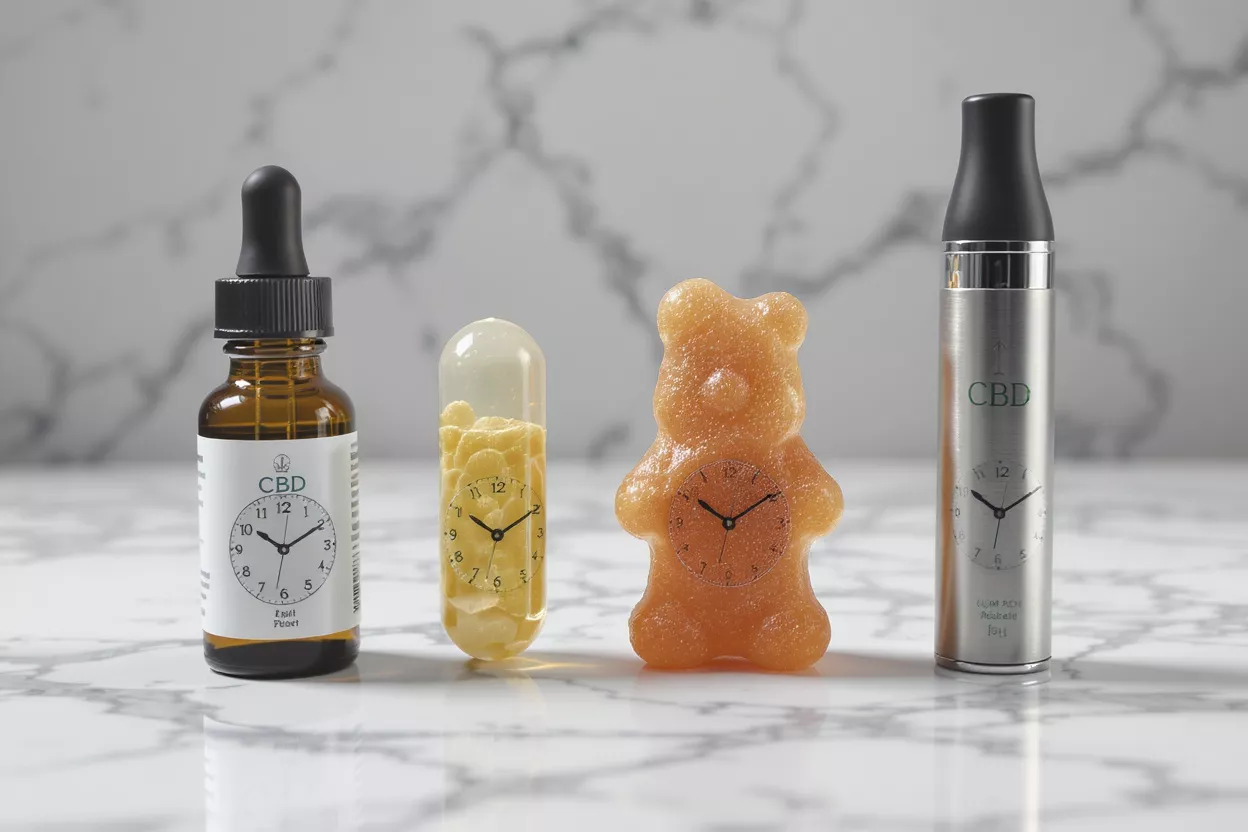
Because onset is so method-dependent, it helps to see the common formats side by side. The way you consume CBD changes not only how fast it works but how much of the dose your body actually absorbs, a quality known as bioavailability. Inhaled and sublingual routes reach the bloodstream more directly, while anything swallowed must survive digestion first.
- 💨 Inhalation (a thc vape pen-style device for CBD): onset in 1–5 minutes, ideal for sudden anxiety spikes, but the shortest duration.
- 💧 Sublingual oil and tinctures: onset in 15–45 minutes, a practical middle ground balancing speed and longevity.
- 🍬 Edibles, capsules, and gummies: onset in 45–120 minutes, slowest to arrive but longest-lasting and easiest to dose.
- 🍵 Beverages such as a thc tea or CBD-infused drink: variable onset, often quicker than solid edibles on an empty stomach.
- 🧴 Topicals and a thc lipstick or balm: localised effect only, not designed for systemic anxiety relief.
Empty stomach versus full stomach changes everything for edibles. Fatty foods can boost CBD absorption but also delay onset, so a capsule taken after a large meal may surprise you an hour later than expected. If predictability matters, keep your timing and food intake consistent from day to day.
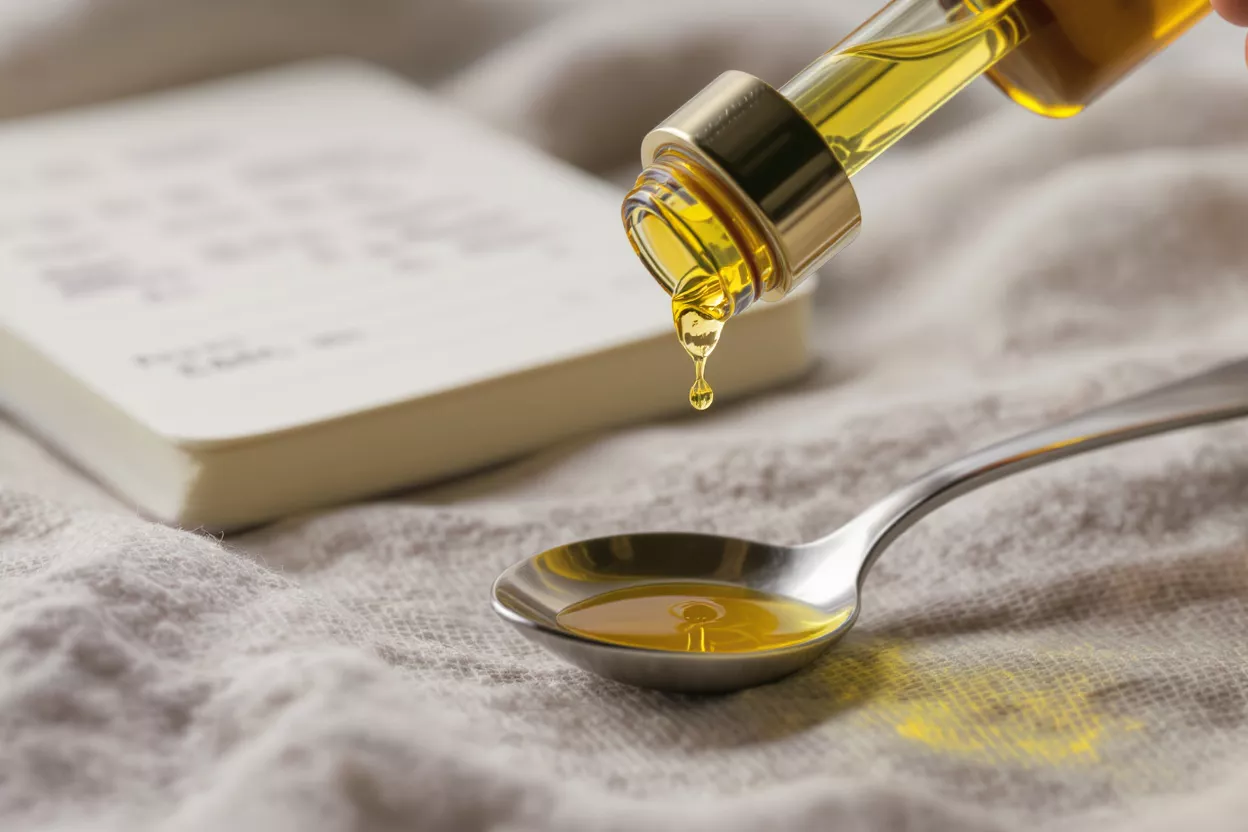
For those who dislike swallowing anything, sublingual products remain the most popular entry point. A measured dropper of oil under the tongue gives you control the way a pre-made edible cannot, letting you nudge your dose up or down by small increments until you find your sweet spot.
How Long Do the Effects of CBD Last?
Once CBD takes hold, the next question is how long the calm sticks around. As a general rule, effects last somewhere between four and six hours, but this window stretches or shrinks based on dose, delivery method, and your individual metabolism. A larger oral dose generally lasts longer than a small inhaled one, simply because it releases into your system more gradually.
Half-life explains the lingering tail. CBD has a half-life ranging from roughly one hour for inhaled forms up to several hours for oral doses, meaning traces remain active in your body well after the obvious effects fade. This is also why daily users often report a smoother, more even experience over time, as a gentle background level accumulates rather than spiking and crashing.
Inhaled CBD offers the shortest duration, fading within a couple of hours, which makes it well-suited to targeted moments rather than all-day coverage. If you need sustained relief through a long, stressful workday, a slow-release format like a capsule or a long-acting CBD softgel for daytime calm usually serves you better than repeated quick hits.
CBD Oil Dosage for Anxiety: Finding Your Range
Start low and go slow is more than a slogan. There is no universal CBD dosage for anxiety because body weight, metabolism, the severity of your symptoms, and product strength all pull the number in different directions. A sensible starting point for many people is between ten and twenty-five milligrams per day, taken consistently, with small increases every few days only if needed.
Tracking is what turns guesswork into a real routine. Keep a simple log of how much you took, when, what format, and how you felt a few hours later. Over a week or two, patterns emerge that no generic chart can predict for you. This personal record is far more valuable than any one-size-fits-all dosing table you will find online.
Some clinical studies have used much higher doses than the wellness market typically recommends, which can make published figures confusing. The gap exists because trials are isolating a measurable effect under controlled conditions, while everyday use is about finding the lowest effective amount that fits comfortably into your life.
- 📋 Week one: establish a low baseline dose and take it at the same time daily.
- 📈 Week two: increase in small steps only if you notice no benefit.
- 📝 Throughout: log dose, timing, format, and mood to spot your personal pattern.
- ⚖️ Adjust: settle on the lowest amount that delivers reliable relief.
Best CBD for Anxiety and Depression
When people search for the best CBD for anxiety and depression, they are usually really asking which format and formulation will fit their life. The honest answer is that "best" is personal, but a few principles narrow the field. Full-spectrum extracts preserve the supporting cannabinoids and terpenes, broad-spectrum removes THC while keeping much of the rest, and isolate delivers pure cannabidiol alone.
Full-spectrum often edges ahead for mood support. The combined effect of multiple plant compounds working together may produce more rounded relief than isolated CBD, especially where anxiety and low mood overlap. That said, anyone subject to drug testing or sensitive to even trace THC may prefer broad-spectrum or isolate for peace of mind.
Beyond the extract type, formulation quality is decisive. Look for third-party lab results, a clear cannabinoid breakdown, and supporting ingredients that make sense, such as a measured dose of Theanine or a calming herbal blend. For people balancing focus and calm during the day, a thoughtfully built broad-spectrum CBD tincture often hits the mark better than a heavily sedating night-time formula.
Can CBD Cause Anxiety? Side Effects to Know
It sounds paradoxical, but some people do wonder whether CBD can make anxiety worse. For the vast majority, cannabidiol is well tolerated and non-intoxicating, but individual responses vary, and a poorly chosen product can muddy the picture. The good news is that pure CBD itself is not associated with the paranoia or racing thoughts that high-THC products can occasionally trigger.
The most common side effects are mild: drowsiness, dry mouth, changes in appetite, or slight digestive upset, usually at higher doses. These tend to fade as your body adjusts or when you lower the amount. If a product contains more THC than the label suggests, that hidden THC, not the CBD, is the more likely culprit behind any uneasy feeling.
Drug interactions deserve genuine caution. CBD can affect how your liver processes certain medications, including some prescribed for anxiety and depression. If you take any regular medication, particularly anything with a grapefruit warning, speak with a healthcare professional before starting. This single conversation prevents the most serious problems people run into with CBD.
CBD for Anxiety vs Other Natural Options
CBD is far from the only natural tool people reach for when managing anxiety, and it often works best alongside others rather than in isolation. Comparing it honestly with the alternatives helps you decide where it fits in your own toolkit rather than treating it as a stand-alone cure.
Functional mushrooms have surged in popularity for stress and focus, with Lion's Mane frequently mentioned for cognitive support and a sense of steadiness. Amino acids like Theanine, found naturally in tea, promote calm alertness, while adaptogenic herbs aim to buffer the body against stress over time. None of these is a magic bullet, but several stack sensibly with a CBD routine.
Lifestyle foundations still outperform any supplement. Sleep, regular movement, breathing practice, and limiting caffeine do heavy lifting that no capsule can replace. CBD works best as one supportive layer on top of those fundamentals, not as a substitute for them. Think of it as part of a wider strategy rather than the entire plan.
- 🍄 Functional mushrooms: Lion's Mane and similar options support focus and a calmer baseline.
- 🍵 Theanine: promotes relaxed alertness without sedation, pairs naturally with CBD.
- 🌿 Adaptogenic herbs: aim to build resilience to stress with consistent daily use.
- 🧘 Lifestyle basics: sleep, exercise, and breathwork remain the strongest foundation.


Sleep Gummies 60mg CBD : CBN x 30 pcs (1800mg) – NOW+THEN
Bedtime, redefined. NOW+THEN's Sleep gummies pair 30mg of CBD with 30mg of CBN in each of 30 pieces — a balanced, sleep-supporting duo in a delicious, non-habit-forming chew. One before bed to quiet the mind and ease into rest. A full month of sweeter nights, no high required.
- Comprehensive Sleep Support : Dual cannabinoids address all sleep issues
- Natural Drowsiness : CBN promotes genuine sleepiness
- Anxiety Relief : CBD calms mental chatter
- Pattern Building : Consistent use improves sleep cycles
- Gentle Formula : A natural, easygoing option
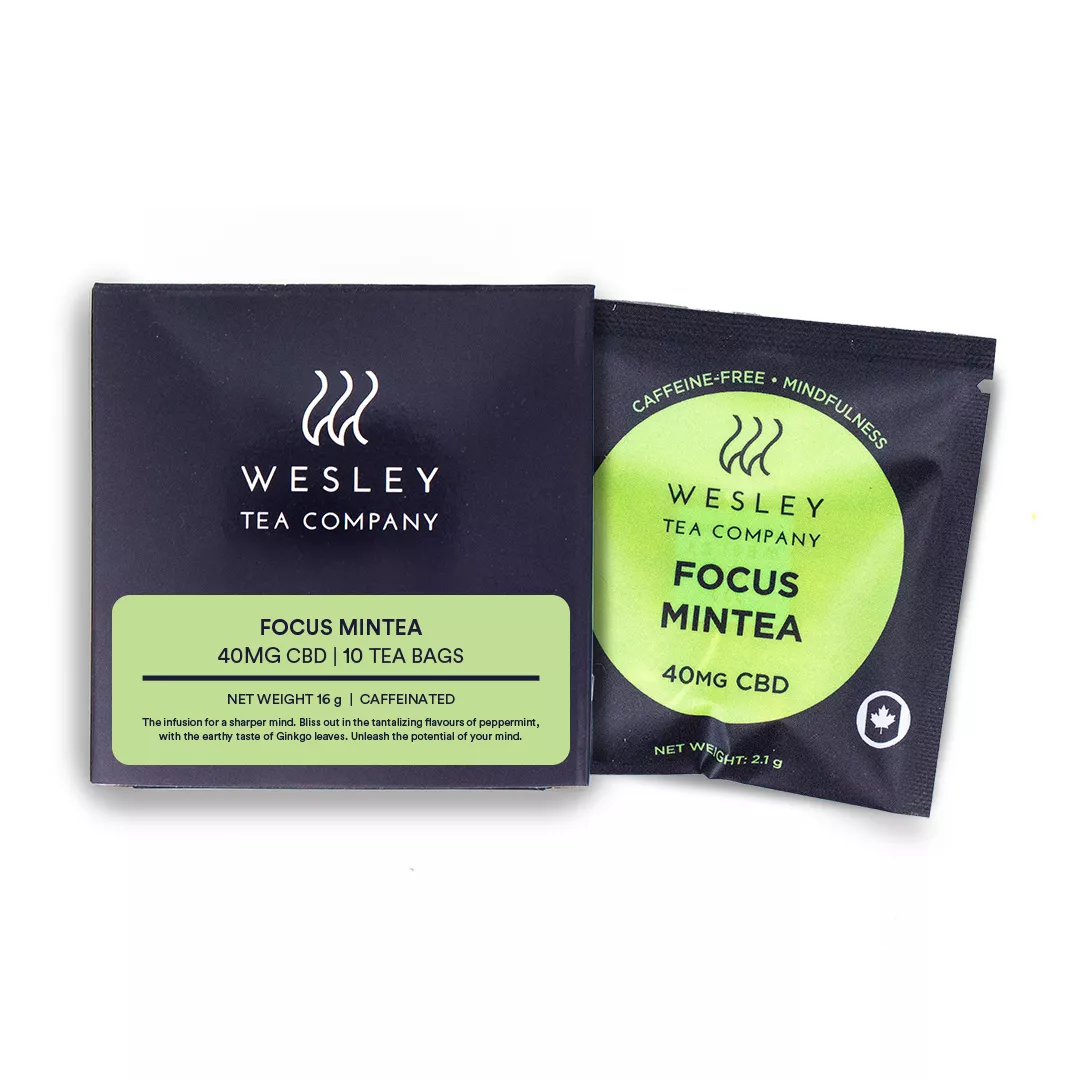
FOCUS CBD Mint Tea 40mg / 1 Tea Bag – Wesley
A calmer kind of tea break. Wesley's FOCUS steeps 40mg of CBD into cooling peppermint, memory-friendly ginkgo, and warming turmeric, so a single bag turns an ordinary cup into a clear-headed reset. Bright, herbal, and naturally caffeine-light, it's made for the mid-afternoon slump or a frazzled morning — wellness you can sip slowly while the day settles back into focus.
- Anxiety Relief: 40mg therapeutic CBD reduces stress hormones and calms racing thoughts
- Mental Clarity: Ginkgo leaves enhance focus, memory, and cognitive performance
- Digestive Comfort: Peppermint soothes stomach tension commonly caused by anxiety
- Anti-Inflammatory Support: Turmeric reduces physical inflammation linked to chronic stress
- Antioxidant Protection: Orange pieces provide vitamin C for immune and mood support

Sleep Gummies 60mg CBD : CBN x 15 pcs (900mg) – NOW+THEN
Sweeter nights, smaller pack. NOW+THEN's Sleep gummies deliver 30mg of CBD and 30mg of CBN per piece across 15 chewables — a scientifically balanced nudge toward deeper rest. One before bed and let the calm settle in. The easygoing, no-high way to turn bedtime into a ritual.
- Natural Sleep Induction : CBN specifically promotes drowsiness
- Anxiety Reduction : CBD calms racing bedtime thoughts
- Deep Sleep Support : Improves sleep quality and duration
- Plant-Based : Made with natural cannabinoids
- Morning Clarity : No grogginess or hangover effects
How to Build a CBD Routine for Lasting Relief
Consistency beats intensity every time. The people who report the most reliable benefit from CBD for anxiety are rarely the ones taking the biggest doses; they are the ones taking a measured amount at the same time each day. Building CBD into an existing habit, such as morning coffee or an evening wind-down, makes it far easier to stick with long enough to judge whether it truly helps.
Match your format to your need. For predictable daytime calm, a sublingual oil or capsule gives steady coverage; for sudden spikes, a faster-acting option provides quick reassurance. Many people end up keeping two formats on hand, using each for the situation it suits best rather than forcing one product to do every job.
Give any new routine a fair trial of at least two to four weeks before judging it, and adjust only one variable at a time so you can tell what is actually working. CBD for anxiety is not an instant switch but a gradual recalibration, and the patience you invest early pays off in a steadier, more dependable sense of calm. Track your progress, stay consistent, and let your own experience guide the fine-tuning.
To sum up: onset ranges from minutes for inhaled forms to over an hour for edibles, effects typically last four to six hours, and the real magic tends to come from consistent daily use rather than any single dramatic dose. Start low, log everything, choose a format that fits your life, and treat CBD as one strong layer within a broader anxiety-management strategy built on solid lifestyle foundations.



Comments