


Cross
Discover what a cannabis cross is and how breeders create hybrid strains.
What Is a Cross in Cannabis Breeding
A cross is the engine behind nearly every cannabis strain you'll find on a dispensary menu. At its simplest, a cross is the intentional pairing of two distinct parent plants so their offspring inherit genetic material from both. Breeders rely on this method to merge the standout qualities of each parent — say, the heavy resin output of one plant alongside the mold resistance of another — into a fresh genetic line. Strip crossing out of the picture and the staggering variety of aromas, flavors, and effects on today's shelves would collapse into a handful of unremarkable options.
The cross-versus-hybrid distinction confuses plenty of newcomers, so it's worth pinning down. A cross is the act of breeding two plants together, while a hybrid is the plant that results from that act. Practically every commercial cultivar is a hybrid descended from one or more crosses, including strains marketed as pure indica or sativa. Only true landrace varieties — original populations isolated by geography — sit outside that rule, and even those grow harder to find in untouched form each year.
The language of crossing borrows directly from classical plant genetics, the same discipline that gave us better corn, tomatoes, and roses. Cannabis is just a relative newcomer to that long agricultural lineage. Once you understand what a cross actually is, you gain a sharper lens for decoding strain names, anticipating effects, and recognizing the meticulous work that produces a stable, repeatable harvest inside a licensed facility.
How Does a Cannabis Cross Work
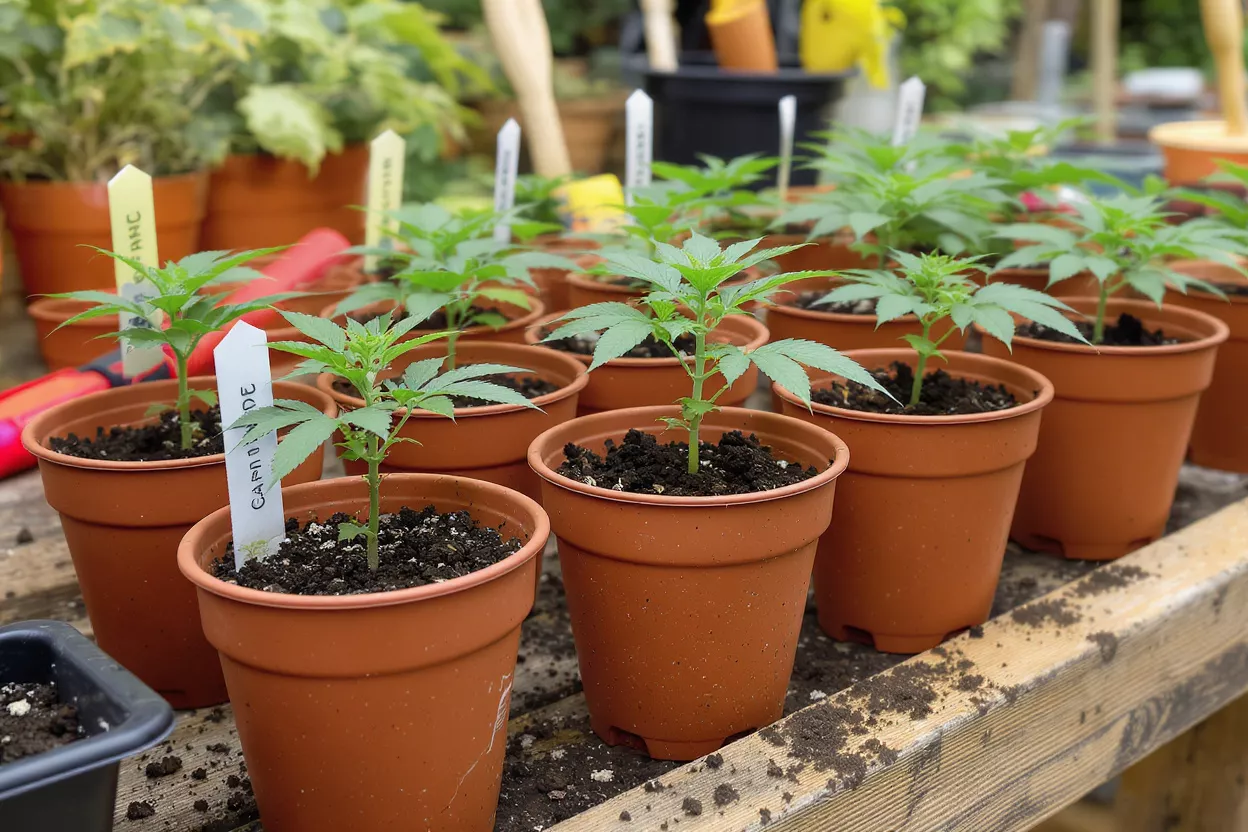
Biologically, a cross begins when pollen from a male plant fertilizes the flower of a female plant. The female responds by producing seeds, and each seed carries its own unique reshuffling of genes drawn from both parents. Because cannabis is dioecious — individual plants are generally either male or female — breeders must tightly control which plants pollinate which, frequently isolating them in separate rooms to head off any accidental fertilization.
Choosing the parent plants is where craft enters the equation. A capable breeder may evaluate dozens or hundreds of candidates, scrutinizing cured-flower quality, terpene profiles, growth structure, and overall resilience. Only the exceptional individuals — the keepers, or "the mother" — earn a slot in the breeding program. Some growers favor a hydroponics setup to keep parent stock pristine and free of soil-borne pathogens through this evaluation window.
After seeds are produced, the breeder germinates and grows them out to study the results firsthand. The chemical makeup of cannabis varies dramatically from one cultivar to the next, which is exactly why this observation phase carries so much weight. The first generation rarely looks uniform — instead it expresses a broad spread of traits that the breeder then sorts, selects, and refines across multiple generations before a dependable cross takes shape.

Types of Cannabis Crosses Explained
Not every cross is built the same way, and the vocabulary can feel dense on a first read. The type of cross a breeder selects hinges entirely on the objective — inventing something genuinely new, reinforcing a single prized trait, or blending two established favorites. Learning these categories makes the genetic background printed on quality seed packs and product labels far easier to interpret.
Here are the most common cross types you'll run into while exploring cannabis genetics:
- 🌱 F1 hybrid cross: The first-generation offspring of two genetically distinct, stable parents, frequently displaying strong hybrid vigor.
- 🔁 Backcross (BX): Breeding a hybrid back to one of its own parents to lock a specific desirable trait firmly in place.
- 🧬 Polyhybrid cross: A pairing of two plants that are themselves already hybrids, producing highly variable offspring.
- 📐 Self-cross (S1): Pollinating a plant with its own reversed pollen to create feminized seeds.
- 🌍 Landrace cross: Combining two pure regional varieties to inject fresh genetics into a breeding line.
Each route carries its own trade-offs in predictability and stability. An F1 cross may deliver striking vigor yet scatter into inconsistent offspring the very next generation, while a carefully executed backcross trades novelty for reliability. Reputable breeders spell out these distinctions plainly, and learning to read terms like BX1 or S1 on a label tells you a great deal about what waits inside the seed pack.
What Traits Does a Cross Pass On
A cross can transmit a remarkable range of characteristics, and many of them stay hidden until the plant matures. The traits breeders pursue fall into three broad buckets: chemical, structural, and agricultural. Each parent contributes alleles that may express dominantly, recessively, or somewhere between, which explains why siblings from the same cross can look and smell strikingly different from one another.
Cannabinoid and terpene inheritance usually tops the breeder's wish list. The ratio of THC to CBD, the presence of minor compounds, and the dominant terpenes — such as the earthy, hoppy signature of humulene — are all heritable. A cross built for relaxation might foreground myrcene, while one aimed at an uplifting profile leans on limonene or pinene. For shoppers chasing a specific experience, a well-bred indica THC gummy often reflects exactly this kind of intentional terpene pairing.

Structural and agricultural traits matter just as much to growers, even when they're invisible in the finished product. Plant height, internodal spacing, flowering time, mold resistance, and yield are all shaped by the cross. A breeder working toward a compact, fast-flowering plant selects parents with that goal in mind, and root-system efficiency can even influence how readily a plant takes up nutrients across different growing media. Genetics, in other words, dictate far more than what ends up in the jar.
How Breeders Stabilize a Cross
Making a cross is the straightforward part; stabilizing it is where genuine breeding skill reveals itself. A stable cross yields offspring that reliably express the same traits generation after generation. Without stabilization, a strain devolves into a genetic lottery — some plants spectacular, others forgettable — an outcome that's unacceptable for commercial cultivation or any consistent consumer experience.
Phenotype hunting is the painstaking work of growing out large populations and keeping only the individuals that match the breeder's vision. Consistency is a recurring concern for patients using cannabis medicinally, and stabilization is precisely how breeders answer that demand at the genetic root. This selection cycle may repeat across five, six, or even more generations before the line finally breeds true.
Stabilization leans on several techniques: inbreeding to fix traits, disciplined record-keeping, and rigorous testing. Many breeders maintain detailed logs covering everything from germination rates to final potency. The aim is a cross stable enough that when a grower plants those seeds, the resulting plants perform as advertised — a form of quality assurance that ultimately protects both cultivators and the people who consume the harvest.
F1 Hybrids and Backcrossing Basics
The terms F1 and backcross surface constantly in breeding conversations, and getting comfortable with them unlocks a deeper read on any cross. An F1 hybrid is simply the first filial generation — the direct children of two stable, unrelated parents. These plants often show hybrid vigor, a phenomenon in which offspring outperform both parents in growth rate, yield, or resilience.
Why F1 vigor fades in later generations catches many new growers off guard. Breed two F1 plants together and the resulting F2 generation scatters genetically, throwing off a wide, unpredictable range of phenotypes. That reshuffling of recessive and dominant genes is entirely natural, and it's the exact moment where serious selection work either begins in earnest or quietly falls apart.
Backcrossing supplies a solution when a breeder wants to preserve one specific trait. By crossing an offspring back to one of its original parents, the breeder boosts that parent's genetic contribution and locks the desired characteristic into place. BX1 marks one backcross, BX2 marks two, and so on — each pass concentrating the target genetics further. Consumers who value predictable potency often gravitate toward products grown from well-backcrossed lines, including options like a high-dose indica shatter bar.
Why a Cross Shapes Cannabis Effects
The effects you feel from any cannabis product trace straight back to a cross somewhere in its lineage. The interplay of cannabinoids and terpenes — commonly called the entourage effect — is shaped by which parents a breeder chose and which traits they prioritized. A thoughtfully constructed cross can mark the line between a couch-locking evening strain and a clear-headed daytime variety.
Consider how a cross balances opposing qualities. Breeders routinely pair a high-yielding but mellow plant with a pungent, potent one to land on a middle ground that pleases growers and consumers alike. The resulting chemovar might offer moderate potency wrapped in rich flavor — a profile neither parent could deliver on its own.
Reading effects from genetics remains an inexact science, yet lineage offers real, usable clues. A strain crossed from two relaxing indica-leaning parents will probably skew sedative, while sativa-heavy crosses tend toward energizing effects. Even so, growing conditions, harvest timing, and curing all bend the final experience, so genetics set the stage rather than script the entire performance. Some consumers explore products like a CBD CBN sleep chocolate bar to taste how a specific cross translates into a finished edible.
Famous Cannabis Crosses and Genetics
Some crosses prove so influential that their genetics ripple through hundreds of descendant strains. These legendary pairings form the backbone of modern cannabis, and recognizing them lets you trace the family tree behind your favorite cultivar. Many household-name strains are, in fact, polyhybrids assembled from layer upon layer of earlier crosses.
Here are a few foundational crosses and the legacy each one left behind:
- 🔥 OG Kush lineage: A cornerstone cross whose genetics surface in countless West Coast hybrids prized for potency and fuel-like aroma.
- 💜 Granddaddy Purple: A cross celebrated for deep purple coloration and the grape-forward terpenes inherited from its parents.
- 🍪 Cookies family: Built on an OG cross, this line spread sweet, dessert-like flavor profiles across the entire market.
- 🌫️ Haze crosses: Sativa-dominant lineages responsible for the soaring, cerebral effects in many daytime strains.
- 🧀 Cheese phenotypes: A famously stable cross known for its unmistakable savory, pungent aroma.
None of these crosses achieved fame by accident — each marked a breakthrough in stability, flavor, or potency at the moment of its release. When you spot a product whose name references one of these lineages, you're looking at a genetic inheritance that breeders have refined across decades, often through repeated crosses and careful backcrossing to preserve the original magic.

How to Read a Cross on a Label
Once crossing clicks into place, product labels suddenly turn far more informative. Most quality cannabis products list a lineage, typically written as "Parent A x Parent B," where the "x" literally denotes a cross. The plant named first is often the seed-bearing mother, while the second serves as the pollen donor, though these conventions vary from breeder to breeder.
Decoding the genetic shorthand spares you guesswork at the dispensary. Notations like F1, BX2, or S1 reveal exactly how the seeds were produced and hint at how stable or variable the plants will turn out. A label reading "Strain A x (Strain B x Strain C)" flags a polyhybrid, signaling more complex and potentially more variable genetics than a clean two-parent cross.
Beyond the lineage itself, note whether a producer names the specific phenotype or cut. Two products sharing an identical cross can diverge dramatically depending on which phenotype was selected and propagated forward. Reputable operators working in a licensed facility typically document this detail, handing you the transparency needed to land on a product that matches your preferences batch after batch.
Are Crossed Strains Right for You
For nearly every cannabis consumer, the answer lands at yes — because almost everything on the market today is the product of a cross. The real question isn't whether to choose a crossed strain, but how to use lineage information to find one that fits your goals, whether that's relaxation, focus, flavor exploration, or symptom relief.
Matching a cross to your needs begins with naming what you actually want from the experience. Individuals respond differently to various cannabis chemovars, so a cross that works beautifully for a friend may register entirely differently for you. Treat lineage as a starting hypothesis, then refine it through personal experience and honest note-taking on dose, timing, and effect.
Ultimately, understanding crosses promotes you from a passive shopper to an informed consumer. You'll grasp why a particular strain hits the way it does, anticipate the effects of an unfamiliar cultivar from its parents alone, and appreciate the generations of breeding craft behind every flower. A cross is far more than a name on a jar — it's the genetic story of how that plant came to be, and learning to read it makes every purchase more deliberate and rewarding.





Comments