Narrow-spectrum
Learn what narrow-spectrum cannabis means, how it's made, and why it matters.
What Is Narrow-Spectrum Cannabis
Narrow-spectrum cannabis sits in the strategic middle ground between full-spectrum extracts and single-molecule isolates. It refers to a product that retains a deliberately curated selection of compounds from the cannabis plant — typically several cannabinoids and a chosen set of terpenes — while specific unwanted molecules have been removed. The most common example is a broad extract from which all detectable THC has been stripped, leaving an intentional, predictable chemical signature behind.
The defining principle is selection, not stripping. Where isolate chases purity by eliminating everything except one molecule, narrow-spectrum preserves a working community of compounds chosen for how they behave together. This makes it a tool for formulators who want some of the synergy associated with whole-plant products without inheriting every variable that comes along for the ride.
The terminology is still settling across the industry. You may see "narrow-spectrum" used interchangeably with terms like targeted-spectrum or custom-spectrum, and the precise definition can shift between manufacturers. The constant thread is intentionality: a deliberate decision about which cannabinoids and terpenes stay and which leave, verified by laboratory testing rather than guesswork.
How Narrow-Spectrum Extracts Are Made
Producing a narrow-spectrum extract begins with a full-spectrum or broad-spectrum starting material, then applies refinement techniques to remove or retain specific compounds. The most widespread approach starts from a complete extract and uses chromatography to subtract target molecules — most often THC — while leaving the rest of the desired profile intact.
Chromatographic separation is the workhorse technique. By passing an extract through a column packed with a separation medium, manufacturers can isolate fractions based on how strongly each compound interacts with that medium. This allows surgical removal of a single cannabinoid without collapsing the surrounding profile, which is how a THC-free yet otherwise rich extract is achieved.
Other production routes build a narrow-spectrum product from the bottom up. Rather than subtracting from a complex extract, formulators sometimes start with purified CBD isolate and reintroduce a measured set of minor cannabinoids and terpenes. This "reconstruction" method offers extreme batch-to-batch consistency because every component is added in known quantities rather than inherited from raw plant variability.
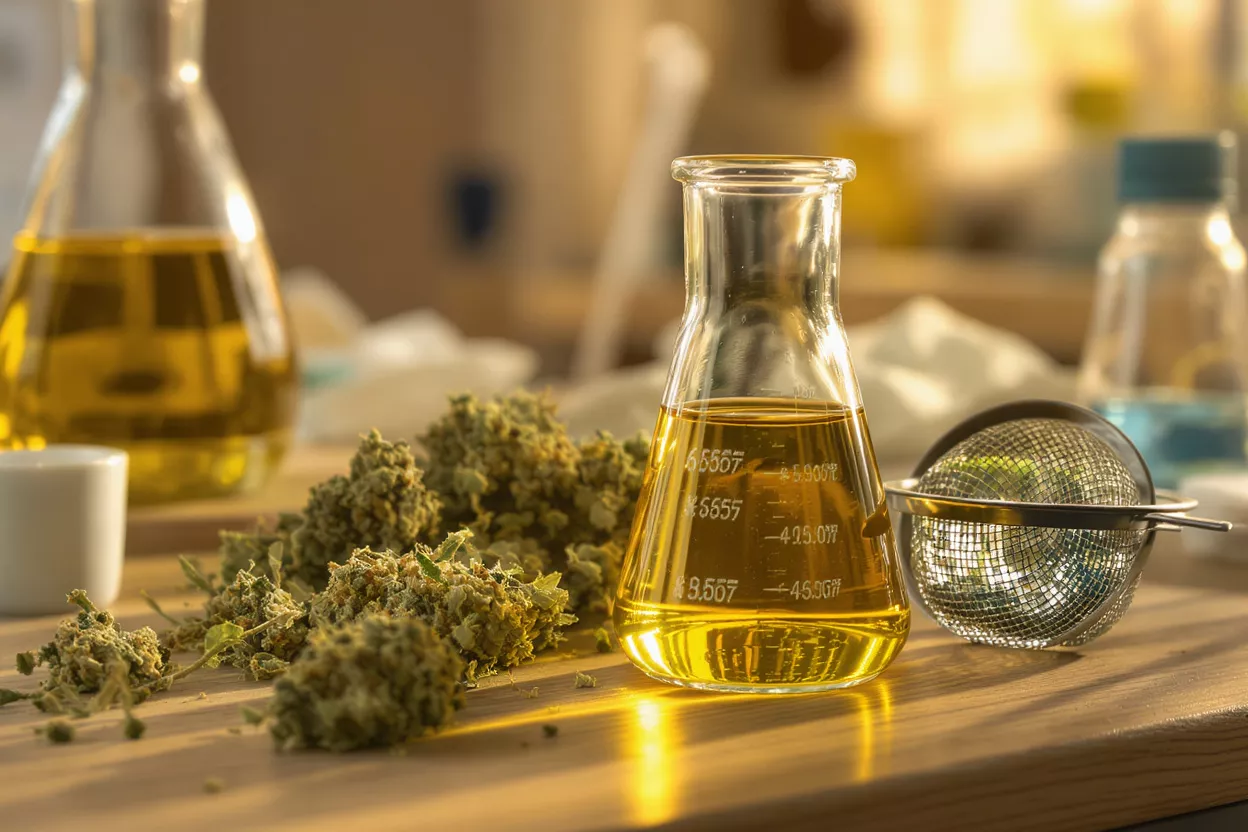
Winterization and distillation often precede the final step. Before any spectrum is dialed in, crude extract is usually cleaned of fats, waxes, and chlorophyll through winterization, then concentrated via distillation. These foundational steps determine how clean the canvas is before the targeted profile is composed.
Narrow-Spectrum vs Full-Spectrum vs Isolate
Understanding narrow-spectrum cannabis is easiest when you place it beside its two neighbors. Full-spectrum captures the entire chemical fingerprint of the plant, including trace THC. Isolate represents a single purified molecule with everything else removed. Narrow-spectrum occupies the curated middle, keeping a chosen community while excluding specific unwanted compounds.
The practical differences come down to three trade-offs: the presence of THC, the breadth of the entourage effect, and consistency from batch to batch. Here is how the three categories compare across the factors people care about most:
- 🌿 Full-spectrum: Maximum compound diversity and strongest entourage potential, but includes trace THC and varies with each harvest.
- 🎯 Narrow-spectrum: A curated subset of cannabinoids and terpenes, typically THC-free, balancing synergy with predictability.
- 💎 Isolate: A single molecule at near-total purity, completely flavorless and THC-free, but without any entourage contribution.
No single category is universally superior. The right choice depends on whether a user wants the full plant experience, needs to avoid THC entirely, or prefers a clean single-cannabinoid baseline. Narrow-spectrum exists precisely because many people want some plant synergy without the THC question hanging over them.
Types of Narrow-Spectrum Cannabis Products
Narrow-spectrum formulations appear across nearly every product format on the market, because the technology is about the extract's composition rather than its delivery method. Once a targeted profile is created, it can be infused into oils, edibles, topicals, and vapes the same way any other concentrate would be.
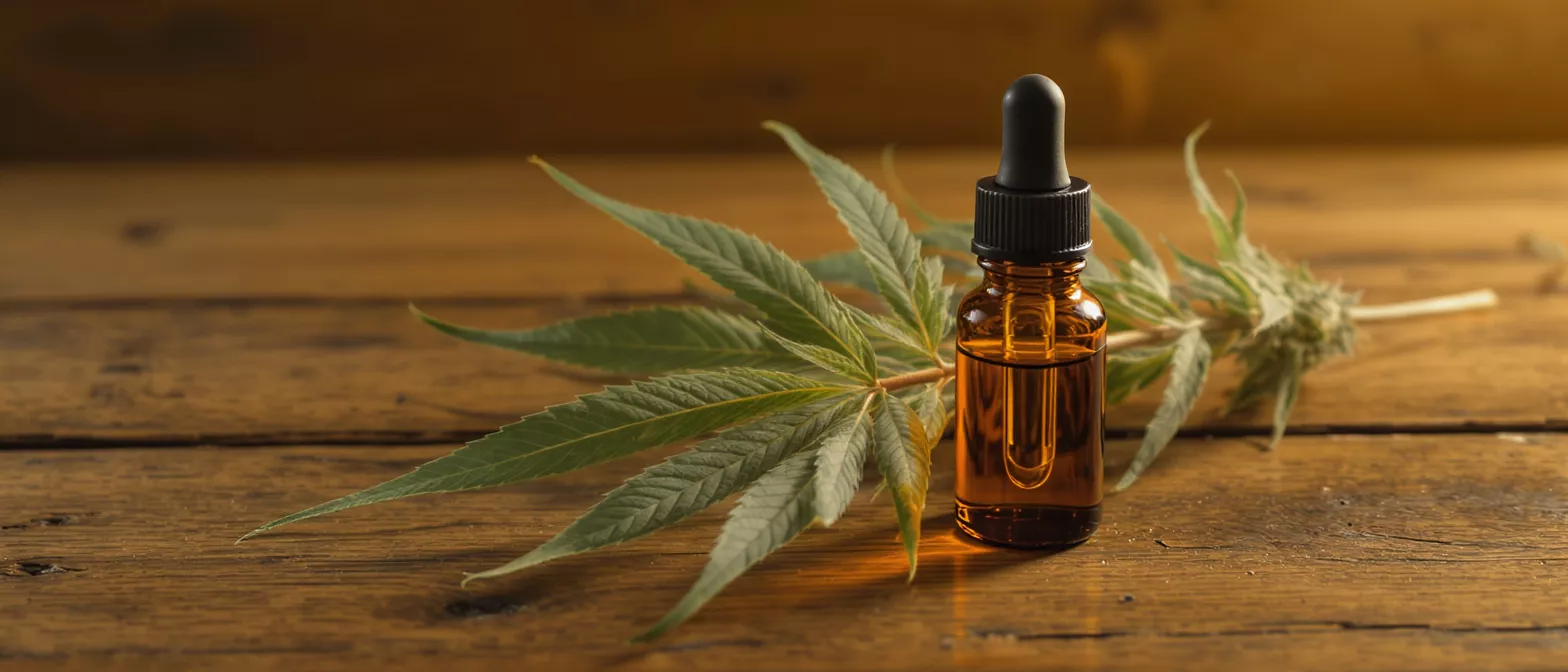
Tinctures and oils are the most common home for narrow-spectrum extracts. The format allows precise dosing and pairs naturally with the consistency that narrow-spectrum products are valued for. A few drops deliver a reliable cannabinoid ratio every time, which matters most to users tracking their intake carefully.
Below are the formats where narrow-spectrum extracts are most frequently used, each chosen for a different reason:
- 💧 Tinctures: Favored for accurate dosing and fast sublingual onset, ideal for daily routines.
- 🍬 Edibles and gummies: Mask the herbal taste while delivering a fixed dose, popular for discretion.
- 🧴 Topicals: Localized application where THC-free formulas are often preferred.
- 💨 Vapes: Rapid onset with a curated terpene profile shaping the flavor and feel.
- 💊 Capsules: Pre-measured, tasteless, and convenient for consistent supplementation.
The shared advantage across all of these is repeatability. Because the underlying extract has a defined and tested profile, a manufacturer can promise the same experience across thousands of units — something far harder to guarantee with raw full-spectrum material.
Narrow-Spectrum Cannabis Benefits
The appeal of narrow-spectrum cannabis comes from solving a specific problem: how to capture meaningful plant synergy while controlling exactly which compounds are present. This makes it attractive to a wide range of users who find full-spectrum too unpredictable and isolate too bare.
THC avoidance without sacrificing synergy is the headline benefit. For people subject to drug testing, those sensitive to intoxicating effects, or anyone in a jurisdiction with strict THC limits, a THC-free yet multi-cannabinoid extract offers a genuine middle path. They get contributions from minor cannabinoids and terpenes without the molecule they need to avoid.
Predictability supports better dosing decisions. Because narrow-spectrum extracts are built or refined to hit a defined profile, users can reproduce a result they liked rather than chasing it across inconsistent batches. This reliability is especially valuable for wellness routines where a steady, repeatable dose matters more than maximum potency.
There is also a flavor and formulation advantage. By removing chlorophyll, certain off-tasting compounds, or unwanted cannabinoids, manufacturers can craft cleaner-tasting products and fine-tune terpene content for a specific aroma or experience, giving formulators creative control that raw extract rarely allows.
Targeted Cannabinoid Profiles Explained
The heart of narrow-spectrum cannabis is the targeted cannabinoid profile — the specific roster of compounds a manufacturer chooses to include. Rather than accepting whatever a plant produced, formulators compose a profile around an intended outcome, whether that is relaxation, daytime clarity, or topical comfort.
A targeted profile typically anchors on one or two primary cannabinoids and then layers in supporting minor cannabinoids. Common building blocks include:
- 🌱 CBD: The most frequent foundation, non-intoxicating and well studied.
- 🌙 CBN: Often added to profiles aimed at rest and evening use.
- ☀️ CBG: Included for its non-intoxicating character and growing research interest.
- 🌸 Terpenes: Aromatic compounds selected to shape flavor and modulate the overall experience.
Ratios matter as much as ingredients. A profile listing CBD and CBN tells you little without the proportions; a 1:1 ratio behaves very differently from a 20:1. Reputable narrow-spectrum products disclose these ratios precisely, letting users match a profile to their intended use rather than guessing from a name on the label.
This compositional approach is what separates narrow-spectrum from simply "broad-spectrum with THC removed." A true targeted profile reflects deliberate formulation choices, often informed by emerging research into how individual cannabinoids and terpenes interact within the entourage effect.
Therapeutic Applications of Narrow-Spectrum Cannabis
While research into cannabis is ongoing and individual results vary, narrow-spectrum products have found a natural home among users seeking targeted wellness support without intoxication. The ability to exclude THC while retaining other compounds makes these formulations especially suited to specific use cases.
Daytime wellness routines benefit from THC-free clarity. Users who want to incorporate cannabinoids into a working day without any psychoactive interference often gravitate toward narrow-spectrum tinctures and capsules, where a consistent dose supports a steady routine without altering mental sharpness.
Topical applications represent another strong fit. For localized comfort, a narrow-spectrum cream lets people apply a multi-cannabinoid formula directly to an area of interest without introducing THC into a product they may use frequently or in large amounts. The targeted profile can be tuned with specific terpenes thought to complement topical use.
It bears repeating that narrow-spectrum cannabis is not a medicine and these products are not a substitute for professional care. Anyone considering cannabinoids for a specific health concern should consult a qualified healthcare provider, particularly when other medications are involved.
How to Read a Narrow-Spectrum COA
A Certificate of Analysis, or COA, is the single most important document for verifying a narrow-spectrum claim. Because the entire value proposition rests on a precise, tested profile, a product without third-party lab results is asking you to take its spectrum on faith.
The cannabinoid panel confirms the profile and the THC claim. Look for each cannabinoid listed with a measured concentration, and specifically confirm that THC reads as "ND" — not detected — if the product is sold as THC-free. A reputable lab will state its limit of detection so you know how sensitive the test was.
Beyond cannabinoids, a thorough COA covers the safety panels that matter for any consumed extract. When reviewing one, check that it includes:
- ✅ Cannabinoid potency: Confirms the targeted profile and THC-free status.
- 🧪 Pesticides and solvents: Verifies that production left no harmful residues behind.
- 🦠 Microbials: Screens for mold, yeast, and bacterial contamination.
- ⚗️ Heavy metals: Ensures the plant did not concentrate toxic elements from its soil.
Cross-check the batch number on the COA against the one on your product. A current, matching, third-party report is the strongest assurance that the narrow-spectrum profile you paid for is the one actually in the bottle.
Who Should Choose Narrow-Spectrum Cannabis
Narrow-spectrum cannabis is not the right answer for everyone, and recognizing where it fits helps you decide whether it suits your goals. It serves a particular intersection of needs: people who want plant synergy but cannot or prefer not to consume THC.
THC-sensitive and routinely tested users are the core audience. Athletes, professionals subject to workplace screening, and anyone uncomfortable with intoxication can use these products to access minor cannabinoids and terpenes while keeping THC out of the equation entirely, provided the COA confirms a non-detect result.
Newcomers also benefit from the predictability. Someone exploring cannabinoids for the first time often appreciates a consistent, non-intoxicating, well-documented profile over the variability of full-spectrum flower or extract. Narrow-spectrum lowers the number of unknowns when you are still learning how your body responds.
Conversely, experienced users specifically seeking the full entourage effect, including the contribution of THC, may find narrow-spectrum incomplete for their purposes. That is not a flaw — it simply reflects that this category is a precision instrument, designed for users who value control over total breadth.
Narrow-Spectrum Dosing and Best Practices
Dosing narrow-spectrum cannabis follows the same sensible principles that govern any cannabinoid product, with the added advantage that a tested, consistent profile makes your results easier to reproduce. The guiding rule remains to start low and increase gradually until you find your comfortable range.
Start low and go slow regardless of THC-free status. The absence of THC does not mean cannabinoids have no effect; minor cannabinoids and terpenes still influence how you feel. Begin with a modest measured dose, wait long enough to gauge the response, and adjust in small increments over several sessions rather than all at once.
Onset time depends heavily on format. Use these general timing expectations to plan your dosing:
- ⏱️ Sublingual tinctures: Typically felt within 15 to 45 minutes when held under the tongue.
- 🍽️ Edibles and capsules: Slower onset of 30 minutes to two hours as they pass through digestion.
- 💨 Inhalation: The fastest route, with effects often noticeable within minutes.
- 🧴 Topicals: Localized and gradual, working at the application site rather than systemically.
Keep a simple log of dose, format, and how you felt so you can build on what works. Because narrow-spectrum products are engineered for consistency, the notes you take today will reliably guide tomorrow's dosing — a level of repeatability that makes this category genuinely useful. In summary, narrow-spectrum cannabis offers a thoughtfully curated middle path: real plant synergy, deliberate THC removal, and the lab-verified predictability that lets you dial in an experience and return to it again and again.