

Ashwagandha
Discover how ashwagandha pairs with cannabis for stress relief and calm.
What Is Ashwagandha in the Cannabis World
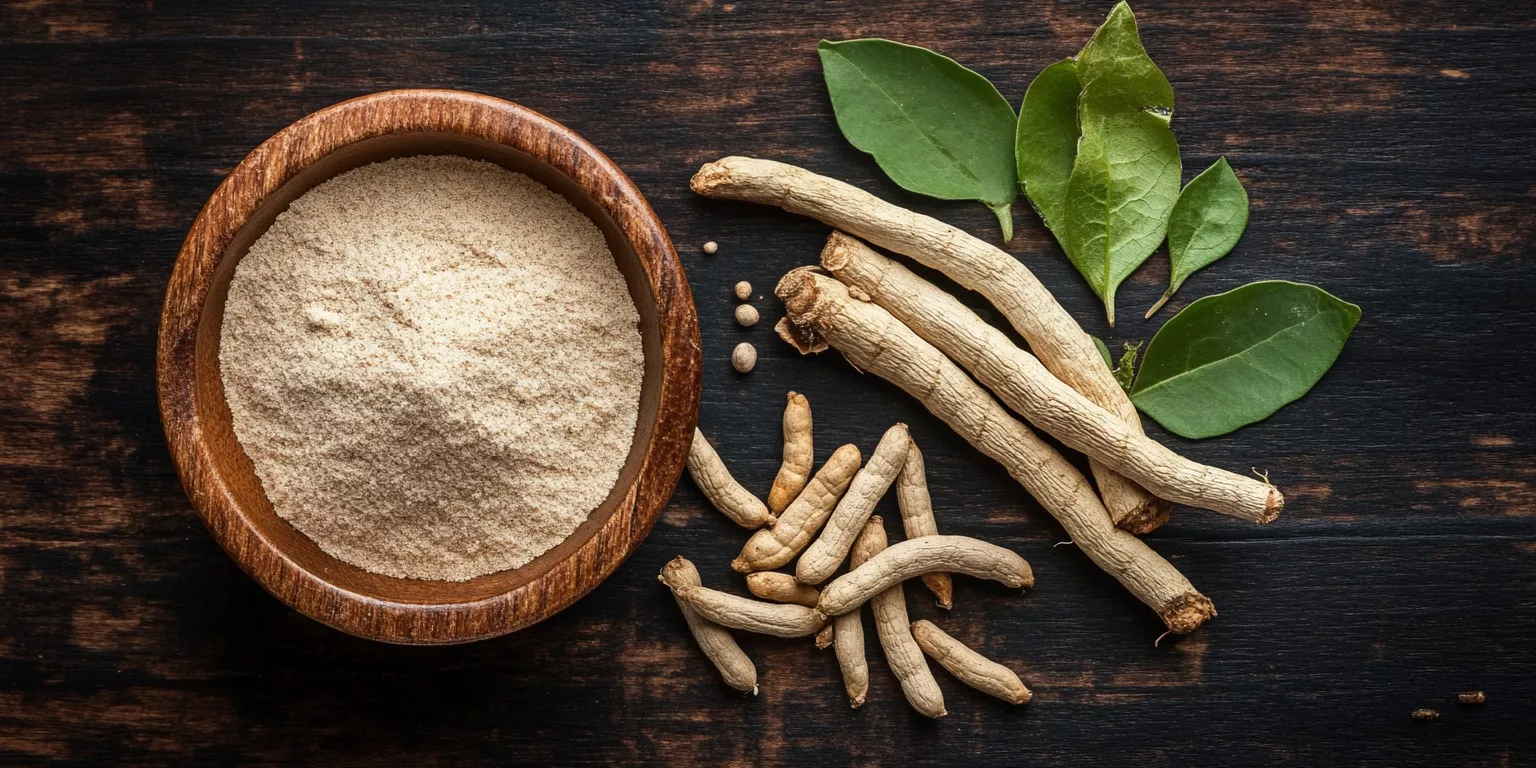
Ashwagandha cannabis blends have become one of the more compelling intersections of traditional herbalism and modern plant medicine. Ashwagandha (Withania somnifera) is an ancient adaptogenic herb with roots in Ayurvedic practice stretching back more than three thousand years. When paired with cannabis, it forms a category of wellness products designed to support balance, calm, and resilience against everyday stressors.
The Sanskrit name ashwagandha translates roughly to "smell of the horse," a nod to both the root's distinctive aroma and the traditional belief that it imparts the strength and vitality of a stallion. In practical terms, it belongs to a class of botanicals called adaptogens — plants thought to help the body adapt to physical and mental stress without overstimulating or sedating it directly.
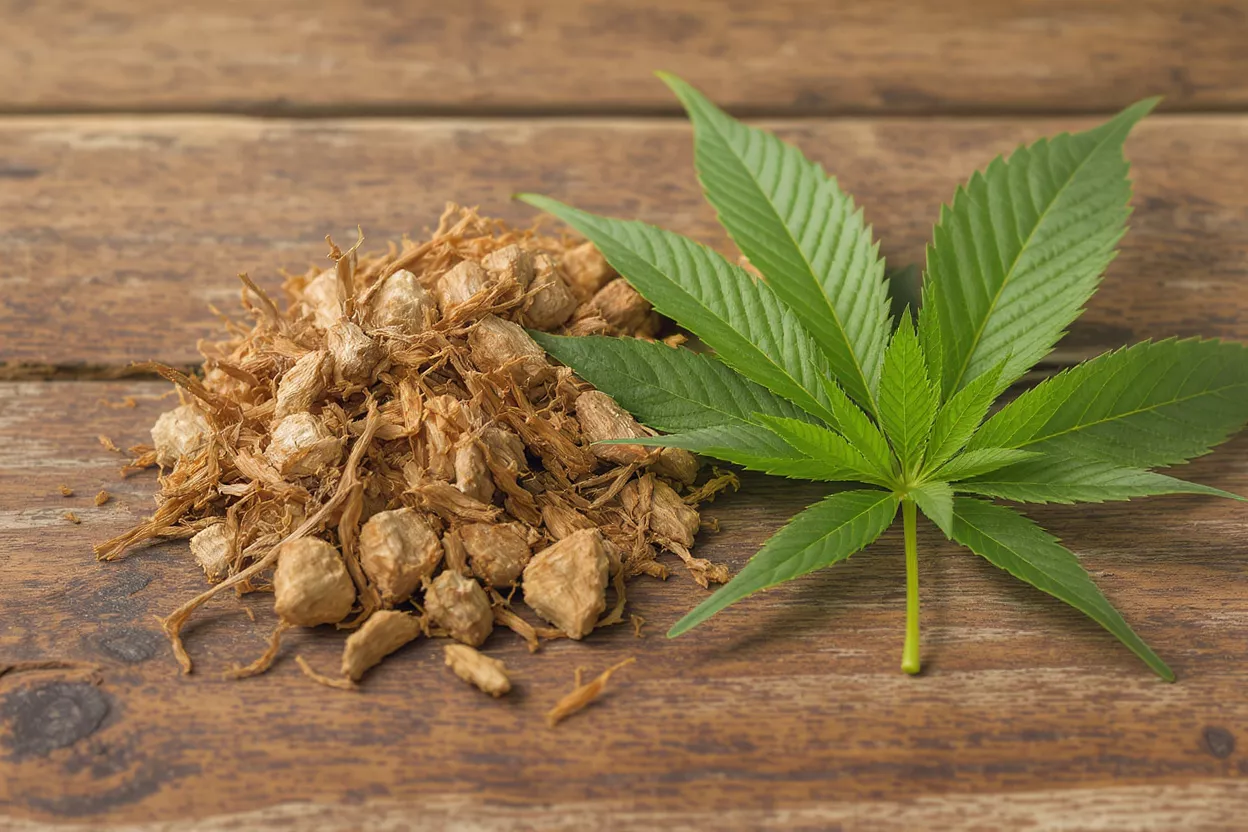
Why ashwagandha appears alongside cannabis: Both plants influence the body's stress-response systems, though through different mechanisms. Formulators increasingly combine them to create products that aim for a smoother, more grounded experience than either ingredient delivers alone. This pairing reflects a broader trend of blending well-studied herbal adaptogens with cannabinoids for targeted effects.
How Ashwagandha Works in the Body
The cortisol connection: Ashwagandha's most studied mechanism involves the hypothalamic-pituitary-adrenal (HPA) axis, the system that governs cortisol release. Several clinical trials have observed measurable reductions in serum cortisol among participants taking standardized root extract over several weeks, which helps explain its reputation as a stress-modulating herb.
The active compounds responsible are a group of naturally occurring steroidal lactones called withanolides. These molecules interact with GABA receptors and influence neurotransmitter signaling in ways that promote a calming effect without the heavy sedation associated with some pharmaceuticals. The concentration of withanolides is what distinguishes a high-quality extract from a weak one.
When ashwagandha is taken alongside cannabis, the two interact with overlapping but distinct pathways. Cannabis engages the endocannabinoid system, while ashwagandha works primarily through the endocrine and GABAergic systems. The result, in theory, is complementary support for relaxation and recovery from multiple angles.
Ashwagandha and Cannabis Synergy Explained
The concept of synergy in plant medicine is often described through the entourage effect, where multiple compounds produce a combined result greater than the sum of their isolated parts. While the entourage effect is traditionally discussed within the context of cannabis compounds alone, formulators have extended the principle to include adaptogens like ashwagandha.
Balancing THC's edge: One of the more practical reasons to combine ashwagandha with cannabis is its potential to temper the anxious or racy feeling that higher doses of THC can sometimes produce. By supporting a calmer baseline cortisol state, ashwagandha may help users feel more grounded during their experience.
The pairing also appeals to those seeking functional rather than purely recreational effects. Ashwagandha's reputation for supporting endurance, sleep quality, and recovery aligns naturally with the wellness positioning of many modern CBD-forward products.
Benefits of Ashwagandha Cannabis Blends
The appeal of ashwagandha cannabis products lies in their potential to address several wellness goals at once. Rather than chasing a single effect, these blends aim for a broad sense of equilibrium that suits daily use. Below are the most commonly cited reasons people reach for them.
- 🌿 Stress resilience: Adaptogenic support for the HPA axis may help blunt the body's cortisol spikes during demanding periods.
- 😴 Sleep support: The herb's calming withanolides paired with relaxing cannabinoids can encourage deeper, more restorative rest.
- 💪 Recovery and stamina: Traditional use centers on physical vitality, and modern athletes often use it to support post-exertion recovery.
- 🧠 Mental clarity: By reducing background stress, some users report sharper focus without the jittery edge of stimulants.
- ⚖️ Mood balance: Combined effects on neurotransmitters may smooth out emotional ups and downs over time.
It is worth emphasizing that benefits accumulate gradually. Unlike the immediate onset of inhaled cannabis, ashwagandha typically requires consistent use over a period of weeks before its full adaptogenic effects become noticeable.
The strongest case for these blends is for people who want a wellness-oriented routine rather than a quick fix. The combination rewards patience and consistency, making it better suited to evening rituals or daily supplementation than to occasional one-off use.
Ashwagandha for Stress and Anxiety Relief
What the research shows: Among adaptogens, ashwagandha has one of the more robust bodies of clinical evidence for stress reduction. Randomized controlled trials using standardized extracts have reported significant decreases in perceived stress scores and anxiety ratings compared to placebo, typically over an eight-to-twelve-week window.
Anxiety relief is also where the cannabis pairing becomes especially relevant. Many people turn to low-dose THC or CBD-rich products specifically to ease tension, and ashwagandha reinforces that goal through a separate physiological route. The combination can feel more rounded than either alone, smoothing both the mental and hormonal dimensions of stress.
That said, individual responses vary widely. Factors like baseline cortisol levels, sleep habits, and overall health all shape how noticeable the effect will be. Setting realistic expectations and tracking your own response over several weeks is the most reliable way to judge whether the blend works for you.

Ashwagandha Cannabis Dosing Guide
Standardized extract matters: Most clinical research uses ashwagandha root extract standardized to a specific withanolide percentage, commonly in the range of 250 to 600 milligrams per day. When evaluating a product, look for the withanolide content rather than the raw root weight, since potency varies dramatically between preparations.
Because the cannabis component carries its own dosing considerations, the two should be approached separately. Start with the lowest effective dose of each and adjust gradually. The table below outlines general starting points, though personal tolerance and product strength always take precedence.
- 🌱 Beginner: 250–300 mg ashwagandha daily paired with a low cannabinoid dose, taken in the evening to assess tolerance.
- 📈 Intermediate: 300–500 mg ashwagandha once stress-modulating effects are familiar, adjusting the cannabis component to comfort.
- 🎯 Experienced: Up to 600 mg ashwagandha daily for those who tolerate it well and seek maximum adaptogenic support.
Consistency outweighs quantity with adaptogens. A modest daily dose taken faithfully tends to outperform a larger dose used sporadically, since the herb's benefits build cumulatively within the endocrine system.
Types of Ashwagandha Products
Ashwagandha appears in a growing variety of formats, each suited to different routines and preferences. The format you choose affects onset time, dosing precision, and how easily the herb integrates with cannabis.
Capsules and softgels remain the most popular for precise, consistent dosing. They typically contain a standardized extract and are easy to incorporate into a daily supplement stack alongside cannabis edibles or tinctures.
Powders and tinctures offer flexibility for those who prefer to blend their own doses into beverages or routines. Liquid extracts in particular allow for fine-tuned adjustments and faster absorption, which appeals to people building custom wellness regimens.
Is Ashwagandha Cannabis Safe to Combine
General safety profile: Ashwagandha is widely regarded as well-tolerated for most healthy adults when used at recommended doses. Reported side effects are typically mild and may include drowsiness or digestive upset, especially at higher amounts. Combining it with cannabis introduces an additive calming effect, which is often the goal but worth approaching mindfully.
Certain groups should exercise caution or avoid the combination entirely. Ashwagandha can influence thyroid hormone levels and may interact with sedatives, immunosuppressants, and thyroid medication. The added relaxation from cannabis can amplify drowsiness, so activities requiring alertness should be avoided until you understand your response.
- ⚠️ Pregnancy and breastfeeding: Both ashwagandha and cannabis are generally advised against during these periods.
- 🩺 Medication interactions: Consult a healthcare provider if you take thyroid, sedative, or immune-related prescriptions.
- 🚗 Impairment awareness: The combined calming effect can impair driving and machinery operation.
As with any supplement, speaking with a knowledgeable healthcare professional before starting is the safest path, particularly if you manage a chronic condition or take daily medication.
Ashwagandha in Modern Cannabis Formulations
Product developers have grown increasingly sophisticated about how they combine adaptogens with cannabinoids. Rather than tossing ingredients together, the best formulations consider ratios, onset profiles, and the specific outcome they intend to support.
Functional gummies and beverages have emerged as a leading category, blending precise milligram doses of ashwagandha with measured cannabinoids and complementary terpenes. These products target sleep, calm, or recovery depending on their composition.
Tinctures designed for sublingual use represent another thoughtful approach, pairing full-spectrum extract with ashwagandha for a faster, more controllable onset than edibles. This format gives experienced users the precision to dial in exactly the balance they want between adaptogenic and cannabinoid effects.
Choosing the Right Ashwagandha Cannabis Products
Verify the source and testing: Quality varies enormously across the market. Look for products backed by third-party lab testing that confirms both cannabinoid content and ashwagandha standardization. Reputable brands publish certificates of analysis that verify potency and screen for contaminants like heavy metals and pesticides.
Consider your goal before the format. Someone targeting sleep will benefit from a different blend than someone seeking daytime stress resilience. Reading the full ingredient panel and understanding the withanolide percentage alongside the cannabinoid ratio helps you match the product to your intention.
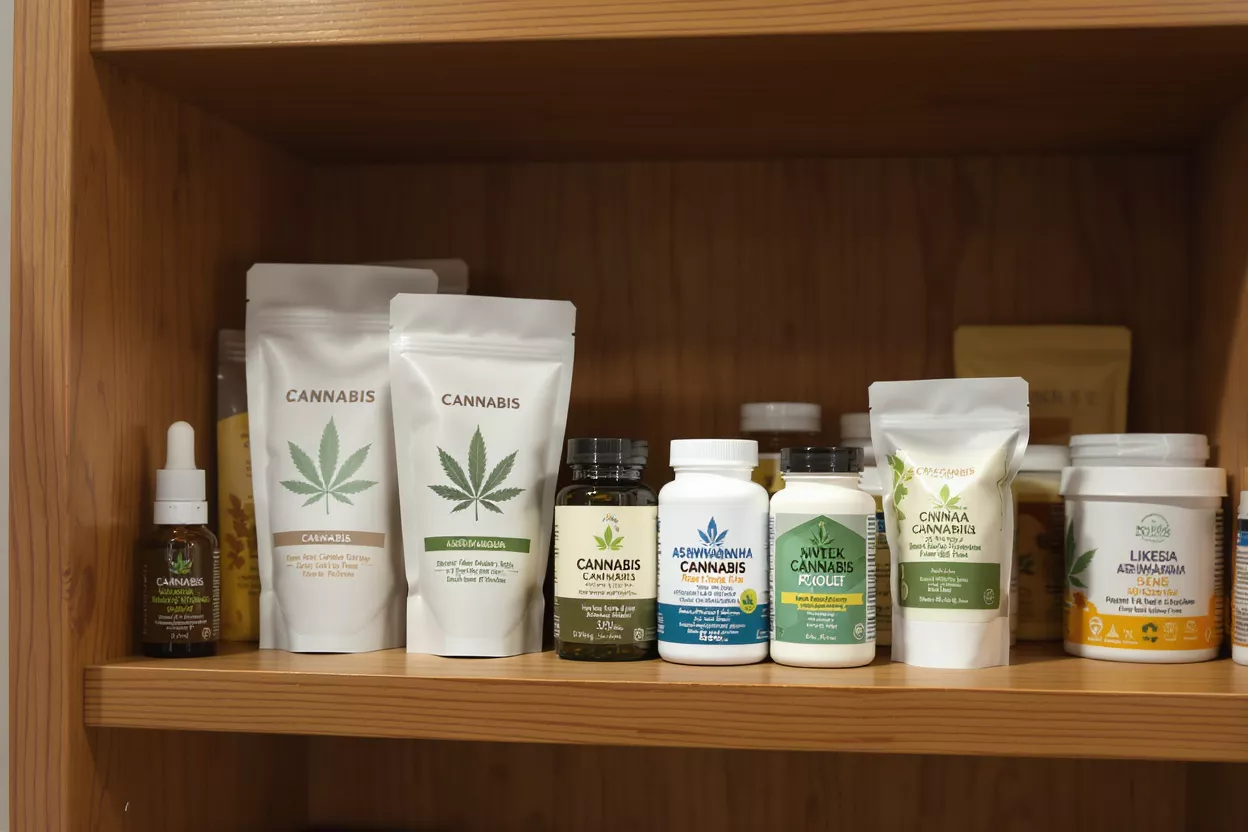
Ultimately, the most rewarding ashwagandha cannabis products are those used as part of a consistent, intentional routine. These blends thrive on patience — the adaptogenic benefits compound over weeks while the cannabinoids provide more immediate support, together forming a wellness approach worth building around.
To summarize, ashwagandha brings thousands of years of traditional use and a solid foundation of modern research to the cannabis space. When thoughtfully combined with cannabinoids, it offers complementary support for stress, sleep, and recovery through distinct yet harmonious physiological pathways. Choose tested products, start low, stay consistent, and consult a healthcare professional whenever your health situation calls for it.