

Sinsemilla
Discover what sinsemilla means and why seedless sinsemilla flower delivers superior potency and resin.
What Is Sinsemilla in Cannabis?
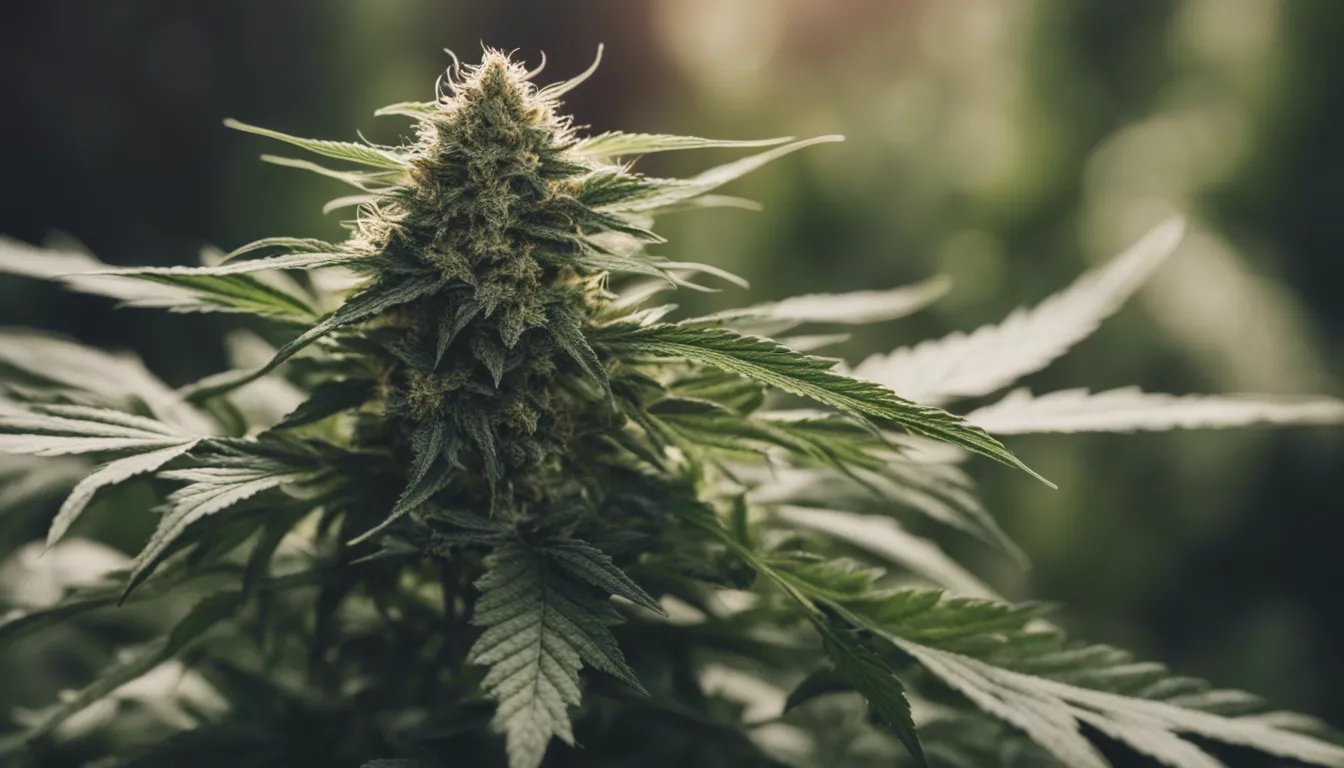
Sinsemilla is one of the most consequential ideas in modern cultivation, even though plenty of consumers have never said the word aloud. It comes from the Spanish "sin semilla," literally "without seed," and it describes female cannabis flower grown so that it never gets pollinated. The payoff is a dense, resin-coated bud with no seeds and a heavy load of cannabinoids. When you pick up quality flower at a dispensary today, you are almost certainly holding sinsemilla, whether or not the label bothers to use the term.
The technique came into focus through the 1970s and 1980s, as growers along the California coast and through the Pacific Northwest refined their methods. They discovered that rigorously keeping male plants away from females produced flower on an entirely different level. What started as an underground horticultural insight steadily hardened into the global benchmark for premium production.
Why the word still earns its place: Even in mature legal markets with sophisticated breeding programs, sinsemilla remains shorthand for quality flower. A seeded bud points to a pollination accident or a poorly managed garden, while a clean, seedless flower signals deliberate, attentive cultivation. Learning the term gives you a vocabulary for reading what a plant's appearance is actually telling you about how it was grown.
Why Sinsemilla Is Seedless Cannabis
To make sense of sinsemilla, you have to understand how cannabis reproduces. The plant is typically dioecious, meaning each individual is either male or female. Males produce pollen sacs, while female cannabis plants produce the flowers — the buds — that consumers actually want. The moment pollen reaches a female flower, the plant's biological priority pivots away from resin and toward making seeds.
By excluding or removing every male, growers prevent that pollination event from happening at all. The unpollinated female, still waiting for pollen that never arrives, keeps channeling its resources into flower development. It continues stacking trichomes and swelling its calyxes in an endless attempt to catch pollen drifting on a breeze.
The energy-redirection principle: A pollinated plant splits its budget between seeds and resin. A seedless plant pours nearly everything into the flowers and the sticky, cannabinoid-rich glands that coat them. This single shift is why sinsemilla smokes so differently from the seeded import weed of past decades. The team at Harvard Health has noted that cannabinoid concentrations in modern flower vastly exceed those of cannabis from the mid-twentieth century, a change driven largely by these cultivation choices.
How Sinsemilla Cultivation Works
Producing sinsemilla is fundamentally an exercise in control — managing which plants share a space and guaranteeing that no stray pollen reaches the garden. Growers either begin with feminized seeds, bred to yield only female plants, or they sex their plants early and pull every male before its pollen sacs crack open. In a licensed facility this is monitored relentlessly, because one overlooked male can pollinate an entire room and compromise a harvest.
Genotype selection shapes the outcome here as much as vigilance does. Some cultivars are more inclined to throw hermaphroditic flowers under stress, which can self-pollinate and seed an all-female room from the inside. Seasoned growers favor stable genetics and manage light, temperature, and nutrients carefully to keep their plants from turning intersex. For home and commercial growers alike, feminized seeds dramatically smooth the path to a clean, seedless crop.
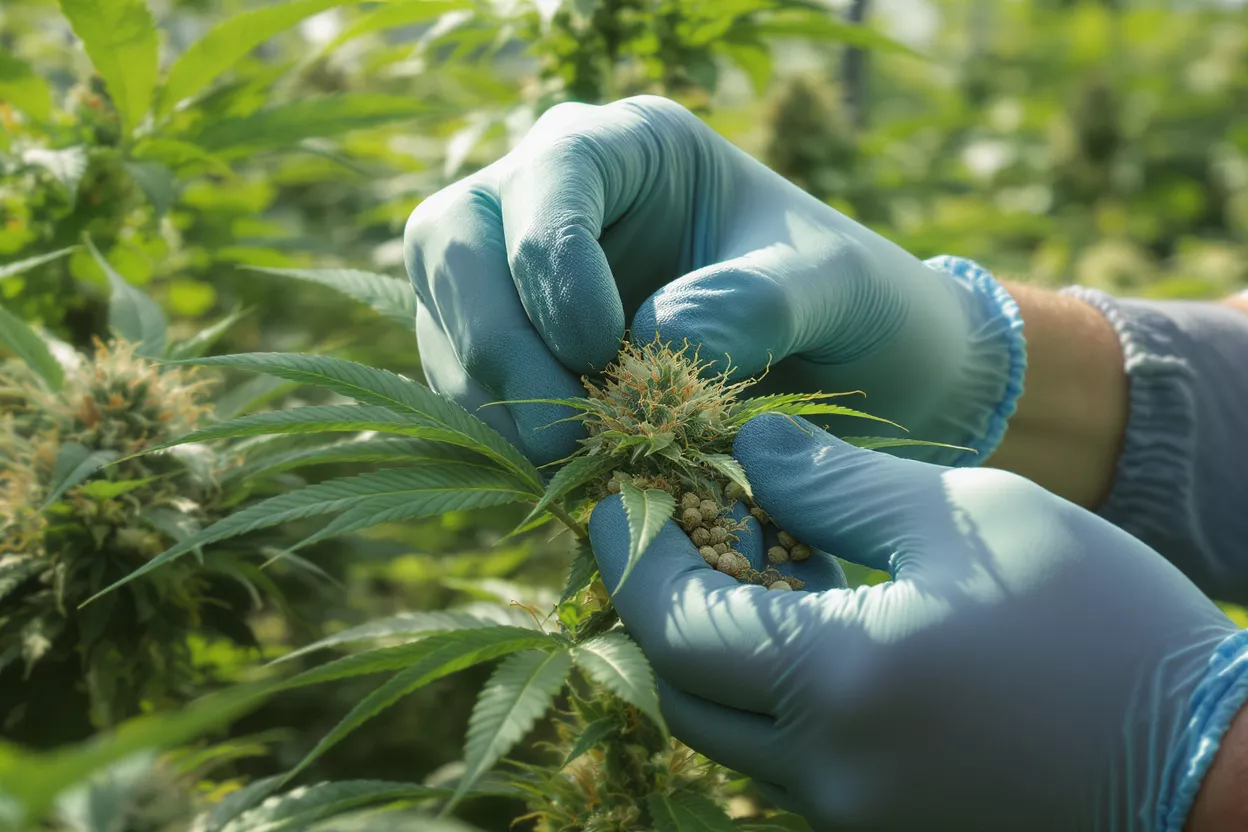
Monitoring through the flowering stage: Vigilance does not end once the males are gone. Across the entire flowering cycle, cultivators inspect plants for stray male flowers, banana-shaped anthers, and other signs of intersex expression. This attention to detail is what separates connoisseur-grade flower from the merely passable, and it ranks among the most labor-intensive parts of growing top-shelf sinsemilla.
Sinsemilla vs Seeded Cannabis Compared
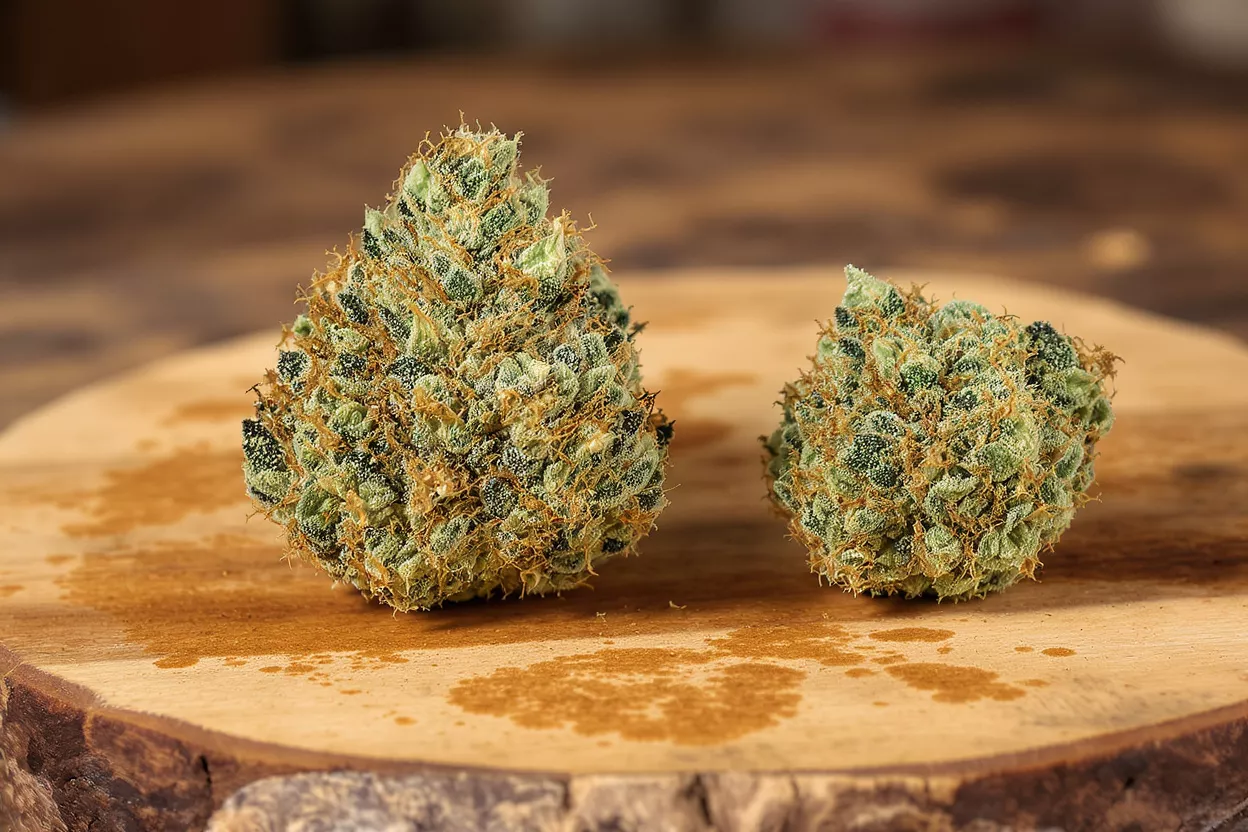
The contrast between sinsemilla and seeded cannabis becomes obvious the moment you know what to look for. Seeded buds carry hard, round seeds tucked inside the flower, adding weight you pay for but cannot smoke. They also tend to be airier and noticeably less resinous, because the plant rerouted its energy toward reproduction instead of resin.
The smoking experience diverges just as sharply. Seeds pop and crackle when they burn, releasing harsh, acrid smoke that smothers flavor. Seedless flower burns cleaner and delivers a smoother, more expressive session that lets the strain's terpene profile come through.
- 🌱 Seedless sinsemilla: dense, sticky buds; no wasted weight; higher cannabinoid content; smooth smoke.
- 🌰 Seeded cannabis: seeds add non-smokable weight; airier structure; lower potency; harsher burn.
- 🔬 Visual cue: seedless calyxes swell with resin, while seeded calyxes bulge around hard seed casings.
- 💨 Combustion: seeds crackle and produce acrid smoke, while resin-rich flower burns evenly.
For most consumers the practical lesson is simple: seedless flower delivers far more value per gram, because every part of the bud contributes to the experience rather than to the next generation of plants.
Why Sinsemilla Drives Cannabis Potency
The cannabis potency associated with sinsemilla traces back to where the plant routes its energy. When a female flower is never pollinated, it keeps building trichomes — the tiny, mushroom-shaped resin glands that manufacture and store cannabinoids and terpenes. These glands concentrate THC, CBD, and the aromatic compounds, and a seedless plant simply produces more of them across the bud.
The trichome-density factor: Trichomes are resin structures that protect the plant and house its most valuable chemistry. A heavily frosted, seedless bud carries a far greater density of these glands than a seeded one ever will. Research summarized by Harvard Health shows that average THC content in flower has climbed substantially over recent decades, and sinsemilla cultivation sits at the center of that rise.
Potency, though, is never just a THC percentage. The full spectrum of cannabinoids and terpenes shapes what the experience actually feels like. A well-grown seedless flower preserves that complex chemistry, which is why processors prize quality sinsemilla as the starting material for full-spectrum extracts like HTFSE and HCFSE that aim to capture the plant's complete signature.
The Genetics Behind Quality Sinsemilla
Great sinsemilla begins with great genetics. A plant's genotype — its inherited blueprint — sets its cannabinoid potential, terpene profile, growth structure, and resilience under stress. Two plants raised in identical conditions can yield wildly different flower simply because their genetic codes diverge.
Breeders spend years stabilizing cultivars so that every seed reliably expresses the traits they are after. This is why reputable seed banks and clone providers command premium prices: they have done the painstaking work of selecting parent plants and locking in a genotype that performs the same way batch after batch. Terpenes such as humulene and eucalyptol are partly heritable, which means the genetics set the ceiling for what a plant's aroma and flavor can ever reach.
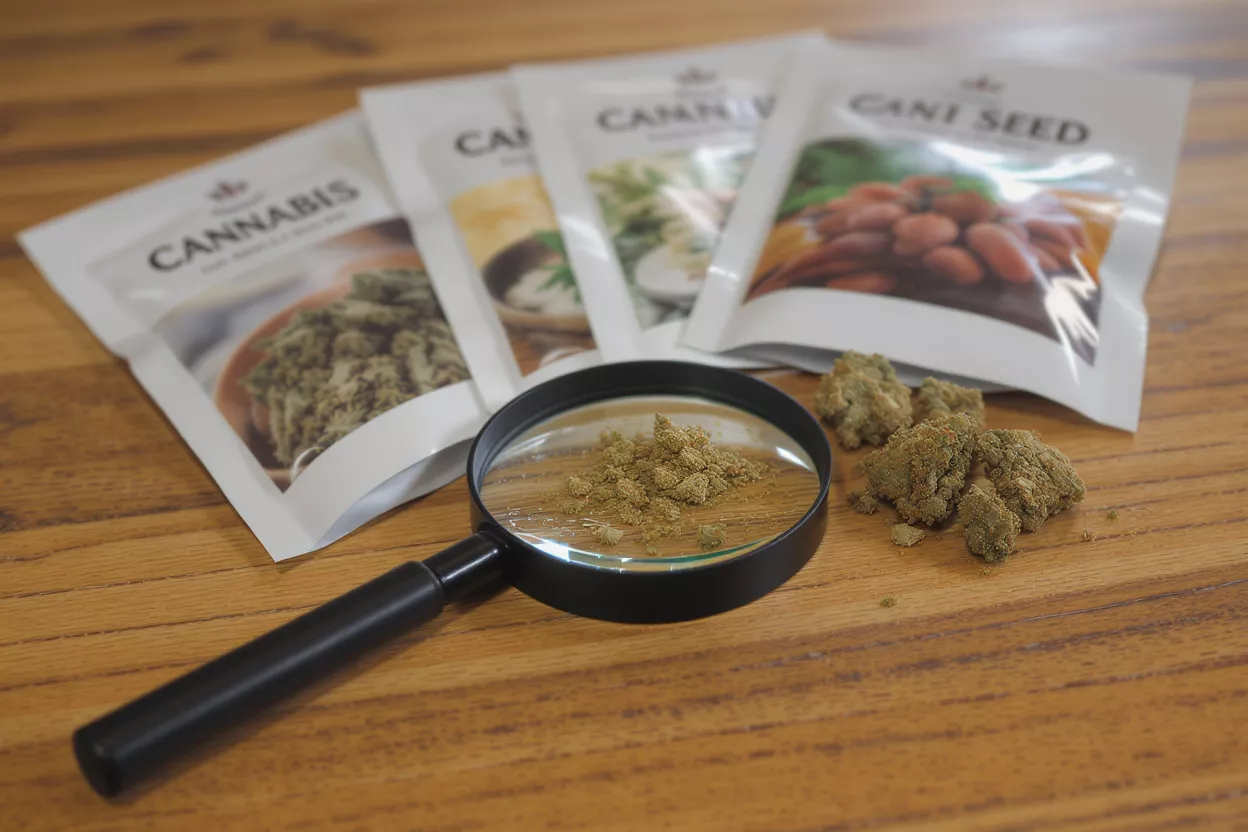
Why phenotype hunting matters: Even within a single strain, individual plants — phenotypes — vary in potency, color, and resin output. Cultivators grow many specimens and select the standouts to clone, ensuring their best flower comes from the strongest expression of a given genotype. This relentless selection is how iconic cultivars build their reputations, and it is why serious growers invest in genetics with documented, trustworthy lineage.
Growing Sinsemilla Indoors and Hydroponically
Indoor cultivation hands growers the precise control that sinsemilla demands. Inside a sealed room, cultivators dictate light cycles, humidity, temperature, and airflow, every one of which influences trichome development and lowers the risk of stray pollination. Sealed environments also make it far simpler to exclude wandering male pollen entirely.
Hydroponics pushes that control further by delivering nutrients straight to the roots in a soilless system. Plants grown this way often grow faster and finish denser, because their roots access exactly what they need without hunting through soil. Many commercial operations lean on hydroponic methods to produce consistent, high-grade seedless flower run after run.
- 💡 Light control: precise 12/12 flowering cycles trigger and sustain bud development.
- 💧 Hydroponics: soilless nutrient delivery boosts growth speed and resin density.
- 🌡️ Climate management: stable temperature and humidity protect trichomes and prevent mold.
- 🛡️ Isolation: sealed rooms keep stray pollen out and the crop fully seedless.
Whether the medium is soil, coco, or a hydroponic reservoir, the objective never changes: keep the females isolated and healthy so they pour everything into flower. The growing medium is simply a tool, while the seedless principle is the constant that defines true sinsemilla.
Sinsemilla Trichomes and Terpenes
The frosted, crystalline look of premium sinsemilla comes from its trichomes, and those structures are far more than decoration. Each trichome is a miniature chemical factory turning out cannabinoids and the terpenes behind a strain's aroma and flavor. The density and maturity of these glands serve as reliable indicators of quality.
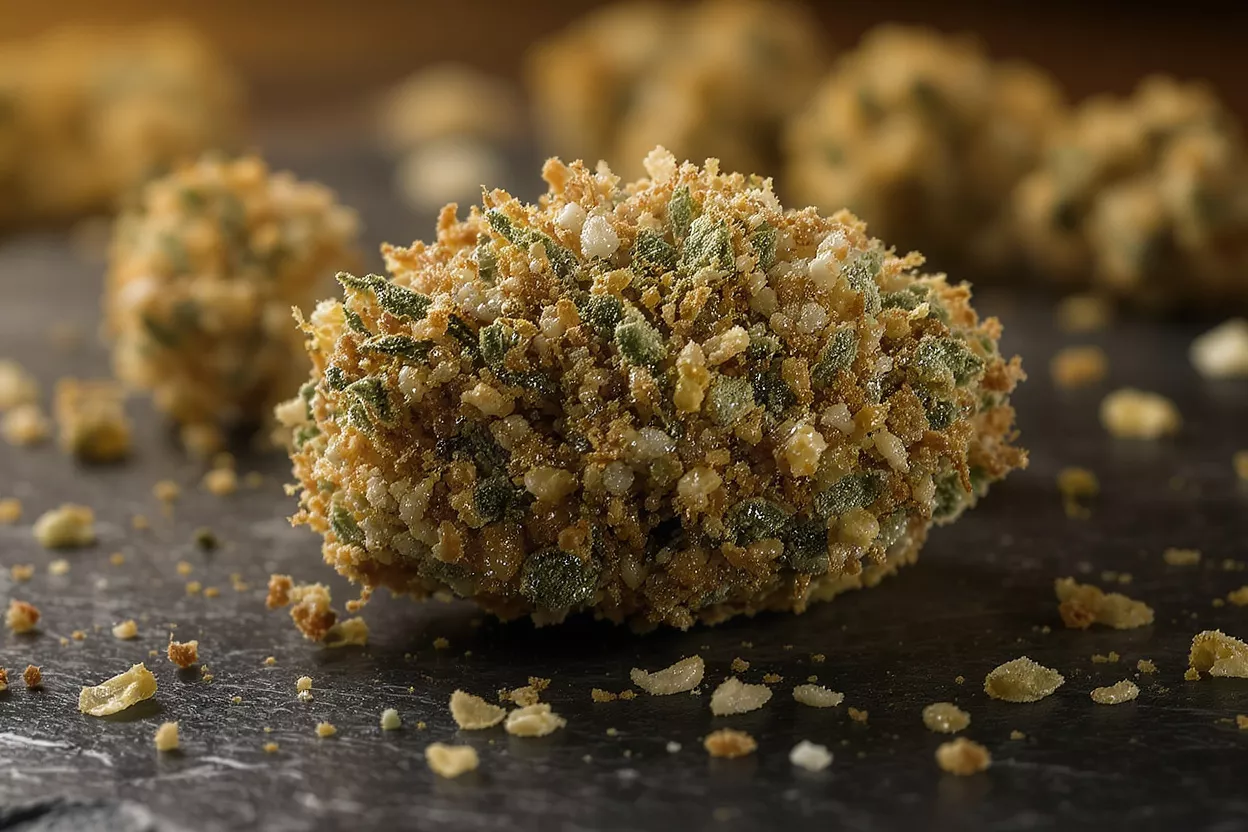
Terpenes deserve particular attention because they govern so much of the sensory experience. Humulene contributes earthy, hoppy notes, while eucalyptol lends a cool, minty edge to certain cultivars. These aromatic compounds work alongside cannabinoids in what many describe as the entourage effect, where the plant's combined chemistry feels greater than the sum of its parts.
Reading trichome ripeness: Growers time their harvest by trichome color, viewed through a magnifier. Clear glands signal immaturity, milky-white ones mark peak cannabinoid content, and amber glands suggest a more sedative profile as compounds begin to degrade. Timing the cut to trichome ripeness is one of the most consequential decisions a cultivator makes, and it directly shapes the character of the finished flower used in everything from a casual bowl to premium concentrates.
How Sinsemilla Flower Is Used
Because sinsemilla represents the highest-quality flower a plant can produce, it serves as the foundation for nearly every cannabis product on the market. Consumers smoke it directly in joints, pipes, and bongs, where its clean burn and full terpene profile shine. The absence of seeds makes for a smoother, more pleasant session than seeded flower could ever offer.
Seedless flower is also the preferred starting material for extracts and concentrates. Solventless products like quality hash depend on abundant, mature trichomes, which only well-grown sinsemilla supplies in quantity. Artisanal preparations begin the same way, with resin-rich seedless buds, and full-spectrum extracts such as HTFSE and HCFSE rely entirely on that dense trichome coverage.
For edibles and infusions, processors decarboxylate the flower and bind its cannabinoids to fats. Lecithin is often added as an emulsifier to improve absorption, since cannabinoids do not naturally disperse through water and need help moving through water-based recipes. Whether the destination is a vape cartridge, an edible, or a simple bowl, premium seedless cannabis flower sits at the heart of the entire supply chain.
Is Sinsemilla Better Than Regular Weed?
In nearly every measurable way, sinsemilla outperforms seeded cannabis. It offers higher potency, richer flavor, smoother smoke, and better value per gram, since you are not paying for seeds you cannot smoke. For those reasons, seedless flower became the universal standard the moment growers learned to produce it reliably.
That said, "regular weed" in today's legal market is almost always sinsemilla already. The seeded brick weed that defined cannabis decades ago has largely faded from quality supply chains, replaced by carefully cultivated seedless flower. When you meet the term now, it usually surfaces in educational contexts, cultivation discussions, or as a nod to the horticultural history that made modern cannabis possible.
Sinsemilla is not a strain, a brand, or a single product — it is a cultivation philosophy built on one simple insight: keep female cannabis plants unpollinated, and they will reward you with their finest possible flower. From the resin-drenched buds on a dispensary shelf to the concentrates and edibles derived from them, the seedless principle underpins the whole modern cannabis experience. Understanding it sharpens your eye for quality and deepens your appreciation for the craft behind every well-grown bud.

Comments