

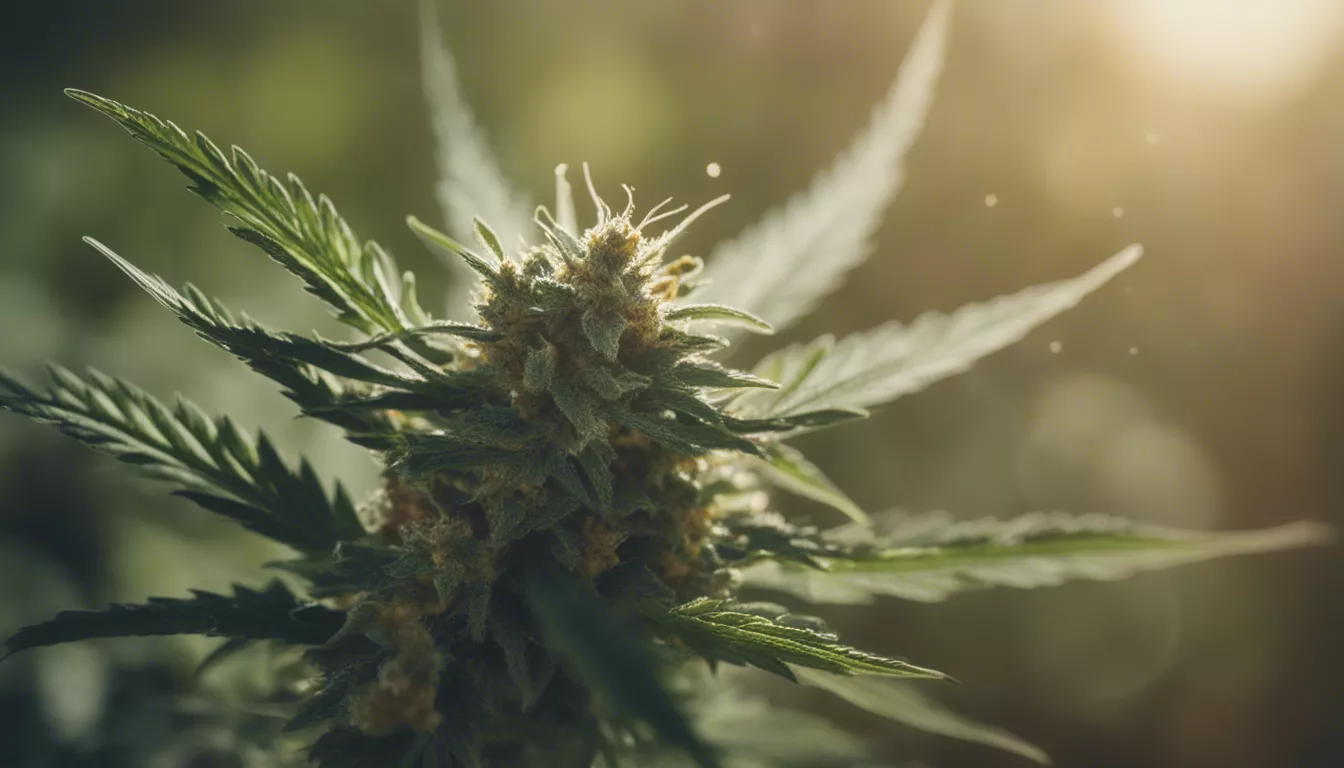
Pollen
Learn everything about pollen — how it's produced, collected, stored, and used for cannabis breeding.
What Is Cannabis Pollen?
Pollen is the fine, powdery substance produced by male cannabis plants to carry the genetic material needed for reproduction. Each grain is a microscopic vessel containing the male gametes that, once delivered to a receptive female flower, trigger the formation of seeds. While many growers view pollen as a nuisance to be avoided in a sinsemilla (seedless) garden, it is the single most important ingredient in cannabis breeding and the propagation of new genetics.
Understanding pollen means understanding the reproductive biology of cannabis itself. The plant is typically dioecious, meaning individual plants are either male or female. Males develop pollen sacs, while females develop the flowers prized for their cannabinoids and aroma. When the two meet, the result is the next generation of seeds.
For the home grower, knowing how pollen behaves is the difference between a clean harvest of resin-rich buds and a crop full of seeds. For the breeder, pollen is a tool — a way to combine desirable traits, stabilize new cultivars, and preserve rare genetics for future seasons.
How Cannabis Pollen Is Produced
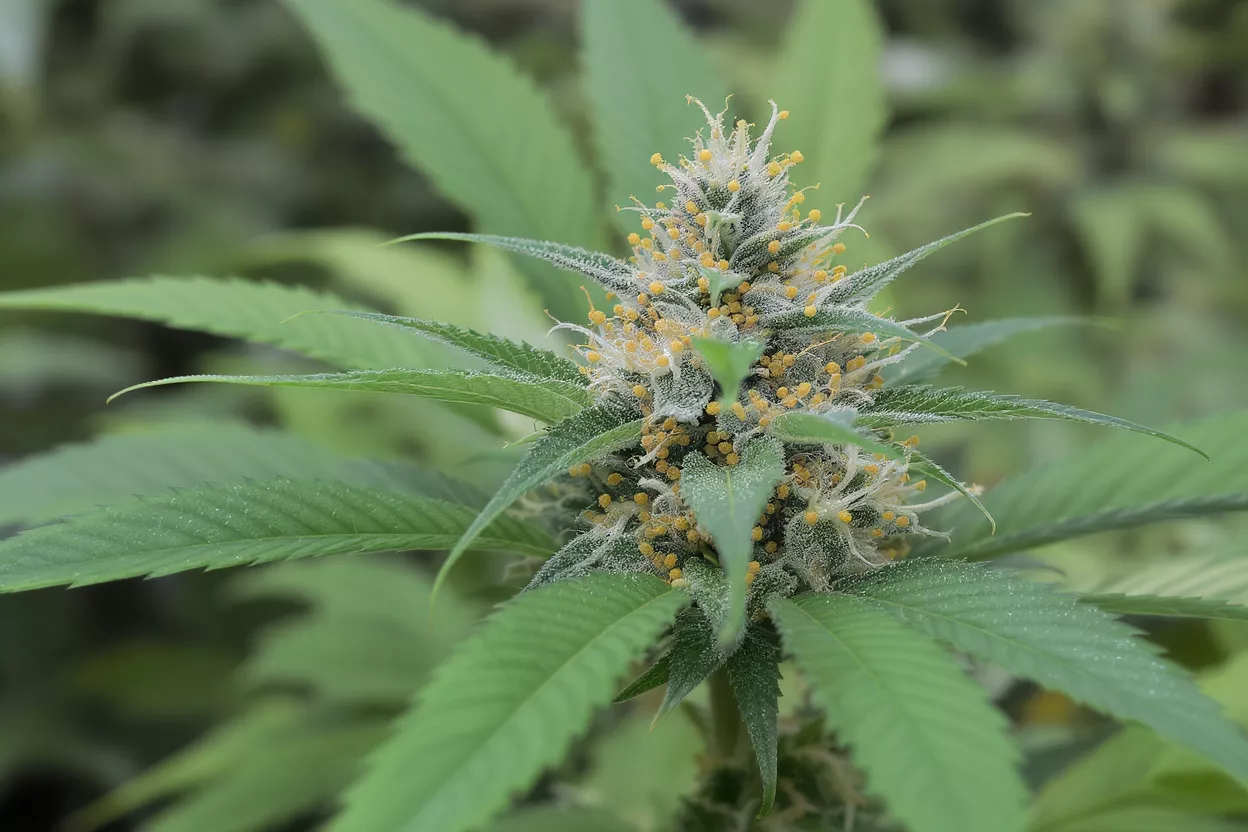
Where pollen forms on the plant: Pollen develops inside small structures called anthers, which are housed within the male flower's pollen sacs. These sacs resemble tiny clusters of bananas or bells hanging from the nodes and branches. As the plant matures into its flowering stage, the sacs swell, eventually splitting open to release their contents into the surrounding air.
Male plants generally show their sex earlier than females, often days before females reveal their pistils. This head start is a reproductive strategy: by maturing first, the male ensures pollen is airborne and ready by the time nearby females become receptive. The timing is driven by the same shift in light cycle that triggers flowering in females.
A single mature male plant can produce an astonishing volume of pollen — enough to fertilize an entire field of females. This is why even one overlooked male in an indoor tent or outdoor plot can compromise a whole crop. The grains are light enough to drift on the faintest breeze and small enough to slip through ventilation systems.
What Does Pollen Look Like Under a Microscope?
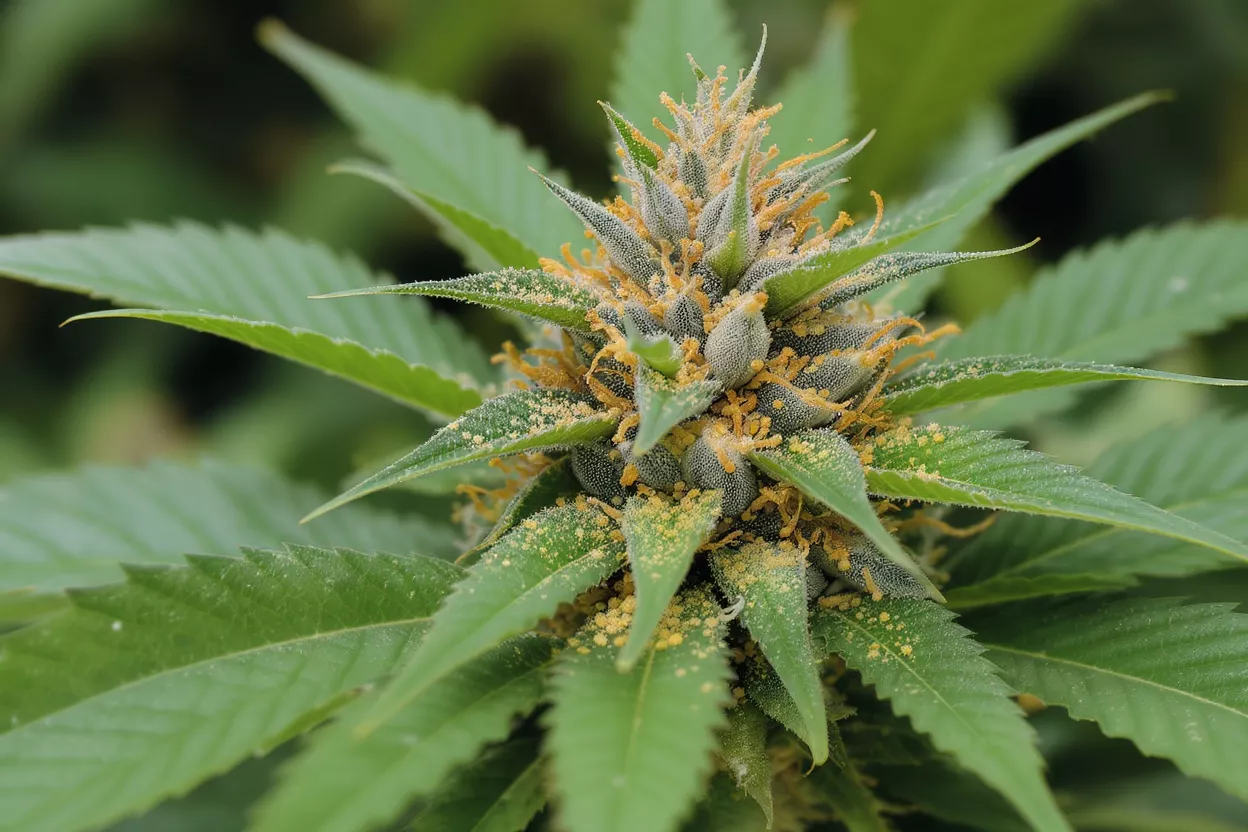
To the naked eye, cannabis pollen appears as a pale yellow or off-white dust, almost indistinguishable from fine flour or the dust that collects on a windowsill. It is easy to overlook a light dusting on leaves or work surfaces, which is part of what makes it so easy to spread accidentally.
Microscopic structure: Under magnification, each grain reveals itself as a roughly spherical or slightly oval cell with a textured outer wall. This protective coating, called the exine, shields the delicate genetic cargo inside from drying out and from minor physical damage. The grain's small size — typically around 25 to 30 microns — allows it to travel efficiently through the air.
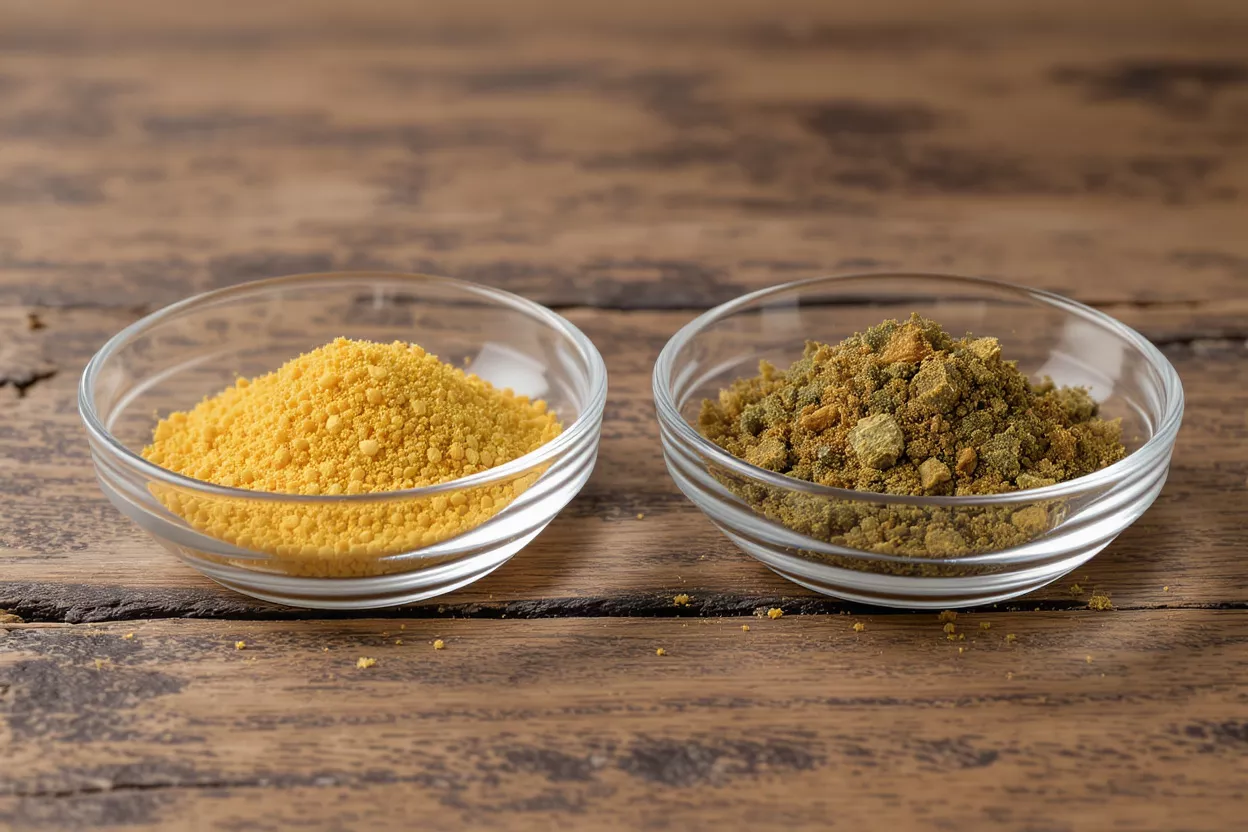
The visual similarity between pollen and kief causes endless confusion among new growers. The two substances are completely different in origin and purpose, even though both appear as a fine golden powder. We'll untangle that distinction in a later section.
How Pollen Fertilizes Female Plants
The role of pistils: Female flowers produce delicate, hair-like structures called pistils, each tipped with a sticky pair of stigmas. These stigmas are the landing pads for airborne pollen. When a grain lands on a receptive stigma, it adheres to the moist surface and begins the fertilization process almost immediately.
Once attached, the pollen grain germinates and sends out a slender pollen tube that grows down through the pistil toward the ovule waiting at the base of the flower. The male genetic material travels down this tube and fuses with the female gamete, completing fertilization. From this union, a seed begins to develop.
After successful pollination, the female plant redirects its energy. Instead of producing more resin and swelling her flowers, she pours resources into maturing seeds. This is precisely why seedless cannabis is so highly prized — an unpollinated female keeps producing trichomes and cannabinoids in a continued, frustrated attempt to attract pollen that never arrives.
How to Collect Cannabis Pollen
For breeders, collecting clean pollen is a foundational skill. The process begins by isolating a chosen male plant well away from any females, ideally in a separate room or sealed space, to prevent premature or unwanted fertilization. Patience is essential — the pollen sacs must be allowed to mature until they are plump and just beginning to open.
A simple collection method: Many breeders gently shake or tap the mature flowers over a clean sheet of wax paper, a mirror, or a glass surface. The released grains accumulate as a fine layer that can be carefully gathered. For more control, some growers remove entire pollen sacs, dry them, and crush them to extract every last grain.
Cleanliness is critical at every step. Stray plant matter, moisture, and contaminants reduce pollen viability and can introduce mold. Below are the essentials for a successful collection session:
- 🧤 Isolation: Keep the male far from females to avoid accidental drift before you're ready.
- 📄 Clean surface: Use wax paper, glass, or a mirror to catch falling grains.
- ⏳ Timing: Harvest when sacs are swollen and just starting to split open.
- 🧊 Dryness: Ensure the collected pollen is fully dry before storage to prevent mold.
How to Store Pollen Properly
Cannabis pollen is notoriously short-lived. At room temperature and exposed to air, viable pollen may last only a few days to a couple of weeks before it loses the ability to fertilize. The two great enemies of pollen are moisture and heat, both of which rapidly degrade the genetic material inside each grain.
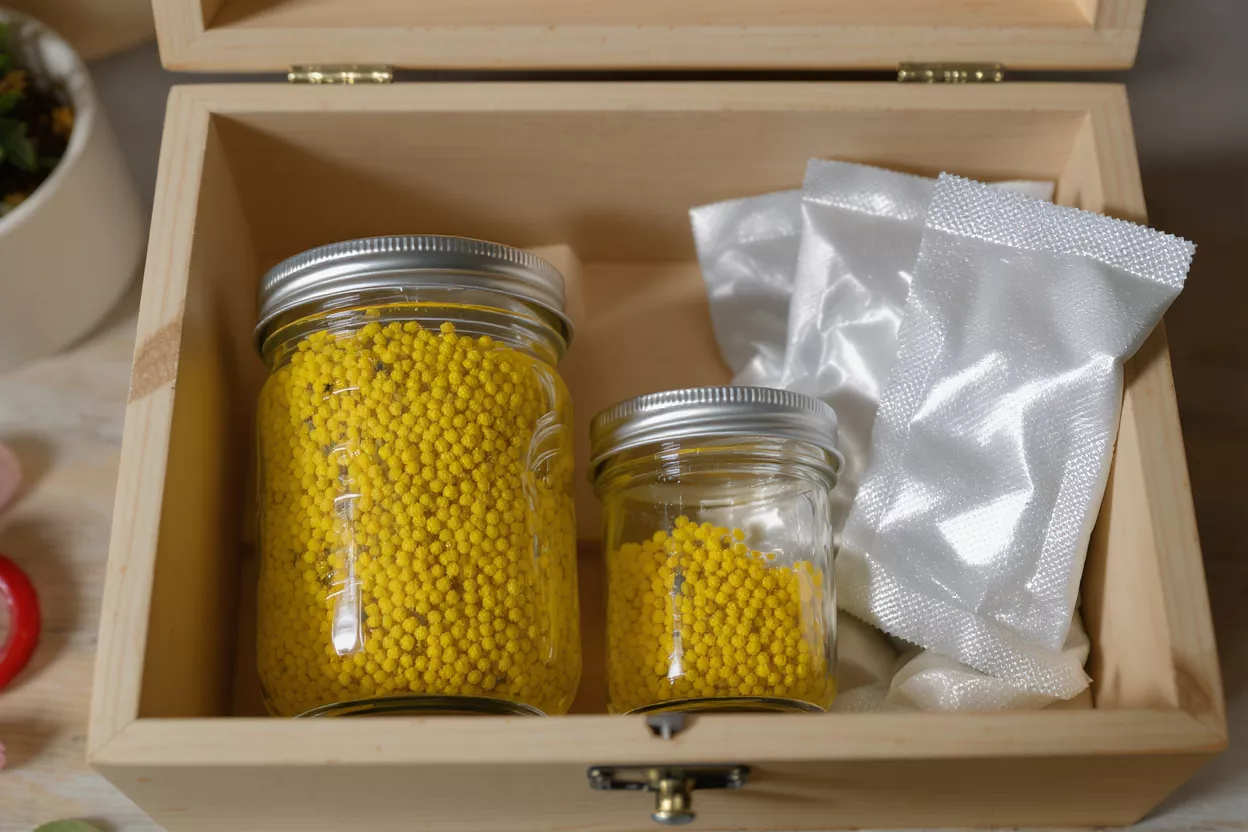
Extending pollen life through freezing: To preserve pollen for months or even a year, breeders dry it thoroughly and then freeze it. A common technique is to mix the dried pollen with an equal or greater amount of flour, which acts as a desiccant and buffer against humidity. The mixture is sealed in an airtight container with a desiccant pack and placed in a freezer.
When you're ready to use frozen pollen, allow the sealed container to return to room temperature before opening it. Opening a cold container in a warm room invites condensation, and that stray moisture can kill an entire batch of carefully preserved genetics in moments. Proper storage transforms pollen from a fleeting resource into a long-term genetic library.
Using Pollen for Breeding and Seed Production
Breeding is where pollen reveals its true value. By selecting a male with desirable traits and applying its pollen to a chosen female, a breeder combines the genetics of two plants to create offspring that may inherit the best of both. This deliberate crossing is how new cultivars are born and how existing lines are improved over generations.
Controlled pollination techniques: Rather than releasing pollen freely, careful breeders apply it with precision. Using a small brush or by isolating a single branch inside a sealed bag, a breeder can pollinate just one part of a female plant. This allows the same plant to produce both seeds on the pollinated branch and seedless flower elsewhere — a practical approach for hobbyists with limited space.
The genetic outcomes of breeding depend heavily on the stability of the parent plants. Working with well-documented genetics gives more predictable results, while crossing unknown plants can produce surprising variation. Breeders often track several factors when planning a cross:
- 🌱 Parent vigor: Strong, healthy parents tend to pass on resilience to their offspring.
- 🧬 Trait stability: Stable genetics yield consistent traits across the seed batch.
- 🌸 Desired characteristics: Aroma, potency, yield, and flowering time all guide male selection.
- 📋 Record keeping: Documenting each cross makes future breeding decisions far easier.
Pollen vs Kief: Clearing Up the Confusion
Few topics generate as much beginner confusion as the difference between pollen and kief. Both appear as a fine, golden powder, and the resemblance has led some retailers and old-school growers to call kief "pollen" — a misleading habit that persists in cannabis slang to this day.
What actually sets them apart: Pollen is a reproductive substance produced by male plants for fertilization. Kief, by contrast, is the collection of resinous trichome heads knocked loose from female flower. Kief is rich in cannabinoids and terpenes and is prized for making hash and adding potency to a bowl. Pollen contains no meaningful cannabinoids and is useless for consumption.
The practical takeaway is simple: if a fine powder is being sifted from dried buds and people are smoking it, that's kief. If it's a yellow dust shaken from the banana-shaped sacs of a male plant and used to make seeds, that's true pollen. Confusing the two can lead to disappointment — and potentially to accidentally pollinating your garden if you mishandle the real thing.
Preventing Accidental Pollination
For anyone growing for flower rather than seed, accidental pollination is the nightmare scenario. A single rogue male — or a hermaphrodite female that develops pollen sacs under stress — can seed an entire crop, slashing both quality and yield. Vigilance throughout the early flowering period is the best defense.
Spotting and removing males early: The key is to identify and remove male plants before their pollen sacs open. Inspect the nodes of every plant as flowering begins, looking for the small, smooth, ball-shaped pre-flowers that signal a male. Females, by contrast, reveal thin white pistils. Remove suspected males gently to avoid jostling open any sacs that may already be maturing.
Environmental control matters as well, because pollen travels on air currents and clings to clothing, hands, and tools. A few precautions dramatically reduce the risk of contamination:
- 🔍 Frequent inspection: Check plants daily during early flower for male pre-flowers.
- 🚪 Separation: Quarantine any suspected males immediately, in a different room if possible.
- 🧼 Hygiene: Wash hands and change clothing after handling males to avoid carrying grains.
- 💨 Airflow awareness: Remember that ventilation can carry pollen between spaces.
Why Pollen Matters for Every Grower
Whether you see it as a threat or a tool, pollen sits at the heart of cannabis cultivation. For the flower grower, understanding pollen means knowing exactly what to watch for and how to keep a garden seedless and potent. For the breeder, mastering pollen collection, storage, and application opens the door to creating entirely new genetics tailored to specific goals.
The more you learn about how pollen forms, travels, and fertilizes, the more control you gain over your own results. A grower who can identify a male at the first sign of pollen sacs protects their harvest. A breeder who can preserve viable pollen across seasons builds a living library of genetics to draw from year after year.
Ultimately, pollen is a reminder that cannabis is a living, reproducing organism with its own biological imperatives. Respecting that biology — rather than ignoring it — is what separates the casual hobbyist from the confident cultivator. Master the role of pollen, and you hold one of the fundamental keys to growing and breeding cannabis with intention and skill.
Comments