

Joint
Learn everything about the joint — from rolling techniques and paper types to filters and styles.
What Is a Joint in Cannabis Culture
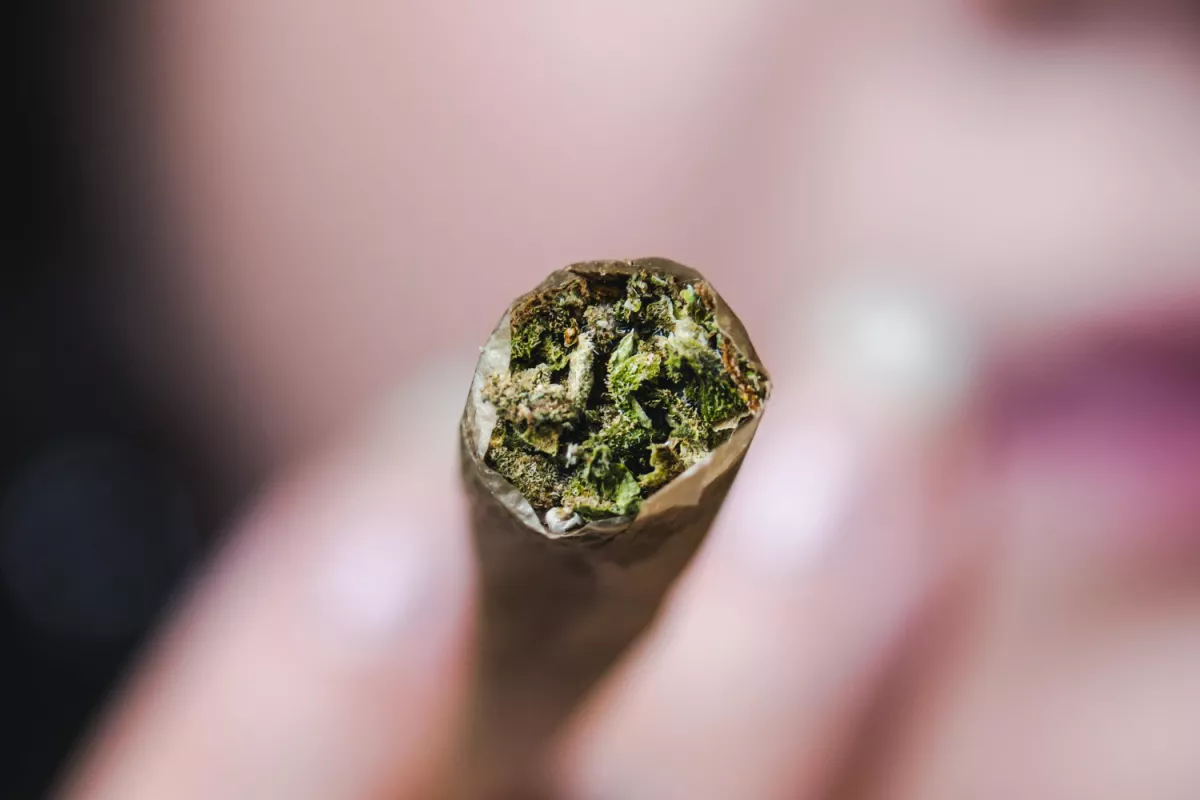
The joint is arguably the most recognizable symbol of cannabis consumption, a hand-rolled cylinder of ground flower wrapped in thin paper and twisted or tucked at the ends. For decades it has served as the entry point for new consumers and the ritual of choice for seasoned ones, bridging the gap between casual social use and dedicated solo sessions. Its simplicity is part of its enduring appeal: no glass, no batteries, no maintenance, just paper and plant.
Why the joint became iconic: Long before vaporizers and dab rigs entered the scene, the joint was the great equalizer. It required almost no equipment, traveled easily, and could be shared hand to hand. That portability and social character cemented it in music, film, and counterculture, turning a humble paper tube into shorthand for the entire cannabis experience.
At its core, a joint is simply ground flower rolled in a combustible paper. When lit, the cannabis combusts and the smoke is drawn through the tube and inhaled. Unlike a pipe or bong, nothing is reusable, and the entire object is consumed during the session. This disposability is both its charm and its limitation, making it perfect for one-off occasions but less economical than a glass piece over the long run.
Joint vs Blunt vs Spliff: Key Differences
Newcomers often use "joint," "blunt," and "spliff" interchangeably, but each refers to a distinctly different roll. Understanding the differences helps you choose the right format for the experience you want, whether that means a clean cannabis-only burn or a tobacco-infused blend.
The distinction comes down to two variables: what the cannabis is wrapped in, and what it is mixed with. A joint uses thin rolling paper and contains pure cannabis. A blunt uses a tobacco leaf or cigar wrap, while a spliff blends cannabis with tobacco inside a standard rolling paper. Each produces a different flavor, burn rate, and effect profile.
- 🌿 Joint: Pure ground cannabis rolled in thin paper made from rice, hemp, or wood pulp. Clean flavor, no nicotine.
- 🚬 Spliff: A mix of cannabis and tobacco in a standard rolling paper. Common in Europe, adds a nicotine head-rush and faster burn.
- 🍂 Blunt: Cannabis wrapped in a tobacco leaf or hollowed cigar wrap. Larger, slower-burning, with a heavier, earthier taste.
For most North American consumers, the joint remains the default. It keeps the focus on the terpenes and cannabinoids of the flower itself, free from the masking effect of tobacco. If you want to taste a strain's true character, the joint is the purest combustion method short of a clean glass pipe.
How to Roll a Joint Step by Step
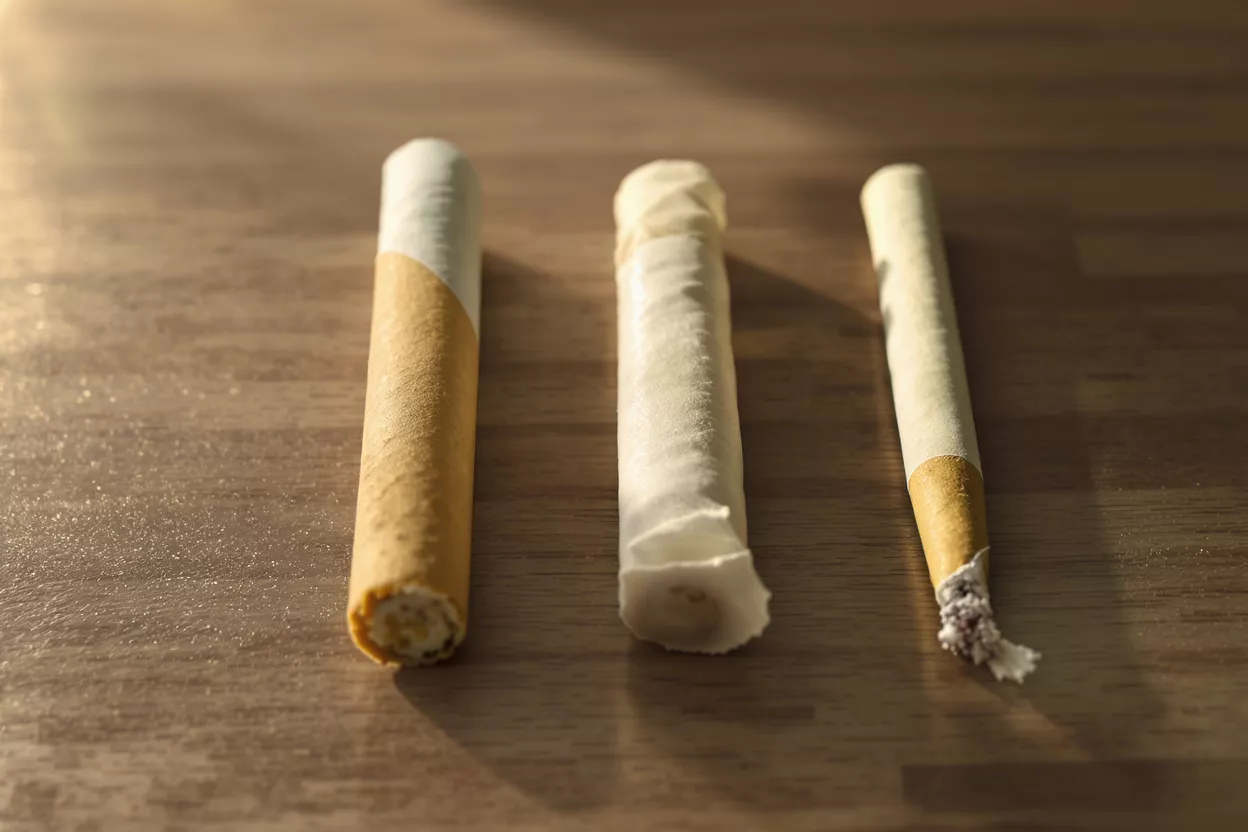
Learning to roll a joint is a rite of passage, and while it looks intimidating, the mechanics are straightforward once you understand the geometry. The goal is an evenly packed cylinder that burns smoothly from tip to tail without canoeing or running. Patience matters more than speed; your first few attempts will be loose or lumpy, and that is completely normal.
The basic rolling sequence: Start by grinding your flower to a consistent, fluffy texture. Uneven chunks create hot spots and uneven burns. Shape a crutch or filter tip, lay it at one end of the paper, then distribute the ground flower evenly along the length. The actual roll is a tucking-and-rolling motion that compresses the cannabis into shape before you lick and seal the adhesive strip.
- 🌱 Grind: Break down flower to an even, fluffy consistency using a grinder for the smoothest burn.
- 📄 Crutch: Fold a small accordion at one end of a thin cardboard strip and roll it into a cylinder.
- 👐 Fill: Distribute ground flower evenly along the paper, leaving room at the crutch end.
- 🤏 Roll: Tuck the paper's edge under the flower and roll back and forth to shape and compress.
- 👅 Seal: Lick the adhesive strip and press it down, then twist the open tip to close.
Once sealed, give the joint a gentle tap on a hard surface to settle the contents toward the crutch, then twist the tip. A well-rolled joint should feel firm but not rock-hard; too tight and it will not draw, too loose and it will burn unevenly. Like any manual skill, rolling rewards repetition, and within a few sessions the motion becomes second nature.
Best Rolling Papers for Joints
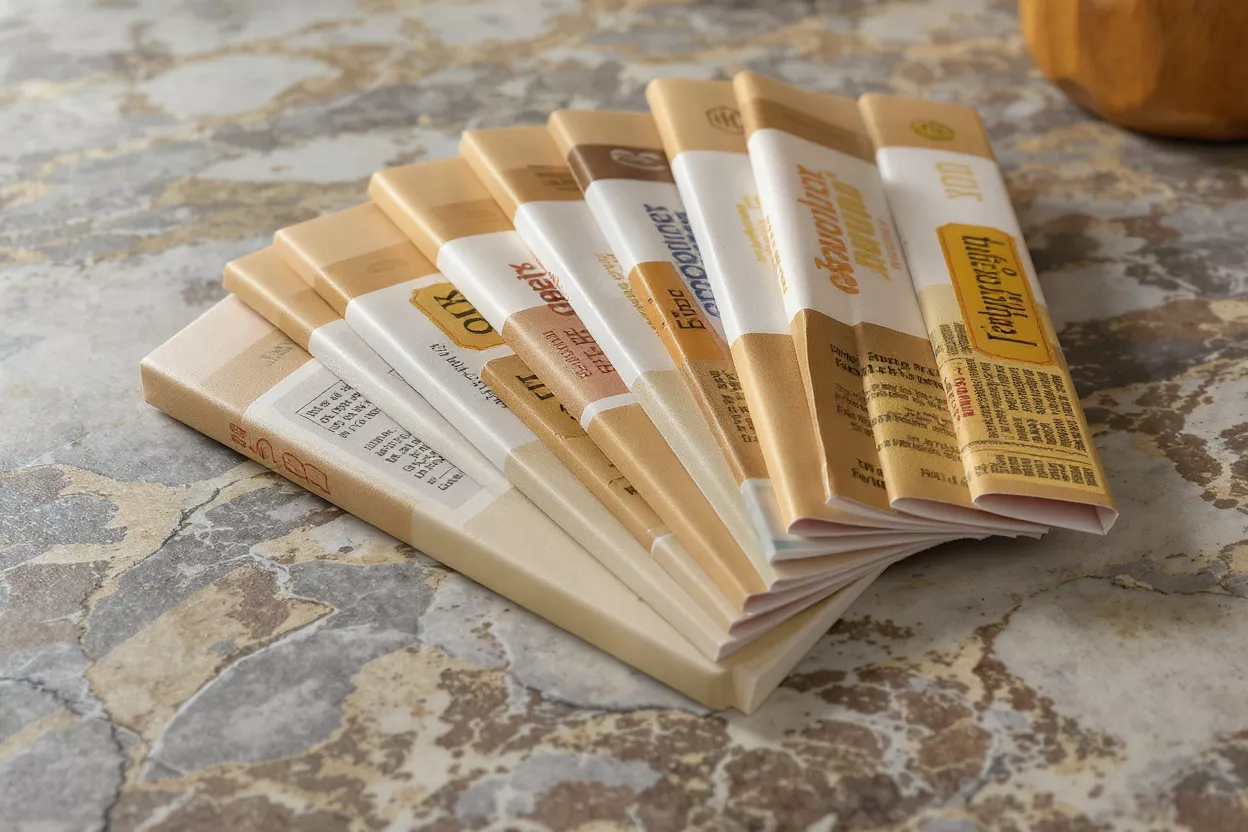
The paper you choose has a real impact on flavor, burn rate, and ease of rolling. Modern rolling papers come in a range of materials, sizes, and thicknesses, each suited to different preferences and skill levels. Thinner papers burn cleaner and let the flower's flavor shine, while thicker papers are more forgiving for beginners.
Material matters more than you think: Wood pulp papers are the classic white sheets, easy to handle but slightly heavier in taste. Rice papers are ultra-thin and nearly flavorless, prized by purists but trickier to roll. Hemp papers strike a balance, offering a slow even burn with a mild earthy note that complements cannabis well.
- 🌾 Rice paper: Thinnest option, minimal flavor, slow burn, best for experienced rollers.
- 🪵 Wood pulp: Classic, beginner-friendly, slightly faster burn and a touch more taste.
- 🌿 Hemp paper: Balanced burn and grip, mild earthy flavor, great all-around choice.
Size also matters. A single-wide paper suits a solo session, while king-size and 1¼ papers accommodate larger group rolls. Whichever you choose, store papers in a cool, dry place so the adhesive stays tacky and the sheets do not dry out or tear during rolling.
Why Use a Joint Filter or Crutch
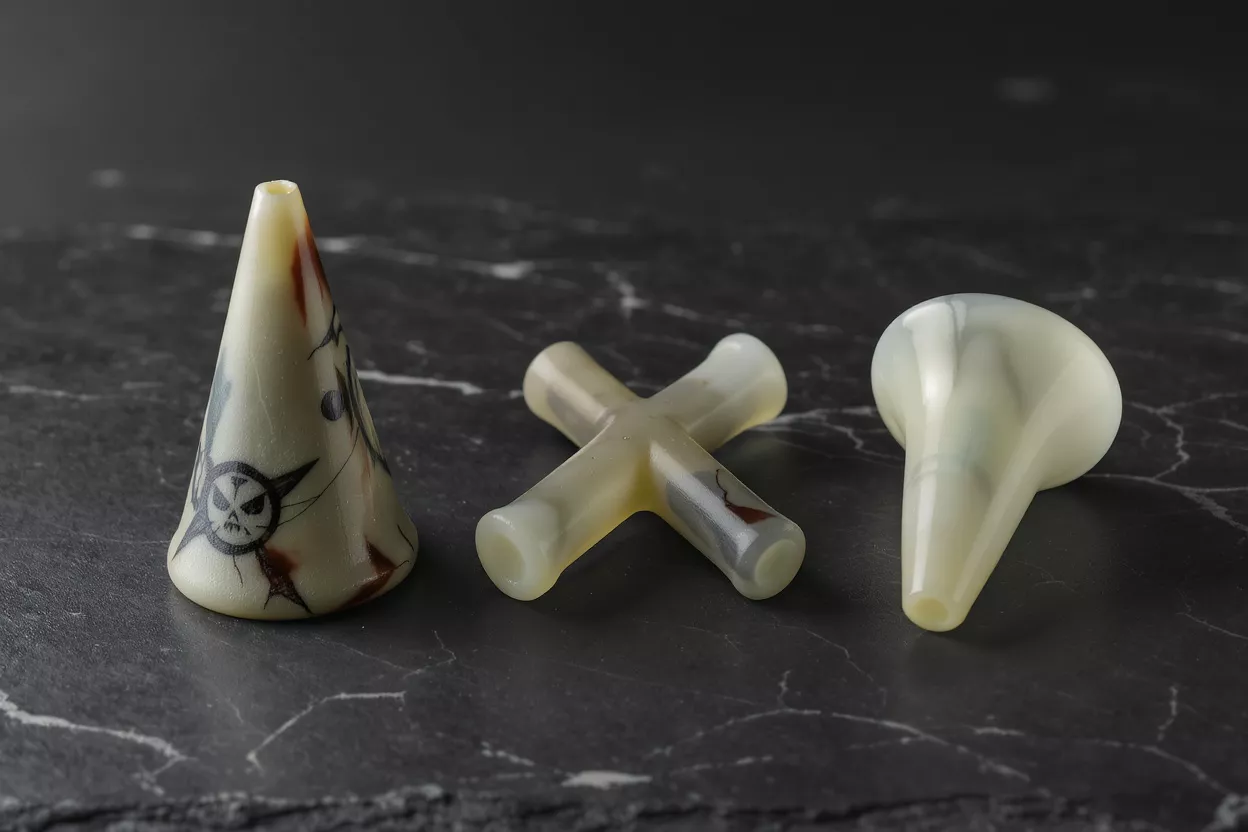
The small rolled piece of cardboard at the mouth end of a joint goes by many names: crutch, tip, or filter. Though optional, it dramatically improves the smoking experience and is worth the extra ten seconds it takes to make. Once you smoke a joint with a proper crutch, going back to a twisted-tip roach feels like a downgrade.
A crutch serves three practical functions. It keeps the open end structurally rigid so the joint does not collapse when you draw. It prevents loose flower from being pulled into your mouth, a common annoyance known as Scooby snacks. And it lets you smoke the joint all the way down without burning your fingertips or lips on the final embers.
- 🧱 Structure: Holds the mouth end open and rigid for a consistent, easy draw.
- 🛡️ Filtration: Blocks loose flower particles from reaching your mouth.
- 🔥 Efficiency: Lets you finish the joint without singeing your fingers.
It is worth noting that a cardboard crutch does not filter out tar or particulates the way a cigarette filter does; its role is structural and protective, not health-focused. Many smokers craft crutches from thin business-card stock or use pre-made glass and ceramic tips for a reusable, flavor-neutral option.
Types of Joints and Popular Rolling Styles
While the standard straight joint is the everyday workhorse, the rolling world is full of creative variations. Some are designed to hold more flower for group sessions, others are purely for showmanship, and a few improve the smoking dynamics in measurable ways. Exploring different styles is part of the fun once you have mastered the basics.
From practical to artistic: The classic straight joint is consistent and quick. The cone shape, wider at the lit end and narrow at the crutch, burns more evenly and is the format used by most pre-rolls. Beyond these, ambitious rollers create cross joints, tulips, and braided shapes that turn a session into a spectacle.
- 📏 Straight: Even diameter end to end, fast and easy to roll, the daily standard.
- 🍦 Cone: Tapered shape that burns evenly and holds more flower at the tip.
- ✝️ Cross joint: Three-paper construction with a perpendicular branch, made famous on film.
- 🌷 Tulip: Bulbous flower-filled head on a slim stem, designed for large shared sessions.
For consumers who would rather skip the manual work, a pre-roll delivers a machine-perfect cone ready to light. Pre-rolls offer convenience and consistency, though hand-rolling still gives you complete control over strain, paper, and density.
Why Joints Burn Slower Than a Bowl
One of the most practical advantages of a joint is its pace. Because the cannabis combusts gradually along the length of the paper rather than all at once, a joint provides a steady, extended session that suits sharing and slow enjoyment. This is a defining characteristic that sets the format apart from a packed bowl.
The physics of a slow burn: In a pipe or bong, you apply direct flame to a small concentrated pile of flower, igniting a large portion at once for a fast, potent hit. A joint instead burns a thin advancing line of cannabis fed by ambient airflow through the tube. This controlled smolder stretches the same amount of flower across many more minutes.
Burn rate also depends on how tightly you pack the joint, the paper material, and even the ambient humidity. A loosely packed joint races and may canoe down one side, while a properly compressed roll burns in a slow, even ring. Mastering this consistency is what separates a frustrating burn from a smooth one, and it ties directly back to grind quality and rolling technique.
How Much Flower Goes Into a Joint
A common question for new consumers is how much flower a typical joint holds. The answer varies by paper size and personal preference, but there are reliable benchmarks that help you plan a session and budget your stash. Understanding these amounts also helps you gauge potency and pace your consumption responsibly.
A standard single-wide joint typically holds between 0.3 and 0.5 grams of ground flower. King-size papers and cone formats can comfortably accommodate 0.75 grams to a full gram, making them better suited for groups. Most commercial pre-rolls land at half a gram, a deliberate sweet spot balancing duration and dose.
- 🌿 Single-wide: 0.3–0.5 g, ideal for solo or two-person sessions.
- 👥 King-size: 0.75–1.0 g, built for sharing in a circle.
- 🎁 Standard pre-roll: 0.5 g, the industry default for balance.
The amount of flower in a joint directly influences total THC consumed, so it pays to know the potency of your strain. A 0.5-gram joint of 20 percent THC flower contains roughly 100 milligrams of THC before combustion losses, far more than most edible doses, which underscores why pacing and sharing matter.
Common Joint Rolling Mistakes to Avoid
Even experienced smokers occasionally roll a dud, and beginners almost always make the same handful of errors. Recognizing these pitfalls early shortens the learning curve and saves you wasted flower. Most mistakes trace back to two culprits: uneven grind and inconsistent packing.
The usual suspects: Over-grinding turns flower to dust that packs too dense and chokes airflow, while under-grinding leaves chunks that create hot spots and canoeing. Rolling too loose produces a joint that burns fast and falls apart; rolling too tight makes it impossible to draw. Skipping the crutch leads to a soggy, collapsing mouth end.
- ⚠️ Uneven grind: Causes hot spots and lopsided burns. Aim for a uniform, fluffy texture.
- 💨 Too loose: Burns fast, runs, and spills flower. Compress gently but evenly.
- 🚫 Too tight: Restricts airflow so you cannot draw. Leave a little breathing room.
- 💧 Over-licking: A soggy seam tears and burns poorly. A light, even lick is enough.
The fix for nearly all of these is patience and consistency. Use a quality grinder, distribute flower evenly, compress with light steady pressure, and seal with a minimal amount of moisture. A few thoughtful rolls beat a dozen rushed ones, and the muscle memory you build pays off every session afterward.
Are Joints Safe and How to Smoke Smarter
Any form of combustion produces smoke, and inhaling smoke carries inherent risks regardless of the plant being burned. Being honest about this helps consumers make informed choices. While the joint is a beloved cultural staple, it is worth understanding the tradeoffs and the steps you can take to reduce harm.
Burning cannabis creates tar, carbon monoxide, and other combustion byproducts similar to any smoke. Holding smoke in your lungs longer does not increase absorption meaningfully and only exposes lung tissue to more irritants. Choosing clean, additive-free papers and unbleached crutches reduces the extra compounds you inhale alongside the flower.
- 🌬️ Inhale normally: No need to hold smoke; cannabinoids absorb within seconds.
- 📄 Choose clean papers: Unbleached, additive-free rice or hemp papers burn cleaner.
- ⏱️ Pace yourself: Wait several minutes between draws to gauge effects and avoid overconsumption.
For those who want the ritual of inhalation with fewer combustion byproducts, dry-herb vaporizers heat flower below the point of combustion and are widely regarded as a gentler alternative. Still, the joint endures because of its simplicity, sociability, and the unmistakable flavor of freshly combusted flower. Roll thoughtfully, source quality flower and clean papers, pace your session, and the humble joint remains one of the most satisfying ways to enjoy cannabis. Whether you are perfecting your first roll or refining a decade-old technique, mastering the joint is a skill that rewards every consumer who takes the time to learn it.

Comments