Best Cannabis for Nerve Pain Guide: What to Know in 2026
Discover the best cannabis for nerve pain relief.
Finding the best cannabis for nerve pain can feel like navigating a maze of strain names, cannabinoid ratios, and conflicting advice. Neuropathic pain — the burning, tingling, electric-shock sensations caused by damaged or misfiring nerves — responds differently to treatment than the dull ache of inflamed muscles or joints. That difference matters enormously when you are choosing a product, because what soothes a sore back may do little for the shooting pains of diabetic neuropathy or sciatica. This guide walks through what the research actually shows, which cannabinoids and strains tend to help, and how to approach dosing without trial-and-error frustration.
Nerve pain is notoriously stubborn. Conventional medications like gabapentin and certain antidepressants help some people, but a significant number find them either ineffective or burdened with side effects. That gap is exactly why so many sufferers explore cannabis, and why understanding the plant's chemistry — not just its marketing — becomes essential. Throughout this guide we will treat cannabis as a tool to be used thoughtfully, with realistic expectations and an eye toward what makes neuropathic pain distinct from other types of discomfort.
What Is the Best Cannabis for Nerve Pain?
There is no single "best" cannabis for nerve pain — there is a best fit for your specific neuropathy. The phrase gets searched constantly, but the honest answer is that the right choice depends on your pain pattern, your tolerance, the time of day you medicate, and whether you want to stay clear-headed. A daytime professional managing chemotherapy-induced neuropathy needs something very different from a retiree using cannabis to sleep through diabetic foot pain. The goal is to match the plant's chemistry to your nervous system, not to chase a trophy strain.
That said, certain patterns hold up across patient experiences and clinical observation. Cannabis with a balanced or CBD-forward profile tends to be the starting point most experts recommend for nerve pain, because cannabidiol modulates pain signaling without the intoxicating intensity of high-THC products. Some patients ultimately need THC for meaningful relief, but beginning with a gentler ratio reduces the risk of overshooting and feeling impaired before you have found your sweet spot.
Whole-plant products often outperform isolated cannabinoids. The "entourage effect" — the idea that cannabinoids and terpenes work better together than alone — appears especially relevant for neuropathic pain. A full-spectrum elixir or extract preserves the supporting compounds that a pure THC or CBD isolate strips away. When shopping, many patients gravitate toward full-spectrum CBD tinctures precisely because they capture this synergy in a controllable, low-fuss format.
How Cannabis Works on Nerve Pain
The endocannabinoid system sits at the heart of how cannabis affects nerve pain. Your body produces its own cannabinoids that bind to CB1 and CB2 receptors, which are densely concentrated in the nervous system and immune cells. When nerves are damaged, this signaling network becomes dysregulated — pain signals fire too easily and dampening signals weaken. Cannabis introduces plant cannabinoids that interact with these same receptors, helping to recalibrate an overactive pain pathway. Research compiled in journals indexed by MDPI has explored how cannabinoids modulate neuropathic signaling at the receptor level.
THC binds directly to CB1 receptors, which are abundant in the brain and along peripheral nerves. This direct activation is part of why THC can blunt the perception of nerve pain so effectively, though it is also why it produces a high. CBD works more indirectly — it influences how endocannabinoids are broken down, interacts with serotonin receptors involved in pain, and appears to calm the inflammatory component that often accompanies nerve injury. The two cannabinoids complement each other, which is why ratio matters so much.
Beyond the two headline cannabinoids, the plant's terpenes and minor compounds contribute. Curcumin from turmeric is sometimes paired with cannabis in wellness formulations for its anti-inflammatory reputation, and certain terpenes like eucalyptol and fenchol may add subtle supportive effects. Nerve pain is rarely a single mechanism, so a multi-target approach often makes intuitive sense.
Best Cannabis Strains for Nerve Pain Relief
When people ask which strains help nerve pain, they usually want names — but a strain name only tells part of the story. The same name grown by two different cultivators can have meaningfully different chemistry. What matters more is the cannabinoid and terpene profile printed on the lab report. Still, certain cultivars have earned reputations among neuropathy patients for consistent, reliable relief.
Balanced and high-CBD cultivars tend to lead the pack for daytime nerve pain. Strains bred for roughly equal THC and CBD give you the analgesic benefit of THC with the buffering, anti-anxiety effect of CBD. These are often the easiest entry point for someone new to using cannabis medicinally, because they reduce the chance of feeling uncomfortably high while still addressing the underlying pain.
- 🌿 Balanced THC:CBD hybrids: Ideal first choice for neuropathy; relief without heavy intoxication.
- 🌙 Sedating indica-dominant strains: Best for nighttime nerve pain that disrupts sleep.
- ☀️ CBD-forward cultivars: Daytime relief that keeps you functional and clear.
- 🔥 Myrcene-rich varieties: Add a body-heavy, muscle-relaxing quality many find soothing.
- 🌸 Linalool-rich flowers: Floral, calming profiles that ease the anxiety pain often brings.
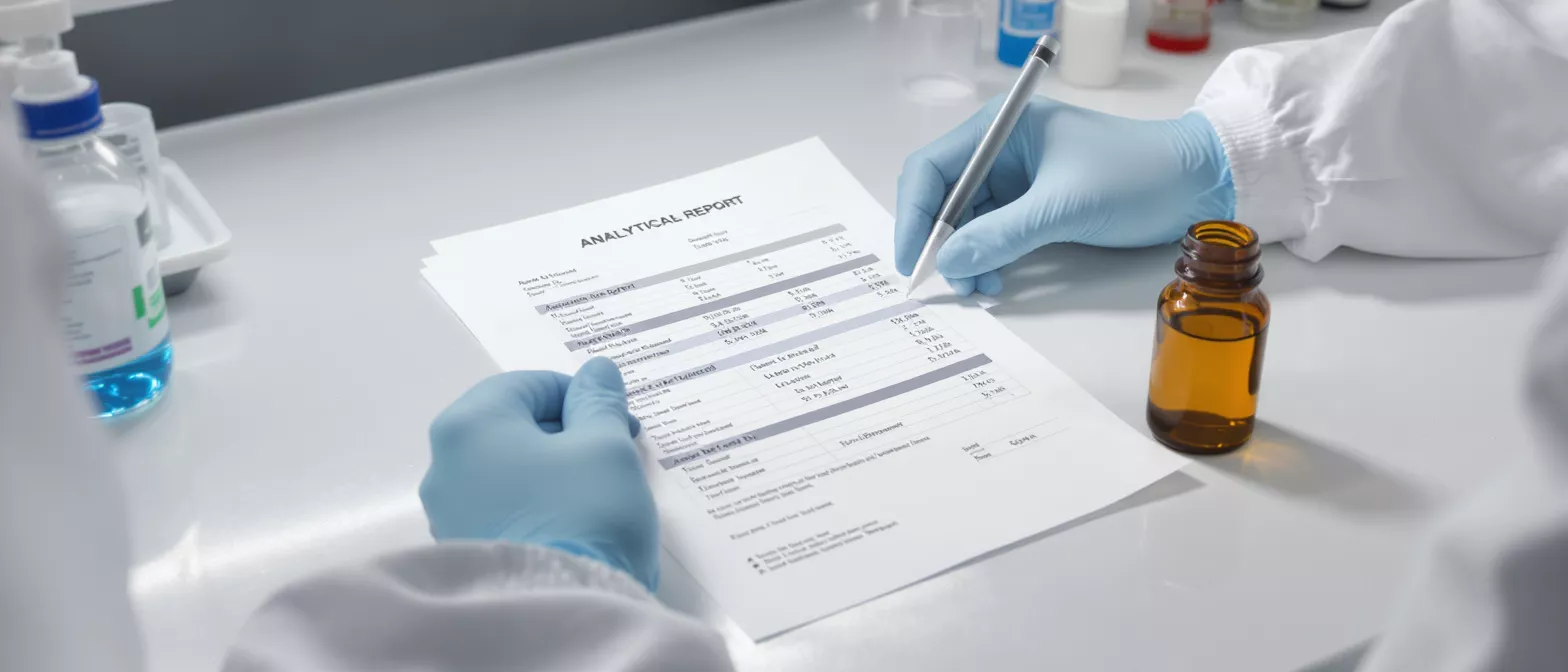
Rather than fixating on a marketing name, read the certificate of analysis. A cultivar's myrcene, caryophyllene, and linalool content will predict how it feels far better than whether the label says "indica" or "sativa." An experienced extraction artist or dispensary budtender can often point you toward a fan leaf or flower whose profile matches what has worked for similar patients.
Indica vs Sativa for Nerve Pain
The indica-versus-sativa framework is more useful as a rough guide than a rigid rule. Botanically, the distinction has blurred almost to meaninglessness through decades of crossbreeding — nearly everything sold today is a hybrid. But the colloquial associations still carry practical weight: "indica" generally signals a relaxing, body-heavy, sedating experience, while "sativa" suggests a more energizing, cerebral one. For nerve pain, that body-versus-head distinction can guide your timing.
Indica-leaning products are the traditional pick for evening and nighttime nerve pain because their sedating quality helps quiet both the discomfort and the racing mind that pain can trigger. If neuropathy keeps you tossing at night, an indica-dominant edible or a few draws from a downstem-equipped piece before bed may help you settle. The heavy, couch-locked feeling many users describe is often welcome when the alternative is lying awake with burning feet. A study indexed through Healthline-style clinical summaries has noted cannabis's role in improving sleep quality among chronic pain patients.
Sativa-leaning options suit daytime use, when you need relief but cannot afford to be sedated. The tradeoff is that some sativa-forward strains can heighten anxiety in sensitive users, which is counterproductive since stress amplifies pain perception. This is where CBD content becomes your friend — a sativa with meaningful CBD tends to deliver daytime function without the jittery edge.
CBD and THC Ratios for Neuropathy
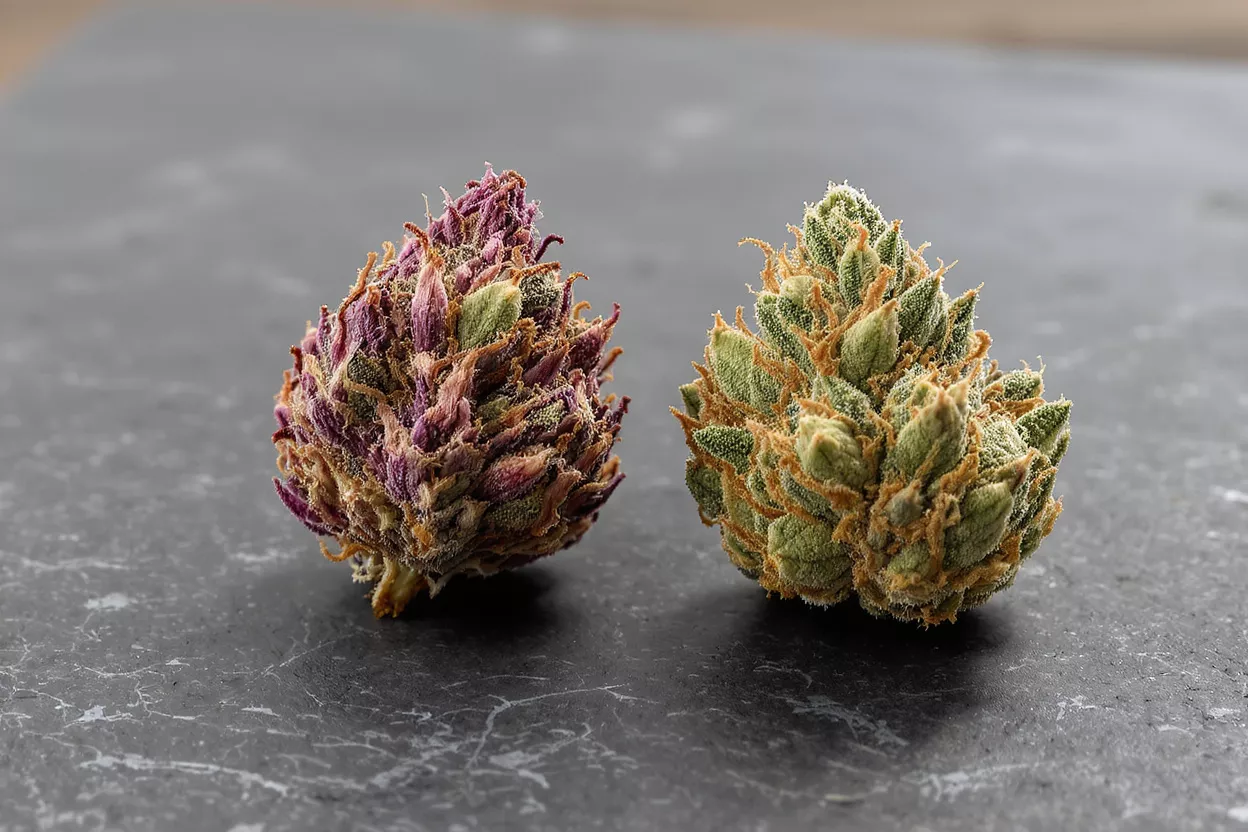
Ratio is arguably the single most important variable for nerve pain relief. The conversation about strains and product types ultimately comes back to how much THC sits alongside how much CBD. A 1:1 ratio is the classic starting recommendation for neuropathy because it balances analgesia against intoxication, and many patients find it the most comfortable long-term zone. Higher-CBD ratios like 2:1 or 4:1 suit those who are sensitive to THC or who need to function clearly.
For patients with severe, treatment-resistant nerve pain, THC-dominant ratios sometimes become necessary. There is no shame in needing more THC — neuropathic pain is genuinely difficult to treat, and the receptor-level activation THC provides can be the difference between coping and suffering. The key is to build tolerance gradually rather than starting at a high dose, which usually just produces discomfort without proportionally better relief.
- 💧 Start CBD-forward (2:1 or 4:1): Gentle introduction, minimal intoxication, good for sensitive users.
- ⚖️ Move to balanced (1:1): The neuropathy workhorse; strong relief with manageable high.
- 🌿 Escalate to THC-dominant only if needed: Reserve for stubborn, treatment-resistant nerve pain.
- 🌙 Adjust by time of day: Higher CBD for daytime function, more THC for nighttime relief.
Whatever ratio you choose, consistency helps your nervous system find a new baseline. Erratic dosing makes it hard to judge what is working. Keeping a simple log of ratio, dose, and effect for a couple of weeks will teach you more about your own response than any general guide can.
Types of Cannabis Products for Nerve Pain
Delivery method shapes how fast relief arrives and how long it lasts. Inhaled cannabis — whether through a dry-herb device, an e-rig, or a traditional piece — acts within minutes, making it ideal for breakthrough nerve pain that flares suddenly. The tradeoff is a shorter duration, typically two to four hours. Many patients keep an inhalation option for acute spikes and a longer-acting product for steady baseline coverage.
Edibles and capsules take 30 to 90 minutes to work but can provide six to eight hours of relief, which makes them excellent for overnight neuropathy or all-day baseline management. Because edibles are processed by the liver into a more potent metabolite, they hit harder than the same dose inhaled — a crucial reason to start low. Tinctures and an oral elixir offer a middle ground, with faster onset than edibles when held under the tongue.
Topicals deserve special mention for localized nerve pain. A salve, balm, or emulsion applied directly to the painful area — diabetic foot pain or a specific patch of neuropathy — can deliver cannabinoids to local receptors without entering the bloodstream meaningfully, so they produce no high. Many people layer a topical over a low-dose internal product. For convenient localized relief, CBD topical balms are a popular non-intoxicating addition to a nerve pain routine.
- 💨 Inhalation: Fast onset, short duration; best for sudden flare-ups.
- 🍬 Edibles & capsules: Slow onset, long-lasting; ideal for overnight and baseline relief.
- 💧 Tinctures: Flexible dosing and moderate onset when held sublingually.
- 🧴 Topicals: Targeted, non-intoxicating relief for localized nerve pain.

Cannabis Dosing Guide for Nerve Pain
"Start low and go slow" is not a cliché — it is the foundation of safe, effective dosing. For edibles, that means beginning with 2.5 to 5 milligrams of THC and waiting a full two hours before considering more. For tinctures, a few milligrams sublingually lets you titrate carefully. The mistake most newcomers make is redosing too quickly, then feeling overwhelmed when both doses land at once.
Nerve pain often responds best to steady, low-level cannabinoid presence rather than occasional large doses. This is the principle behind microdosing: small amounts taken regularly to keep your endocannabinoid system gently engaged. Many neuropathy patients find that consistent low doses through the day, with a slightly larger dose at night, manages their pain better than waiting until it becomes severe and then taking a lot.
Tolerance is real and worth respecting. If you find yourself needing steadily more to achieve the same effect, a short tolerance break of a few days can reset your sensitivity and restore the product's potency. Building tolerance is not failure — it is simply how the receptor system adapts — but periodic resets keep your effective dose, and your costs, in check.
Terpenes That Support Nerve Pain Relief
Terpenes are the aromatic compounds that may explain why two strains with identical THC content feel completely different. Beyond their scent, several terpenes appear to contribute to pain modulation and the broader entourage effect. For nerve pain specifically, beta-caryophyllene stands out because it actually binds to CB2 receptors directly — behaving almost like a cannabinoid — and is associated with anti-inflammatory and analgesic activity.
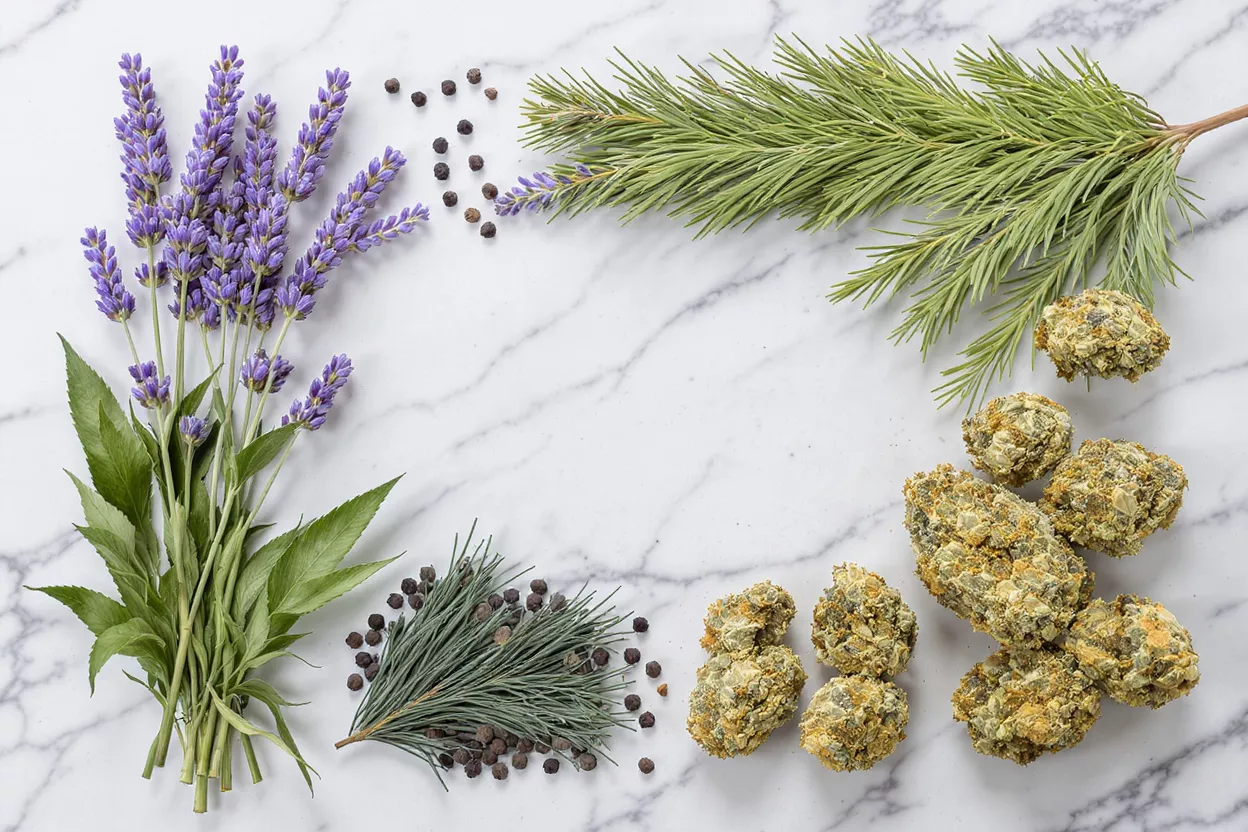
Myrcene, the most common cannabis terpene, contributes the sedating, muscle-relaxing "couch-lock" quality and may enhance the permeability that lets cannabinoids reach receptors. Linalool — the same compound that makes lavender calming — brings anti-anxiety and pain-dampening properties that pair naturally with neuropathy's stress component. Eucalyptol and fenchol appear in smaller quantities but add to the aromatic complexity and may offer mild supportive effects.
- 🌶️ Beta-caryophyllene: Binds CB2 receptors directly; anti-inflammatory and analgesic.
- 😴 Myrcene: Sedating and muscle-relaxing; supports nighttime relief.
- 💜 Linalool: Calming and anti-anxiety; eases the stress that worsens pain.
- 🌲 Eucalyptol & fenchol: Minor terpenes adding aromatic depth and mild support.
When you understand terpenes, the certificate of analysis becomes a far richer tool than the strain name. Looking for products rich in caryophyllene and linalool is often a smarter strategy for nerve pain than chasing a specific cultivar. Some patients seek out terpene-rich full-spectrum extracts specifically to capture these supporting compounds in concentrated form.
Are Cannabis Products for Nerve Pain Safe?
For most adults, cannabis has a favorable safety profile, but "safe" is not the same as "without considerations." The most common adverse effects — dizziness, dry mouth, fatigue, and short-term cognitive fog — are dose-dependent and usually mild. Unlike opioids, cannabis carries no risk of fatal respiratory depression, which is one reason it appeals to chronic pain patients seeking alternatives. Still, impairment is real, so you should never drive or operate machinery after THC.
Drug interactions deserve attention. CBD in particular can affect how the liver metabolizes certain medications, including some blood thinners and seizure drugs, by competing for the same enzymes. If you take prescription medication, a conversation with a knowledgeable physician or pharmacist before starting cannabis is genuinely important — not a formality. Quality also matters: contaminated products can introduce pesticides or residual ethanol from sloppy extraction, so buy lab-tested products from reputable sources.
Certain populations should be especially cautious. People with a history of psychosis, those who are pregnant or breastfeeding, and adolescents whose brains are still developing face elevated risks. For everyone else, starting low, choosing tested products, and staying mindful of your body's response keeps the risk profile manageable while you pursue relief from genuinely debilitating nerve pain.


CBD CBG Pain Tincture 1500mg – NOW+THEN
Targeted relief where regular CBD stops short. NOW+THEN's CBD+CBG Pain tincture combines two complementary cannabinoids at a robust 1500mg — a focused, whole-body approach to persistent aches. A measured dropper delivers steady, no-high comfort that builds into your routine. The higher-strength bottle for discomfort that needs more than CBD alone.
- Synergistic Pain Relief : Two cannabinoids work together
- Anti-Inflammatory Power : Reduces swelling and pain
- Neuropathic Support : Effective for nerve pain
- Fast Acting : Sublingual absorption in minutes
- Precise Control : Adjust dose for pain levels
How to Choose the Right Cannabis for Nerve Pain
Choosing the right cannabis for nerve pain comes down to matching chemistry, format, and timing to your life. Begin by clarifying your priorities: Do you need daytime function or nighttime sleep? Is your pain localized or widespread? Are you sensitive to THC or comfortable with intoxication? Your honest answers narrow the field dramatically before you ever read a single product label. Nerve pain is personal, and the right product reflects your specific pattern.
From there, let the lab report guide you rather than the marketing. Look for a balanced or CBD-forward ratio to start, note the terpene profile for caryophyllene and linalool, and choose a format that fits your needs — fast-acting inhalation for flares, long-lasting edibles for baseline, topicals for localized spots. Keep a brief log of what you try and how it feels, because that record turns guesswork into a refined, personal protocol over a few weeks.
Ultimately, the best cannabis for nerve pain is the one that lets you live your life with less burning, tingling, and electric discomfort — chosen thoughtfully, dosed conservatively, and adjusted as you learn. There is no shortcut around the personal calibration, but the payoff is real relief tailored to your nervous system. Approach it patiently, lean on lab data over hype, and consult a knowledgeable professional, and you will be far ahead of anyone simply grabbing the strongest product on the shelf. With the right approach, cannabis can become a dependable part of a thoughtful nerve pain strategy.