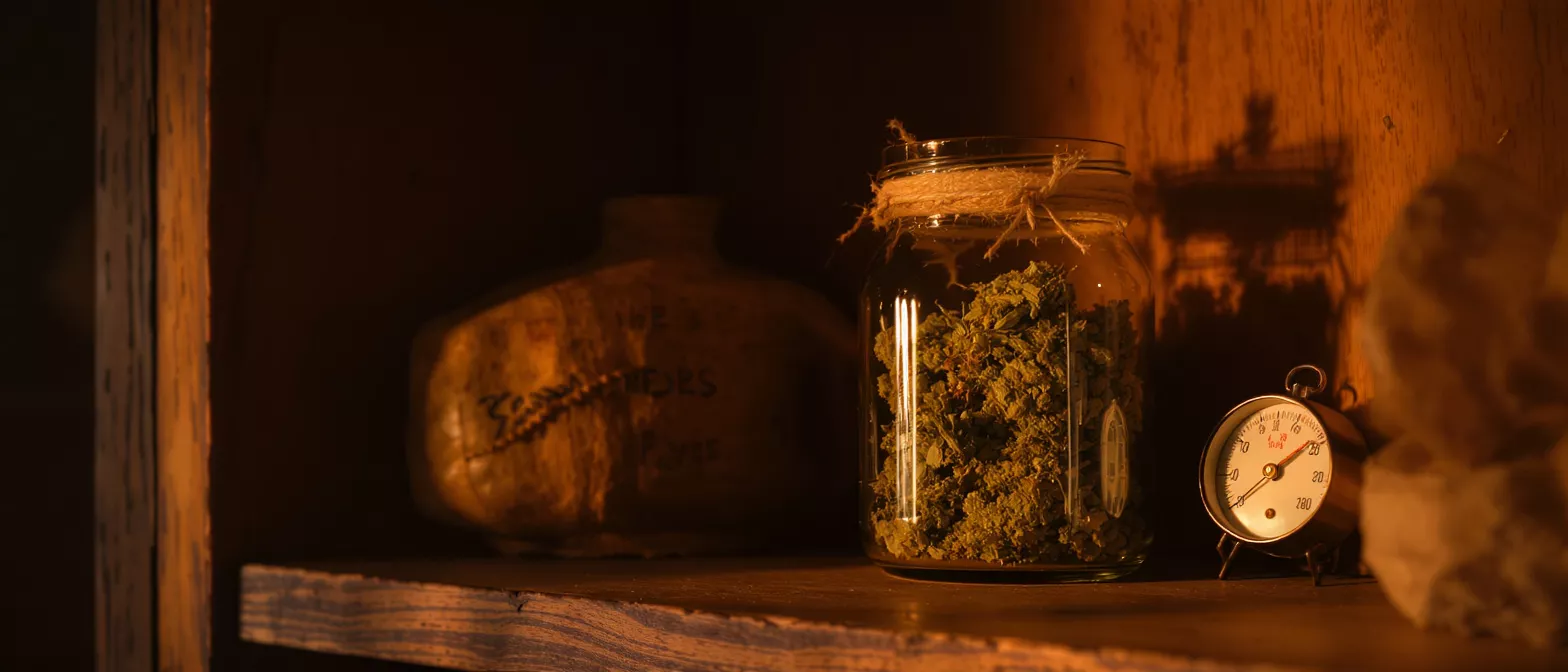
Best Cannabis Storage Guide: What to Know in 2026
Master cannabis storage with our 2026 guide.
Whether you cultivate your own harvest from feminized seeds or pick up a few grams from a dispensary, the way you store your stash determines how much of that flower's character survives until you actually use it. This best cannabis storage guide pulls together the chemistry, the gear, and the daily habits that keep buds potent, aromatic, and smooth. Cannabis is not a static product — it is a living botanical full of volatile compounds that drift away the moment they meet light, heat, oxygen, or the wrong humidity. Understanding what you are protecting is the first step toward a stash that tastes as good in month six as it did on day one.
Most people lose the better part of their cannabis quality not in a single dramatic mistake but through slow, invisible erosion. A jar left on a sunny windowsill, a baggie tossed in a hot car, a container opened a dozen times a day — each of these chips away at the trichomes that carry potency and flavor. The good news is that proper storage is neither expensive nor complicated once you grasp the four enemies of fresh flower and how to neutralize each one.
Why Cannabis Storage Matters More Than You Think
Preserving potency and value: Cannabis is a meaningful purchase, and letting it degrade is the same as throwing money away. The cannabinoids and terpenes that define an experience are fragile organic molecules. When THCA and THC oxidize, they convert into CBN, a compound associated more with sedation than the bright, multidimensional high a fresh flower delivers. According to the Society of Cannabis Clinicians, the chemical profile of cannabis — its full-spectrum extracts of cannabinoids and aromatic compounds — is what shapes both recreational and therapeutic outcomes, which means preservation is not a luxury but a core part of getting what you paid for.
Protecting flavor and aroma: The genotype of a given strain determines its terpene fingerprint, but storage decides how much of that fingerprint actually reaches your senses. Terpenes like fenchol and the geranyl-derived aromatics are some of the first compounds to evaporate when flower is exposed to air and warmth. A well-stored jar keeps that bouquet locked in, while a neglected one fades into a flat, hay-like smell within weeks.
Beyond chemistry, good storage is about safety and consistency. Improperly stored flower can develop mold, especially if residual moisture lingers after flushing and curing. Damp, warm conditions invite microbial growth that no amount of grinding will remove. A disciplined storage routine protects your health as much as your high, and it makes every session predictable instead of a gamble.
What Degrades Cannabis Flower Over Time
Four environmental forces drive cannabis degradation: light, heat, oxygen, and humidity. Each one acts on the delicate trichomes coating the buds, and together they accelerate the breakdown of cannabinoids and the loss of terpenes. Understanding how they work individually makes it obvious why a single all-purpose container solves most problems at once.
The science of cannabinoid breakdown: THC is not chemically stable. Exposure to ultraviolet light and oxygen oxidizes it into CBN at a measurable rate, and heat speeds that reaction dramatically. This is the same first-pass metabolism concept that affects edibles in the body — compounds transform as they pass through a process — except here the transformation happens in the jar before you ever consume it. A flavonoid-rich, terpene-heavy flower stored badly can lose a significant fraction of its punch in just a few months.
- ☀️ Light: UV rays are the single most destructive factor, breaking down cannabinoids faster than any other element.
- 🌡️ Heat: Warm temperatures evaporate terpenes and accelerate every chemical reaction degrading the flower.
- 💨 Oxygen: Air contact oxidizes THC into CBN and dries out the plant material over time.
- 💧 Humidity: Too much invites mold; too little turns buds brittle and harsh.
The interplay matters as much as any single factor. Heat and humidity together create the worst-case scenario, fostering mold while simultaneously cooking off the volatile aromatics. This is why storage location is as important as the container itself — a cool, dark, stable environment removes two threats before you even seal the lid.
Best Cannabis Storage Containers in 2026
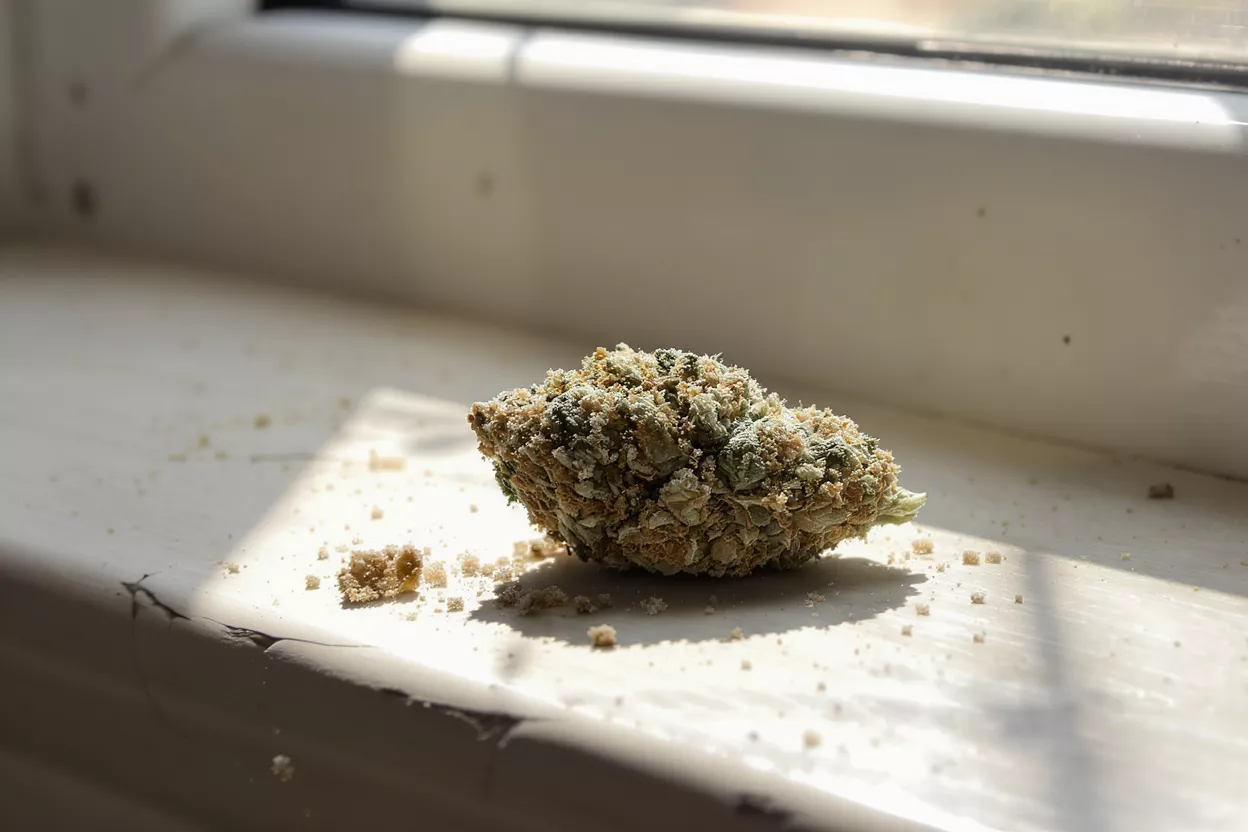
Why glass remains the gold standard: The humble glass mason jar continues to dominate for good reason. Glass is non-reactive, airtight when sealed, and does not impart any flavor or static charge to your flower. Plastic baggies, by contrast, carry a static charge that strips trichomes off the buds and cling to the jar walls, and some plastics can leach compounds over time. For anyone serious about preservation, an airtight glass storage jar is the foundational piece of any setup.
Beyond the basic mason jar, 2026 brings a wave of purpose-built solutions. UV-blocking jars tinted amber or violet filter out the harmful light spectrum while letting you peek at the contents. Vacuum-seal containers pull oxygen out entirely, and some premium options integrate humidity controls directly into the lid. For collectors managing multiple strains, opaque storage with separate compartments prevents cross-contamination of aromas.
- 🫙 Glass mason jars: Affordable, airtight, and inert — the reliable everyday choice.
- 🟣 UV-blocking jars: Tinted glass that shields flower from light degradation.
- 🔒 Vacuum-seal containers: Remove oxygen for long-term storage.
- 🌱 CVault and stainless steel tins: Pair with humidity packs for set-and-forget freshness.
Avoid the temptation to store flower in the grinder, in a wooden dugout, or in a clear plastic dispensary container long-term. These are fine for a day or two of carry but expose your cannabis to air, light, and material reactions that degrade it quickly. Match your container to your timeline — short-term carry versus long-term curing call for different tools.
How Humidity Affects Cannabis Storage
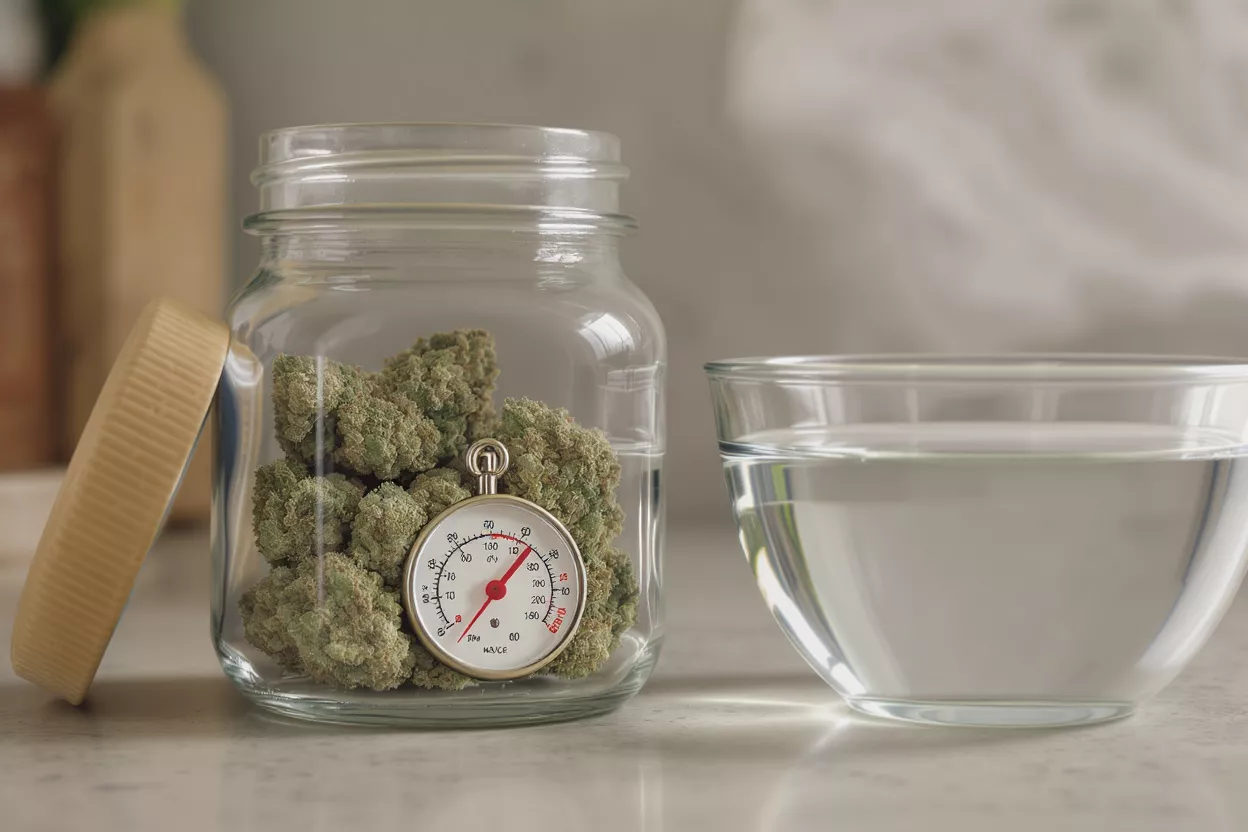
Humidity is the trickiest variable to master because both extremes cause harm. The widely accepted sweet spot for stored cannabis is a relative humidity between 55% and 62%. Within this band, buds stay supple and flavorful, trichomes remain intact, and the risk of mold stays low. Drift above it and you invite microbial growth; drop below it and the flower becomes brittle, harsh, and prone to crumbling into dust.
Two-way humidity packs explained: Products like Boveda and Integra Boost use a saturated salt solution to both absorb and release moisture, holding your jar at a target RH automatically. These are inexpensive, last for months, and remove nearly all the guesswork. Slipping a single two-way humidity control pack into each jar is the easiest upgrade most people can make to their storage game.
If you cured your own harvest properly after flushing the plants and drying slowly, the flower should arrive at storage already close to the ideal range. The curing process — sometimes called the slow burp — lets residual moisture redistribute and chlorophyll break down, which is what gives well-cured cannabis its smooth smoke. Humidity packs then maintain that hard-won balance indefinitely rather than fixing a flower that was rushed.
Ideal Temperature for Storing Cannabis
Temperature governs the speed of every degradation reaction inside the jar. The ideal storage temperature sits below 70°F (21°C), with a cool, stable cupboard or drawer being far better than any spot that swings with the day. Heat does double damage: it evaporates terpenes directly and it accelerates the oxidation that turns THC into CBN. A stash kept consistently cool will outlast an identical one stored warm by many months.
Should you store cannabis in the fridge or freezer? This is one of the most common questions, and the answer is usually no for everyday flower. Refrigerators introduce humidity swings every time the door opens, and condensation can form inside the jar, raising mold risk. Freezing is even riskier for cured flower because frozen trichomes become brittle and snap off at the slightest handling, robbing you of the very potency you are trying to preserve. The freezer has a narrow use case for long-term bulk preservation, but only with careful vacuum sealing and zero handling once frozen.
Stability beats coldness. A consistent 65°F in a dark closet protects flower better than a fridge cycling between cold and warm. Keep jars away from appliances that radiate heat, electronics, and exterior walls that bake in afternoon sun. The goal is an environment so boring and unchanging that your cannabis simply sits in suspended animation.
Light and Air: The Hidden Cannabis Storage Threats
Why light is the worst offender: Of the four enemies, ultraviolet light degrades cannabinoids the fastest. A clear jar on a shelf might look attractive, but it is slowly bleaching the potency out of your flower with every hour of exposure. The solution is simple and free: store containers in complete darkness, inside a drawer, cabinet, or opaque box. If you prefer to display your collection, UV-filtering tinted glass offers a compromise that blocks the damaging spectrum.
Air management is the other half of this pairing. Every time you open a jar, you swap stale, low-oxygen air for fresh, oxygen-rich air, restarting the oxidation clock. This is why portioning matters — keeping a small working jar for the week and a larger sealed jar for the rest of your supply minimizes how often the bulk gets disturbed. A reliable UV-blocking stash container handles both light and air in one purchase.
Headspace inside the jar also plays a role. A jar that is mostly empty holds a large volume of air against a small amount of flower, accelerating oxidation. As you use up a supply, transferring the remainder to a smaller container keeps the air-to-flower ratio low. It is a small habit that meaningfully extends the life of those last precious grams.
How Long Does Cannabis Stay Fresh in Storage
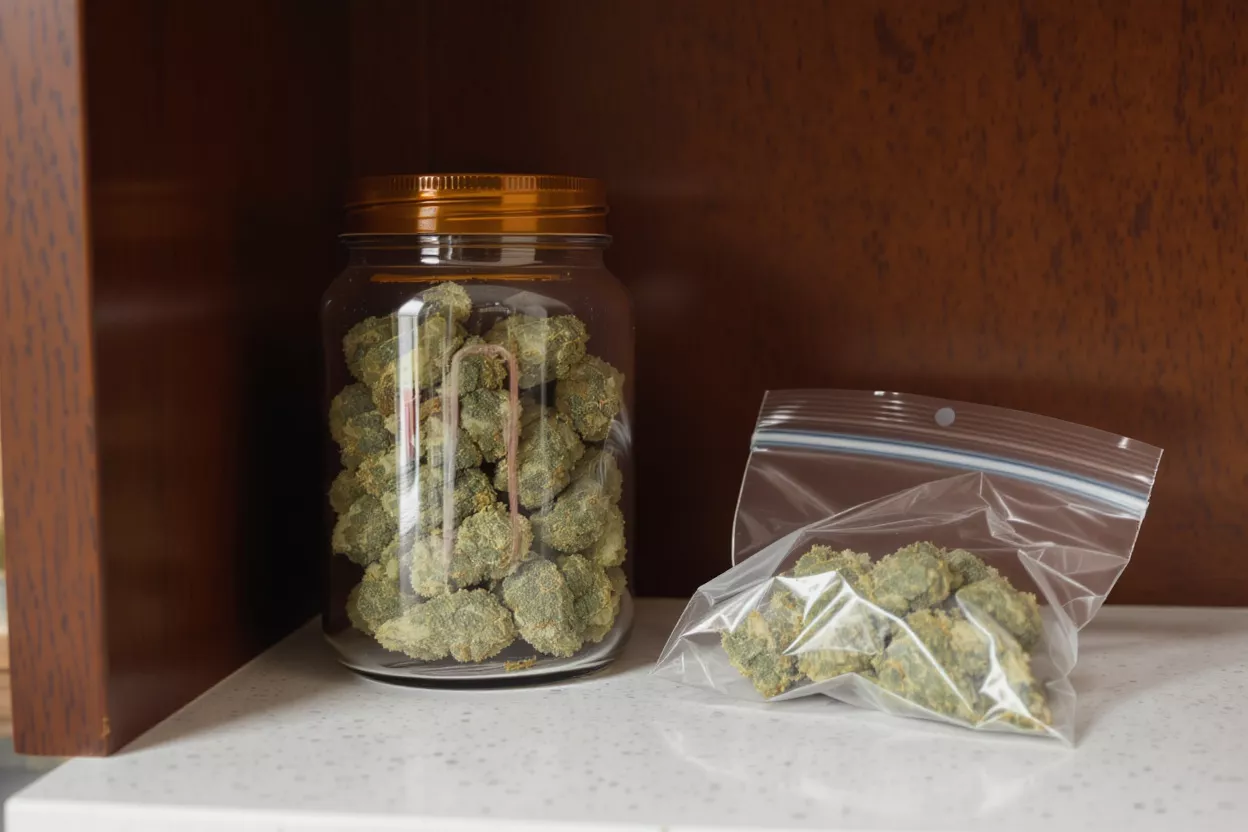
With proper storage, cured cannabis flower stays at peak quality for roughly six months to a year, and remains usable for considerably longer. Poorly stored flower, by contrast, can noticeably decline in a matter of weeks. The variables are entirely within your control: container quality, humidity stability, temperature, and light exposure all dictate where on that spectrum your stash lands.
Signs your cannabis has degraded: Recognizing decline helps you use flower before it slips too far. Trust your senses rather than a calendar date. A few clear indicators tell you when quality has dropped.
- 👃 Faded aroma: Once-pungent buds smelling flat or like dry hay signal terpene loss.
- 🍂 Brittle texture: Flower that crumbles to powder has lost its protective moisture.
- 😴 Couch-lock shift: A more sedating, CBN-heavy effect indicates THC has oxidized.
- ⚠️ Visible mold or mildew: Fuzzy white spots or a musty smell mean the batch is unsafe — discard it.
Degraded flower is not necessarily dangerous unless mold is present, but it is disappointing. Over-aged cannabis tends to produce a heavier, foggier effect and can contribute to greening out if someone overcompensates by smoking more to chase a high that the diminished THC simply cannot deliver. Storing properly from the start keeps every session dialed in and avoids that frustrating chase.
Cannabis Storage for Edibles and Concentrates
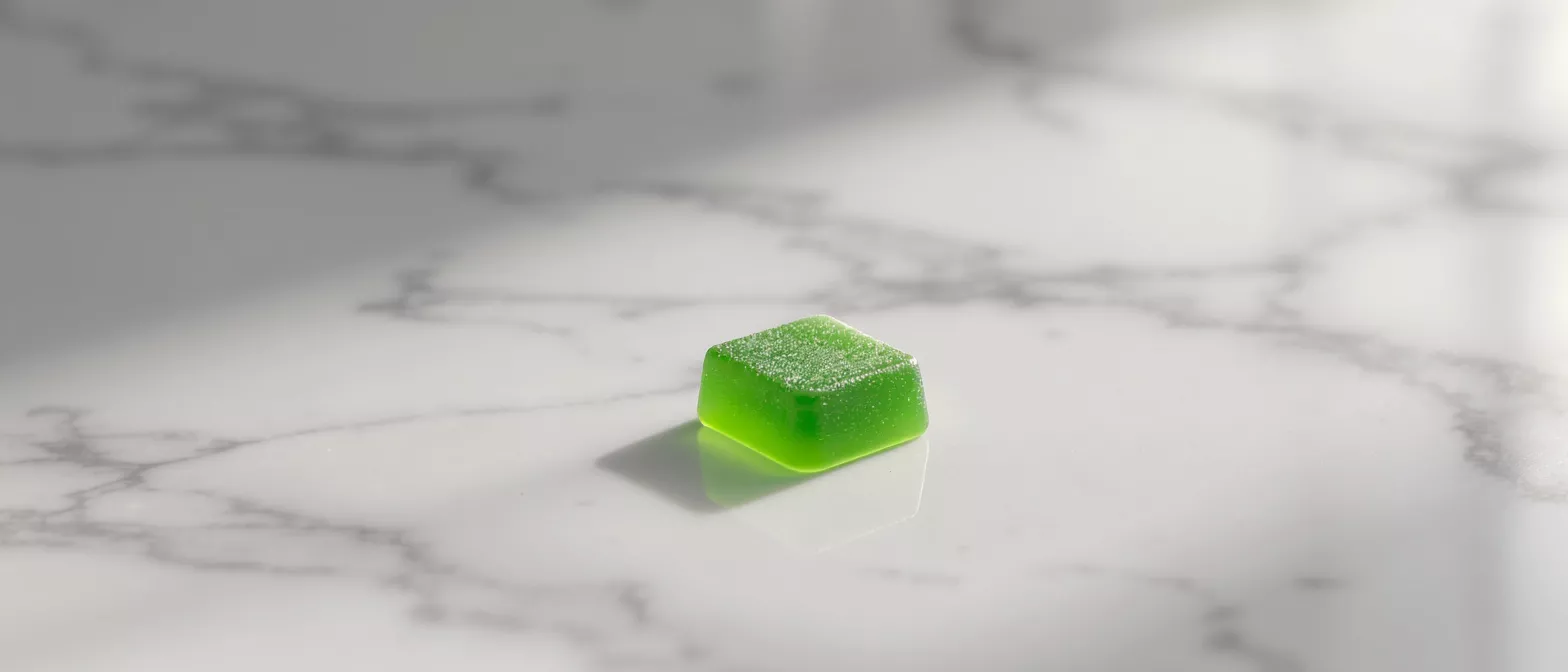
Flower is not the only product that benefits from thoughtful storage. Edibles, concentrates, and tinctures each have their own quirks. Glycerin and fatty oil-based edibles can go rancid if exposed to heat and air, while gummies dry out or melt depending on conditions. Most cannabis edibles store best in a cool, dark cabinet, and many extend their life nicely in the refrigerator since the food matrix, not the cannabinoids, drives spoilage.
Concentrate storage essentials: Concentrates like shatter, rosin, and live resin are terpene-dense and especially sensitive to heat and light. Warmth causes them to lose their texture and aroma, sometimes melting into a puddle. Store concentrates in non-stick silicone or glass containers, kept cool and dark; for long-term holding, the refrigerator or even the freezer can preserve a fractionated extract or full-spectrum dab far better than room temperature. Always let cold concentrates return to room temperature before opening to prevent condensation.
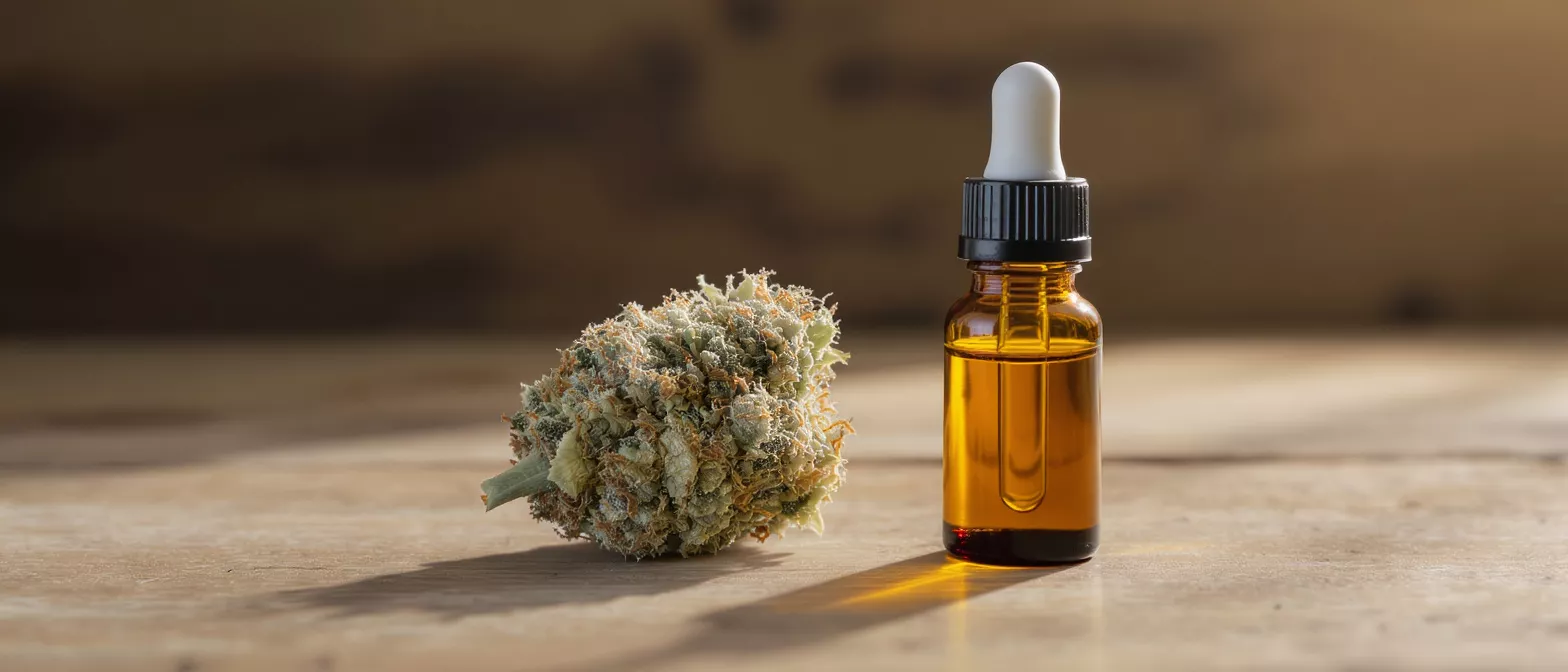
Tinctures, particularly those in a glycerin or fractionated coconut oil base, are among the most shelf-stable cannabis products thanks to their preservative-like carriers. Keep them in their original tinted dropper bottles, away from sunlight, and they hold their potency for a year or more. The same principles echo across every format: cool, dark, sealed, and stable wins every time, whether you are preserving ganja flower, a batch of brownies, or a gram of premium rosin.
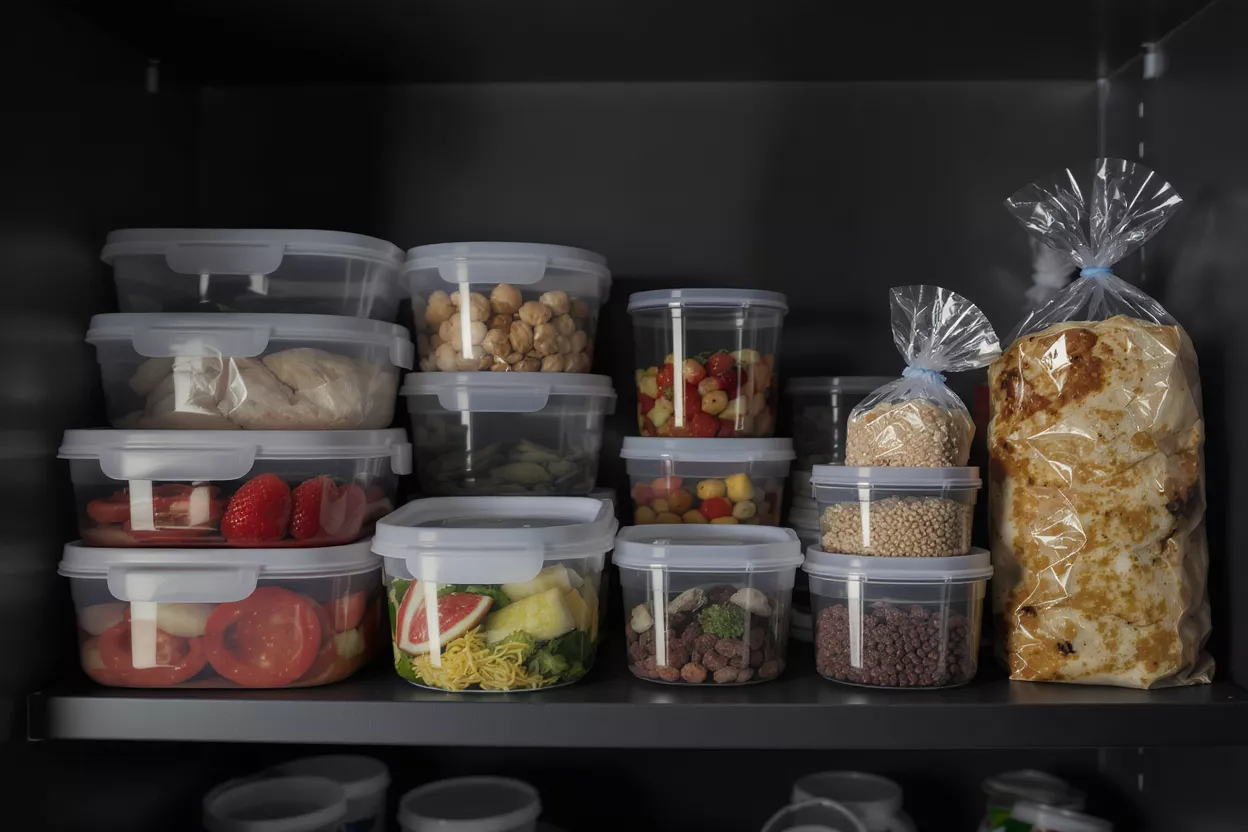
Common Cannabis Storage Mistakes to Avoid
The plastic baggie trap: The most widespread mistake is also the most damaging. Plastic sandwich bags carry a static charge that literally pulls trichomes off the buds and sticks them to the bag, and they offer no protection from air or light. What you scrape out is a fraction of what went in. If you only fix one habit, ditch the baggies in favor of glass.
Another frequent error is storing different strains together. Each strain's terpene profile is distinct, and mingling them in one container blends their aromas into a muddled, generic scent over time. Keep strains in separate jars to preserve their individual character — the citrus-bright genotype should not bleed into the earthy one.
People also tend to over-handle their cannabis, opening jars repeatedly to admire or smell the contents. Every open swaps in fresh oxygen and lets aroma escape. Tools matter too: a gravity bong or any setup that has you grinding and exposing flower well ahead of use leaves ground material sitting in air, where it stales far faster than intact buds. Grind only what you are about to consume, and your flower stays fresher between sessions.
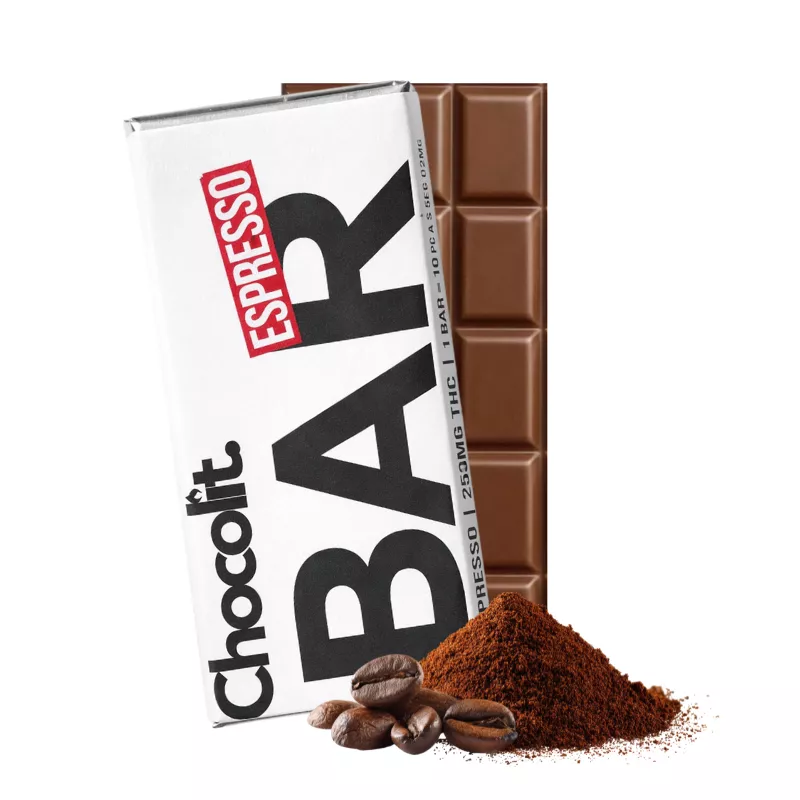

Espresso THC Milk Chocolate 250mg / 15pcs – Chocolit
Coffee flavour, cannabis lift, zero caffeine. Chocolit's Espresso THC milk chocolate bar carries 250mg of hybrid THC across 15 scored squares — rich espresso taste without the jitters. Balanced and creative-leaning, it's the after-dinner square for a mellow, flavourful evening. Smooth onset, consistent dosing, all the coffee-shop comfort and none of the caffeine.
- Creative Enhancement : The hybrid profile stimulates imagination and artistic thinking while maintaining mental clarity
- Pain Management : THC's analgesic properties provide relief from chronic discomfort and muscle tension
- Sleep Preparation : Caffeine-free formulation makes this ideal for evening use without disrupting sleep cycles
- Anxiety Reduction : Gentle onset and balanced effects help calm racing thoughts and physical restlessness
- Digestive Comfort : Natural appetite stimulation combined with milk chocolate's soothing qualities
Building the Best Cannabis Storage Routine
A simple system that works: The best cannabis storage routine is one you will actually follow. Start with airtight tinted glass jars, add a two-way humidity pack to each, label them by strain and date, and tuck them into a cool, dark drawer or cabinet. Maintain a small working jar for the current week so your bulk supply stays sealed and undisturbed. That handful of habits covers light, heat, air, and humidity in one elegant system.
For those who grow at home, storage is the final step in a long chain that begins with germination, runs through cultivation and training techniques like FIMing, and ends with a careful flush and slow cure. All that effort deserves a proper finish. Whether your flower comes from your own functional mushroom-and-cannabis garden experiments or a trusted dispensary, the storage principles are identical, and getting them right honors the work that produced the harvest.
Cannabis storage rewards a little knowledge with a lot of preserved quality. Glass over plastic, dark over light, cool over warm, and a steady 55–62% humidity — internalize those four rules and your flower will reward you with full flavor and potency long after purchase. Treat storage not as an afterthought but as the final, essential step of enjoying cannabis, and every jar you open will taste exactly as the grower intended. Bookmark these fundamentals, set up your system once, and you will never again open a jar to find a brittle, faded shadow of what you brought home.