FIMing
Learn FIMing to grow bushier cannabis with multiple colas.
What Is FIMing in Cannabis Growing?
FIMing is a high-stress training technique used by cannabis growers to encourage bushier plants and multiple main colas instead of a single dominant top. The name itself is a happy accident — legend has it that a grower botched a topping cut, looked at the messy result, and muttered "F*ck, I Missed," which became the acronym FIM. What started as a mistake evolved into one of the most popular pruning methods among home cultivators who want fuller canopies without dramatically delaying the harvest.
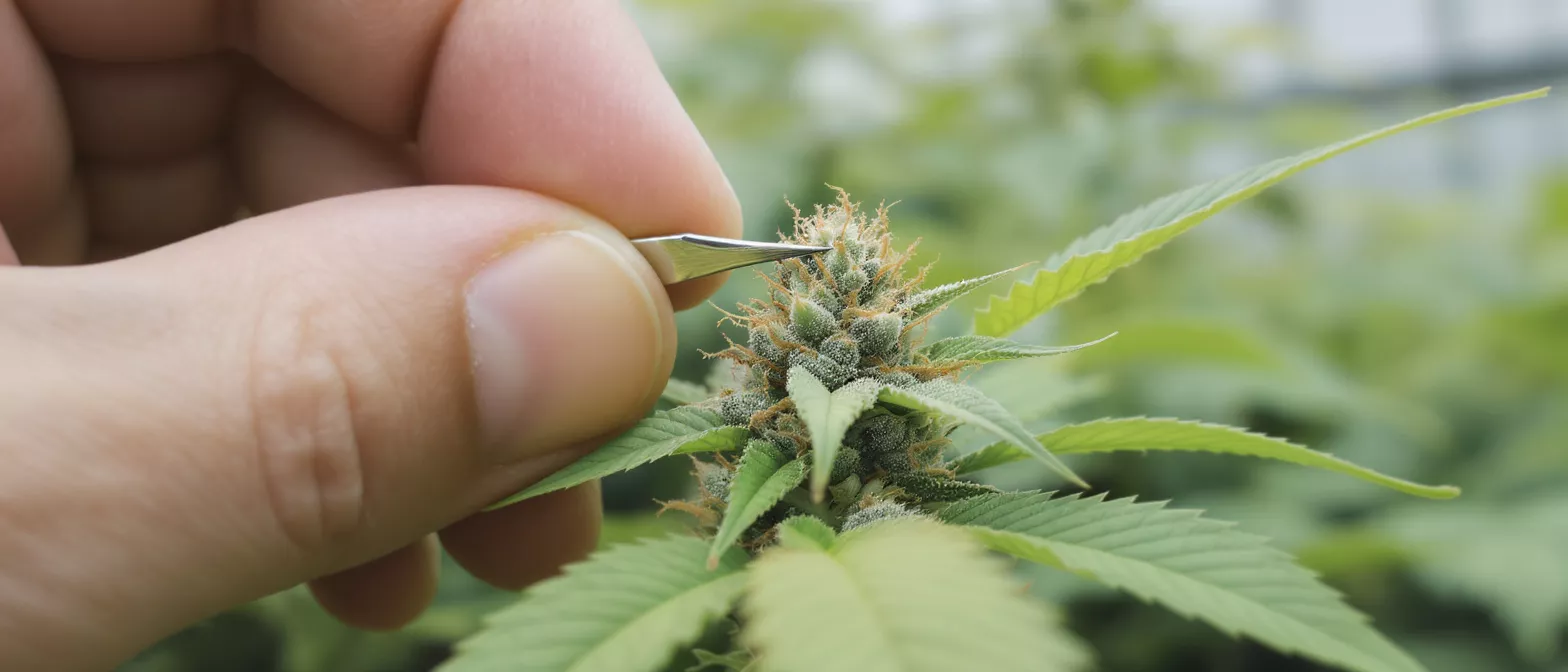
Unlike a clean topping cut that removes the entire growth tip, FIMing involves pinching or snipping away roughly 75% of the newest growth at the very top of the plant. This partial removal confuses the plant's hormonal signaling and prompts it to push out multiple new shoots from a single node. Where topping typically yields two new main stems, a successful FIM can produce four or more.
Because FIMing leaves a portion of the apical tissue intact, it tends to be slightly less stressful than a full top, and recovery is often quicker. That said, it is still a high-stress technique, and timing matters. Cultivation experts note that plant resilience and recovery from controlled stress is well documented in horticultural science, with healthy plants compartmentalizing wound damage much like described in tissue-healing research summarized by Mayo Clinic for living organisms generally.
How FIMing Works on a Plant
The science of apical dominance: Every cannabis plant has a built-in hierarchy. The main growing tip — the apical meristem — produces a hormone called auxin that suppresses the growth of lower side shoots. This is why an untrained plant tends to grow tall and Christmas-tree shaped with one big top cola and smaller buds beneath. FIMing disrupts this hormonal chain of command.
Redistributing growth hormones: When you remove most of the top growth, the plant loses its primary auxin source at the apex. Auxin then redistributes to the lower nodes and the remaining tissue at the cut site, signaling multiple dormant buds to activate. The result is a plant that channels its energy outward and upward through several competing tops rather than one. Growers chasing a flatter, wider canopy often pair this technique with quality low-stress training clips to spread the new shoots horizontally.
The partial nature of the cut is what makes FIMing distinct. Because you are leaving ragged tissue rather than a clean stump, several growth points can emerge from one location. This unpredictability is part of the appeal and part of the challenge — you might get three tops, you might get five, and you rarely know until the new growth pushes out over the following week.
FIMing vs Topping: What's the Difference?
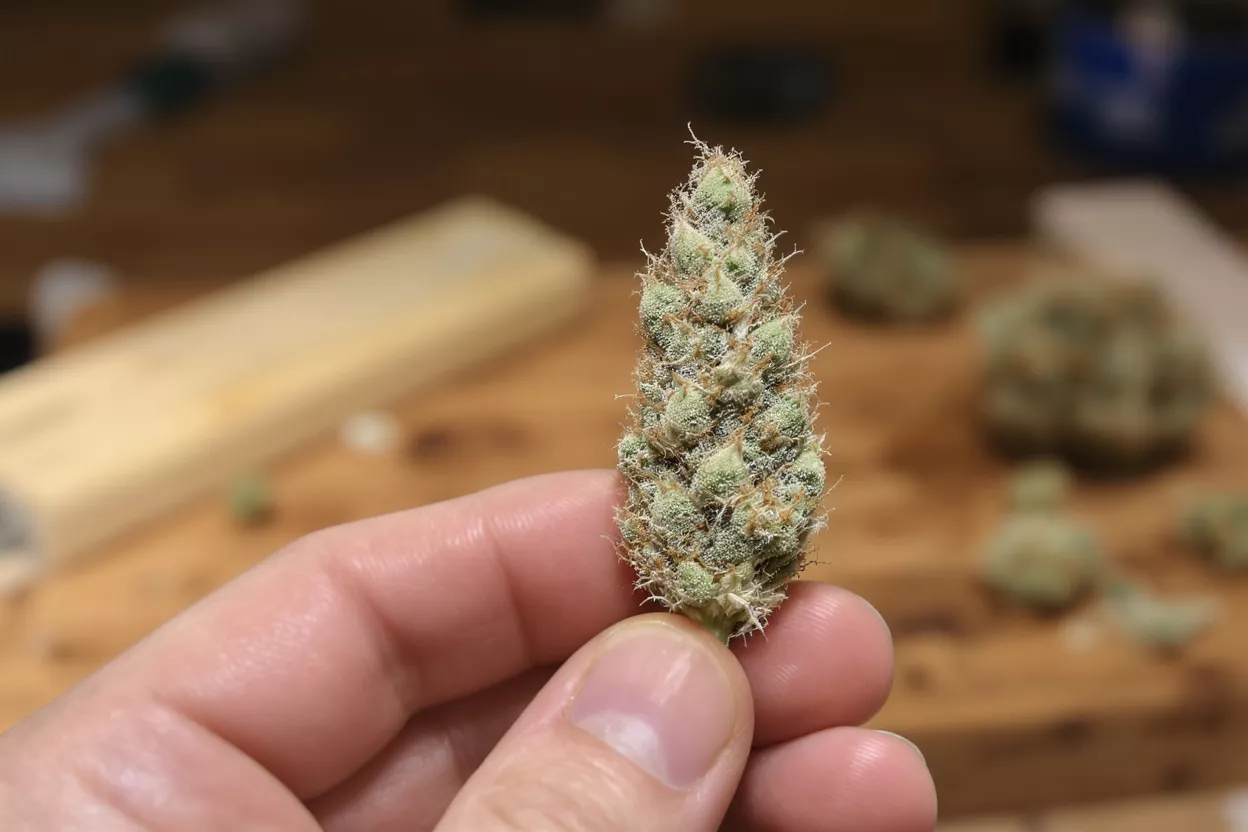
Both FIMing and topping are forms of pruning that aim to break apical dominance and create a bushier plant, but they differ in execution and outcome. Topping is a clean, decisive cut that removes the entire top of the plant above a node, reliably producing two new main stems. FIMing is a messier pinch that removes about three-quarters of the newest growth and can produce four or more shoots.
Here is a quick comparison of the two techniques to help you decide which fits your grow style:
- 🌱 Topping: Clean cut, removes whole tip, predictable two-cola result, slightly longer recovery.
- ✂️ FIMing: Partial pinch, removes ~75% of growth, up to four-plus shoots, faster recovery.
- ⏱️ Recovery time: FIMing typically stresses the plant less because some apical tissue remains.
- 🎯 Precision: Topping is easier to execute consistently; FIMing rewards a steady hand.
Many growers actually use both throughout a plant's life — topping early to establish a strong primary structure, then FIMing later to multiply colas across the canopy. Neither is objectively superior; the right choice depends on your goals, your strain, and how much risk you are comfortable taking with a high-stress technique.
When to FIM Your Cannabis Plants
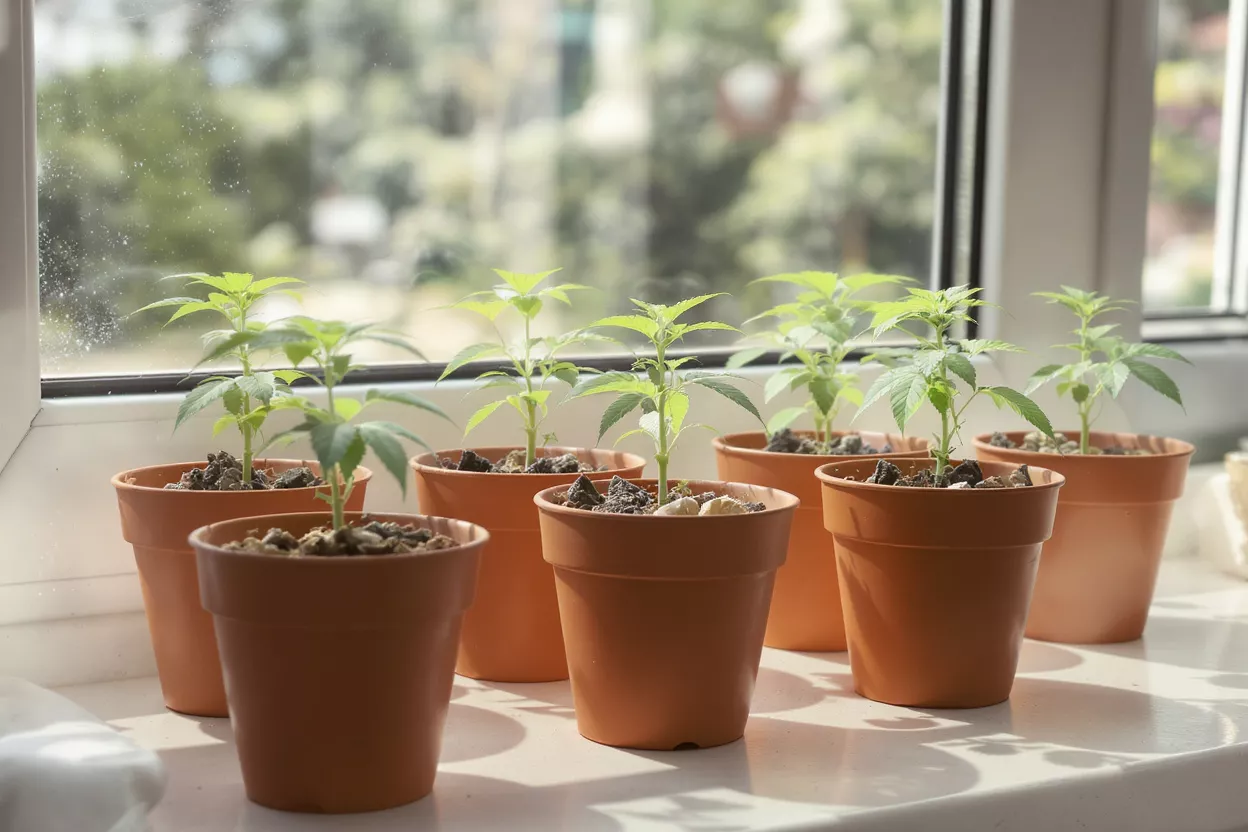
Vegetative stage timing: FIMing should only be performed during the vegetative phase, never during flowering. The plant needs time to recover and develop new growth before it shifts its energy toward bud production. Most growers wait until the plant has developed at least three to five nodes before making the first FIM, which usually corresponds to three to four weeks of age.
The plant should be healthy and actively growing before you introduce any high-stress training. A vigorous plant with deep green leaves and strong turgor will bounce back quickly, while a struggling or nutrient-deficient plant may stall or even die from the added shock. General guidance on stress and recovery in living tissue, as discussed by Mayo Clinic, underscores why a healthy starting point matters before deliberate injury.
If you intend to FIM more than once, space your cuts at least a week or two apart to give the plant full recovery time between sessions. Autoflowering plants are trickier because they run on a fixed clock — many growers avoid high-stress training on autos entirely, opting instead for gentler bending and tucking with a soft plant tie kit to avoid stalling the limited vegetative window.
How to FIM Cannabis Step by Step
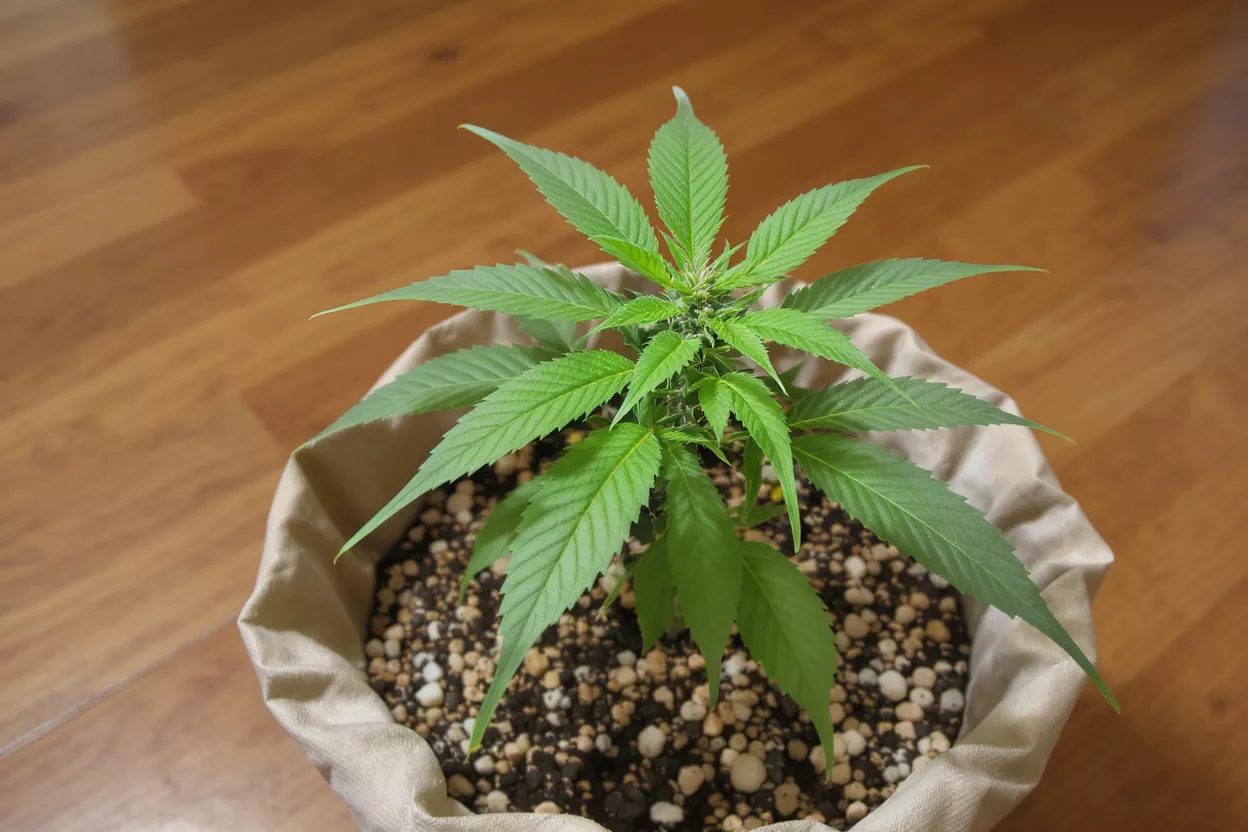
Executing a clean FIM is straightforward once you understand the target. You are aiming for the cluster of new growth at the very top of the main stem, where the youngest leaves are still tightly bunched together. The goal is to remove most of that cluster while leaving a small portion intact at the base.
Follow these steps for a successful FIM:
- 🧼 Sterilize your tools: Clean scissors or fingernails with isopropyl alcohol to prevent infection at the wound.
- 🔍 Identify the top growth: Locate the newest cluster of leaves at the apex of the main stem.
- ✂️ Pinch or snip 75%: Remove about three-quarters of that new growth, leaving roughly a quarter behind.
- 💧 Avoid overwatering: Keep care consistent and let the plant recover without drowning the roots.
- 👀 Watch for new shoots: Within a week, multiple new tops should begin emerging from the cut site.
Some growers prefer to use sharp scissors for cleaner results, while others swear by pinching with fingernails because it leaves slightly more ragged tissue that can encourage more shoots. Either method works — consistency and cleanliness matter more than the tool you choose. After the cut, simply maintain your normal grow routine and give the plant time to respond.
FIMing Benefits for Yield and Canopy
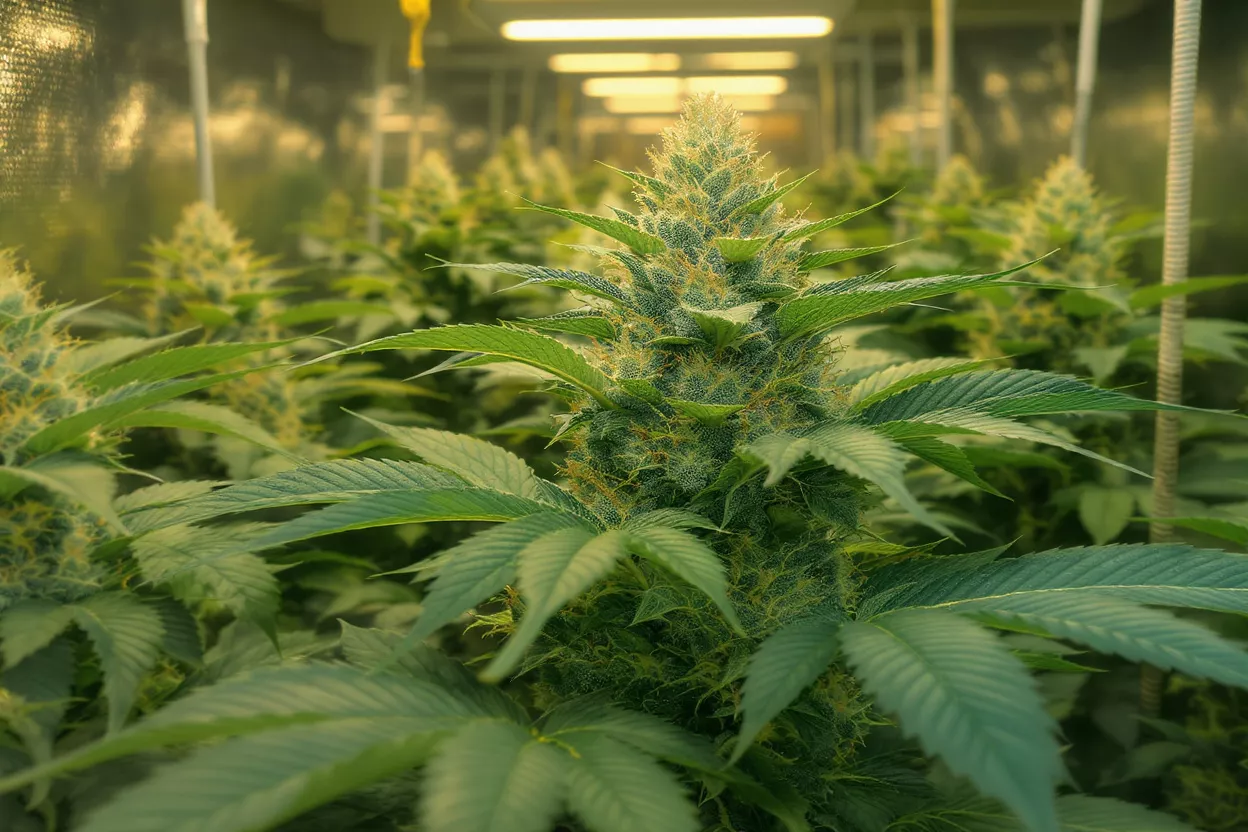
More colas, bigger harvest: The headline benefit of FIMing is the potential for a higher yield. By converting one dominant cola into four or more, you create more sites for dense, mature buds to form. When combined with an even canopy and good light penetration, this can translate into a noticeably larger harvest from the same plant footprint.
A flatter, more efficient canopy: FIMing naturally encourages horizontal growth, which is ideal for growers working under fixed lights in a tent. A flat, wide canopy means more bud sites sit at the optimal distance from the light, reducing the light intensity differences that cause some buds to grow dense while others stay fluffy. Many indoor growers pair FIMing with a trellis netting screen to lock the canopy into an even plane.
Beyond yield, FIMing improves airflow through the plant. A bushier, well-structured plant with multiple tops allows air to move between branches more freely, which lowers the risk of mold and mildew in humid grow spaces. Better directional airflow around the buds during late flower can be the difference between a clean harvest and a moldy one.
Common FIMing Mistakes to Avoid
The most common mistake new growers make is FIMing too early or too late. FIM a seedling that is too young and you may kill it; FIM during flowering and you sacrifice yield without giving the plant time to recover. Wait for at least three to five healthy nodes and stay in the vegetative window.
Another frequent error is removing too much or too little of the top growth. Cut away the entire tip and you have essentially topped the plant instead of FIMing it. Remove too little and the plant barely responds. The sweet spot is roughly 75% of the new growth — enough to disrupt apical dominance without fully decapitating the meristem.
Dirty tools are an underrated risk. Any open wound is an entry point for pathogens, and a contaminated cut can introduce infection that sets the plant back or invites rot. Always sterilize before cutting. Likewise, do not pile other stressors on top of a fresh FIM — avoid transplanting, heavy defoliation, or nutrient changes in the same window, since stacking stress can overwhelm even a healthy plant.
FIMing and Plant Stress Recovery
Reading recovery signals: After a FIM, watch how your plant responds over the following days. Healthy recovery looks like fresh green growth emerging from the cut site within five to seven days, with the rest of the plant continuing to grow normally. Drooping that lasts more than a day or two, yellowing, or stalled growth suggests the plant is struggling and needs gentler care.
Supporting recovery is mostly about not interfering. Keep your environment stable — consistent temperature, humidity, and light. Avoid the temptation to feed heavily in an attempt to speed things along; a stressed plant cannot process extra nutrients well, and overfeeding can compound the problem. Plain water or a light feeding is usually all the plant needs while it heals.
Stress recovery in plants mirrors broader biological principles of wound healing, where the organism walls off damage and redirects resources to repair, a concept explored in health literature from Mayo Clinic. A plant that has recovered fully from a FIM is often more vigorous than before, having activated dormant growth points that now contribute to the overall structure.
Best Strains for FIMing
Not all cannabis strains respond to FIMing the same way. Vigorous, fast-growing photoperiod plants with naturally bushy structures tend to handle high-stress training best because they recover quickly and have plenty of nodes to work with. Indica-dominant and hybrid strains often shine here, building dense, multi-cola canopies with minimal fuss.
Some strains and types are better left alone or trained gently. Consider these guidelines when matching FIMing to your genetics:
- 💪 Vigorous photoperiods: Bushy indica and hybrid strains recover fast and reward FIMing.
- 🐢 Slow growers: Plants that veg slowly may struggle to recover before flowering.
- ⏳ Autoflowers: Best left to gentle low-stress training due to their fixed timeline.
- 🌿 Sativa-leaning strains: Already stretchy and tall; FIMing can help control height and add tops.
Whatever genetics you grow, the most important factor is plant health at the moment of the cut. A robust plant of almost any strain will tolerate FIMing better than a weak plant of an ideal strain. When in doubt, top first to gauge how your particular phenotype handles stress, then experiment with FIMing on later growth.
Is FIMing Worth It for Home Growers?
For most home growers, FIMing is absolutely worth learning. It is a low-cost, no-equipment technique that can meaningfully increase yield and produce a more manageable plant shape. The only real investment is a clean pair of scissors and the willingness to make a slightly nerve-wracking cut on a plant you have nurtured from seed.
That said, FIMing is not mandatory. Plenty of growers produce excellent harvests with no training at all, and others prefer the predictability of topping or the gentleness of low-stress bending. If you grow autoflowers, run a fast-paced harvest cycle, or simply want to minimize risk, you can skip high-stress techniques entirely without guilt.
Ultimately, FIMing rewards growers who enjoy the craft and want to push their plants toward fuller, more even canopies. Start with a single healthy plant, make one clean FIM during early veg, and observe how it responds. Once you have seen four new tops emerge from a single cut, you will understand why this happy accident became a cornerstone of cannabis training. Combine it with attentive care, a stable environment, and the right genetics, and you will have a powerful tool for getting the most out of every grow.