Flushing
Learn what flushing means in cannabis growing.
What Is Flushing in Cannabis Growing?
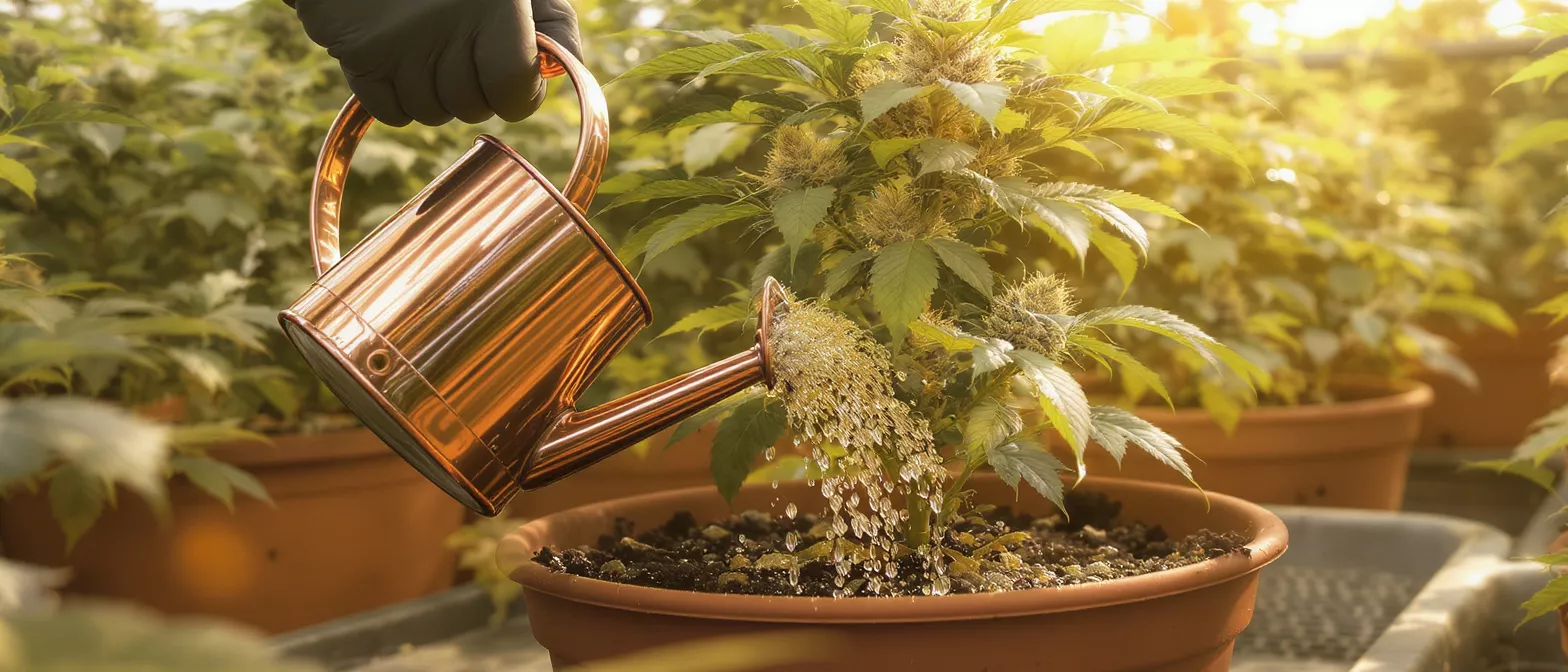
Flushing is the practice of feeding cannabis plants plain, pH-balanced water without added nutrients during the final stretch of the flowering stage. The goal is to clear residual mineral salts and built-up fertilizer from the growing medium and the plant's tissue before harvest. Most experienced growers treat flushing as a finishing ritual, a deliberate transition from heavy feeding to a clean, water-only diet that lets the plant draw down its stored reserves.
The concept borrows from a simple idea: a plant that has been fed aggressively all season carries leftover nitrogen, phosphorus, and potassium in its leaves and buds. By cutting off the nutrient supply, you encourage the plant to consume those stored compounds rather than leaving them locked in the finished flower. The result, in theory, is a smoother smoke and a cleaner-tasting product that won't leave a harsh, chemical aftertaste.
It helps to think of flushing less as washing the plant and more as a controlled fast. You are not rinsing toxins out in a dramatic sense; you are gently starving the plant of new inputs so it metabolizes what it already holds. According to the Cleveland Clinic, the way a plant-based product is processed and cured can influence both its flavor and how it feels when consumed, which is exactly why finishing techniques like flushing draw so much attention from cultivators.
How Does Flushing Work?
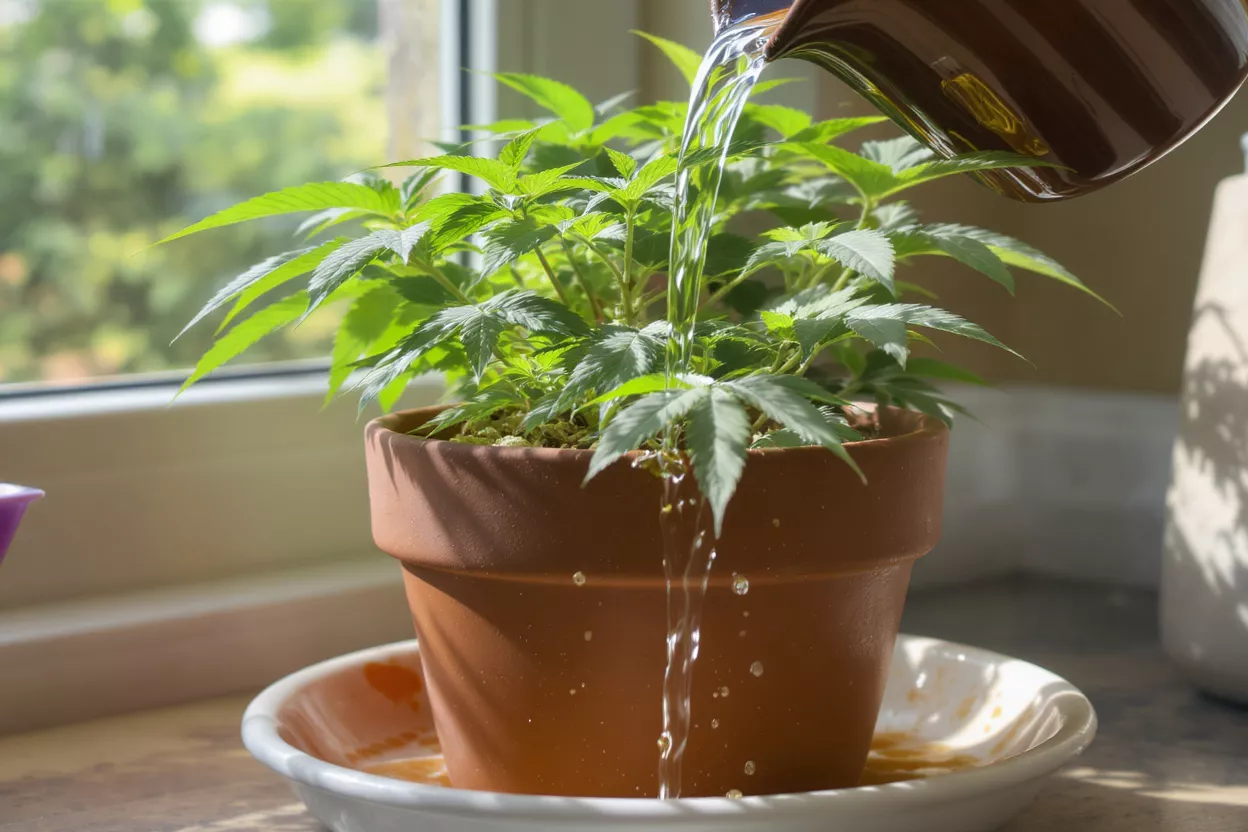
The salt-leaching mechanism: When you water with plain water repeatedly, you saturate the root zone and physically wash dissolved mineral salts down and out through the drainage holes. Each pass dilutes the concentration of fertilizer salts surrounding the roots. Over several waterings, the medium's electrical conductivity drops, signaling that fewer nutrients remain available for uptake.
Triggering the plant's reserves: Once external nutrients become scarce, the plant turns inward. It mobilizes nitrogen and other elements stored in its fan leaves, breaking them down and translocating those compounds elsewhere. This is why properly flushed plants often show yellowing, fading leaves near the end of flower. That fade is not always a problem; it can be a visual cue that the plant is burning through its internal pantry.
The biochemistry here is similar across many flowering plants, not just cannabis. Senescence, the natural aging process, accelerates when a plant senses the end of its life cycle, and flushing nudges that process along. A clean medium during these final days means the buds finishing in your tent are pulling from reserves rather than gulping fresh salts. If you grow in containers, a good drainage setup and quality pH and EC testing meters make this process far easier to monitor accurately.
Why Flush Cannabis Plants Before Harvest?
The most cited reason to flush is smoke quality. Buds loaded with excess nutrient salts tend to burn unevenly, produce harsh black ash, and crackle as they combust. Growers chasing that connoisseur-grade dank often swear that a proper flush is the difference between a smooth draw and a throat-scratching one. Whether the flower becomes diesel-pungent or sweet and floral, the cleaner finish lets the genetics shine through.
Ash color as a quality signal: A common rule of thumb holds that well-flushed flower burns to a pale gray or white ash, while nutrient-heavy buds leave dark, oily, hard-to-relight residue. While ash color is influenced by many factors beyond flushing, it remains a quick field test that many growers trust. Clean white ash on a fat bud loaded with frosty diamonds is the visual payoff most cultivators are after.
There is also a plant-health angle. Late-stage nutrient overload can lock out other elements and stress the plant precisely when it should be packing on weight and resin. The Cleveland Clinic notes that how botanical products are prepared and finished can affect the compounds they ultimately deliver, reinforcing why so many growers refuse to skip this step.
When to Start Flushing Your Plants
Reading the trichomes: Timing your flush starts with a jeweler's loupe or a digital microscope aimed at the trichomes. When the majority of those resin glands shift from clear to milky white, with a small fraction turning amber, you are entering the harvest window. That transition is your cue to stop feeding and begin the water-only phase so the plant has time to draw down before you cut.
Strain genetics matter enormously. A fast-finishing indica may signal readiness around week seven, while a sativa-leaning plant or a long-flowering haze can stretch past ten or eleven weeks. Track your strain's expected flowering time and back-calculate your flush start from there. Beginning too early can sacrifice yield and resin development; starting too late defeats the purpose entirely.
Pistil color offers a secondary reference. As flowers mature, the white hairs darken and curl inward, and a high percentage of darkened pistils alongside cloudy trichomes confirms you are close. Pairing both signals keeps you from relying on a single, sometimes-misleading indicator. Keeping a grow journal with dates and photos makes future runs far more predictable.
How Long to Flush Cannabis Before Harvest
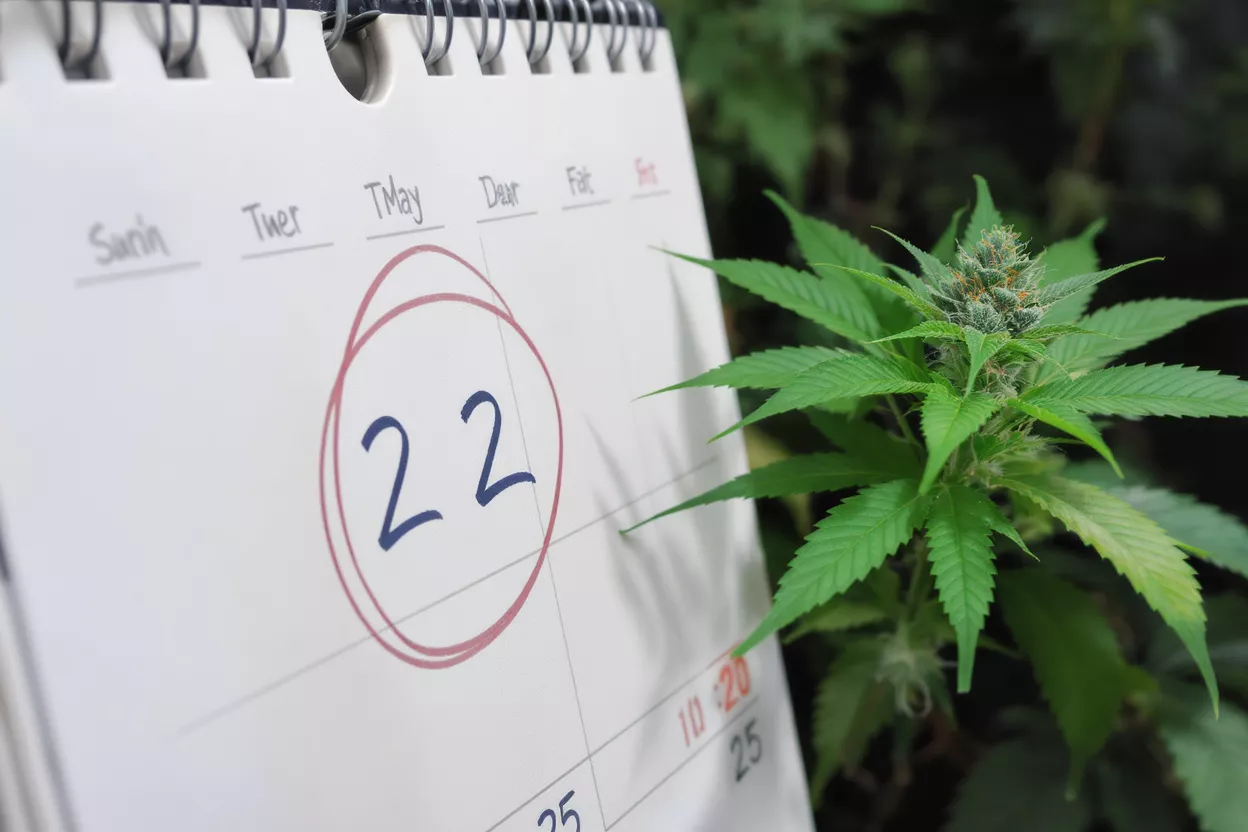
There is no universal number, but most growers land somewhere between one and two weeks. The right duration depends heavily on your growing medium, the plant's nutrient load, and how aggressively you fed throughout flower. A plant pushed hard with synthetic salts generally needs a longer, more thorough flush than a lightly fed organic grow.
Here is a quick reference many cultivators use as a starting point:
- 🌱 Soil: 1 to 2 weeks, since soil holds nutrients and buffers slowly.
- 💧 Coco coir: 5 to 7 days, as coco is inert and clears faster than soil.
- 🚿 Hydroponics: 1 to 3 days, because the medium retains almost no nutrients.
- 🌿 Heavy organic: Often little to no flush, as soil microbes handle balance naturally.
The biggest mistake is treating these numbers as gospel. Watch the plant, not the calendar. If leaves are fading on schedule and the medium tests low for salts, you are on track. If the plant still looks lush and dark green, it may need a few extra days. Patience here pays dividends in the jar.
Flushing in Soil vs Hydroponics
Why soil takes longer: Soil is a living, buffered system that clings to nutrients and releases them gradually. That same buffering capacity means flushing soil requires more time and volume of water to meaningfully reduce the salt concentration around the roots. A general guideline is to run roughly three times the pot's volume in plain water across the flush period, monitoring runoff EC as you go.
Hydroponic and inert media sit at the opposite end of the spectrum. Because there is no soil to hold reserves, a simple reservoir swap to plain pH-balanced water clears the system almost immediately. Many hydro growers flush for just one to three days, and some skip it entirely in favor of a longer dark period before harvest. A reliable reservoir water filtration system helps ensure the water you flush with is clean to begin with.
Coco coir lands in the middle. It behaves like an inert hydro medium in terms of how fast it drains, yet it can hold a cation charge that grips certain nutrients. The Cleveland Clinic emphasizes that consistency in how a product is grown and processed contributes to a predictable end result, and that principle holds whether you cultivate in dirt or in a directional airflow hydro tent.
Signs Your Flush Is Working
The clearest visual indicator is the gradual fade of the fan leaves. As the plant pulls stored nitrogen from its foliage, the lower and outer leaves yellow first, then the fade creeps upward and inward. This autumn-like coloring tells you the plant is metabolizing reserves rather than gorging on fresh feed. A healthy fade is gradual, not a sudden crispy brown that signals true deficiency stress.
Monitoring runoff EC: If you have a meter, testing the electrical conductivity of your drainage water gives you hard data. As flushing progresses, the runoff EC should steadily decline, approaching the EC of your input water. When the two numbers converge, the medium is largely cleared of excess salts and the flush has done its job. This is the most objective way to know you are finished.
Smell can offer a final hint. As the plant winds down, the aromatic terpene profile often intensifies, and the harsh fertilizer tang fades from the grow space. Trust the trichomes for harvest timing, but let the fade and the EC readings confirm that your flush is on the right track before you commit the scissors.
Common Flushing Mistakes to Avoid
Flushing too early: The most damaging error is starting the flush before the plant is genuinely close to harvest. Cutting nutrients during peak bud development robs the plant of resources right when it needs them most, sacrificing both yield and resin. Always confirm with trichome and pistil checks before you commit to water only.
Another frequent misstep is overwatering during the flush. Running massive volumes of water through the pot in a panic can drown roots and invite root rot, especially in poorly draining soil. Flush with normal watering habits and let the medium dry appropriately between sessions. More water faster is not better; steady and measured wins.
Consider these pitfalls that consistently trip up growers:
- ⏰ Wrong timing: Starting before trichomes are mostly cloudy wastes flowering potential.
- 🌊 Drowning the roots: Dumping too much water at once stresses the plant.
- 🧪 Ignoring pH: Flush water that is off-pH can lock out remaining nutrients harshly.
- 📋 Blind calendar flushing: Following a fixed day count instead of reading the plant.
- 🔥 Skipping the cure: Even a perfect flush won't fix a rushed dry and cure.
The last point deserves emphasis. Flushing and curing are partners, not substitutes. A flawless flush followed by a hasty dry will still produce harsh smoke, while a proper slow cure can smooth out even a less-than-ideal finish.
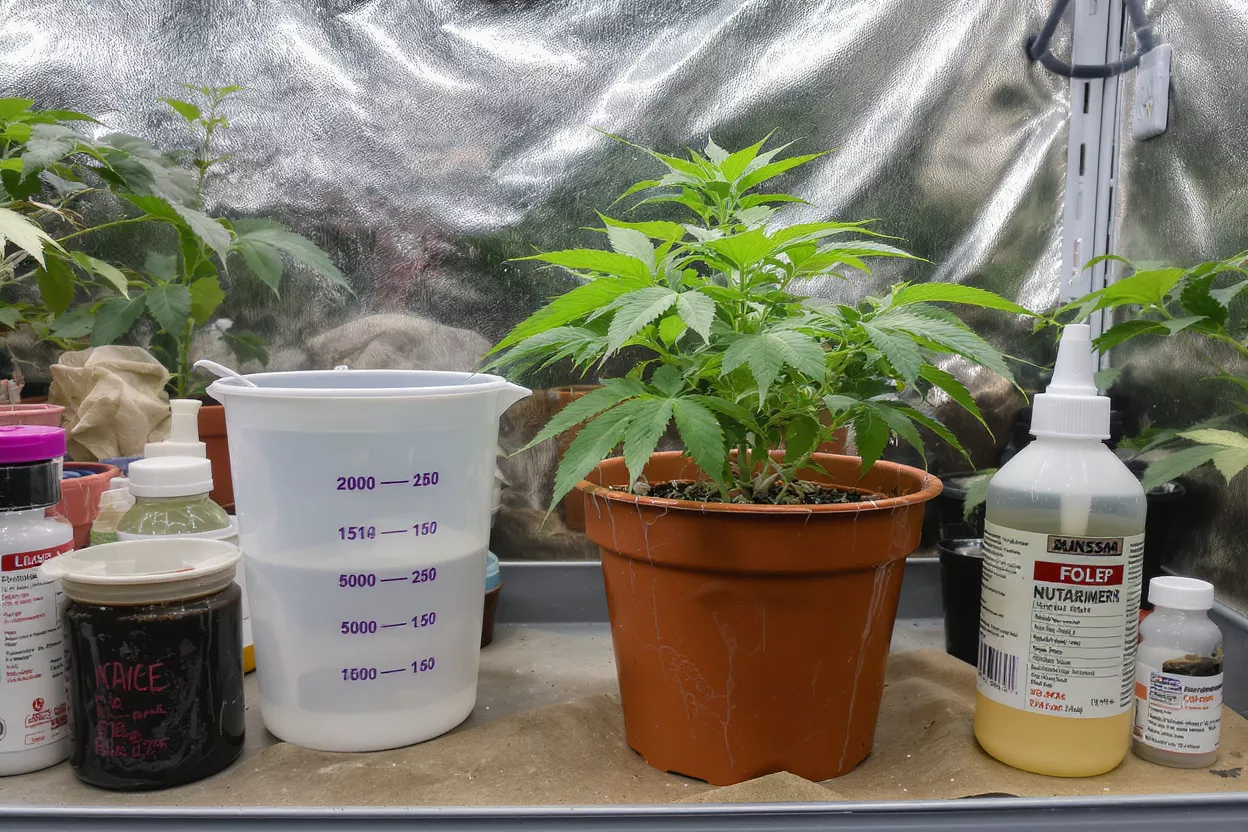
Does Flushing Really Improve Taste?
This is where the cannabis community splits. Anecdotally, countless growers report smoother, tastier flower after a proper flush, describing fuller terpene expression and that prized clean white ash. The experiential evidence is vast, even if controlled studies remain scarce. For many cultivators, the consistency of their own results is proof enough to keep flushing every cycle.
The skeptic's view: Some research-minded growers point out that the cannabinoids and terpenes responsible for flavor and aroma are largely produced and locked in well before the final two weeks, suggesting flushing's flavor impact may be overstated. They argue that proper drying and curing do far more heavy lifting for taste than the flush itself. There is reasonable truth on both sides of this debate.
What is hard to dispute is that excess mineral salts in combusting plant material can affect burn quality and harshness. The Cleveland Clinic highlights that combustion byproducts and how plant material is processed influence the experience of inhaling any botanical, which lends practical support to clearing salts before harvest regardless of where you stand in the flavor debate.
Flushing Tips for Better Buds
Use clean, pH-balanced water: Whatever your medium, the water you flush with should be properly pH-adjusted, around 6.0 to 6.8 for soil and slightly lower for hydro. Off-pH water during the flush can cause nutrient lockout and undermine the entire effort. Reverse-osmosis or well-filtered water gives you the cleanest baseline to work from.
Combine your flush with smart environmental control. Slightly lowering temperatures and dropping humidity in the final days can encourage richer color and protect against mold as buds densify. Some growers add a 24- to 48-hour dark period right before harvest, believing it boosts resin and trichome density, an easy experiment to run alongside your flush. A quality digital grow room hygrometer takes the guesswork out of dialing those final conditions.
A few field-tested practices to carry into your next run:
- 💧 Test your runoff: Watch EC drop toward your input water before harvesting.
- 🌗 Try a dark period: A short blackout before chop may enhance the finish.
- 📔 Keep a journal: Log flush start, fade progression, and results each cycle.
- 🍃 Cure properly: Slow-dry and jar-cure to let the flush pay off fully.
Flushing is one of those finishing touches that separates a careless grow from a refined one. Read your plant, balance your water, give the flush the right number of days for your medium, and follow it with a patient cure. Do that, and you give your genetics every chance to deliver clean, flavorful, smooth-burning flower that rewards the months of work you put in. Whether you chase top-shelf flavor or simply want that satisfying white ash, dialing in your flush is a skill worth mastering for every harvest to come.