Papaya
Discover the Papaya strain — a tropical, indica-dominant hybrid with mango sweetness and deep body calm.
The Papaya strain has earned a devoted following among cannabis enthusiasts who chase both flavor and a deeply relaxing experience. Named for its unmistakable tropical fruit aroma, this indica-dominant variety delivers a sweet, mango-papaya sensory profile alongside effects that melt tension from the body. Whether you are a seasoned connoisseur curating your collection or a curious newcomer drawn in by the name, understanding what makes Papaya special helps you decide whether it belongs in your rotation.
In this guide, we explore the genetics, aroma, effects, cannabinoid content, and cultivation quirks that define the Papaya strain. We will also look at who tends to enjoy it most and how it compares within the broader landscape of fruity, relaxation-forward cannabis. By the end, you will have a complete picture of why this strain continues to win loyal fans season after season.
What Is the Papaya Strain?
The Papaya strain is an indica-dominant hybrid celebrated for its tropical sweetness and its grounding, full-body calm. Bred by Nirvana Seeds, it typically leans around 70% indica to 30% sativa, which explains why its effects favor physical relaxation over racing mental energy. The name comes straight from its flavor, a juicy blend of ripe papaya, mango, and a faint earthy spice that lingers on the palate.
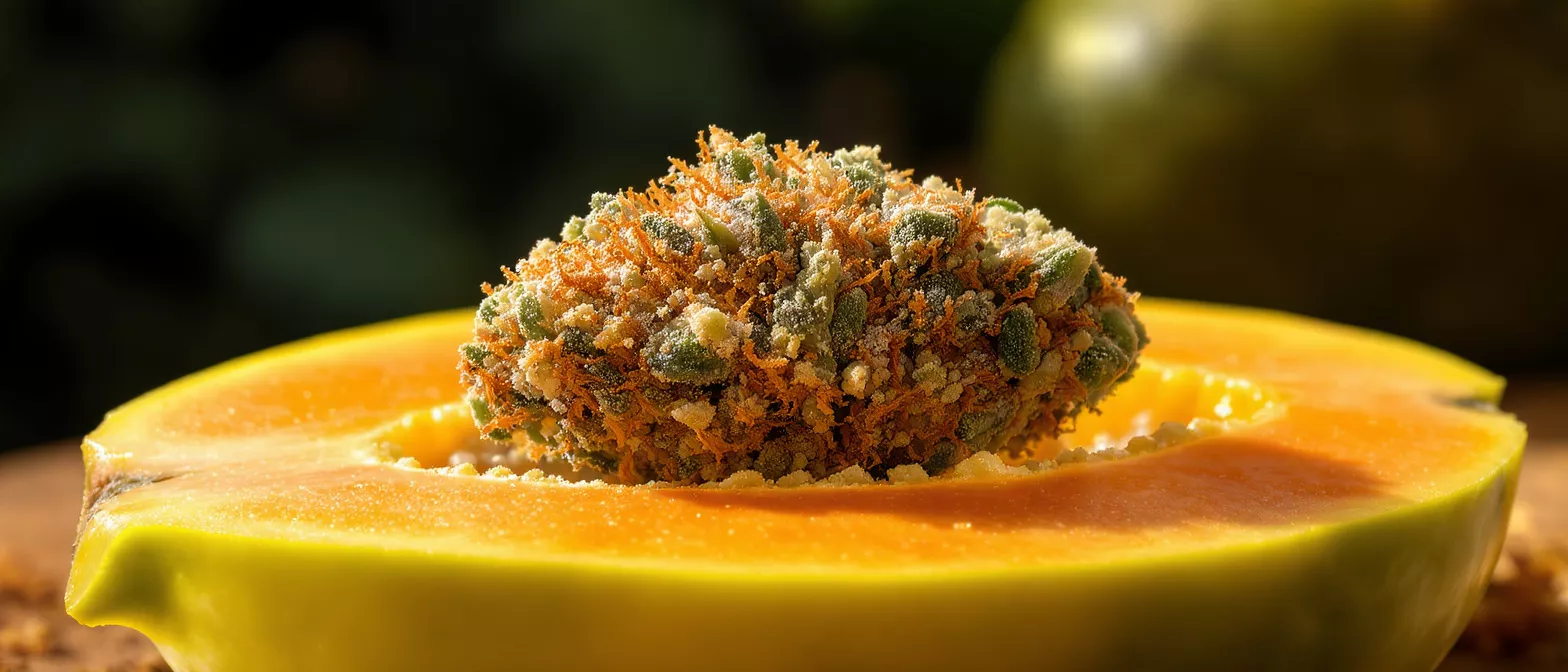
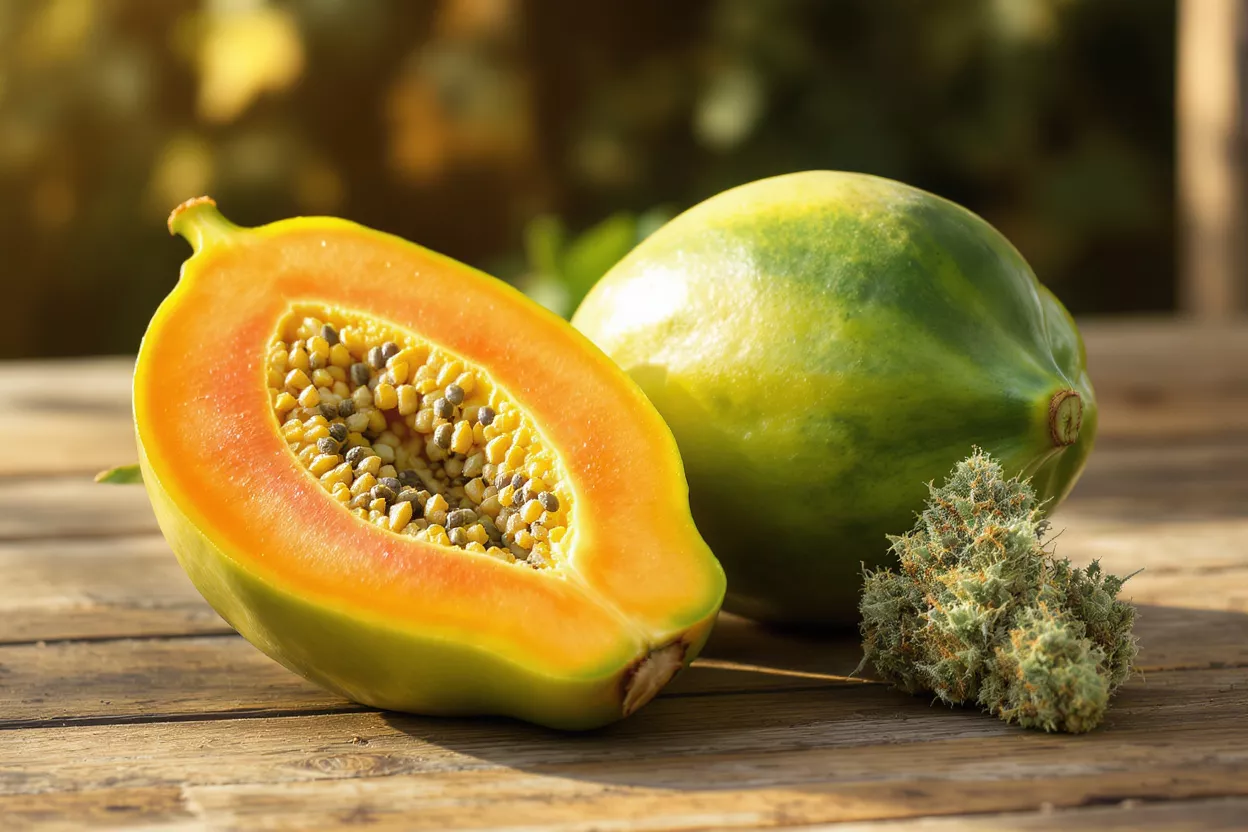
Why the Papaya strain stands out: Among the many fruit-forward varieties on dispensary shelves, Papaya distinguishes itself with a uniquely creamy, dessert-like terpene profile rather than the sharp citrus of many tropical strains. The buds are dense, often coated in resinous trichomes, with rust-colored pistils threading through olive-green flower. It is a strain that looks as luxurious as it tastes.
Papaya has also become a foundational parent in modern breeding, lending its flavor genetics to popular descendants. That heritage means you will sometimes encounter the Papaya name woven into newer hybrids, a testament to how reliably it passes on its tropical character to the next generation of cultivars.
Papaya Strain Genetics and Lineage
Understanding a strain's family tree reveals a lot about what to expect in the jar and in the experience. Papaya descends from a cross of Citral #13 and Ice #2, two stabilized lines that contributed its fruity sweetness and its resin-heavy structure respectively. This pairing gave Papaya its signature balance of flavor and potency.
The role of Citral genetics: Citral #13 is prized for its mango-citrus aroma, and it is the primary source of Papaya's tropical bouquet. Breeders selected for the sweetest expressions of this line, which is why quality Papaya phenotypes carry such a pronounced ripe-fruit nose. The phenotype you receive can vary slightly between growers, but the fruit-forward foundation remains consistent.
Notable descendants: Papaya has spawned a lineage of celebrated hybrids. Its genetics underpin several award-winning strains where the tropical flavor profile carries through. Here are a few traits Papaya reliably passes down:
- 🥭 Tropical aroma: A dominant ripe-fruit nose that survives crossbreeding remarkably well.
- 🌿 Indica structure: Compact, resin-coated buds suited to both indoor and outdoor canopies.
- 😌 Relaxing effects: A body-forward calm that descendants tend to inherit.
- ✨ Heavy trichome coverage: Frosty flower that appeals to extract makers and flower lovers alike.
What Does Papaya Strain Smell and Taste Like?
Aroma is where Papaya makes its first and most memorable impression. Crack open a jar and you are met with a wave of ripe tropical fruit, sweet papaya and mango layered over a creamy, almost custard-like base. Beneath the sweetness sits a subtle earthy spice that keeps the profile from feeling one-dimensional.
The flavor on the inhale: When smoked or vaporized, Papaya translates its nose into taste with impressive fidelity. The smoke is smooth and rounded, carrying notes of mango flesh and sweet melon, finishing with a faint peppery warmth. This dessert-like quality is what earns it a place among the most flavorful indica options available.
The intensity of these aromas comes down to terpene preservation. Properly cured and stored Papaya retains its punchy fruit profile for months, while poorly handled flower loses its volatile aromatics quickly. According to the Cleveland Clinic, the compounds responsible for a plant's scent can also influence how the body responds to it, which makes terpene-rich strains like Papaya especially interesting to flavor-focused consumers.
Papaya Strain Effects and Experience
The Papaya strain delivers an experience that mirrors its indica-leaning genetics, beginning with a gentle mental lift before settling into deep physical relaxation. Many users describe the onset as a soft wave of euphoria that lightens mood without overwhelming the mind, making it approachable for those who dislike racy, anxious highs.
How the high progresses: Within the first several minutes, a warm, tingling calm spreads through the body. As the experience matures, that calm deepens into a sedating heaviness that anchors you comfortably in place. This is not a strain for productivity sessions; it shines in the evening when winding down is the goal.
Best time to enjoy Papaya: Because the back half of the experience trends toward couch-lock and drowsiness, Papaya is best reserved for late afternoons and nights. Pairing it with a quiet environment, a good meal, or relaxing entertainment lets the strain's mellow character shine. New consumers should start low, as the body effects can sneak up on the unprepared.

Papaya Strain THC and Cannabinoid Profile
Papaya is a moderately to highly potent strain, with THC levels that typically range from 18% to 25% depending on the phenotype and cultivation practices. This places it firmly in the territory where its relaxing effects are reliably pronounced without venturing into the extreme potency of some modern hybrids.
Beyond THC: While THC drives the bulk of Papaya's effects, the strain also produces small amounts of secondary cannabinoids like CBD and CBG. These minor cannabinoids are present in trace quantities but may contribute to the rounded, full-bodied feel of the experience through the entourage effect, where compounds work together rather than in isolation.
Lab testing is the only reliable way to know the exact cannabinoid content of any given batch. Here is what to keep in mind when reading a Papaya certificate of analysis:
- 🔬 THC range: Expect 18–25%, with most commercial flower landing near the middle.
- 🌱 Minor cannabinoids: Trace CBD and CBG that support the overall profile.
- 📊 Batch variation: Numbers shift between harvests, so check each label.
- 💧 Total terpenes: A high terpene percentage often signals fresher, more flavorful flower.
Terpenes in the Papaya Strain
Terpenes are the aromatic compounds responsible for Papaya's signature tropical scent, and they also play a role in shaping its effects. The strain's dominant terpene is typically myrcene, a compound associated with relaxation and the earthy, fruity notes found in mangoes and hops.
The supporting cast: Alongside myrcene, Papaya often carries caryophyllene, which adds a peppery spice and is the only terpene known to interact directly with cannabinoid receptors. Limonene and pinene frequently round out the profile, contributing subtle citrus brightness and a touch of pine that balances the sweetness.
The combined effect of these terpenes is what creates Papaya's distinctive personality. Myrcene's sedative tendencies reinforce the indica body high, while caryophyllene's calming qualities complement the strain's stress-melting reputation. This synergy between terpenes and cannabinoids is a core reason why two strains with identical THC numbers can feel completely different.
How to Grow the Papaya Strain
For home cultivators, Papaya is a rewarding strain that balances manageable difficulty with impressive yields. Its indica-dominant structure produces compact, bushy plants that stay relatively short, making it a strong candidate for indoor grows where vertical space is limited. The plant's natural resilience also forgives many beginner mistakes.
Indoor and outdoor considerations: Indoors, Papaya typically finishes its flowering cycle in about 8 to 9 weeks and responds well to techniques like topping and low-stress training to maximize light exposure across the canopy. Outdoors in a warm, Mediterranean-style climate, it rewards growers with generous harvests around early to mid October.
Maximizing flavor and yield: To coax out Papaya's full tropical terpene expression, attention to the final weeks of flowering matters most. Consider these grower tips:
- 🌡️ Control humidity: Keep late-flower humidity low to protect the dense buds from mold.
- ✂️ Train early: Topping and LST open up the canopy for bigger, more even colas.
- 🌙 Cool nights: A slight temperature drop late in flower can deepen color and aroma.
- 🪣 Slow cure: A patient two-to-four-week cure preserves the strain's volatile fruit terpenes.
Proper drying and curing cannot be overstated; rushing this stage is the single most common way growers lose Papaya's prized aroma. A slow, controlled cure in glass jars locks in the tropical sweetness that makes this strain worth growing in the first place.
Papaya Strain Potential Benefits
Many people gravitate toward the Papaya strain not only for its flavor but for the way its relaxing effects may support everyday wellness goals. While cannabis affects everyone differently and should never replace professional medical care, anecdotal reports and the strain's profile suggest several reasons consumers reach for it.
Stress and unwinding: Papaya's mood-lifting onset followed by body-calming depth makes it a popular choice for releasing the mental tension that accumulates over a long day. The combination of euphoria and physical heaviness encourages a settled, contented state that many find ideal for decompressing.
Evening rest and comfort: Because of its sedating tail end, Papaya is frequently chosen by those seeking help winding down at night. Its myrcene-rich profile aligns with the relaxation many associate with restful evenings. Some consumers also appreciate its potential to ease minor physical discomfort and to gently encourage appetite, common attributes of indica-leaning varieties. As always, individual responses vary and starting with a modest amount is the wisest approach.
Who Should Try the Papaya Strain?
Papaya appeals to a specific kind of cannabis consumer, and knowing whether you fit that profile can save you disappointment. If you prioritize flavor as much as effect, this strain ranks among the most satisfying tropical options on the market. Its dessert-like sweetness rewards anyone who appreciates a nuanced sensory experience.
Ideal for relaxation seekers: Those who use cannabis to decompress, ease into the evening, or quiet a busy mind will find Papaya's indica-forward character a natural fit. It is less suited to people seeking energetic, creative, or daytime productivity effects, since the body high tends to encourage stillness over motion.
A note for newcomers: Beginners can absolutely enjoy Papaya, provided they respect its potency and start with a small amount. The gentle, approachable onset makes it friendlier than some high-octane modern hybrids, but the deep relaxation that follows deserves a comfortable, low-pressure setting. Experienced consumers, meanwhile, will appreciate the strain's rich terpene complexity and reliable, predictable performance.


Papaya Strain FAQs and Final Thoughts
Before wrapping up, a few common questions help round out a complete understanding of what the Papaya strain offers. These quick answers address the practical details that new and returning consumers most often ask.
- ❓ Is Papaya an indica or sativa? It is an indica-dominant hybrid, roughly 70% indica, with relaxing, body-forward effects.
- ❓ Does Papaya make you sleepy? The later stages trend toward sedation, making it well suited to evening use.
- ❓ What does Papaya taste like? Ripe tropical fruit, mango and papaya, over a creamy, lightly spiced base.
- ❓ How strong is Papaya? THC commonly ranges from 18% to 25%, placing it in moderate-to-high potency territory.
The Papaya strain endures as a favorite because it delivers on two fronts that matter most to discerning consumers: exceptional tropical flavor and a deeply relaxing experience. From its Citral and Ice genetics to its myrcene-rich terpene profile, every element works together to create flower that is as enjoyable to taste as it is to feel.
Whether you are growing it in your own garden, savoring its mango-sweet smoke, or simply unwinding after a demanding day, Papaya rewards attention and care. Treat it well, store it properly, and start with a measured approach, and this tropical indica will reward you with one of the more memorable flavor-driven experiences cannabis has to offer.