


Bong
Learn how a bong filters and cools cannabis smoke for smoother hits.
What Is a Bong and How Does It Work?
A bong is a filtration device used to smoke cannabis flower, drawing combusted smoke through water before it reaches your lungs. The fundamental principle is simple: when you light dried flower and inhale, the resulting smoke is pulled downward through a submerged tube and bubbled through water, where it cools and sheds some particulate matter before traveling up the chamber to your mouth.
The word "bong" is widely believed to derive from the Thai word "baung," which referred to a cylindrical bamboo tube used for smoking. Water pipes themselves are far older, with archaeological and historical evidence pointing to filtration smoking devices across Central Asia, Africa, and the Middle East centuries ago. The modern bong evolved from these traditions into the glass, silicone, and ceramic pieces familiar today.
What separates a bong from a dry pipe is that crucial water chamber. By forcing hot smoke to pass through liquid, a bong delivers a noticeably cooler, smoother hit that many users find easier on the throat. This is why bongs remain one of the most popular ways to consume cannabis flower among both newcomers and seasoned consumers.
The Main Parts of a Bong Explained
The bowl is the small, often removable cup where you pack ground flower. When you apply a flame, the flower combusts and the smoke is drawn into the rest of the device. Most bowls can be lifted out entirely, which is how you "clear" the chamber at the end of a hit.
The downstem is the tube that connects the bowl to the water chamber. It carries smoke from the bowl down beneath the water line, ensuring the smoke must pass through the liquid. Many downstems are themselves diffusers, with slits or holes that break the smoke into smaller bubbles for better filtration.
The chamber and mouthpiece make up the body of the bong. The base holds the water, the neck channels the cooled smoke upward, and the mouthpiece is where you seal your lips and inhale. Understanding these components helps you troubleshoot, upgrade, and maintain your piece over time.
- 🌿 Bowl: Holds and combusts the ground flower; removable for clearing the hit.
- 💨 Downstem: Channels smoke below the water line for filtration.
- 💧 Water chamber: Cools and filters the smoke as it bubbles through.
- 👄 Mouthpiece: The sealed opening where you inhale the finished hit.
How Bong Water Filtration Cools Your Smoke
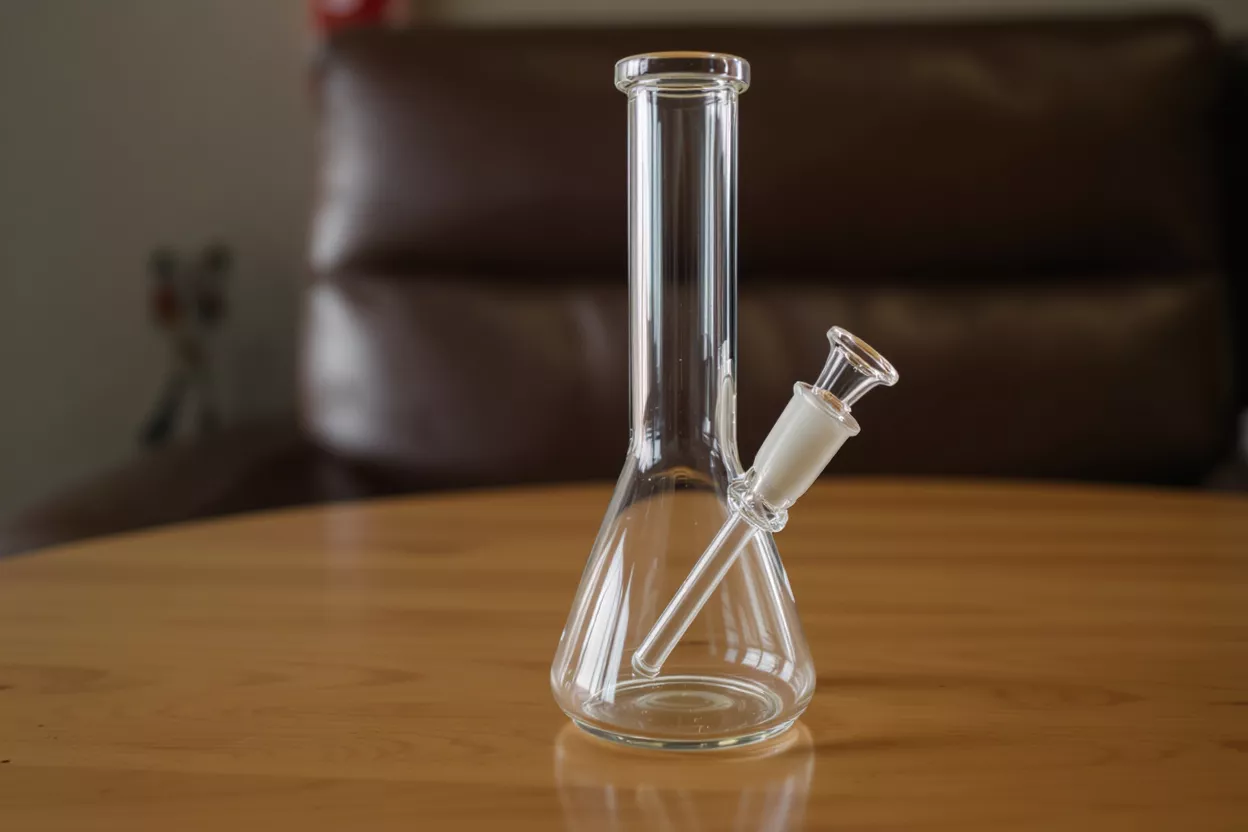
The science behind a bong is straightforward thermodynamics and basic filtration. When hot smoke from burning flower contacts the cooler water, heat transfers rapidly from the smoke into the liquid. By the time the smoke surfaces and travels up the neck, it has dropped significantly in temperature, producing the smoother sensation people associate with water pipes.
Beyond cooling, the water traps a portion of the heavier, water-soluble particulates and some ash that would otherwise reach your throat and lungs. This is why bong water turns brown and murky after repeated sessions. It is worth noting, however, that water filtration does not remove THC or other cannabinoids in any meaningful amount, so your potency is preserved.
The bubbling action also increases the surface area of contact between smoke and water. Smaller bubbles mean more cooling and more filtration, which is the entire reason percolators and diffused downstems exist. A well-designed bong maximizes this interaction without making the draw too restrictive.
Types of Bongs and Their Differences
Straight tube bongs are the classic, no-frills design: a single vertical cylinder sitting on a flat base. They are easy to clear, simple to clean, and deliver fast, powerful hits. Their straightforward construction makes them a reliable first piece for anyone new to water pipes.
Beaker bongs widen at the bottom into a triangular, flask-like base. That extra volume holds more water and smoke, creating a larger reservoir that produces voluminous, smooth pulls. The wider base is also more stable and harder to tip over, which is a practical advantage on a crowded table.
Specialty shapes include round-base bongs, recycler bongs that cycle water through multiple chambers, and percolator bongs built around heavy diffusion. Each style trades off between smoothness, airflow resistance, and ease of maintenance, so the "best" type genuinely depends on your personal preference.
- 📏 Straight tube: Fast, hard-hitting, and easy to clear and clean.
- ⚗️ Beaker: Larger water volume, stable base, smooth high-volume hits.
- 🔄 Recycler: Continuously cycles water for maximum cooling and filtration.
- 🫧 Percolator: Extra diffusion chambers for the smoothest possible draw.
Bong Materials: Glass, Silicone, Ceramic and Acrylic
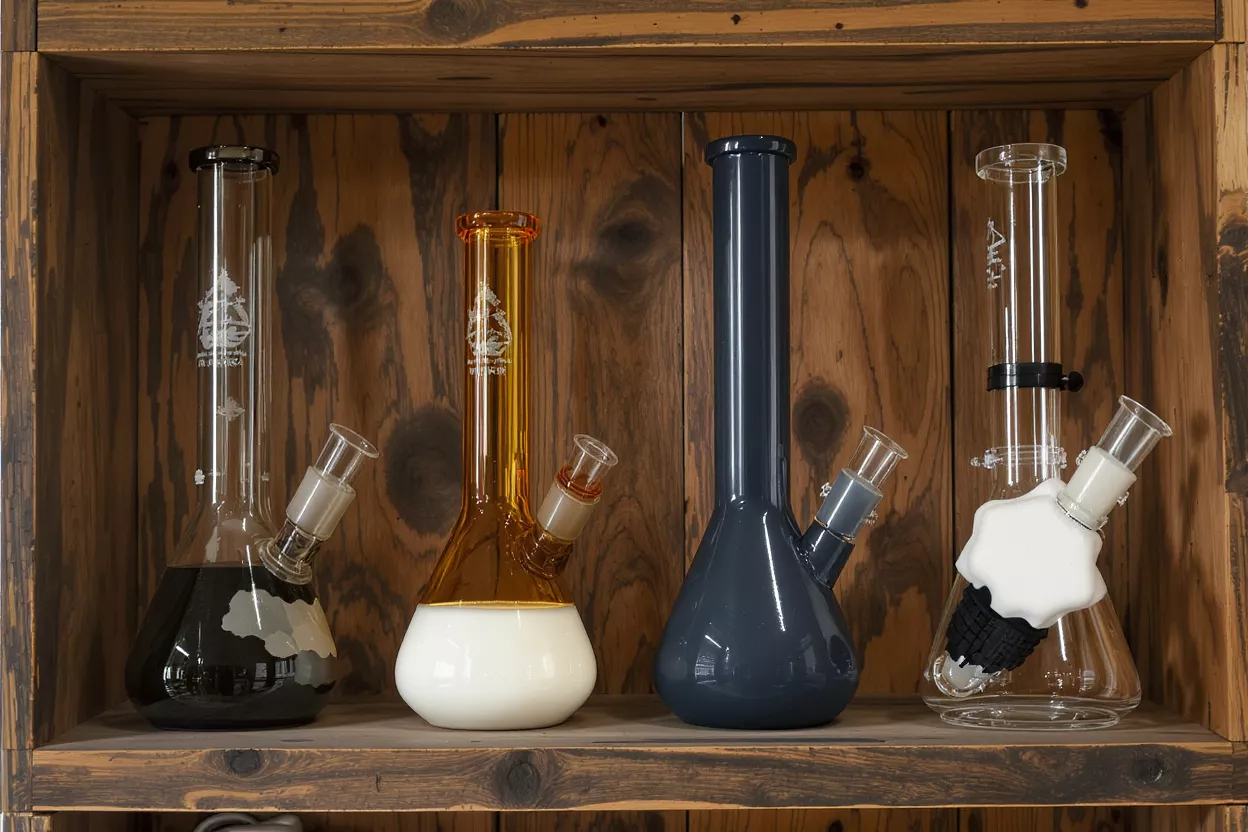
Borosilicate glass is the gold standard for bongs and for good reason. It is heat-resistant, chemically inert, and delivers the cleanest possible flavor because it does not impart any taste to the smoke. Glass is also transparent, letting you see exactly when your piece needs cleaning, though it is naturally the most fragile option.
Silicone bongs trade some flavor purity for near-indestructibility. They are flexible, travel-friendly, and many are dishwasher safe, which appeals to anyone who wants a low-maintenance piece they can toss in a bag. Ceramic, by contrast, offers artistic shapes and a substantial feel, often functioning as decorative pieces as much as functional ones.
Acrylic bongs are the budget-friendly entry point. They are inexpensive and durable, though they can affect flavor and tend to scratch over time. For someone testing whether they prefer a water pipe at all, an acrylic piece is a sensible low-cost starting point before investing in glass.
Percolators and Diffusers: Do They Matter?
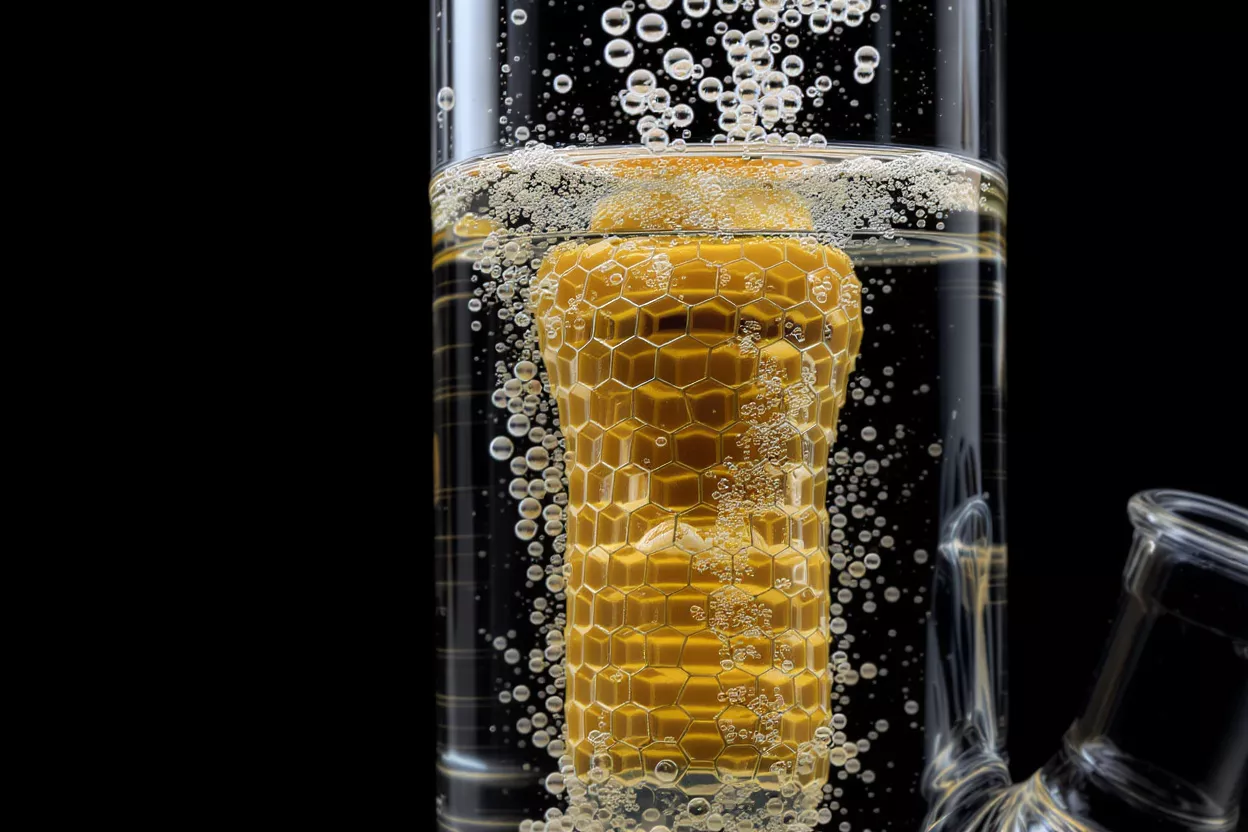
A percolator is a secondary filtration component built into the bong that breaks smoke into many small bubbles as it passes through water. The more bubbles created, the greater the surface area for cooling, and the smoother the resulting hit. Common designs include tree percs, honeycomb percs, showerhead percs, and inline percs, each with a slightly different bubble pattern and airflow character.
Whether percolators "matter" depends entirely on what you value. If your priority is the coolest, silkiest draw possible, a quality perc makes a real, noticeable difference. The tradeoff is that more diffusion usually means more airflow resistance and more nooks where residue collects, demanding more frequent cleaning.
Diffused downstems offer a middle ground. These are downstems with slits cut into the submerged end, providing meaningful diffusion without the complexity of a full percolator system. For many users, a diffused downstem hits the sweet spot between smoothness and simplicity. 🫧
Bong vs Pipe vs Joint: What's the Difference?
The core distinction is filtration and temperature. A joint burns flower wrapped in paper and delivers smoke directly with no cooling, giving a portable but harsher experience. A dry pipe is more convenient than a joint and reusable, but it also offers no water filtration, so the smoke stays hot.
A bong sits at the smoother end of the spectrum. Because the smoke is cooled and partially filtered through water, hits tend to be larger and gentler on the throat, which is precisely why so many people prefer bongs for flower. The tradeoff is portability: a bong is a stationary, at-home device rather than something you slip in a pocket.
There is no objectively superior method, only the right tool for the moment. Joints excel for sharing and travel, pipes for quick solo sessions, and bongs for smooth, substantial hits in a comfortable setting. Many cannabis enthusiasts keep all three on hand.
- 🔥 Joint: Portable and social, but hot and harsh with no filtration.
- 🪈 Dry pipe: Reusable and convenient, yet still delivers warm, unfiltered smoke.
- 💧 Bong: Cooler, smoother, larger hits at the cost of portability.
How to Use a Bong Step by Step
Preparing your bong begins with adding water. Fill the chamber until the bottom of the downstem is submerged by about an inch, then check by taking a quick dry pull to confirm the bubbling feels right. Too little water provides no filtration; too much will splash up into the mouthpiece.
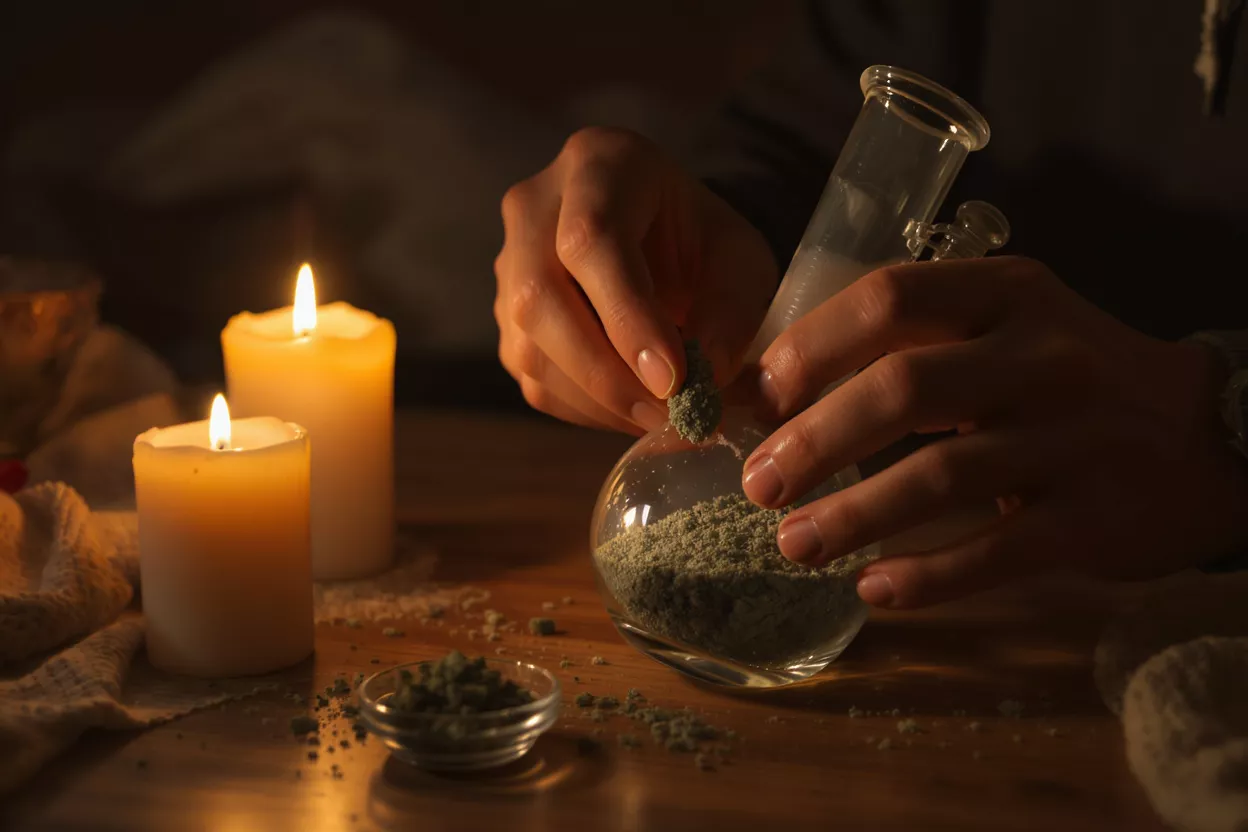
Packing and lighting comes next. Grind your flower to a medium consistency and pack the bowl loosely enough that air can flow through it. Seal your lips inside the mouthpiece, hold a flame to the edge of the bowl, and inhale slowly to draw smoke down through the water and into the chamber.
To finish the hit, lift the bowl out of the downstem and inhale sharply to clear the accumulated smoke from the chamber. Beginners should start with small pulls, since the cooling effect of the water can make it deceptively easy to inhale far more than intended.
How to Clean a Bong Properly
Resin and residue build up quickly inside a bong, dulling flavor and harboring bacteria if left unchecked. The most common cleaning method uses isopropyl alcohol and coarse salt. Pour both into the chamber, cover the openings, and shake vigorously so the salt acts as an abrasive while the alcohol dissolves the resin.
For best results, change your bong water after every session and give the piece a deep clean weekly if you use it regularly. Removable downstems and bowls can be soaked separately in the same alcohol solution to dislodge stubborn buildup in tight spaces.
Always rinse thoroughly with clean water before your next use so no alcohol residue remains. A clean bong not only tastes dramatically better but also draws more smoothly, since clogged percolators and downstems restrict airflow over time. ✨
Are Bongs Better for Smoking Cannabis?
Whether a bong is "better" depends on what you are optimizing for. For smoothness and the ability to take larger, cooler hits comfortably, bongs are hard to beat among combustion methods. The water filtration genuinely reduces harshness, making them a favorite for flower enthusiasts who smoke at home.
It is worth being clear-eyed about the limits, though. Water filtration cools and lightly filters smoke, but it does not eliminate the byproducts of combustion. Any time you burn plant material and inhale the smoke, you are taking in tar and other compounds, and a bong does not change that fundamental reality. Those seeking to avoid combustion entirely often explore vaporizers instead.
Ultimately, the bong endures because it balances tradition, ritual, and a genuinely smoother smoking experience. Choose a material and style that suit your habits, keep it clean, use clean water each session, and a quality water pipe will reward you with consistently smooth hits for years. Whether you are new to flower or a longtime connoisseur, understanding how a bong works lets you get the most out of every session.
Comments