nano thc
Discover how nano THC works, why it absorbs faster, and how to dose it.
What Is Nano THC and How Is It Made
Nano THC is THC that has been broken down into microscopic particles and wrapped in a water-compatible shell, a process called nanoemulsion. Instead of large oil droplets that your body struggles to absorb, nano THC delivers particles measured in nanometers — often between 25 and 200 nanometers wide. This tiny size is the entire point: smaller particles dissolve more readily into water-based environments, including the fluids that make up most of your body. The result is a cannabinoid that behaves very differently from the THC found in a traditional edible or oil tincture.
The manufacturing process typically begins with a cannabis concentrate or distillate, sometimes derived through CO2 extraction, which yields a clean CO2 oil rich in cannabinoids. That oil is then combined with emulsifiers and run through high-shear mixers or ultrasonic equipment that physically shatters the oil into nano-sized droplets. The concentrate slurry that emerges is stabilized so the particles stay suspended rather than clumping back together. The science borrows heavily from pharmaceutical and food industries, where nanoemulsion has been used for decades to improve drug delivery.
Water solubility is what makes nano THC distinct. Regular THC is famously hydrophobic, meaning it repels water and prefers fat. Because the human body is largely water, raw THC has a hard time crossing into the bloodstream efficiently. By engineering THC to mingle with water, manufacturers sidestep one of cannabis's oldest absorption problems. According to GoodRx, bioavailability — the fraction of a substance that actually reaches circulation — is a central concern in how any compound is formulated for consumption.
How Nano THC Works in the Body
When you consume a standard edible, the THC must travel through your digestive system and pass through the liver before reaching your bloodstream. This first-pass metabolism destroys a significant portion of the active compound and delays onset by anywhere from 45 minutes to two hours. Nano THC short-circuits much of this journey. The tiny, water-friendly particles begin absorbing through the tissues of your mouth and upper digestive tract, entering circulation far more directly.
Bioavailability improvements are the headline benefit. Studies on nanoemulsified cannabinoids suggest absorption rates several times higher than conventional oil-based products. In practical terms, more of what you consume actually does something. A 5mg nano dose may feel comparable to a much larger conventional dose, which is why fast-acting THC beverages have become popular among people who want predictability rather than guesswork.
The endocannabinoid system itself functions identically regardless of particle size — nano THC still binds to CB1 and CB2 receptors the same way ordinary THC does. What changes is the speed and efficiency of delivery, not the fundamental pharmacology. You may notice familiar effects like dry mouth, sometimes called cottonmouth, arriving more quickly. Some users describe a cleaner, more controlled experience, partly because consistent absorption reduces the unpredictable spikes that make traditional edibles intimidating.
Nano THC vs Regular THC: Key Differences
The gap between nano THC and conventional THC comes down to three measurable factors: particle size, absorption pathway, and onset time. Regular THC arrives as relatively large oil droplets that demand a slow, fat-based digestion process. Nano THC, having been emulsified into water-compatible particles, takes a quicker and more efficient route. Understanding these differences helps you pick the right product for the experience you want.
- ⚡ Onset speed: Nano THC often takes effect in 10 to 20 minutes versus 45 to 120 minutes for standard edibles.
- 💧 Solubility: Nano THC mixes into water and beverages cleanly; regular THC needs fat to carry it.
- 📊 Bioavailability: Nanoemulsified THC can reach the bloodstream several times more efficiently.
- 🎯 Dose consistency: Smaller particles distribute more evenly, reducing batch-to-batch surprises.
- ⏱️ Duration: Faster onset can mean a somewhat shorter overall arc compared to slow-digesting edibles.
That last point matters more than people expect. Because nano THC enters and clears circulation more briskly, the effects may feel shorter-lived than the marathon body high of a heavy conventional gummy. Neither approach is universally better — a slow edible is excellent for sustained relief, while nano shines when you want control and a quick read on how a dose feels.
It is worth noting that nano formulation does not change the strain genetics behind the THC. Whether the source plant was an indica-dominant cross or a sativa clone grown for a specific terpene profile, the nano process only alters delivery. Compounds like citronellol or cymene that contribute to aroma survive in distillate-based formulations depending on how the extract was made.

Why Nano THC Kicks In Faster
The speed advantage of nano THC is not marketing — it is physics and physiology working together. Large oil droplets have a small surface-area-to-volume ratio, meaning only the outer edges of each droplet can interact with your tissues at any moment. Shrinking those droplets into the nanometer range explodes the available surface area, so vastly more of the THC is exposed and ready to absorb the instant it makes contact.
Sublingual and mucosal absorption play a major role. When a nano product lingers in your mouth, a portion of the dose slips directly through the mucous membranes into the bloodstream, bypassing the liver entirely. This is the same principle that makes water-soluble THC tinctures effective for people who want a faster, more reliable response than swallowing a capsule provides. The mouth is rich with blood vessels sitting just beneath thin tissue.
Convection-style vaporizers and other inhalation methods have always been fast because lungs absorb cannabinoids almost instantly. Nano THC brings ingestible products closer to that speed without requiring you to inhale anything. For people who dislike smoking or want to avoid the harshness of combustion, this is a meaningful middle ground. As GoodRx notes, how a substance enters the body strongly influences both how fast it acts and how much of it ultimately works.
Types of Nano THC Products
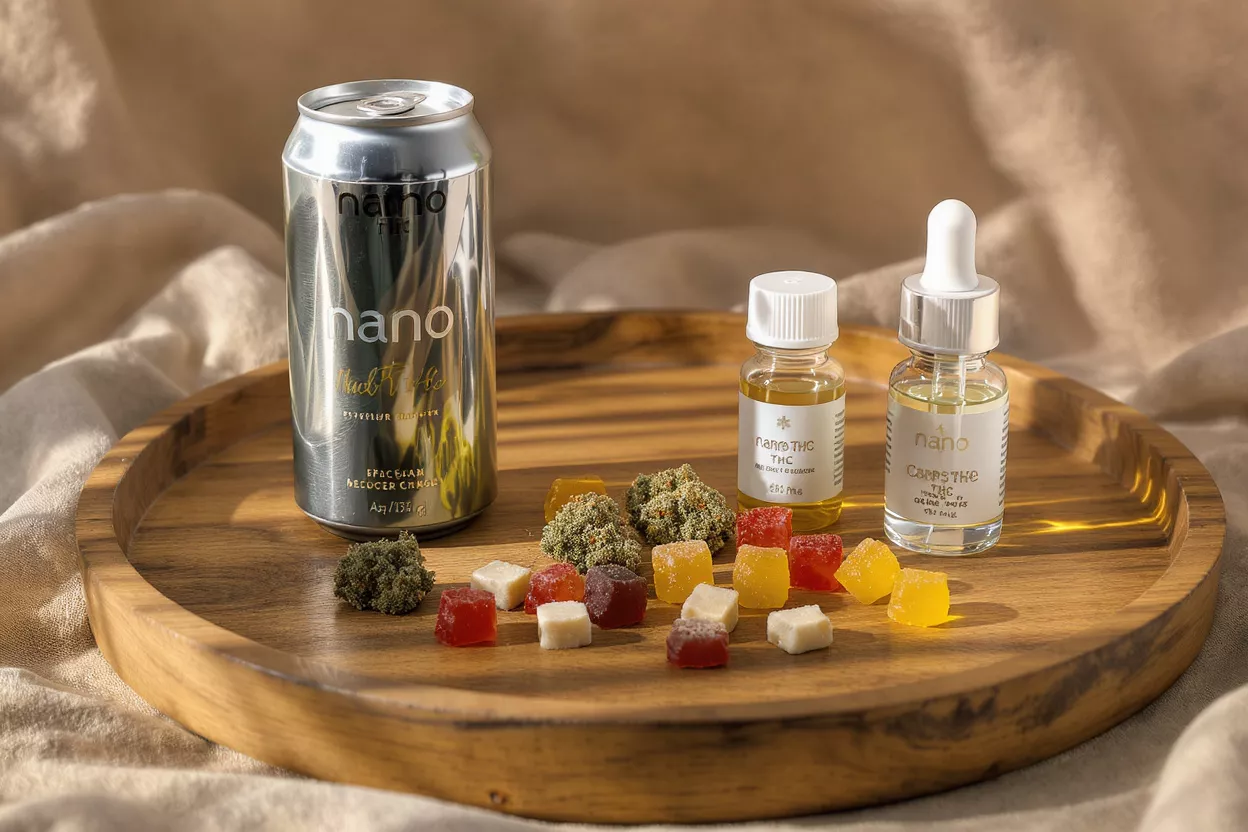
Nano technology has expanded well beyond a single format. Because the THC is water-compatible, it can be blended into products that traditional oil-based THC simply cannot inhabit. This versatility is one reason nano formulations have spread so quickly through the market.
- 🥤 Beverages: Seltzers, shots, and drink mixes where THC dissolves invisibly without an oily film.
- 🍬 Fast-acting gummies: Edibles engineered for 15-minute onset rather than the usual hour-plus wait.
- 💧 Sublingual tinctures: Drops designed to absorb under the tongue for rapid, controllable dosing.
- 🧊 Dissolvable powders: Single-serving packets you stir into any drink.
- 💊 Softgels: Capsules using nanoemulsion to improve how much of each dose survives digestion.
Nano beverages deserve special attention because they have driven much of the category's growth. A nano-infused seltzer behaves like a normal drink — no separation, no greasy mouthfeel, no waiting forty minutes wondering whether anything will happen. This makes social, controlled consumption far easier, and many newcomers find low-dose cannabis seltzers a gentler entry point than smoking a cola-topped flower or dabbing crumble.
Format matters because it shapes the ritual. Someone seeking a discreet daytime option behaves very differently from someone chasing the deep couch lock of a heavy nighttime edible. Nano products tend to favor moderation, precision, and predictability — qualities that appeal to both medical users and cautious recreational consumers.
Nano THC Benefits for Consistent Dosing
The strongest argument for nano THC is consistency. Traditional edibles are notorious for unpredictable results — the same gummy might barely register one evening and overwhelm you the next, depending on what you ate, your metabolism, and how the THC distributed through the product. Nano formulations dramatically reduce this variability because the active compound is spread evenly throughout the medium at a microscopic scale.
Predictable onset changes the entire dosing experience. When you know effects will arrive in roughly 15 minutes, you can wait, assess, and decide whether to take more — instead of impatiently redosing after 30 minutes only to be ambushed when both doses hit at once. This single feature prevents a huge share of uncomfortable overconsumption episodes that scare people away from edibles.
Lower effective doses are another quiet benefit. Because so much more of the THC actually reaches your bloodstream, you accomplish the same effect with less material. That can mean fewer calories in a beverage, less plant matter consumed, and potentially lower cost per experience over time. The curing and cultivation choices behind the source flower still matter for flavor and cannabinoid ratios, but nano delivery squeezes more value from whatever extract goes in. Some users even report a smoother crossfade when combining a measured nano dose with a beverage, precisely because the timing is so predictable.
Nano THC Dosing Guide for Beginners
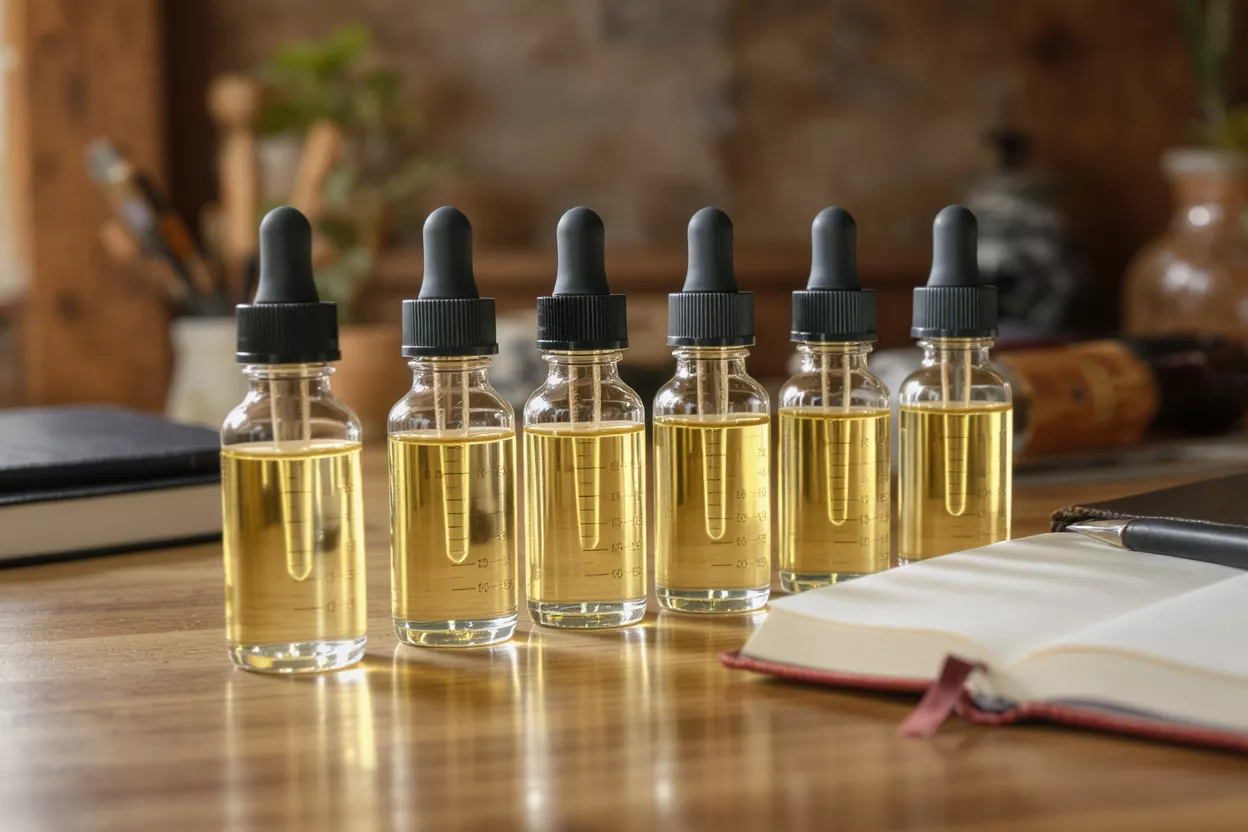
Because nano THC absorbs so efficiently, the cardinal rule is to start lower than you think you need. A dose that feels mild as a conventional edible can feel noticeably stronger in nano form, since more of it actually reaches circulation. Treating nano THC like an ordinary gummy is the most common beginner mistake.
Starting doses for newcomers generally fall between 2 and 5 milligrams. Take that amount, then genuinely wait the full window — at least 20 to 30 minutes — before considering more. The faster onset works in your favor here: you will know where you stand quickly, so patience for half an hour is entirely manageable. Experienced consumers may comfortably use higher amounts, but even seasoned users often find nano products hit harder per milligram than expected.
Set and setting still apply. Stay hydrated to counter cottonmouth, keep your first few experiences in a comfortable environment, and avoid mixing with alcohol until you understand your personal response. According to GoodRx, individual factors like body chemistry, tolerance, and concurrent medications meaningfully affect how any cannabinoid product feels, so there is no universal perfect dose — only the one that works for you.
Is Nano THC Safe to Use
For healthy adults, nano THC carries a safety profile broadly similar to conventional THC — the active compound is identical, only the delivery differs. The primary risk is not the technology but the efficiency: because nano THC is more potent per milligram, accidental overconsumption is easier if you assume it behaves like a regular edible. Respecting the lower effective dose is the single most important safety habit.
Emulsifier quality is a legitimate consideration. Nano products require emulsifying agents to keep particles suspended, and reputable manufacturers use food-grade, well-studied ingredients. Lower-quality products may rely on questionable additives, which is why third-party lab testing and transparent ingredient lists matter so much in this category. The nanoemulsion process itself is widely used in food and pharmaceuticals, so the underlying technique is far from experimental.
Typical THC side effects still apply — dry mouth, red eyes, increased appetite, and at higher doses, anxiety or dizziness. None of these are unique to nano formulations, though faster onset means they may appear sooner. People who are pregnant, nursing, taking prescription medications, or managing health conditions should consult a healthcare provider before use. Some wellness-minded consumers pair cannabinoids with supplements like curcumin or cordyceps, but combining anything new warrants a cautious, informed approach.

Choosing Quality Nano THC Products
Not all nano THC is created equal, and the gap between excellent and mediocre products is wide. Because nanoemulsion is technically demanding, manufacturing quality directly determines whether you actually get the fast, consistent experience the category promises. A poorly emulsified product may separate, lose potency, or simply fail to deliver the rapid onset that justifies choosing nano in the first place.
Lab testing is non-negotiable. Look for a current certificate of analysis confirming THC content, verifying the absence of contaminants like pesticides and residual solvents, and ideally noting particle size. Products built from clean source material — distillate from careful CO2 extraction, for instance — start with an advantage. The crutch of attractive packaging means nothing without verifiable test data behind it.
Consider these markers when evaluating a product:
- 🔬 Third-party COA: Recent, batch-specific, and easy to access.
- 📋 Transparent ingredients: Food-grade emulsifiers clearly listed, nothing mysterious.
- 📏 Stated particle size: Reputable brands often disclose the nanometer range.
- ⭐ Brand reputation: Established makers with consistent reviews and clear sourcing.
- 🏷️ Accurate labeling: Clear per-serving dosing so you can portion confidently.
Reading reviews helps, but prioritize verifiable data over hype. A brand that publishes thorough testing and explains its process honestly is almost always a safer bet than one leaning entirely on bold potency claims and flashy design.
The Future of Nano THC in Cannabis
Nano THC sits at the intersection of cannabis and pharmaceutical science, and that overlap suggests where the category is heading. As researchers refine nanoemulsion techniques, expect even faster onset, more precise dosing, and formulations tailored to specific outcomes — daytime clarity versus nighttime rest, for example. The same engineering applied to THC is already being used for CBD, CBN, and minor cannabinoids, opening the door to sophisticated, targeted blends.
Beverage innovation is likely to keep leading the way. As more consumers seek alternatives to alcohol, nano-infused drinks offer the social ritual without the hangover, and their predictable timing makes them genuinely practical. Improvements in flavor masking and shelf stability will only accelerate adoption, while regulatory clarity gradually catches up with the technology.
Nano THC represents one of the most meaningful shifts in how people consume cannabis — a move from the slow, unpredictable edibles of the past toward fast, consistent, and precisely controllable products. By solving the old problem of water solubility, nano formulation delivers more of what you consume, more reliably, with onset rivaling inhalation. Whether you are a cautious newcomer drawn to low-dose beverages or an experienced user who values precision, understanding how nano THC works empowers you to choose products thoughtfully, dose responsibly, and get genuinely better results from every serving.