


Crumble
Learn what crumble is, how it's made, and how to dab it.
What Is Cannabis Crumble?
Crumble is a cannabis concentrate prized for its dry, brittle texture that breaks apart into loose flakes, much like a block of feta cheese or a streusel topping. It belongs to the broader family of solvent-based extracts, but its honeycombed, matte appearance sets it apart from glassy shatter and creamy budder. When you press a dab tool into it, the material gives way and crumbles rather than stretching or snapping.
The appeal of crumble comes down to balance. It is drier and easier to portion than waxes, yet it preserves more aromatic compounds than the high-clarity extracts that prioritize visual perfection. For anyone exploring the world of concentrate products, crumble occupies a friendly middle ground that is forgiving to handle and rich in flavor.
Why crumble earns its name: The final product is so dry and porous that it fractures at the slightest pressure. This loose consistency makes it simple to break off a small dose, sprinkle it over flower, or load a dab tool without the sticky mess associated with stickier extracts. That practical handling is a big part of why crumble has stayed popular among both newcomers and seasoned concentrate users.
How Crumble Concentrate Is Made
Crumble starts the same way most modern concentrates do: with a solvent extraction. Producers run a solvent such as butane or propane through cannabis plant material to dissolve the resin, then collect a viscous oil rich in cannabinoids and terpenes. What happens next during purging is what gives crumble its signature form.
The role of low-heat purging: After extraction, the oil must be purged of residual solvent in a vacuum oven. Crumble is typically purged at lower temperatures over a longer period than shatter. This gentler approach encourages the extract to whip up and dry out gradually, trapping tiny air pockets that create the brittle, honeycomb structure rather than a smooth glass sheet.
Starting material matters too. Extracts with higher moisture or lipid content tend to favor a crumbly outcome, which is why some producers intentionally use specific input material to coax the texture they want. The result is a concentrate that finishes dry to the touch and ready to flake apart.
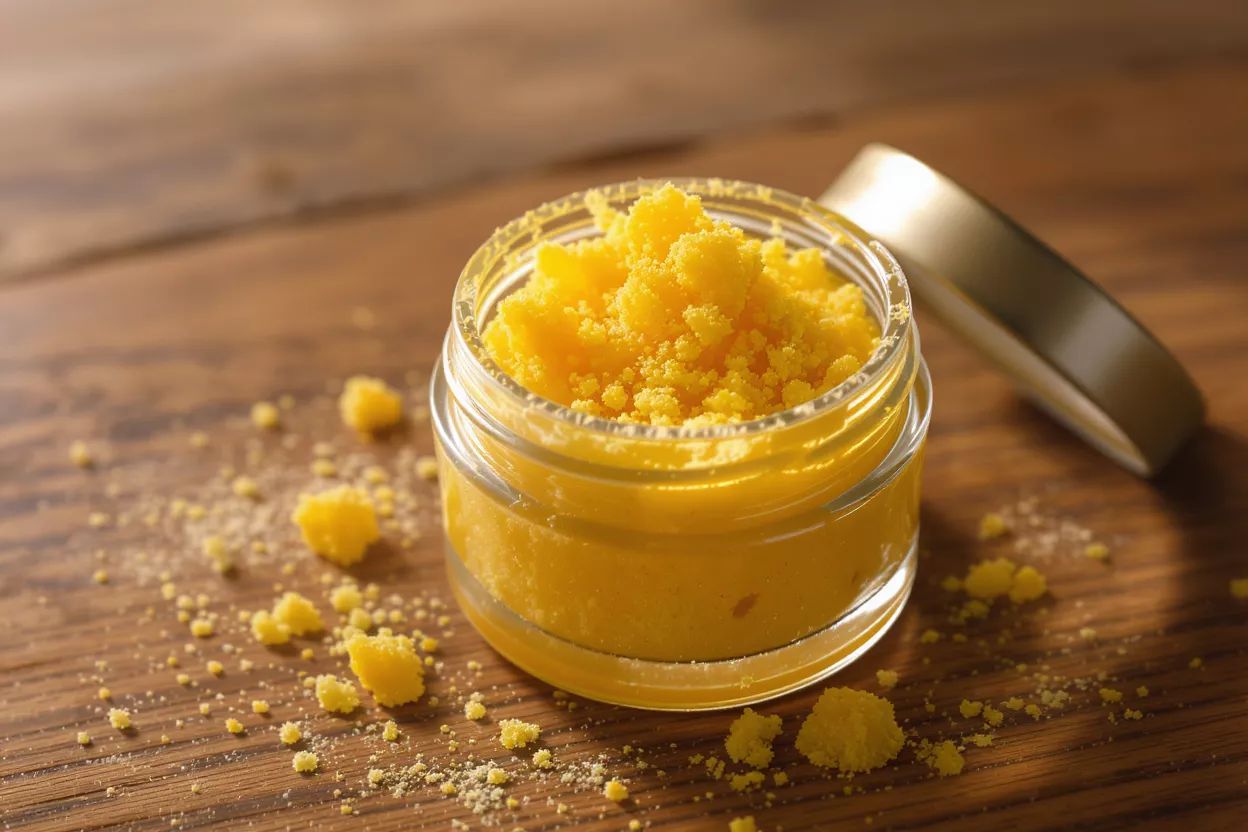
Quality crumble depends on thorough purging. A well-made batch contains only trace solvent levels that fall well within safety limits, while a rushed purge can leave behind residue that affects both flavor and safety. This is one reason buying lab-tested concentrate from a reputable source is worth the effort.
What Gives Crumble Its Crumbly Texture
The texture of crumble is not an accident but the product of deliberate processing choices. The interplay of heat, time, vacuum pressure, and agitation determines whether an extract finishes as crumble, budder, or something glassier.
Temperature and agitation: Lower heat and minimal mechanical whipping push an extract toward crumble. Higher heat with vigorous whipping tends to produce a creamier budder. The crumble process lets the extract dry and stiffen until it loses its pliability and becomes brittle.
Several variables push an extract toward that signature crumbly finish:
- 🌡️ Low purge temperature: Gentle, sustained heat dries the extract slowly without melting it into a sheet.
- ⏳ Extended purge time: A longer vacuum cycle drives off solvent while the texture stiffens.
- 💧 Input moisture and lipids: Starting material with more fats and moisture nudges the result toward a crumbly state.
- 🌀 Limited whipping: Less agitation keeps the structure porous rather than creamy.
Because so many factors interact, two batches from the same starting oil can finish quite differently. Skilled extractors learn to read their material and adjust the process to consistently land on the crumble texture customers expect.
Crumble vs Budder vs Shatter
Crumble is best understood in contrast to its closest relatives. All three are solvent-based concentrates with similar potency ranges, but they differ in texture, handling, and the way they preserve flavor compounds.
The clarity tradeoff: Shatter is the glassy, translucent member of the family, prized for its stability and clean appearance. Achieving that clarity, however, can drive off some volatile terpenes. Crumble sacrifices visual polish in exchange for retaining more of those aromatic compounds, which many enthusiasts feel translates to better flavor.
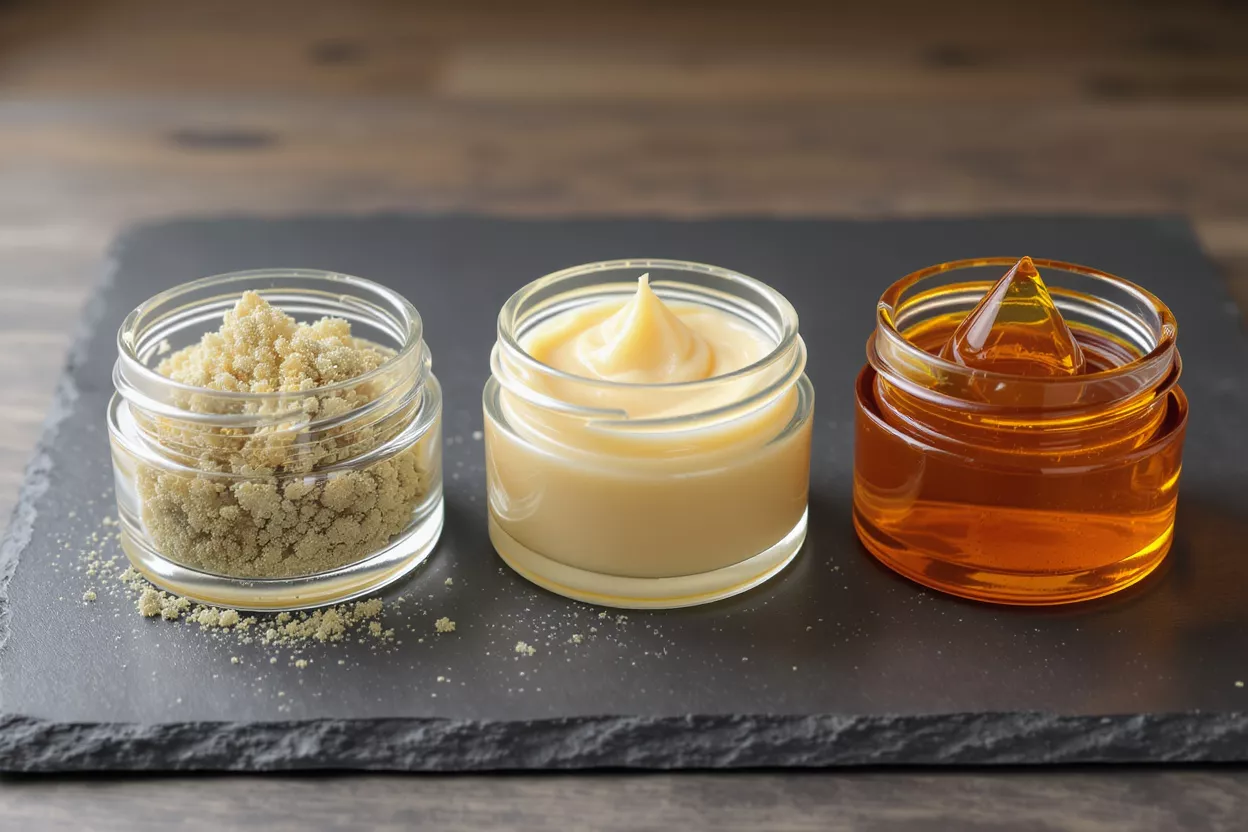
Here is how the three compare at a glance:
- 🧊 Shatter: Hard, glass-like, and translucent. Stable for storage but can snap and shatter when cold; clarity may come at the cost of some terpenes.
- 🧈 Budder: Soft, creamy, and cake-frosting smooth. Easy to scoop and flavorful, but stickier to handle.
- 🧀 Crumble: Dry, brittle, and flaky. Easiest to portion, low mess, and retains terpenes lost in clearer extracts.
None of these is objectively superior. The right choice depends on whether you value clarity, scoopability, or the dry, crumbly handling that makes portioning effortless. Many concentrate fans keep more than one texture on hand for different occasions.
Types of Crumble Extracts
Not all crumble is created equal. The category includes several variations distinguished by starting material, solvent, and cannabinoid profile. Understanding these types helps you pick a product that matches your preferences.
Solvent-based crumble: The most common form is made with hydrocarbon solvents like butane and propane. This is the classic BHO-derived crumble, valued for high yields and consistent texture. It is what most people picture when they hear the word crumble.
Beyond the standard hydrocarbon version, you will encounter several distinct styles:
- 🍯 Live resin crumble: Made from fresh-frozen plant material to lock in a fuller terpene profile and a more vibrant aroma.
- 🌿 Distillate-blended crumble: Combines a high-purity base with reintroduced terpenes for a cleaner, customizable flavor.
- 🔬 CO2 crumble: Produced with supercritical carbon dioxide for those who prefer a solventless-style extraction method.
- 🌱 Strain-specific crumble: Sourced from a single cultivar to highlight that strain's unique terpene signature.
Whichever type you choose, lab testing is the great equalizer. A current certificate of analysis tells you the cannabinoid percentages, terpene content, and confirms the product is free of residual solvents and contaminants.
Crumble Potency and Terpene Content
Crumble is a true concentrate, meaning its cannabinoid content is dramatically higher than raw flower. Where dried buds typically test in the teens to low twenties for THC, crumble commonly lands in the 60 to 90 percent range. That intensity is exactly why such small doses are used.
Why terpene retention matters: Because crumble is purged at lower temperatures, it tends to hold onto more of its native terpenes than shatter. Those terpenes do more than provide aroma and flavor; many researchers believe they shape the overall character of the experience through what is often called the entourage effect, where cannabinoids and terpenes work together.
It is worth remembering that potency is not the only measure of quality. A crumble with balanced cannabinoid and terpene content often delivers a more rounded, flavorful experience than a product that chases the highest possible THC number while sacrificing aroma. Reading the full lab panel, not just the headline percentage, gives you the complete picture.
How to Dab Crumble Step by Step
Dabbing is the most popular way to enjoy crumble, and the dry texture makes it especially convenient to portion. The process vaporizes the concentrate on a heated surface so you inhale the vapor rather than smoke. A little goes a long way, so start with a portion no larger than a grain of rice.
Temperature is everything: Low-temperature dabbing preserves flavor and produces a smoother vapor, while higher temperatures yield bigger, harsher clouds. Many concentrate fans favor lower temps specifically to enjoy the terpenes that crumble retains so well. An e-rig or a quality thermometer takes the guesswork out of hitting the right range.
A straightforward dabbing routine looks like this:
- 🔥 Heat the nail: Warm your banger or nail, then let it cool for 30 to 60 seconds to reach an optimal temperature.
- 🥄 Portion the crumble: Use a dab tool to break off a small, rice-sized piece — easy thanks to the flaky texture.
- 💨 Apply and inhale: Drop the crumble onto the heated surface and inhale slowly and steadily.
- 🧢 Cap it: Place a carb cap over the nail to retain heat and vaporize every last bit.
If you are new to concentrates, ease in gradually. The potency of crumble means even a tiny dab can be significant, and you can always take more after gauging how the first portion affects you.
Other Ways to Use Crumble
Dabbing may be the headline method, but crumble's dry, flaky form makes it one of the most versatile concentrates to work into other routines. Its low-mess texture is a genuine advantage when you want to add concentrate to flower or a portable device.
Topping flower: Sprinkling crumble over ground flower in a bowl or joint is a popular way to boost potency and flavor. Because crumble breaks apart so easily, it distributes evenly without the sticky clumping you get from waxes, making it a natural fit for this method.
Crumble adapts well to several consumption styles:
- 🌿 Sprinkled on flower: Add flakes to a bowl or twist them into a joint for an extra kick.
- 💨 Dry herb vaporizers: Many concentrate-compatible vaporizers handle crumble cleanly thanks to its dry texture.
- 🖊️ Concentrate pens: Some portable dab pens are designed to load crumble directly for on-the-go sessions.
- 🍪 Infusions: Once decarboxylated, crumble can be melted into oils or butter for homemade edibles.
This flexibility is part of crumble's lasting appeal. Whether you own a full dab rig or just want to enhance a bowl of flower, the texture cooperates rather than fights you, which is not always true of stickier extracts.
How to Store Crumble Properly
Like all concentrates, crumble is sensitive to heat, light, air, and moisture. Proper storage protects both its texture and its terpene content, keeping the product fresh and flavorful for as long as possible. Poor storage, by contrast, can degrade cannabinoids and dull the aroma you paid for.
Cool, dark, and airtight: The ideal home for crumble is an airtight container kept in a cool, dark place away from direct sunlight and heat sources. Silicone containers and small glass jars are both popular choices. Excess heat can melt the brittle structure into a sticky mass, defeating the easy-handling benefit that makes crumble appealing in the first place.
A few simple habits go a long way toward preserving quality:
- ❄️ Keep it cool: Store away from windows, electronics, and any source of warmth.
- 🌑 Block out light: UV rays degrade cannabinoids and terpenes, so opaque or shaded storage helps.
- 🔒 Seal it tight: An airtight container slows oxidation and locks in volatile aroma compounds.
- 🧤 Handle with clean tools: Use a dab tool rather than fingers to avoid introducing oils and contaminants.
Treated well, crumble holds its quality for many months. Because its texture is already dry, it is somewhat less prone to the dramatic changes that can affect softer concentrates, though good storage habits still pay dividends in flavor and potency.
Is Crumble Right for You?
Crumble suits anyone who wants concentrate-level potency with the easiest possible handling. If sticky waxes frustrate you and glassy shatter feels too fussy to portion, the dry, flaky middle ground of crumble may be exactly what you are looking for. Its terpene retention is a bonus for flavor-focused users.
Matching crumble to your routine: Dabbers appreciate how cleanly crumble portions onto a hot nail, while flower smokers love sprinkling it into bowls and joints. Its versatility across methods means a single jar can serve several different consumption styles, which is a practical reason it earns a spot in many collections.
To sum up, crumble is a high-potency cannabis concentrate defined by its dry, brittle texture, born from low-temperature purging that preserves more terpenes than clearer extracts. It is easy to handle, simple to dose, versatile across consumption methods, and rewarding for anyone who values flavor. Whether you are dabbing for the first time or rounding out an experienced concentrate lineup, crumble offers a friendly, flavorful, and forgiving option worth getting to know.

Comments