Hotbox
Learn what a hotbox is, how it works, and tips for doing it safely.
What Is a Hotbox in Cannabis Culture
A hotbox is the practice of smoking cannabis inside a small, enclosed, poorly ventilated space so the smoke accumulates rather than dissipating. The term works as both a noun and a verb — you can be in a hotbox, or you can hotbox a room. The defining feature is sealed air: closed windows, blocked vents, and a confined volume that lets exhaled and ambient smoke linger thick enough to see and breathe. For many longtime smokers, the hotbox is less a technique than a social ritual, a shared experience built around staying put and letting the cloud build.
The appeal blends practicality with atmosphere. Containing smoke means less of it escapes, which some users believe concentrates the experience, and the dim, hazy environment lends itself to a relaxed, communal vibe. The word itself entered mainstream slang the same way "dank" and "dope" did — through subculture repetition until it stuck. Today it shows up in films, music, and casual conversation as shorthand for a particular kind of indulgent, low-key session shared among friends.
It helps to separate the cultural image from the physical reality. Culturally, a hotbox is camaraderie, music, and a haze that signals everyone is in it together. Physically, it is a closed room saturated with combustion byproducts. Both descriptions are accurate, and understanding both is the foundation for doing it more thoughtfully — which is exactly what the rest of this guide unpacks.
How Does a Hotbox Work
The science of trapped smoke: When cannabis combusts, it releases smoke containing THC, other cannabinoids, and a long list of particulates and gases. In an open space, that smoke disperses into the surrounding air almost immediately. Seal the space, and the concentration of everything in the air climbs steadily with each exhale and each fresh hit. The result is an environment where the air itself carries an active cannabinoid load far higher than any open room would ever reach.
Ambient inhalation versus direct smoking: Inside a hotbox you inhale two ways — the deliberate draws from your own joint, pipe, or vape, plus the secondhand-style ambient smoke filling the room. While research consistently shows that secondhand cannabis smoke delivers far less THC than direct inhalation, extended exposure in a tightly sealed space is not nothing, particularly for non-smokers in the room. According to Healthline, secondhand cannabis smoke shares many of the same combustion compounds as tobacco smoke, which matters in any enclosed setting.
Airflow is the variable that defines the whole experience. Directional airflow — even a cracked window or a small fan — dramatically changes how thick the air gets and how quickly. A true hotbox eliminates that airflow on purpose. That is precisely why a quality portable dry herb vaporizer appeals to people who want the session without the lingering combustion haze, since vapor disperses and clears differently than smoke.
Hotbox History and Origins
The exact origin of the term is fuzzy, which is typical for slang born in subcultures rather than dictionaries. Cannabis culture has long borrowed and repurposed everyday words, and "hotbox" likely drew on older uses of the phrase describing any hot, stuffy, enclosed space. By the late twentieth century it had attached firmly to the practice of smoking in sealed cars and small rooms, spreading through word of mouth long before the internet accelerated slang adoption.
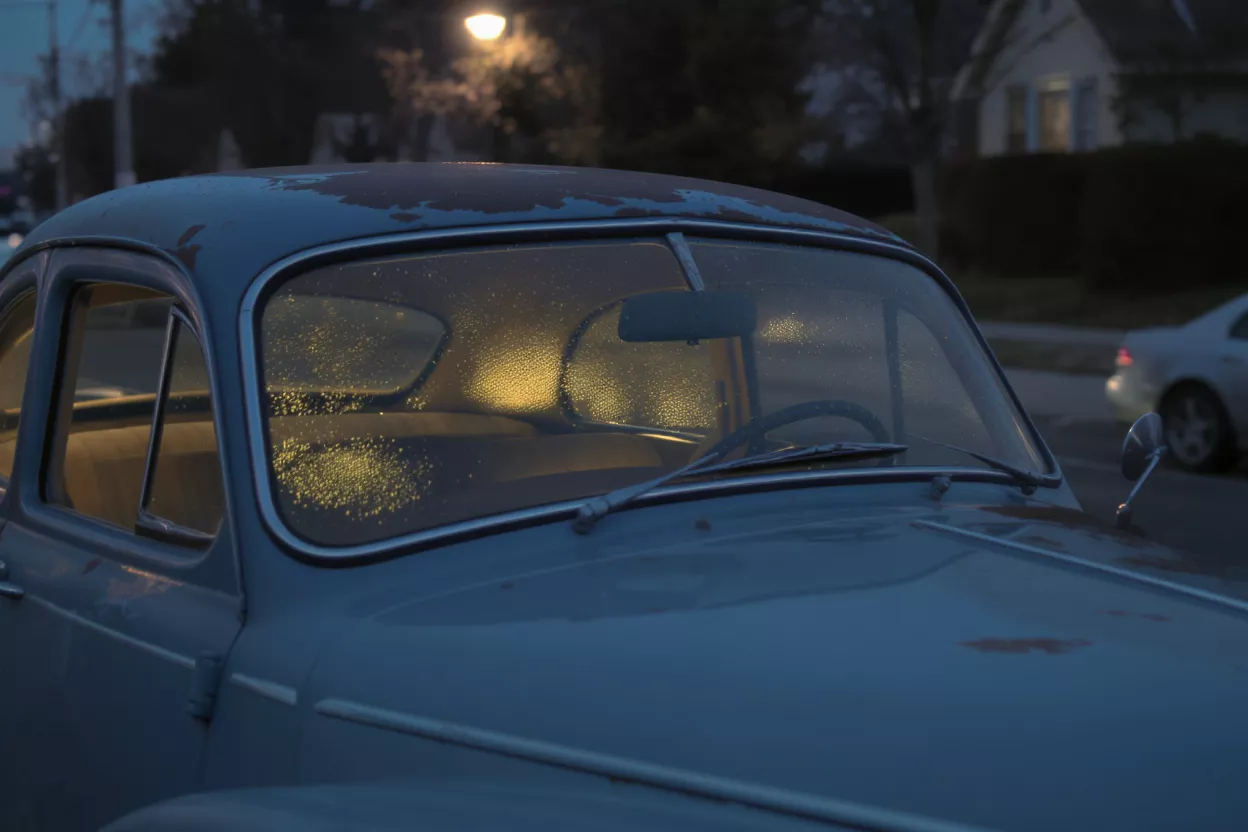
The car connection: The automobile became the archetypal hotbox for obvious reasons — it is small, sealable, mobile, and private. Generations of smokers came up associating the hotbox with parked cars, and that image cemented itself in film and television to the point that the car hotbox became a cultural shorthand all its own. The downside, of course, is that smoke saturates upholstery and lingers for days, which is why the practice carries a reputation alongside the romance.
As legalization expanded access through the modern dispensary system, the language of cannabis moved into the open. Terms once whispered now appear on menus and in marketing. The hotbox survived that transition because it describes something specific and universally understood — a shared, sealed, smoke-filled session — and no cleaner word has replaced it.
Best Spaces to Hotbox Safely
Choosing the right enclosed space: Not every small room makes a sensible hotbox. The ideal space balances containment against the practical realities of ventilation, surface materials, and the people around you. Bedrooms, basements, garages, and dedicated smoke rooms tend to work better than vehicles or rented spaces where lingering odor causes real problems. Surfaces matter too — fabric, carpet, and upholstery absorb smoke and hold the smell for days, while tile, glass, and sealed surfaces release it more readily.
Here are practical considerations when picking a space:
- 🪟 Recoverable ventilation: Pick a room you can air out afterward — a window or door you control changes everything once the session ends.
- 🚭 Smoke detectors: Know where they are. Disabling one is dangerous and a fire risk; choosing a different room is the smarter move.
- 🧱 Hard surfaces: Rooms with tile or sealed walls hold odor far less than carpeted, fabric-heavy spaces.
- 🚗 Skip the car if it's running: Hotboxing a vehicle creates serious carbon monoxide and impairment risks, and driving after is never an option.
Never seal a space so completely that fresh air cannot eventually enter, and never combine a sealed environment with anything that produces carbon monoxide, such as a running engine or fuel-burning heater. The goal is trapped cannabis smoke, not trapped dangerous gases — a distinction that genuinely matters for safety.
Does Hotboxing Actually Get You Higher
The ambient THC question: The most common claim about hotboxing is that the trapped smoke gets everyone significantly higher than open-air smoking would. The reality is more nuanced. The bulk of your high still comes from what you actively inhale through your joint, pipe, or e-rig — not the ambient haze. Studies on secondhand cannabis exposure show that meaningful effects from passive inhalation require extreme conditions: very poor ventilation, high potency, and prolonged exposure all stacked together.
That said, a true hotbox can create exactly those extreme conditions, which is why non-smokers in a sealed room sometimes report mild effects. Healthline notes that passive cannabis exposure under sealed, unventilated conditions can produce detectable effects, though far weaker than direct smoking. So the "hotbox makes you higher" belief is partly true and partly atmosphere — the dim, hazy, communal setting amplifies the perceived experience as much as the chemistry does.
Perception plays a real role here. Sitting in a thick cloud with friends, music going, eyes a little irritated, creates a sensory experience your brain associates with being more intoxicated. For most people chasing a stronger effect, choosing better flower, a fresh grind, or a quality concentrate like live diamonds will move the needle far more than sealing the room ever does.
Hotbox Health Risks Worth Knowing
Smoke is smoke: The single most important health point about hotboxing is that concentrating combustion smoke in a sealed space concentrates everything in that smoke — including irritants and fine particulates. Any inhaled smoke, cannabis included, carries compounds that irritate the lungs and airways. A hotbox maximizes exposure to those compounds by design, which is the trade-off baked into the experience.
Carbon monoxide and oxygen: The genuinely serious risk is not THC but the byproducts of combustion and the displacement of fresh air. Burning anything consumes oxygen and produces carbon monoxide, and a sealed room with no airflow can let those levels creep upward. This is why hotboxing a running car is uniquely dangerous — engine exhaust adds carbon monoxide on top of the smoke. The Healthline resource on smoke exposure underscores that enclosed, unventilated spaces amplify these risks considerably.
Key health takeaways to keep in mind:
- 💨 Lung irritation: Concentrated smoke means more particulates reaching your airways in a single session.
- 🫁 Reduced oxygen: Sealed spaces lower available fresh air, which can cause lightheadedness independent of the high.
- ⚠️ Carbon monoxide: Never hotbox with any combustion source other than your cannabis — no engines, no fuel heaters.
- 👁️ Eye and throat irritation: Common, usually temporary, but a sign the air quality is genuinely poor.
Hotbox Etiquette and Group Tips
A hotbox is almost always a group activity, and the unwritten rules matter as much here as in any shared session. The classic "puff, puff, pass" rhythm exists so everyone gets a turn before the rotation continues, and holding the joint too long — bogarting — is the fastest way to annoy a circle. Keeping the pass moving smoothly keeps the vibe relaxed and the session fair for everyone in the room.
Consent in a sealed room: Because a hotbox forces ambient exposure on everyone present, consent becomes more important than in an open space. Anyone who does not want to inhale ambient smoke cannot simply step a few feet away — the whole room is the cloud. Always confirm everyone is genuinely on board before sealing a space, and respect anyone who taps out partway through. A cracked door for someone who needs air is never an insult.
Bring your own supply when you can, share generously, and handle communal pieces with care. If someone offers their stash, a quality grinder, or even a fresh dugout for the rotation, treating those tools respectfully keeps you welcome at the next session. Good etiquette is what turns a one-time hotbox into a standing invitation.
Hotbox vs Other Sharing Methods
The hotbox is one of several ways people consume cannabis socially, and it sits at a specific point on the spectrum between intensity and comfort. Compared to passing a joint in an open room, a hotbox trades fresh air for atmosphere. Compared to a dab session on an e-rig or domeless nail, it trades potency precision for communal haze. Understanding where it fits helps you decide when it actually makes sense.
Here's how the hotbox stacks up against common alternatives:
- 🔥 Open-air smoking: Comfortable and low-odor-retention, but lacks the sealed, communal intensity some users specifically want.
- 🌿 Vaporizing: A good desktop vaporizer setup delivers cannabinoids with far less combustion smoke, and the vapor clears the room faster.
- 💎 Dabbing concentrates: An e-nail or e-rig session with diamonds offers intense, precise potency without filling a room with flower smoke.
- 🍬 Edibles: No smoke at all, though the onset is slow and the edible hangover the next day is a real consideration for some.
None of these is universally "better" — they serve different moods. A hotbox is about the shared, immersive ritual. If your priority is clean lungs, precise dosing, or discretion, the alternatives win. If your priority is a sealed-room session with friends and a thick, unmistakable atmosphere, the hotbox is the method built for exactly that.
How to Clear a Hotbox Afterward
Restoring airflow fast: The moment a session ends, your priority shifts to clearing the air and minimizing lingering odor. Open every window and door you sealed, and create cross-ventilation by opening openings on opposite sides of the space. A fan pointed out a window pushes smoke-laden air outside far faster than passive venting alone, and directional airflow is the single most effective tool for clearing a room quickly.
Odor control is a separate battle from air quality. Smoke molecules embed in fabric, carpet, and upholstery, which is why a room can smell long after the visible haze is gone. Washing fabrics, running an air purifier, and wiping down hard surfaces all help. According to Healthline, lingering smoke particles can settle onto surfaces as residue, so a genuine cleanup means addressing surfaces, not just the air.
For habitual sessions, investing in real ventilation pays off. A window fan, an air purifier with a carbon filter, and washable covers for upholstered furniture turn a smoke-saturated room into one that recovers in minutes instead of days. The effort up front is what keeps a regular hotbox space pleasant rather than permanently stale.
Is Hotboxing Safe and Worth It
The honest verdict: Hotboxing in a reasonable space, for a reasonable time, with consenting adults and no combustion source other than cannabis, is something many people do without incident. The risks are real but manageable: lung irritation from concentrated smoke, reduced fresh air, and odor are the main trade-offs. The serious dangers — carbon monoxide, oxygen displacement — only become genuine threats when people seal a space too aggressively or add an engine or fuel heater to the mix.
Whether it is worth it comes down to what you want from a session. The hotbox offers a specific kind of immersive, communal experience that open-air smoking simply does not replicate. If that atmosphere is the point, hotboxing thoughtfully — recoverable ventilation, no running engines, consenting participants, a plan to clear the air afterward — lets you enjoy it while sidestepping the worst risks. As always, consider the source guidance from Healthline on smoke exposure when weighing how often makes sense for you.
The takeaway is balance. A hotbox is neither the harmless ritual some treat it as nor the serious hazard others fear — it sits in between, and the details determine which way it leans. Choose your space wisely, keep a path to fresh air, respect everyone in the room, and clear the haze when you're done. Done with that care, the hotbox remains one of cannabis culture's most enduring shared experiences.