
Maltodextrin
Discover how maltodextrin shapes cannabis edibles, powders, and beverages.
What Is Maltodextrin in Cannabis Products?
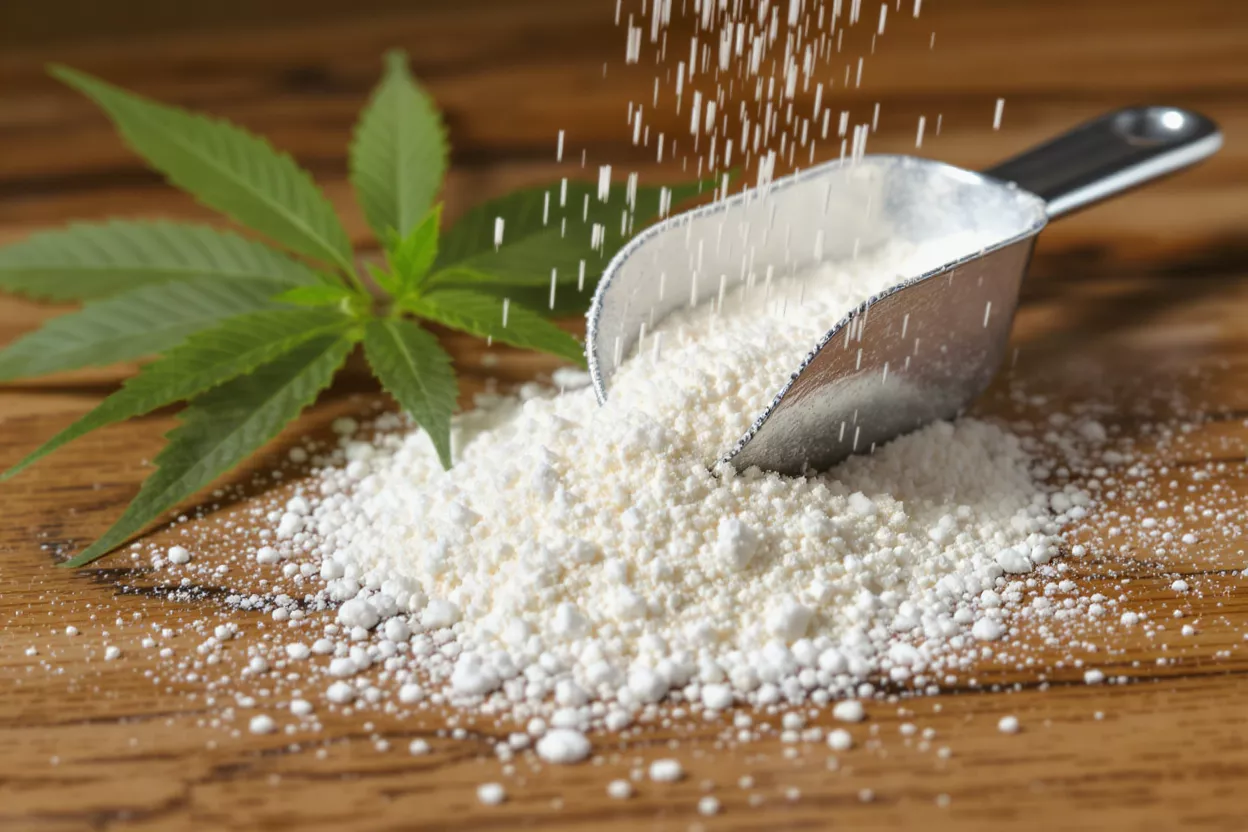
Maltodextrin cannabis products are more common than most consumers realize. Maltodextrin is a white, nearly tasteless powder derived from starch — usually corn, rice, potato, or wheat — that has been partially broken down through a process called hydrolysis. In the cannabis industry, it serves as a quiet but essential workhorse, carrying cannabinoids, stabilizing formulations, and giving powdered products their structure. If you have ever consumed a fast-acting drink mix, a dissolvable powder, or certain edibles, there is a strong chance maltodextrin was part of the recipe.
Chemically, maltodextrin sits between a complex starch and a simple sugar. It is composed of chains of glucose units, but those chains are short enough to dissolve readily in water without delivering the intense sweetness of table sugar. This neutral profile is precisely why formulators love it: it can carry active compounds like THC and CBD without altering the intended flavor of the final product.
Where the ingredient comes from: Most commercial maltodextrin is produced from corn starch in North America, though tapioca and rice versions are increasingly popular for products marketed as allergen-friendly. The raw starch is treated with enzymes or acids that snip the long molecular chains into smaller fragments, then the resulting slurry is filtered, purified, and spray-dried into the fine powder that manufacturers receive in bulk.
How Maltodextrin Works in Cannabis Manufacturing
The real value of maltodextrin in cannabis manufacturing lies in its ability to turn oily, water-hating cannabinoid extracts into stable, water-friendly powders. Cannabinoids are fat-soluble, which means they naturally resist mixing with water. This creates a problem for any product meant to dissolve in a beverage or distribute evenly through a dry mix. Maltodextrin helps solve it by acting as a carrier and encapsulating agent.
Encapsulation in plain terms: During production, a cannabinoid oil or distillate is blended with an emulsifier and a maltodextrin solution, then spray-dried. As the mixture passes through hot air, the water evaporates and the maltodextrin forms a microscopic shell around tiny droplets of cannabinoid oil. The result is a free-flowing powder where each particle hides a protected payload of active compound.
This encapsulation does more than just enable water mixing. It shields delicate cannabinoids and terpenes from oxygen, light, and moisture, all of which can degrade potency over time. A well-encapsulated powder simply lasts longer on the shelf and delivers a more predictable dose with every serving.
Types of Maltodextrin Used in Cannabis Formulations
Not all maltodextrin is identical. Manufacturers classify it by something called dextrose equivalent, or DE, which measures how thoroughly the starch has been broken down. A higher DE means shorter glucose chains, more solubility, and a touch more sweetness; a lower DE means longer chains, better film-forming ability, and a more neutral taste. Choosing the right DE is part of the formulator's craft.
Different products call for different grades, and the source starch matters too. Here is how the common varieties break down for cannabis applications:
- 🌽 Corn-derived maltodextrin: The industry default — affordable, reliable, and widely available, used in the majority of mass-market powders and drink mixes.
- 🍚 Rice and tapioca maltodextrin: Preferred for gluten-free and allergen-conscious lines, offering a clean label without sacrificing performance.
- 🧪 Low-DE maltodextrin: Excellent for encapsulation thanks to strong film-forming properties, ideal for protecting cannabinoids during spray-drying.
- 💧 High-DE maltodextrin: More soluble and faster to disperse, favoured in instant beverages where a quick, clear mix matters.
Matching grade to product: A cannabis beverage company aiming for crystal-clear dissolution will lean toward higher-DE grades, while an edibles maker focused on shelf stability and potency protection may select a lower-DE option. The decision balances solubility, mouthfeel, sweetness, and how well the powder guards its cannabinoid cargo.
Why Maltodextrin Appears in Cannabis Edibles
Walk through the ingredient list of many cannabis edibles and you will spot maltodextrin doing several jobs at once. In gummies, baked goods, and confections, it contributes texture, bulk, and consistency while helping distribute the active cannabinoid dose evenly throughout the batch — a critical factor for accurate, repeatable potency.
Dose uniformity matters most: When a manufacturer makes a batch of hundreds of gummies, each piece must contain roughly the same amount of cannabinoids. A cannabinoid powder built on maltodextrin mixes far more evenly into a recipe than a sticky concentrated oil, which tends to clump or pool. This even distribution is one of the quiet reasons store-bought edibles deliver more consistent effects than many homemade attempts.
Beyond dosing, maltodextrin can improve mouthfeel and act as a bulking agent that gives low-calorie or low-sugar products the body they would otherwise lack. It also helps powders resist caking, so a product stays loose and pourable rather than clumping into a brick inside its package.
Maltodextrin in Cannabis Beverages and Powders
The cannabis beverage and drink-mix category is where maltodextrin truly shines. Consumers expect a cannabis powder to vanish into water or juice within seconds, leaving no oily film, grittiness, or separation. Achieving that experience with a fat-soluble compound is genuinely difficult, and maltodextrin-based encapsulation is one of the most effective tools for the job.
Fast-acting formulations: Many beverage powders pair maltodextrin with nano-emulsion technology to shrink cannabinoid droplets to a microscopic size. Smaller droplets dissolve more readily and may be absorbed faster by the body, which is why some powdered drink products report a quicker onset than traditional oil-based edibles.
Powdered formats also offer practical advantages that consumers appreciate:
- ⚡ Convenience: A single-serve sachet is easy to carry and discreet to use, with no measuring or messy oils involved.
- 🥤 Customization: Users can stir powder into the beverage of their choice, tailoring flavor and serving size to taste.
- 📦 Shelf stability: Dry powders resist degradation better than many liquids, extending usable life on the shelf.
- 🎯 Precise dosing: Pre-measured packets remove much of the guesswork that comes with self-dosing concentrates.
Maltodextrin Benefits for Cannabis Bioavailability
Bioavailability — the proportion of an ingested compound that actually reaches your bloodstream — is one of the central challenges in cannabis product design. Cannabinoids consumed orally face a rough journey through the digestive system and liver, and a significant share never makes it into circulation. Maltodextrin-based delivery systems can help tilt those odds in the consumer's favor.
Improving absorption: By encapsulating cannabinoids inside water-dispersible particles, maltodextrin helps present those compounds to the gut in a form the body can handle more efficiently. When combined with emulsifiers that reduce droplet size, the surface area available for absorption increases dramatically, which can translate into more reliable effects from a given dose.
It is important to keep expectations realistic. Maltodextrin alone is not a magic bioavailability booster; its contribution depends heavily on the full formulation, including emulsifiers, particle size, and the presence of fats that aid cannabinoid uptake. Still, as part of a thoughtfully engineered delivery system, it plays a meaningful supporting role in helping consumers get predictable value from each serving.
Is Maltodextrin in Cannabis Safe to Consume?
For the vast majority of people, maltodextrin is recognized as safe by major food regulators and has a long track record across the broader food supply, where it appears in everything from salad dressings to sports drinks. Its presence in cannabis products does not change that fundamental safety profile — it is the same ingredient, simply applied to a cannabinoid delivery context.
Who should pay closer attention: People managing blood sugar carefully deserve a heads-up, since maltodextrin is rapidly metabolized into glucose. Individuals with diabetes or those following low-glycemic diets may want to factor it into their overall carbohydrate accounting, even though the amounts in a typical cannabis serving are usually small.
A smaller subset of consumers report digestive sensitivity to maltodextrin, including bloating or gas when consumed in larger quantities. Most cannabis products contain only modest amounts, so reactions are uncommon, but anyone with a known sensitivity should check labels and start with a small serving to gauge their own response.
Maltodextrin Cannabis Products and the Glycemic Index
One surprising fact about maltodextrin is that it carries a very high glycemic index — often higher than table sugar itself. Despite tasting only faintly sweet, it breaks down into glucose extremely quickly, causing a rapid rise in blood sugar. For most casual consumers this is a non-issue, but it deserves clear explanation for anyone who tracks their metabolic health.
Putting the numbers in context: The glycemic impact of any single cannabis product depends on how much maltodextrin it actually contains. A few grams in a drink mix will have a far smaller real-world effect than a tablespoon would. The high glycemic index matters most in products consumed frequently or in large servings, rather than an occasional gummy or beverage.
For consumers who want to be mindful, a few practical considerations help keep things in perspective:
- 📊 Check the serving size: Glycemic impact scales with quantity, so small single servings carry small effects.
- 🩺 Diabetic awareness: Those monitoring blood glucose should treat maltodextrin like any other fast carbohydrate in their daily total.
- 🔍 Look for alternatives: Some brands now use lower-glycemic carriers for consumers who prefer them.
Reading Labels: Spotting Maltodextrin in Cannabis Goods
Becoming a label-literate consumer is one of the best ways to understand exactly what you are putting into your body. Maltodextrin is almost always listed by name in the ingredient panel, typically appearing among the non-active components rather than the cannabinoid content. Knowing where to look helps you make informed choices that match your dietary goals.
Context clues on the panel: Maltodextrin frequently shows up alongside emulsifiers, natural flavors, and other carriers in powdered and fast-acting products. When you see it grouped with these ingredients, it is usually performing its encapsulation and bulking role rather than acting as a sweetener or primary flavor.
If you are comparing two similar products, the ingredient order offers a useful hint about quantity, since panels list components from most to least by weight. A product where maltodextrin sits near the top of the list contains proportionally more of it than one where it appears toward the end. This small detail can guide consumers who want to moderate their intake.
Alternatives to Maltodextrin in Cannabis Products
As consumer preferences evolve toward cleaner labels and lower-glycemic options, manufacturers have developed several alternatives to maltodextrin. These substitutes aim to deliver the same encapsulation and stability benefits while addressing concerns about blood sugar, allergens, or ingredient transparency. The right choice depends on a product's goals and the audience it serves.
Common substitutes worth knowing: Several ingredients can step into maltodextrin's role, each with its own trade-offs in cost, performance, and label appeal. Formulators weigh these factors carefully when designing for specific consumer segments.
- 🌿 Acacia (gum arabic): A natural fiber and emulsifier with a low glycemic impact, popular in premium and clean-label products.
- 🍯 Inulin: A prebiotic fiber that adds gut-friendly appeal while serving as a bulking carrier.
- 🥥 Tapioca-based carriers: Allergen-friendly options for brands targeting gluten-free and corn-free shoppers.
- ⭐ Modified starches: Engineered for specific solubility and film-forming traits when standard maltodextrin falls short.
None of these alternatives is universally superior — each shines in particular applications. Maltodextrin remains the most widely used carrier precisely because it offers a dependable balance of cost, performance, and availability. Understanding the alternatives simply empowers you to read labels with sharper insight and select products that align with your personal priorities, whether that means clean labels, allergen avoidance, or glycemic awareness. The more you know about these behind-the-scenes ingredients, the more confidently you can navigate an increasingly sophisticated cannabis marketplace.